REVIEW · ROME
Rome: Catacombs of Domitilla Entry Ticket & Guided Tour
Book on GetYourGuide →Operated by OPERA ROMANA PELLEGRINAGGI · Bookable on GetYourGuide
Rome hides the dead beneath your feet. The Catacombs of Domitilla are one of the largest underground cemeteries in Rome, and a short guided visit is the easiest way to make sense of the dark corridors, burial chambers, and art you’ll see there.
I especially like two things: the way the guide ties the site to real people like Flavia Domitilla and the imperial family, and the look at frescoes that mix pagan and Christian imagery. You’ll also get practical context on why burial spaces for Christian martyrs were treated with such care.
One possible drawback: the tour is only 30 minutes, so you’ll cover highlights rather than the whole network. Also, no photography inside means you’ll want to pay close attention while you’re there.
In This Review
- Key things to know before you go
- Why the Catacombs of Domitilla feel different from other Rome sights
- Price and value: is $16 for 30 minutes worth it?
- Small-group format and guides: what to expect underground
- The descent on Via delle Sette Chiese and the Flavians’ story
- Hypogeum of the Flavians: where pagan space becomes Christian
- Martyrs Nereus and Achilleus, the crypt, and the papal basilica
- Frescoes and meaning: pagan and Christian artwork in the same breath
- Restoration talk you’ll notice long after you leave
- Practical tips: clothes, no photos, and how to time your visit
- Who should book this Domitilla catacomb tour
- Should you book the Catacombs of Domitilla tour?
- FAQ
- How long is the Catacombs of Domitilla tour?
- What languages are available for the guided tour?
- Is the entrance fee included in the price?
- Can I take photos inside the catacombs?
- Where do I meet for the tour?
- When should I arrive before the scheduled tour?
- How big is the group?
- Is it accessible for people using wheelchairs?
Key things to know before you go
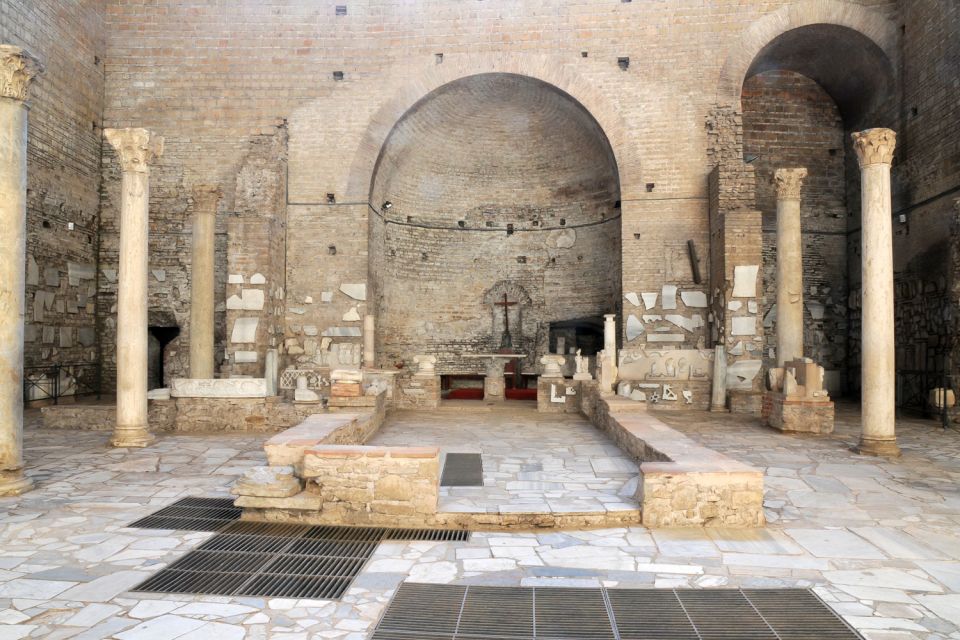
- One of Rome’s largest underground cemeteries: built on land tied to Flavia Domitilla and her freedmen
- Two main levels to understand: the Hypogeum of the Flavians and a second-floor area linked to later martyrs
- Frescoes with pagan + Christian mix: art that changed as the site became Christian
- Named figures and popes: Nereus and Achilleus, plus work credited to Popes Damasus and Siricius
- Small groups (max 10): enough time for your guide to answer questions
- No photos inside: plan on memory and notes, not screenshots
Why the Catacombs of Domitilla feel different from other Rome sights
Rome is loud and sunny above ground. Then you step into a controlled chunk of darkness, and the catacombs instantly feel like a separate world. The Catacombs of Domitilla sit on via delle Sette Chiese, and they’re often picked because they’re large enough to feel like a true system, not a quick hallway.
What makes Domitilla worth your time is the story of transformation. The site starts as burial land associated with Flavia Domitilla, then shifts from a pagan hypogeum into a Christian cemetery with later additions. If you like your history with names, dates, and a sense of how people re-used space over generations, this tour gives you that.
You can also read our reviews of more tours and experiences in Rome.

Price and value: is $16 for 30 minutes worth it?
At about $16 per person for a guided visit of around 30 minutes, the value comes down to one thing: access plus interpretation. Entrance fees are included, and you get a live guide in Italian or English, which matters in underground spaces where signs and labels can’t do all the teaching for you.
If you tried to go on your own, you’d still see stone walls and corridors. But you’d likely miss the meaning behind what you’re looking at—especially the mix of pagan and Christian frescoes, and why certain areas became sacred after the placement of martyrs’ bodies.
The short duration is also part of the deal. You’ll walk through key highlights without getting stuck in a long underground slog. If you want a deeper, longer exploration, this may feel tight—yet for many people, that timing keeps the experience sharp.
Small-group format and guides: what to expect underground
This tour runs with a small group limited to 10 participants, and it’s led by a live guide (Italian or English). That size matters because catacomb spaces can be confusing, and narrow movement helps if the guide can pace the group and handle questions without chaos.
You should also know that the route is guided, and the accessible sections are not the entire cemetery network. In a place this big, your guide chooses what you can realistically experience in the time you have, and that’s why a guided format beats a casual wander.
Guides can make or break a catacomb visit, and the best ones focus on clarity: what you’re seeing, why it mattered, and what the restoration effort is trying to protect. You’ll also have a chance to ask questions during the tour, which is useful because frescoes can look similar until someone explains the key details.
The descent on Via delle Sette Chiese and the Flavians’ story
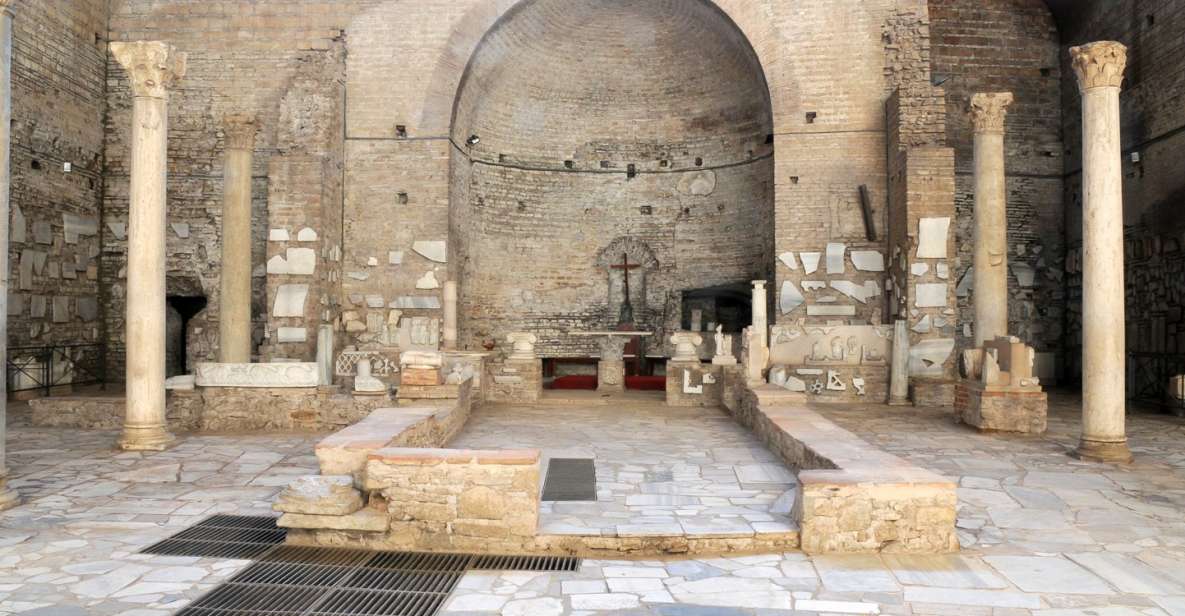
Your visit is centered on the Catacombs of Domitilla, an underground burial ground connected to land originally linked to Flavia Domitilla and donated to her freedmen. Flavia Domitilla is described as related to the imperial family, with family connections reaching back to Flavio Clemente, consul in 95 AD. That kind of background helps you understand why the site doesn’t feel like a random burial area—it’s tied to real social rank and later religious shifts.
The tour takes you down beneath the busy streets, where you’ll experience the cold, stone atmosphere that preserves centuries of burial history. The provided info says the descent is 16km beneath the streets. Even if the number sounds surprising, what you’ll feel right away is the height change: the air gets cooler, the light changes, and your attention narrows to what the guide points out.
The catacomb itself is described as being divided into two main levels. That structure is important because it explains why you’ll hear different historical phases while you’re underground: pagan burials first, Christian re-use later, and then later transformations tied to martyrs and papal work.
Hypogeum of the Flavians: where pagan space becomes Christian
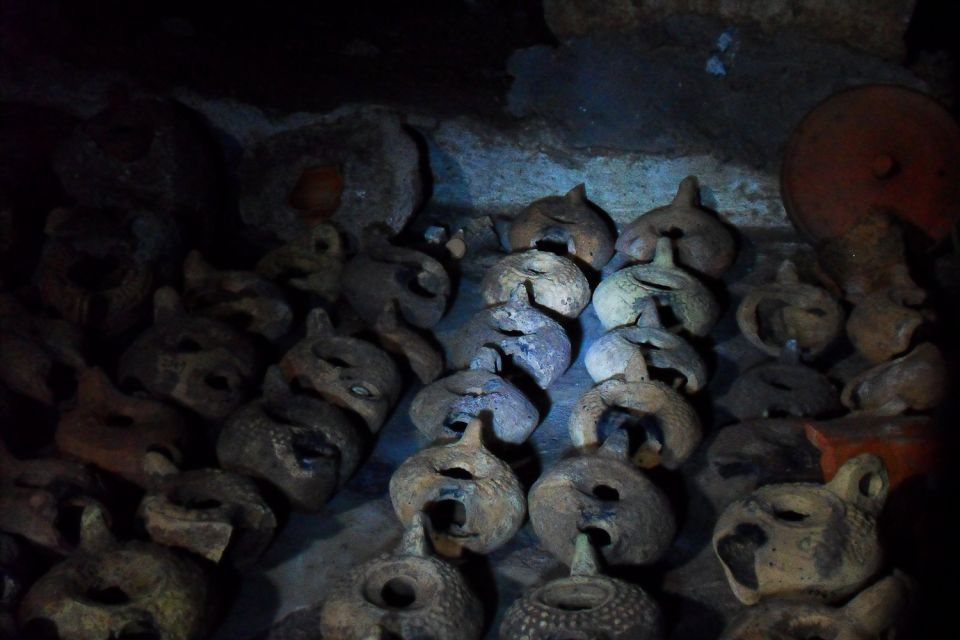
One of the most interesting parts of Domitilla is the way the site’s identity evolves. The area called the Hypogeum of the Flavians is where historians have discussed tomb identifications linked to the Christian members of the Flavia Domitilla family. At the same time, there’s also a pagan hypogeum dating roughly from the late 2nd to early 3rd century that later became Christian.
So what does that mean for what you’ll see? You’re not just looking at “old” art. You’re looking at a space that got reinterpreted. Christian communities expanded and adapted existing underground areas, and that can show up in the way frescoes and burial use change over time.
This is the kind of history that’s hard to learn from plaques alone. A good guide helps you connect the dots: why a burial chamber could start in one context and later serve a different one. You’ll also hear about the Hypogeum’s significance in understanding early Christian presence tied to influential Roman families.



Martyrs Nereus and Achilleus, the crypt, and the papal basilica
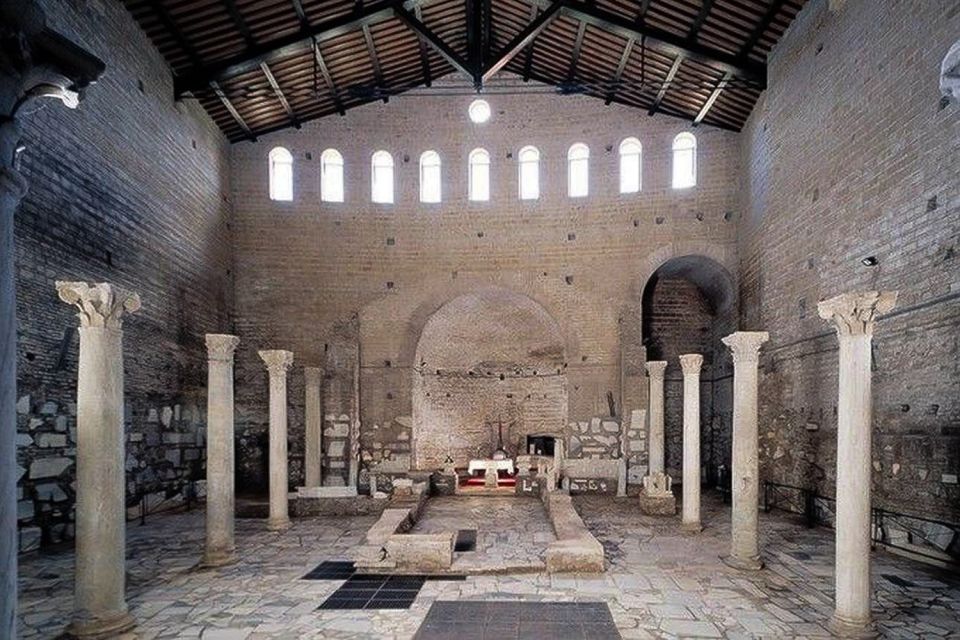
Later in the story, the catacombs become connected to the martyrs Nereus and Achilleus. The info you’re given explains that their bodies were placed in a crypt on the second floor toward the end of the third century. That detail matters because it’s when the site’s religious importance deepens.
Then comes the papal phase: Pope Damasus (366–384) is credited with transforming that crypt into a small basilica. After that, Pope Siricius (between 390 and 395) is credited with enlarging it until it reached its current size.
This part is one of the reasons Domitilla stands out. You get an underground burial setting, but you also get a sense of architecture and sacred function. It’s not just a corridor of graves; it’s a place that grew into an organized space of worship tied to revered figures.
If you’re a fan of Rome’s layered time periods, this section is where you feel the site stepping from private burial into public religious meaning—without leaving the underground world.
Frescoes and meaning: pagan and Christian artwork in the same breath
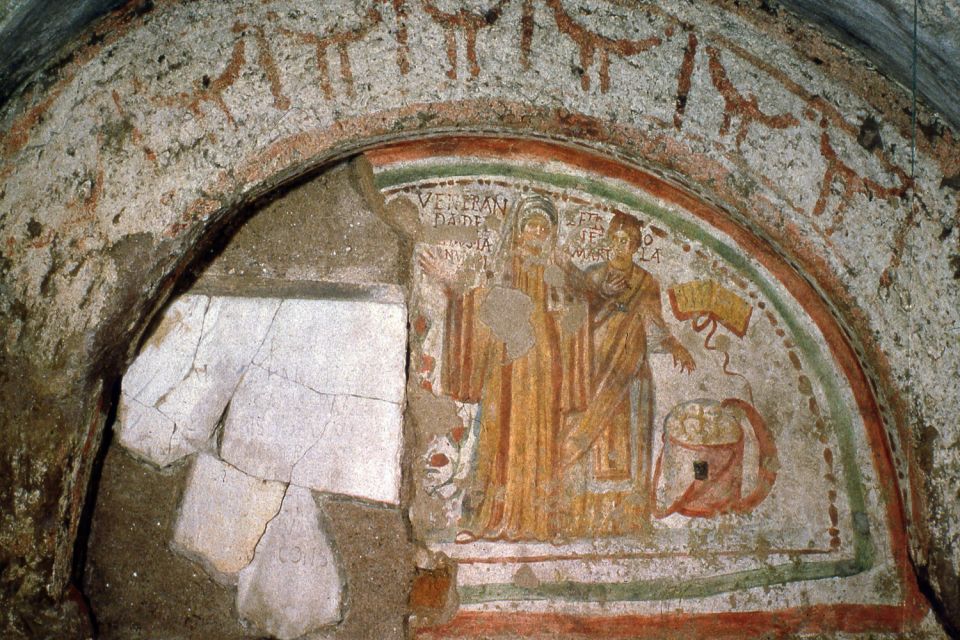
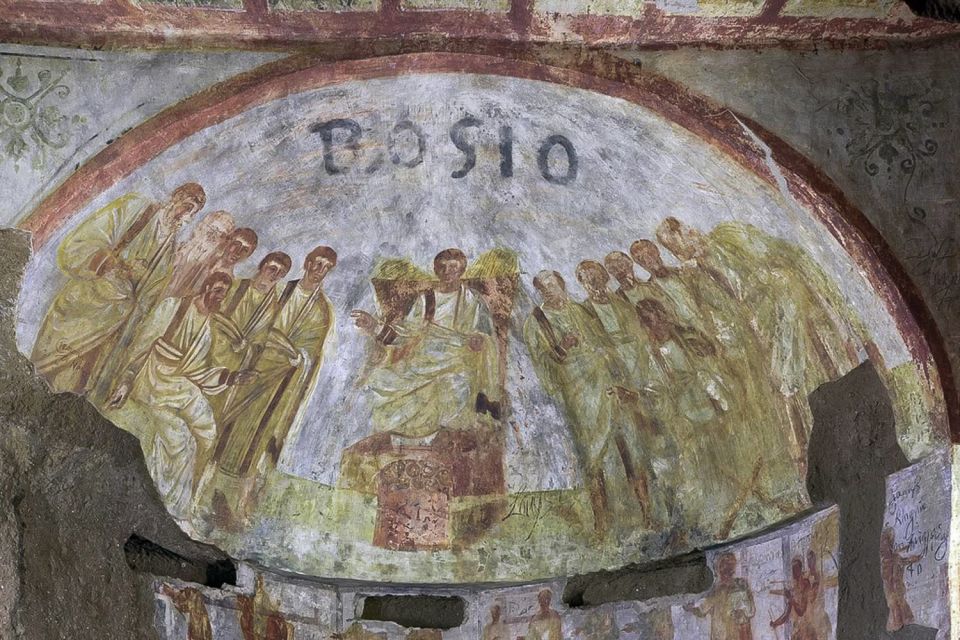
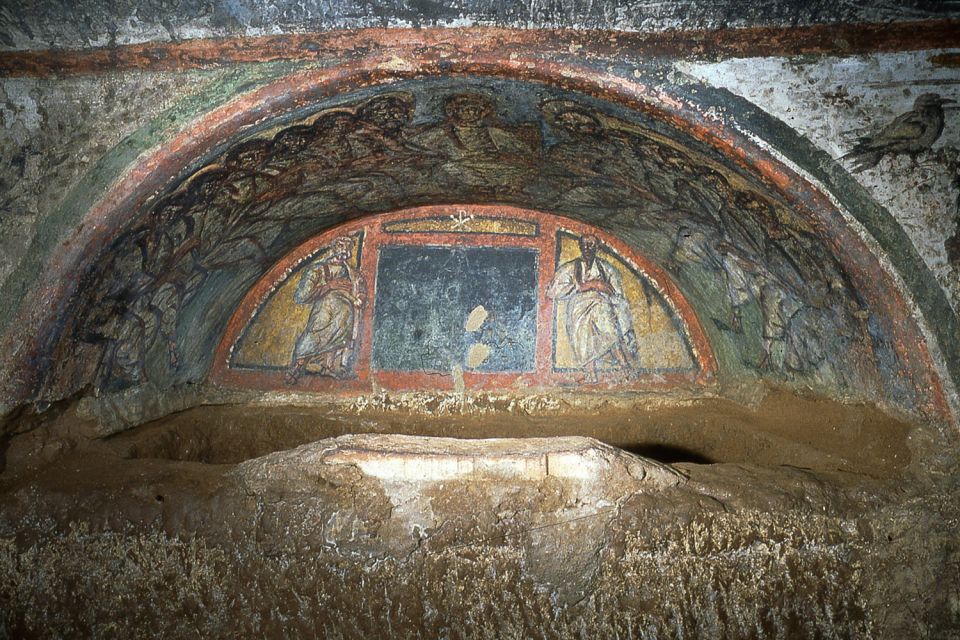
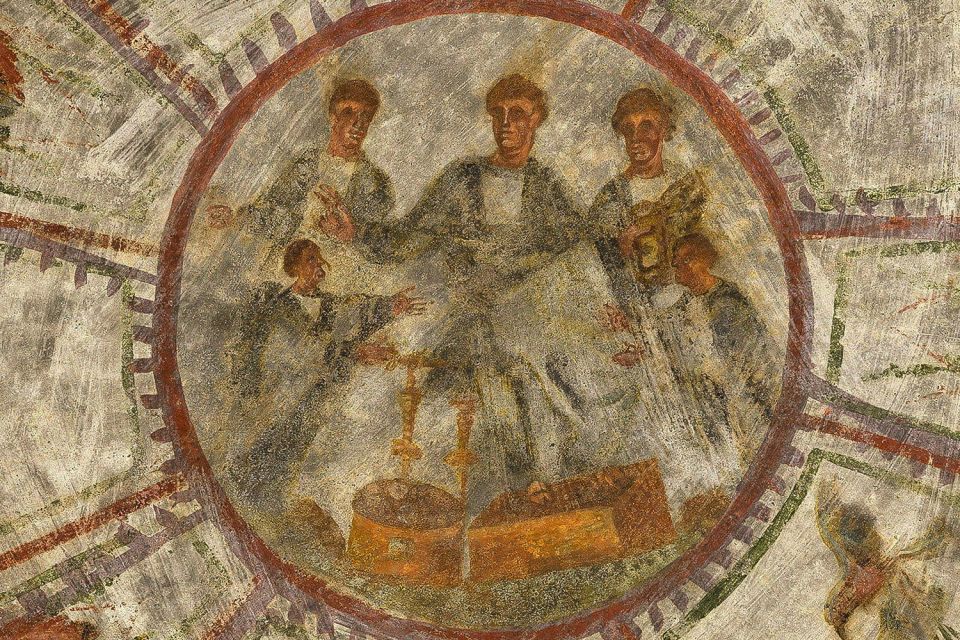
The tour highlights a unique mixture of frescoes: pagan and Christian imagery side by side. That’s a big deal because it reflects real social change. In the earliest centuries of Christianity, believers didn’t always build entirely new visual worlds right away. Instead, they often adapted existing Roman art languages and burial spaces to express new beliefs.
What you’ll want from your guide here is translation. Frescoes in dim light can be hard to interpret, and your eyes might just register color and shapes unless someone points out what’s actually significant. The tour’s goal is to help you read these images in context, not just admire them.
The experience also includes a focus on how burial grounds for Christian martyrs were treated with sanctity. That helps you see the site as more than ancient décor. It’s a functional sacred landscape where art, memory, and reverence were tied to burial practices.
Restoration talk you’ll notice long after you leave
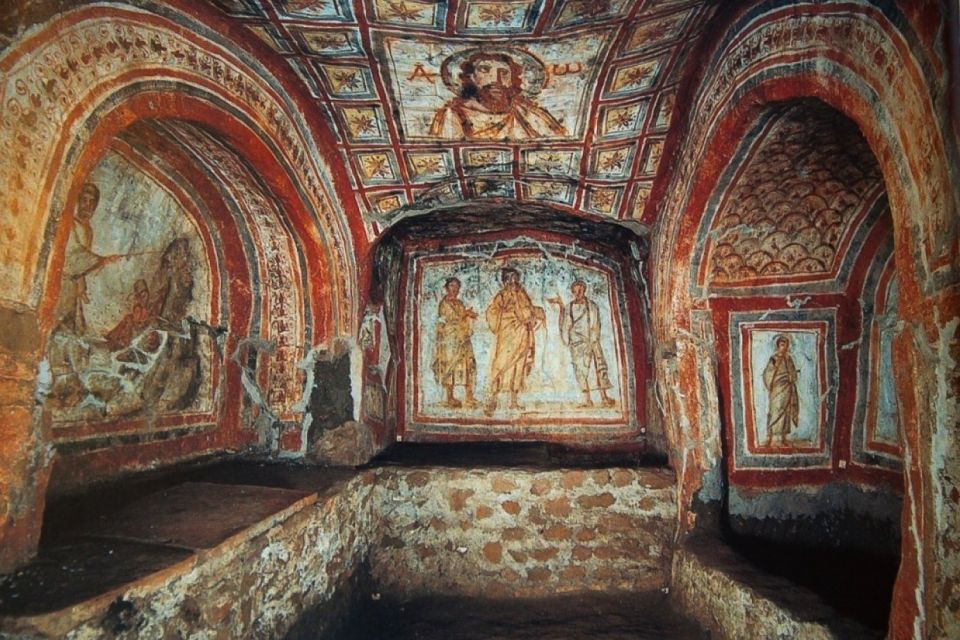
Another standout is the guide’s explanation of restoration work. Underground wall surfaces can be fragile, and frescoes in particular are sensitive to changes in humidity, light, and touch. Even if you’re not a conservation nerd, you’ll feel why restoration matters once you realize how much is being protected for future visitors.
This is where the best guides do more than lecture. They connect restoration to what you actually see: why surfaces look the way they do, and what restoration is trying to preserve rather than rewrite.
It’s also where you’ll understand the site’s “chilling aura” isn’t just mood. It’s the combined effect of cold stone, preserved surfaces, and a burial environment designed for a kind of permanence. The restoration work is trying to keep that environment’s traces readable.
Practical tips: clothes, no photos, and how to time your visit
Bring comfortable clothes. Underground spaces tend to stay cool, and you’ll be on your feet through corridors and chambers, so sturdy, comfortable footwear helps.
Photography is not allowed inside. That rule changes how you should prepare mentally. Instead of relying on images, plan to remember shapes and guided explanations. If you like taking notes, this is a great place to jot down names like Flavia Domitilla, Nereus, Achilleus, and the popes credited with changes to the basilica.
For meeting logistics, the guidance is simple and strict: go directly to the ticket office of the catacomb and show your reservation at least 10 minutes before your scheduled tour. Underground tours don’t wait forever, and arriving early reduces stress in an area where you might not want to rush around.
Group size and duration are your friend here: with only up to 10 people and a set 30-minute visit, you can plan your day around it. The risk is missing the start time and losing your slot, so be realistic about transit time.
Who should book this Domitilla catacomb tour
This tour fits well if you want a guided way to understand Rome’s underground world in a short time frame. It’s also ideal for people who like art history that has a human backbone—family ties, martyrs, and papal involvement—rather than only general background.
Because it’s underground, it’s not suitable for people with mobility impairments or wheelchair users. If mobility is a concern, you’ll need a different plan.
Language options (Italian and English) make it workable for most visitors. If you’re traveling as a couple or solo and want a guided story without crowd pressure, the small-group format supports that.
Finally, if you’re also hitting other Roman highlights, Domitilla works as an atmospheric contrast. You get underground history without competing with lines at daylight monuments.
Should you book the Catacombs of Domitilla tour?
Yes, you should book this if you want a focused, guide-led introduction to one of Rome’s biggest underground cemeteries. The price is reasonable for a guided visit that includes entrance fees, and the story is clear: Flavia Domitilla’s connections, pagan-to-Christian changes, martyrs Nereus and Achilleus, and the basilica work credited to Popes Damasus and Siricius.
Skip it only if you’re looking for a long, self-paced exploration of the full network, or if you need wheelchair-friendly access. And if you hate tours where you can’t take photos, remember that the no-photography rule is part of the experience.
If you like being taught what you’re seeing—especially when art and burial history overlap—this one is a strong use of your time in Rome.
FAQ
How long is the Catacombs of Domitilla tour?
The guided tour is listed as about 30 minutes.
What languages are available for the guided tour?
Live guides are available in Italian and English.
Is the entrance fee included in the price?
Yes. Entrance fees are included, along with the tour guide.
Can I take photos inside the catacombs?
No. Photography is not allowed inside.
Where do I meet for the tour?
Go directly to the ticket office of the catacomb and show your reservation.
When should I arrive before the scheduled tour?
Arrive at least 10 minutes before your scheduled tour time.
How big is the group?
The tour is a small group, limited to 10 participants.
Is it accessible for people using wheelchairs?
No. It is not suitable for people with mobility impairments or wheelchair users.