REVIEW · ROME
Rome: City Highlights Private Golf Cart Tour
Book on GetYourGuide →Operated by RomeByCart · Bookable on GetYourGuide
Rome clicks into place fast on wheels. This private golf cart tour lets you cover Rome’s biggest sights without wearing down your feet, and it still feels personal thanks to route flexibility with your guide. I especially like the mix of major landmarks plus the kind of church and art stops that give you context, not just photos, and the included Roman cuisine tasting adds a real-world flavor of the city.
The main thing to consider is that most stops are built around photo time, not full museum or monument visits, and entrance fees are not included. So if you want to go inside the Pantheon, the Colosseum, or Vatican sites, plan on buying tickets separately.
The best part is that you get a local driver-guide rhythm for your day. And if you care about hearing the stories, you’ll want to position yourself where you can hear clearly as you move between stops.
In This Review
- Key Points to Know Before You Go
- Why a Golf Cart Works So Well for Rome’s Big Stops
- Getting Started: Pickup, Your Pace, and How the Cart Time Feels
- Colosseum Photo Stop: Fast Photos Plus the Story Behind the Stone
- Circus Maximus and Giardino degli Aranci: Ancient Power, Then a View Break
- Altar of the Fatherland and Piazza Navona: Big Squares, Clear Contrast
- Pantheon and Spanish Steps: Art You Can Spot, History You Can Hear
- St. Peter’s Square and Janiculum Hill: Religious Rome Meets Sunset Views
- Sant’Ignazio di Loyola and St. Louis of the French: Church Stops That Don’t Feel Random
- The Roman Food and Wine Taste Stop: A Real Break, Not a Random Snack
- What You Learn on the Cart: Myths, Major Artists, and Why Rome Keeps Changing
- Price and What You Get for $49 in 3 Hours
- Who This Tour Fits Best
- Should You Book RomeByCart’s Golf Cart Highlights Tour?
- FAQ
- How long is the Rome: City Highlights Private Golf Cart Tour?
- What is the price per person?
- Is this tour private?
- Can I choose where I’m picked up and dropped off?
- What stops are included during the tour?
- Is the food tasting included?
- Are entrance fees included for attractions?
- What languages are available for the guide?
- What should I bring?
- Is free cancellation available?
Key Points to Know Before You Go
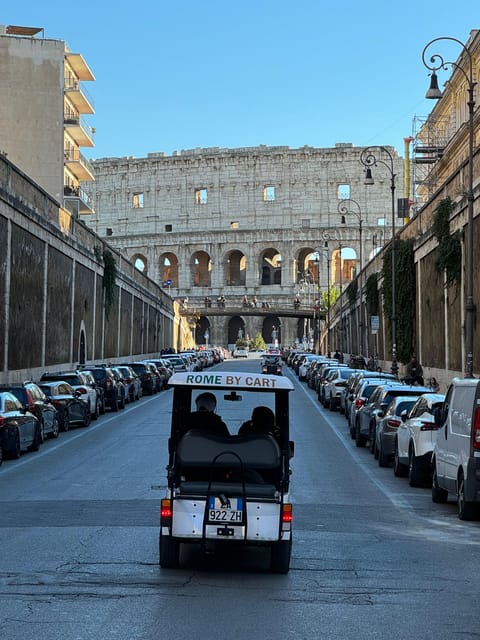
- Private golf cart flexibility: Your route can be adjusted around what you care about most.
- A tight highlights loop in 3 hours: Long sights, short stops, and smart timing.
- Food tasting built in: You get a real Roman snack break, not just a view.
- Church art and Baroque giants: You’ll hear stories tied to Michelangelo, Bernini, Borromini, and Caravaggio.
- A guide who steers the day: Guides like Stefano, Valerio, Massi, and Fabio are repeatedly praised for energy and matching the group.
- Pickup and drop-off in Rome: Less fuss means more time seeing.
Why a Golf Cart Works So Well for Rome’s Big Stops
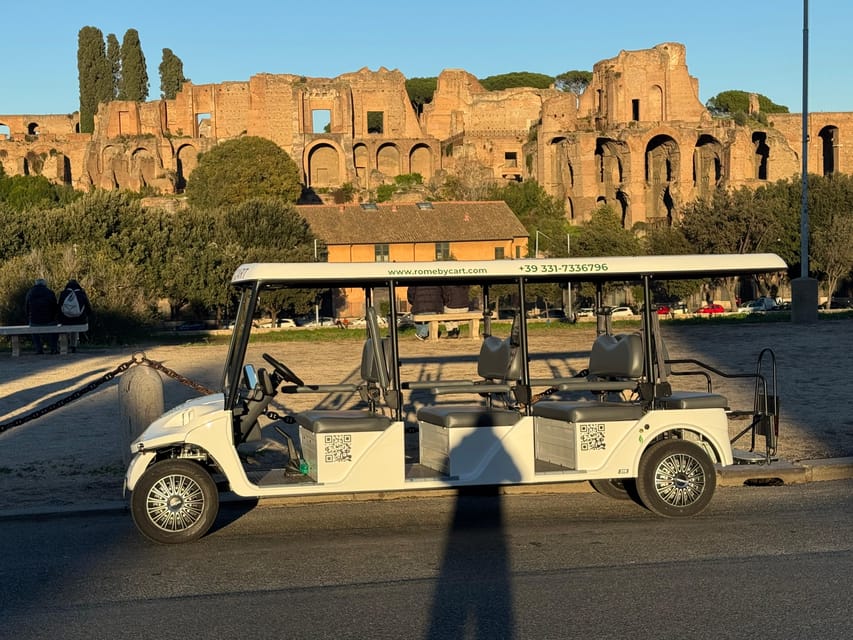
Rome is amazing, but it can also be noisy, crowded, and tiring. This tour’s formula is simple: hop into a golf cart, get dropped right near the action, and use the guide’s knowledge to understand what you’re seeing.
For you, that means two big wins. First, you cover key sights that normally require a lot of walking and backtracking. Second, you get a guided narrative as you pass landmarks like the Colosseum, Circus Maximus, and the Pantheon area, so the city feels less like random monuments and more like one connected story.
One practical note: you will have some walking for photo moments and getting from the cart to viewpoints. I’d wear comfortable shoes and keep your camera ready, because several stops are timed for the best angles.
You can also read our reviews of more tours and experiences in Rome.

Getting Started: Pickup, Your Pace, and How the Cart Time Feels
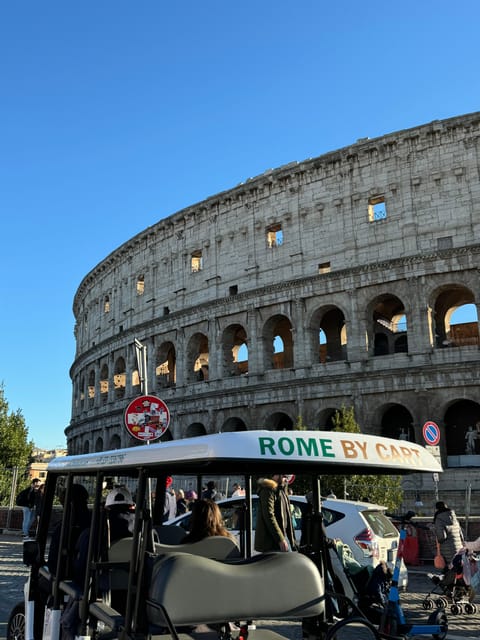
The tour starts with pickup in Rome and ends back in Rome. Before you roll, you can choose your pickup and drop-off points, and your guide helps shape the route for your interests.
This is one of the reasons the tour works well for different types of groups. Families can move at a calmer pace between stops. First-timers can get the “what matters most” overview fast. Even if you’ve been in Rome before, a private cart lets you target specific areas you’d otherwise skip because the logistics are annoying on foot.
It’s also worth knowing what the structure feels like on the ground: the itinerary is built around photo stops that range from about 10 to 20 minutes. You’ll see plenty, but you’re not going to linger for hours at one location. If your dream day is slow and museum-heavy, pair this with one or two deeper visits on separate days.
Colosseum Photo Stop: Fast Photos Plus the Story Behind the Stone
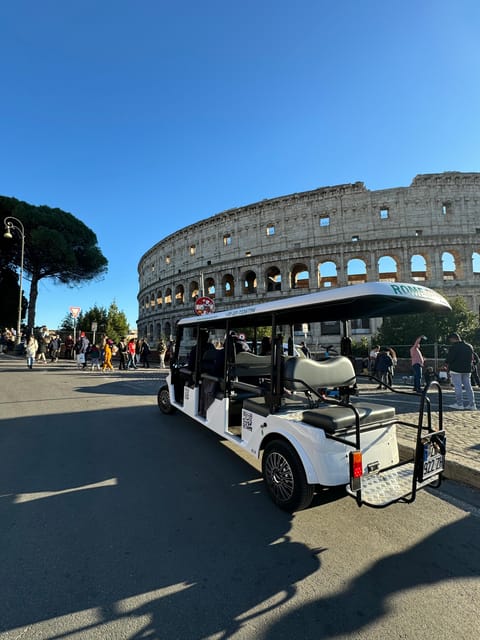
Your first major stop is the Colosseum, with about 20 minutes for photos. Even if you don’t go inside, it’s a strong anchor for the day because your guide can frame what you’re looking at and why it mattered in Roman life.
What I like about starting here is that it sets expectations for the rest of the route. Once you understand the Colosseum’s role as a centerpiece of public entertainment, Circus Maximus and the surrounding ancient sites start to make more sense.
The only drawback is timing. You won’t have the option to roam freely around the entire site the way you would on a dedicated Colosseum visit. If you want that deeper experience, plan those ticket-based hours separately.
Circus Maximus and Giardino degli Aranci: Ancient Power, Then a View Break
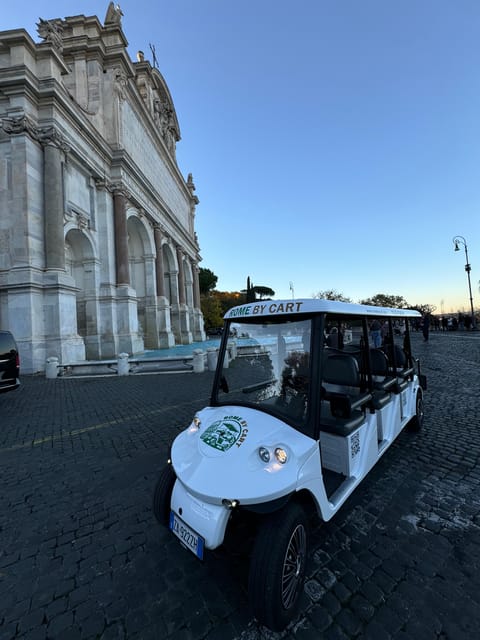
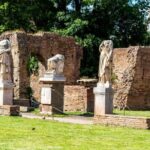
Next you head to Circus Maximus for a quick photo stop (about 10 minutes). This is one of those places where it helps to have someone explain what the space was built for, because from the outside it doesn’t look like an obvious “monument” in the way the Colosseum does.
Then the route turns to Giardino degli Aranci (Orange Garden) for about 15 minutes. This stop is more about the moment than the architecture details. You get a classic Roman overlook vibe—breathing room after the dense ancient core—so your day doesn’t feel like nonstop “look but don’t touch.”
If you’re traveling in warm weather, this is a good point to slow down, hydrate, and use the shade where you can. The tour encourages you to bring sunglasses, a hat, and sunscreen, and that advice becomes real the longer you’re out.
Altar of the Fatherland and Piazza Navona: Big Squares, Clear Contrast
You’ll pause at Altar of the Fatherland for about 15 minutes. This area is all about scale and ceremony, and your guide’s job is to connect the look of the place to the layers of Rome—ancient foundations, later eras of power, and modern civic identity.
After that, it’s Piazza Navona for around 20 minutes. Piazza Navona is the kind of square where you can feel Rome’s street-life energy. What makes it work on a cart tour is that you get just enough time to take in the setting and understand what makes the space special historically and artistically, without turning it into a long slog.
If your group includes people who hate crowds, this is still a busy part of Rome. The cart helps you reach it with less friction, but you’ll still be in the center of the action for your photo time.

Pantheon and Spanish Steps: Art You Can Spot, History You Can Hear
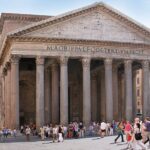
The Pantheon is next, with about 15 minutes. You’ll get the views and context, and this is one of the stops where church and art references start to feel more concrete. Your guide also connects the city’s art world—names like Michelangelo, Bernini, Borromini, and Caravaggio—to the places you’re seeing.
Then you roll to the Spanish Steps for about 20 minutes. This is a great stop for photos at different angles, and it’s also an easy win for groups of mixed ages. If someone wants a shorter day, Spanish Steps still delivers famous Rome energy without demanding a long walk.
One small practical tip from real-world experience: if your cart timing puts you near the back of the group, ask early about how you’ll hear the guide. Several guides get praised for storytelling, but hearing it clearly can vary depending on where you’re seated.
St. Peter’s Square and Janiculum Hill: Religious Rome Meets Sunset Views
You’ll stop at Saint Peter’s Square for about 20 minutes (photo time). This isn’t just about seeing a famous spot—it’s where your guide can connect Roman public life to the influence of papal patrons and the broader story of Rome changing over time.
Then the tour climbs to Janiculum Hill for about 20 minutes. This is where the day often turns scenic. Janiculum gives you a classic vantage point where the city looks like a spread of layers rather than one crowded street.
If you’re visiting during a season with nicer late light, Janiculum is the kind of stop that can make your whole afternoon feel extra worth it. Even if you’re not chasing sunset specifically, the views help you reset your eyes.
Sant’Ignazio di Loyola and St. Louis of the French: Church Stops That Don’t Feel Random
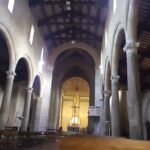
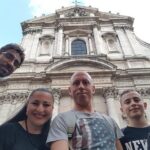
Next comes Church of Sant’Ignazio di Loyola for about 10 minutes, followed by Church of St. Louis of the French for about 15 minutes. These two stops are valuable because they turn “we passed a church” into “we understood why this church matters.”
Your guide’s explanations focus on what you can notice: paintings, sculptures, temples, frescoes, and mosaics from different eras. This is also where stories matter. The tour is designed to tie religious spaces to Roman myths, patronage, and customs—so the art isn’t just decoration. It becomes part of the city’s living memory.
If you’re the type who usually skips churches because you don’t know where to look, this portion is a strong reason to book. The guide helps you point your attention at the details you’d otherwise miss.
The Roman Food and Wine Taste Stop: A Real Break, Not a Random Snack
The tour includes a tasting at selected local eateries. This is one of the highest-value parts of the experience because it’s a short chance to eat like a local, guided by someone who knows the area.
From the way the tasting is described, it isn’t just a single cookie-and-coffee moment. People have mentioned cheese-and-wine style stops, deli-style samples, and even kid-friendly treats like chocolate-covered espresso beans. The exact items can vary, but the pattern stays the same: you taste Roman flavors while you’re already out seeing Rome’s sights.
Practical idea: if you don’t like single-use plastic, bring your own small cups or reusable option for the wine tasting. It’s a small habit that can matter to some travelers, and it’s easy to do.
Also, this is the best time to ask the guide for food recommendations after the tour. You’ll leave with better instincts about where to eat and what to look for.
What You Learn on the Cart: Myths, Major Artists, and Why Rome Keeps Changing
Rome’s story is layered, and the value of a guided cart tour is how your guide connects dots. You’ll hear about ancient Romans and their myths, papal patrons, and Roman customs—then your guide brings those stories back to the places you see.
Art is a big thread through the tour. The tour highlights names like Michelangelo, Bernini, Borromini, and Caravaggio. Even if you’ve heard those names before, you’ll likely find the connections start to click when someone points to the kind of work tied to what you’re looking at.
This matters for you because it changes what the city feels like. Instead of random landmarks, Rome becomes a set of repeating themes: power, religion, public entertainment, and the human urge to make beauty in stone.
Price and What You Get for $49 in 3 Hours
At $49 per person for a 3-hour private tour, the best way to think about value is coverage plus added experiences. In a short window, you get multiple iconic stops, a guided route with flexibility, pickup and drop-off, and an included food tasting.
What you don’t get is paid entry into attractions. Entrance fees aren’t included, so if you want to go inside big-ticket sites, you’ll want to budget separately. But for many travelers, that’s exactly why this works: it gives you the overview and context that makes the later ticketed visits smarter.
The tour also tends to feel like a practical family-friendly option. People have specifically highlighted it as a way to move easily around Rome and reduce stress for kids and older travelers, because you’re not doing long distances on foot.
Who This Tour Fits Best
I’d recommend this tour if you want a first-day orientation, you’ve got limited time, or you don’t want to navigate Rome by yourself under city traffic pressure.
It also fits well if you care about more than surface sightseeing. The church portion and art storytelling are strong for anyone who likes to understand what they’re seeing, not just collect photos.
It may be less ideal if you want full, slow-paced interior visits at every major stop. This tour is built around photo time and brief stops, so consider pairing it with one or two deeper museum or basilica visits on separate days.
Should You Book RomeByCart’s Golf Cart Highlights Tour?
If your goal is to get your bearings fast, see the headline sites, eat well, and still come away with better context, I think it’s a smart buy. The private format with route flexibility is the secret sauce, and the tasting is the bonus that turns the day from sightseeing into a small slice of daily Roman life.
If you’re okay with photo stops and you plan ahead for entrances you want to pay for, this tour can save you time and energy. And if you can request a guide, names like Valerio, Fabio, Massi, and Stefano show up often for a reason: people mention engaging storytelling and a friendly, accommodating style.
FAQ
How long is the Rome: City Highlights Private Golf Cart Tour?
It runs for 3 hours.
What is the price per person?
The price is $49 per person.
Is this tour private?
Yes, it’s a private golf cart tour.
Can I choose where I’m picked up and dropped off?
Yes. You can choose your pick-up and drop-off point, and your guide can help shape the route.
What stops are included during the tour?
The tour includes photo stops at places such as the Colosseum, Circus Maximus, Giardino degli Aranci, Altar of the Fatherland, Piazza Navona, the Pantheon, Spanish Steps, Saint Peter’s Square, Janiculum Hill, and churches including Sant’Ignazio di Loyola and St. Louis of the French.
Is the food tasting included?
Yes. The tour includes a tasting of local cuisine at selected local eateries.
Are entrance fees included for attractions?
No. Entrance fees to attractions are not included.
What languages are available for the guide?
The guide is available in English, Spanish, Italian, and Portuguese.
What should I bring?
Bring comfortable shoes, sunglasses, a hat, a camera, and sunscreen.
Is free cancellation available?
Yes. You can cancel up to 24 hours in advance for a full refund.