REVIEW · ROME
Rome City, Pantheon, and Trevi Fountain Walking Tour
Book on Viator →Operated by Republic Experiences · Bookable on Viator
Rome clicks fast on this walk. In about two hours, you’ll get a tight route that connects the biggest names and a few lesser-known corners, with Roman history stories you can actually use as you wander. I especially liked the max 15-person group size, which keeps the pace human and the questions welcome.
One thing to consider: this is still a real walking tour, and it’s not recommended if you have foot injuries.
You can pick a morning or afternoon departure, and the tour runs in English with a mobile ticket. It also starts and ends in very convenient spots, so you’re not stuck trying to backtrack for dinner plans.
In This Review
- Key highlights at a glance
- Why This 2-Hour Rome Walk Helps You Start Smarter
- Piazza d’Aracoeli and Piazza Venezia: Reading Rome’s Layers at Street Level
- Galleria Sciarra: The Art Nouveau Passage Most People Miss
- Trevi Fountain: What You Notice When the Guide Sets the Scene
- Chiesa di Sant’Ignazio di Loyola: The Baroque Church With the Fake Dome Trick
- Pantheon: The One Stop You Must Budget for Separately
- Piazza Navona: Three Fountains, One Great Dinner Setup
- Price and Value: Why $24.20 Can Make Sense
- Guides Make the Difference: The Personal Style You’ll Hear on This Walk
- Pace, Walking, and When to Choose Morning vs Afternoon
- Where You Start and Where You Finish (So You Don’t Lose Time)
- Who Should Book This Tour?
- Should You Book It?
- FAQ
- How long is the Rome City, Pantheon, and Trevi Fountain Walking Tour?
- What does the tour cost?
- How many people are in the group?
- What languages is the tour offered in?
- Is Pantheon admission included?
- Where does the tour start and end?
- Is the tour suitable if I have trouble walking?
- Can I cancel and get a full refund?
Key highlights at a glance
- Max 15 people: more personal attention than the giant conga-line tours
- Two hours in the right places: Piazza Venezia, Trevi Fountain, Sant’Ignazio, Pantheon, and Piazza Navona
- Plan-friendly timing: morning or afternoon departures to match your Rome rhythm
- Free admission for most stops: you focus your budget on the Pantheon only
- A guide who sets context: you learn what you’re looking at, not just where to stand
- Ends where you want dinner: Piazza Navona restaurant and bar area
Why This 2-Hour Rome Walk Helps You Start Smarter
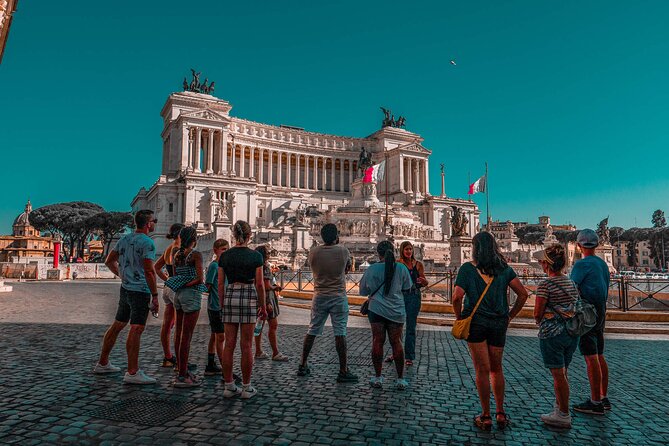
Rome can feel like sensory overload on day one. This tour gives you a route that makes the city less random, with a guide who helps you connect what you see to the bigger story of Rome’s built environment. You’ll leave with a mental map, plus a sharper eye for details you’d normally walk past.
I like that the tour is short enough to stay pleasant, but long enough to cover real ground on foot. And because the group tops out at 15, you’re more likely to hear everything clearly and get answers to questions.
You can also read our reviews of more tours and experiences in Rome.


Piazza d’Aracoeli and Piazza Venezia: Reading Rome’s Layers at Street Level
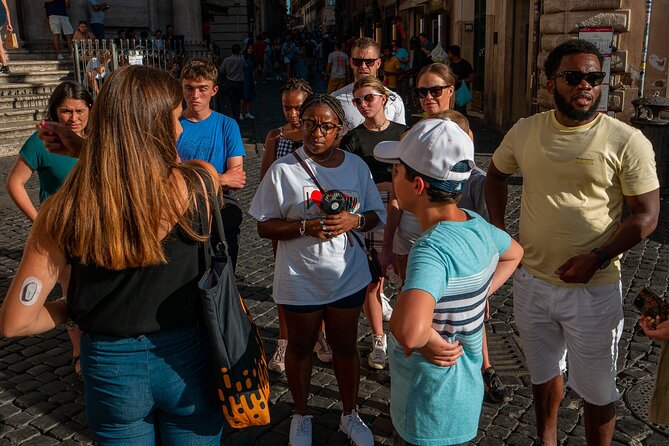
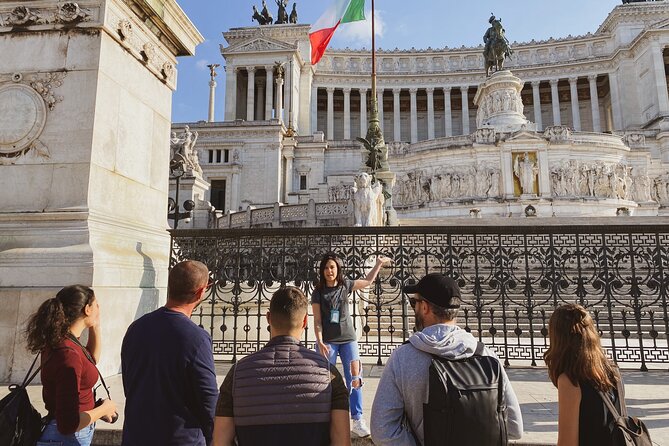
The tour kicks off at Piazza d’Aracoeli (near Via di S. Venanzio). From there, you move into Piazza Venezia / Ancient City, where the guide frames the space as a timeline you can walk through.
What makes this stop work is the “Rome in layers” angle. You’ll connect ancient Roman power (the forums associated with emperors) to later eras that left their mark here, including Renaissance and Napoleonic Rome. In plain terms, you start seeing why the city looks the way it does, even when you’re standing in the middle of a modern square.
Time here is about 20 minutes, which is enough to get oriented without dragging you through a lecture.
Galleria Sciarra: The Art Nouveau Passage Most People Miss
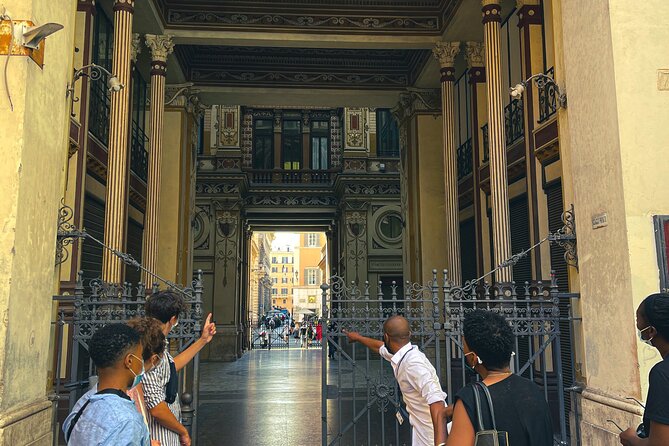
Next comes Galleria Sciarra, often described as a best-kept secret, and it’s easy to see why. This 19th-century building is decorated with art nouveau frescoes and paintings, giving you a different Rome than the one you usually photograph from the street.
This is the kind of stop that changes how you look at Rome. Instead of only chasing the headline monuments, you start noticing the architecture details tucked into passages and side streets. The time here is around 10 minutes, so it feels like a quick palate cleanser between big-ticket sights.
If you like the idea of Rome as a city of surprises, this is where you’ll feel it.
Trevi Fountain: What You Notice When the Guide Sets the Scene
Then you hit the moment most people come to Rome for: Trevi Fountain. You’ll have about 20 minutes there, and the guide helps bring the sculpture to life—especially as it’s lit up.
Trevi Fountain is famous, but it’s still worth going with context. A good guide helps you understand what you’re looking at so the fountain becomes more than a photo stop. You’ll also get guidance on how to experience it during your time there, since timing and lighting matter a lot for a place like this.
This is one of those stops where you’ll likely want extra minutes later. But even with the planned time, you’ll come away with the “okay, I get why this place is iconic” feeling.
Chiesa di Sant’Ignazio di Loyola: The Baroque Church With the Fake Dome Trick
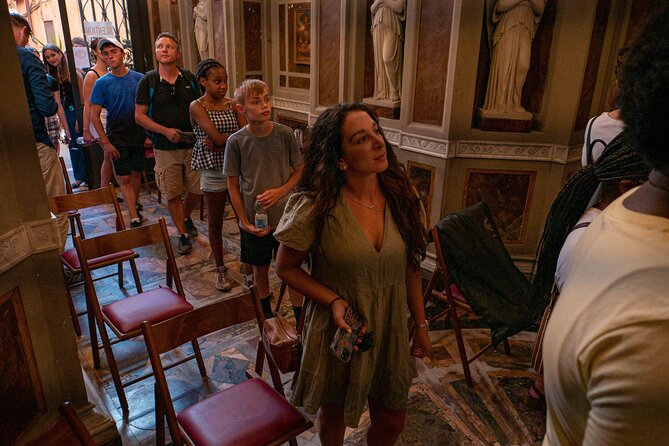
From Trevi, you move into Chiesa di Sant’Ignazio di Loyola, one of Rome’s major Baroque churches. You’ll get about 15 minutes here, and the big draw is the artificial dome—a famous illusion element.
What to expect is a shift in pace and atmosphere. You’re not hunting for the next outdoor landmark; you’re stepping into a space designed to amaze. The guide explains what you’re seeing so the dome isn’t just a visual gimmick—it’s part of the Baroque idea of spectacle and emotion.
If your Rome includes a few church stops, this one is a strong choice because it’s structured around a specific visual effect, not vague “it’s pretty” comments.



Pantheon: The One Stop You Must Budget for Separately
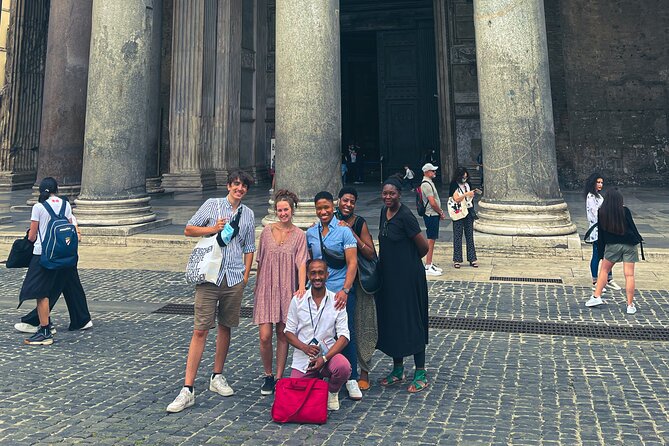
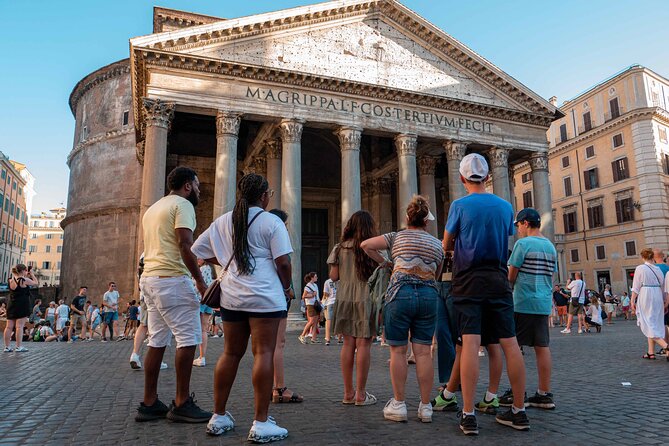
The tour’s centerpiece is the Pantheon, with about 20 minutes on-site. It’s described as one of ancient Rome’s best-preserved temple spaces, later converted into a church. The guide’s job here is to help you understand the design so it lands as architecture, not just an old building.
Here’s the key planning point: Pantheon admission is not included. In other words, you should expect to pay for access separately, and you’ll want to factor that into your day. The tour gives you the guided experience at the right moment, but it doesn’t cover entry into the building.
If you want to avoid stress, treat this as your “main commitment” stop. Once you’re in the flow of the tour, the rest tends to feel easier because you’re not juggling ticket decisions on the fly.
Piazza Navona: Three Fountains, One Great Dinner Setup
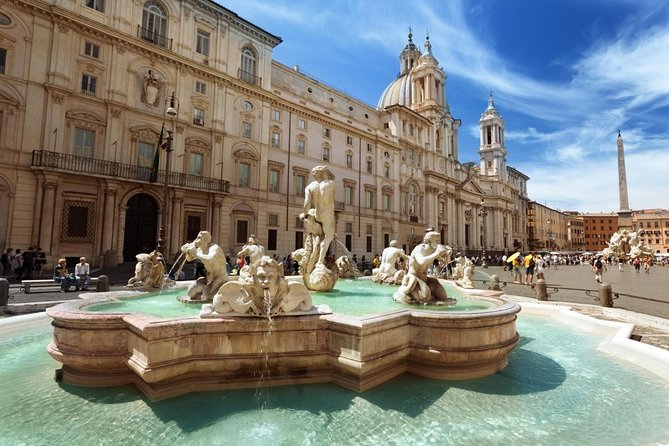
You end in Piazza Navona, with about 15 minutes there. This square is known for its lively feel and its three magnificent fountains, plus the Baroque church Sant’Agnese in Agone.
What I like about finishing here is practical. The tour closes in an area renowned for restaurants and bars, so your next step is obvious: food, a drink, and time to linger. You’re not stuck asking, okay now where do we go?
Also, Piazza Navona is an ideal place to decompress after walking. Even if you’re tired, you can still enjoy the energy of the square without pushing yourself to sightsee harder.
Price and Value: Why $24.20 Can Make Sense
At $24.20 per person for about two hours, the value mostly comes from how the guide structures your attention. You’re not just moving between landmarks; you’re learning enough context that the stops make sense when you’re back out on your own.
Most admissions on this route are listed as free (everything except the Pantheon). That means you’re spending money on what matters most instead of paying little fees at every corner. The Pantheon is the one paid access stop to plan for, and once you account for that, the overall cost usually feels reasonable for a guided walkthrough.
One more value point: the group cap at 15 makes the experience more conversational. If you like asking questions—about why a place was built, or why it looks the way it does—you’ll get more back from your time.
Guides Make the Difference: The Personal Style You’ll Hear on This Walk
The tour’s small size helps you hear the guide, but the guide quality is what turns a list of sights into a real experience. From the guide names I’ve seen associated with this tour, you can expect a range of styles that still focus on facts, pacing, and personality.
For example, Anna is praised for being friendly and patient, with a sense of humor that keeps the mood light while still covering the route. Dan comes up for people who want deeper explanations and room for questions. Domenica is repeatedly mentioned as a great option if you already saw the big Vatican and Colosseum sites and want history beyond the obvious track.
Other names linked with this experience include Sharon, who helps first-timers get their bearings, and Pollina, who’s credited with pointing out details and stops you might otherwise miss. Guides like Vlad and Victor are noted for keeping the tour engaging for the full group size, even when it’s small enough to talk one-on-one.
If you care about the guide vibe—fun, relaxed, or more structured—this is one tour where your guide really shapes the day.
Pace, Walking, and When to Choose Morning vs Afternoon
This is a walking itinerary, and while it’s only about two hours, you should be comfortable moving through central Rome at a steady pace. The tour is not recommended if you have foot injuries, so be honest with yourself about your limits.
The good news is that it doesn’t feel like an all-day grind. It’s broken into short, focused segments: around 10 to 20 minutes at each stop, with enough movement between places to keep your energy up.
If you’re choosing between departures, I’d match it to the rest of your plans. Morning works well when you want to start the day with orientation. Afternoon can be a smart move if you’re saving indoor time and want to end around the time dinner becomes tempting.
Where You Start and Where You Finish (So You Don’t Lose Time)
You begin at Piazza d’Aracoeli, at Via di S. Venanzio, 8. The tour finishes at Piazza Navona, which is exactly where you want to be if you plan to eat and keep walking afterward.
That start-end setup matters in Rome. When your route ends in a major square, you avoid the post-tour shuffle and can transition straight into a meal with a view of fountains and historic buildings.
Who Should Book This Tour?
This is a strong fit if you want a guided orientation that hits the essentials plus a couple of quieter architectural moments. It’s especially useful if it’s your first trip and you want your bearings fast, or if you’ve already checked off the ultra-famous sites and want more context in the streets around them.
It’s also a good choice if you like small groups and want a guide who stays friendly and responsive. The tour notes most people can participate, but again, if your feet are an issue, look for another format.
Should You Book It?
I think this tour is worth booking when you want structure without feeling trapped. The route covers the big icons—Trevi Fountain and the Pantheon—plus the kind of in-between stops that help Rome make sense.
Book it if you like walking with a guide so you don’t spend your first days playing catch-up. Just plan for the Pantheon admission separately, wear shoes you can handle for a couple hours on foot, and consider doing it earlier in your trip so the rest of your Rome day trips feel easier.
If that sounds like your style, this is a smart way to start.
FAQ
How long is the Rome City, Pantheon, and Trevi Fountain Walking Tour?
It’s listed as about 2 hours.
What does the tour cost?
The price is $24.20 per person.
How many people are in the group?
The tour has a maximum of 15 travelers.
What languages is the tour offered in?
It’s offered in English.
Is Pantheon admission included?
No. Access to the Pantheon is not included.
Where does the tour start and end?
It starts at Piazza d’Aracoeli (Via di S. Venanzio, 8) and ends at Piazza Navona.
Is the tour suitable if I have trouble walking?
It is not recommended for travelers with foot injuries, but most people can participate.
Can I cancel and get a full refund?
Free cancellation is available up to 24 hours in advance for a full refund. If you cancel less than 24 hours before the start time, the amount paid isn’t refunded.