REVIEW · ROME
Rome Explorer Pass: 2 to 7 Attractions – Includes Colosseum
Book on GetYourGuide →Operated by Go City - EMEA · Bookable on GetYourGuide
Rome can chew up your time fast. This pass is built to cut ticket hassle while you pick your mix of top sights. I like that you can choose 2 to 7 attractions from a long list, instead of being stuck with one fixed schedule. I also like the phone-first system: the digital guide tells you what to do and where to go, so you’re not hunting for details at the last minute.
The big consideration is simple: popular attractions need reservations. If you wait until the week before, you may not get the time slots you want, especially around busy days.
In This Review
- Key takeaways before you buy
- Rome Explorer Pass: how the 2–7 attractions model works
- Colosseum, Roman Forum, and Palatine Hill: what you get and what to watch for
- Vatican Museums and Sistine Chapel: skip-the-line style access and a real timing issue
- Pantheon reserved entrance: fast access to one of Rome’s best interiors
- Big Bus Rome and the Hop-on river cruise: using Rome transit as a sightseeing tool
- Food and small experiences: pizza cooking, gelato stops, and Prati evenings
- St. Peter’s Basilica and Castel Sant’Angelo: pairing spiritual sights with viewpoints
- Other included choices you can plug into your plan
- Reservations and the Go City app: your key to a smooth day
- Price and value: when this pass is worth it
- Who this pass fits best in Rome
- Should you book the Rome Explorer Pass?
- FAQ
- How many attractions are included with the Rome Explorer Pass?
- Does the pass include the Colosseum?
- How long is the pass valid after I start using it?
- Can I start using the pass anytime during my trip?
- Do I need to reserve for attractions?
- What do I need to bring with me?
- Is transport or food included?
Key takeaways before you buy

- You activate once: the pass starts when you use it at your first included attraction, then you have 30 days to finish the rest.
- Colosseum is included: the pass lists Colosseum, Roman Forum, and Palatine Hill entry with an audio tour plan.
- Vatican access can include skip-the-line: Vatican Museums and Sistine Chapel are listed with escorted skip-the-line tickets.
- Pantheon has reserved entrance: you get reserved entrance with an audioguide option (rather than standard walk-up entry).
- You can rest your legs: Big Bus Hop-On Hop-Off (1-day) and a 24-hour river cruise are part of the pass options.
- Some items require reservations: several top add-ons are marked with a reservation requirement in the pass list.
Rome Explorer Pass: how the 2–7 attractions model works

This is a flexible entry pass, not one guided tour. You choose a bundle size—2, 3, 4, 5, 6, or 7 attractions—then you use those entries over a window that starts when you activate the pass.
Here’s the practical rhythm you should expect:
- You activate the pass at any included attraction or tour.
- You then have 30 days to visit the remaining number of attractions you selected.
- Your pass is valid for up to 1 year from the purchase date, but it only counts once activated.
For value, this model works best when you plan smart. You’re not paying for “everything.” You’re picking a handful of experiences that remove line stress and replace the chaos of buying multiple separate tickets.
And since the “best Rome day” is rarely one single monument, the mix-and-match option is the point. You can build around your pace: classic landmarks one day, a food lesson the next, then a boat ride to give your feet a break.
You can also read our reviews of more tours and experiences in Rome.


Colosseum, Roman Forum, and Palatine Hill: what you get and what to watch for

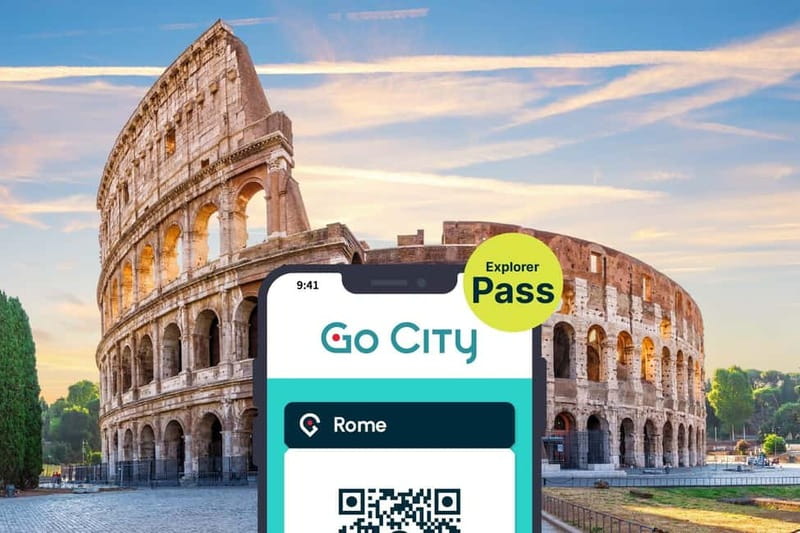
The pass includes the Colosseum, Roman Forum and Palatine Hill with an audio tour and multimedia video setup. Even if you don’t think you’re an audio-tour person, this can be a big help in Rome, because the site is huge and easy to wander without a thread.
What I like about this setup for planning:
- You’re not just staring at stones. The audio/video elements give structure, which matters more here than at many smaller attractions.
- Because it’s grouped with the Forum and Palatine Hill, you can turn one visit into a bigger “ancient Rome” experience.
A possible drawback: the Colosseum area is famous for crowds and timed entry pressure. The pass says reservations are required for the most popular activities, and this is one of them. That means you should be proactive about securing a time slot you can actually use.
If you only do one “ticketed giant” in Rome, this is a strong candidate—Colosseum visibility is part of the reason people come. With this pass, you’re trying to avoid the day-of scramble.
Vatican Museums and Sistine Chapel: skip-the-line style access and a real timing issue
The Vatican side is another major selling point. The pass lists Vatican Museum and Sistine Chapel with escorted skip-the-line tickets. It’s paired with a digital-guide approach so you can follow instructions rather than guessing your way to the right entrance.
This matters because Vatican logistics can be stressful:
- Security and entry lines can swallow a big chunk of your morning.
- You’re competing with tour groups and tour group energy.
Also, there’s a timing note you should take seriously: Sistine chapel is temporarily closed, with expected re-opening mid-May. The key move for you is to check the Go City app when you book and again before your visit, because your “Vatican day” may need adjustment depending on the current status.
What to do with that reality:
- Plan your Vatican visit with flexibility in mind.
- If the Sistine Chapel is not accessible during your dates, you might still get value from the Vatican Museums portion—just don’t assume the Sistine stop is guaranteed.
Pantheon reserved entrance: fast access to one of Rome’s best interiors

The Pantheon is included with Reserved Entrance with Audioguide. This is a classic “less waiting, more looking” win.
Here’s why it’s such a good pairing in a pass:
- The Pantheon is compact compared with Rome’s larger sites, so it fits easily into a day.
- The audioguide helps you understand what you’re seeing (and what you’re looking at) without turning the visit into a research project.
The practical trick: treat it as more than a quick photo stop. If you let yourself slow down for the interior, you’ll feel less like you’re ticking a box.
If crowds are thick when you arrive, reserved entrance helps, but it won’t make Rome empty. You still need patience, especially during peak times.
Big Bus Rome and the Hop-on river cruise: using Rome transit as a sightseeing tool

Not every Rome day should be a walking day. This pass includes options that can move you around without you constantly plotting routes.
You can add:
- Big Bus Rome Hop-On Hop-Off 1-Day Discover Ticket
- Hop-on Hop-off River Cruise Ticket (24 Hours)
- A Big Bus Rome Catacombs guided tour with bus transfer
Why I like this as part of a pass plan:
- Rome’s sights are spread out. Even if you love walking, rest is part of the travel budget.
- A hop-on system lets you “self-curate.” You can start at one loop, get off where it makes sense for your interests, and then hop back on.
For a practical itinerary strategy, I’d use transit days like this:
- Morning: concentrated sights in one zone
- Afternoon: hop-on/hop-off sightseeing to reposition
- Evening: pick a neighborhood experience (pizza, gelato, a viewpoint)
The river cruise option is especially good if you want big views without turning your day into leg day.





Food and small experiences: pizza cooking, gelato stops, and Prati evenings

One of the smarter uses of a pass is adding experiences that don’t require another huge queue. The list includes several that can feel more “Rome” than another monument.
Examples from the included options:
- 1-Hour Pizza-cooking Experience
- Espresso, Gelato and Tiramisu Tour
- Sunset pizza tour near the Colosseum
- Pizza Terrace Menu in the Prati District
Also, the pass mentions a pizza dinner-style experience in the Prati District in the overview. That’s useful because Prati is a calmer base than the busiest tourist pockets, and food plans can anchor your day.
The main thing to remember: food and drinks are not automatically included unless they’re part of the specific activity. So before you commit, check what your chosen food experience actually covers in the app.
If you’re the type who wants “one hands-on thing” on every trip, this category is where the pass can feel most worth it.
St. Peter’s Basilica and Castel Sant’Angelo: pairing spiritual sights with viewpoints

The pass lists:
- St. Peter’s Basilica and Cupola Guided Tour with Breakfast + audioguide of the papal tombs
- Castel Sant’Angelo
These are strong complements in one theme: iconic architecture plus Rome-from-above payoff. Even if you’re not religious, the basilica and the cupola offer the kind of scale you can’t fake.
A consideration: a guided cupola-focused plan likely means time coordination. So again, you’ll want reservations for the items that require them, especially if you’re traveling in a busy season.
Castel Sant’Angelo also works as a “not just another church” choice. It gives you a mix of history and views, without needing you to spend an entire day in one single complex.
Other included choices you can plug into your plan

The pass includes more than the headliners, which is great when you want variety. A few examples listed:
- Imperial Rome Walking Tour (including Colosseum exterior)
- Imperial Rome walking plan gives you a way to see ancient Rome beyond one ticketed monument.
- Capitolini Museums with Skip Line Entry
- Altar of the Fatherland Panoramic View
- Big Bus Rome Catacombs guided tour with bus transfer
- Espresso, Gelato and Tiramisu Tour
How you should use these without overpacking:
- Pick one “museum day” and one “views day.”
- Don’t stack two heavy museums back-to-back unless you know you can handle long indoor time.
- Use walking tours as a lighter layer between major sites.
Also note that attraction/tour line-ups can change, and the app has the latest opening times and access instructions. That’s not just fine print—it’s your best tool for making sure the plan matches what’s actually running on your dates.
Reservations and the Go City app: your key to a smooth day

This pass leans hard on your smartphone. The most important item on the packing list is a charged phone. The pass also uses the Go City app to sync and manage your entries.
Here’s what I’d do to avoid the common “we’re stuck” moments:
- Sync your pass to the app as soon as you can, then follow the digital guide instructions for each attraction.
- Save the pass to your phone/tablet or print a copy if the app instructions suggest it.
- When you see a reservation-needed activity, treat it like a priority. Popular time slots can go fast.
Also, the pass says start and access instructions can vary by attraction. Meeting points are essentially the included attractions, and your visit ends back at the meeting point for that item. So don’t schedule multiple close-together activities without leaving real time for movement and entry.
And one more timing reality: attraction operating hours can change around holidays. Rome can shift days and hours without much notice, so check before you go.
Price and value: when this pass is worth it
The listed price is $100.82 per person (for this Rome Explorer Pass setup). Pass value depends on what you choose inside the 2–7 range.
In plain terms:
- If you’re choosing 2 high-ticket attractions (like the Colosseum plus Vatican Museums/Pantheon), you’re likely getting solid value because the pass is designed to cover the biggest names in a single bundle.
- If you stretch to 5–7 attractions, it can feel like you’re turning Rome into an all-you-can-entry plan—especially if you include at least one “big queue” site and then balance with food and transit-style sightseeing.
But don’t assume the pass automatically beats buying separate tickets in every case. The pass is best when your selection includes major timed-entry sights and when you’ll actually use the days inside your 30-day post-activation window.
Also consider this: the pass can be less cost-effective if you end up dropping a reservation-needed attraction. That’s why your planning matters as much as the price tag.
Who this pass fits best in Rome
This Rome Explorer Pass is a good match if you:
- Want flexibility to choose 2–7 attractions without committing to a rigid itinerary.
- Like planning on your phone and following guided instructions via a digital guide.
- Know you’ll hit at least one or two heavyweight attractions (Colosseum and/or Vatican).
- Prefer mixing major sights with easier add-ons like a hop-on bus route, a river cruise, or a food experience.
It’s also a smart fit for couples and small groups who want control over timing but still want help skipping some ticket friction.
If you hate the idea of making reservations, then this can be risky because reservations are required for many of the most popular items.
Should you book the Rome Explorer Pass?
I’d book it if your Rome plan includes at least one of the big crowd-magnet sights and you’re comfortable planning time slots in advance. The strongest value comes from pairing Colosseum with either Vatican Museums/Sistine (if open during your dates) or Pantheon, then rounding out the rest with experiences like the hop-on bus/river cruise and one food tour.
I would skip it if you want total spontaneity and you’re not willing to reserve. In Rome, timed entry and reservation pressure are real, and this pass is built for people who will work with that system rather than fight it.
If you do book, your best move is simple: decide your top 2 first (Colosseum plus one major partner), then fill the remaining choices with the experiences that help your feet and your schedule.
FAQ
How many attractions are included with the Rome Explorer Pass?
You choose a pass that includes entry to any 2, 3, 4, 5, 6, or 7 Rome and Vatican attractions and activities, depending on the pass you buy.
Does the pass include the Colosseum?
Yes. The pass includes the Colosseum, Roman Forum and Palatine Hill with an audio tour plan and multimedia video.
How long is the pass valid after I start using it?
Your pass is activated when you use it for your first included attraction. After activation, you have 30 days to visit the remaining attractions you purchased.
Can I start using the pass anytime during my trip?
The pass is valid for 30 days to 2 months depending on availability and starting times, and you can start by activating it at an included attraction or tour.
Do I need to reserve for attractions?
Yes. The most popular activities require reservations, and you should reserve well in advance.
What do I need to bring with me?
Bring a charged smartphone. You’ll use the Go City app to sync your pass and follow digital guide instructions.
Is transport or food included?
Transport is not included unless it’s part of the activity. Food and drinks are not included unless they’re part of the specific activity.
If you want, tell me which pass length you’re considering (2, 3, 4, 5, 6, or 7) and your travel dates, and I’ll suggest a tight, low-stress mix of options from the included list.