REVIEW · ROME
Rome in the Evening Cannondale EBike Tour with optional Dinner
Book on Viator →Operated by TopBike Rental and Tours · Bookable on Viator
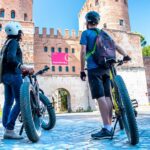
Rome at night is magic. This guided evening e-bike tour turns major monuments into a relaxed, can’t-miss walk-around, minus the map stress and minus the foot pain. I love that the group stays small (up to 10), so you’re not just herded from one photo spot to the next.
I also like the practical rhythm of the ride: you cover about 12 km at a leisure pace, with routes designed to keep traffic limited and with helmets provided. One drawback to plan for: if you’re a brand-new cyclist, you may occasionally feel more comfortable walking for a moment in busier intersections or trickier spots on the route.
In This Review
- Key highlights
- Why Rome’s evening timing changes everything
- Cannondale e-bikes: the easy way to cover 12 km
- Your stop-by-stop route: from Colosseum views to the Pantheon
- Piazza del Colosseo: the Colosseum, lit and explainable
- Colle Capitolino: Roman Forum views from Capitol Hill
- Teatro di Marcello: a prototype you can still recognize
- Through the Jewish Ghetto and the Renaissance/French Embassy connection
- Il Portico di Ottavia: ancient columns in a living neighborhood
- Piazza Farnese: a square with power behind it
- Piazza Navona and the trick of riding around famous squares
- Piazza Navona: cycle, pause, and watch the fountain
- The Pantheon: one of the best-preserved Antiquity buildings
- Baroque illusion at Piazza Sant’Ignazio
- Trevi steps, Trevi lights, and the monumental machine of Piazza Venezia
- Spanish Steps: the staircase as a nighttime stage
- Trevi Fountain: sparkling lights, first-row night viewing
- Piazza Venezia: Trajan’s Column and the layered view
- Via dei Fori Imperiali: the open-air museum ride
- The optional dinner: what you’re actually paying for
- Safety, pace, and group size: what you can count on
- What this tour is best for (and who should reconsider)
- Should you book this Rome evening e-bike tour?
- FAQ
- How long is the Rome in the Evening eBike Tour?
- Where does the tour start and where does it end?
- Is the tour offered in English?
- Do I get a helmet?
- Does the tour include dinner?
- What’s included besides the bike?
- How far do you ride and how hard is it?
- Is the tour safe with traffic and busy streets?
- Are the main stops ticketed?
- What if the tour is canceled or you need to change plans?
- FAQ
- What types of dinner are served on the 4-hour tour?
- How many people are on the maximum group?
- Is there any age limit for this tour?
- What weight limit do the bikes have?
Key highlights
- Night lighting makes the big sights feel calmer. You see Rome’s monuments when the streets are cooler and often less packed.
- Guides do the thinking for you. Stops come with clear explanations, so you can look at what matters instead of guessing.
- Cannondale e-bikes handle Rome’s hills with ease. The assist helps a lot on climbs, which is huge in a city that loves elevation changes.
- A pre-planned, safer-feeling route. The ride uses carefully planned roads with limited access for cars, plus some car-free segments.
- Optional dinner is baked into the flow. In the 4-hour option, dinner happens about 1h15 after the tour starts, so you’re not waiting around later.
- Free admission at each main stop. You’re not paying ticket fees to enjoy these viewpoints.
Why Rome’s evening timing changes everything
Rome in the daytime can be loud, hot, and crowded in a way that makes even the famous sights feel stressful. This tour is built for the opposite mood: cooler evenings, calmer streets, and lights that turn stone monuments into something almost theatrical.
And because you’re on an e-bike, you get that rare mix of speed and attention. You’re close enough to really see details, but you’re also covering ground fast enough to hit a lot of highlights without feeling wrecked. In the reviews, people consistently point out that the ride feels safe and smooth—especially because the route avoids the messier traffic bits and keeps the group moving at a human pace.
You can also read our reviews of more tours and experiences in Rome.
Cannondale e-bikes: the easy way to cover 12 km
This is not a “power through no matter what” bike tour. It’s leisure-focused, and the e-bike support is the secret ingredient. You’re riding roughly 12 km, with a difficulty level that’s described as leisure for most people, shifting toward intermediate only when you add certain child seating setups.
A few practical pieces matter here:
- Helmet is mandatory and provided.
- The bikes come with anti-puncture tires, which is a big deal when you’re riding over cobblestones.
- You get a handlebar bag and water in a biodegradable bottle, so you’re not juggling supplies while you look around.
In real-life use, the e-bikes also help with one thing many first-timers worry about: hills. Rome is hillier than many people expect, and the assist takes the edge off so you don’t arrive at each stop sweaty and exhausted.
Your stop-by-stop route: from Colosseum views to the Pantheon
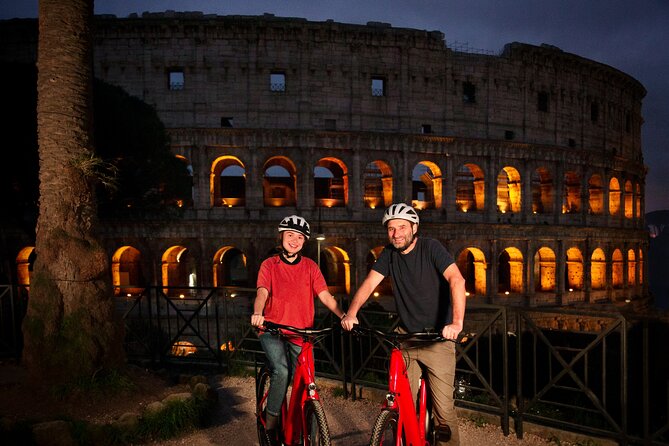
The tour is built like a guided slideshow you can ride through—each stop is quick (about 5 minutes) but meaningful. You’re seeing the city from viewpoints that are much more impressive than they look from street level, especially after dark.
Piazza del Colosseo: the Colosseum, lit and explainable
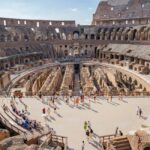
You start at Piazza del Colosseo, where the Colosseum’s outline grabs you immediately. Your guide sets the context, covering the big 2000-year timeline and what made Rome’s “most famous landmark” so influential. The short stop works because the view is the star, and the guide gives you a framework so you’re not just admiring—it’s more like understanding what you’re seeing.
Colle Capitolino: Roman Forum views from Capitol Hill
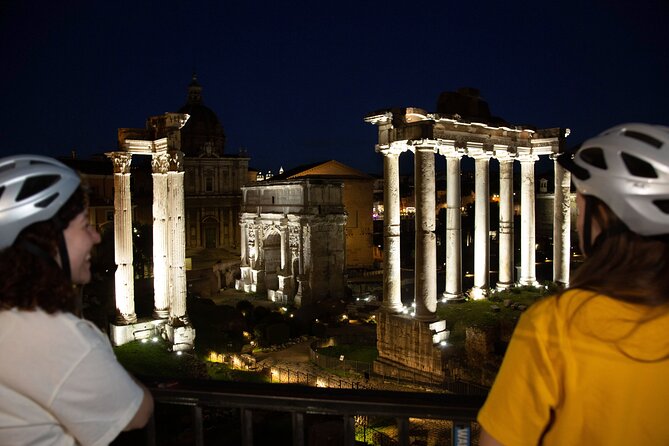
Next is Colle Capitolino (Capitol Hill). This is one of those moments where the city opens up. From above, you get a sweeping view of the Roman Forum lit at night—a “wow” stop that feels made for photographs, but also for the explanation you get right then. It’s a great reminder that Rome’s ruins aren’t random bits; they’re part of a layout that shaped the city.

Teatro di Marcello: a prototype you can still recognize
At Teatro di Marcello, you see an ancient theater, and the guide connects it to the later story of the Colosseum—this site is often described as a prototype. Night helps here too: shadows carve out the structure so it’s easier to picture how it would have looked and sounded centuries ago.
Through the Jewish Ghetto and the Renaissance/French Embassy connection
Il Portico di Ottavia: ancient columns in a living neighborhood
Il Portico di Ottavia sits in a setting that’s famously layered—part ancient ruin, part neighborhood reality. The portico is from the 1st century B.C., and it’s one of those spots where you can sense how Rome reuses space across eras. Because it’s in the Jewish Ghetto, the mood feels different: quieter, more intimate, more “local life” than postcard Rome.
Piazza Farnese: a square with power behind it
At Piazza Farnese, you get another kind of “stone theater”—a famous square with a Renaissance palace, now the seat of the French Embassy. This stop is short, but it helps you notice how Rome’s central spaces often mix politics, art, and architecture in one view.
Piazza Navona and the trick of riding around famous squares
Piazza Navona: cycle, pause, and watch the fountain
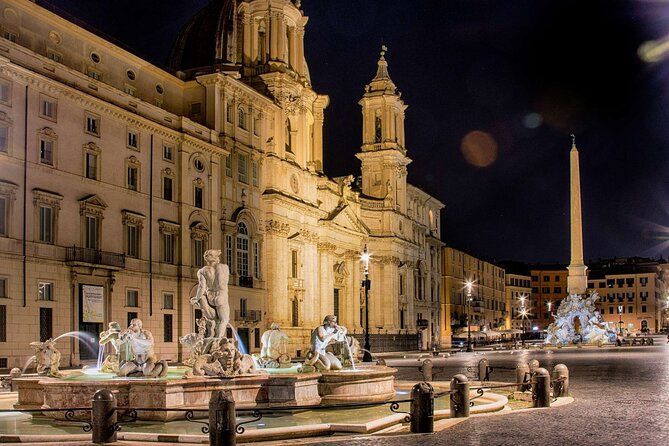
Piazza Navona is famous for a reason, and at night the central fountain looks like it belongs in a movie set. You cycle around the square and get a front-row feel without trying to elbow your way through crowds on foot. It’s also a smart way to experience the geometry of the place—oblong, open, and built to be seen from multiple angles.
The Pantheon: one of the best-preserved Antiquity buildings
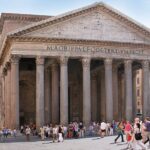
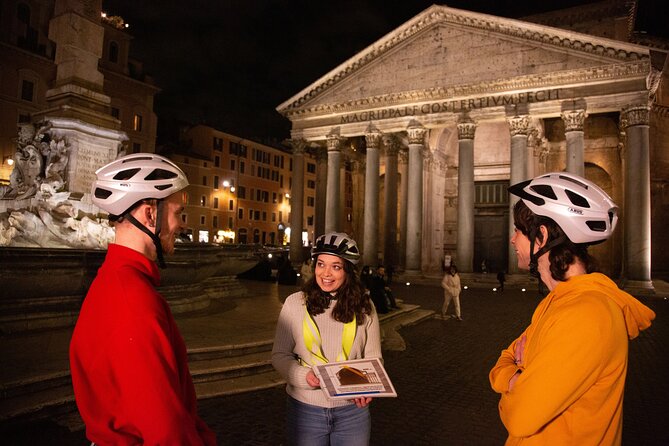
The Pantheon stop gives you one of Rome’s strongest “wow-per-minute” moments. The big idea here is that this is among the oldest—and still best-preserved—buildings from Antiquity. At night, you can see the structure more clearly because lighting pulls focus to the silhouette and proportions. Even if you only stay for a few minutes, it’s enough to anchor your trip.
Baroque illusion at Piazza Sant’Ignazio
Piazza Sant’Ignazio is where your brain gets fooled—in a good way. The church of Sant’Ignazio di Loyola has an astonishing illusion painting that’s meant to be experienced by looking upward. On an e-bike, it’s a nice change of pace: you stop moving for long enough to reset your eyes and really register the effect.
If you’re someone who enjoys architecture and optical tricks, this is the stop that often feels the most memorable, because the payoff isn’t just the exterior.
Trevi steps, Trevi lights, and the monumental machine of Piazza Venezia
Spanish Steps: the staircase as a nighttime stage
At the Spanish Steps (Piazza di Spagna), the view is less about climbing and more about watching the geometry from the base. The staircase coming down from Trinità dei Monti looks dramatic under night lighting, and it feels like a stage where Rome performs.
Trevi Fountain: sparkling lights, first-row night viewing
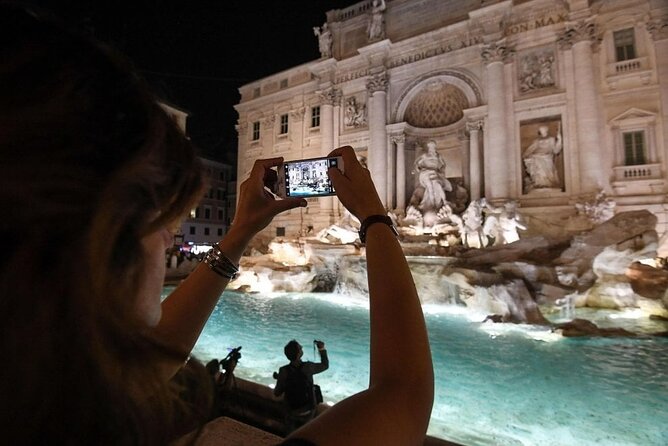
Then you hit Trevi Fountain, where the lights do a lot of the work. You get that famous fountain moment without the daytime chaos—exactly the kind of “Roman highlight, but calmer” experience people like to plan for.
A practical note from the way the tour is handled: in tight or crowded areas (especially around Trevi), groups sometimes need to adjust. One review described a few moments where it made more sense to walk the bike briefly rather than push through. That’s normal, and it’s part of what keeps the ride feeling safer.
Piazza Venezia: Trajan’s Column and the layered view
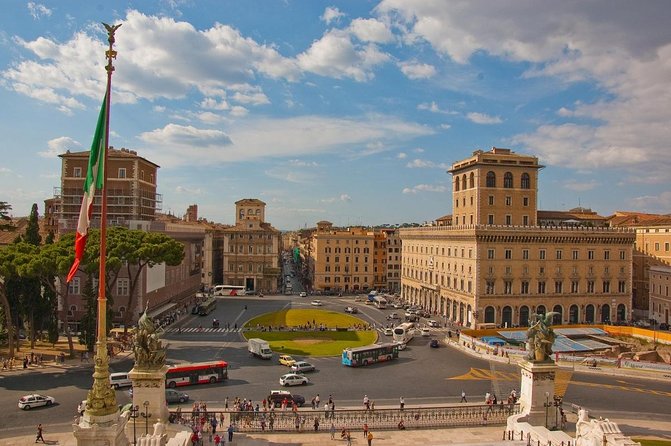
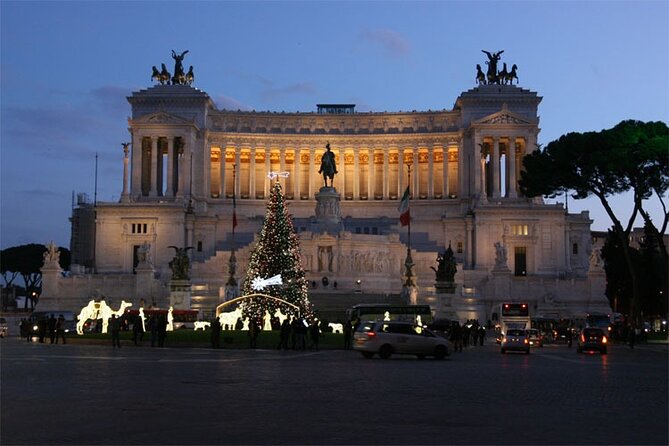
At Piazza Venezia, you get the “three layers” feeling—Trajan’s Column, the Vittoriano monument, and Piazza Venezia’s stacked historical cues, all from one outdoor standpoint. It’s a nice capstone because it ties together the story of Rome’s timeline: Antiquity, then later monument-building that kept reusing the idea of empire and power.
Via dei Fori Imperiali: the open-air museum ride
The ride continues on Via dei Fori Imperiali, a monumental road that cuts through the Roman Forum and the Imperial Fora. This is an “in motion” kind of history stop. You’re not just looking at ruins—you’re riding the corridor that connects them.
Because the route is designed for relaxed cycling, the experience feels like an open-air museum you can actually travel through without suffering. It’s also a good reminder that Rome isn’t one thing. It’s a network of eras layered into streets.
The optional dinner: what you’re actually paying for
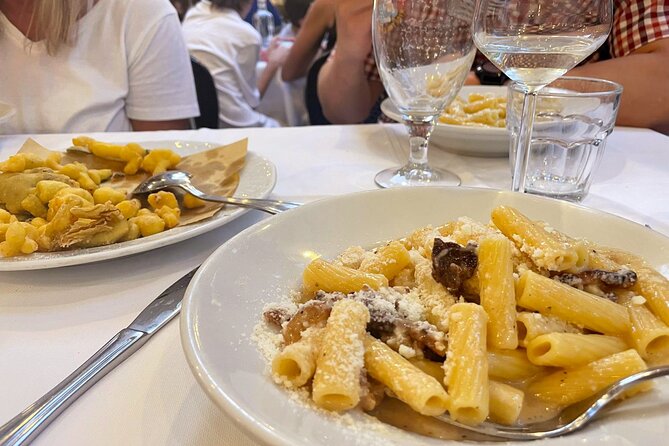
The 4-hour version includes dinner in an Italian trattoria. Timing matters here: dinner takes place about 1h15 after the tour starts, so the meal becomes part of the flow rather than an awkward later add-on.
The included meal is described as:
- a mix of appetizers
- pizza or a pasta dish
- soft drink or a glass of wine or beer
- water
- coffee
In the reviews, the dinner gets strong praise overall—people mention pizza and pasta served well and one guide helping picky eaters choose the right dish with the restaurant owner. Still, keep expectations balanced. One review had a negative dinner experience: they felt the food wasn’t worth the time and that the pasta was rushed and salty. That doesn’t mean it’s the usual outcome, but it does suggest the dinner is a fixed included option, not a customizable culinary audition.
If food is your top priority in Rome, treat the dinner as a practical bonus that rounds out the evening—not as the main event you’d choose over other plans.
Safety, pace, and group size: what you can count on
This tour is framed as safe, with carefully planned routes and limited traffic access, including some roads with no traffic. Helmets are mandatory, and the ride is described as leisure-level for most participants.
The group max is 10 travelers, and that matters. Fewer people means more space to maneuver and more likely that your guide can spot discomfort early. The reviews also mention how guides adjust when needed—such as guiding bike handling at busy intersections and staying attentive if weather turns.
One review even mentioned ponchos during heavy rain. If you travel in shoulder seasons or summer with sudden weather changes, that’s a reassuring sign that the company doesn’t just cancel—they tries to keep the experience going.
What this tour is best for (and who should reconsider)
This is a strong pick if you:
- want big Roman highlights in one evening
- hate the idea of walking hill after hill
- like guided explanations tied to what you’re actually seeing
- appreciate calmer streets and nighttime lighting
It may be less ideal if you:
- feel unsteady on a bike and don’t want any chance of briefly walking at stops
- expect a fully flexible restaurant experience (the dinner included option is set)
- are very sensitive to salt-heavy meals (one dinner critic complained about that)
Should you book this Rome evening e-bike tour?
Yes—if your goal is to see Rome efficiently, comfortably, and with guidance, this tour makes a lot of sense. The value is strongest when you choose the evening timing and the 4-hour option: you get a long guided ride, multiple “top sight” viewpoints, and a ready-to-go dinner plan without ticket hunting.
Book it especially early in your Rome trip. Seeing the city from these angles helps you decide what you’ll want to return to later—on foot or with a more targeted plan. And if you’re nervous about hills or cobblestones, don’t be. The e-bike assist plus a planned route is exactly what this tour is built for.
FAQ
How long is the Rome in the Evening eBike Tour?
It runs about 2 to 4 hours depending on the version you select.
Where does the tour start and where does it end?
It starts at Via Labicana, 49, 00184 Roma RM, Italy and ends back at the meeting point.
Is the tour offered in English?
Yes. The guide is offered in English (and also in Dutch, German, French, Spanish, or Italian).
Do I get a helmet?
Yes. Helmets are provided and they’re mandatory.
Does the tour include dinner?
Dinner is included with the 4-hour version. It takes place about 1h15 after the tour starts.
What’s included besides the bike?
You also get a handlebar bag and water in a biodegradable bottle, plus a guide and the e-bike.
How far do you ride and how hard is it?
You cover about 12 km. The difficulty is described as leisure for most adults, with difficulty increasing for certain child seating setups.
Is the tour safe with traffic and busy streets?
The tour states it follows carefully planned routes with limited access to traffic, including some roads with no traffic.
Are the main stops ticketed?
Each listed highlight indicates admission is free for the stops shown.
What if the tour is canceled or you need to change plans?
You can cancel for a full refund up to 24 hours before the experience start time. If the minimum number of participants isn’t met, you’ll be offered an alternative date/experience or a full refund.
FAQ
What types of dinner are served on the 4-hour tour?
The dinner includes a mix of appetizers, then pizza or pasta, plus soft drink or beer/wine, water, and coffee.
How many people are on the maximum group?
The tour has a maximum of 10 travelers.
Is there any age limit for this tour?
There’s no age minimum or maximum as long as you can ride a bike. Children 5–8 can use a child extension, and 9+ can ride on appropriately sized e-bikes.
What weight limit do the bikes have?
The equipment has a weight limitation of 300 lbs (136 kg).