REVIEW · ROME
Rome on Wheels: Experience the City with a Vespa Tour
Book on Viator →Operated by MY VESPA TOURS · Bookable on Viator
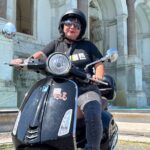
Rome clicks into place on two wheels. I love the detailed audio guide that keeps the story clear while you’re moving, and I love the complimentary souvenir photos that help you remember each landmark fast. The catch: if you drive yourself, Rome traffic means you need real scooter skill, not just a few attempts.
In about 3 to 4 hours, you cover major sights with short, focused stops instead of getting stuck in long, slow logistics. The tour keeps the group small (a maximum of 15), which makes it easier to stay together and actually catch what your host is saying.
You’ll start and end at Via Cavour 80, and the ride runs in all weather, so plan for sun or drizzle. For the self-driven option, you need the right license category (A for motorcycles/scooters, or B for cars) and good prior experience. Most people can participate, but you should be honest about your comfort before you commit to the handlebars.
In This Review
- Quick takes
- Why a Vespa Tour Works So Well for a Fast Roman First Look
- Via Cavour 80 Start Point: Getting On Fast and Staying Together
- Palatine Hill: Roman Origins Plus Real View Power
- St. Peter’s Basilica from the Street: Michelangelo’s Dome Up Close
- Colosseum: The Amphitheater Moment (With Free Admission Time)
- Gianicolo (Colle del Gianicolo): Panorama Break and Fontana dell’Acqua Paola
- Buco della Serratura and Circo Massimo: The Keyhole View and Ancient Racing Dreams
- Buco della Serratura (Keyhole at Piazza dei Cavalieri di Malta)
- Circo Massimo
- Audio Guide, Souvenir Photos, and Bottled Water: Small Inclusions That Pay Off
- Self-Driven Vespa vs Riding With the Guide: Choose Your Comfort Level
- Price and Value: Is $235.92 Worth 3–4 Hours of Scooter Time?
- Should You Book This Vespa Tour?
- FAQ
- How long is the Vespa tour?
- Where does the tour start and end?
- Is the tour offered in English?
- What is included in the price?
- Can I drive the scooter myself?
- What are the age requirements and group size?
- Is there free cancellation?
Quick takes
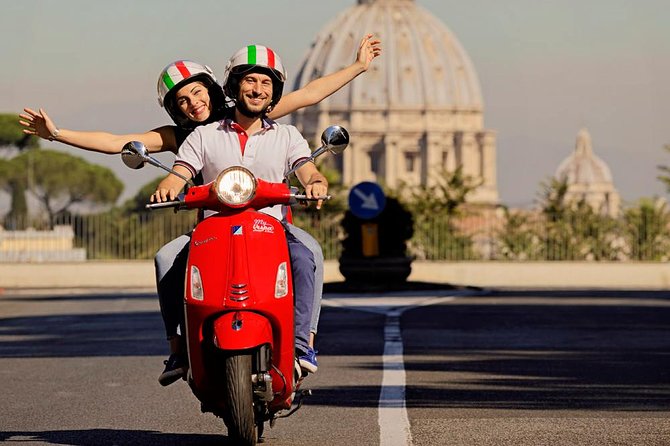
- Small group pace, big-sight coverage: you hit major landmarks without spending your whole day stuck in transit
- Detailed audio guide while you ride: narration helps you make sense of what you’re seeing between stops
- Panorama breaks are built in: Gianicolo gives you a serious view moment, not just another quick photo
- The Colosseum stop includes free admission time: you get the famous amphitheater experience without extra ticket hunting
- The Rome keyhole moment is real: Buco della Serratura frames St Peter’s through a famous view slot
- Guides like David, Frederick, Erico, Enrico, Alessandro, and Virgilio show up in real-world feedback: people consistently highlight how friendly and safety-focused the hosts can be
Why a Vespa Tour Works So Well for a Fast Roman First Look
Rome is a city you can walk your way through for days. But if your time is tight, you need shortcuts that still feel human. That’s where a Vespa-style tour shines: you get motion, street-level atmosphere, and you’re close to the sights instead of craning your neck from far away.
The tour’s format is designed for quick orientation. You’re not trying to conquer every museum door. You’re getting a guided “map in your head” by pairing landmarks with explanations as you travel between them. That matters a lot when you later wander on your own, because suddenly streets and monuments start connecting.
You’ll also get little extras that improve the experience without being gimmicky. Bottled water is included, and you leave with souvenir photos. Those photos aren’t just proof you were there; they also help you recall specific spots when you’re planning the rest of your day.
One practical note: this isn’t a sit-back-and-do-nothing tour. If you’re riding yourself, you’re actively participating in the experience. If you’re riding with a guide, you still feel the pace and the Roman road vibe. Either way, come prepared to pay attention.
You can also read our reviews of more tours and experiences in Rome.
Via Cavour 80 Start Point: Getting On Fast and Staying Together
Your meeting point is Via Cavour 80, 00184 Roma RM, and the activity ends back at the same place. That simple loop is a big deal in Rome, where finding your way back after a few hours can be harder than it sounds.
This departure spot is close to Basilica di Santa Maria Maggiore, so you can enjoy the area around the start point before you roll out. The tour is also described as being near public transportation, which is helpful if you’re mixing this ride with trains, metro lines, or bus hops during your day.
Because the tour is limited to 15 travelers max, you’re not stuck in a huge pack. In a city where crowding can slow everything down, that size cap keeps the rhythm manageable. You’ll likely have an easier time hearing the host and following the group’s movements.
Timing-wise, plan for a smooth “half-day feel.” The total time is listed as about 3 to 4 hours, so treat it like a structured outing rather than a casual walk. If you book this early in your visit, it can function like a quick preview that makes the rest of your Rome day easier to enjoy.
Palatine Hill: Roman Origins Plus Real View Power
Palatine Hill is one of the Seven Hills of Rome, and it’s steeped in origin myths and archaeological remains. It’s associated with the idea that this is where Rome began, and that blend of legend plus ruin is exactly why it’s so compelling on a guided stop.
What you’re likely to appreciate here is the combination of context and perspective. Palatine isn’t only about stones; it’s a viewpoint over the surrounding area, so the explanations stick better when you can actually see what’s below and around you. The ruins linked to imperial palaces add extra weight to the story, because you’re not just hearing about emperors in theory.
The drawback is mostly practical: time at each stop is short. You’ll get the highlights, not a long academic-style walkthrough. If you’re the type who wants to read every plaque and linger for an hour, you may want a separate visit later on foot.
Still, as part of a Vespa route, Palatine Hill works well. You’re getting the “big picture” of why this spot matters before you move on to the next iconic layer of Rome.
St. Peter’s Basilica from the Street: Michelangelo’s Dome Up Close
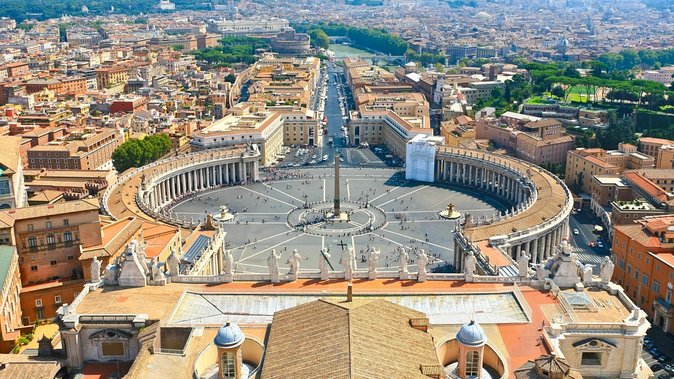
St. Peter’s Basilica in Vatican City is described as the largest church in the world and a major spiritual center for Catholicism. It’s also famous for the magnificent dome designed by Michelangelo, which is one of those visual anchors you remember even after the tour ends.
As a stop on a riding tour, the value here is timing and flow. You’re not trying to squeeze it in after an entire day of museum lines. You’re getting the Basilica’s scale and significance as part of a broader Rome route, with audio narration to keep it from being just another impressive building.
One consideration: churches can be visually overwhelming. If you’re not sure what to look for, the audio guide helps you focus on key elements like the dome and the Basilica’s role. And because this is a short stop, the experience is about capturing the moment and moving on, not settling in for a full, slow visit.
If you’ve never seen St. Peter’s before, this is a great “first contact” stop. If you already know you want to do a deeper interior visit, you can use this tour stop as the spark that points you toward a later, longer visit.
Colosseum: The Amphitheater Moment (With Free Admission Time)
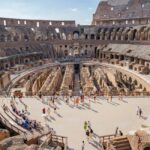
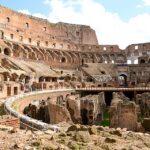
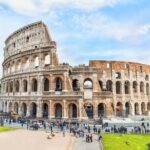
The Colosseum is the Roman icon everyone knows, and it still earns its fame. It was built as one of the largest amphitheaters ever, with a capacity often cited up to 80,000 spectators, and it hosted gladiatorial contests and public spectacles.
On this tour, the Colosseum stop is designed to give you a fast but meaningful hit. You’ll spend around 10 minutes, and the info specifically notes admission ticket free for that segment. That’s the sweet spot for value: you don’t waste time figuring out tickets while you’re on a tight schedule.
What I like about the way this fits a Vespa itinerary is that you can approach it without building your whole day around it. You get the majesty of the arches and a history-focused explanation, then you move on while your energy is still high.
The possible downside is also the obvious one: with only about ten minutes, you won’t get a full inside-and-out experience. This is best for travelers who want the Colosseum to be a highlight, not the only event of the day. If you want the long version, treat this as your orientation stop, then return later for a deeper exploration.

Gianicolo (Colle del Gianicolo): Panorama Break and Fontana dell’Acqua Paola
When the tour heads to Colle del Gianicolo (the Janiculum Hill), you’re getting one of Rome’s strongest “I get it now” views. Gianicolo is known for panoramas over the city, and it’s popular with locals and visitors who want that layered skyline feeling.
This stop is also more than a viewpoint. Gianicolo has parks and monuments, so the atmosphere feels less like a rush-and-photos moment and more like a short reset. You may also spot the famous Fontana dell’Acqua Paola, described as a stunning Baroque fountain. It’s the kind of detail that turns a wide view into something memorable.
The time here is around 15 minutes, which gives you a little breathing room to actually take in the scenery. That longer stop length is a clue: this part of the route is meant for your eyes, not just your ears.
The practical drawback: panoramas mean you’ll want to be careful with photos and footing. If it’s windy or if streets/paths feel crowded, keep your situational awareness. This is a stop where you’ll likely stop, look, and reposition several times.
If you’re traveling fast, you’ll appreciate Gianicolo because it gives your Rome experience a visual “wow” that you can’t really recreate by reading about the city later.
Buco della Serratura and Circo Massimo: The Keyhole View and Ancient Racing Dreams
Two stops here add a playful side to the tour—one is a secret-view trick, and the other is imagination fuel.
Buco della Serratura (Keyhole at Piazza dei Cavalieri di Malta)
The keyhole at Piazza dei Cavalieri di Malta is famous for a framed view of St. Peter’s Basilica through a decorative keyhole with greenery around it. It’s short (about 10 minutes) but it’s different from the usual “standing in front of the landmark” approach.
This stop works because it gives you a specific target. Instead of trying to take in everything at once, you aim for one perfect sight picture. That makes the experience feel almost like a mini quest, and it’s easy to share the moment with your group.
Circo Massimo
Circo Massimo was the largest ancient chariot racing stadium in Rome, with seating mentioned over 150,000 spectators. Today, it’s a historic site and a public park, so it can feel surprisingly open compared with the dense city blocks around it.
The value of Circo Massimo is how your brain connects story to place. When you stand there, the idea of racing and crowd noise becomes more believable. And because the stop is about 10 minutes, it’s a quick “transport back in time” moment without turning into a long detour.
A balanced expectation: neither of these stops is the kind of place you fully absorb in a few minutes. But they’re excellent for variety. They add texture to your Rome day so it’s not just big monuments in a row.
Audio Guide, Souvenir Photos, and Bottled Water: Small Inclusions That Pay Off
The tour includes a detailed audio guide, and that’s one of the most important parts of the experience. When you’re moving by scooter, your attention gets split between traffic flow, street views, and learning. A good narration layer makes sure you don’t just collect snapshots.
I also like the simple human touches: souvenir photos are included, and bottled water is provided. In a city where plans can change quickly, those items reduce stress. You don’t have to wonder if you’ll remember to buy water or scramble for a photographer at your most important moments.
You’ll also have a mobile ticket, which helps keep day-of logistics lighter. And there’s a tour escort/host, which matters because scooter tours are only fun when you feel supported and safe.
One more useful angle: people have praised guides for being flexible with stops, depending on what you might have already seen. That kind of adjustment can make the difference between feeling like you followed a script versus feeling like you got a route that fits your day.
Self-Driven Vespa vs Riding With the Guide: Choose Your Comfort Level
This is the biggest fork in the road for your experience.
There’s a self-driven option, and the rules are firm: for self driving, you need good driving experience in scooters or motorcycles. The info explicitly warns that it’s not enough to have driven a few times before.
You also need the right license category: A (motorcycles and/or scooters) or B (cars) is required. Minimum age is 18 years.
If you’re not confident driving in active urban traffic, consider riding with the guide instead. In feedback from real riders, hosts have been accommodating with slower pacing for those who felt apprehensive at first. People also highlight that the experience is exciting but still safety-minded when you choose the right setup.
Even if you are a capable rider, remember you’re in Rome. Road behavior can feel chaotic compared with calmer cities. I suggest treating this like a skill test, not a thrill ride. If you feel tense, slow down mentally and prioritize control.
If you’re the passenger, you’ll still experience the pace and street layout, but you avoid the pressure of making split-second choices at scooter speed. That can turn this into a fun “see Rome fast” day rather than a stress day.
Price and Value: Is $235.92 Worth 3–4 Hours of Scooter Time?
At $235.92 per person, this isn’t the cheapest way to see Rome. But scooter tours are rarely about being cheap; they’re about buying time, access, and a guided route you can’t easily replicate on your own.
Here’s what you’re paying for that’s clearly included:
- a tour escort/host and the scooter-based routing
- a detailed audio guide
- souvenir photos
- bottled water
- taxes/fees/fuel surcharge and local taxes
- admission ticket free time at listed stops like the Colosseum
What you’re not paying for:
- food and drinks
- hotel pickup/drop-off
That means you should plan a simple strategy: eat before (or bring a small snack for after), and get yourself to Via Cavour 80. If you do that, the day feels efficient.
Is it good value? For first-time visitors with limited time, yes, because you’re packing together key landmarks and viewpoint moments into one structured afternoon. Also, the small group size helps the experience feel personal rather than factory-made.
The one caution I’d keep in mind is about refunds. In one unpleasant situation shared in feedback, the operator explained that drivers had been specifically hired and partial refunds weren’t possible through the booking platform when a serious medical issue came up. I’m not saying that will happen to you. I am saying it’s smart to plan carefully and consider travel insurance if you’re traveling with any health uncertainty.
Should You Book This Vespa Tour?
Book it if:
- you want a fast, guided first look at Rome without spending the whole day on lines and transit
- you like learning while moving, and you’ll actually use the audio guide
- you’re comfortable with the idea of scooter travel, either as a driver or as a passenger
- you enjoy viewpoint stops like Gianicolo and quirky moments like Buco della Serratura
Skip it or think twice if:
- you’re hoping to learn scooter driving during this tour (the self-driven requirements are strict)
- you’re uncomfortable with the reality of busy Roman roads
- you need a fully slow, museum-style pace where every stop is long and unhurried
If you’re deciding, my practical take is this: if you only have a few hours in Rome, this kind of tour often gives you the best “return on effort.” You’ll leave with landmarks in your memory in the right order, plus photos and stories that make later walking tours feel far more effortless.
FAQ
How long is the Vespa tour?
The tour runs for approximately 3 to 4 hours.
Where does the tour start and end?
It starts at Via Cavour 80, 00184 Roma RM, Italy, and it ends back at the same meeting point.
Is the tour offered in English?
Yes, the tour is offered in English.
What is included in the price?
The price includes taxes, fees, and handling charges, a fuel surcharge, local taxes, a tour escort/host, souvenir photos, and bottled water. Food and drinks are not included, and there is no hotel pickup or drop-off.
Can I drive the scooter myself?
You can choose the self-driven option only if you have good driving experience with scooters or motorcycles. You also need the right license category: A for motorcycles/scooters or B for cars.
What are the age requirements and group size?
The minimum age is 18. The tour has a maximum of 15 travelers.
Is there free cancellation?
Yes. You can cancel up to 24 hours in advance for a full refund.