REVIEW · ROME
Rome Private Wine & Food Tour Trastevere, Ghetto, Campo de Fiori
Book on Viator →Operated by GOURMETALY FOOD TOURS OF ROME · Bookable on Viator
Food tastes better with a private guide. This Rome walking tour strings together three big neighborhoods—Campo de’ Fiori, the Jewish Ghetto, and Trastevere—with generous tastings and wine stops. You’ll also get the kind of local context that makes each bite make sense fast.
I especially liked how the tour plans real time around food you’d miss on your own. The stops are built around recognizable Roman classics—pizza bianca, mozzarella di bufala, cacio e pepe, amatriciana, and gelato—plus seasonal fried specialties like carciofi alla giudia in season.
One thing to consider: Rome’s hours can be tricky, and the route shifts on Sundays so you don’t sit outside closed shops. If you dislike walking for about 3.5 hours, bring comfortable shoes and tell your guide you need a slower pace.
In This Review
- Key highlights at a glance
- Private guide, Roman food in one 3.5-hour loop
- Piazza Farnese to Campo de’ Fiori: market morning energy
- The Giordano Bruno stop and how Campo de’ Fiori sets the pace
- Into the Jewish Ghetto: Piazza delle Cinque Scole and fried classics
- Pizza and wine breaks: what “seated stops” change
- Ancient pizzicheria Ruggeri and pizza al taglio at Roscioli
- Crossing Isola Tiberina and arriving in Trastevere
- Gelato at Fiordiluna and the finish at Santa Maria in Trastevere
- Sunday version: farmer-managed organic market and fewer shop closures
- Price and value: what $217.69 buys you (and why it’s not just snacks)
- Who this tour is best for
- Should you book this Rome food tour?
- FAQ
- How long is the Rome Private Wine & Food Tour?
- Where do I meet the guide, and where does the tour end?
- Is this a private tour?
- What food tastings are included?
- Are wine tastings included?
- Do you stop at Campo de’ Fiori?
- Does the itinerary change on Sundays?
- Is there a vegetarian option?
- What about gluten-free or dairy-free needs?
- What is the cancellation policy?
Key highlights at a glance
- Private pacing: only your group, with your guide adjusting the rhythm to you
- Campo de’ Fiori market time: browse seasonal produce and snack on Roman favorites
- Jewish Ghetto food stops: fried artichokes, suppli, and other classic bites tied to place
- Seated wine moments: multiple stops with wine, not just sips standing up
- Trastevere finishes strong: pizza al taglio, Roman pasta, and gelato in one arc
Private guide, Roman food in one 3.5-hour loop
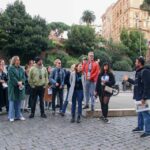
This is a private Rome food tour built for people who like eating their way through neighborhoods, not just collecting photos. The format is straightforward: you meet at Piazza Farnese, then walk through the city’s food triangle—Campo de’ Fiori to the Jewish Ghetto to Trastevere—while tasting your way through standout shops.
The timing is about 3 hours 30 minutes. That’s long enough to feel like you actually learned something and ate a proper meal’s worth of highlights, but short enough that you can still do a second round of Rome later that day.
What makes it work is the guide. Guides like Clelia, Livia, Marielle, and Claudio are repeatedly praised for being friendly, answering questions clearly, and making the experience feel unhurried. If you’re the type who likes to ask Why do they cook it like that? you’ll be in your element.
You can also read our reviews of more tours and experiences in Rome.
Piazza Farnese to Campo de’ Fiori: market morning energy
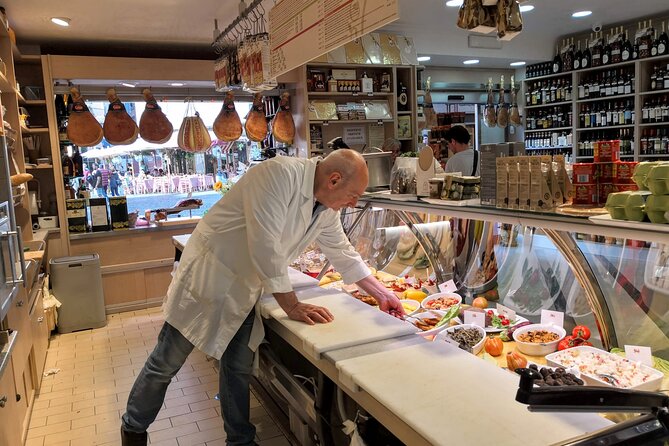
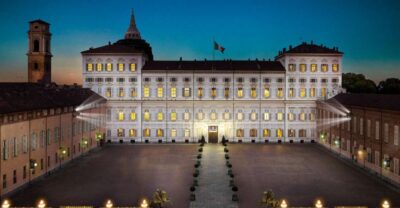
You start at Piazza Farnese—a pretty, elegant starting point near the Farnese buildings, the French Embassy area, and two fountains. It’s a good first step because it puts you in a calmer pocket before the food action starts.
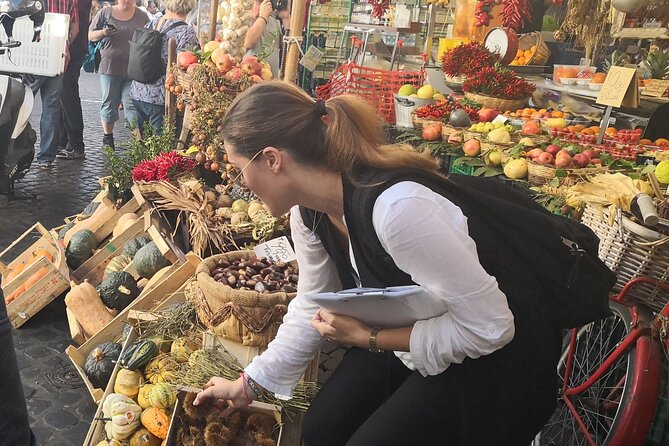
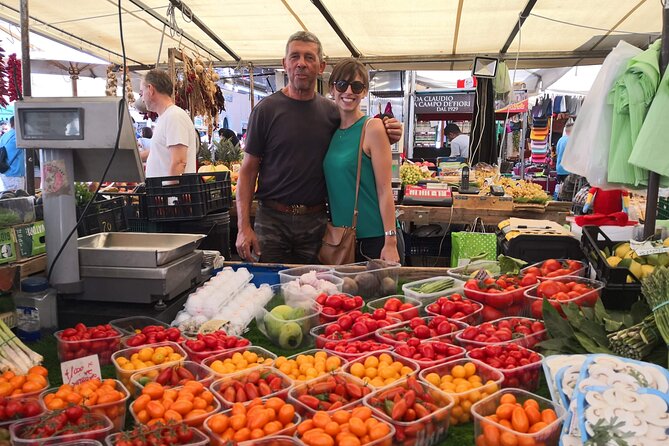
From there, the route leads you into Campo de’ Fiori, where the whole experience gets more real. In the morning version (Monday to Saturday), you’re in the market at its best: seasonal produce, local products, and vendors who do this every day. This is where you learn what residents are buying for dinner—not just what tourists tend to order.
And yes, there’s a specific landmark here: the statue of Giordano Bruno. He’s the philosopher remembered for being burned alive by the Inquisition in 1600. It’s a heavy note to hang around a bright food market, but it fits the bigger theme of Rome: public squares have always mixed everyday life with big ideas and big power.
The Giordano Bruno stop and how Campo de’ Fiori sets the pace
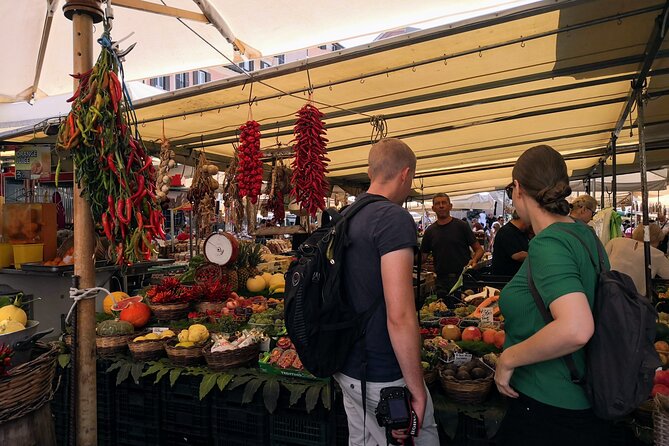
Campo de’ Fiori can feel like a circus if you let it. The tour helps you keep it organized. You don’t just wander. You browse with a purpose, then taste Roman staples that match the market vibe.
On the food side, you can expect classics that show up again and again in Roman cooking:
- pizza bianca (often paired with mortadella)
- pizza rossa with EVO oil and tomato
- pizza con le patate (potato pizza with rosemary and black pepper)
- fresh mozzarella (including mozzarella di bufala when offered)
If you’re thinking, That sounds like a lot of pizza—good. That’s the point. Rome’s “street lunch” food is part of its identity. This tour gives you a taste map so you can order with confidence later, even without the guide.
Morning or afternoon matters. Afternoon tours still go through Campo de’ Fiori, but at a calmer pace. Even when the market isn’t in full swing, the square feels like a neighborhood living room—less frantic, more stroll-and-snack.
Into the Jewish Ghetto: Piazza delle Cinque Scole and fried classics
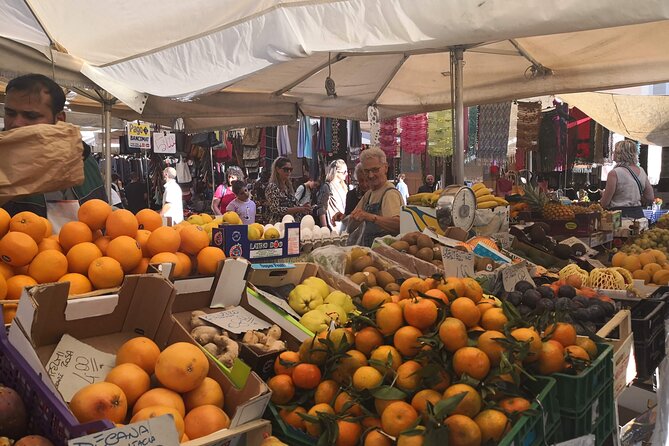
After Campo de’ Fiori, you move into the historic Jewish Ghetto. This is where the tour adds depth without turning into a lecture. You walk past older structures and learn how the area’s cultural and culinary traditions shaped what’s on menus today.
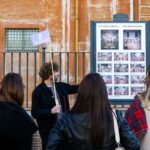
A key stop is Piazza delle Cinque Scole. The guide explains what you’re seeing, and you’ll spend time there before continuing into food-focused shops. The main idea: you’re not only sampling Italian food. You’re sampling food tied to a specific community history in Rome.
This is also where seasonal fried specialties take center stage. If your tour happens in the right season, you may taste Jewish-style fried artichoke (carciofo alla giudia). The tour describes it as a winter-only specialty, double-fried and made for the season.
Other classic bites tied to the ghetto include:
- supplì al telefono (fried rice balls with mozzarella and tomato sauce)
- fried seasonal vegetables like zucchini flowers (summer version)
- cured meats and other Roman staples that play well with the ghetto flavors
Here’s the practical value: once you taste suppli and fried artichoke, you understand why locals treat these as comfort food, not novelty. Then when you see them elsewhere in Rome, you’ll know what to order and what to compare.
Pizza and wine breaks: what “seated stops” change
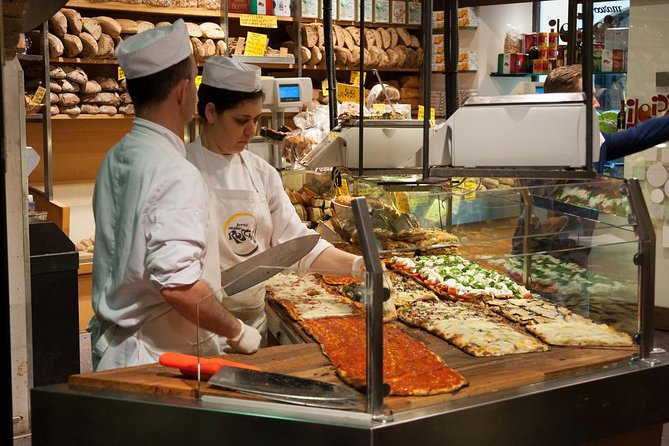
Rome is famous for food. It’s also famous for lines. This tour fights both issues by building in seated stops with wine.
The package includes three wine tastings at stops where you sit. You’re not just offered a small sip while standing in a doorway. You get time to breathe, talk, and let the flavors reset before the next neighborhood.
As for food, the tour is heavy on the Roman “starter-to-main” rhythm:
- cheeses & hams in a historic grocery
- pizza tastings (the tour notes 2/3 pizza tastings)
- fried seasonal specialties at an older Jewish Ghetto restaurant
- two pasta tastings in Trastevere
- gelato tasting at the end
One standout shop in the middle of the route is Antico Quartiere Ebraico’s traditional spots, including an emphasis on fried items like artichokes and suppli, plus other ghetto favorites such as codfish when listed for the experience.
If you love the idea of pairing wine with tastings instead of rushing through, this tour makes that easy. If you dislike drinking alcohol, you’ll still be eating well—but you’ll want to confirm what you prefer in advance since wine tastings are part of the plan.


Ancient pizzicheria Ruggeri and pizza al taglio at Roscioli
Two names come up as anchors for the food side.
First is Antico Quartiere Ebraico / Ancient Pizzicheria Ruggeri. The tour frames this stop around the history and legends of Roman habits, and you’ll taste traditional Roman foods there. This is one of those places where the “why” matters. The point isn’t just eating. It’s learning how Romans snack and shop.
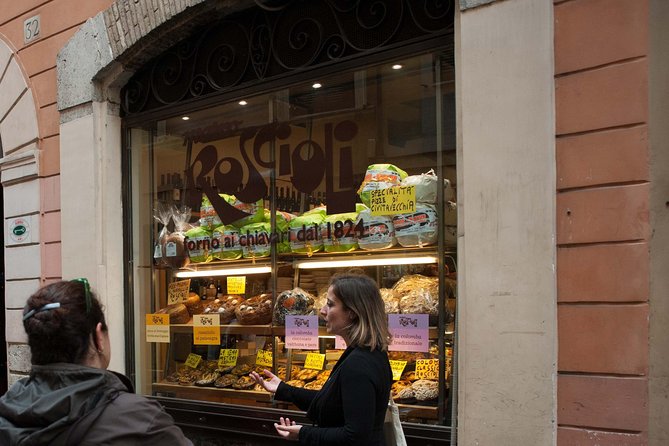
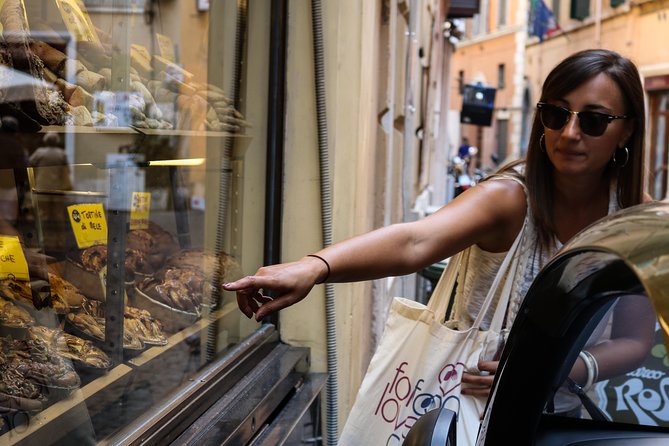
Next is Antico Forno Roscioli, described as a kingdom of pizza al taglio—pizza cut by the slice, sold fresh and perfect for tasting. Roscioli is also explicitly tied to bread-lovers, and the stop includes tasting what’s presented as the best pizza.
If you only have a day or two in Rome, this is one of the most efficient ways to understand Roman pizza styles:
- pizza bianca and pizza rossa show up earlier in the story
- pizza al taglio at Roscioli shows you how Romans eat pizza as an everyday thing
You’ll likely leave with a new habit: ordering pizza based on the crust and topping style, not just the nearest sign.
Crossing Isola Tiberina and arriving in Trastevere
You’ll also cross toward the Isola Tiberina area. The tour specifically notes crossing the oldest bridge in town to reach the island, where a church, convent, and hospitals are found. It’s a quick change of pace—part walkway, part perspective shift.
From there, you slide into Trastevere, one of Rome’s best-known dining neighborhoods. The experience ends up on narrow streets with artisan shops and cafés, with the guide explaining what makes Trastevere’s food traditions unique.
A key Trastevere stop is Ristorante Sette Oche in Altalena, where you can taste pasta classics:
- cacio e pepe
- amatriciana
These aren’t “pizza and pasta” in the vague sense. They’re Roman identity dishes. That’s why they work so well in a walking tour: you get to taste the ingredients (not just the final product) and then understand the logic behind the flavors.
Gelato at Fiordiluna and the finish at Santa Maria in Trastevere
For dessert, the tour takes you to Fiordiluna. It’s described as a hidden shop and linked to gelato excellence, including a “gelato world champion 2020” detail tied to Eugenio Morrone. Translation: you’re not just getting cold sweetness. You’re getting a serious gelato moment.
The tour ends with a gelato tasting, and it even reminds you not to call it ice cream. Expect a cup with two flavors plus extras, depending on what’s offered during your visit.
Then you finish at Basilica di Santa Maria in Trastevere, in the splendid square. This is a strong landing spot because it feels like a reward: you’ve walked through markets, old neighborhoods, and food shops, then you get a classic Roman landmark area to close the loop.
Sunday version: farmer-managed organic market and fewer shop closures
On Sundays (Monday to Saturday is the normal market pattern) the tour adapts. Many independent shops and food vendors in Rome close on Sundays, so the itinerary shifts to focus on markets and venues that are open.
Instead of starting at Campo de’ Fiori in the same way, Sunday tours begin at a farmer-managed organic market where producers sell directly. You’ll sample fresh products and learn how ingredients are sourced and used in Roman cooking.
From there, you still walk through lesser-known streets toward the Jewish Ghetto and continue to Trastevere. You’ll still get tasting moments, but you’ll want to expect more market-centered food stops and fewer “classic shop” pauses than a weekday plan.
If you’re visiting on a Sunday and you hate the thought of missing out because shops are closed, this adaptation is the right kind of practical fix.
Price and value: what $217.69 buys you (and why it’s not just snacks)
At $217.69 per person for roughly 3.5 hours, the price isn’t “cheap,” but it’s built around value that’s hard to replicate on your own without planning.
Here’s what the package includes, in plain terms:
- Multiple food tastings across neighborhoods (cheeses and hams, several pizza tastings, fried seasonal specialties, two pasta tastings)
- Three wine tastings with seated stops (not random sips)
- Gelato tasting
- A private local guide who handles pacing, chooses stops, and provides food tradition context
If you were to pay for tastings separately, plus wine at several places, plus time spent figuring out where to go and what’s worth it, you’d end up spending money anyway. This tour bundles it into one route, with your guide acting like a filter: fewer wrong turns, more “order this” certainty.
The private format also matters. Instead of waiting for a big group, you get undivided attention—and in the reviews, that shows up as guides slowing down for people who need it. If you’re traveling with family or want a more relaxed pace than a standard group tour, that can be worth real money.
Who this tour is best for
This is a great match if you:
- want a food-focused walking tour with context (not just eating)
- like comparing Roman staples—pizza styles, pasta signatures, fried snacks, and gelato
- enjoy wine with tastings and want it built into the plan
- prefer a route that leads into three key neighborhoods without overplanning
It may be less ideal if:
- you don’t like walking much for any reason (you still need good shoes)
- you want a long sit-down meal instead of short tastings and frequent movement
- you have strong restrictions on alcohol, since wine tastings are included
One smart move: if you have mobility concerns, tell the operator ahead of time. The tour has included slower-walker accommodations in past experiences, and the best results come when the guide knows early.
Should you book this Rome food tour?
I’d book it if you want one afternoon-or-morning that turns Rome’s food from random names into a clear set of favorites. The biggest strengths are the private guide, the mix of market + old neighborhood shops + Trastevere classics, and the fact that wine tastings happen at seated moments.
If you’re picky about Sunday shopping hours, book with confidence only if you’re okay with the Sunday plan shifting to markets and open venues. And if you don’t drink wine, you should ask about your options early, since wine tastings are part of the standard experience.
For most people, this is an efficient way to eat well and understand what you’re actually tasting.
FAQ
How long is the Rome Private Wine & Food Tour?
It runs for about 3 hours 30 minutes.
Where do I meet the guide, and where does the tour end?
You start at Piazza Farnese, 106, 00186 Roma RM, Italy. The tour ends at Piazza Giuseppe Gioachino Belli, 00153 Roma RM, Italy.
Is this a private tour?
Yes. Only your group will participate.
What food tastings are included?
The tour includes cheeses and hams in a historic grocery, pizza tastings, fried seasonal specialties, pasta tastings in Trastevere, and a gelato tasting.
Are wine tastings included?
Yes. The tour includes 3 wine tastings and notes that there are 3 stops seated with wine.
Do you stop at Campo de’ Fiori?
Yes, the tour includes Campo de’ Fiori, with market time on Monday to Saturday tours and a described square atmosphere for afternoon options.
Does the itinerary change on Sundays?
Yes. Sunday tours start at a farmer-managed organic market and then continue through areas toward the Jewish Ghetto and Trastevere, with adaptations because many shops close on Sundays.
Is there a vegetarian option?
Vegetarian option is available. You need to advise at the time of booking.
What about gluten-free or dairy-free needs?
Gluten-free or dairy-free options are available. The tour also notes allergens can be present in tastings, including milk, eggs, soya, mustard, nuts, and gluten.
What is the cancellation policy?
Free cancellation is available. You can cancel up to 24 hours in advance for a full refund. Less than 24 hours before the start time isn’t refundable.