REVIEW · ROME
Rome: Skip the line Vatican Museums & Sistine Chapel Tour
Book on GetYourGuide →Operated by Tourismotion · Bookable on GetYourGuide
Vatican Museums without the stress. This Rome skip-the-line Vatican Museums & Sistine Chapel tour moves fast through the highlights with a professional local guide, so you spend more time looking up and less time standing in queues. I especially love the guided storytelling that makes big rooms feel understandable, plus the earphones that keep you connected even when crowds press in. One possible drawback: it’s a tight, standing-and-walking experience, and it’s not suitable for wheelchair users or strollers.
In about 3 hours, you’ll roll through the key galleries most people miss when they self-tour. You’ll start near the Vatican area, pass through the Belvedere area, hit the Gallery of Maps and Gallery of Tapestries, then go into the Raphael Rooms and Belvedere Courtyard statues before ending in the Sistine Chapel for about 30 minutes. If your goal is the “greatest hits” with context, this style of tour is a strong pick. If you want slow browsing at your own pace, you might find the schedule a bit brisk.
In This Review
- Key highlights you’ll actually feel in the Vatican
- Time-Saving Value: What skip-the-line really buys you
- Where you start and how the route flows
- Belvedere Courtyard: when sculpture teaches you how artists think
- Gallery of Maps: Italy as it looked in the 1500s
- Gallery of Tapestries: seeing design, color, and storytelling
- Raphael Rooms and the School of Athens: art as a coded argument
- Belvedere influence: the anatomy lesson from the Torso
- Sistine Chapel: 30 minutes that can change how you see the whole Vatican
- The guide matters: what the best ones do for your experience
- Logistics you can’t ignore: clothing, security, and tight corridors
- Included and not included: what you should expect from the package
- Should you book this Rome Vatican Museums and Sistine Chapel tour?
- FAQ
- How long is the Vatican Museums and Sistine Chapel tour?
- Does this tour include tickets to the Vatican Museums and the Sistine Chapel?
- Where do I meet the group?
- What time or languages are offered?
- Will I need to go through security?
- What should I wear or bring?
- Are shorts or large bags allowed?
- Is St. Peter’s Basilica included?
- Is this tour suitable for wheelchair users or strollers?
Key highlights you’ll actually feel in the Vatican
- Skip-the-line entry so you waste less of your day on queue lines
- Earphones included, helping you hear your guide in crowded rooms
- Gallery of Maps and Tapestries with Renaissance details you’d miss without pointers
- Raphael Rooms and the School of Athens explained through perspective and symbolism
- Belvedere Courtyard statues like Laocoön and the famous Belvedere Torso
- Sistine Chapel viewing time with a reverent, guided focus on Creation of Adam and the Last Judgment
Time-Saving Value: What skip-the-line really buys you
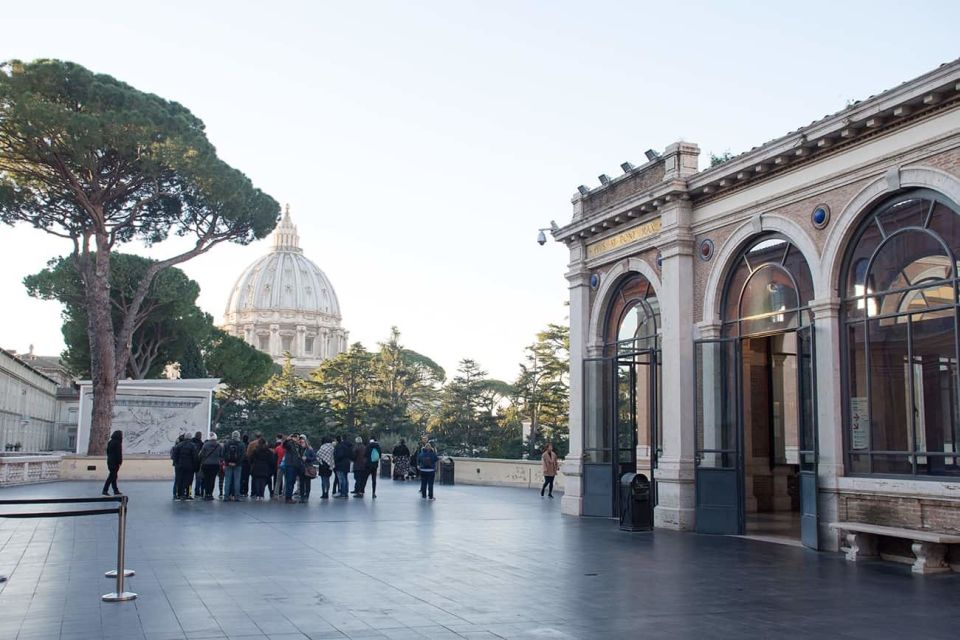
At the Vatican, time is the product. Lines can swallow half your day if you self-tour and get delayed at the wrong moment. This tour is built around a simple win: skip-the-ticket line and get into the Vatican Museums area with your guide and group.
The other value piece is the “how to look” part. You’re not just walking through rooms like a pinball. A good guide helps you aim your attention—what to look for, what to ignore, and how the artwork is doing its job. In this case, you’ll also get earphones, which matters because the Vatican is loud in the way crowds are loud: muffled voices, footsteps, sudden pauses. Those small audio advantages help you stay oriented.
Price-wise, the $71 per person for a 3-hour guided loop is easier to justify because your ticket into the Vatican Museums and access to the Sistine Chapel are included, along with a guide and audio. If you’d otherwise pay for entry plus try to navigate it all on your own, you’re paying for options that create extra friction. Here, the “friction” is handled for you.
You can also read our reviews of more tours and experiences in Rome.
Where you start and how the route flows
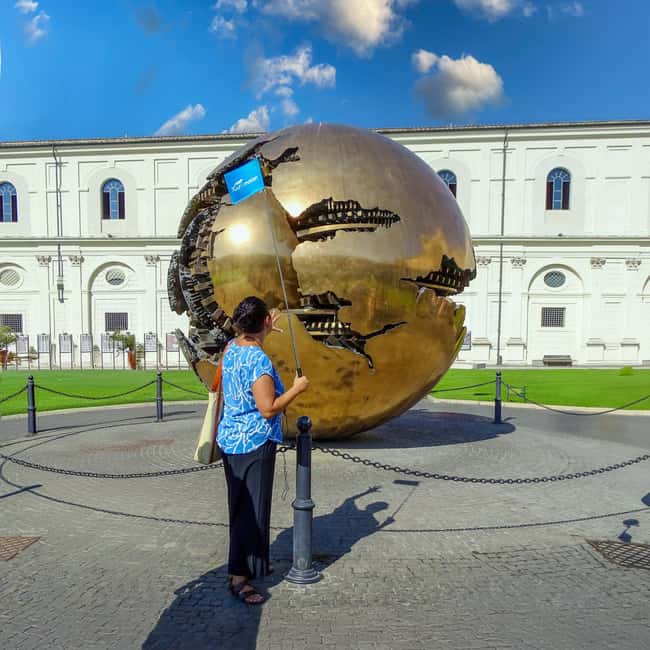
You’ll meet at one of the listed starting points (Viale Giulio Cesare, 229 is one option), and your drop-off is at Piazza Pio XII, 1. The meeting point can vary by the option booked, so plan to arrive a few minutes early and follow the instructions you receive.
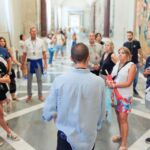
Once you’re together, the route is designed like a guided walk through artistic and historical themes. You’ll begin with the Belvedere Courtyard area, then move through the Vatican Museums galleries in a logical sequence—maps and tapestries for the “world as seen by Renaissance artists,” Raphael rooms for perspective and symbolism, classical sculpture for anatomy and influence, and finally the Sistine Chapel for the big payoff.
That order is part of the value. It prevents that common Vatican problem where you see masterpieces but you can’t remember what you just saw—or why it matters.
Belvedere Courtyard: when sculpture teaches you how artists think
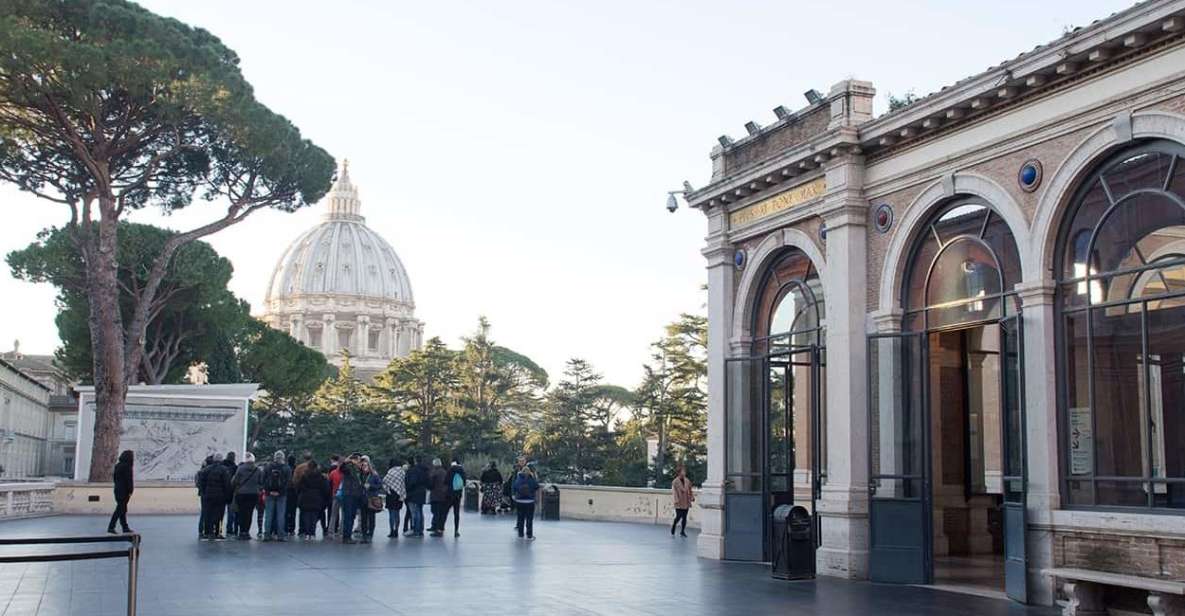
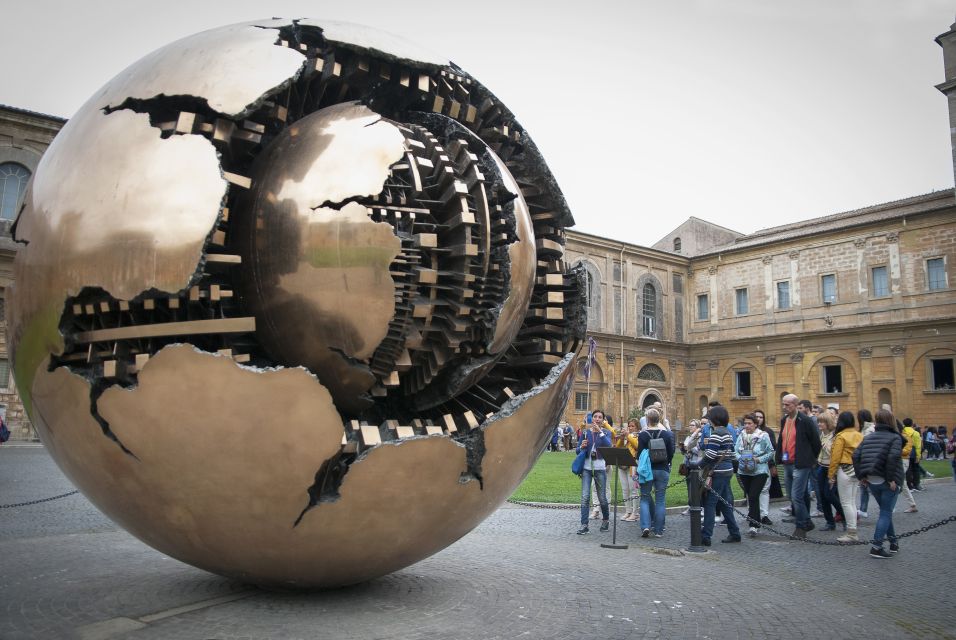
Before the Museums feel like one long maze, you get the classical tone set at the Cortile del Belvedere. This courtyard is where you can connect the dots between ancient sculpture and later Renaissance art.
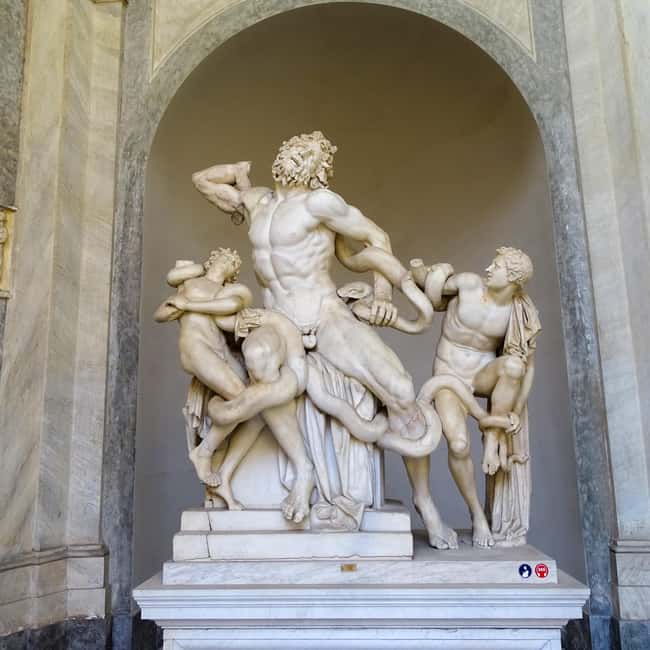
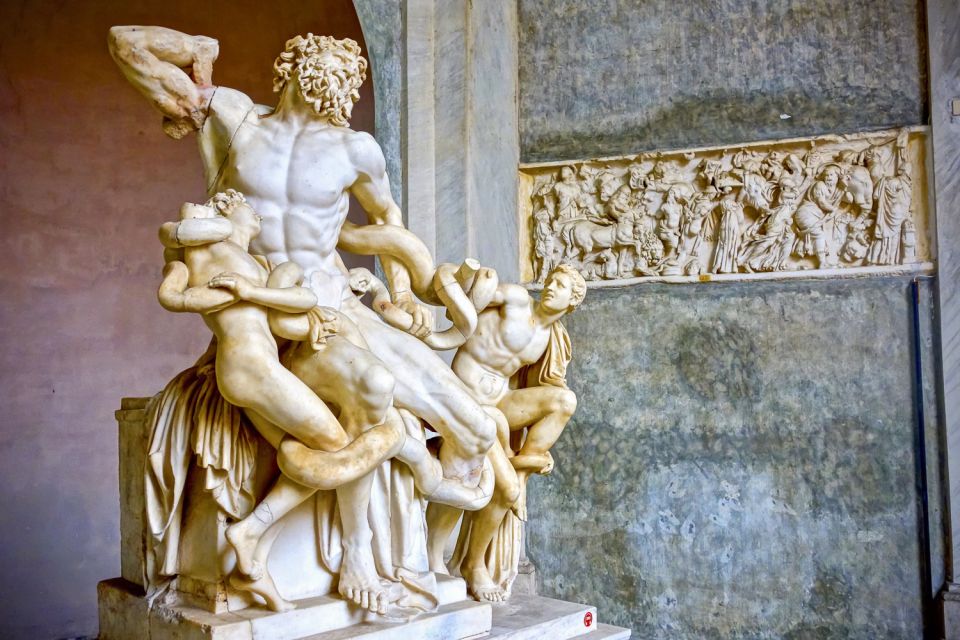
Expect to see major works such as Laocoön and His Sons and the Belvedere Torso. The Belvedere Torso is especially important because it’s described as the piece that helped shape Michelangelo’s understanding of human anatomy. Standing there, you start noticing what sculptors were studying: proportion, muscle tension, and the way artists handle movement even when the statue is still.
Practical note: this is a “look up and look around” zone, but you’re also going to be standing. Comfortable shoes are not a nice-to-have here—they’re the difference between enjoying the art and counting minutes.
Gallery of Maps: Italy as it looked in the 1500s
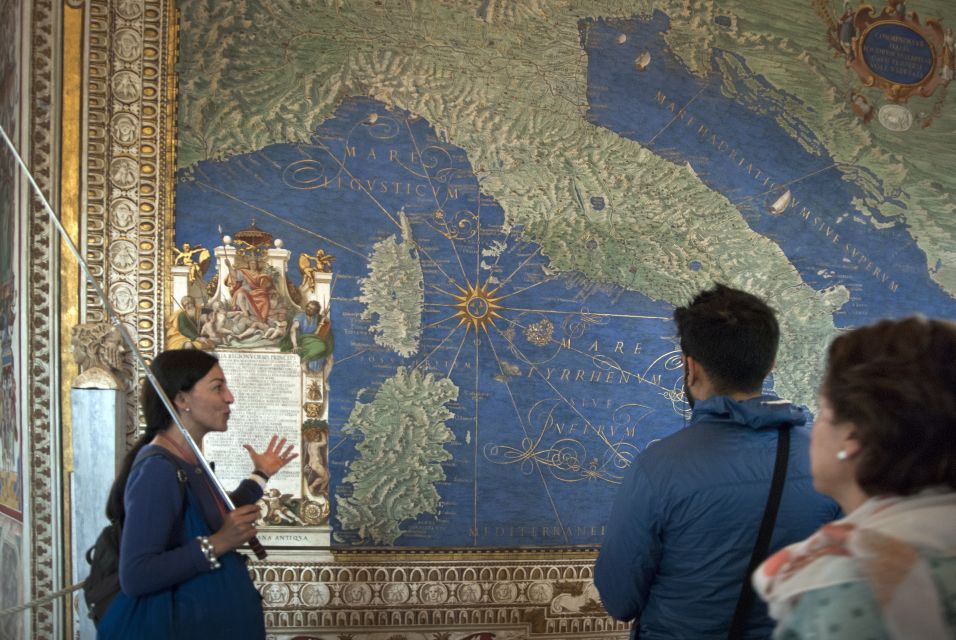
Next comes the Gallery of Maps, one of the most fun stops if you like detail and context. You’ll move through frescoed and illustrated depictions that show geography in a pre-modern way—an Italy mapped through 16th-century knowledge and artistic interpretation.
What I like about this kind of stop is that it broadens the Vatican beyond religion and celebrity names. It’s still “high art,” but it’s also a window into how people thought about the world. The guide’s job is to point out what’s accurate, what’s symbolic, and what you’re really seeing when you look at maps made long before modern cartography.
If you tend to skim museums, maps can be a wake-up call. You slow down because the room gives you something to “read.”
Gallery of Tapestries: seeing design, color, and storytelling
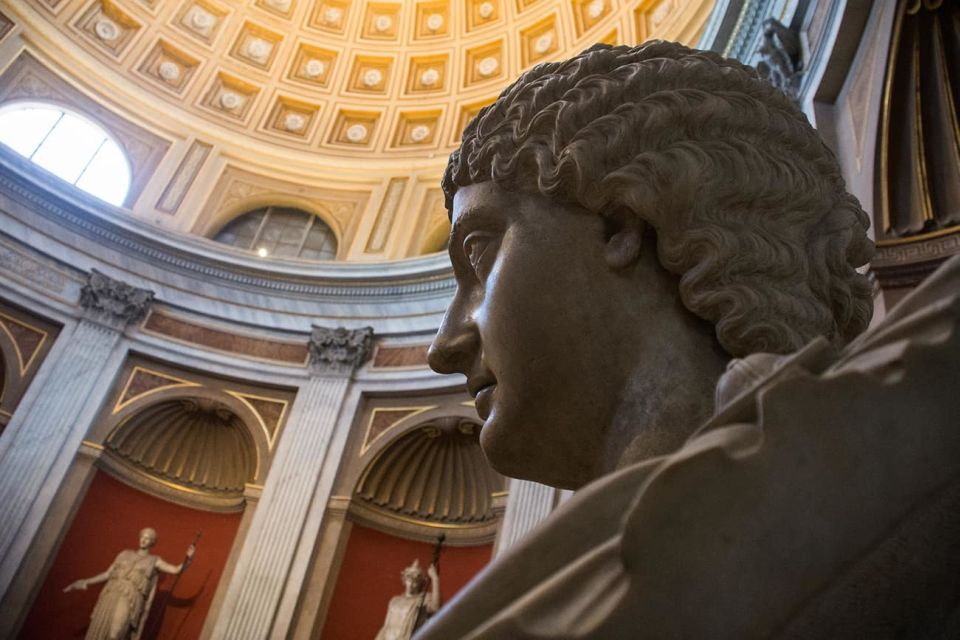
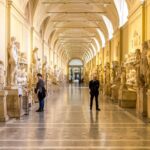
The Gallery of Tapestries follows, and this is where the Vatican Museum experience starts to feel tactile—like you can sense the craft behind the scenes. You’ll be guided through the room’s intricate details and rich imagery, including works that connect to Renaissance brilliance and storytelling.
Tapestry art is easy to misunderstand if you treat it like background decoration. A good guide makes it clearer: it’s not just decoration, it’s display, politics, belief, and craftsmanship all at once. And when you’re in a guided flow, you have someone pointing to the specific visual choices that create meaning.
One benefit of a small group is that you can actually get close enough to notice things without getting bulldozed by the room’s constant churn. That’s the difference between seeing tapestries and seeing the tapestries.

Raphael Rooms and the School of Athens: art as a coded argument
Then you move into the Raphael Rooms, including the School of Athens. This is the part of the Vatican where many visitors feel like they’ve seen it before—because it’s referenced everywhere. The guided advantage is that you’re not just recognizing the famous figures. You’re learning how Raphael uses perspective, composition, and symbolism to build the scene as an idea.
Expect a guide-led explanation of what the figures represent and why the painting is staged the way it is. When you understand perspective and symbolism, the room stops being a photo-op and starts being a logic puzzle with human faces.
You may also see the Room of the Fire in the Borgo during the tour. Even if the artworks are famous, the value is in the guide’s ability to tie the scenes to their historical context and visual clues.
Belvedere influence: the anatomy lesson from the Torso
After the Raphael side, the tour returns you to a theme you can feel in your own body: how art learns from the ancient world. The Belvedere Torso is highlighted as the inspiration behind Michelangelo’s anatomical understanding, so you’ll likely be encouraged to look at proportions and form in a sharper way than you would alone.
This is also where a guide helps you avoid the usual trap: “It’s old, so it looks old.” In reality, classical sculpture can be startlingly modern in its realism and tension. Standing close and looking with guidance makes that click happen faster.
Sistine Chapel: 30 minutes that can change how you see the whole Vatican
The tour culminates inside the Sistine Chapel, with about 30 minutes of guided time. This is the moment most people think they know, but the guided structure is what makes it hit differently.
You’ll be in the chapel with a quiet, focused atmosphere. The guide will point out and contextualize major works such as The Creation of Adam and The Last Judgment. The Creation of Adam is iconic, but the Last Judgment is often harder for first-time visitors to parse. A strong guide helps you look past the surface drama and notice how the figures are organized, how the composition directs attention, and what the scene is communicating.
One realistic consideration: 30 minutes sounds short because it is short. But it’s also intentional. The Sistine Chapel is crowded and rules-based, and you’re going to spend time facing art rather than constantly repositioning. With a guide, you get the main beats without wandering in circles.
The guide matters: what the best ones do for your experience
This tour leans hard on the quality of the guide. The reviews attached to this experience strongly praise guides who are friendly, prepared, and energetic. You may meet guides such as Lorena, Alexandra, Monica, Marco, Alessandra, and Laura—names that show up repeatedly in feedback.
What matters isn’t the name. It’s the behavior:
- You get a clear structure and timing that keeps you from losing the group
- You get stories and small details that turn famous scenes into something you can interpret
- You’re reminded to look for the guide flag (a small thing that saves real confusion in a packed museum)
Also, the earphones help you hear the guide even when you’re surrounded by chatter. Just note that in one case, a reviewer said the acoustics made it harder to hear at times. That’s a normal Vatican challenge, not a dealbreaker—just a reason to hold your head toward the guide when you can.
Logistics you can’t ignore: clothing, security, and tight corridors
The Vatican has rules, and this tour follows them. Plan for airport-style security. In high season, the wait at security may be up to 30 minutes. The good news is that skip-the-line access applies to the ticketing side of the Vatican Museums experience, not the general security process.
Dress code is strict:
- No shorts
- No short skirts
- No sleeveless shirts
- For places of worship, you need clothing that covers shoulders and knees
Bring:
- A passport or ID card
- Comfortable shoes
- For kids, an ID/passport as well
Bags are limited. Access isn’t possible with large backpacks, so bring a small backpack or bag.
Finally, this group tour is not suitable for wheelchair users, and it’s not set up for strollers either. If you’re traveling with mobility constraints, you’ll likely find the moving spaces and crowd density too hard.
Included and not included: what you should expect from the package
Here’s what’s included:
- Entrance ticket to the Vatican Museums
- Access to the Sistine Chapel
- Expert guide
- Earphones
- Helpline and assistance
What’s not included:
- Transfers
- Access to St. Peter’s Basilica (the tour description lists it as not included)
That said, one review notes access to St. Peter’s Basilica after the tour. I can’t promise that for your day, so treat it as a bonus if it happens—not something to plan around.
If you want St. Peter’s that day, you’ll probably want a separate plan for it. The Vatican is big enough that mixing everything without a strategy can turn into a sprint.
Should you book this Rome Vatican Museums and Sistine Chapel tour?
Book it if:
- You want skip-the-line convenience and a guided path through the biggest rooms
- You like art but also want the stories behind it explained in plain language
- You’re short on time and want to see the Gallery of Maps, Gallery of Tapestries, Raphael Rooms, Belvedere Courtyard, and then the Sistine Chapel
- You value earphones to keep up in crowds
Skip it or think twice if:
- You want a very slow, self-paced museum day with lots of lingering
- You need wheelchair access (this one isn’t suitable)
- You’re bringing a stroller or expect a kid-friendly flow through tight corridors (the experience is physically demanding)
If your goal is the best-known highlights with context and less line stress, this is the kind of tour that helps you get your money’s worth in the exact places that usually cost you time.
FAQ
How long is the Vatican Museums and Sistine Chapel tour?
The tour duration is 3 hours, with guided time inside the Sistine Chapel for about 30 minutes.
Does this tour include tickets to the Vatican Museums and the Sistine Chapel?
Yes. It includes the entrance ticket to the Vatican Museums and access to the Sistine Chapel.
Where do I meet the group?
The meeting point may vary depending on the option booked. One listed option is Viale Giulio Cesare, 229. Confirm your specific start point with your booking details.
What time or languages are offered?
The tour languages are Spanish and English. Starting times depend on availability.
Will I need to go through security?
Yes. All visitors must pass through airport-style security. In high season, the wait at security may be up to 30 minutes.
What should I wear or bring?
Bring a passport or ID card and wear comfortable shoes. You also need clothing that covers your shoulders and knees to access places of worship. Shorts, short skirts, and sleeveless shirts are not allowed.
Are shorts or large bags allowed?
Shorts are not allowed. Large bags are not allowed; you’ll need a small backpack or bag. Luggage and large bags won’t work for access.
Is St. Peter’s Basilica included?
No. The tour information lists St. Peter’s Basilica access as not included.
Is this tour suitable for wheelchair users or strollers?
No for wheelchair users. The tour is also not suitable for strollers, and it involves walking and standing in tight museum spaces.