REVIEW · ROME
Rome’s 12 Best Highlights Full Day Private Tour
Book on Viator →Operated by Rome-Limousines · Bookable on Viator
Rome hits you fast. This private full-day tour turns that into a clean plan, bouncing you between 12 of the biggest landmarks with photo stops and clear explanations from a single English-speaking driver-guide. You also ride in an air-conditioned Mercedes with bottled water, so the day feels manageable even when Rome is not.
What I like most is the focus on momentum: Teatro di Marcello, Palatine Hill viewpoints, Circus Maximus, and the Forum area get you the ancient “wow” without burning your day on ticket lines. I also like that the itinerary covers modern Rome icons in the same loop—St. Peter’s Square, Trevi Fountain, Spanish Steps, Piazza Navona, and the Pantheon exterior—so your first day has real orientation.
One possible drawback: this is mostly an outside-view day. A few stops include optional time at places like the Pantheon if you want to go in, and the Colosseum is generally viewed from outside, so if you’re chasing deep inside access at every stop, you may want a ticket-focused add-on.
In This Review
- Key Highlights Worth Knowing Up Front
- A 12-Stop Rome Snapshot Without Ticket Lines
- The Mercedes Pickup That Keeps the Day From Falling Apart
- Teatro di Marcello, Palatine Hill, and Circus Maximus: The Ancient “Backstory” Trio
- Piazza Venezia and the Roman Forum: Where the City’s Power Looked Like
- St. Peter’s Square: One Hour That Changes Your Vatican Mental Map
- Trevi Fountain, Spanish Steps, and Piazza Navona: The Central-Rome Loop
- The Pantheon Exterior and a Smart Option for Going In
- Terrazza del Gianicolo: Big Views Plus the Noon Cannon
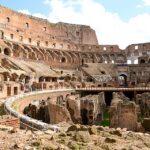
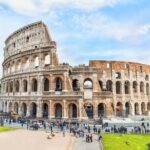
- Colosseum From Outside: What You Can Still Learn Fast
- Price and Logistics: Is $424.65 Worth It?
- Who Should Book This Tour (and Who Might Skip It)
- Should You Book This Rome 12 Highlights Private Tour?
- FAQ
- What does this private tour include?
- Do I need tickets for the 12 highlights?
- How long is the tour and how much time do we spend at each stop?
- Is there pickup and drop-off?
- What happens if my date has street closures or major events?
- What’s the best way to use the Pantheon stop time?
Key Highlights Worth Knowing Up Front
- Private, one-guide format: one English-speaking driver-guide handles driving, timing, and explanations so the day stays fluid
- Outside viewing strategy: many stops are ticket-free to keep you moving and reduce long waits
- Photo-first viewpoints: Palatine Hill and Circus Maximus are timed for panoramas, not just passing glances
- Vatican plus classic center loop: St. Peter’s Square and the major central sights are grouped for efficiency
- Flexible routing: on-the-day changes can happen for street closures, and extra ticket-free stops may be swapped in
A 12-Stop Rome Snapshot Without Ticket Lines
The big selling point here is how it respects your time. Rome can be gorgeous and chaotic at the same time, so a plan that hits a lot of ground with short stops is the fastest way to get your bearings. You’ll see the Colosseum area, the Pantheon, Trevi Fountain, and Vatican City in one day, but you’re not stuck waiting around at every checkpoint.
The “outside-view” approach is not a downgrade—it’s a strategy. Many of the stops are designed for quick photo moments and interpretation from the curb, terrace, or nearby viewpoint. For a first or limited-day visit, that’s gold. You leave with names, stories, and locations you can later map onto a deeper second day.
You should still expect a full, active day. Even with car time, the stops are timed and you’ll have short windows to take photos, ask questions, and reposition quickly. Think of it as a highlight reel with context, not a slow museum day.
You can also read our reviews of more tours and experiences in Rome.
The Mercedes Pickup That Keeps the Day From Falling Apart
Getting around Rome by yourself can mean fighting traffic, parking, and figuring out where you’re allowed to stop. This tour hands you the hard parts: an air-conditioned Mercedes minivan or sedan, plus parking fees and bottled water. That matters because heat and delays don’t just waste time—they drain your energy for the sights.
A real advantage is the one-person driver-guide setup. You’re not switching between separate taxi driving and a walking guide. Instead, the same professional handles route planning and narration. In multiple experiences shared through the years, guides like Claudio, Alessandro, Andrea, Marco, Hector, Stephane, and Cristiano were praised for making the driving part part of the experience, not a chore. You can feel that in the way routes get adjusted to make photos easier and walking more practical.
If you’re traveling with people who don’t love long treks, this style helps. The day is built around getting you close, giving you viewpoints, and keeping movement efficient—especially helpful around dense central areas.
Teatro di Marcello, Palatine Hill, and Circus Maximus: The Ancient “Backstory” Trio
Rome’s ancient sites can feel intimidating if you only see ruins with no guide thread. This early stretch gives you that thread fast.
Stop 1: Teatro di Marcello
You’ll pause at the second-largest of Rome’s ancient theaters and one of the few that still survives in a dramatic, usable form. It was built by Augustus in the 1st century BC and dedicated to Marcellus, his young nephew. In the 16th century, the structure was repurposed as a foundation for a private residence—so you’re looking at layers of Rome, not one frozen moment. You get a short explanation plus photo time right there, which helps you later recognize what you’re seeing.
Stop 2: Palatine Hill (outside viewpoints only)
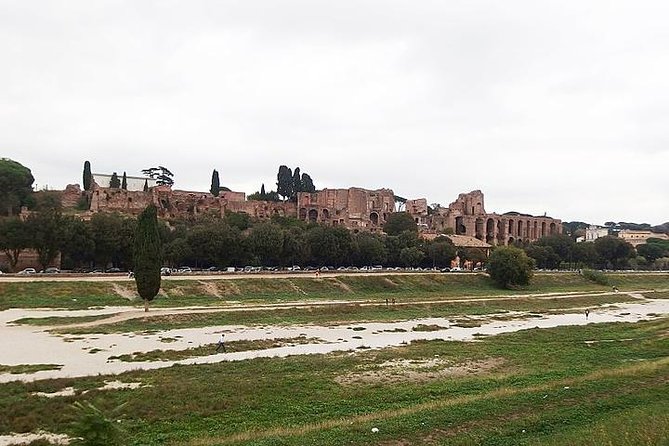
Palatine Hill is where Rome’s founding story is often placed in the timeline, and later it became the location for imperial residences. You won’t roam the interior here, but you will get a smart photo moment from a crest overlooking the Circus Maximus area. That viewpoint style is exactly what you want early in the day: you’re being shown where history lived, not just what’s left behind.
Stop 3: Circus Maximus (outside only, panoramic angle)
Circus Maximus is now mostly a flat, green space, but it was once the stage for chariot racing on a massive scale—famously referenced through pop culture. Your stop is set up so you can see from the southern crest with a broad view, which is ideal for photos and for understanding the scale.
These three stops together work well because they build a simple map in your head: theater → imperial hill → racing arena. You’ll feel less lost when you reach the Forum later.
Piazza Venezia and the Roman Forum: Where the City’s Power Looked Like
Next comes a pivot from the “spectacle” of ancient entertainment into the civic core of Rome.
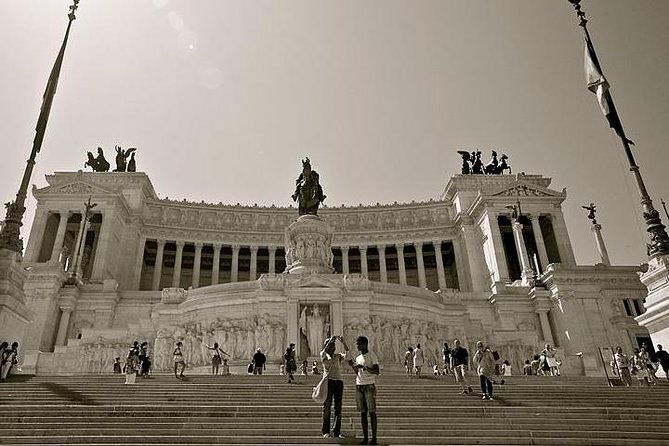
Stop 4: Monument to Victor Emmanuel II (Piazza Venezia)
This is one of the main-square anchors of central Rome. It honors Victor Emmanuel II, the first king of unified Italy, and the monument area includes the Tomb of the Unknown Soldier with eternal flames. You view it from outside, from a corner in the main square, with brief photo time and context. It’s a quick way to remind yourself that Rome isn’t only ancient—it keeps rewriting itself.
Stop 5: Roman Forum (short stop with explanation and photo time)
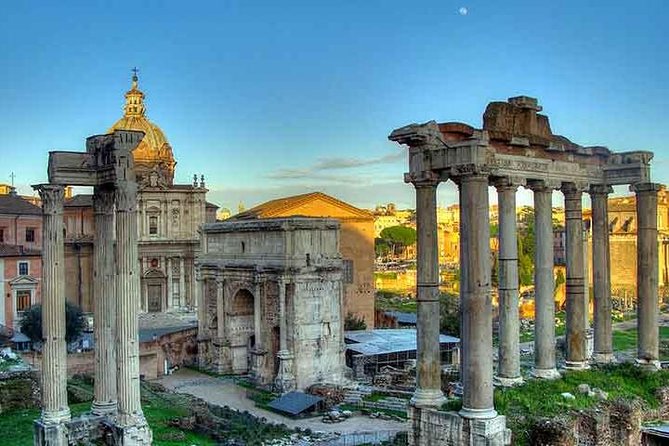
The Roman Forum was the political and civic heartbeat of ancient Rome, evolving from a marketplace into a center for ceremonies and public life. You don’t enter here on this tour plan, but you do get close viewing options depending on vantage points. You’ll stop near the Forum zone with time to take pictures and absorb the key significance of the area.
What I like about this pairing is how it sets up your later “big wow” moments. Colosseum is entertainment and spectacle. The Forum is administration and politics. You get both moods in one morning.
St. Peter’s Square: One Hour That Changes Your Vatican Mental Map
Vatican City can be overwhelming, even from the outside. This tour treats it like a priority photo moment with a focused orientation.
Stop 6: St. Peter’s Square
You’ll get a brief explanation from the driver-guide, then time to take photos and explore the square. St. Peter’s Square is named after St. Peter’s Basilica at the heart of it, and it’s where the Pope meets people and gives blessings (with Sunday audiences in the mix). The square is open to the public except during special celebrations.
The practical value here is time. One hour is enough to understand the space, find the main sight lines, and take photos without turning the Vatican into an all-day puzzle. If you’ve only seen Vatican images online, this stop helps you connect those images to real scale and layout.

Trevi Fountain, Spanish Steps, and Piazza Navona: The Central-Rome Loop
After the Vatican, you drop back into classic central Rome—icon sights that you can enjoy quickly, even if you do not plan to go inside anything.
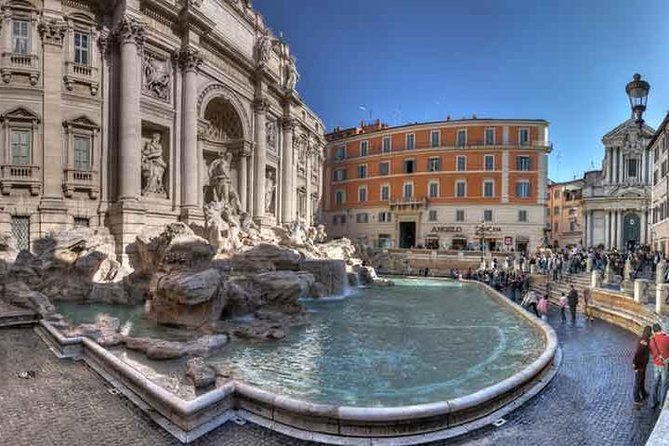
Stop 7: Trevi Fountain (coin-in-the-water moment)
Trevi is more than a pretty postcard. It’s tied to a water system: the fountain display shows the aqueduct water stage. You’ll be guided to street level as close as access allows. The lower level is restricted to ticketed guests, so your time is focused on the main view, plus a historical explanation and photo time.
Here’s a small practical tip: if you want the best photos, arrive with a plan. You get about 30 minutes here, so decide where you want your main shot before you start wandering.
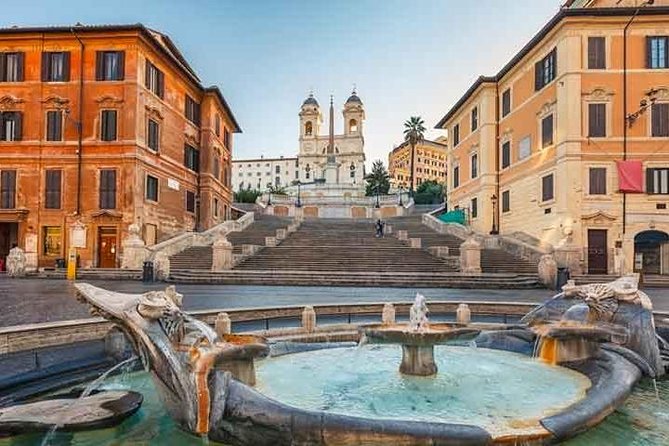
Stop 8: Spanish Steps
You’ll stop at the Spanish Steps area with time to take in the plaza, nearby fashion district energy, and the famous stairway view. This is a quick reset point between major landmarks.
Stop 9: Piazza Navona
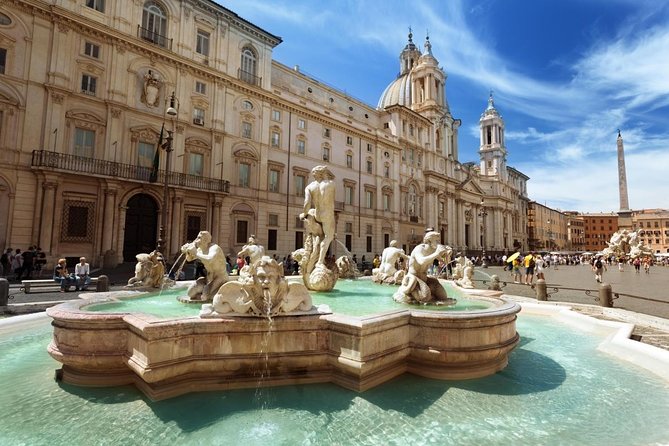
Piazza Navona keeps the outline of an ancient stadium arena from 86 AD and later became shaped by Renaissance and Baroque ambitions influenced by the Popes. You’ll drop near the square, get context, and then have time to look around and grab photos.
This three-stop block is ideal because it’s “high recognition, short time.” It satisfies the must-see list while keeping the day moving.
The Pantheon Exterior and a Smart Option for Going In
If you want one place where Rome’s design feels almost unfairly perfect, the Pantheon is it. On this tour, you’ll start with what you can do quickly.
Stop 10: Pantheon (outside with optional interior time)
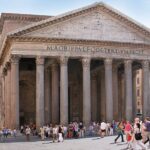
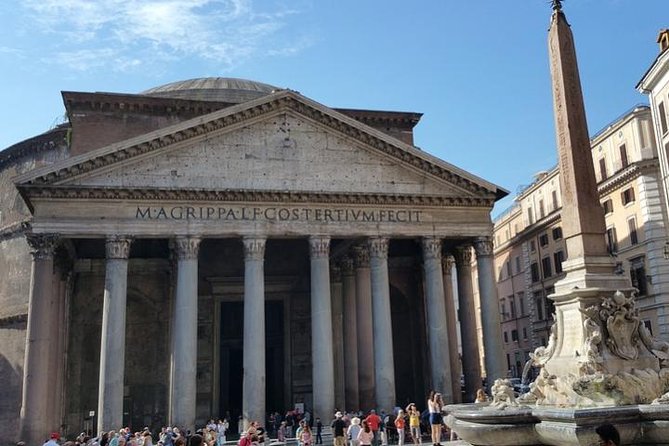
You’ll view it from outside and get historical context about it being dedicated to all gods and famous for engineering—especially the dome. Then you’ll decide if you want to enter. The tour plan notes that extra time can be provided if you wish to go inside.
If you do buy a ticket on-site: the entrance has ticket offices where cash payments are available on the left side and credit card payments on the right. Knowing that small detail helps you avoid frantic last-minute searching.
Even if you skip the interior, this stop is still useful. The Pantheon’s exterior is a lesson in symmetry and scale, and the explanation helps you understand what you’re looking at.
Terrazza del Gianicolo: Big Views Plus the Noon Cannon
This is where the tour gives you something most city itineraries miss: a calm panoramic break.
Stop 11: Terrazza del Gianicolo
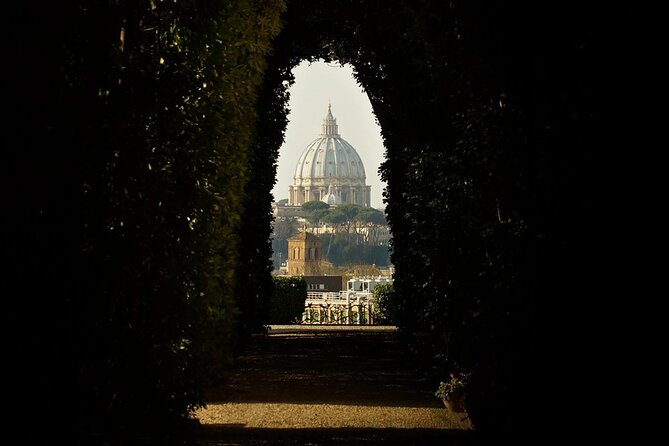
You’ll stop at a terrace built for city views. It’s also framed by a fountain, so it’s not just a lookout—it’s an actual pleasant place to pause and let your brain absorb the city.
Then comes the famous daily moment: Rome fires a cannon at noon from this area. It’s become a tourist attraction because people line up for the sound and the ritual. Your stop includes photo time and a stroll around the area.
I love this stop because it gives contrast. After crowd-heavy central Rome, you get open sky and a wider perspective. It also helps you map later directions and neighborhoods.
Colosseum From Outside: What You Can Still Learn Fast
The Colosseum is always going to be the star. Even when you’re viewing from the outside, you can still understand a lot if someone puts it into words.
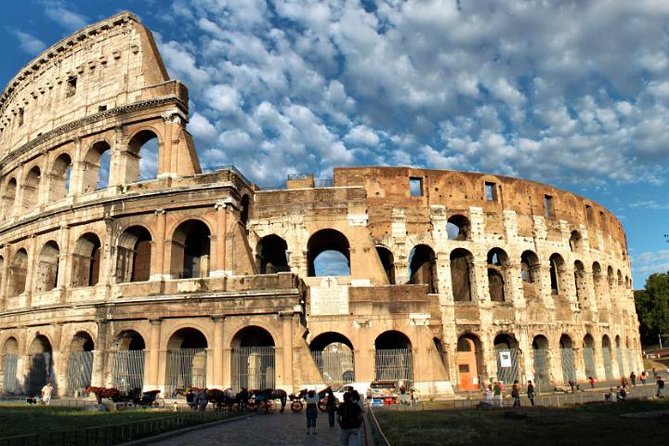
Stop 12: Colosseum exterior viewpoint with explanation
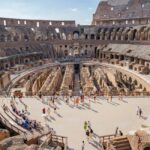
You’ll see the Flavian Amphitheater from outside and get a detailed explanation about gladiatorial contests and hunting games connected to its 1st-century A.D. purpose. You’ll also have time to take photos and walk around the surrounding area.
Now, here’s the important nuance for your planning: this tour’s core plan does not require entrance tickets for the listed stops and keeps most viewing outside. If you choose a private licensed tour guide option and you already have tickets for the Pantheon and/or Colosseum, the guide can guide you inside those monuments. So if inside access is a must for your group, you’ll want to match your booking to your ticket plan.
In one example shared by a party who had a special timing situation, the guide helped them get into the Colosseum during First Sunday circumstances. That’s not a guarantee—just evidence of how a strong guide can handle timing tricks when they’re available.
Price and Logistics: Is $424.65 Worth It?
Let’s talk value, because private tours can be a splurge.
At $424.65 per person for about 7 hours, what you’re really buying is:
- private door-to-door style service within downtown Rome (pickup and drop-off are offered)
- air-conditioned Mercedes transport
- parking, plus bottled water
- a professional English-speaking driver-guide who handles timing and explanation
- an efficient outside-view itinerary that covers 12 top highlights without requiring you to line up at every stop
If you compare that to piecing Rome together on your own, the math often works for small groups. You’re not just paying for the car. You’re paying for someone to manage the day so you don’t waste hours negotiating transit, finding street parking, or realizing the entrance was closed or the view you want is blocked.
Where the price might feel heavy is if you want a slow, inside-heavy museum day. This is a highlight-and-context format. No lunch is included, and the outside-only structure means you should still plan at least one separate day—or add-on tickets—for deep interiors you truly care about.
Who Should Book This Tour (and Who Might Skip It)
I’d point this tour at three kinds of people:
- First-time Rome visitors who want structure and must-see coverage fast
- Groups with mixed interests who want ancient sites plus central landmarks without splitting up
- People who hate logistics and would rather spend energy on photos, viewpoints, and explanations
If you already know Rome well and you want hours inside specific monuments, you might prefer a more ticket-heavy plan with longer walking blocks. Also, if your ideal day is unhurried and quiet, this schedule is packed. It’s still good for the heart of Rome, but it’s not built to wander slowly.
Should You Book This Rome 12 Highlights Private Tour?
Yes—if your goal is getting the big story of Rome in one day with minimal friction. The outside-view plan is smart, and the guide-plus-driver format keeps the day from turning into a travel scavenger hunt. The stop selection is also well balanced: ancient entertainment, civic core, Vatican orientation, then the classic central sights, finishing with a panoramic break and the Colosseum area.
I’d book it if you want an efficient first day. I’d think twice if you need inside access at every stop, or if you already plan to spend multiple days in Rome and don’t need this fast overview.
FAQ
What does this private tour include?
It includes an air-conditioned Mercedes minivan or sedan, private transportation, parking fees, and bottled water. It also includes a professional English-speaking driver-guide and pickup is offered within downtown Rome.
Do I need tickets for the 12 highlights?
This tour is designed so you can see the listed highlights from outside, and it states that tickets are not required for the stops. If you choose the private licensed tour guide option and have tickets for the Pantheon and/or Colosseum, the guide can guide you inside.
How long is the tour and how much time do we spend at each stop?
The tour runs about 7 hours. Individual stops are short, ranging from roughly 15 to 30 minutes at most locations, with one longer stop at St. Peter’s Square.
Is there pickup and drop-off?
Yes. Free pickup and drop-off are offered within downtown Rome. Pickup from outside that zone (like some locations outside the Rome area) may involve a transfer fee.
What happens if my date has street closures or major events?
If your tour date coincides with events like marathons or strikes that close streets or squares, some of the 12 highlights may be replaced with other ticket-free attractions at the driver-guide’s discretion.
What’s the best way to use the Pantheon stop time?
You’ll have time to view the Pantheon from outside, and you can add interior time if you want to enter. The Pantheon ticket offices accept cash on the left side and credit card on the right, which can help you move faster.