REVIEW · ROME
Rome: Hop-on Hop-off Sightseeing Bus Tour with Audioguide
Book on GetYourGuide →Operated by Gray Line I Love Rome · Bookable on GetYourGuide
Rome can feel big and noisy. This bus tour turns the chaos into a clear route. You ride in comfortable double-decker pink buses and listen to a multilingual audio guide through included headphones, so you’re not just looking at monuments—you’re understanding what you’re seeing. I like that you get a flexible hop-on hop-off setup that hits major sights like the Colosseum, the Vatican area, and the Spanish Steps, plus it’s run in multiple languages. One possible drawback: getting back to the exact next stop can be tricky once you hop off, so plan on asking for directions and wearing comfy shoes.
The loop works best when you treat it like a Rome “orientation pass.” I also found the on-board narration easy to follow, and staff support can be really helpful (people have mentioned friendly, informative greeters like Francis P). The big payoff is simple: you can take in the city’s big landmarks by day, then hop off where you want to linger—without building a complex plan from scratch.
In This Review
- Key highlights that matter
- A smart way to orient yourself in Rome
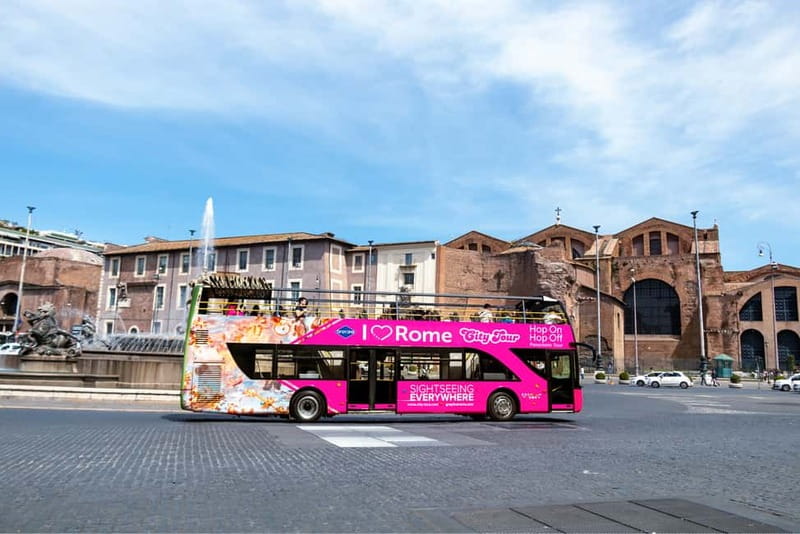
- Your bus experience: what the pink double-deckers are like
- Price and value: what $22 gets you
- Stop-by-stop: the route from Termini to Trevi area
- Stop 1: Termini (Via Giovanni Giolitti) to get your bearings
- Stop 2: Santa Maria Maggiore (quick access to a major basilica)
- Stop 3: Colosseum area (the classic Rome moment)
- Stop 4: Circus Maximus + Mouth of Truth vibes
- Stop 5: Piazza Venezia and the Forum side of town
- Stop 6: Vatican City area (Sistine Chapel, St. Angelo Bridge)
- Stop 7: Spanish Steps + shopping zone
- Stop 8: Barberini and the Trevi Fountain area
- Audio guide: how the narration improves your photos
- How long it really takes: 4 hours to multi-day flexibility
- Timing and operating hours: plan around the last bus
- Where this tour shines (and who should book)
- Quick “how to use it” tips that actually help
- Should you book this Rome hop-on hop-off bus tour?
- FAQ
- How long is the Rome hop-on hop-off bus tour?
- How many stops are on the route?
- What is included with the ticket?
- Is admission to attractions included?
- Can I hop on and off at any location in Rome?
- Which languages are available for the audio guide?
- Are the buses open-top?
- Where does the tour start?
- What time does the bus run?
- Is the Vatican area stop location always the same?
Key highlights that matter
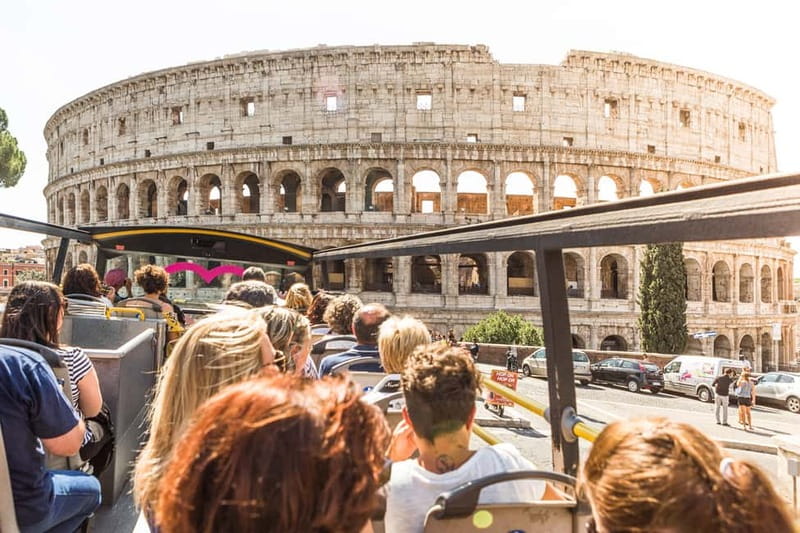
- Pink open-top (with detachable roof) buses help you see the city while staying comfortable in changeable weather
- 8 strategic stops connect you to the Colosseum, Vatican area, Spanish Steps, Piazza Navona area sightseeing, and more
- Headphones + 12 language options mean you don’t have to guess what you’re looking at
- Routes are fixed (you can’t hop on anywhere with a one-run style ticket), so you’ll want to match your plan to the stops
- Runs through the heart of the day with clear last-bus times from Termini depending on season
A smart way to orient yourself in Rome
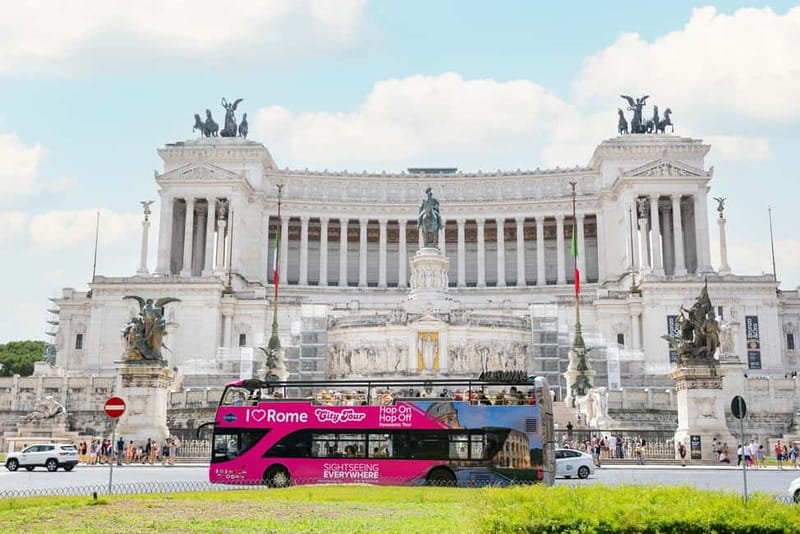
If this is your first time in Rome, the city’s scale can surprise you. Distances between the Colosseum, the Vatican, and the Spanish Steps aren’t walkable in a sane way—at least not with limited time and full-size crowds. This hop-on hop-off format helps you solve that problem fast. You start at Termini, ride past Rome’s headline sights, and choose your own pace.
I like that it’s not just a drive-by. You get detachable-roof double-decker views and a guided audio story, so your brain starts clicking things into place: why the Forum matters, how St. Peter’s Square is set up for crowds, and what you’re seeing around the Spanish Steps area.
The other thing I appreciate is that the tour is built around stops that put you within walking distance of big landmarks. That matters in Rome, where “close” can still involve a lot of uphill steps, detours, and pavement that’s not exactly flat. This bus route reduces the guessing.
You can also read our reviews of more tours and experiences in Rome.


Your bus experience: what the pink double-deckers are like

The buses are open-top double-deckers with a roof panel that can be detached. In practice, that means you get classic Rome sightseeing views while still having a buffer when weather shifts. It’s also helpful in hot months, because you’re not always roasting in direct sun; you can switch where you sit as conditions change.
You’ll also notice the service style is built for moving. Buses run regularly (some riders note about every 15 minutes), and the route stays focused on the city’s main attractions. That makes the hop-off-and-on part feel practical instead of stressful.
Practical notes to keep in mind:
- You can ride and listen at your own pace, thanks to the headset audio system.
- The service has fixed routes, so it’s not the kind of bus you use to jump randomly around the city.
- If you want wheelchair access, wheelchairs may be accommodated on the lower floor.
Price and value: what $22 gets you
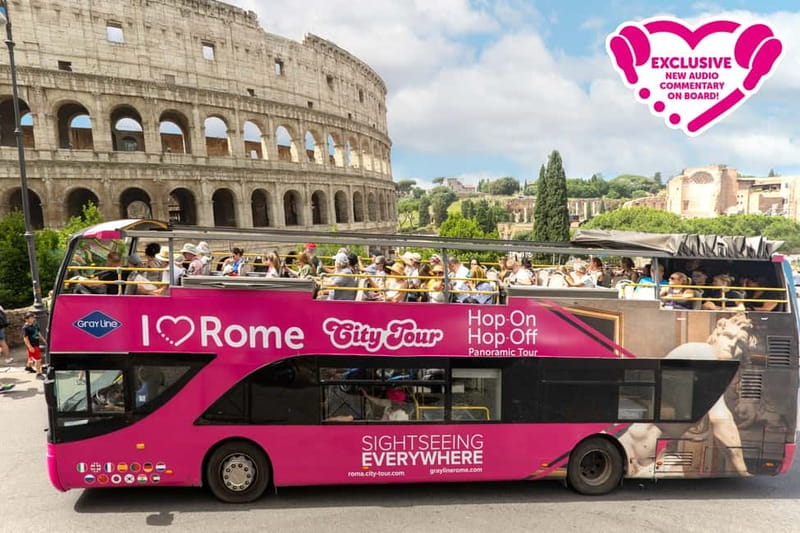
At around $22 per person, you’re buying a way to save time, energy, and planning headaches. You’re not paying for museum entry here. What you are getting is transportation plus narration plus convenience.
That tends to be good value when:
- You want to see a lot without making a day-by-day itinerary from scratch.
- You’re traveling with people who want variety (one person wants photos, another wants context).
- You’re trying to decide where to go deeper afterward.
Where value can drop a bit is if you already have a tight plan and you only want one or two stops. Since the route is fixed and timed around the bus loop, you’ll get more out of it when you actually hop off, then reboard later.
Stop-by-stop: the route from Termini to Trevi area
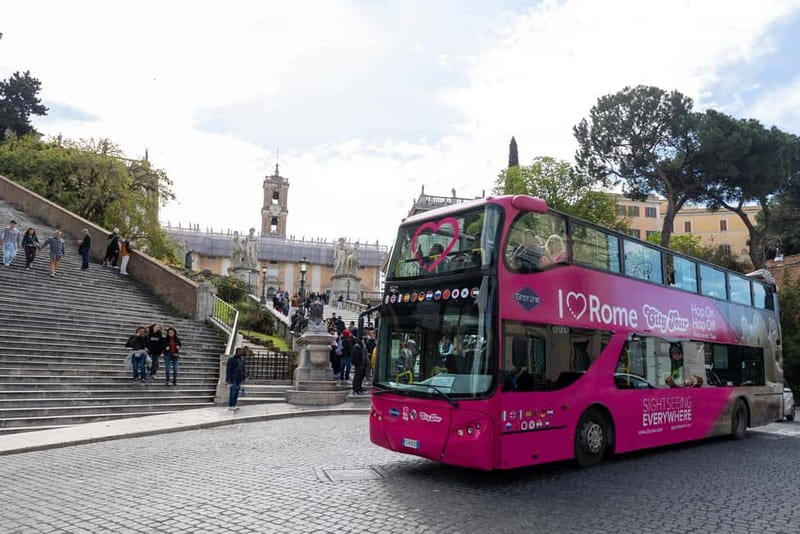
The route is built around 8 stops, and each one sets you up to either walk nearby or use the bus as your connector. Here’s how each stop tends to work in real life, plus where the trade-offs are.
Stop 1: Termini (Via Giovanni Giolitti) to get your bearings
Most people start at the Termini area, with the main pickup at Via Giovanni Giolitti, 32 (meeting point can vary by option). This is a smart place to begin because Termini is one of Rome’s major transport hubs. If you’re arriving by train, it also reduces the “where do I go now?” factor.
You’ll get your first ride-by views quickly, and the audio helps you understand the big picture before you choose where to exit next. My advice: use the first loop as reconnaissance. Don’t overthink it—just stay on long enough to learn the shape of the route.



Stop 2: Santa Maria Maggiore (quick access to a major basilica)
Your next major architectural stop is Santa Maria Maggiore (the stop is listed as Piazza dell’Esquilino, 12). This is one of those locations where it’s easy to appreciate the scale and history without needing an entire museum day.
The main benefit here is timing. You can choose to hop off briefly, see what you want, and then reboard without losing the day to travel between far-apart neighborhoods.
The drawback: if you’re chasing only the most famous “one photo” sights, you might not spend much time here. But if you like church architecture and the feel of Rome beyond the top two tourist hits, this stop gives you a nice change of pace.
Stop 3: Colosseum area (the classic Rome moment)
The Colosseum Archaeological Area stop is listed at Via di S. Gregorio, 30. This is the big one. Even from outside, the Colosseum is dramatic enough to pull you in, and having the bus deliver you here saves a lot of navigation stress.
Practical tip: if you plan to do more than photos—like a longer walk around the surrounding area—take a bit of time. Rome’s most famous ruins don’t feel like “stop, take picture, leave.” They’re built to linger over.
Trade-off to watch: this area can be crowded and busy. The bus helps you get there, but you’ll still want to be ready for lines and foot traffic when you step off.
Stop 4: Circus Maximus + Mouth of Truth vibes
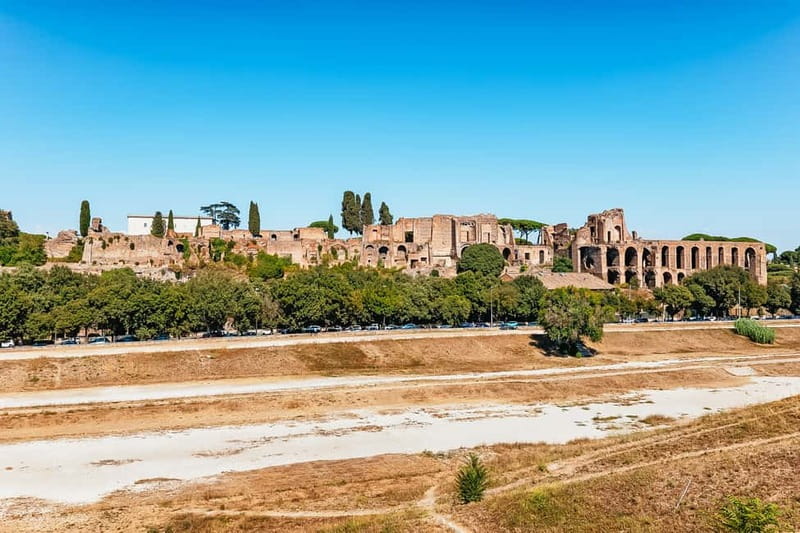
Stop 4 is tied to Circo Massimo (Circus Maximus) and the Mouth of Truth area (listed at Via del Circo Massimo, 41/89, opposite Roseto Comunale). This is a great stop if you want Roman history that feels less like a theme park line and more like an open-air slice of the ancient city.
The value here is contrast. After Colosseum, this provides a different Roman landmark shape—plus it’s a useful stepping stone toward the Forum/Piazza Venezia side of the route.
Stop 5: Piazza Venezia and the Forum side of town
Stop 5 is Piazza Venezia with the nearby Foro Romano (Roman Forum) connection (listed at Via del Teatro di Marcello, 34, behind the terminus of public buses). This area is where you start seeing how Rome’s center evolved over time.
If you’re the type who likes to understand what you’re walking among, this is one of the better “audio + walking” pairings. The bus audio gives context; the streets and ruins let you put it together for yourself.
One consideration: Rome’s street level around this zone can feel like a maze, especially if you hop off and then try to locate the next stop quickly. Plan to give yourself a little extra time to reconnect with the bus.
Stop 6: Vatican City area (Sistine Chapel, St. Angelo Bridge)
Stop 6 covers Vatican City, including mention of the Sistine Chapel and the St. Angelo Bridge area. The location note is important: from 23rd December 24, it will be at Lungotevere Tor di Nona 7, between Via Panico and Via Mastro.
This matters because Vatican area access changes in busy cities. You don’t want to arrive expecting one exact curb and find buses have shifted. If you’re going around late December and beyond, take note of that stop location detail.
As for value: getting to this zone via the bus is a huge time-saver. The Vatican area is one of Rome’s most intense traffic and crowd zones, and the bus loop keeps you from wrestling with complicated local routes.
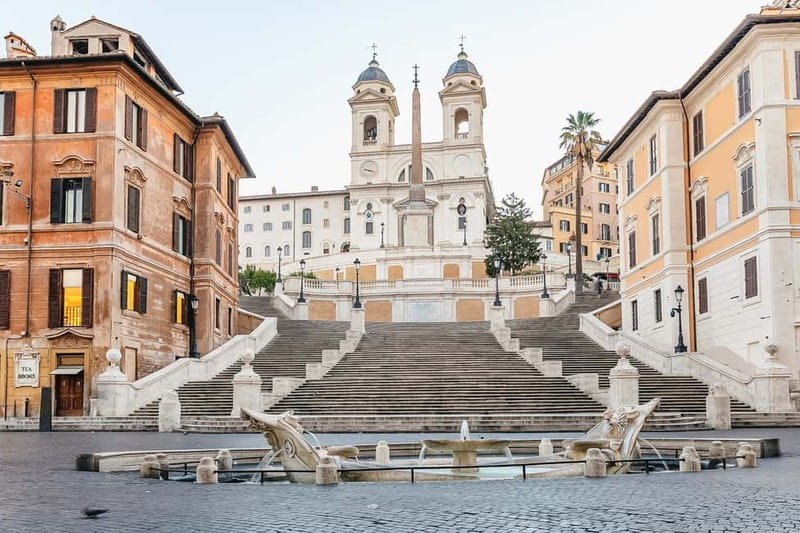
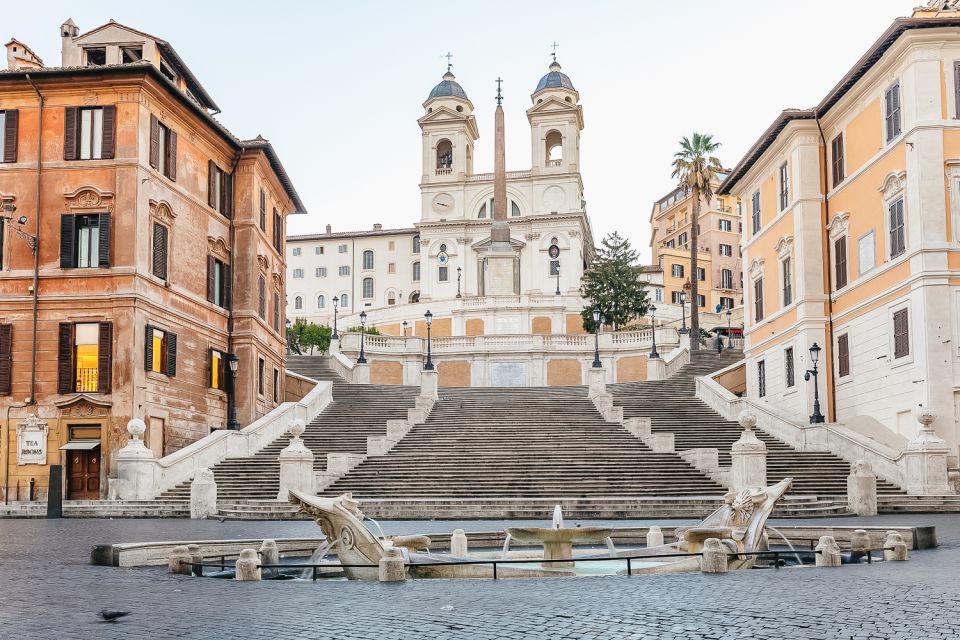
Stop 7: Spanish Steps + shopping zone
Stop 7 is the Spanish Steps area (listed as Via Ludovisi, 35). This is a great spot for both photos and a slower stroll. The audio helps you understand why this area is such a major meeting point in Rome’s visual culture.
The trade-off is the crowd factor. This is one of the most photographed corners in the city. If you hate crowds, you might want to time your hop-off earlier in the day.
Also, this is a good stop if your group likes variety. One person can focus on the steps; another can wander into side streets and shops nearby without “wasting” the bus ride.
Stop 8: Barberini and the Trevi Fountain area
Stop 8 covers Barberini & Trevi Fountain (listed at Via Barberini 12). This area is ideal as a finale because you can close the day with a classic Rome icon.
A helpful way to do it: if you do the loop once, then decide where you want to return, you’ll often end up back around Trevi. And since the bus gets you to the general area, it makes a repeat visit easier than trying to line up transport on your own.
Audio guide: how the narration improves your photos
The included audio guide is available in Spanish, Chinese, Dutch, English, French, German, Italian, Japanese, Arabic, Portuguese, Russian, Korean. The practical advantage isn’t just language. It’s that you’re listening while the sites slide past in sequence.
That creates a timeline in your head. You stop seeing the Colosseum as a single big photo. You start connecting it to the Forum side. You also pick up why certain squares and viewpoints exist.
I also noticed the pace can be slow and easy to follow on some rides, and staff have been described as friendly and helpful when people needed guidance. If you struggle with fast tour audio, you’ll likely appreciate the calmer delivery.
How long it really takes: 4 hours to multi-day flexibility
The tour duration depends on the ticket option you choose (the listing notes 4 hours to 3 days, depending on what you book). In real life, I treat a multi-day ticket as a second chance: you can do one full loop for orientation, then use later days for deeper walks.
People have mentioned using a 72 hour option because it worked well for a three-day plan. That kind of multi-day pass is especially useful if:
- you’re juggling long museum visits on some days and want the bus for “in-between” time
- you want to return to one or two areas you missed on day one
If you only buy the short option, you’ll still get value, but you’ll need to commit to prioritizing which stops you hop off at. Rome rewards choice, and the bus forces you to make it.
Timing and operating hours: plan around the last bus

The bus hours are seasonal:
- From March 15 to October: 8:30 AM to 6:40 PM, last bus 6:40 PM from Termini (Stop 1)
- From November 4 to March 14: 8:30 AM to 5:40 PM, last bus 5:40 PM from Termini (Stop 1)
This matters because the Vatican and Spanish Steps areas can soak up time, especially with photo breaks. So don’t wait until late afternoon to hop off at your “big” stop unless you’re confident you’ll still catch the last bus.
My practical rule: aim to be at your final target stop by early evening, then use the bus as your way back instead of trying to sprint across Rome.
Where this tour shines (and who should book)
This is best for you if:
- You want a low-effort way to see Rome’s headline sights in the right neighborhoods
- You like learning through narration while you travel
- You’re visiting for a short time and want an easy “map” of where to go next
It also makes sense for families and mixed-age groups. Some rides have been described as a smart choice during hot weather because the bus can be covered and you’re not walking every minute.
It might be less ideal if:
- You already know your exact plan and only need one site
- You hate navigating to bus stops once you hop off (because finding the next stop can be a bit of a puzzle if you’re not expecting it)
- You’re relying on the bus as a free-for-all around town (the route is only for specified routes)
Quick “how to use it” tips that actually help
Here’s how I’d do it to get the best day, not just “a bus ride”:
- Do one full loop first (or at least a big portion). Let the audio sequence build context.
- Pick two must-visit stops for the first day, then use the remaining hop-offs as bonus time.
- Wear comfortable shoes. Even when stops are close, Rome is Rome: walkways, steps, and detours happen.
- When you hop off and need to reboard, don’t guess. Ask directions and look for the pink buses.
Should you book this Rome hop-on hop-off bus tour?
If you want a practical Rome starting point, I think this is an easy yes. For around $22, you’re getting transportation plus an audio story plus access to the main sights clustered across Rome’s core. The flexibility is the real selling point: you can adjust on the fly as crowds, time, and energy change.
Book it if you:
- need an efficient orientation day
- want to see Colosseum and Vatican area without heavy planning
- like learning while you move
Skip it (or choose a different approach) if you:
- only care about one site and don’t need the route
- hate coordinating reboarding at stop locations
- expect that every attraction admission is included (it isn’t)
FAQ
How long is the Rome hop-on hop-off bus tour?
The tour duration depends on the ticket option you select, ranging from 4 hours up to 3 days.
How many stops are on the route?
The panoramic route includes 8 stops, covering Termini, Santa Maria Maggiore, the Colosseum area, Circus Maximus/Mouth of Truth, Piazza Venezia/Roman Forum, Vatican City area, the Spanish Steps, and Barberini/Trevi Fountain.
What is included with the ticket?
Included are the bus ticket (based on your selected option), a multilingual audio headset on the Panoramic tour, and Wi-Fi.
Is admission to attractions included?
No. Admission to monuments, museums, and attractions is not included.
Can I hop on and off at any location in Rome?
No. Hop-on hop-off service is only available for specified routes. You cannot hop on and off at any location with a one-run ticket.
Which languages are available for the audio guide?
Audio guide languages include Arabic, Chinese, Dutch, English, French, German, Italian, Japanese, Korean, Portuguese, Russian, and Spanish.
Are the buses open-top?
The pink buses are open-top double-decker buses with a detachable roof, so they can operate in all weather.
Where does the tour start?
Meeting point can vary depending on the booked option, but the main start is at Stop 1 at Via Giovanni Giolitti, 32 near Termini.
What time does the bus run?
From March 15 to October it runs 8:30 AM to 6:40 PM. From November 4 to March 14 it runs 8:30 AM to 5:40 PM.
Is the Vatican area stop location always the same?
The tour notes that from 23rd December 2024, Stop 6 will be at Lungotevere Tor di Nona 7, between Via Panico and Via Mastro.