REVIEW · POMPEII
Sharing Tour of Pompeii
Book on Viator →Operated by Tours Pompei · Bookable on Viator
One ash-covered city can teach you faster than a book. A guided Pompeii walk like this turns the ruins into clear stories, with smart stop choices in about 2.5 hours. I like the tight structure—no wandering—and I also like that you get a real guide with you from start to finish. The one drawback: the Pompeii entrance ticket isn’t included in the main price, so you’ll need to plan for the extra per-person cost.
You’ll start at Pompei Scavi Villa Dei Misteri and, if you opted in, you can be picked up. You’ll use a mobile ticket, and the tour is set up so only your group participates, even though it’s called a sharing tour product. One more thing to consider: while most people are thrilled (a 4.9 rating and 98% recommendation), there is at least one reported case of a very late cancellation, so keep some flexibility if your trip is tight.
The big payoff is how you’ll read Pompeii’s “frozen moment” differently after three focused stops. You’ll see how volcanic ash preserved everyday space and public sites—then a guide connects what you’re looking at to how the city lived in 79 AD.
In This Review
- Key highlights you’ll actually feel on the ground
- Start at Villa dei Misteri: the pickup and meeting point rhythm
- Pompeii in 2 hours 30 minutes: what this pacing is really good for
- Roman temple stop: learning to read ash-buried sacred space
- Casa dei Vettii: why a Roman domus hits harder than you expect
- The lupanari: seeing the brothel ruins without turning it into a shock show
- Price and tickets: what you’re paying for (and what costs extra)
- Getting the most out of the guide: small habits that pay off
- Who this Pompeii tour fits best
- Should you book this Sharing Tour of Pompeii?
- FAQ
- How long is the Sharing Tour of Pompeii?
- What does it cost?
- Is the Pompeii entrance ticket included?
- Is pickup available?
- What language is the tour?
- Do I get a mobile ticket?
- Can I get a refund if my plans change?
Key highlights you’ll actually feel on the ground
- 3 targeted ruins that cover sacred space, daily life, and the commercial side of Pompeii
- Private guide time for just your group, so questions don’t get lost
- Mobile ticket for easier entry day-of
- Casa dei Vettii as a standout Roman domus example, including how it got its name
- Lupanari still visible in parts, giving context for Pompeii’s after-dark economy
Start at Villa dei Misteri: the pickup and meeting point rhythm
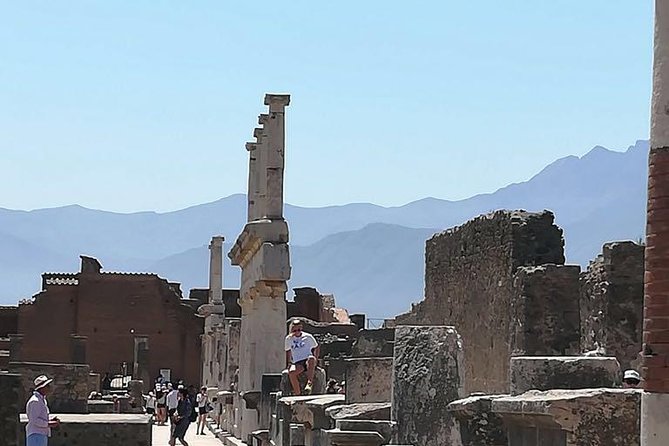
You’ll begin at Pompei Scavi Villa Dei Misteri (80045 Pompei). This matters because it keeps you close to the main Pompeii flow, instead of doing the “arrive, get lost, then start walking” routine. If pickup is offered in your booking, you’ll coordinate that ahead of time, and on arrival you’ll find your guide with the Sharing Tour of Pompei sign.
You’ll also end back at the meeting point. That’s a small detail, but it helps a lot if you’re trying to line up dinner, a train, or a hop to the next stop around Naples. The tour is listed as near public transportation too, so even if you’re not using a car, getting to the start area should be straightforward.
Another practical plus: the tour allows service animals, and the format is described as suitable for most people. So if you want a guided Pompeii experience without turning the day into a logistics project, this one is built for that.
You can also read our reviews of more tours and experiences in Pompeii.



Pompeii in 2 hours 30 minutes: what this pacing is really good for

This tour runs about 2 hours 30 minutes. That’s long enough to build understanding, but short enough that you’re not worn out before you see the best-preserved parts. Pompeii is big, and the instinct is to sprint from one “must-see” to another. This route is smarter: it focuses on three stops where a guide can connect visible evidence to what happened in 79 AD.
For me, the biggest value of this kind of pacing is clarity. You’re not just looking at stones; you’re learning what each site was for—sacred ritual, domestic life, and commercial entertainment—and how ash burial preserved them.
The tour is in English, and you’ll get a private guide included. Also, it’s set up so only your group participates. Translation: you won’t have to fight for attention in a crowded pack, and you can ask those quick, practical questions that make Pompeii finally make sense.
Finally, note the booking timing: it’s typically reserved around 50 days in advance on average. If you’re traveling in peak season or on a popular day of the week, that’s your nudge to lock it in early.
Roman temple stop: learning to read ash-buried sacred space

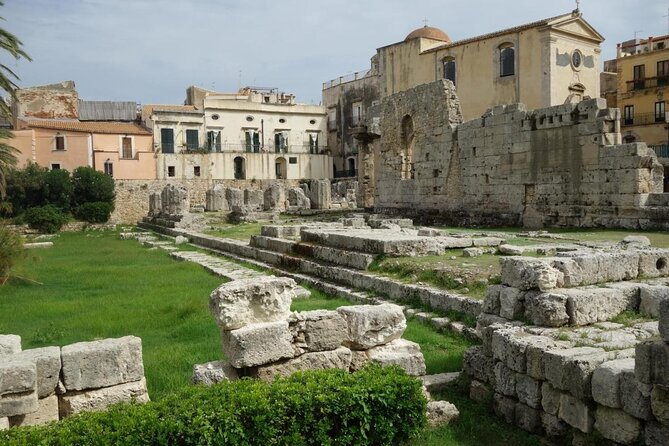
The first stop is a Roman temple buried by Vesuvius’ eruption in 79 and later recovered through excavation. Even without a dramatic “wow” moment on every square meter, temple ruins are where Pompeii’s purpose shows through. A temple wasn’t just architecture—it was part of the city’s routine of belief, civic identity, and public gathering.
What I like about starting here is that it sets your brain to the right mode. Before you get to homes and the lupanari, you learn how Romans used religious space. That context makes later sights easier to interpret. When you see the way the site is laid out and what parts remain visible, the guide can help you connect it to how sacred places functioned before the eruption.
One consideration: Pompeii temples can feel “less personal” than a house, because they’re built for public use. If you’re hoping for constant intimate details, you might wish the stops were more home-focused. Still, as an orientation to Roman city life, this temple stop does useful work.
In practical terms, this is also a good place to slow down and look. You’ll want to notice material, shape, and layout—because those are the cues that help the guide explain what you’re seeing.
Casa dei Vettii: why a Roman domus hits harder than you expect
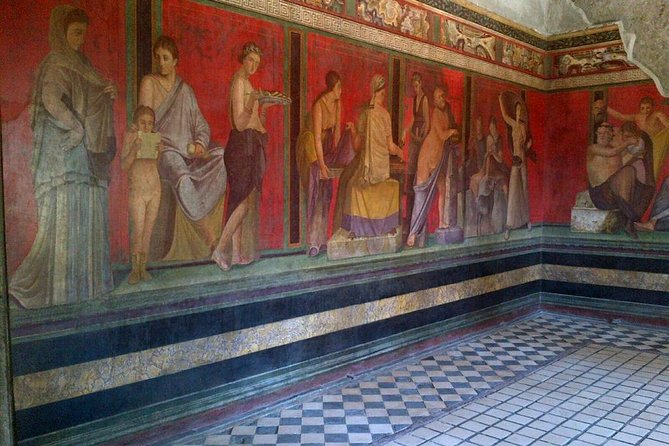
Next is the Casa dei Vettii, a Roman domus (a house) also buried during the 79 AD eruption and found later through excavation. This one is especially compelling because it’s described as one of the greatest examples of Roman art from the first century. And it has a story built into its identity: it’s named after the owners’ names.
What this means for you is that the guide can point out how art and daily living weren’t separate things. In a domus like this, the walls and spaces weren’t blank. They carried status, taste, and messages about the household. When a guide connects those choices to what you’re seeing, the house becomes more than a set of rooms—it becomes a window into how Roman families wanted visitors to read them.
The main benefit is perspective. A temple makes you think about the city’s public role. A domus flips the lens to private life—what mattered inside, how spaces were used, and how decoration communicated power and culture.
A possible drawback is that houses can involve close viewing of surfaces—paint, reliefs, and architectural details. If you’re not comfortable with lots of standing and looking closely at wall-level features, you might want to manage expectations. Pompeii doesn’t do “museum-friendly seating” the way indoor exhibits do. This is where a guide helps most: you don’t waste time trying to guess what you’re looking at.
The lupanari: seeing the brothel ruins without turning it into a shock show
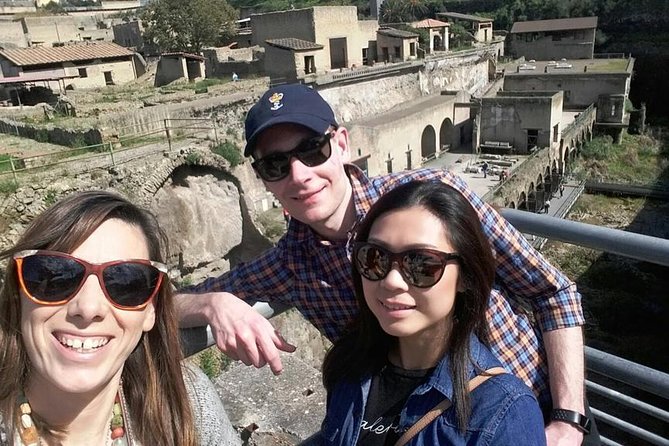
The last stop is the lupanari. The name comes from the Latin lupa, meaning prostitute. During the Roman period, these were places dedicated to mercenary sexual pleasure—basically appointment houses or brothels. Some of the ruins are still visible.
This stop is often what people talk about, but the real value is not the gossip factor. The value is context. When a guide explains what a lupanari represented in the broader economic and social system, you get a more grounded understanding of how Pompeii worked as a city. It wasn’t only temples and respectable domestic life. There was commerce, labor, and a public-facing underbelly too.
For you, the goal isn’t to stare. It’s to understand the layout and what remains. The guide can help you connect those physical traces to how such a venue would have functioned. When you keep it factual and guided, it becomes part of a complete picture of Pompeii rather than a one-note stop.
One consideration: if you want a purely family-friendly interpretation, this is the one stop where the subject matter is adult. The tour is still presented as a standard Pompeii experience, but you should be mentally prepared.






Price and tickets: what you’re paying for (and what costs extra)
The tour price is listed as $193.49 per group, up to 8 people. That makes it easier to compare to other Pompeii options: you’re paying for shared guide time, not per-person guide pricing.
Here’s the key line for budgeting: the Pompeii entrance ticket is not included. It’s €20.00 per person, and the tour provider notes that they buy entrance tickets daily for customers. So you’re not stuck figuring ticket windows out on your own, but the fee still lands in your lap.
How to think about the value: you’re paying for (1) a guide included in the group price, (2) organized time in the park so you don’t waste half the day figuring out where to go, and (3) a route that targets three high-information stops. If you’re splitting with friends or family (up to 8), the per-person math usually looks better than buying guide services separately.
One note on expectations: this experience is private in the sense that only your group participates. So if you hate the chaos of large groups, this setup should fit your style—again, assuming your group size is within the up-to-8 model.
Getting the most out of the guide: small habits that pay off
If you want this tour to feel worth it, do two simple things.
First, go in with curiosity about the “why.” Instead of asking what something is, ask what it did. Temple spaces had roles. Houses signaled status and routine. The lupanari reflected commerce and social reality. If you keep that mindset, the guide’s explanations connect the dots fast.
Second, plan your camera use. Pompeii details show up best when you pause and look, not when you keep moving. I like to take fewer photos but spend more time watching the guide point out what to notice—because the guide can help you see what you’d otherwise miss.
Also, remember you’re using a mobile ticket. Make sure your phone battery is healthy. Pompeii days are walking days, and you don’t want your entry moment to become a charging hunt.
If you’re booking with pickup, confirm timing so you aren’t rushed at the start. The tour ends where it starts, so a smooth start usually means a smoother finish.
Who this Pompeii tour fits best
This works well if you:
- want a guided Pompeii experience without trying to cover the whole site
- prefer a route built around big categories: sacred, domestic, and commercial
- like asking questions without a crowd setting the pace
- are planning a day trip and want something that clocks in at about 2 hours 30 minutes
It may be less ideal if you:
- want a purely broad “see everything” tour of Pompeii
- strongly dislike adult subject matter, since the lupanari stop includes historical context about prostitution
- need long breaks or a slower walk at every stage (Pompeii is still outdoors and uneven)
Should you book this Sharing Tour of Pompeii?
I’d book it if you want a guided Pompeii visit that feels focused and readable. The combination of a high satisfaction score (4.9 overall, 98% recommendation) and a tight route through three meaningful sites is exactly how Pompeii becomes memorable instead of overwhelming.
The decision hinge is budgeting. Because the entrance ticket is extra (€20 per person) and not baked into the tour price, you need to price it correctly upfront. Once you plan for that, the tour’s structure makes sense: you get a guide included, you start at Villa Dei Misteri, and you finish back at the meeting point.
One cautious note: there’s at least one report of a very late cancellation, so if your schedule is inflexible, keep a Plan B for that day. Still, the standard policy is free cancellation up to 24 hours before the experience start time, which gives you room to adjust.
If your goal is to understand Pompeii’s “before and after” with less guesswork, this is a solid pick.
FAQ
How long is the Sharing Tour of Pompeii?
The tour lasts about 2 hours 30 minutes.
What does it cost?
The price is $193.49 per group (up to 8 people).
Is the Pompeii entrance ticket included?
No. The entrance ticket is not included in the tour price, and it is €20.00 per person.
Is pickup available?
Pickup is offered. You’ll find your guide with the Sharing Tour of Pompei sign at the meeting point.
What language is the tour?
The tour is offered in English.
Do I get a mobile ticket?
Yes, a mobile ticket is provided.
Can I get a refund if my plans change?
Free cancellation is available. You can cancel up to 24 hours in advance for a full refund.