REVIEW · POMPEII
Pompeii Small Group Tour with an Archaeologist
Book on Viator →Operated by Askos Tours · Bookable on Viator
Pompeii hits hard when you see it explained. This small-group tour with an archaeologist gives you a clear route through the ruins plus a story-driven look at everyday life before the eruption. I especially like the short, high-impact pacing (so you don’t lose the day to wandering) and the chance to stop at famous spots like the Basilica and Forum in context. The main thing to consider is that it’s still an outdoor walking tour with uneven ground, steps, and some steep bits—so comfortable shoes really matter.
You’ll meet at Porta Marina Superiore, go in with skip-the-line Pompeii Express tickets, and use a headset if your group is large enough (16+). The goal is simple: get you oriented fast, then let your guide’s archaeological background connect the architecture, the plaster casts, and the darker corners of the city into one unforgettable picture.
This is also a good “first taste” of Pompeii. Two hours won’t cover everything, but it will show you the highlights you’d otherwise miss—or misread—on your own.
In This Review
- Key points before you go
- Why this Pompeii tour feels different (and worth the money)
- Meeting at Porta Marina Superiore: getting in and getting oriented
- The 2-hour route: what each stop teaches you
- Basilica and Forum: Pompeii’s public heart
- Granaries of the Forum: the casts and the harsh reality
- House of Menander: what wealth looked like inside
- Stabian Baths: daily life at the water’s edge
- Lupanar: the brothel ruins with context
- House of the Faun and Teatro Piccolo: scale and city planning
- Teatro Grande: the big finish inside Pompeii
- What the small-group format does for your visit
- Comfort and timing: what to plan around
- Tickets, entry, and the practical side of Pompeii Express
- Who this Pompeii archaeologist tour is best for
- Who should think twice
- Quick value check: is $35.67 a good deal?
- Should you book it? My practical take
- FAQ
- FAQ
- How long is the Pompeii Small Group Tour with an Archaeologist?
- Where do I meet the guide?
- Does the tour include skip-the-line entry?
- Is this tour in English?
- What group size should I expect?
- Do we get headsets?
- What will we see on the route?
- Are food and drinks included?
- Is transportation included?
- Is it suitable for children?
- Can I bring a mobility scooter or have mobility limitations?
- Is it available year-round?
Key points before you go
- Archaeologist-led route through top sites without the guesswork
- Skip-the-line entry using Pompeii Express tickets
- Stops built around big themes: politics (Forum), daily life (houses and baths), and the aftermath (casts)
- Small group size (max 20 per guide) helps keep things conversational
- You’ll still do real walking on uneven stone with steps and ramps
Why this Pompeii tour feels different (and worth the money)
Pompeii can feel like a pile of ruins until someone helps you “read” it. This tour is designed to do that quickly. You don’t just get a checklist of buildings; you get an archaeologist’s way of looking at what you’re standing in front of—how the spaces worked, what people likely did there, and how the eruption froze those routines in place.
The value is in what’s included. At around $35.67 per person, you’re paying for: guidance throughout, licensed archaeological guidance, a Pompeii Express entrance ticket, and a small group capped at 20 people. For a site as big as Pompeii, that combination is the difference between spending hours comparing ruins on your own and getting your bearings in minutes.
The best part is that the route is efficient. You start at Porta Marina Superiore, move through the core area, and finish inside the ruins at Teatro Grande. That means less time spent figuring out where to go next, and more time looking closely at what’s already there.
You can also read our reviews of more tours and experiences in Pompeii.



Meeting at Porta Marina Superiore: getting in and getting oriented
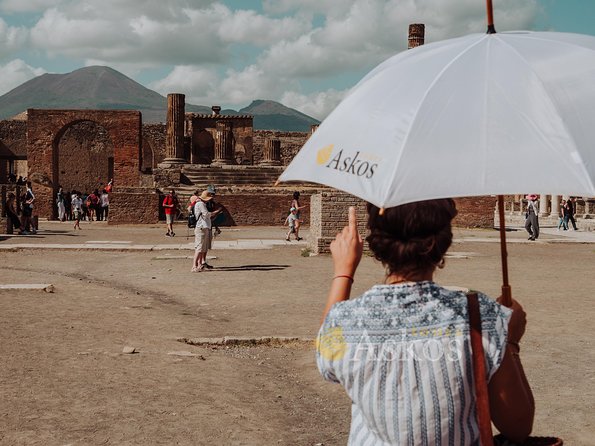
The tour begins at Via Villa dei Misteri, 2, 80045 Pompei (near public transportation), then you’ll meet your guide at the archaeological entrance called Porta Marina Superiore. Your guide will be holding a sign with the company name Askos Tours on top.
Right after you meet, you head directly inside with skip-the-line access. That matters because Pompeii’s main pain point is time lost at entry and time lost re-orienting mid-visit. If you show up underprepared, it’s easy to wander and miss the main storyline.
Also, this tour uses headsets for groups of 16 or more. If you’ve ever tried to hear a guide over wind and foot traffic in an open archaeological park, you know the headset is not a luxury—it’s a comfort tool.
One practical note: this is a walking tour, and you’re on an ancient site. Expect uneven ground, steps, and some tight changes in grade.
The 2-hour route: what each stop teaches you
This isn’t a “sit and listen forever” tour. It’s built from a sequence of stops that answer a few big questions: How did Pompeii organize its public life? What did people do in private homes? Where did they relax, eat, and socialize? And what did the eruption leave behind?
Basilica and Forum: Pompeii’s public heart
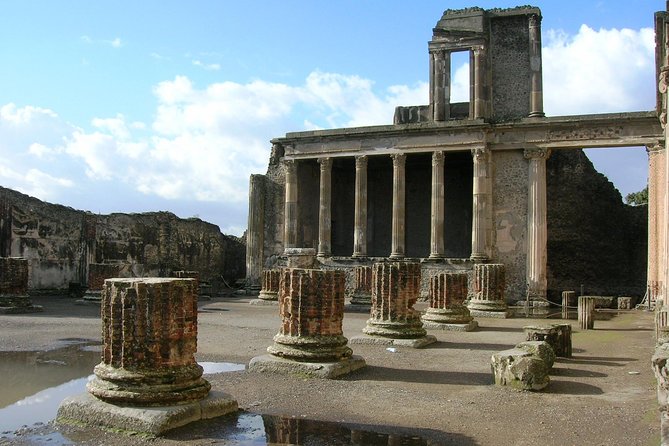
You start with the Basilica—an open portico area where merchants and other activities gathered. Even if you’ve seen a photo of the Basilica, it’s hard to understand its role until you’re standing in the area where people would have moved, traded, and met.
Next comes the Forum, Pompeii’s main square. The Forum isn’t just “a square.” It’s where public power and everyday civic life overlapped. When you connect the Basilica’s sheltered activity with the Forum’s open civic space, Pompeii starts to feel like a functioning town, not just a disaster site.
Granaries of the Forum: the casts and the harsh reality
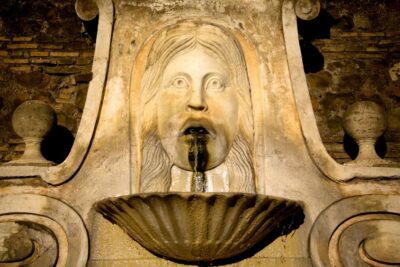
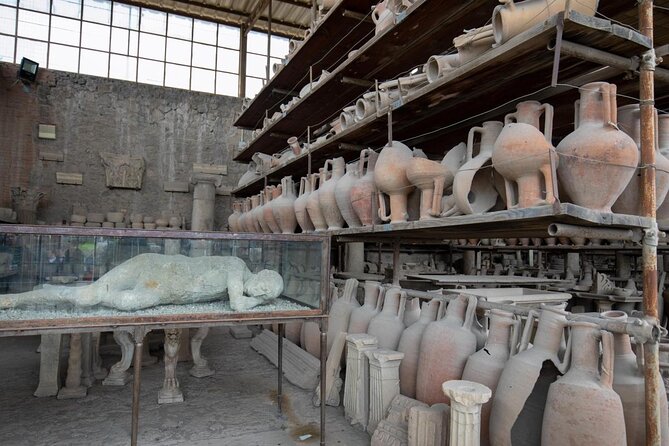
At the Granaries of the Forum, you get to see marble features tied to the entrances of houses and fountains. But the unforgettable part is the plaster casts of victims—and yes, there are also casts connected to a dog and a tree.
This stop is emotionally heavy, but it’s also historically important. It turns the eruption from a headline into something physical: people were caught where they stood, and the city preserves those moments in an unusually direct way. Your guide’s job here is to keep you grounded in what you’re seeing, without rushing past the meaning.
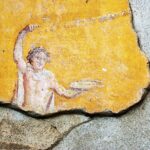



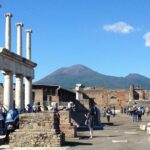
House of Menander: what wealth looked like inside
Then you move to the House of Menander, one of Pompeii’s richest homes. What makes this stop special is the combination of architecture, decoration, and the everyday “stuff” that helps you imagine a household’s rhythm.
In practical terms, a good guide points out what you’d normally overlook: how rooms relate to each other, what the decorative choices suggest about status, and how the home works as a social space, not just private living.
Stabian Baths: daily life at the water’s edge
The Stabian Baths (Terme Stabiane) are huge and represent the oldest thermal complex in the city. Baths in the Roman world weren’t only about cleanliness. They were social hubs—places to talk, relax, and pass time.
This stop gives you a change of pace from homes and public spaces. And since Pompeii has limited shade, being near a complex built for a “cooler” lifestyle (even in ruins) helps the visit feel more balanced.
Lupanar: the brothel ruins with context
Next is the Lupanar, the most famous brothel ruins in Pompeii. This is the kind of site that attracts attention, but it’s easy to reduce it to shock value. A strong archaeologist guide usually brings it back to context: how such places fit into the urban economy and the social structure of the city.
It’s also a reminder that Pompeii included the everyday, not only the grand buildings.
House of the Faun and Teatro Piccolo: scale and city planning
After that, you walk to the House of the Faun, one of the largest private residences in Pompeii. The main takeaway here is scale. When you see big homes inside the ancient street grid, you start to understand how different classes lived side by side—not in separate cities, but layered within the same compact layout.
Then you’ll have a look at the Teatro Piccolo. It’s a smaller theater than the big one you’ll end at, but it helps you see how performance and public gatherings were part of life at multiple levels.
Teatro Grande: the big finish inside Pompeii
Your tour ends at Teatro Grande, the city’s largest theater and one of the most important performance spaces. By the time you reach it, you’ve already seen how public spaces functioned (Basilica and Forum) and how private spaces worked (houses and baths). Teatro Grande ties those ideas together by showing where crowds gathered and how the city organized big social moments.
Ending inside the ruins is a smart choice. You finish at a major landmark instead of being left near the entrance with lots of empty walking ahead.
What the small-group format does for your visit
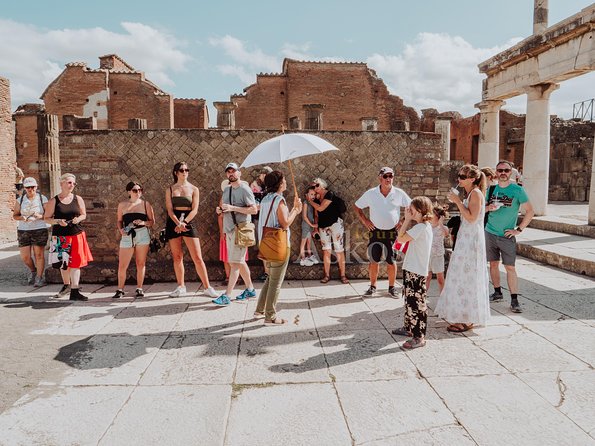
With a maximum of 20 people, this tour usually keeps the energy practical. Big tour buses are loud and chaotic; small groups can actually hear and ask questions.
One more detail I like: this tour is built around short stops that help you see more of Pompeii’s variety. It’s not trying to make you become an expert in one afternoon. It just helps you notice what matters.
There is a trade-off, though. Some people want lots of time to linger at each site. With a guided route, you’ll experience each stop with a specific time window. If you’re the type who needs to sit down and stare at floor mosaics for 45 minutes, you might want to add extra self-guided time afterward.
Comfort and timing: what to plan around
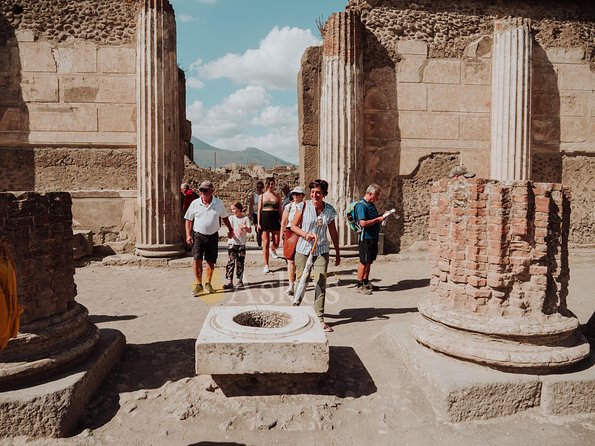
Pompeii is one of those places where good footwear changes everything. Even with a guide holding the route, you’re still dealing with uneven ground, steps, and ramps.
Also plan for sun. Shade is limited. Bring sunglasses and sunscreen, and in summer you’ll want that small bottle of water the instructions suggest. For cooler months, the pace still matters—expect enough walking to feel it.
Tours run all year around with rain or shine, so bring something for weather. Shoes should handle damp stone too, not just dry pavement.
If you have mobility concerns: this is not recommended for travelers with mobility issues or impairments because of steps, ramps, and some steep climb. Mobility scooters are not allowed. If you want a version that works for your needs, ask about a suitable private tour.
Tickets, entry, and the practical side of Pompeii Express
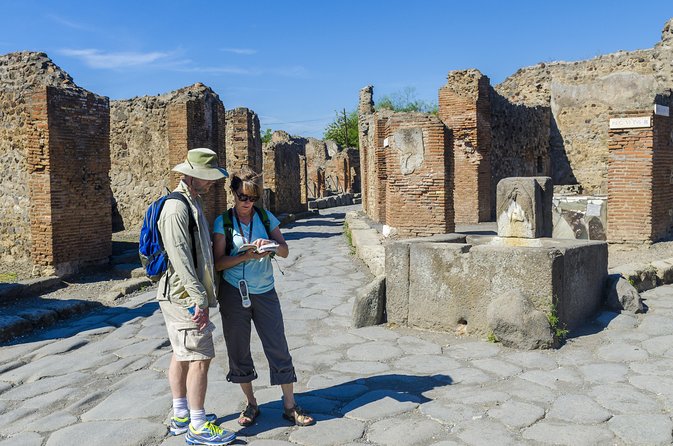
You’ll receive a mobile ticket, and the tour includes the Pompeii Express entrance ticket. The point is to reduce time spent at ticketing and bottlenecks.
Your guide’s job is also to keep the flow moving after entry. In a place like Pompeii, getting started on time is half the success. When technical things go wrong—headsets not working, delays at the start—that can affect how “fluid” the walk feels. Most days run smoothly, but it’s worth knowing that in busy archaeological parks, timing can be imperfect.
A headset helps, and your group size helps more. That’s why this format tends to work well.
Who this Pompeii archaeologist tour is best for

This tour is ideal if you:
- Want a 2-hour hit of Pompeii’s top highlights without spending your day charting a route
- Like context—architecture, urban planning, and the eruption’s aftermath
- Prefer a guided storyline over a map and guesswork
- Travel with teens or mixed ages who benefit from a clear pace and “what you’re looking at” explanations
It’s also a strong match if you plan to explore afterward. You finish inside Pompeii, and the guide can point you toward what to look for next—especially helpful because the site is easy to get turned around in.
Who should think twice
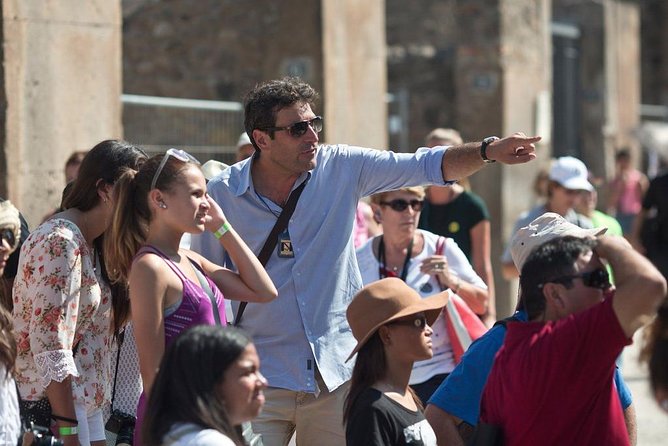
You might want to rethink this tour if:
- You need step-free access. This one isn’t set up for mobility scooters, and it includes steps and ramps.
- You hate walking on uneven ancient stone.
- You’re expecting a slow, museum-style visit with lots of free time at each stop.
Also, if you’re extremely detail-focused and want deep time at one room (like lingering for ages over specific frescoes), you may feel rushed at the end of the allotted stop windows.
Quick value check: is $35.67 a good deal?
For Pompeii, that price can be a bargain when you compare it to the cost of entrance plus the time savings plus the archaeologist-led interpretation.
You’re getting:
- Entrance included via Pompeii Express
- Guidance for the full duration
- Small group up to 20
- Headsets for larger groups
- A route that hits major sites in one compact window
If you were going in solo, you’d spend time figuring out what each area is, and you might still miss the emotional and historical stops that make Pompeii so powerful (like the casts).
Should you book it? My practical take
Book this tour if you want your Pompeii visit to make sense fast. It’s a smart choice for first-timers because it sequences the big public spaces, key houses, and the eruption aftermath into one readable walk.
Don’t book it if you’re seeking a step-free, low-walking experience or if you want to spend lots of unscripted time sitting in one place. In that case, you may be happier with a private arrangement designed around your pace.
If you’re flexible, bring sturdy shoes, a bit of water, and a weather plan. Then show up ready to look closely. Pompeii is more human when someone helps you connect the dots.
FAQ
FAQ
How long is the Pompeii Small Group Tour with an Archaeologist?
The tour lasts about 2 hours.
Where do I meet the guide?
You meet at the archaeological site entrance called Porta Marina Superiore. The company sign shown there is Askos Tours.
Does the tour include skip-the-line entry?
Yes. You get Pompeii Express tickets, and the tour includes skip-the-line entrance.
Is this tour in English?
Yes, it’s offered in English.
What group size should I expect?
It’s a small group with a maximum of 20 people per guide.
Do we get headsets?
If your group is 16 or more, headsets are provided.
What will we see on the route?
You’ll visit key sites such as the Basilica, Forum, Granaries of the Forum (with casts), House of Menander, Stabian Baths, the Lupanar, House of the Faun, Teatro Piccolo, and Teatro Grande.
Are food and drinks included?
No. Food and drinks are not included.
Is transportation included?
No. Transportation is not included.
Is it suitable for children?
Children must be accompanied by an adult. For travelers under 18, you’ll need to bring an ID card or passport.
Can I bring a mobility scooter or have mobility limitations?
Mobility scooters are not allowed, and it’s not recommended for travelers with mobility issues or impairments due to steps, ramps, and steep climbs.
Is it available year-round?
Yes. The tour runs all year around with rain or shine.