REVIEW · ROME
Skip the Line: Vatican Museum, Sistine Chapel & Optional Basilica
Book on Viator →Operated by EcoArt Travel · Bookable on Viator
The Vatican is huge, but this tour keeps you moving. I love the skip-the-line entrance that saves you real waiting, and I love the headsets that make the guide’s commentary easy to follow. The one drawback to plan for is crowd crush: even with priority entry, the Museums can feel packed and fast.
If you want the highlights without spending your whole day hunting for them, this is a smart way to structure Vatican time. I also like that you get a guided route through key galleries like Pio Clementino, then you end with a planned Sistine Chapel moment where you can actually look up and take it in.
In This Review
- Key points to know before you go
- Skip-the-Line Vatican Entry: what it really saves you
- Vatican Museums first: Cortile della Pigna and Sphere-within-a-Sphere
- Pio Clementino and the big statuary rooms: where the tour’s focus pays off
- Hand-painted maps in the Galleria delle Carte Geografiche
- Raphael’s Rooms: a quick hit of the Stanzas
- Sistine Chapel: silence, headsets, and what to fix your eyes on
- Optional St. Peter’s Basilica: a shortcut that’s only worth it when you select it
- Price and value: is $35.07 worth it?
- Practical expectations: crowds, pacing, and comfort
- Who this tour fits best
- Should you book this Vatican Museums and Sistine Chapel tour?
- FAQ
- How long is the Vatican Museums and Sistine Chapel portion?
- What’s included in the tour price?
- Is St. Peter’s Basilica included?
- What should I wear?
- Where does the tour ticket redemption happen?
- Do I need to arrive early?
- Is the Sistine Chapel affected by conservation?
Key points to know before you go
- Skip-the-line access means less time stuck in the general queue at the start
- Headsets help you catch every explanation, even when the group moves quickly
- You’ll hit signature stops like Cortile della Pigna, Pio Clementino, and Raphael’s Rooms
- The Sistine Chapel visit is guided with a heads-up about the no-speaking rules
- There’s an optional upgrade that adds St. Peter’s Basilica access (only on the right option)
- This runs about 2 hours 30 minutes, so it covers the big essentials, not every corner
Skip-the-Line Vatican Entry: what it really saves you
The practical win here is time. The Vatican Museums draw lines that can eat half your day. With skip-the-line entrance tickets included, you cut through that big delay and start seeing art sooner—especially helpful if you have a tight Rome schedule.
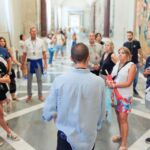
This tour also caps at 20 travelers, which matters in a place that usually feels like one giant hallway. Smaller groups don’t magically make the Vatican quiet, but they do help your guide manage pacing. You also get headsets when the guided option is selected, so you can hear the narration without craning your neck or relying on shouting over other tours.
One more thing I appreciate: you’re not just handed a ticket. A guide helps you move through the “which room first” problem. In a museum this large, that’s not a luxury. It’s the difference between seeing highlights and wandering into dead ends.
You can also read our reviews of more tours and experiences in Rome.
Vatican Museums first: Cortile della Pigna and Sphere-within-a-Sphere
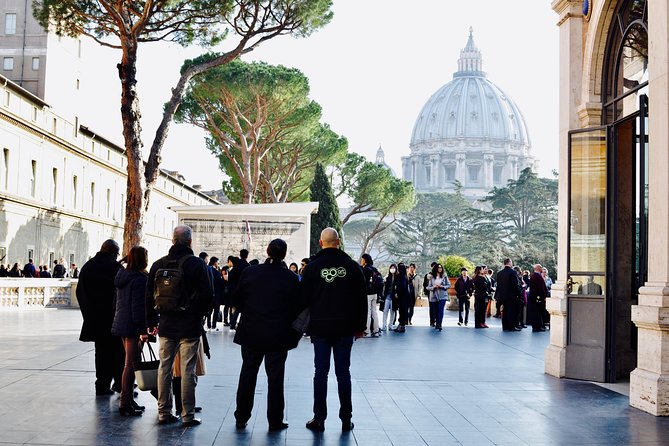
Your visit begins in the Vatican Museums, stepping in via the fastest entrance flow. From there, the route quickly lands you in Cortile della Pigna, the Pinecone Courtyard. It’s named for a massive bronze pinecone, and it’s one of those spaces where your brain goes, Wait—this is here?
This stop is doing two jobs at once. First, it orients you in the Vatican Museums’ geography. Second, it sets up the mix of eras you’ll keep seeing: ancient Roman scale next to modern artistic commentary.
Right in this courtyard you’ll find the Sphere within a Sphere sculpture by Arnaldo Pomodoro, paired with the Roman fountain setting. The idea is simple but effective for first-timers: you learn how artists keep talking to older forms. Even if you’re not a sculpture person, this makes you look more slowly.
Time spent here is about 15 minutes, and that’s a good pace. You’re meant to look, take the photo, then keep going—because the next rooms contain the kind of names you came to see.
Pio Clementino and the big statuary rooms: where the tour’s focus pays off
Next you move into Museo Pio Clementino, often considered the “highlights concentration” wing of the Vatican Museums. The guide brings you through a progression of iconic sculpture spaces, and the narration helps you read what you’re looking at.
A few specific anchors on this route:
- The Octagonal open-air courtyard, which gives you breathing room before the indoor gallery density
- The Laocoonte and Apollo Belvedere stops, where you get context beyond just “famous statue”
- The Room of the Animals, which can feel eerily lifelike when you’re standing close
- The Gallery of the Candelabra, known for masterfully painted vaults with a 3D effect
The reason this portion works well is pacing. You’re not stuck in one room for ages, and you’re not running blind either. Around 45 minutes in this major section is enough to make the art stick, especially when a guide points out what to notice: posture, expression, composition, and why these pieces were celebrated.
That said, this is still the Vatican. Crowds happen. One honest consideration is that the museum can become slow moving and overheated, so comfortable clothes and good shoes matter more than style.
Hand-painted maps in the Galleria delle Carte Geografiche
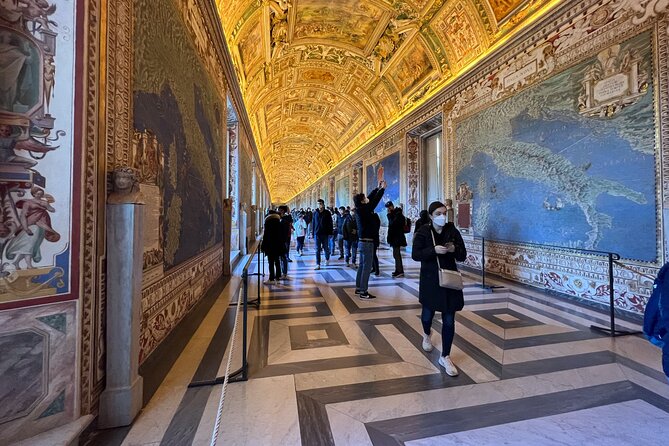
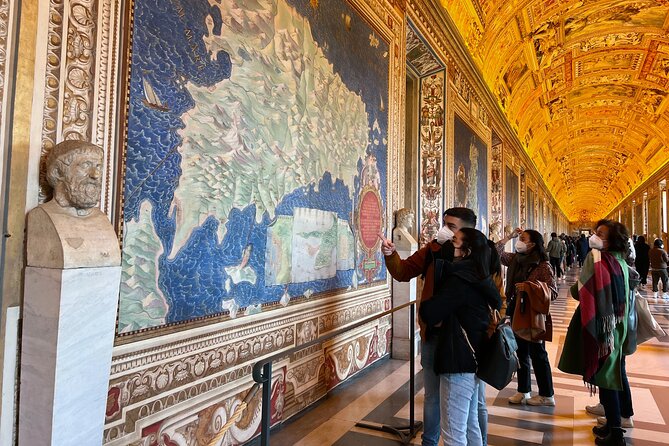
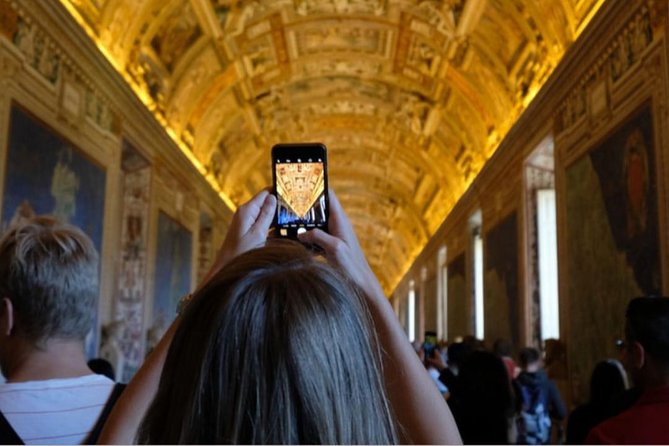
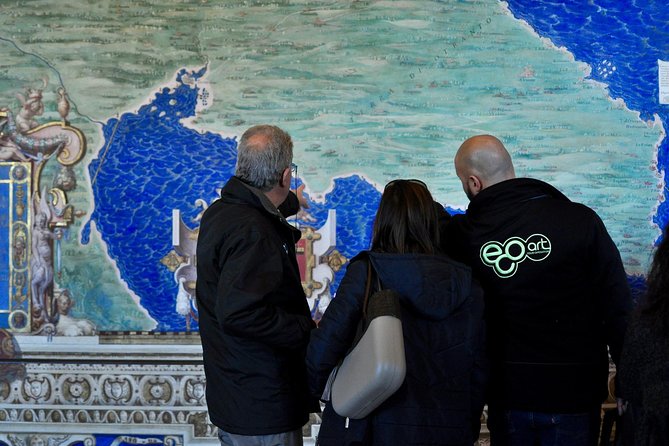
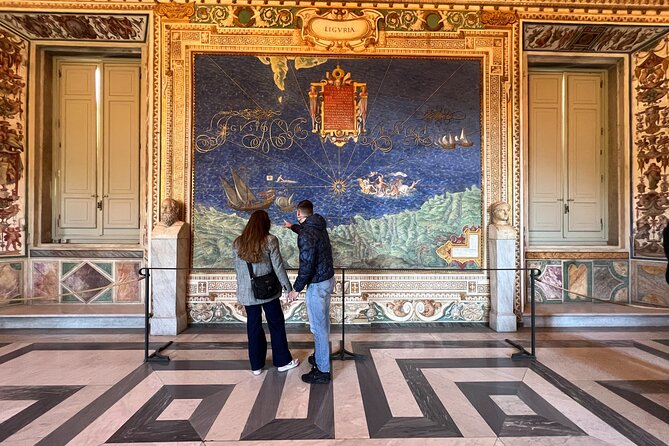
Then comes a left-turn in the best way: the Galleria Delle Carte Geografiche, the gallery of hand-painted maps. These aren’t quick background decoration. The maps let you see how the world was understood nearly five centuries ago, and the details are where the fun lives.
This stop is also a great mental reset. After rooms full of sculpture and fresco drama, these maps give you something different to focus on—cities, borders, the odd perspective of older cartography. If the guide knows your interests, they can help you point out places you’ve visited in Italy, which makes the gallery feel personal instead of academic.
This is a shorter stop at about 20 minutes. Perfect length. Long enough to enjoy it, not so long you lose the group flow.
Raphael’s Rooms: a quick hit of the Stanzas
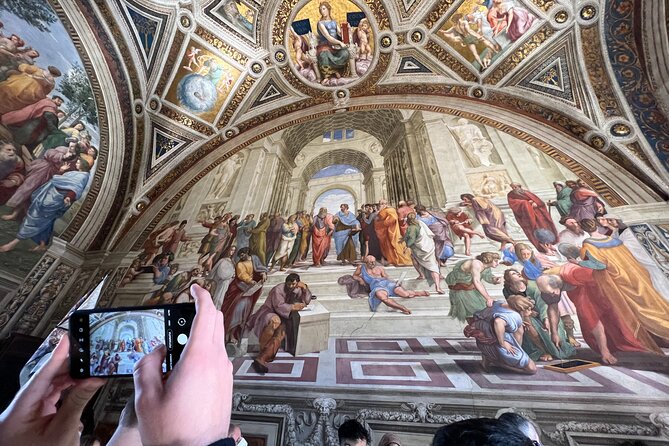
After the maps, you’ll head to Stanze di Raffaello, often called Raphael’s Rooms. This is where you see painted rooms that feel theatrical—like you’re walking through a story set to color and symbols.
This portion is guided, with about 15 minutes in the space. That can sound brief, but it’s realistic. Raphael’s Rooms need looking, but the Vatican timeline doesn’t allow leisurely lingering if you want the full highlights plan (Museums plus Sistine Chapel, and possibly Basilica).
If you’re the type who likes to study brushwork and iconography up close, you might wish you had more time here. The silver lining is that the guide’s commentary helps you leave with a clearer mental map of what you saw, so you can return later on your own if you want to slow down.

Sistine Chapel: silence, headsets, and what to fix your eyes on
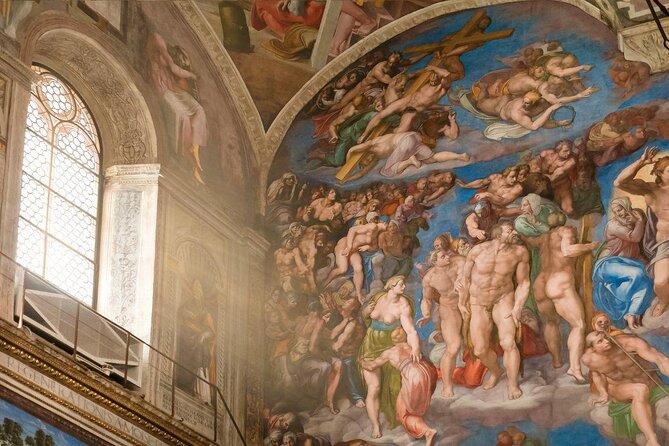
The Sistine Chapel is the emotional payoff. Before you enter, your guide prepares you for one key rule: no speaking is allowed. That matters. With silence in place, you can finally focus on the paintings instead of negotiating chatter.
This visit is about 30 minutes, which includes time to settle, listen to what the guide sets up, and then look. The guide’s job here is especially important because the Sistine Ceiling can feel overwhelming if you don’t know what you’re seeing first.
Also, conservation is a real-world factor to know about. For Jan 12–Mar 31, 2026, Michelangelo’s Last Judgment is under conservation work. The Sistine Chapel stays open, but the fresco will be temporarily not visible due to scaffolding, meaning your experience there may look different than the classic postcard view.
If you’re traveling during those dates, plan mentally for that possibility. It’s not the tour being “wrong.” It’s preservation.
One more practical note: even with headsets, you want good audio. Some people have mentioned headset reliability issues. So if your channel seems unclear, ask immediately and don’t just tolerate it—your ability to follow the guide depends on being able to hear.
Optional St. Peter’s Basilica: a shortcut that’s only worth it when you select it
St. Peter’s Basilica is not automatically included in every booking. The upgrade is the one that provides skip-the-line access to the Basilica, and it’s handled with an access route connected to the Sistine area.
On the option that includes it, you’ll get access provided, skipping lines, and then you’ll be free to explore inside on your own. The tour ends with time at St. Peter’s Square as part of the flow.
This is one of those “right choice, right option” moments. If Basilica is on your must-do list, make sure you selected the version that explicitly includes it. A Basilica-only option does not give you the Vatican Museums and Sistine Chapel.
If you do choose the upgrade, it helps to think of the day as two halves:
- Guided Vatican Museums + Sistine Chapel, where explanations make the art click
- Self-guided Basilica time, where you can step back, look up, and wander at your own speed
Price and value: is $35.07 worth it?
At $35.07 per person, this tour is priced to be approachable compared to many Vatican add-ons. The value comes from three things you’re paying for:
- Skip-the-line admission to the Museums and Sistine Chapel, which is the biggest friction point
- A guide who helps you choose where to look and what to notice
- Headsets, so the guided part doesn’t turn into you playing guess-the-translation
The duration—around 2 hours 30 minutes—also helps value. You’re not paying for a half-day you don’t really have. You’re paying for a concentrated route through the main hits, plus a thoughtful Sistine Chapel moment.
What’s not included is also clear: food and beverages. So you’ll want to eat before or after, not during. Also, be realistic about the physical side: the Museums involve lots of walking and stairs. Wear solid shoes, and don’t treat this as a casual stroll.
Practical expectations: crowds, pacing, and comfort
Let’s talk honestly about the thing that can make or break this day: crowds. The Vatican Museums can be so packed that you feel like you’re moving through a crowd machine. One reason the guide is crucial is that they try to manage flow and keep you with the group, including finding less crowded spots when possible.
Still, you won’t get a private Vatican. Even with skip-the-line, you may experience slow movement once you’re inside.
If you’re sensitive to tight indoor spaces, the Sistine Chapel can feel claustrophobic because it’s full and you stand fairly still. It’s beautiful, but it’s not spacious. If you know you’ll struggle with that, keep it in mind.
Here’s what I’d do to make the experience smoother:
- Plan your day so you’re not rushed between activities
- Wear clothes that meet the dress code: no shorts or sleeveless tops; shoulders and knees must be covered
- Bring official ID, since ticket matching matters
- Arrive early enough to check in, because check-in is 15 minutes before your booked start time and late arrivals can’t be accommodated
Who this tour fits best
This is a good fit if you:
- Want the Vatican highlights without building a game plan
- Prefer a guided route that explains what you’re seeing (especially in sculpture rooms and the Sistine Chapel)
- Like the idea of finishing with optional Basilica time if you choose it
- Want a small group feel with headsets
It may be less ideal if you:
- Need lots of time to linger in one room without group pacing
- Struggle with crowded environments or claustrophobic spaces
Guides can make a noticeable difference in how the day feels. In the feedback I’ve seen, guides such as Laura, Riccardo, Assunta, Maria Laura, Oscar, and Yamuna come up often, praised for clear English, keeping groups on track, and pointing out details you’d miss on your own.
Should you book this Vatican Museums and Sistine Chapel tour?
I’d book it if your goal is simple: see the big masterpieces efficiently, hear the context, and avoid losing hours in lines. The combination of skip-the-line entry, a structured highlights route (Pio Clementino, Raphael’s Rooms, the Sistine Chapel), and headsets makes the experience feel less stressful than DIY.
If your travel window includes Jan 12–Mar 31, 2026, keep expectations aligned with the conservation note about the Last Judgment fresco not being visible. And if Basilica matters, double-check that you selected the option that includes it.
Bottom line: this is a smart value play for first-timers, as long as you go in ready for walking, crowds, and a mostly highlights-focused pace.
FAQ
How long is the Vatican Museums and Sistine Chapel portion?
The tour runs about 2 hours 30 minutes (approx.).
What’s included in the tour price?
Skip-the-line access and the entrance ticket to the Vatican Museums and Sistine Chapel are included. Headsets and an insider guide are included when the guided option is selected. St. Peter’s Basilica skip-the-line access is included only if you select that option during booking.
Is St. Peter’s Basilica included?
Not in every option. The Basilica is included only when it’s explicitly listed as included in the tour you book. A Basilica-only option does not include access to the Vatican Museums.
What should I wear?
A dress code is required. No shorts or sleeveless tops. Knees and shoulders must be covered for both men and women, or you may risk being refused entry.
Where does the tour ticket redemption happen?
Tickets are redeemed at Via Tunisi, 4, 00192 Roma RM, Italy.
Do I need to arrive early?
Yes. Check-in is 15 minutes prior to the booked start time. Tickets are time sensitive, and late arrivals can’t be accommodated.
Is the Sistine Chapel affected by conservation?
For Jan 12–Mar 31, 2026, Michelangelo’s Last Judgment will be under conservation and may be obscured due to scaffolding. The Sistine Chapel remains open.