REVIEW · ROME
Super Fun Pasta & Gelato Class by Vatican with Wine + Oil Tasting
Book on Viator →Operated by Holy Pizza · Bookable on Viator
Rome tastes better with your own hands. This pasta-and-gelato class is built around learning a real skill, with handmade pasta from scratch and gelato at the end, guided by chefs like Chef Massimo in a small English-speaking group. One thing to plan for: the sauce can change with the season, so the exact flavors may vary day to day.
I like that it stays practical. You’ll get hands-on teaching, eat what you make, and sip along the way with wine (and sometimes beer/water/soft drinks, depending on the group). It also has a friendly, interactive feel, which matters in a cooking class—nobody wants to stand around watching.
The workshop runs about 2 hours 30 minutes, so it’s not a slow, all-day meal. You’ll want to show up ready to cook, ask questions, and enjoy the pacing.
In This Review
- Key highlights to know before you go
- Handmade pasta and gelato: the vibe you’re buying in Rome
- Where you meet near Via Simone de Saint Bon (and why it’s easy)
- The 2.5-hour flow: how the class actually runs
- The pasta lesson: beginners welcome, and the real tricks matter
- Bruschetta starter: the quick route to Italian flavor
- Wine-and-oil tasting: small sips, big context
- Gelato making: dessert as a hands-on skill
- Food, pace, and drinks: what to expect from the group size
- Value check: is $85.26 worth it?
- Who should book this pasta & gelato class
- Practical tips before you go (so your night stays smooth)
- Should you book this pasta & gelato class?
- FAQ
- How long is the pasta and gelato class?
- Is the class offered in English?
- What do we make and eat during the class?
- What drinks are included?
- How big is the group?
- Where do I meet the group?
- What is the cancellation policy?
Key highlights to know before you go
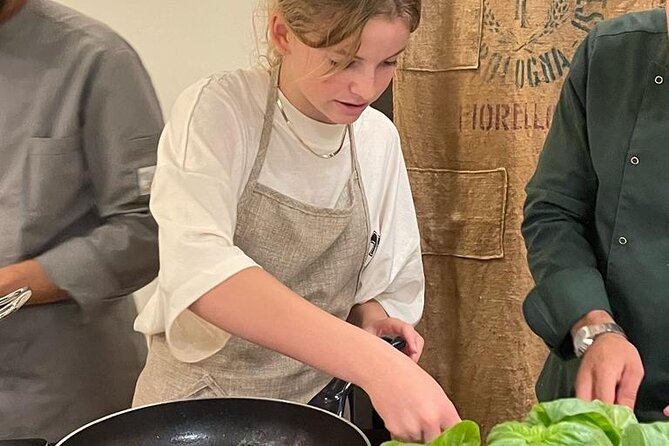
- Handmade pasta skills you can repeat at home (rolling, shaping, timing)
- A 3-course finish: bruschetta starter, pasta + seasonal tomato sauce, gelato dessert
- Wine-and-oil tasting included as part of the experience flow
- Small group size (max 15) for more direct attention
- All skill levels welcome, from first-timers to experienced cooks
- Family-friendly energy, with chefs known for keeping kids engaged
Handmade pasta and gelato: the vibe you’re buying in Rome
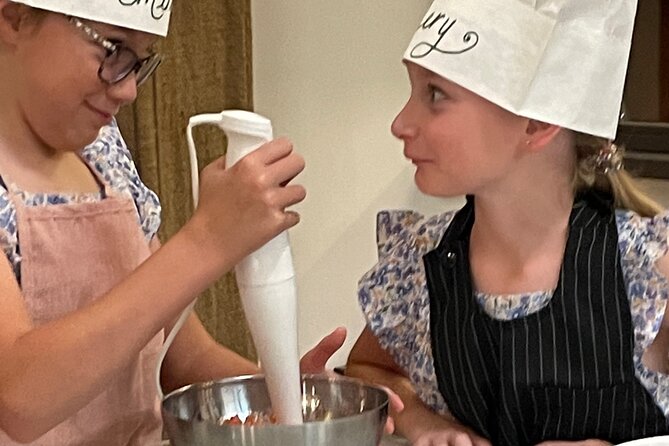
This is one of those Rome activities that feels like more than a ticketed event. You’re not just tasting Italian food—you’re making it, learning the techniques, and then sitting down to eat your own work.
The menu is simple on purpose. Handmade pasta (paired with a tomato-based sauce that can depend on the season), bruschetta as a starter, and gelato for dessert. That’s the point: Italian home cooking works because it’s focused—fresh ingredients, straightforward methods, and respect for texture.
What makes it especially worth your time is the structure. The class is interactive, the chefs keep things moving, and the result is a meal you can actually recreate later. Reviews repeatedly highlight that the instructors don’t talk down to beginners, and they also give useful “how to fix it” tips when dough or sauce needs a small adjustment.
You can also read our reviews of more tours and experiences in Rome.


Where you meet near Via Simone de Saint Bon (and why it’s easy)
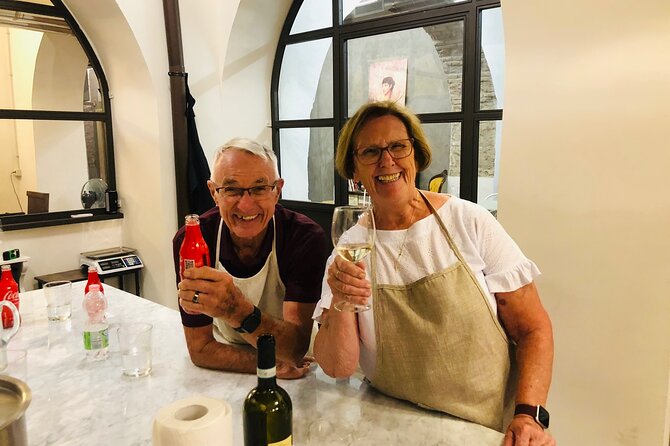
You meet at Via Simone de Saint Bon, 57, 00195 Roma RM, Italy. The class ends back at the meeting point, so you’re not dealing with a long, end-of-night commute.
This part matters more than people think. In Rome, a cooking class can either feel convenient—or it can turn into logistics. Here, you’re near public transportation, and the venue is designed for a group lesson (not a sprawling restaurant where you spend half the time waiting for a table).
Also, this is an experience offered in English with a mobile ticket. That combination is great if your Italian is rusty and you still want a full evening of hands-on learning without guessing what’s happening.
The 2.5-hour flow: how the class actually runs
The schedule is built to keep you cooking for most of the time, not standing idle. While the exact minute-by-minute pacing can vary by group, the overall arc is consistent:
1) Arrive, settle in, and start with tastings/drinks
You’ll sip something along the way—beer, wine, water, or soft drinks—plus there’s a wine-and-oil tasting component tied to the experience title. This sets the tone fast: casual, social, and food-focused.
2) Bruschetta starter
You begin with the starter route first. Bruschetta is an ideal early lesson because it’s forgiving and teaches you flavor basics—what matters, what to taste for, and how “simple” becomes delicious when ingredients are fresh.
3) Handmade pasta and seasonal tomato sauce
This is the main event. You’ll learn to make pasta from scratch, using hands and a rolling pin (not just a machine and a shrug). Depending on the season, the sauce will be a tomato base.
4) Gelato for dessert
Then you switch gears to dessert. Gelato is a perfect finale because it feels special in the moment, but the technique is still learnable enough that you can attempt it later at home.
5) Eat what you made
The meal isn’t an afterthought. You sit down and savor your own three-course work—starter, pasta, and gelato—so you leave with a memory that’s tied to something you produced.
The pasta lesson: beginners welcome, and the real tricks matter
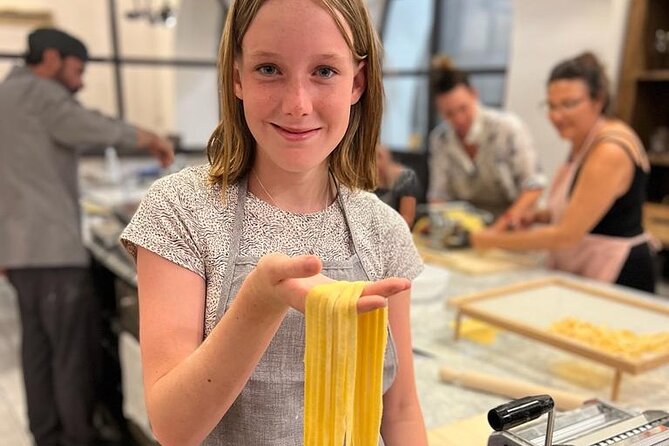
Handmade pasta sounds fancy until you learn the mechanics. The class is designed for all skill levels, so first-timers aren’t stuck with “watch and hope” instructions.
One of the most praised parts is how much you learn in a small time window. That usually comes from two things:
- clear steps
- lots of small corrections while you work
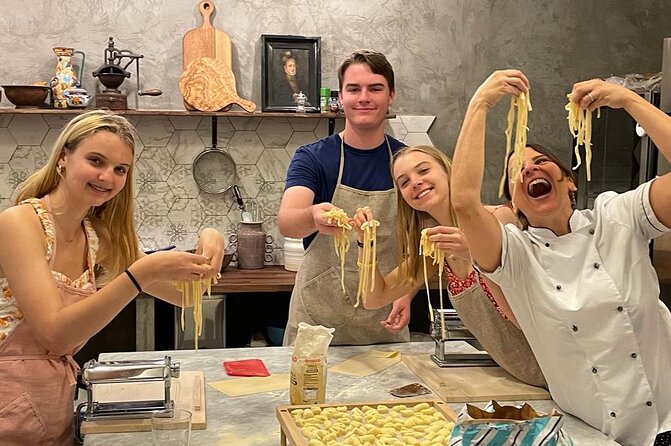
You’ll focus on the dough work and the shape/texture side of pasta. A recurring tip from the class experience: hand rolling often produces better results than relying on a machine. Not because machines are “bad,” but because hand rolling helps you feel the dough and control thickness more naturally—and it can mean less cleanup.
If you’re the type who wants to understand the why, you’ll like how the chefs explain what they’re doing and what you should look for as the dough comes together.
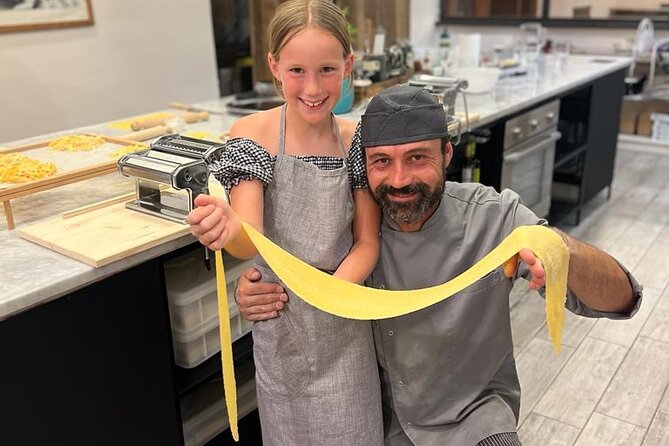
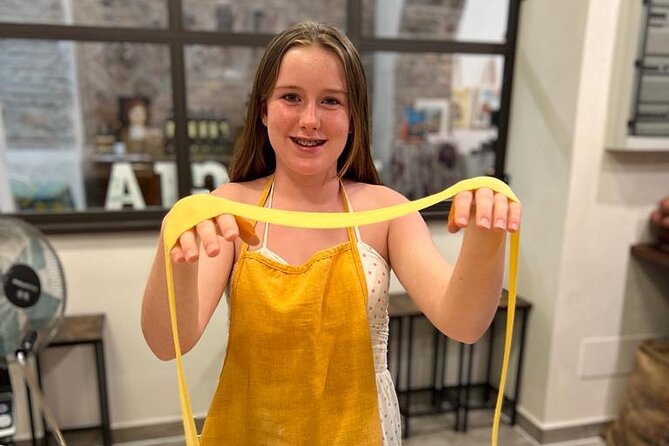
And if you’re coming with kids, this is where the class shines. The lesson is tactile. Kids can knead, roll, and assemble in a way that feels like play—but it still teaches real technique.
Bruschetta starter: the quick route to Italian flavor
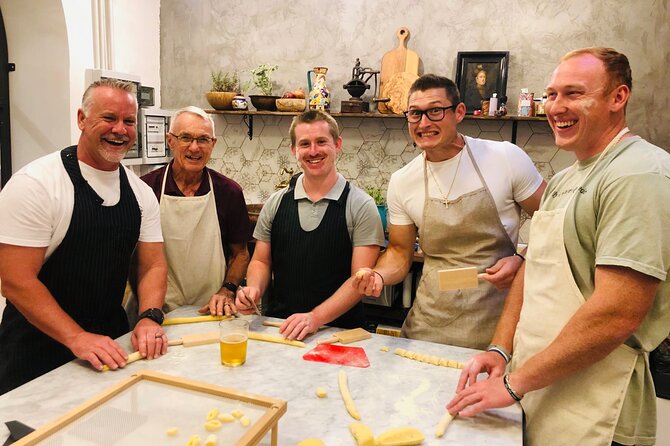
Bruschetta is the kind of dish that makes you pay attention to small details. It’s not complicated, but it’s not generic either.
What you take from this part is the idea that good flavor comes from timing and ingredient quality:
- prepping toppings thoughtfully
- building taste in layers
- serving with the right texture contrast
It also helps you warm up before pasta, which can take more concentration. By the time you’re rolling dough, you’re already in an Italian flavor mindset.


Wine-and-oil tasting: small sips, big context
This experience includes a wine and oil tasting, along with the chance to sip beer, wine, water, or soft drinks during the class.
That might sound like an add-on, but it’s actually useful. Olive oil and wine are part of the Italian food language—people talk about balance, freshness, and how food and drink work together. A short tasting during cooking gives you a reference point so the meal doesn’t feel disconnected from the culture.
It’s also a nice “social glue.” Cooking classes can be either stiff or fun. Having tastings built into the flow nudges it toward relaxed conversation.
Gelato making: dessert as a hands-on skill
Gelato is where the class turns from meal-making into a fun finale you’ll remember. You’ll learn how to make gelato and then enjoy it as dessert right after the rest of your meal.
This is also the part where skill levels tend to even out. Pasta is technique-heavy, but gelato is approachable—especially when the chef is guiding you step-by-step and keeps things moving.
If you’re thinking about what to recreate later, this is a great “take-home” item because you’ll leave with a clearer sense of texture and sweetness—not just a vague idea of dessert.
Food, pace, and drinks: what to expect from the group size
The group is capped at 15 travelers, which is a big deal for a cooking class. Smaller groups mean:
- more hands-on time
- fewer long waits for help
- quicker feedback when your dough or mixture needs adjustment
The atmosphere is also consistently described as friendly and interactive, with chefs who bring humor and warmth to the room. You might meet instructors such as Chef Massimo, or other named hosts like Carla, Luca, David, or Peter (names vary by schedule and staffing). The common thread: they keep the class lively while still teaching.
Pace is the one consideration. In a 2.5-hour class, you move. That’s good if you like momentum, but it’s not a slow cooking retreat.
Value check: is $85.26 worth it?
At $85.26 per person, you’re paying for more than ingredients. You’re paying for:
- instruction that’s hands-on (not just a demonstration)
- a full meal outcome (starter, main, dessert)
- drinks and a wine-and-oil tasting component
- a small-group class setup
If you’ve done cheaper “tour-with-a-meal” experiences, this one usually feels better because you’re actively cooking the food you eat. That makes the cost easier to justify. You’re not just buying dinner—you’re buying skill practice plus a meal you can repeat.
Also, the class is booked about 42 days in advance on average, which is a clue it sells because people find it a good use of time on a Rome trip.
Who should book this pasta & gelato class
This experience fits best if you want a break from sightseeing and you still want something real, not staged.
You’ll especially enjoy it if:
- you want to learn actual cooking techniques (not just eat)
- you’re traveling as a couple, friends, or family and want a shared activity
- you like food with a hands-on angle
- you want a memorable evening that ends with a sit-down meal you made
It’s also a solid choice for kids. Multiple class experiences mention chefs who kept children engaged and made the process feel welcoming, including for families with kids around the 11 to mid-teens range.
If you have dietary restrictions, tell the provider in advance. One experience specifically mentions that a guest’s allergies were accommodated so they could eat what they cooked.
Practical tips before you go (so your night stays smooth)
A few small prep moves make the class more fun:
- Wear something comfortable. You’ll knead and roll pasta, and you’ll be standing and moving.
- Plan your appetite. This ends with a full meal, so avoid a huge lunch right beforehand.
- If you care about an exact sauce flavor, remember the sauce can be seasonal. Ask when you book what’s planned for your date.
- If you’re bringing kids, let them participate fully. The class works best when everyone gets hands-on.
And if you want to maximize take-home value, go in with one mindset: ask questions when you’re working, not after the food is already on the table.
Should you book this pasta & gelato class?
In my view, yes—if you want a genuinely hands-on Roman meal experience. The biggest strength is the combination of three-course results plus real technique coaching in a small group.
Book it if you:
- want to make handmade pasta (rolling pin, dough feel, and all)
- like the idea of ending with gelato you made yourself
- appreciate a family-friendly, interactive cooking lesson
- value a class where you eat what you cook
Skip it only if you’re uncomfortable with cooking tasks or you’d rather spend your limited Rome time on a more passive activity.
If you’re on the fence, treat it like a “best use of one evening” choice: you’ll leave with a skill, a full meal, and a story that’s about something you actually did—dough in your hands and gelato in the bowl.
FAQ
How long is the pasta and gelato class?
It runs about 2 hours 30 minutes.
Is the class offered in English?
Yes. The experience is offered in English.
What do we make and eat during the class?
You’ll make and eat handmade pasta with a tomato-based sauce that can depend on the season. You’ll also prepare bruschetta as a starter and gelato for dessert.
What drinks are included?
You can sip on beer, wine, water, or soft drinks, and the experience includes a wine and oil tasting as part of the program.
How big is the group?
The class has a maximum of 15 travelers.
Where do I meet the group?
You meet at Via Simone de Saint Bon, 57, 00195 Roma RM, Italy, and the activity ends back at the meeting point.
What is the cancellation policy?
You can cancel for a full refund up to 24 hours before the experience start time. If the experience is canceled because the minimum number of travelers isn’t met, you’ll be offered a different date/experience or a full refund.