REVIEW · ROME
Taste of Rome: Food Tour with Local Guide
Book on Viator →Operated by Food Tours Of Rome · Bookable on Viator
Rome smells like snacks. This 3-hour walking food tour in Rome mixes Roman street classics with old-stone landmarks and short history stories from a local guide. It’s designed for people who want to eat well and also understand what they’re looking at along the way.
I especially love how the tastings feel like local routine, not museum-style bites. You’ll line up for pasta dishes, cured meats, cheeses, and dessert while pausing for context around the sites, including the Campo de’ Fiori market area and the Roman ruins zone.
One thing to consider: this is not a vegan or strict-allergy-friendly tour. If you need dairy-free, gluten-free, or you have severe nut and dried-fruit allergies, you’ll need to look for another option.
In This Review
- Key things I’d plan around
- From Piazza Farnese to Largo di Torre Argentina: the route and the rhythm
- Campo de’ Fiori: Roman pasta, salumi, cheeses, and gelato with real-market energy
- Roman ruins and the walk to Piazza Navona: how history gets folded into lunch logic
- Piazza Navona: Temple ruins, Baroque details, fountains, and classic Roman bites
- Area Sacra di Largo Argentina: a quick city-center orientation that ends with gelato
- Wine and soft drinks: what’s included, and how it affects value
- What you’ll eat: classic Roman staples in a guided sequence
- How 3 hours feels on your feet (and why the small group helps)
- Guides bring the tour to life: Maria, Fabrizia, Marco, Greta, and more
- Price and value: is $83.48 a smart spend?
- Who should book Taste of Rome (and who should skip it)
- Tips to make your tour smoother from the first bite
- Should you book this food tour?
- FAQ
- How long is the Taste of Rome walking food tour?
- What does the tour cost?
- Where do I meet, and where does the tour end?
- Is the tour offered in English?
- What’s included in the ticket price?
- Is hotel pickup included?
- Can vegetarians eat on this tour?
- Can this tour handle vegan, gluten-free, or dairy-free diets?
- What about cancellations?
Key things I’d plan around
- Small groups (up to 15) so your guide can actually explain what’s on your plate
- Wine included (or soft drinks), which makes the value much better if you like a glass
- Campo de’ Fiori focus on Roman staples like pasta, salumi, cheeses, and gelato
- Piazza Navona to Largo Argentina for a compact hit of ancient-to-Baroque sights
- Smart casual dress and a sensible walking pace for moderate fitness levels
From Piazza Farnese to Largo di Torre Argentina: the route and the rhythm
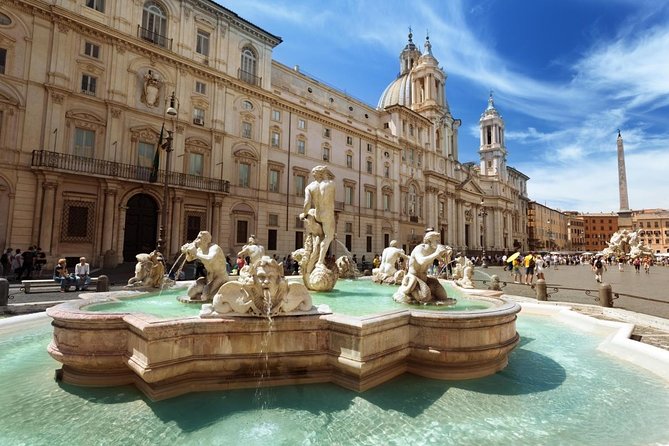
This tour is built as an evening-friendly walk through central Rome, starting at Piazza Farnese and ending near Largo di Torre Argentina. Expect a steady pace with frequent stops for food and short sights, so it doesn’t feel like pure sightseeing with snack breaks. It’s more like a guided food crawl that happens to thread through some of the city’s most famous historic layers.
The group size is capped at 15, which helps the vibe. You get conversation time, and you’re not shouted over by a big crowd. It also makes it easier for a guide to check needs like vegetarian requests if you’ve told them in advance.
Two practical notes you’ll be glad you thought about: you’ll want to be hungry, and you’ll want comfortable shoes. Smart casual fits the mood, but Rome’s sidewalks are still Rome’s sidewalks.
You can also read our reviews of more tours and experiences in Rome.


Campo de’ Fiori: Roman pasta, salumi, cheeses, and gelato with real-market energy
Campo de’ Fiori is often called the heart of Rome’s foodie life, and this tour leans into that. You start in the area known for the day market, and depending on your time slot you may get a stronger market feel. If you go in the morning, you’ll meet vendors who’ve been in the neighborhood for generations, which gives the whole place a lived-in rhythm.
Even on the evening-style experience, the atmosphere matters. The guiding idea is simple: eat where locals eat after work. You’ll sample Roman-style foods in an environment that feels ancient and active at the same time, not staged.
Here’s what this stop typically delivers:
- Cheeses, prosciutti, and salami paired with wine
- Two of Rome’s most famous pasta dishes, with wine as part of the pairing
- Street-snack energy, including classic bites you’d recognize from Roman eating habits
- Gelato from a local family-run shop, described as top-rated and longtime
What makes this part work is the pacing. You taste, then you connect it to what you’re seeing nearby. The guide’s stories help you understand why those foods show up here in the first place, instead of treating them like a generic sampler plate.
A small drawback to keep in mind: the tour’s food style is classic and hearty. If you’re expecting very light, trendy, or fine-dining plating, you might find it more straightforward than you imagined. One of the consistent themes is that you’ll leave full, not merely impressed.
Roman ruins and the walk to Piazza Navona: how history gets folded into lunch logic

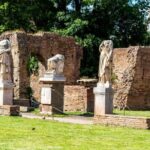
After Campo de’ Fiori, the walk continues through the old-city core and toward famous ruins and historic buildings. One highlight that’s specifically part of the route plan is the area around Pompey’s Theatre. You’re not just snapping photos from a distance; you’re getting the “why this place matters” story in a short, practical way.
This is a tour strength if you like history but hate the slow lecture approach. The stops are positioned so that a landmark usually gets explained right when you can see what the guide is talking about. That makes it easier to remember later when you’re wandering on your own.
Also, because you’re eating on the move, the history doesn’t drag. You’re taking in architecture, then you’re tasting something that connects to daily life. That blend is why people keep coming back for food tours in general, and why this one has such a strong overall rating.
Piazza Navona: Temple ruins, Baroque details, fountains, and classic Roman bites
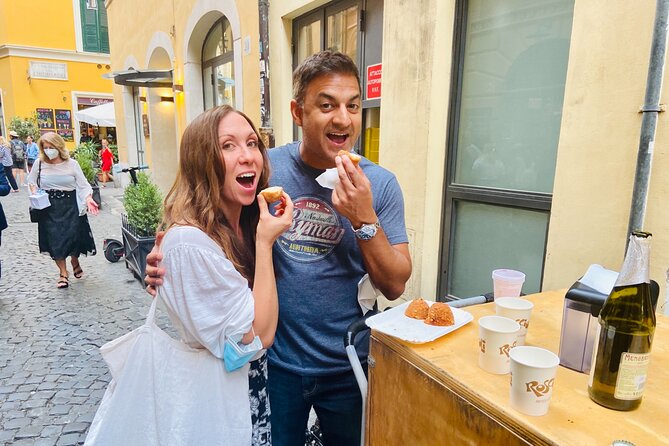
Piazza Navona is the sort of place where you can’t help but look up. This stop is about watching Rome’s layers stack: you’ll go from ancient Roman temple ruins to Baroque masterpieces and the kind of Renaissance fountain views that make the square famous.
Food-wise, this is where the tour shifts from market-sense eating to a more “you’re in the center of Rome, here’s how people snack” feel. You’ll sample a mix of classic Italian dishes and typical Roman snacks, with stories and insights threaded through the walk and the setting.
What I like about this stop is the offbeat angle. The square is famous, but the tour doesn’t treat it like just a photo backdrop. You get tips on what to notice in the architecture and how the city’s history explains the vibe of the streets nearby.
Potential drawback: Piazza Navona is busy in general, and you’ll still be in a central, public space. The tour helps you move smartly, but it’s not a quiet neighborhood stroll.
Area Sacra di Largo Argentina: a quick city-center orientation that ends with gelato
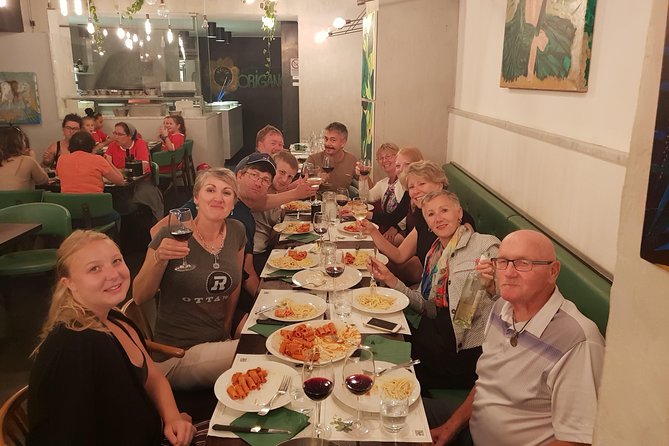
Largo Argentina’s Area Sacra is one of those locations that makes you slow down. The vibe here is that of an ancient sacred area inside a modern city grid, which is exactly why it works well for a tour that aims to help you get oriented fast.
This part of the experience is also a practical segue. It’s described as a first overview of the city center, plus guidance on some of the best addresses for eating—the kind of advice you can actually use later when you’re hungry and indecisive.
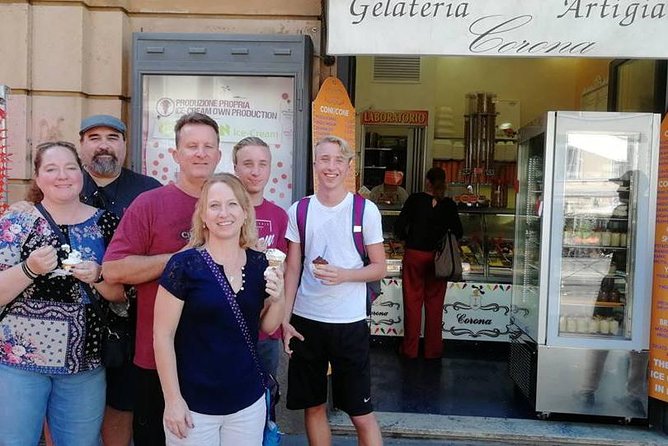
The food payoff is an end-of-tour gelato moment: you’ll finish with artisanal gelato. In a tour like this, gelato is a bigger deal than people expect, because it’s both dessert and a last taste that helps you sort what you liked most. Some folks love the stops here; one person found the gelato stop less impressive, so I’d treat gelato as a likely win but not a guaranteed knockout.

Wine and soft drinks: what’s included, and how it affects value
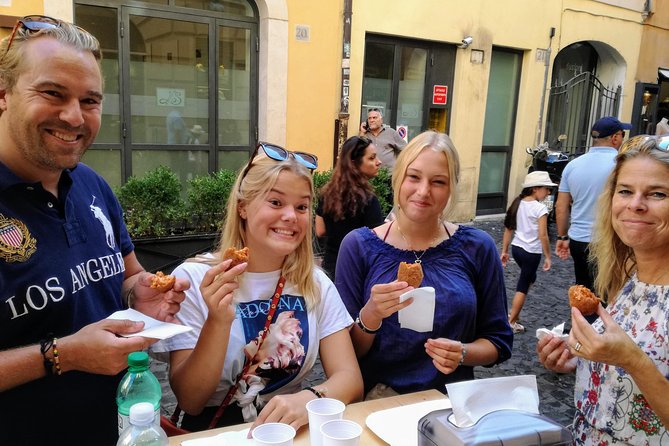
Wine is part of the core experience. You’ll have wine or soft drinks with tastings, plus bottled water and alcoholic beverages. That matters for value because you’re not paying extra for drinks while you’re also paying for multiple food stops.
One review detail comes up in a real-world way: if you don’t drink wine, the tour can feel like it’s less of a bargain. The upside is that you can choose soft drinks, but the overall “I got everything included” feeling may not land the same if your drink plan is non-alcoholic.
So my practical advice is simple: if you like wine with meals, this is a strong deal. If you don’t, you can still have a good time, but go in knowing the tour is built around classic Roman eating plus drink pairings.
What you’ll eat: classic Roman staples in a guided sequence
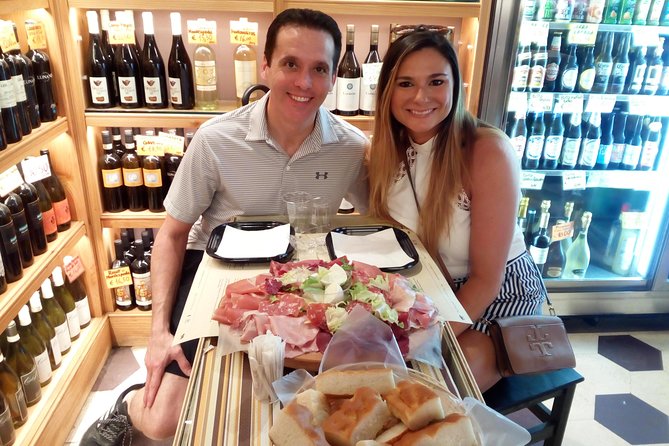
This tour is firmly rooted in Roman favorites. You’re looking at a menu style that tends to include cured meats and cheeses, bread and pasta moments, plus desserts and gelato.
Across the tastings, the theme is sensory—using all your senses to understand Rome in one go. The tour framing isn’t fancy food trivia. It’s more like: taste what people actually order, then connect it to the streets and monuments you just walked past.
A few details that show how this works in practice:
- You’ll get both savory and sweet tastings, so the tour doesn’t end on a heavy sour note
- Pasta is a major player, with descriptions that mention multiple pasta dishes in different tastings and pairings
- Dessert isn’t a token bite; it’s part of the pacing so you can keep walking without feeling stuffed too early
Vegetarian guests can be accommodated if you advise the provider in advance. However, the tour explicitly cannot accommodate vegan, gluten-free, or dairy-free diets. It also isn’t suitable for people with severe allergies to nuts and dry fruits.
That allergy/diet reality is important. In Rome, many dishes contain dairy and wheat, and desserts can include nuts even when they look simple. If you’re managing a serious restriction, don’t assume substitutions will be possible.
How 3 hours feels on your feet (and why the small group helps)
This is listed as about 3 hours, and the structure is designed so you’re not stuck in one long line or trapped in one overpacked area for too long. The walking is steady, but it’s broken by tastings and landmark pauses.
You’ll want a moderate fitness level. This isn’t a marathon, but it is still walking. If you tire quickly, wear shoes that you trust and plan to slow down with the group during the busiest square moments.
The small cap (15 people) also helps with timing. You’re less likely to get stretched out or left behind. Guides also have an easier job adjusting the pace if someone needs a rest or a quick clarification.
Guides bring the tour to life: Maria, Fabrizia, Marco, Greta, and more
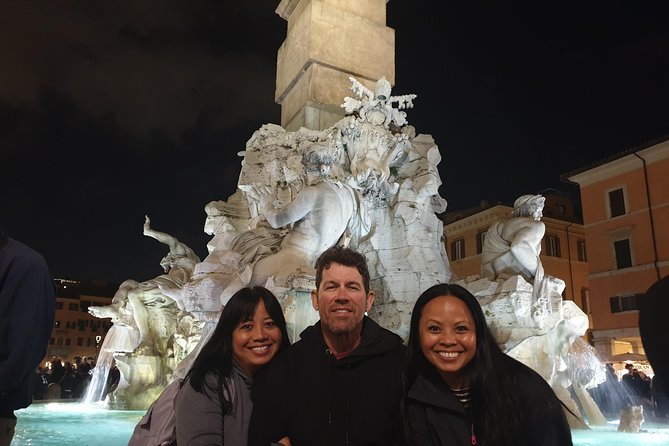
The quality of the experience often comes down to the guide’s storytelling and energy. The guides connected with this tour have repeatedly been praised for making Rome feel understandable and fun at the same time.
Names that show up in the guide chatter include Maria, Fabrizia, Marco, Greta, Matteo, and Mattia, plus Fabrizia again in another standout note. What’s consistent across these guide reports is that they connect food to Roman life and architecture, and they keep the mood friendly.
Practical bonus: in at least one instance, a guide helped someone arrange a taxi at the end. That’s not something you should demand, but it’s reassuring to know the guide team can be helpful when you’re finishing up in the evening.
Price and value: is $83.48 a smart spend?
Let’s talk real value. At $83.48 per person for roughly 3 hours, you’re paying for:
- A local expert guide
- Several food tastings
- Wine or soft drinks
- Bottled water
- A small-group walking format
In central Rome, buying enough food and drinks to match multiple tastings would add up fast. So the value question is less about the sticker price and more about what kind of eater you are. If you want a guided sequence—where you don’t have to decide where to eat, and where you can try several Roman staples without guessing—this price tends to make sense.
Where the value can drop is personal taste and drink habits. If you don’t drink and you prefer lighter or more specialized dishes, you may feel the tour is weighted toward classic, filling Roman comfort food plus wine pairings.
My take: for a first Rome trip, or when you want a smart start to your dining instincts, this is a good spend—especially if you’re the type who likes to eat your way through neighborhoods.
Who should book Taste of Rome (and who should skip it)
Book it if:
- You want a first taste of Roman classics like pasta, cheeses, cured meats, desserts, and gelato
- You like history told in short bursts while you’re actually walking and eating
- You’d rather follow a route than plan 3 separate meal stops
- You enjoy wine pairing or at least don’t mind it being part of the plan
Consider skipping or switching tours if:
- You need vegan, gluten-free, or dairy-free options
- You have severe allergies to nuts and dried fruits
- You’re expecting upscale fine dining rather than neighborhood-style Roman food
- You don’t want alcohol included and feel strongly about value tied to wine
Tips to make your tour smoother from the first bite
A few small habits can make a big difference:
- Get there early for the meeting point at Piazza Farnese. One person had confusion after a change notice, and even though the guide waited, late starts can still stress you out.
- Bring water and plan to pace yourself. The tastings add up, and you’ll be better off nibbling slowly than trying to power through.
- Ask about vegetarian options when you book. The tour can accommodate them if you told the provider in advance.
- Don’t overbook right after. You’ll end around Largo di Torre Argentina, and you’ll likely want time to digest and wander.
Should you book this food tour?
I’d book it if you want a compact way to eat like Rome and understand why the city feels the way it does. The route hits real focal points—Campo de’ Fiori, Piazza Navona, and Largo Argentina—and the tastings keep the experience moving with a clear rhythm.
Skip it if your diet restrictions are strict or allergy-related. Also, if you dislike the idea of wine being part of a food plan, you may feel the value isn’t as sharp. But for most people—especially first-time visitors—this is the kind of tour that helps you start your Rome trip with confidence, full stomachs, and better instincts for where to eat next.
FAQ
How long is the Taste of Rome walking food tour?
It’s approximately 3 hours.
What does the tour cost?
The price is listed as $83.48 per person.
Where do I meet, and where does the tour end?
The meeting point is Piazza Farnese, 00186 Roma RM, Italy. The tour ends at Largo di Torre Argentina, 00186 Roma RM, Italy.
Is the tour offered in English?
Yes, it’s offered in English.
What’s included in the ticket price?
You get several food tastings, wine or soft drinks, a walking tour with a local expert guide, bottled water, and alcoholic beverages.
Is hotel pickup included?
No, hotel pickup and drop-off are not included.
Can vegetarians eat on this tour?
Vegetarians can be accommodated if you advise the provider in advance.
Can this tour handle vegan, gluten-free, or dairy-free diets?
No. Vegan, gluten-free, or dairy-free diets cannot be accommodated.
What about cancellations?
Free cancellation is available up to 24 hours in advance for a full refund, and the experience requires a minimum number of travelers (if it’s canceled for that reason, you’ll be offered another date/experience or a full refund).