Rome’s biggest crowd-pullers feel manageable with timed entry. This 3-hour Colosseum + Forum + Palatine experience pairs skip-the-wait admission with a guide you can actually hear via headsets, plus an optional arena floor add-on.
I like how the route is built to help you see the site, not just pass by it: you hit major monuments in a sensible order, from triumphal arches to Via Sacra, then end on Palatine Hill for city views. I also really value the small-group feel (up to 25), since the Colosseum area can turn into a human obstacle course fast.
One consideration: this is a lot of walking and standing on uneven terrain, with stairs. If you’re sensitive to heat or fatigue, plan on taking it slow and consider an early time slot.
In This Review
- Key Highlights You’ll Feel on the Ground
- Timed Entry and Headsets: Why This Tour Works
- Meeting at the Arch of Constantine and How the Route Moves
- Stop 1: Arch of Constantine Between Power and Pageantry
- Stop 2: The Colosseum—How the Inside Feels With a Timed Plan
- Roman Forum and Via Sacra: The Political Center Comes Into Focus
- Piazza del Colosseo and Via dei Fori Imperiali: Reading the Ruins Like a City
- The Rostra, Venus and Roma, and Two Triumphal Arches
- Palatine Hill Views and the Best-Looking Circus Maximus Moment
- Price and Value: Why $59.28 Can Be a Smart Move
- Who Should Book This Tour (and Who Might Want a Different Pace)
- Book It or Skip It: My Practical Recommendation
- FAQ
- What’s included with the timed-entry ticket?
- Is arena floor access included?
- How long is the tour, and how many people are in the group?
- Do I get a live guide, or is it audio-only?
- Will I need a smartphone for the audioguide option?
- Where does the tour start and end?
- Can I bring luggage or large bags?
- What if the Colosseum closes due to bad weather?
- Can I cancel for a refund?
Key Highlights You’ll Feel on the Ground
- Timed entry into the Colosseum plus the Forum & Palatine keeps your day from being eaten by lines.
- Headsets help you follow the story even when the crowd noise is loud (and it is).
- Optional arena access is one of the best “I can’t believe I’m standing here” upgrades in Rome.
- A tight 3-hour route covers a lot of ground while still leaving time to keep exploring after.
- Palatine Hill + Circus Maximus views give you the scale you miss when you only look at ruins from street level.
Timed Entry and Headsets: Why This Tour Works
Rome’s Colosseum isn’t a place you want to approach with blind optimism. Timed entry matters because it controls the biggest variable in your visit: waiting. With this tour, your ticket is pre-arranged so you’re not stuck comparing line lengths while everyone else slowly turns into a cranky statue.
The other practical win is sound. If you choose the guided option, you’ll get headsets so you don’t have to strain to hear in the crowd. It’s the difference between enjoying the facts and constantly scanning for your guide’s voice.
And if you’re the “I want control” type, there’s also an audioguide option. Just know that “guided” and “audio app” are very different experiences, and the booking option you pick changes everything.
You can also read our reviews of more tours and experiences in Rome.
Meeting at the Arch of Constantine and How the Route Moves
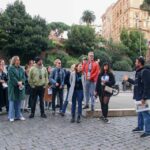
You start near the Arch of Constantine at Piazza del Colosseo, and you finish on Palatine Hill (Via di S. Gregorio 30). That matters more than it sounds: you’re not backtracking all afternoon.
The flow is also designed to build context step by step. You don’t jump straight into random ruins. You start with a triumphal monument (so you’re already thinking about politics and spectacle), then you move into the Colosseum, then you widen out to the Forum and Palatine world that made the Colosseum matter.
This tour runs about 3 hours, and it’s built for people comfortable with standing, uneven surfaces, and several staircases.
Stop 1: Arch of Constantine Between Power and Pageantry
The Arch of Constantine is a strong opener. It’s the largest Roman triumphal arch here, built to celebrate Emperor Constantine’s victory connected to the Battle of the Milvian Bridge. Because it sits between the Colosseum and Palatine Hill, it’s basically a statement sign that says: this is where emperors turned events into propaganda.
What I like about starting here is that it gives you a lens. When you later walk around the Colosseum and Forum, you’re not just looking at stones—you’re noticing the “why” behind Roman public architecture: victories, legitimacy, and mass attention.
You’ll spend about 10 minutes here, with admission included.
Stop 2: The Colosseum—How the Inside Feels With a Timed Plan
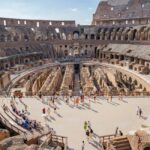
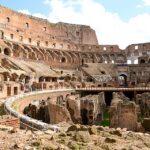
The Colosseum is the obvious draw, but the real value is how you experience it. With timed entry, you can get in and start reading the structure before the worst crowd crush hits. And once inside, you’re exploring and standing in key areas where gladiatorial spectacle once played out.
You’ll have about 30 minutes at the Colosseum with admission included. If you add arena floor access, that’s a different level of wow. The opportunity to stand on the arena level is the kind of upgrade you remember long after you leave, because it changes your sense of scale and layout.
A quick reality check: in heavy weather, the Colosseum may close unexpectedly. The tour notes that you’ll be offered a change of date or a full refund if that happens.
Also: no luggage or large bags. If you’re traveling with more than a small daypack, you’ll want to rethink what you bring.
Roman Forum and Via Sacra: The Political Center Comes Into Focus
After the Colosseum, you move into the Roman Forum, often the part people understand least—until a guide helps you connect buildings to daily power.
You’ll spend about 20 minutes at the Roman Forum, walking through the heart of ancient Rome where government life happened. Think: meeting places, court-adjacent politics, official speeches, and the public face of the empire.
Then you head to Via Sacra, the main processional street that ran from the Capitoline side through the Forum toward the Colosseum. It’s described as the route of Roman triumphs, lined with important religious sites. Even if you don’t know every name, the street’s purpose becomes obvious when you connect it to the triumphal arches you saw earlier.
Expect about 10 minutes on Via Sacra.

Piazza del Colosseo and Via dei Fori Imperiali: Reading the Ruins Like a City
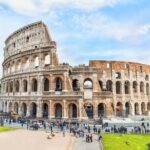
Next you reach Piazza del Colosseo, a square named for the Colosseum, and the area around includes the Meta Sudans and the Colossal statue of Nero. It’s one of those stops that helps you orient yourself in the “bigger picture” neighborhood.
From there, you walk along Via dei Fori Imperiali, a monumental boulevard linking Piazza Venezia with the Colosseum. It highlights the long imperial run of forums connected with emperors like Caesar, Augustus, Nerva, and Trajan.
This part works best when you use your imagination in small doses. Look at the street’s alignment, notice how the spaces open up, and you’ll start to feel how movement through the city was meant to look and sound.
You’ll spend around 10 minutes at each of these viewpoints.
The Rostra, Venus and Roma, and Two Triumphal Arches
Now the tour shifts into “public speech and sacred power” mode.
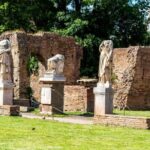
You visit the Rostra, the remains of a major platform used for orations during both republican and imperial periods. In plain terms: it’s where politicians and advocates spoke to the assembled public. Seeing that platform area helps you understand Rome wasn’t just built for ceremonies—it was built for talking back and forth, arguing, and announcing decisions.
Then comes Temple of Venus and Roma (Tempio di Venere di Roma) on the Velian Hill. You’ll learn it was dedicated to Venus Felix and Roma Aeterna and described as the largest temple in ancient Rome. Even in ruins, temples like this explain why emperors loved religious symbolism: it wrapped authority in the language of the divine.
After that, you get Arco di Tito, a triumphal arch with a single archway on the Palatine slopes. It commemorates Emperor Titus’s victories, including the Siege of Jerusalem. The art and message matter here, because triumphal arches weren’t neutral decoration—they were political storytelling in stone.
You’ll also stop at Tempio di Antonino e Faustina, an ancient temple that became the church of San Lorenzo in Miranda. The notes explain it began dedicated to Faustina, then later to both Antoninus Pius and Faustina after deification.
These stops run about 10 minutes each, giving you snapshots instead of long museum-style time. That’s intentional in a 3-hour format: you’re meant to leave with a roadmap.
Palatine Hill Views and the Best-Looking Circus Maximus Moment
The finale is Palatine Hill, where Rome’s foundation story gets tangled with the idea of elite living. You’ll spend about 20 minutes here, and you’ll get panoramic views that make the surrounding ruins feel more like a city than a pile of stone.
From Palatine, you get a special moment: the tour offers a view of Circus Maximus. The visit notes explain that from the hill you can look down on the vast arena where chariots and crowds once ruled the scene. It’s only a short view (about 2 minutes), but it’s timed perfectly—right when your brain is ready to understand scale.
If you’re tempted to rush, don’t. This is the spot where everything starts clicking: street, forum, spectacle, and power.
Price and Value: Why $59.28 Can Be a Smart Move
At $59.28 per person, this sounds like an “activity cost,” but the value math is better than it first appears.
The tour states timed entry to the Colosseum plus the Forum & Palatine is included, with a value listed as €18 per person (and €24 if you choose arena access). There’s also a stated reservation fee valued at €2 per person. So a large chunk of what you pay is really paying for access, not just narration.
That leaves the rest of the price covering the service side: the guided structure (or coordinated audio option), headsets when guided, and the value of not wasting your time figuring out what entrance to use and in what order.
In other words: you’re paying to trade stress for flow. For the Colosseum area, that’s usually a good deal.
Who Should Book This Tour (and Who Might Want a Different Pace)
This tour fits best if you:
- Want major sites in one visit without spending half your day in lines
- Like getting a clear narrative as you walk through ruins
- Prefer a group size that’s capped at 25 travelers
- Want the option to upgrade to arena floor access
It may be less ideal if you:
- Have limited mobility, because the route includes uneven terrain and stairs
- Expect a slow, sit-down pace—this is structured walking and standing
- Plan to travel with lots of luggage (large bags aren’t allowed)
For people in their 70s or anyone who tires quickly: consider an early time slot and keep expectations realistic. The tour itself warns you the effort is not light.
Book It or Skip It: My Practical Recommendation
If your goal is to see the Colosseum, Forum, and Palatine in a tight window, I’d book this. The timed entry is the heart of the deal, and the headset option makes the experience smoother than wandering on your own.
What I’d decide carefully is this: do you want a live guide with headsets, or do you want the autonomy of an audioguide app? Both can be fine, but confusion is where disappointment starts. If you go the audio route, you’ll need a smartphone and your own earphones, and you’ll get app instructions ahead of time.
Also, if you care about atmosphere and photos, try for an earlier slot. The Colosseum is crowded in general, and early timing makes it easier to enjoy the structure instead of just surviving the crowd.
FAQ
What’s included with the timed-entry ticket?
The tour includes timed entry to the Colosseum plus the Roman Forum & Palatine.
Is arena floor access included?
Arena floor access is included only if you select the arena floor option during booking.
How long is the tour, and how many people are in the group?
The tour runs about 3 hours and has a maximum of 25 travelers.
Do I get a live guide, or is it audio-only?
There are guided tour options with headsets for clear audio guidance. If you book the audioguide option, you’ll use an app (not a live guide walking with you).
Will I need a smartphone for the audioguide option?
Yes. The audioguide app requires a smartphone and earphones. It’s available for both Android and iOS, and it can be downloaded for offline use.
Where does the tour start and end?
The tour starts at Piazza del Colosseo, near the Arch of Constantine and ends at Palatine Hill (Via di S. Gregorio, 30).
Can I bring luggage or large bags?
No. It’s not possible to enter the venues with luggage or large bags.
What if the Colosseum closes due to bad weather?
If the Colosseum closes unexpectedly in inclement weather, you’ll be offered a change of date or a full refund.
Can I cancel for a refund?
Yes. You can cancel up to 3 days in advance for a full refund.
—
If you tell me your travel month and whether you’re thinking about the arena floor upgrade, I can help you choose the best timing and decide if the guided version is worth it for your style.