REVIEW · ROME
Trastevere and Rome’s Jewish Ghetto Half-Day Walking Tour
Book on Viator →Operated by Nicom Tours · Bookable on Viator
Rome’s backstreets tell sharper stories. This half-day style walk ties together Trastevere and the Jewish Ghetto with Roman ruins, working neighborhoods, and views you’d miss on your own.
I love two things most: the stop at Santa Maria in Trastevere (with an interior visit when the church schedule allows) and the way the tour mixes everyday Roman life with the big historical layers that sit under today’s streets. The headsets also make a real difference when you’re in busy lanes and trying to hear every detail.
One consideration: parts of what you’ll see depend on schedules. You’ll visit the synagogue area from the outside only, and the Santa Maria interior is subject to what’s open that day—so go in flexible.
In This Review
- Key highlights before you go
- Largo di Torre Argentina: where your walk starts with Caesar-level drama
- Piazza Mattei and the Fontana delle Tartarughe: entering ghetto Rome with context
- The Jewish Ghetto streets: how to see layers without getting lost in dates
- Isola Tiberina crossing: synagogue exterior views and bridge panoramas
- Trastevere’s Santa Maria in Trastevere: an interior visit when it’s open
- Ponte Sisto and Piazza Farnese views: people-watching with a plan
- Ending at Campo de’ Fiori: use the tour to pick your next move
- Guides, headsets, and the small-group advantage (max 15)
- What’s included (and what you should plan around)
- Timing and walking effort: the “half-day” that feels like evening
- Who this tour is best for
- Should you book this Trastevere and Jewish Ghetto walk?
- FAQ
- Where does the tour start, and where does it end?
- What time does the tour begin?
- How long is the walking tour?
- What’s included in the price?
- Is the synagogue visited inside?
- Do you visit Santa Maria in Trastevere church?
- Are tickets for sights included?
- Is this a small group tour?
- Is hotel pickup or drop-off included?
- Is luggage storage available?
Key highlights before you go
- Julius Caesar’s shadow at Largo di Torre Argentina: start where Roman history gets very real, very fast
- Piazza Mattei and Fontana delle Tartarughe: admire the colored marble and learn the backstory as you enter the ghetto area
- Tiber Island viewpoints: cross over for wide bridge views before heading into Trastevere
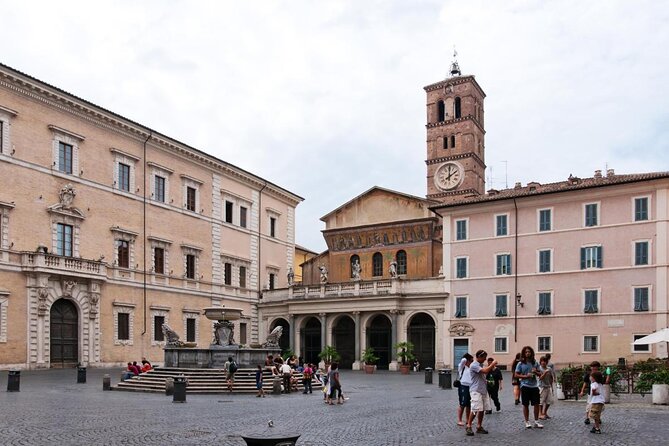
- Santa Maria in Trastevere interior (schedule-dependent): one of Rome’s oldest church sites, traced back to the 340s AD
- Small group feel (max 15): easier questions, less getting lost, more actual conversation
- Campo de’ Fiori finish: end in a lively square that’s ideal for dinner and more wandering
Largo di Torre Argentina: where your walk starts with Caesar-level drama
Meet your guide at Largo di Torre Argentina and start with a place that’s famous enough to anchor the whole evening. This is the area tied to Julius Caesar’s assassination, and it’s a strong opener because it immediately frames what comes next: Rome’s past is not in some faraway museum—it’s right here.
From the start, you’ll also get explanations that connect the square to ancient remains you can still sense around you. That matters because Rome’s street level is only part of the story. With a guide speaking as you walk, you start noticing how today’s city sits above older layers.
Expect a slow, conversational pace. This is the kind of start where you’ll want to look up at buildings and glance down at the street, because the tour logic is teaching you how to read the area.
You can also read our reviews of more tours and experiences in Rome.


Piazza Mattei and the Fontana delle Tartarughe: entering ghetto Rome with context
After the initial square intro, you head toward the ghetto area via Piazza Mattei. This is the turning point where the tour stops being only about famous Roman moments and becomes about how different communities lived side by side over centuries.
A key moment here is Fontana delle Tartarughe. You’ll pause to appreciate the fountain’s three kinds of colored marble and learn about its romantic past. It’s a fun break too—short, pretty, and a good way to reset your brain before the heavier history.
Then comes the heart of the experience: your guide helps you understand why the Jewish quarter is considered one of the ancient Jewish quarters in the world. You’ll hear stories that connect inhabitants of the area with the broader Roman world, and you’ll be encouraged to ask questions as you walk.
If you like history that doesn’t feel like a lecture, this part is a sweet spot. It’s grounded in specific places, not just dates.
The Jewish Ghetto streets: how to see layers without getting lost in dates
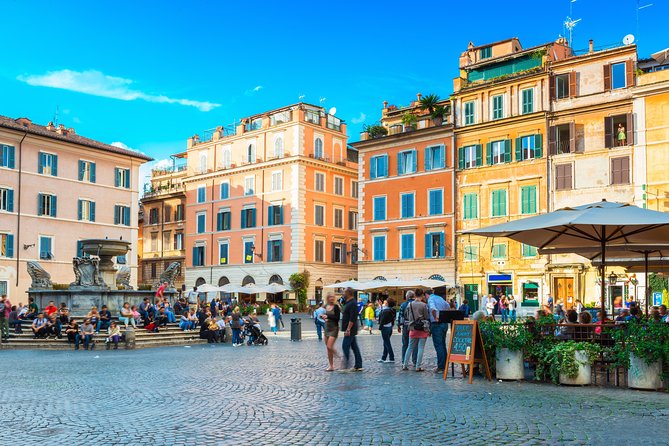
Once you’re in the ghetto zone, the tour’s value is in the way it teaches you to notice what changed and what stayed. You’ll hear about medieval, Renaissance, and baroque periods alongside the older Roman remnants, which helps you avoid the common problem: seeing the neighborhood as one thing.
The tour also emphasizes how ancient Rome can be literally “beneath” your feet. You’ll learn to spot how remnants sit below today’s street level, which is one of those ideas that sounds abstract until someone points it out while you’re standing there.
This isn’t only solemn walking either. You’ll also pick up details about popular cafes and modern-day Roman life, so the neighborhood doesn’t get frozen into a single mood. That balance is a big reason the tour works well for both first-timers and people who have already done the big highlights.
A practical thought: bring your curiosity. This is the kind of route where you’ll get the most out of it if you’re willing to slow down and look.
Isola Tiberina crossing: synagogue exterior views and bridge panoramas
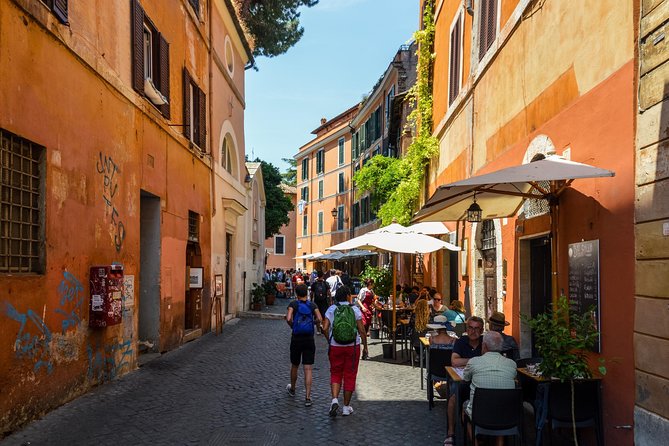
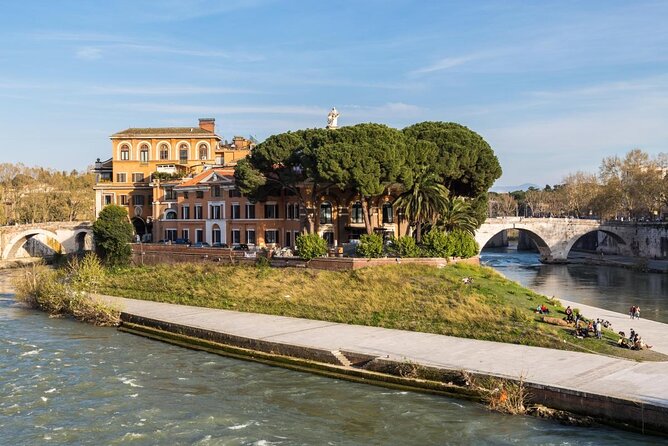
One of the most memorable segments is the crossing to Isola Tiberina (Tiber Island). As your route takes you past the synagogue exterior—described as one of the largest in Europe—you get a clear sense of how landmarks fit into the real fabric of the city.
Then you cross the river and enjoy views of Rome’s bridges. It’s a great change of pace after walking tight lanes. Plus, you’ll get a different perspective on how the city is stitched together, not just a view of buildings but a sense of movement and geography.
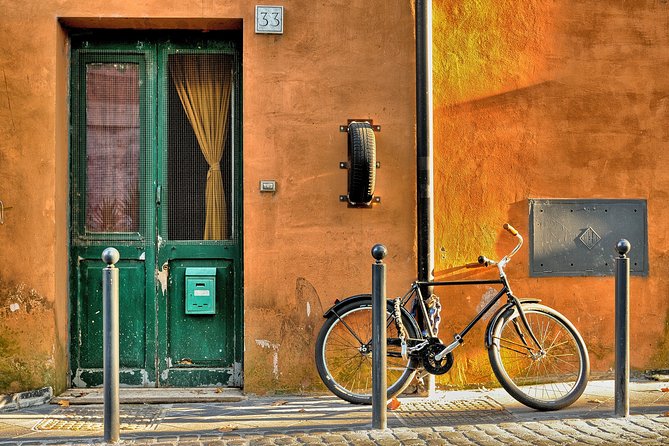
When you reach Trastevere, the mood shifts again. This is the bohemian-feeling part of the historic center where artists, authors, and people drawn to night life tend to gravitate. Even if you’re not out for partying, you’ll feel the neighborhood’s human rhythm.
This section is also good for photos. It’s not the kind of stop where you stare for one minute and move on. You’ll have time to look around and take in what you’re seeing.
Trastevere’s Santa Maria in Trastevere: an interior visit when it’s open
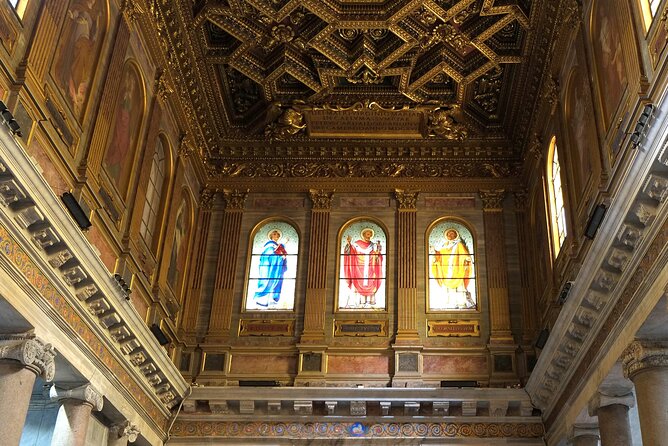
In Trastevere, the tour’s highlight is the visit to Santa Maria in Trastevere. This church is described as one of the oldest in Rome, with a past that dates back to the 340s AD—so yes, you’re standing in a place with serious age behind it.
You should know the tour includes an interior visit subject to the church schedule. That means you’ll plan for it, but you don’t control it. If the timing is right, you’ll get inside and see why the place matters.
Even when interior access is limited, you’ll still benefit from the tour’s framing. The guide’s explanations connect the church to the broader story of Trastevere’s development and its long continuity as a living neighborhood.
This stop is why I think the tour is worth doing even if you’re short on time. It adds something you often can’t squeeze in on your own—an organized walk plus a meaningful doorway into older Rome.




Ponte Sisto and Piazza Farnese views: people-watching with a plan
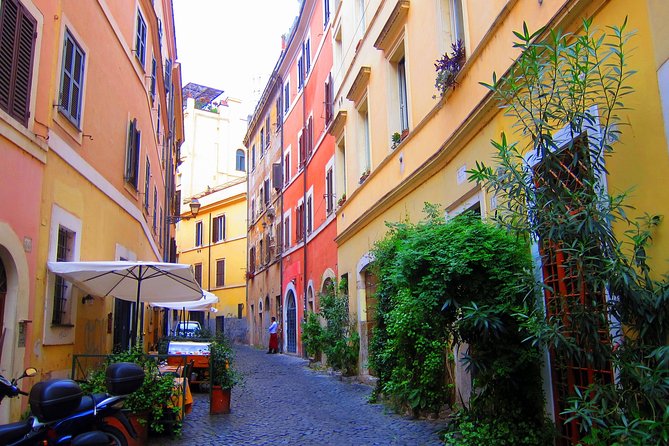
After Trastevere, you cross back over the Tiber via Ponte Sisto. This is a practical and pleasant rhythm: a return crossing, a few key sights passed along the way, and then a final approach to a major square.
As you move, you’ll pass the Piazza Farnese Palace area. The palace itself isn’t part of the visit, but seeing it from the outside helps you understand where you are in the city’s hierarchy of neighborhoods and landmarks.
Then you head toward Campo de’ Fiori. Think of this as the tour ending sweet spot: it’s busy, social, and packed with options. You’ll also do well here because you’re finishing where you can keep the story going on your own.
If you like tours that leave you with a strong next step, this finish is smart. You don’t end in a silent side street where everyone disappears. You end where dinner actually makes sense.
Ending at Campo de’ Fiori: use the tour to pick your next move
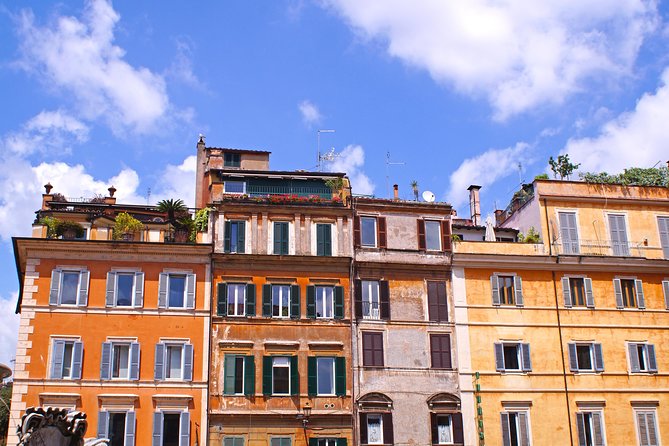
Your tour ends at Campo de’ Fiori, a lively central square where locals and visitors mingle. It’s a strong place to wrap up because you can decide on the next hour based on what you feel like: quick bites, a proper meal, or just wandering nearby streets.
One tip from the vibe of the area: if you’re in the mood for food that nods back to Jewish Roman traditions, look for places serving Jewish artichokes. This kind of dish comes up as a standout suggestion tied to the area’s eating scene, and it’s a fun way to extend what you learned about daily life.
Even if you don’t eat right away, use the end point to keep walking. Campo de’ Fiori is a hub, so you’ll find it easier to branch out once you’ve got the neighborhoods straight in your head.
Guides, headsets, and the small-group advantage (max 15)

This tour keeps group size limited—up to 15 travelers—and that’s a quiet superpower. Smaller groups move with less chaos, and you’re more likely to get questions answered without feeling like you’re interrupting.
Headsets are included, which means you can follow the guide’s explanations even when the group spreads out or you’re standing near louder streets. For Rome walking tours, this is not a luxury. It’s the difference between hearing the story and missing half of it.
About the guide: people often highlight guides who bring humor and clear enthusiasm while still staying focused on archaeology, culture, and the way the city developed. Names that show up in past tour experiences include Irene, Paolo, Claudio, James, and Jeanette. You might not get the same person, but it’s a good sign that the guide talent pool tends to mix expertise with personality.
Practical note: a couple of visitors have mentioned that shoe comfort matters and that the pace can feel a bit tight at times. So do yourself a favor and wear shoes you’d happily wear for several hours of Rome stone.
What’s included (and what you should plan around)
The essentials are straightforward. You get a professional guide and headsets, and the route covers Trastevere and the Jewish Ghetto area in about 3 hours.
What’s not included is also important for expectations:
- There’s no hotel pickup/drop-off.
- There’s no internal visit of the synagogue—you see it from the outside.
- Palazzo Farnese is passed by, but not visited.
- Food and drinks are not included unless specifically added for your departure.
You also should expect that at least one key stop has admission status that isn’t automatically bundled (the Area Sacra di Largo Argentina stop notes admission ticket not included). If you’re the kind of traveler who likes to have every payment pre-decided, consider budgeting separately for anything you choose to enter on your own while nearby.
Timing and walking effort: the “half-day” that feels like evening
This tour runs at 6:00 pm, so you’re typically walking in the evening light. That’s a great time for Rome because streets cool down and neighborhoods feel more human than midday.
Still, it’s a walking tour, and the company lists moderate physical fitness as the right level for participation. Plan on standing and walking through multiple areas, plus time for pauses and explanations.
Also, your meeting point is in a busy historic zone. Some people have said finding the exact group can be a little tricky. So arrive a bit early, scan for the group, and be ready to adjust if you’re on the wrong side of the square.
The last thing to plan for: darkness changes the feel. If you’re doing this in a season where daylight fades quickly, the tour ending around Campo de’ Fiori still works well, but you might prefer adding extra time in Trastevere for the best atmosphere.
Who this tour is best for
You’ll likely love this if:
- You want Roman neighborhoods instead of only monuments.
- You like tours that connect big events to everyday streets.
- You’re interested in how history layers build from ancient through medieval/Renaissance/baroque periods.
- You want a guide who explains not just what you’re seeing, but how to read it.
It’s also a good fit for people who’ve been to Rome before and think they’ve seen it all. This route focuses on areas that many first-time plans skip.
You might not love it as much if:
- You only want fully indoor sights and don’t enjoy schedule-dependent access.
- You need a tour that includes synagogue interior access (this one is exterior only).
- You dislike any commentary that could veer beyond strict archaeology—some guests have felt that way.
Should you book this Trastevere and Jewish Ghetto walk?
I’d book it if you want a smart, emotional, and practical Rome evening: Roman ruins at Largo di Torre Argentina, the ghetto area with place-based storytelling, a crossing to Tiber Island for views, and a church stop at Santa Maria in Trastevere when it’s open. The small group size and included headsets make it feel organized rather than chaotic, and the ending in Campo de’ Fiori gives you a ready-made dinner plan.
Skip it only if your priority is one specific interior you won’t get here (the synagogue interior), or if you’re not comfortable with a real evening walk. Otherwise, this is one of those tours that helps Rome click into place—streets, buildings, and history all talking to each other.
FAQ
Where does the tour start, and where does it end?
The tour starts at Largo di Torre Argentina and ends at Campo de’ Fiori (Magia a Campo de’ Fiori area).
What time does the tour begin?
The start time is 6:00 pm.
How long is the walking tour?
It’s listed as about 3 hours.
What’s included in the price?
You get a professional guide and headsets.
Is the synagogue visited inside?
No. The tour includes an exterior visit of the synagogue area, not an internal visit.
Do you visit Santa Maria in Trastevere church?
Yes, the tour includes an interior visit of Santa Maria in Trastevere, but it is subject to church schedule.
Are tickets for sights included?
At least one stop (Area Sacra di Largo Argentina) notes admission ticket not included. Other admissions may depend on what you choose to do.
Is this a small group tour?
Yes. The maximum group size is 15 travelers.
Is hotel pickup or drop-off included?
No. There is no hotel pickup and drop-off.
Is luggage storage available?
No. Luggage storage is not available.