Rome feels more human after dark. This Trastevere night tour strings together major Roman landmarks with history-meets-fun stops, including Bocca della Verità, all the way to the lively Trastevere end at Piazza Trilussa.
I like that the route is built for wandering: you hit several big-name sites without needing a car or a half-day plan. I also like the guide-led pacing, the sense that you’re learning while the streets around you are doing their own thing. The one thing to watch is that, despite the free-tour vibe in the description, the booking price is $17.38, so double-check what you’re paying for and whether you plan to tip on top.
In This Review
- Key highlights I’d plan around
- Why a 7:30 pm Trastevere walk is the right kind of “Rome at night”
- The start at Teatro di Marcello: where the walk gets real fast
- Circus stories and the road to Bocca della Verità
- Forum Boarium and the ancient-temple stop you’ll actually remember
- Teatro Marcello and the Octavia Portico: power seen in stonework
- Jewish Ghetto context on the way into Trastevere
- The Trastevere ending at Piazza Trilussa: turn the walk into a plan
- Price and value: what $17.38 buys you (and what to expect)
- Group size, guides, and why the “tone” matters on a night tour
- What to bring for Trastevere at night
- Who this tour is for, and who might skip it
- Should you book the Trastevere Tour?
- FAQ
- What is the price per person for the Trastevere tour?
- How long does the tour take?
- What time does the tour start?
- Where do I meet and where does it end?
- Do I get a mobile ticket?
- What is the maximum group size?
- Is there free cancellation?
- Is the tour suitable for most people and are service animals allowed?
Key highlights I’d plan around
- 7:30 pm timing that keeps you out of the hottest hours and in the best night energy
- Teatro Marcello to Trastevere route that covers multiple eras in one walk
- Bocca della Verità with the famous hands test myth (and a gentle warning about it)
- Forum Boarium + ancient port area for a “Rome before Rome” feel
- Jewish Ghetto + Trastevere context as you move through the neighborhoods
- Small group cap (30), which usually makes questions and attention easier
Why a 7:30 pm Trastevere walk is the right kind of “Rome at night”
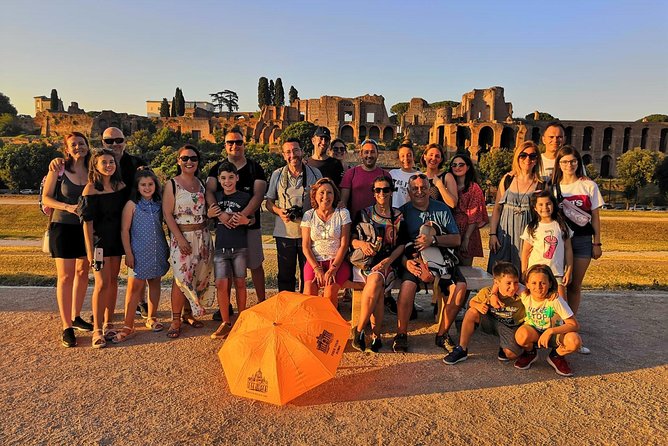
Trastevere at night has that Rome-in-motion feeling. People spill out of bars, scooters thread through the lanes, and the buildings look warmer under streetlights. This tour starts at 7:30 pm, which matters because you’re not rushing through stuff in daylight, and you’re less likely to feel cooked before you reach the best viewpoints.
What I find useful here is the “two birds” approach: you get a guided loop that still feels like a stroll. You’re learning why these places mattered, but you’re also ending in an area where you can immediately turn the walk into dinner plans. The tour ends at Piazza Trilussa, which is a great place to regroup and decide what’s next.
If you’re the type who wants a structured history hit but still wants street-level Rome, this fits. If you’re looking for a museum-style deep dive or a long list of indoor stops, you might want something else.
You can also read our reviews of more tours and experiences in Rome.
The start at Teatro di Marcello: where the walk gets real fast
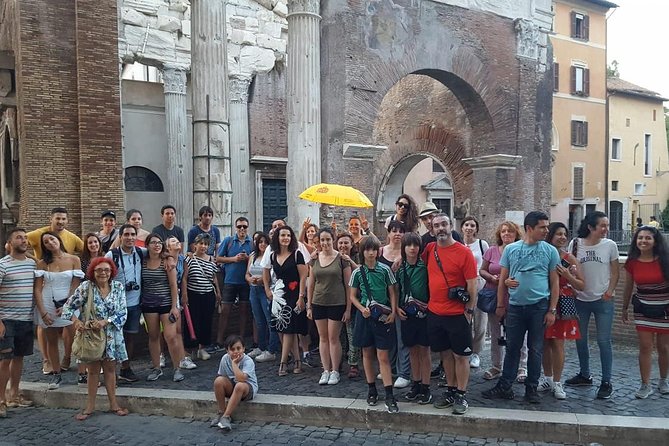
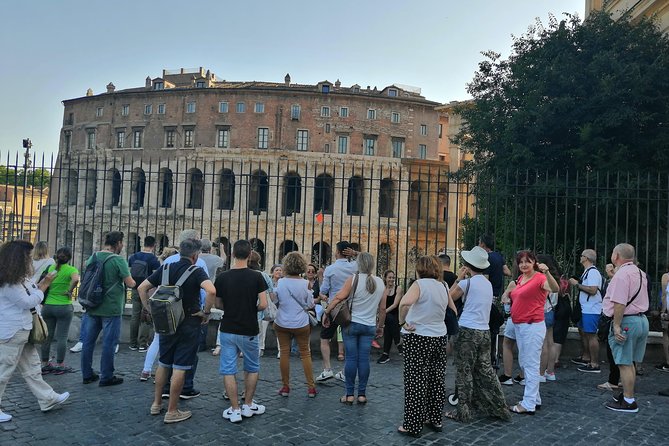
The meeting point is Via del Teatro di Marcello, near the historic theater area. That’s a smart start because Teatro Marcello is one of those “you can’t miss it” ruins: it’s big, it’s dramatic, and it helps you feel what ancient Rome looked like while you’re still near modern streets.
From there, you’re set up to move toward the western side of central Rome, where several layers of history are close together. Even if you don’t know every detail going in, the guide can connect the dots as you walk—why certain monuments were placed where they were, and how the city’s power center shifted over time.
Practical tip: wear shoes that handle uneven pavement. This is Rome. The streets look charming, but your feet will remember the details.
Circus stories and the road to Bocca della Verità
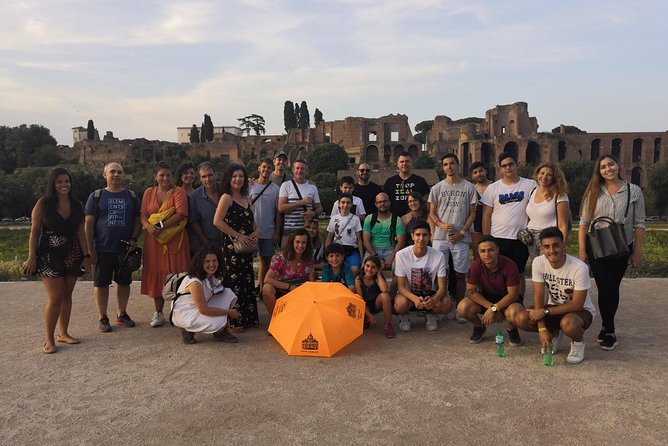
One of the tour’s big threads is the Roman circus legacy. You’ll pass through the Roman circus area connected to Circus Maximus, the place associated with the biggest chariot and spectacle runs of ancient Rome. You’re not touring a stadium today. You’re walking through the part of the city where that kind of mass entertainment once shaped daily life.
Then the tour aims for Bocca della Verità. This is the stop people talk about because it comes with a built-in story-game. The tour even warns you: if you are not fully sure of your honesty, do not put your hands in. That’s the kind of detail that makes a landmark more than a photo spot.
Here’s how I’d think about it before you go:
- If you want a playful, memorable moment, this is your payoff.
- If you’re self-conscious about joining the hands test, that’s fine. You can watch, take the photos, and still enjoy the story context without turning it into a performance.
Forum Boarium and the ancient-temple stop you’ll actually remember
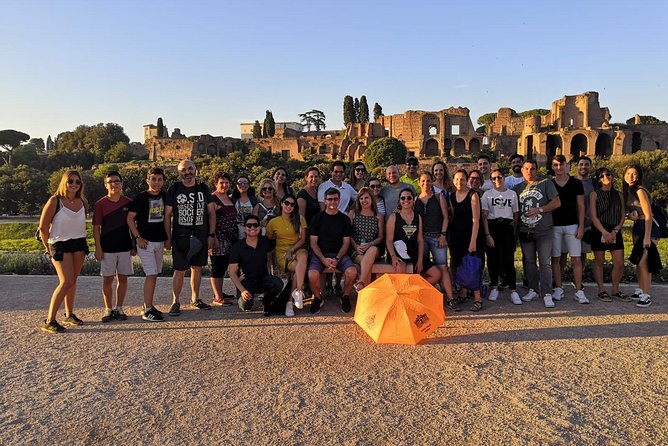
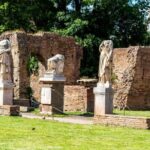
Next you’ll reach the Forum Boarium, known for its ancient temples. This is a different feeling than walking past bigger “poster monuments.” The Forum Boarium area helps you picture Rome as a practical, commercial, religious city—not just an imperial stage.
What I like about this stop is how it gives you perspective. If your mental Rome is mostly emperors and ruins, the Forum Boarium pieces help balance that with daily-life Rome: trade, worship, and the kind of civic order that made the city function.
The tour also references the port area where life developed before the founding of Rome. That’s one of those phrases that can sound vague until you’re standing in the right part of the city and realizing how close water-and-trade life was to the later “great Rome” narrative. You’re basically walking through a corridor of continuity: older activity, then later monuments rising where movement and resources already mattered.
Teatro Marcello and the Octavia Portico: power seen in stonework
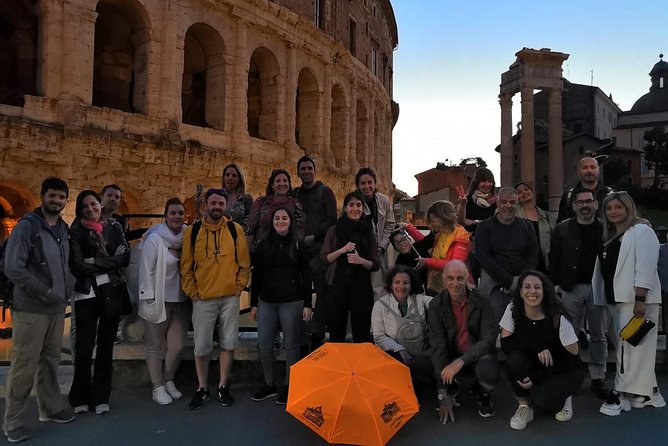
Back in the area around Teatro Marcello, you get another chance to appreciate what Roman architecture was built to do: dominate space. The tour highlights Teatro Marcello as a major structure connected to Emperor Octavius and the memory of his dead nephew. Even if you’re not into family-tree history, it helps you understand the purpose behind the monument—Rome’s grief and politics were often built right into public life.
Then you’ll hear about the Octavia Portico, attributed to Emperor himself. Porticoes like this were not random decorative sidewalks. They were designed for movement, shelter, and social activity—places where people met and the city’s rhythm kept going.
What’s valuable for you: these stops create a “street map” in your mind. After the tour, when you see similar Roman arches or colonnades elsewhere, you’ll know what you’re looking at and why it mattered.


Jewish Ghetto context on the way into Trastevere
As you move through the Jewish Ghetto (Jewish Quarters of Rome) and onward toward Trastevere, the tour includes the history of Jews in Rome. This part is important because Trastevere isn’t just a pretty neighborhood; it’s shaped by real communities over time, and Rome’s story is not only about emperors and battles.
I’d treat this section as a “learn enough to notice more” moment. The tour isn’t trying to replace a long course. It’s giving you a guided framework so when you see the neighborhood streets, you connect them to something beyond food and nightlife.
If you’re sensitive to topics like segregation and community constraints, keep that in mind. It’s history, but it’s still delivered while you’re walking through current streets. That contrast can hit harder than reading about it in a book.
The Trastevere ending at Piazza Trilussa: turn the walk into a plan
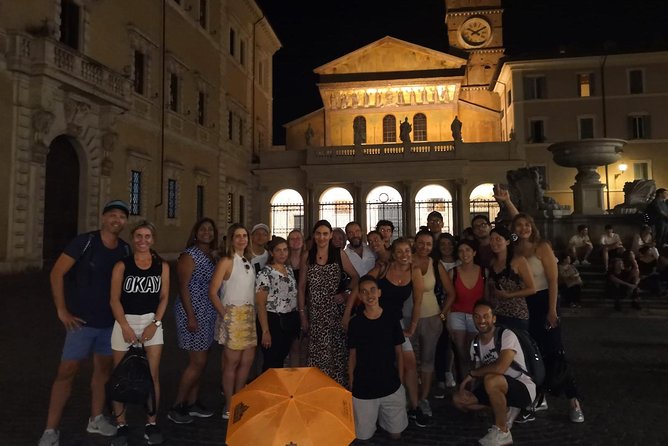
The tour ends at Piazza Trilussa in Trastevere. That’s not a random dot on a map. It’s a practical finish: you’re dropped in the area people actually go to for evening food, drinks, and wandering afterward.
This is where the timing helps again. Starting at 7:30 pm and running about 2 to 3 hours means you still have energy afterward. You can keep going right away rather than needing a new plan for transportation and orientation.
If you’re going to eat after this, I’d do what the guides seem to encourage: ask the guide for 1–2 practical options, then pick based on what you feel like having that night. One of the guides mentioned in feedback, Ana Sofía, was praised for giving solid eating advice and managing the group well. Another guide, Iván, also received shout-outs for recommendations and for communicating Roman and Jewish culture in a passionate, engaging way.
Even if you don’t end up with the same guide, the lesson for you is clear: ask good questions. That’s where a walking tour becomes more than a list of stops.
Price and value: what $17.38 buys you (and what to expect)
The price is listed as $17.38 per person, and it’s a booking you’ll often see taken about 25 days in advance. That doesn’t mean you must book that early, but it does suggest this is a popular slot—especially during peak travel months and weekends.
Is it good value? In my opinion, yes—if you’re using it correctly.
- You’re paying for a guided route that connects several major sights in a short window (2–3 hours).
- The group limit of 30 keeps it from turning into a slow-motion parade.
- You get a mobile ticket, which reduces friction on a busy Roman evening.
What could reduce your value is a mismatch in expectations. One concern to consider: the description leans into a free-tour feel. If you’re the type who wants tip-only pricing, that mismatch can bother you. I’d treat it as a low-cost guided walk with a ticket price, not a fully free model.
Group size, guides, and why the “tone” matters on a night tour
A night walking tour lives or dies by the guide’s tone. You need clarity, pacing, and a way to keep people together in crowded streets. Feedback highlighted that guides like Ana Sofía and Iván were effective at keeping attention and managing groups (including groups right up to the max size).
So what should you do as a participant?
- Show up on time so the group isn’t late starting in the dark.
- Ask questions early, not when you’re already racing to the next stop.
- If you’re traveling with kids or you have mobility limits, this is still a manageable timeframe, but you’ll want to stay aware of uneven sidewalks.
Also note: service animals are allowed, and the tour is near public transportation. That helps make this easier to fit into a normal Rome itinerary without major planning.
What to bring for Trastevere at night
This is a walking-focused experience, so your “kit” matters more than fancy gear.
Bring:
- Comfortable walking shoes
- A light layer if evenings feel cool to you
- A phone with enough battery for the mobile ticket
Keep in mind:
- You’re outdoors the entire time, so rain can change the vibe fast.
- This is the kind of evening walk where you’ll want to glance up often. Roman architecture can reward you, but only if you’re not constantly dodging bad footwear.
Who this tour is for, and who might skip it
You’ll likely love it if:
- You want Trastevere nightlife plus real historical grounding
- You’re seeing Rome for the first time and want a guided corridor of sights
- You like playful moments like Bocca della Verità without needing museums
You might skip it if:
- You want mostly daytime landmarks or long indoor experiences
- You strongly dislike walking and prefer rides between stops
- You’re expecting a tip-only free format and the ticket price would feel off
Should you book the Trastevere Tour?
Yes—if your goal is a practical, low-cost way to connect Trastevere nightlife with major Roman landmarks in a tight 2–3 hour window. The 7:30 pm start is a sweet spot, and ending at Piazza Trilussa makes it easy to keep the evening going without extra planning.
Before you book, I’d do one quick check: confirm your expectations about the paid ticket versus the free-tour vibe. If you’re cool with a ticketed guided walk and you want a human-scale history stroll, this is a smart choice.
If you want the most out of it, come ready to ask your guide for 1–2 evening recommendations. That’s where the experience often turns from sightseeing into an actually memorable night.
FAQ
What is the price per person for the Trastevere tour?
The tour costs $17.38 per person.
How long does the tour take?
The duration is approximately 2 to 3 hours.
What time does the tour start?
The start time is 7:30 pm.
Where do I meet and where does it end?
You meet at Via del Teatro di Marcello, 00186 Roma RM, Italy. The tour ends at Piazza Trilussa, 35, 00153 Roma RM, Italy.
Do I get a mobile ticket?
Yes, the tour includes a mobile ticket.
What is the maximum group size?
The tour has a maximum of 30 travelers.
Is there free cancellation?
Yes. You can cancel for a full refund if you cancel up to 24 hours in advance of the experience start time.
Is the tour suitable for most people and are service animals allowed?
Most travelers can participate, and service animals are allowed. The tour is also near public transportation.