REVIEW · ROME
Ultimate Colosseum, Roman Forum & Palatine Hill Small Group Tour
Book on Viator →Operated by Through Eternity Tours · Bookable on Viator
Rome’s biggest crowd-pleaser has a story.
This small-group walk ties together the Colosseum’s brutal spectacle, the Roman Forum’s political power, and Palatine Hill’s imperial neighborhood—so the ruins don’t feel like random piles of stone. I especially love how the tour uses pre-booked Colosseum entry to cut your time in lines, and how the guide turns stops into a clear timeline from everyday life to emperors and their propaganda. One drawback to plan for: you’ll still be walking through very busy sites, and the pace can feel brisk when multiple groups are funneling through the same areas.
A lot of my favorite moments were tied to standout guide energy. People in recent groups praised guides like Donatella Mauceri, Alessandro, Marco, Luca (an archaeologist and historian), and Francesco for answering questions, keeping a workable rhythm, and sharing details that make the place feel more human. If you want a slow, meandering museum day, this may not be the best fit—but if you want a guided hit list you can understand fast, it’s a strong match.
In This Review
- Key Points to Know Before You Go
- A 3-Hour Plan That Hits Colosseum, Forum, and Palatine Hill
- Entering the Colosseum with Pre-Booked Tickets (and Mobile Entry)
- What the Colosseum Tour Teaches You to See
- Foro Romano: Where Politics, Religion, and Daily Life Collide
- Vestal Virgins, Basilicas, and Reused Roman Stone
- Palatine Hill: The Imperial Neighborhood with Big Views
- Pace, Headsets, and Staying Together in Real Crowd Conditions
- Price and Value: What You Pay for Beyond the Ticket
- Who Should Book This Tour (and Who Might Want a Different Option)
- Should You Book This Ultimate Colosseum Tour?
- FAQ
- How long is the Ultimate Colosseum, Roman Forum & Palatine Hill Small Group Tour?
- Where do I meet the tour, and where does it end?
- Is the Colosseum ticket included?
- Is this tour offered in English?
- Will I need a passport or ID?
- What fitness level do I need?
- Can I cancel for a refund?
- Is this really a small group?
Key Points to Know Before You Go
- Pre-booked Colosseum tickets help you avoid the longest waits
- Small group size (listed max of 10 travelers, also described as up to 16) keeps the experience more controllable
- Headsets are provided for groups of six or more, so you can hear clearly without shoulder-to-shoulder crowding
- Forum and Palatine stops are time-efficient, mixing major monuments with story-based context
- Palatine Hill viewpoints show why emperors wanted to live above the city
- Some focus stays on the main areas, so if you were hoping for lower-level access, double-check your expectations
A 3-Hour Plan That Hits Colosseum, Forum, and Palatine Hill
This tour is built for people who want the big three—Colosseum, Roman Forum, and Palatine Hill—without spending half a day figuring out logistics on your own. It’s about 3 hours, and that time is spent walking between key areas so you get a mental map of how Rome functioned.
The route starts at Largo Corrado Ricci, 43 near the Forum and ends at Colosseum Piazza del Colosseo, 1. Along the way, you’re not just looking at monuments—you’re learning why they mattered: public power in the Forum, performance and intimidation in the Colosseum, and status in the elite district on Palatine Hill.
One reason this format works is that the guide can keep the story moving. When you hear about Julius Caesar’s funeral and Cicero’s beheading in the Forum, the stones around you start acting like stage props rather than homework.
You can also read our reviews of more tours and experiences in Rome.
Entering the Colosseum with Pre-Booked Tickets (and Mobile Entry)
The Colosseum is famous for two things: scale and crowds. The biggest practical win here is Colosseum admission purchased in advance (with a listed €18 ticket value and a €2 reservation fee), plus mobile ticketing. In plain terms, you’re trading money for time and stress.
You should still expect queues somewhere in the system, but the pre-booking helps you avoid the worst delays. And it matters that this is a structured tour: you meet your guide near the Forum, then move as a unit to keep you from getting stuck wandering.
Important on-the-ground detail: you must bring a valid passport or government photo ID that matches the names on your reservation, and you’ll need the full names of all travelers at booking time. If that doesn’t line up, entry can become a mess—Rome is beautiful, but it’s also strict about paperwork for timed sites.
What the Colosseum Tour Teaches You to See
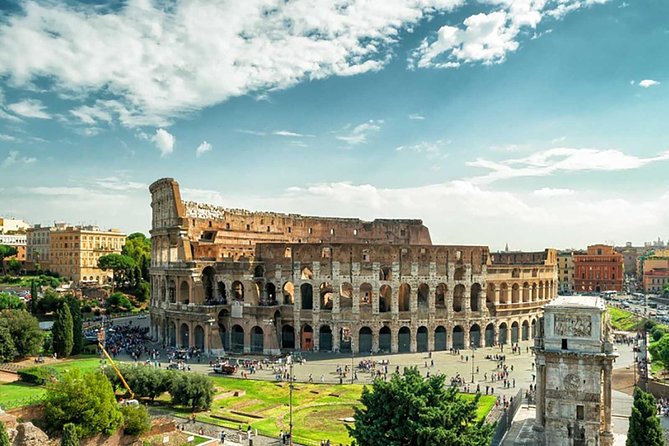
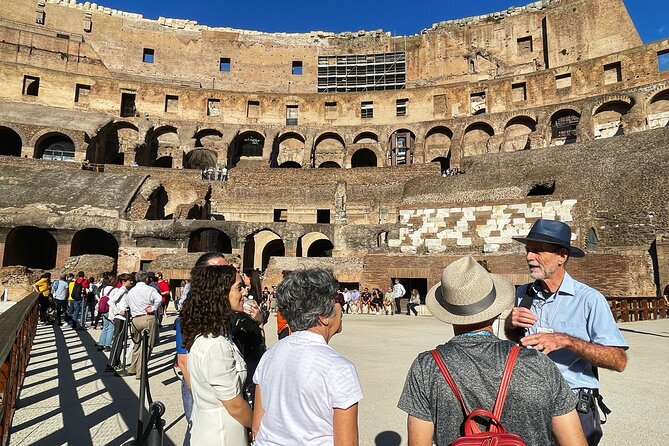
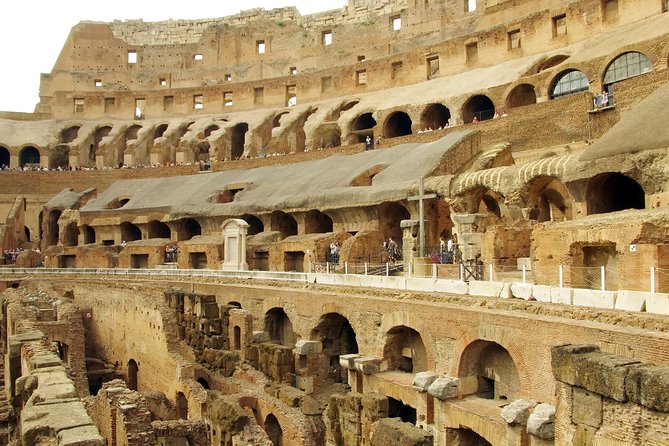
Once you’re inside the Colosseum, the guide focuses on more than dates. You’ll hear about gladiatorial battles and how the games worked as massive entertainment machines. That includes not only what the crowd watched, but also what was happening behind the scenes to stage events of this size.
A strong Colosseum guide helps you notice the architecture and the layout. You’ll get a clearer sense of where spectators would have stood and how the arena space was designed to keep the spectacle moving. Even if you’ve seen photos already, it lands differently when you connect the building to human behavior—fear, pride, politics, and showmanship.
Plan for heat and sun. Several people noted they were kept moving and steered toward shade spots when possible, which is the difference between a fun morning and a tiring one. The tour is also geared toward an efficient timeline—great if you like context, less great if you want to linger for long stretches.
One possible caveat: at least one review flagged that the tour may not include the lower parts of the Colosseum. If lower-level access is a must for you, treat this as a top-view, main-area experience and confirm what you’ll actually be walking through before you book.
Foro Romano: Where Politics, Religion, and Daily Life Collide
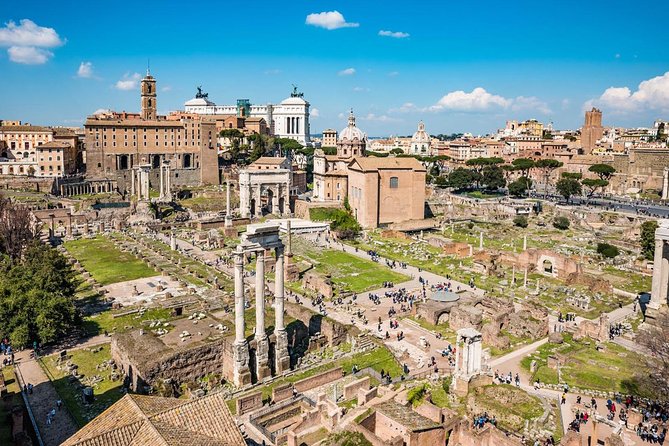
The Roman Forum is where Rome’s power got performed. This tour gives you a guided walk through the heart of it, starting in Foro Romano with a focus on the government buildings and civic spaces that made Rome feel like a functioning city-state.
Your guide helps you understand that the Forum wasn’t only about speeches and temples. It was also part marketplace, part public stage, and part everyday routing system. When you walk among ruins while hearing about how ordinary Romans lived and worked and worshiped there, the Forum stops being abstract.
You’ll also get story anchors that make the place memorable. The tour includes mentions of Julius Caesar’s funeral and Cicero’s beheading—events that happened here—so you’re not just learning history in an office. You’re learning it on the actual terrain where people would have understood those events immediately.
Expect navigation through uneven ground and tight spaces. Crowds are a real factor in this area, and other tour groups can make the flow feel competitive. The good news is that having a guide keeps you from losing time and ending up stuck.
Vestal Virgins, Basilicas, and Reused Roman Stone
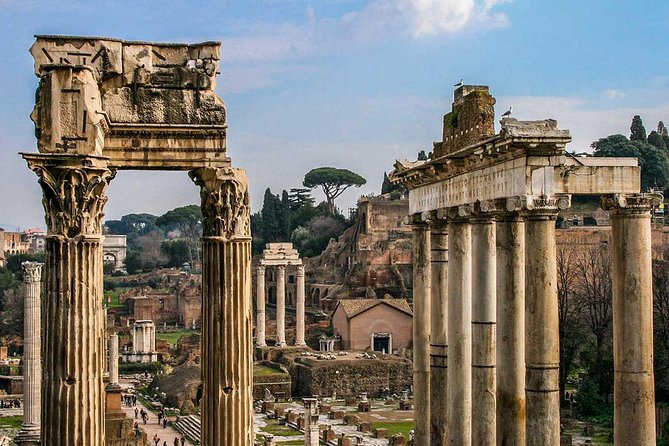
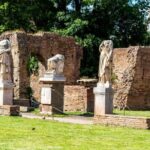
Between the major Forum blocks, you’ll hit several shorter stops that add texture. One highlight is Casa delle Vestali, the residence of the Vestal Virgins. It’s positioned behind the circular Temple of Vesta area, and the guide explains what the Vestals’ role meant in Roman society—especially how religion blended into state authority.
You’ll also see major Forum basilicas, including:
- Basilica of Maxentius, the largest basilica in the Forum and the last one built there
- Basilica Julia, a major public building used for meetings and official business
These sites matter because they show how Romans handled administration. They weren’t all laws and senators in marble. They were also paper-pushers, contracts, and public negotiation—done in grand buildings that made governance feel permanent.
Another fun stop is a preserved Roman monument that survives in part because it was repurposed into the entrance area for the still-functioning Church of Saints Cosma and Damiano. That contrast—Roman civic architecture reused across centuries—is one of the best reminders that Rome is layered, not replaced.

Palatine Hill: The Imperial Neighborhood with Big Views
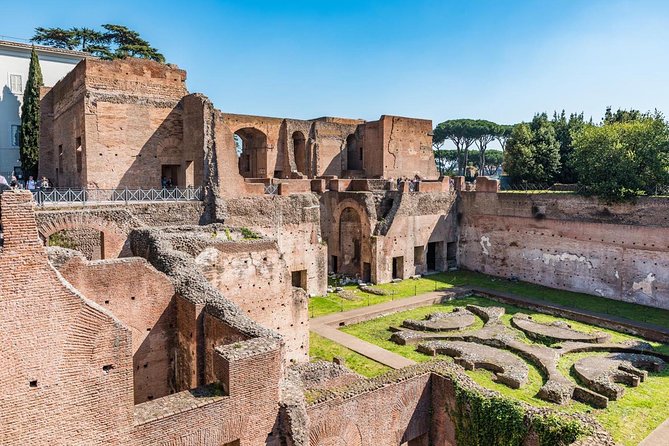
Palatine Hill is where Rome’s elite chose to live, and the tour uses that fact to make the ruins feel intentional. After your Forum walk, you climb to Palatine Hill for about 30 minutes of time in the open-air museum area.
This is an excellent moment to understand why emperors cared so much about location. You’ll pass ruins tied to imperial residences and leisure zones like the Flavian Palace, the Stadium of Domitian, and the Baths of Septimius Severus. The point isn’t to memorize names—it’s to grasp that power and comfort were physically close here.
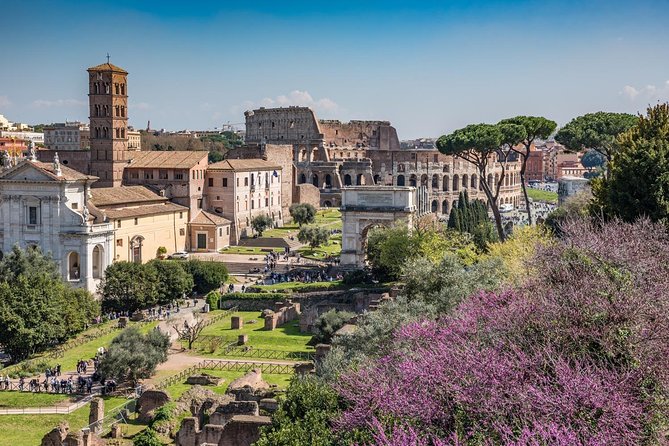
Then you get the views. Even if the skyline isn’t your main focus, looking back toward the Forum and Colosseum helps you connect the story to the geography. This is the “oh, that’s why they wanted this” portion of the tour.
And you’ll hear the big founding myth: Romulus and Remus, raised by a wolf on this hill. The tour explains how that legend boosted Palatine Hill’s appeal to emperors like Augustus and Domitian, who could use origin stories to support political legitimacy.
Pace, Headsets, and Staying Together in Real Crowd Conditions
This tour is designed to work in a crowded city. You’ll be part of a small group—with a stated maximum of 10 travelers in the operator info, and also described as no more than 16. Either way, it’s meant to be manageable enough that you don’t get lost in the shuffle.
Headsets are provided for groups of six or more. That’s a small detail that makes a big difference on the Forum and in the Colosseum, where you otherwise end up craning your neck or repeating questions you already asked. With headsets, you can keep moving while still hearing the guide.
The pace is efficient. Reviews mention a tour that never wasted time and another that included a lot of information fast enough that it might be hard to digest if you’re the kind of person who likes to stop and think. My advice: treat this as a guided orientation. After the tour, you can return on your own for deeper photo time or for monuments you want to revisit.
Also bring water and wear comfortable shoes. This is a walking tour with steps, staircases, and uneven surfaces. Even if you’re an active person, the combination of stone paths and sun can add up fast.
Price and Value: What You Pay for Beyond the Ticket
The price is $94.37 per person, and it’s worth analyzing what’s included. The Colosseum entrance ticket is listed as valued at €18 plus a €2 reservation fee. That’s about €20 of ticket cost you get handled for you.
The rest of what you pay covers the guided experience, time-saving coordination, included fees and taxes, and services like headsets for larger groups. In Rome, that can be a very good trade if you’d otherwise spend your morning in lines, figuring out where to go next, and trying to read plaques while other people block your view.
Is it a bargain? Not if you just want to wander slowly. But it can feel like a smart use of time if you want context and you’re trying to see a lot without turning your trip into a logistics project.
One more value point: booking earlier helps. This experience is described as commonly booked about 74 days in advance, which usually means the operator expects demand and limited entry slots.
Who Should Book This Tour (and Who Might Want a Different Option)
This tour fits best if you want a structured Roman highlights day. If you like hearing how events connect—like the Forum’s role in major political moments, or why the Palatine Hill myth mattered to emperors—then you’ll get more out of this than by simply sightseeing alone.
It’s also a good pick for couples and families who want the group kept under control. Reviews praised guides for answering questions and handling different ages and pace needs, including patience with people who needed extra time for comfort and photos.
Where you should pause and decide is lower-level access and pacing. If your top priority is going into areas beyond the main Colosseum zones, this might not match your wish list. If you dislike “keep moving” tours or you’re sensitive to heat, bring your best stamina plan.
Should You Book This Ultimate Colosseum Tour?
If your goal is to see the Colosseum, Roman Forum, and Palatine Hill in a way that makes sense, I’d book this. Pre-booked entry, a guide who can explain what you’re looking at, and a small group setup are exactly how you turn a crowded morning into a readable story.
Book it if you’re the kind of traveler who wants a plan. Skip it (or read more carefully) if you want a slow self-guided stroll, or if lower Colosseum access is a must-have for you. And whatever you do, show up on time for the meeting point—this tour won’t wait for late arrivals, and you don’t want to lose momentum right at the start.
FAQ
How long is the Ultimate Colosseum, Roman Forum & Palatine Hill Small Group Tour?
It lasts about 3 hours.
Where do I meet the tour, and where does it end?
You start at Largo Corrado Ricci, 43, 00184 Roma RM, Italy, and the tour ends at Colosseum Piazza del Colosseo, 1, 00184 Roma RM, Italy.
Is the Colosseum ticket included?
Yes. The Colosseum entrance ticket and reservation fee are included.
Is this tour offered in English?
Yes, the tour is offered in English.
Will I need a passport or ID?
Yes. Each traveler must present a valid passport or government issued photo ID that matches the name provided at booking for successful entry.
What fitness level do I need?
The tour involves walking with steps, staircases, and uneven surfaces. You should have a moderate physical fitness level, and comfortable walking shoes plus a bottle of water are strongly recommended.
Can I cancel for a refund?
You can cancel up to 24 hours in advance for a full refund.
Is this really a small group?
It’s described as up to a small group size, and the maximum is listed as 10 travelers in the additional info.