REVIEW · ROME
Walk the magic of Rome at night
Book on Viator →Operated by Lock Your Tour · Bookable on Viator
Rome at night turns big landmarks into movie scenes. This guided walk strings together iconic stops like the Trevi Fountain and the Colosseum area, all while the city feels cooler and calmer than daytime rush. I really like how the tour leans into photo moments and street-level storytelling, so you’re not just looking at buildings, you’re learning how Rome’s layers connect.
My second favorite part is the pacing for a city-walker: a small group (up to 12), lots of short stops, and even a planned pause so you’re not marching nonstop. One thing to consider: you won’t enter the monuments, since admission tickets aren’t included, so this is best for seeing the sights from outside and getting your bearings fast.
In This Review
- Key highlights to watch for
- Why this Rome night walk feels different than daytime
- Meeting at Via del Monte Oppio and the flow of a ~3-hour walk
- Stop-by-stop: the route you’ll feel in your legs
- Vittoriano and the Via dei Fori Imperiali approach
- Piazza Venezia: a quick name lesson with big-city clarity
- Pontifical Gregorian University: passing a landmark of learning
- The Pantheon: Rome’s best-preserved Roman monument (from the outside)
- Piazza Navona: lively square energy without the day crowds
- Trevi Fountain at night: the photo moment people remember
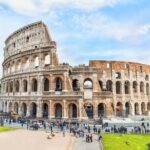
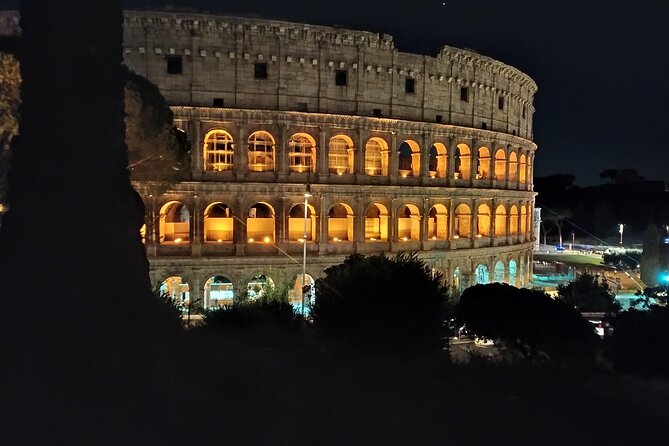
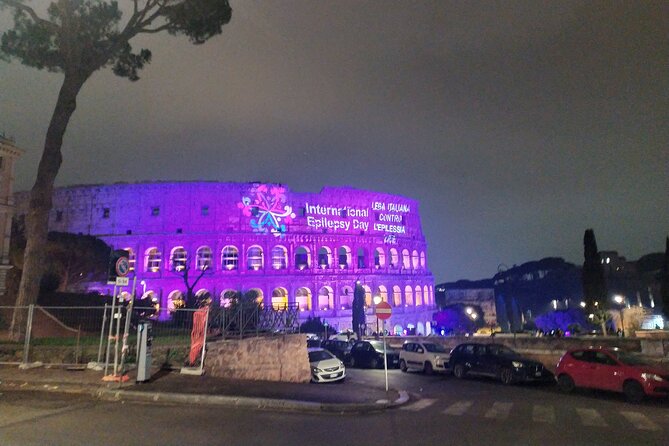
- Colosseum from the outside: learning the building without the ticket
- Finishing in Piazza di Spagna: where your evening ends
- What makes the guides matter (Joseph/Isuf, Drita, Rita, Darita)
- Value check: is $42.34 worth it?
- Who should book this Rome by Night tour
- Quick tips to make your night smoother
- Should you book this tour?
- FAQ
- How long is the Rome at night walking tour?
- How much does the tour cost?
- Is admission included for the monuments?
- Where does the tour start and where does it end?
- Is the tour offered in English?
- What group size should I expect?
- What fitness level and age is needed?
- Does the tour include breaks?
- Is the experience refundable or changeable if I cancel?
Key highlights to watch for
- Night-lit landmarks with real photo strategy at Trevi and the big “wow” points
- A compact, well-planned route that links the Pantheon, Trevi area, and the Spanish Steps
- Small-group energy (up to 12) that keeps questions flowing
- A guide who tells it like a story with humor and trivia-style explanations (names like Joseph/Isuf, Drita, Rita, and Darita came up often)
- Plenty of stops, not a sprint with time to pause and absorb
Why this Rome night walk feels different than daytime
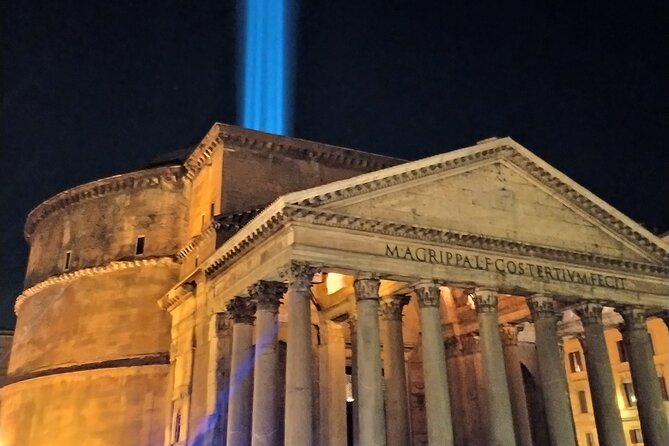
Day in Rome is about stamina. Night in Rome is about mood. Streetlights soften the edges of marble façades, and famous places look more dramatic when they’re lit up and the crowds thin out. This tour is built for that shift. You walk between major landmarks on foot, so you see the city the way you’d actually move through it on your own later.
The tour also gives you something most “checklist” experiences miss: context you can use. Instead of scattered facts, you get the big-picture story of why these places matter and how the areas connect. And because the route is timed for evening, you’re not standing under harsh sun trying to read plaques.
You can also read our reviews of more tours and experiences in Rome.
Meeting at Via del Monte Oppio and the flow of a ~3-hour walk
You start at Via del Monte Oppio, 3, 00184 Roma RM, and finish at Piazza di Spagna (Piazza di Spagna, 77). The whole thing runs about 2 hours 30 minutes to 3 hours, so it’s long enough to feel like a proper tour, but short enough to still have energy afterward for dinner.
A couple practical notes you’ll be glad you planned for:
- Moderate walking fitness helps. This is a city-foot tour, not a sit-and-stare bus ride.
- Expect a manageable group size (maximum 12), which makes it easier to keep pace and ask questions.
- Language is English. If you prefer detailed explanations over “look at that, next,” this format should work well.
Also, based on guide behavior described in the feedback, there’s usually breathing room built in. People mentioned a bathroom stop and a smooth pace that still covers a lot.
Stop-by-stop: the route you’ll feel in your legs
This is a “see Rome fast, learn Rome deeper” kind of evening. Each stop is short, but the stops add up to a clear mental map of central Rome.
Vittoriano and the Via dei Fori Imperiali approach
The evening begins near Monumento a Vittorio Emanuele II, then you walk along Mussolini’s grand Via dei Fori Imperiali direction and into the area around Piazza Venezia. This is the part of Rome where you quickly sense how power, symbolism, and urban design collide.
What makes this stop worth your attention:
- You get a sense of scale. The Vittoriano/Altar of the Fatherland area is huge and formal, and it changes how you think about Rome’s “stage sets.”
- You get a photo-op you can’t easily recreate on your own without figuring out positioning first.
No tickets are included here, and you won’t go inside. But standing outside while your guide explains the meaning behind the monument is exactly the point.
Piazza Venezia: a quick name lesson with big-city clarity
Piazza Venezia is short on time but strong on payoff. You’ll learn why it’s called Venice Square, which is one of those Rome trivia nuggets that makes the city feel less random. It also helps you understand why certain areas became reference points for locals and visitors.
This stop works best as a reset: a short pause after walking, before the route moves into more compact, story-heavy streets.

Pontifical Gregorian University: passing a landmark of learning
You also pass the Pontifical Gregorian University, described as the first university founded by Jesuits. Even if you just glance at the building from outside, the context matters. Rome isn’t only monuments and ruins. It’s also institutions, education, and long-term influence.
The practical angle: this is a “walk and learn” segment, not a photo marathon. If you like short informational stops that break up the walking, you’ll appreciate this rhythm.
The Pantheon: Rome’s best-preserved Roman monument (from the outside)
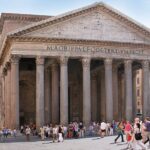
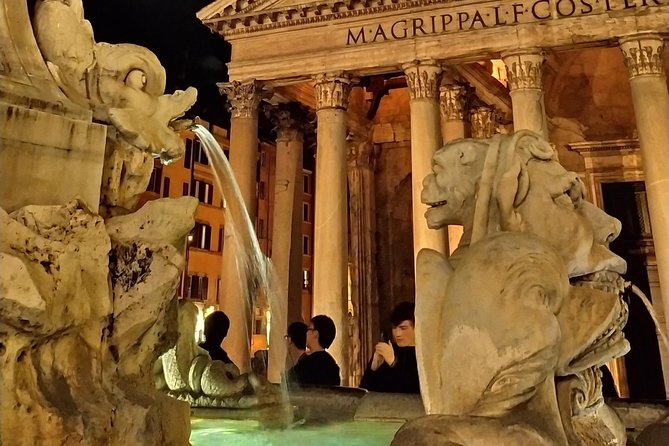
Next you’re at the Pantheon area. It’s often singled out because it’s among the best-preserved Roman monuments. Here, you’re not entering, but that’s not a dealbreaker. From outside, the Pantheon’s shape and presence hit right away, especially in evening light.
Why this stop fits the theme of the tour:
- It’s a pivot point. Once you’ve seen the Pantheon from outside, the rest of the central sights start to “click” in your mind.
- Your guide’s explanation helps you read the building instead of treating it like a postcard.
No admission tickets are included, so if your dream is standing inside beneath the dome, you’ll need a separate plan for that.
Piazza Navona: lively square energy without the day crowds
Your route also includes the lively Piazza Navona square. Even in a short time, a piazza like this tells you what Rome feels like when it’s alive—street performers, terraces, and people moving at a slower tempo.
This is one of those stops that’s less about a single monument and more about atmosphere. It’s a good place to pause your brain and let the city breathe.
Trevi Fountain at night: the photo moment people remember
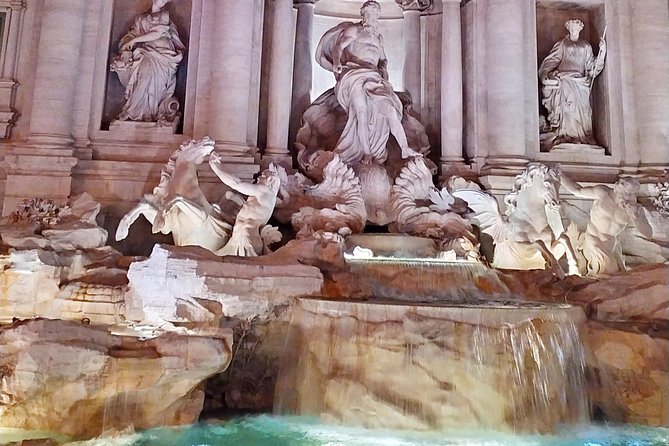
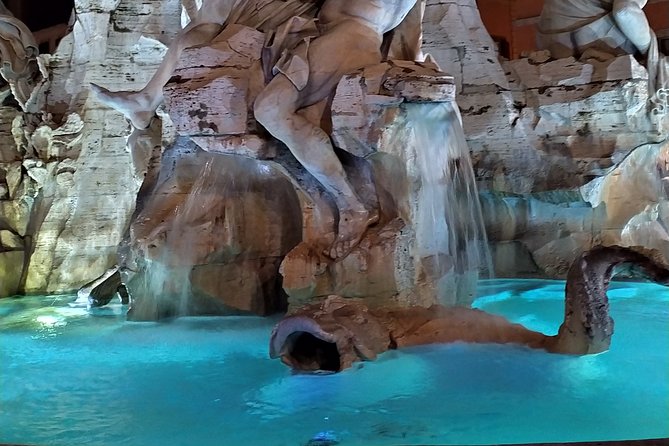
Trevi Fountain is the star for many first-timers, and this tour aims you right at it after dark. The fountain becomes a jewel of water and stone in the evening glow, and you’ll get time to admire it while the city feels cinematic.
Here’s the practical benefit: your guide is typically strategic about where you stand for photos in a crowded spot. One of the most repeated themes was that guides help you get great pictures even when Trevi is full—sometimes by creating a temporary barrier so you can frame the fountain with less chaos.
Admission isn’t included, so this is about seeing the sight well and understanding the story behind what you’re looking at.
Colosseum from the outside: learning the building without the ticket
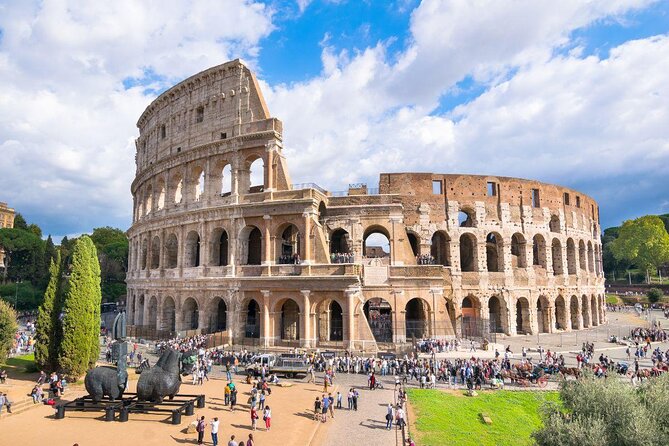
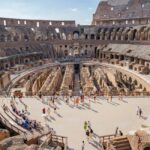
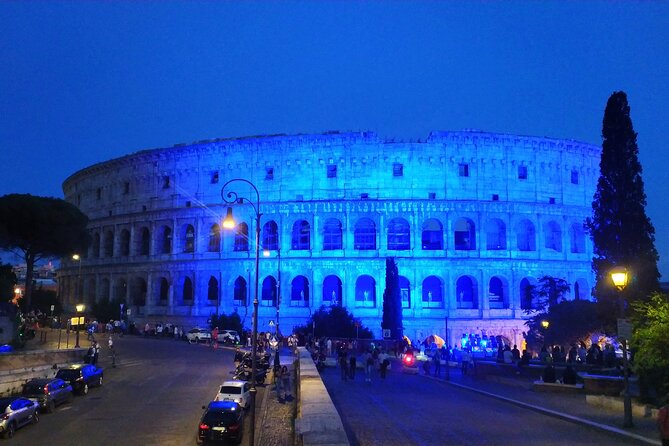
You also stop for the Colosseum from outside. You won’t go in, and that’s intentional. This keeps the tour moving, and it still delivers the main “yes, that’s really it” moment.
What you’ll get from a guided outside view:
- You’ll understand key features from street level—so when you later return for a deeper visit (or if you do enter), you’re not starting from zero.
- You learn to notice proportions and layout instead of just staring at the facade.
This works as an introduction. If you want to do everything in one night, this tour is the perfect first pass.
Finishing in Piazza di Spagna: where your evening ends
The tour ends at the Spanish Steps area (Piazza di Spagna). This is a classic Rome finishing point because it’s central, recognizable, and surrounded by places to grab coffee or linger a bit longer.
Even if you only spend around 10 minutes at the Spanish Steps during the walk, getting there at the end matters. Your brain is tired in a good way, your legs are warmed up from the circuit, and the steps make a strong visual wrap-up to the evening.
What makes the guides matter (Joseph/Isuf, Drita, Rita, Darita)
A big reason this walk scores so high is the guide style. Names like Joseph (also seen as Isuf), Drita, Rita, and Darita show up in the feedback, and the common thread is energy: humor, story-driven explanations, and plenty of interactive moments like trivia or joke-filled context.
You also get practical value from guides who take photography seriously. At Trevi, the help is not just “take a picture.” It’s figuring out positions and timing so the fountain looks right in your frame, even when it’s busy.
Value check: is $42.34 worth it?
At $42.34 per person, you’re paying for a guide, a route plan, and smart timing. You’re not buying entry to monuments, and the tour won’t replace a ticketed museum day. But that’s also what keeps the price in reach.
Here’s why it can still be good value:
- You cover multiple top sights in one evening, which saves you time and decision fatigue.
- You learn enough context to return later with a clearer focus.
- The group stays small, so you’re not lost in a crowd with no chance to ask questions.
- You get photo assistance and a pace that includes pauses (including a bathroom break mentioned in feedback).
If you’re short on days in Rome and want a strong “first orientation” night, the math tends to work.
Who should book this Rome by Night tour
This is a strong fit if you:
- Want to see major landmarks in one evening (Trevi, Colosseum outside, Pantheon outside, Spanish Steps).
- Prefer guided explanations over walking with just a map app.
- Like night photos and want help placing yourself at crowded stops.
- Are comfortable with moderate walking and a 2.5–3 hour commitment.
It’s less ideal if you:
- Only want experiences that include monument interiors and guided entry. This one does not include admissions.
- Don’t like walking at all. The tour is built for foot travel.
Quick tips to make your night smoother
- Wear good shoes. People strongly emphasize how much walking happens, and you’ll feel it after.
- Keep your phone charged. The tour’s photo moments are a big part of the fun.
- If it’s rainy, have a small umbrella or light rain layer. One account mentioned continuing the program when rain started.
- Plan dinner after the tour. The tour ends at Piazza di Spagna, which is easy to connect to other nighttime plans.
Should you book this tour?
If you want a simple way to get oriented in Rome and enjoy the big sights under lights, I’d book it. The format makes sense: a small group, a guided narrative, and enough stops to build a mental map without turning the evening into a marathon.
I’d think twice only if your main goal is entering monuments. Since admissions aren’t included and you stay outside, this is a perfect “see and learn” night, not a ticketed site-hopping replacement.
FAQ
How long is the Rome at night walking tour?
It runs about 2 hours 30 minutes to 3 hours.
How much does the tour cost?
The price is $42.34 per person.
Is admission included for the monuments?
No. The tour does not include admission tickets, and you won’t enter inside the monuments.
Where does the tour start and where does it end?
It starts at Via del Monte Oppio, 3, 00184 Roma RM and ends at Piazza di Spagna, 77, 00187 Roma RM (Spanish Square).
Is the tour offered in English?
Yes, English is listed as the available language.
What group size should I expect?
The maximum group size is 12 travelers.
What fitness level and age is needed?
It’s listed as requiring moderate physical fitness, and participation is for age 11 and up. Babies under 2 are free.
Does the tour include breaks?
A bathroom break was mentioned in feedback, and guides seem to include short pauses as part of the pace.
Is the experience refundable or changeable if I cancel?
No. It is non-refundable and cannot be changed for any reason.