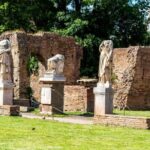
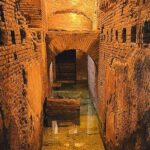
REVIEW · ROME
Castel Sant’Angelo E-Ticket & Multilingual Audio Guide
Book on Viator →Operated by Clio Muse Tours · Bookable on Viator
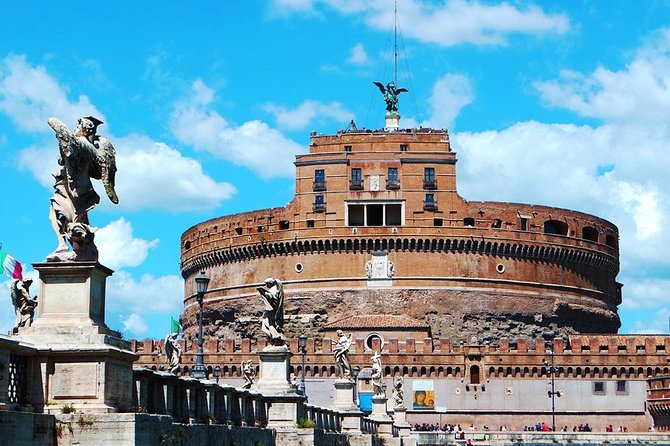
One stop in Rome that mixes drama and views. Castel Sant’Angelo is a fortress with layers, and this setup adds an offline audio guide so you can explore at your pace. You’re not stuck waiting for a group to finish, and you can keep your phone data off while you listen.
What I like most is the simple combo: admission included plus a self-guided tour you can download ahead of time. The other big win is that you get offline maps and narration, which is a real money-saver when roaming gets pricey. The main drawback: the audio experience depends on your phone and setup, and some visitors report the directions or numbering don’t always match what’s open and how traffic flows in the castle.
In This Review
- Key Points to Know Before You Go
- Price and What You’re Actually Getting for Your $34.94
- Entering Castel Sant’Angelo Fast: E-Ticket, Timing, and Real-World Rules
- How the Self-Guided Audio Works (and How to Prevent Frustration)
- Stop 1: The River Tiber Entrance and the Executions Court
- Stop 2: Hadrian’s Cylindrical Tomb and the Room of Cinerary Urns
- Stop 3: Paolina Hall, Pope Paul III, and Perino Del Vaga Frescoes
- Stop 4: The Terrace Views Over Rome and the Tosca Connection
- The Main Trade-Off: Navigation Accuracy Isn’t Guaranteed
- Crowds, Weather, and Why Going Early Helps
- Don’t Forget the Cafe Break (It’s a Nice Pause, Not a Plan)
- Who This Audio + Ticket Combo Is Best For
- Should You Book This Castel Sant’Angelo E-Ticket and Audio Guide?
- FAQ
- Is this a guided tour with a live guide?
- Does the price include entry to Castel Sant’Angelo?
- Do I need mobile data during the visit?
- How long should I plan for?
- What device do I need?
- Are headphones included?
- Can I use the ticket on my phone or do I need to print it?
- Do I need to arrive early?
- Where do I start, and is there a meeting point?
- Can I get a refund if I cancel?
Key Points to Know Before You Go

- Offline audio + maps help you avoid data roaming and awkward signal hunting inside the monument
- E-ticket on your phone means you show up ready for security and entry, not hunting confirmations
- The route focuses on major moments: Inquisition-era stories, Hadrian’s tomb, Paolina frescoes, and terrace panoramas
- There’s no live guide, so you’ll want to be comfortable navigating a bit on your own
- If you like everything to line up perfectly, plan for possible mismatches when renovations change pathways
Price and What You’re Actually Getting for Your $34.94
At $34.94 per person for about 1 hour 30 minutes, you’re paying for two things: the Castel Sant’Angelo entry ticket and the convenience of a downloadable, smartphone-based audio tour. That’s not just trivia. In a place like this, where you’ll climb and wander through multiple levels, audio acts like a “personal docent” that helps you make sense of what you’re seeing.
You’re also buying freedom. You pick a time slot, then you go at your pace through highlights like Hadrian’s imperial mausoleum space and the more lavish papal residence rooms. That matters because Castel Sant’Angelo isn’t a straight hallway museum. It’s a layered fortress, and your body and your attention will need breaks.
One thing to keep expectations realistic: because it’s self-guided, you’re responsible for following the audio prompts and finding each stop. Some people love that setup. Others feel the navigation isn’t always crystal clear when parts of the castle are busy or under change.
You can also read our reviews of more tours and experiences in Rome.



Entering Castel Sant’Angelo Fast: E-Ticket, Timing, and Real-World Rules
This isn’t a ticket you redeem at the entrance from a printed voucher. You’ll get an e-ticket on your phone, and you’ll show it alongside security and entry checks. Viator Voucher isn’t accepted at the entrance, so don’t count on that piece of paper or screen.
Plan for timing: you need to arrive 30 minutes early to handle security check-in. If you show up late, you won’t be accommodated. This is one of those Roman details that can make or break your afternoon, especially when you’re combining a castle visit with other sights.
Also, pack light. Large backpacks and bulky luggage aren’t allowed in the site. If you’re a “everything in one day bag” traveler, treat this as your cue to travel compact.
A practical heads-up from the ticket delivery format: the ticket may be purchased under the name of the company’s legal representative, so the name on your ticket might not match yours exactly. In most cases, that’s not an issue, but it’s good to know ahead of time so you don’t panic at the gate.
Finally, remember what’s not included. There’s no live guide, and you’ll need your own smartphone and ideally your own headphones.
How the Self-Guided Audio Works (and How to Prevent Frustration)
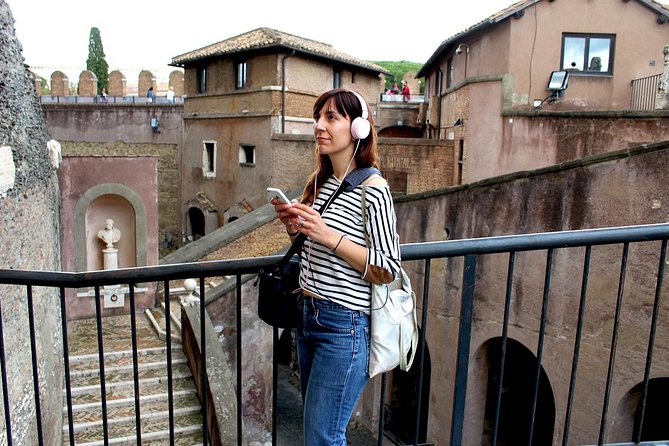
This tour’s magic depends on prep. You’ll get an email with ticket and audio instructions. Then you need to download the audio tour while on Wi‑Fi before you arrive, because there’s no Wi‑Fi/4G on-site.
Storage matters too: you need about 100–150 MB on your phone. If you’re low on space, free up space before the day of your visit. It’s a small task that saves you from the “why won’t this load” problem that some people ran into.
You’ll also want to bring earphones. Even if your day is perfect, there’s no point getting to the first stop and realizing you forgot the basics.
Now the honest part: a chunk of reviews complained that the audio instructions don’t always match what you see, especially the numbers on exhibit signs or the exact route between rooms. That doesn’t mean the audio is useless. It means you should treat it like a smart companion, not a GPS with guaranteed turns.
If you’re the type who hates backtracking, give yourself extra time at Castel Sant’Angelo, because restoration or visitor flow changes can affect where you walk next. In those cases, the offline interactive map is your best friend, but your real-world footing matters more than the audio timing.
Stop 1: The River Tiber Entrance and the Executions Court

Your tour begins at the main entrance of Castel Sant’Angelo on the bank of the river Tiber. The building hits you with the feeling that this place was made for power—military, political, and religious all at once.
From there, you’ll move toward the open space that once functioned as the executions courtyard. This is where the story gets dark. The audio covers famous heretics tied to the Roman Inquisition, including Giordano Bruno. Even if you don’t know the details of his life, hearing the context while standing in a place linked to that era makes the site feel less like a photo and more like a living timeline.
What I think works well here: the audio doesn’t just name-drop. It gives you a reason to look around. You’re not only moving through a courtyard; you’re placing Castel Sant’Angelo in the wider machinery of power.
Time here is about 15 minutes, which is smart—enough for atmosphere, not so long that you stall your whole visit.
Stop 2: Hadrian’s Cylindrical Tomb and the Room of Cinerary Urns

Next you go deeper into the fortress museum with a shift from punishment to emperors. The focus becomes Castel Sant’Angelo’s early history as a mausoleum for Roman rulers.
You’ll learn about Hadrian’s cylindrical tomb, and you’ll see the original-style ramp: a 2nd-century brick-walled ramp that leads you up toward the space tied to the imperial family. Even if the ramp is just “stairs and walls” to you at first, it helps your brain connect the site to its original purpose.
Then comes the room of the cinerary urns, where urns linked to the imperial family were once kept. This is a quieter moment than the executions court, but it can feel surprisingly emotional—because it’s about legacy and mortality, not just dramatic events.
This stop runs about 30 minutes, and it’s one of the most valuable parts of the tour because it explains why this castle ever became what it did. It started as a monument. Over time, it took on new roles.





Stop 3: Paolina Hall, Pope Paul III, and Perino Del Vaga Frescoes

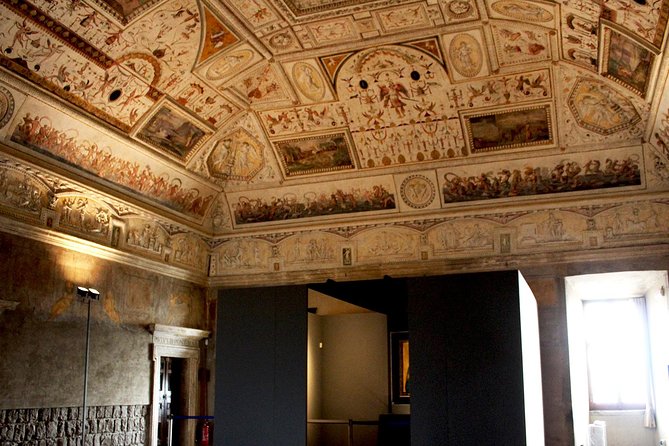
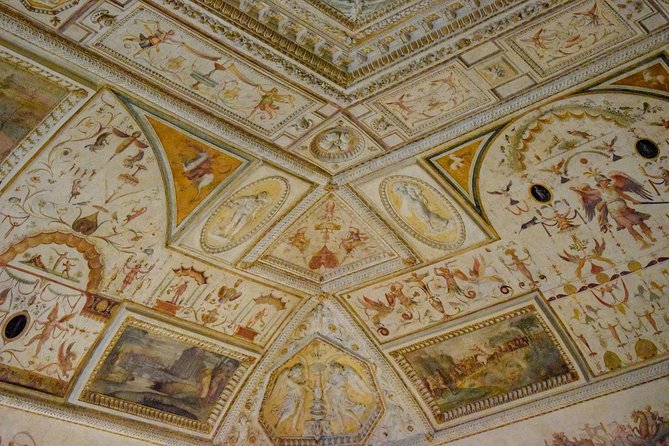
If Stop 2 is emperors, Stop 3 is church power and decoration. You’ll reach the Sala Paolina (Paolina Hall), known for intricate frescoes and a sense of wealth.
The audio explains how this hall was connected to Pope Paul III, who welcomed honored guests there. You’re also guided toward understanding Castel Sant’Angelo as a papal residence—not just a fortress with a bloody past.
One of the standout elements is the decorative work by Perino Del Vaga. The point of the audio here is to help you look longer at the ceilings and surfaces. Without that guidance, it’s easy to treat fresco rooms as pretty but forgettable.
Time at this stop is about 30 minutes. That feels right. You need enough time to slow down and actually read the room with your eyes, while the audio gives you the “what am I looking at and why does it matter” layer.
Stop 4: The Terrace Views Over Rome and the Tosca Connection
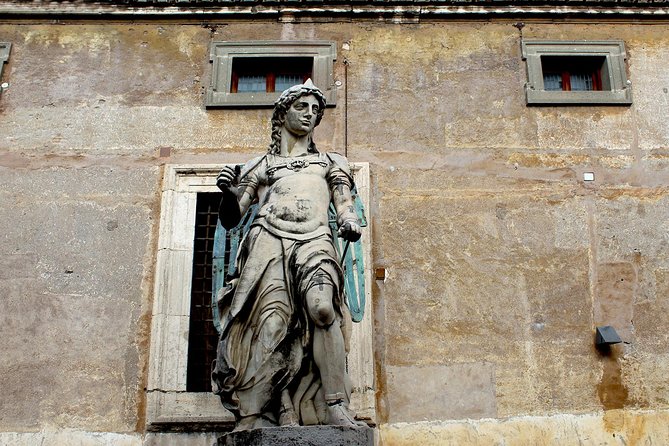
Then you climb to the Sant’Angelo terrace. This is the payoff stop for a lot of people: the views across the Tiber and out to the wider Eternal City.
One reason this terrace is memorable is the way the tour connects it to culture. The audio references Castel Sant’Angelo’s connection to Tosca, with the dramatic ending idea of Floria Tosca throwing herself over the edge. Whether or not you’ve seen the opera, that reference gives the terrace a narrative hook.
This is your 15-minute highlight chunk—short enough that you don’t rush it, long enough to breathe and reorient your whole day.
If you only came for views, you’d still come away feeling you got your money’s worth. If you came for history, this stop helps you hold both ideas at once: beauty and severity, in the same skyline.
The Main Trade-Off: Navigation Accuracy Isn’t Guaranteed
Let’s talk about the big recurring theme from real-world use: the audio and maps are helpful, but not always perfectly synchronized with what’s happening inside the castle.
Some people reported that the audio didn’t match exhibit numbering or that the directions between stops weren’t specific enough—leading them to arrive at rooms before the commentary caught up, or to miss a specific section they expected. Others said the audio route and map didn’t match the current flow of visitor traffic, likely due to on-site changes and renovations.
What does that mean for you?
- Give yourself buffer time.
- Use the offline interactive map when you can.
- Don’t treat the audio like a step-by-step script where every “press play now” moment is mandatory.
The good news: even when the navigation isn’t perfect, most people still walk away impressed by the castle itself. The terrace and the story of how this place evolved—from imperial mausoleum to papal residence—holds up even if you have to do a little self-guided wandering.
Crowds, Weather, and Why Going Early Helps
Castel Sant’Angelo can get hot and busy. One clear piece of advice that matches reality: go early in summer if you can. You’ll feel it faster than you think—especially when you’re walking slopes and stairs between levels.
Also, don’t underestimate the physical side. It’s not just museum flat floors. Expect upward routes and a fair amount of walking. One review even noted that the tour works well at your own pace if endurance is limited, but the site still includes slopes.
If you plan to visit in the middle of the day when crowds peak, you might feel rushed. If you plan earlier, the same route feels calmer and the audio becomes an advantage instead of a chore.
Don’t Forget the Cafe Break (It’s a Nice Pause, Not a Plan)
Castel Sant’Angelo has a cafe/restaurant option, and a few practical tips pop up in feedback. The terrace cafe is described as cute with great views, and one review notes they stop serving food around 4pm and then the menu becomes limited.
So here’s my advice: treat food as a bonus, not the backbone of your schedule. If you want a sit-down meal, aim earlier. If you just need water or a quick snack break, plan your timing so you’re not hunting for options near closing.
Who This Audio + Ticket Combo Is Best For
This works best if you:
- like to explore at your own pace
- want context without paying for a live guide
- are comfortable downloading an app and using it offline
- want a straightforward way to hit the most important highlights in a relatively short visit
It might be less ideal if you:
- hate troubleshooting with apps
- dislike any possibility of route mismatch
- need ultra-specific step directions
- rely on a phone that might not support the audio app (some smartphones are listed as incompatible)
Should You Book This Castel Sant’Angelo E-Ticket and Audio Guide?
I’d book it if you want a solid “heads-up” structure for your visit and you’re willing to do a little pre-planning on your phone. The offline audio + maps and the included entry ticket are good value, and the terrace views make the whole trip feel worth it even if you spend a bit more time than planned inside.
I’d skip it and consider another option if you’re the type who needs the route to match perfectly, or if you’re worried about app setup. In that case, a live-guided format might reduce frustration, especially if you want turn-by-turn help.
FAQ
Is this a guided tour with a live guide?
No. This is self-guided with a downloadable audio tour on your smartphone. There is no live guide provided.
Does the price include entry to Castel Sant’Angelo?
Yes. The adult entry ticket for Castel Sant’Angelo is included with the e-ticket.
Do I need mobile data during the visit?
No. The tour content is available offline, including audio narration and maps. You do need Wi‑Fi before you arrive to download the audio.
How long should I plan for?
Plan on about 1 hour 30 minutes, approximately.
What device do I need?
You need an Android (version 5.0 and later) or an iOS smartphone. The audio tour is not compatible with Windows phones, and it isn’t compatible with older iPhone/iPod/iPad models listed in the instructions.
Are headphones included?
No. You should bring your own headphones or earphones.
Can I use the ticket on my phone or do I need to print it?
Either is accepted. Your ticket can be used in printed or digital format on your phone.
Do I need to arrive early?
Yes. You should arrive 30 minutes in advance for security check-in. Late arrivals won’t be accommodated.
Where do I start, and is there a meeting point?
There is no meeting point. The instructions tell you how to enter and where to begin listening.
Can I get a refund if I cancel?
No. This experience is non-refundable and cannot be changed for any reason.