REVIEW · ROME
Colosseum and Roman Forum – Private tour
Book on Viator →Operated by Kai Travel · Bookable on Viator
Rome reads better with a guide.
This private Colosseum and Roman Forum experience pairs reserved access with a storyteller-style guide so the ruins come with names, politics, and context—not just stone. Along the way you’ll move down Via dei Fori Imperiali, a dramatic avenue slicing through ancient power centers, before slowing down for the Forum’s key monuments and then stepping into the Colosseum.
What I love: first, you get a real guide-led pacing that helps you see more without getting swallowed by crowds. Guides like Denis and Rachele are praised for walking you through the details and keeping the story clear, even for kids and teens. Second, the stops are tuned to the main ideas: the Senate meeting place (Curia Julia), Julius Caesar’s cult site (Tempio del Divo Giulio), the hearth of Rome’s state religion (Temple of Vesta), and both triumphal arches.
The tradeoff to plan for is physical effort. This is a lot of walking (often with stairs) and heat can be intense, so you’ll want good shoes and to take the water advice seriously—especially in summer.
Quick takeaways (what matters most)
- Private, blue badge guiding with English language support
- Reserved Colosseum and Forum entry plus included reservation fees
- Via dei Fori Imperiali gives fast context on how the ancient centers link up
- Short monument stops add up to big understanding of Roman power
- Optional pickup and optional arena access for extra comfort and access
- Guides handle crowds and shade so the experience feels manageable
In This Review
- Via dei Fori Imperiali: the walk that turns Rome into a story
- Roman Forum: where Roman politics felt painfully close
- The Curia Julia: the Senate house that still feels official
- Temple stops you’ll remember: Caesar, Vesta, and state religion
- Tempio del Divo Giulio: Julius Caesar’s cult site
- Tempio di Vesta: the circular hearth of Rome
- Via Sacra impressions: Arch of Titus and the Arch of Constantine
- Arco di Tito: victory and spoils
- Arch of Constantine: re-used stone and a regime change
- Entering the Colosseum: reserved entry, storytelling, and the right pacing
- Optional arena access
- Crowd and heat management
- “Movies made it easy” (but the guide makes it real)
- Tickets, meeting point, and what you need to bring
- Where you meet and where you end
- Mobile ticket and ID rules
- What to wear
- Price and value: why it costs $338.76 and where that money goes
- Who should book this private Colosseum and Forum tour
- Should you book it? My honest call
- FAQ
- How long is the Colosseum and Roman Forum private tour?
- Is the tour private or shared with other people?
- What is included in the price?
- Do I need to select pickup or arena access in advance?
- Is the Colosseum ticket digital?
- What ID do I need for entry?
- Can I get a refund if I cancel?
Via dei Fori Imperiali: the walk that turns Rome into a story
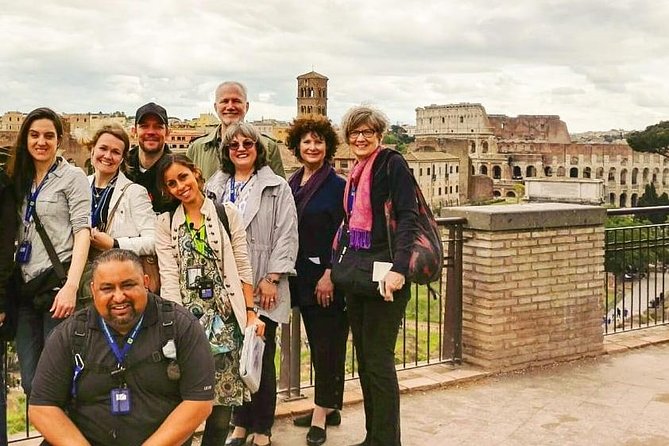
Before you reach the Colosseum, you start on Via dei Fori Imperiali, the long avenue that runs between Piazza Venezia and the Colosseum. It’s not an ancient road—it was built later, under Mussolini between 1924 and 1932—and that twist actually helps you understand Rome better. You’re literally walking through a corridor where modern decisions cut across older archaeology.
What makes this part work is how it frames the day. From the avenue, the Imperial Fora (Caesar’s, Augustus’, Nerva’s, Trajan’s) line up in your mind as a chain of power. A good guide uses that layout to explain not just what you’re seeing, but why Roman leaders needed monuments to compete for attention.
Also, it’s a quick win for orientation. Even if you’ve been to Rome before, this stretch helps you connect the “where” with the “why,” so the Forum stops feel less random and more like chapters.
Roman Forum: where Roman politics felt painfully close
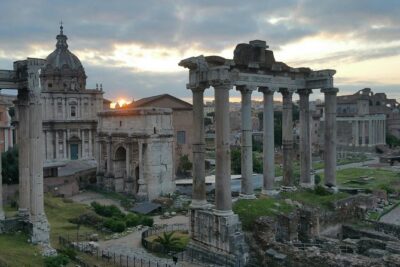
The Roman Forum—Forum Romanum—is the political and business center of ancient Rome, and it’s surrounded by ruins of government buildings. You’re in the middle of it: a rectangular space where citizens came for speeches, meetings with senators, and big public moments.
A big reason this tour format helps is that you’re not just looking down at columns. You’re getting the Forum’s storyline, step by step. Expect your guide to point out how the ruins map onto Roman civic life, so you can picture debates and decisions happening in the same spaces where you’re standing now.
Even the way you move matters. The Forum has uneven ground, tight sightlines, and crowd pressure. The benefit of a private tour is that your guide can manage your route and your stopping points based on your pace—rather than marching you through the same photos every tour group takes.
You can also read our reviews of more tours and experiences in Rome.


The Curia Julia: the Senate house that still feels official
A standout quick stop is Curia Julia, the meeting place of the Roman Senate commissioned by Julius Caesar and finished under Augustus in 29 BC. The building is rectangular and visually “serious,” and it’s one of those rare ruins that still communicates authority. This is where you start to understand how power looked and sounded in Rome.
Your guide’s job here is to make it feel human. You’ll learn what kind of gathering it represented and how this Senate space fit into the broader shift from Republic politics toward imperial control. It’s only a few minutes, but it sets a tone for everything else you’ll see.
Temple stops you’ll remember: Caesar, Vesta, and state religion
Rome loved religious symbolism because religion was part of the government. Two stops make that point fast.
Tempio del Divo Giulio: Julius Caesar’s cult site
Tempio del Divo Giulio honors the deified Julius Caesar and was built by Augustus in 29 BC, right after Caesar’s assassination. The site relates to where Caesar’s cremation took place, and that connection matters. It’s one of the clearest examples of how Rome used ritual to reshape politics.
Today you’ll see ruins rather than a fully intact temple, but that’s not a problem. A strong guide helps you interpret what remains and what those choices meant to ordinary people who wanted to show loyalty to the new order.
Tempio di Vesta: the circular hearth of Rome
Next is Tempio di Vesta, dedicated to the goddess of the hearth. Its circular design is tied to the idea of continuity—the state lasting through time—and inside was an eternal flame tended by the Vestal Virgins. Even though only fragments remain, it’s still a spiritually loaded stop.
If you’ve only thought of Rome as gladiators and marble, Vesta is the pivot point. You start seeing how daily beliefs, fire, and ritual supported the idea that Rome would never fall. Your guide’s explanations are what make that click.

Via Sacra impressions: Arch of Titus and the Arch of Constantine
Between the Forum monuments and the Colosseum, you also pass two major triumphal arches. These aren’t random photo stops. Each one is like a propaganda poster in stone.
Arco di Tito: victory and spoils
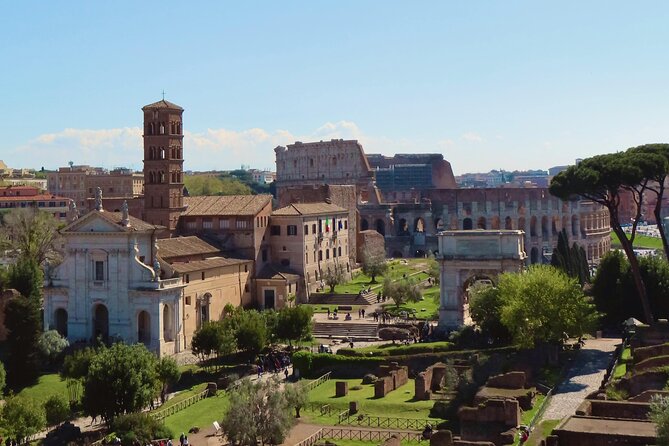
The Arch of Titus, built in 81 AD by Emperor Domitian, commemorates Titus’s victories, including the conquest of Jerusalem. It stands at the entrance to the Roman Forum along the Via Sacra. The reliefs show detailed scenes of spoils of war and the emperor’s triumphal procession.
This is where it helps to have a guide narrate what you’re looking at. Without that, arches can feel like decorative extras. With it, you understand how Rome wanted people to remember conquest: not through vague glory, but through specific scenes and symbolism.
Arch of Constantine: re-used stone and a regime change
Near the Colosseum is the Arch of Constantine, erected in 315 AD. It celebrates Constantine’s victory over Maxentius at the Battle of the Milvian Bridge. What makes it especially interesting is that it’s decorated with reliefs and sculptures reused from earlier monuments.
That reuse tells a story about power shifting while old legitimacy remains useful. Your guide can point out how the architecture visually carries continuity even when leadership changes. It’s a clever detail that you’re unlikely to catch on your own without context.
Entering the Colosseum: reserved entry, storytelling, and the right pacing
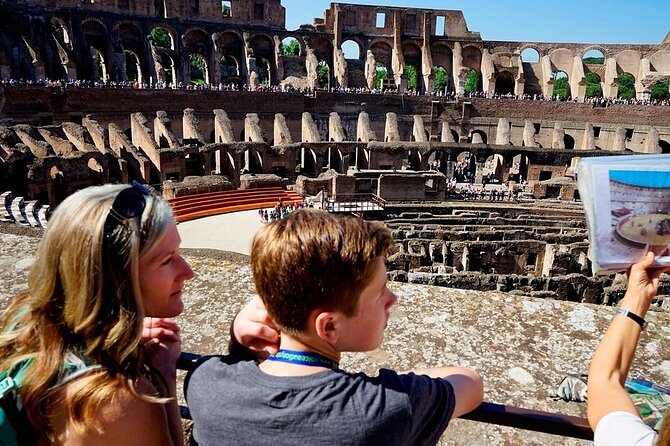
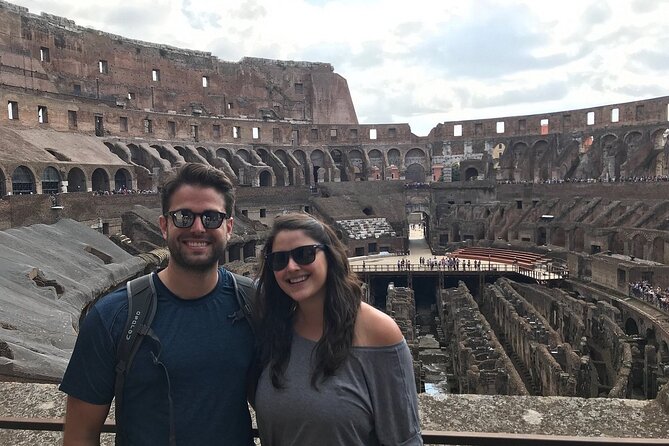
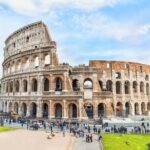
The Colosseum is the headline, of course. This tour includes entrance to the Colosseum and the Foro Romano, and it lasts about 1 hour 30 minutes at the Colosseum itself.
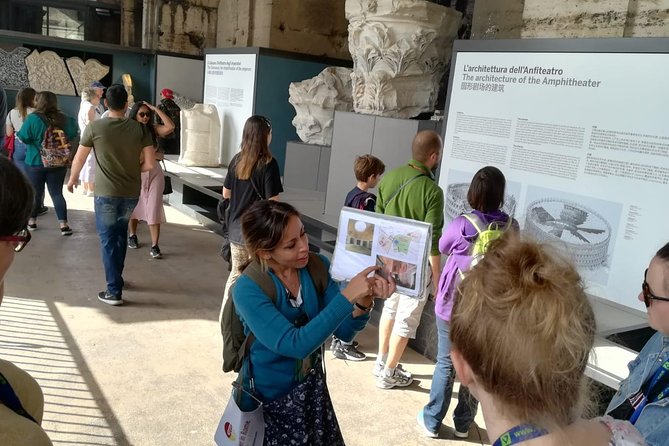
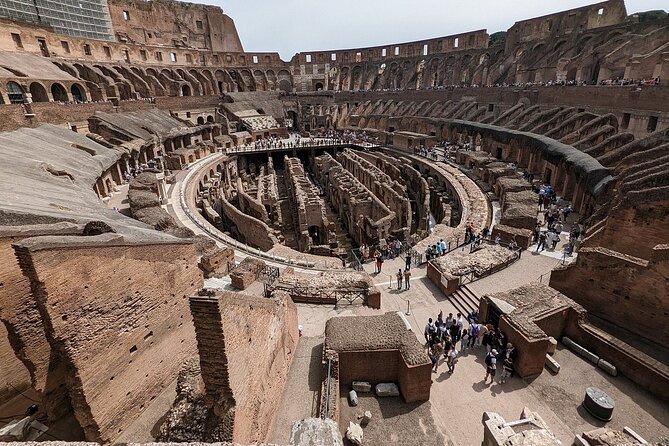
Where this tour becomes more than a basic visit is the focus on interpretation. Your private guide uses visual aids and reconstructions to help you imagine how buildings and seating would have looked in use. That matters because the Colosseum is huge, and today’s gaps can make it harder to understand than it should be.
Optional arena access
If you choose the arena access option, you can go in with extra access compared to the standard viewing areas. The listing is clear that arena access is included only if you select that option, so decide based on your priorities and comfort with standing and walking inside.
Crowd and heat management
This is the part where private guiding earns its keep. On hot summer days, the Colosseum can feel like a furnace. In the feedback you’ll see a pattern: guides actively find shade spots, keep your group moving efficiently, and help you refill water. That kind of attention can turn a stressful visit into a manageable one—especially if you’re traveling with kids, teens, or anyone who dislikes long exposure in direct sun.
“Movies made it easy” (but the guide makes it real)
If you’ve watched Roman epics—The Gladiator, Spartacus, Ben-Hur—you’ll recognize the Colosseum vibe fast. The guide builds on that by translating screen-level drama into architectural and historical detail, so it stops being just a set you once saw on TV.
Tickets, meeting point, and what you need to bring
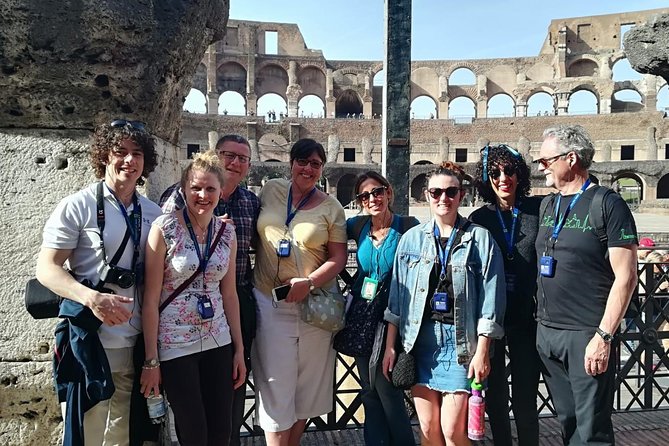
This is a private tour/activity, so your group stays together with your guide. It’s available in English, and you’ll have a professional blue badge guide.
Where you meet and where you end
You start at Caffè Valorani in Rome at Largo Corrado Ricci, 29/30 (near public transportation). The tour ends at Piazza del Colosseo, 1, by the Colosseum.
If you select pickup, you’ll meet your private English-speaking driver in your hotel lobby or in front of your Airbnb, then go to meet the guide. If you don’t select pickup, you’ll start at the listed meeting point.
Mobile ticket and ID rules
You’ll have a mobile ticket, and the Colosseum is strict about names. All members of the group must bring valid government-issued photo ID. A photo of your passport is acceptable, but ticket names must match the full official name on the ID exactly, including first and last names. The ticket is personal: substitutions last-minute aren’t allowed.
It’s worth stressing this because it’s easy to mess up when people travel with nicknames or shortened names.
What to wear
Casual clothing is fine. Bring comfortable walking shoes. A bottle of water is strongly helpful, especially with the amount of walking and time spent in the open.
Price and value: why it costs $338.76 and where that money goes
At $338.76 per person, this isn’t a budget stroll. But the value is easier to understand when you break it into pieces.
First, you’re not only paying for “someone to walk with you.” You’re paying for reserved entry to the Colosseum and the Roman Forum, plus the Colosseum reservation fee. The Colosseum entry ticket is valued at €18 per person and the reservation fee is valued at €2 per person, which means the rest of the price covers the guide service and the parts that make the visit smoother.
Second, you’re getting private guiding. With a private setup, you can keep your pace, ask questions freely, and adjust when your group needs shade or a breather. That matters because Rome’s top sites are not a place for a rigid schedule.
Third, optional upgrades can change the experience. Pickup and optional arena access are offered as add-ons. If you’re short on time, traveling with kids, or simply want the day to feel easier, those options often justify the extra cost.
Food and drinks are not included. So if you’re planning a full day around this tour, I’d schedule a meal afterward when you can sit down and recharge.
Who should book this private Colosseum and Forum tour
This tour style fits best if you want Rome to be more than a checklist.
It’s a good fit for:
- Families with kids and teens who do better with a guide who can keep attention and explain clearly
- Travelers who want the major monuments connected in a single storyline, rather than separate sightseeing
- People who feel overwhelmed by crowds and would rather have a guide manage the flow
- Anyone visiting in hot weather who needs help finding shade and pacing the day
It might be less ideal if you’re a solo expert traveler who already knows Roman politics and architecture well and prefers to wander without structure. Still, even then, the reserved entry and the guide-led interpretation are often worth it for saving time and making the ruins make sense fast.
Should you book it? My honest call
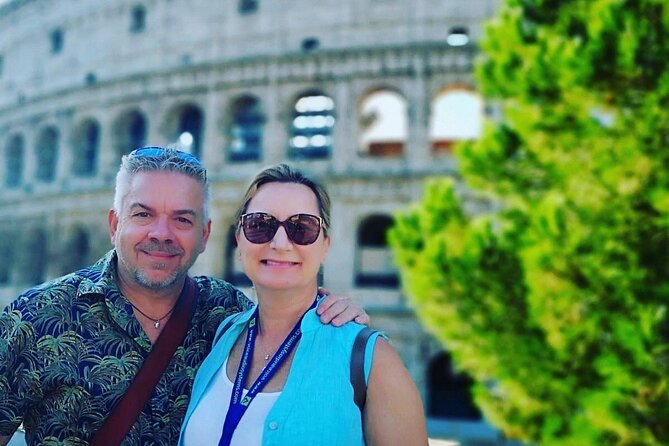
Book it if you want a guided, story-driven visit with reserved entry and a pace you control. The private format is the difference-maker, especially at the Colosseum, where heat and crowds can turn sightseeing into endurance.
Skip it only if you truly want to do everything on your own and you’re comfortable handling the ID name rules and the day’s walking without assistance. Otherwise, for most first-timers—and for families who want less stress—this is the kind of tour that makes Rome feel readable.
If you do book, plan like a Roman: good shoes, water, and full-name ID that matches your ticket exactly.
FAQ
How long is the Colosseum and Roman Forum private tour?
It runs for about 3 hours.
Is the tour private or shared with other people?
It’s private, so only your group participates.
What is included in the price?
A professional blue badge guide, private tour, entrance to the Colosseum and Foro Romano, the Colosseum reservation fee, and the Colosseum entrance ticket. Pick-up and drop-off are included only if you select the option, and arena access is included only if you select that option.
Do I need to select pickup or arena access in advance?
Yes. Pickup and drop-off are offered if you select the pickup option, and arena access is available if you select that option.
Is the Colosseum ticket digital?
You’ll receive a mobile ticket.
What ID do I need for entry?
You need valid government-issued photo ID. A photo of your passport is also acceptable. Names on the ticket must match the full official name and surname on your ID exactly.
Can I get a refund if I cancel?
Yes. You can cancel for free up to 24 hours in advance for a full refund. If you cancel less than 24 hours before the start time, the amount paid won’t be refunded.