REVIEW · VERONA
Verona Walking Tour with Audio and Written Guide by a Local
Book on Viator →Operated by Walking Cap · Bookable on Viator
Verona rewards slow wandering. This self-guided route gives you audio and a written guide so you can pace the day and still learn stories at each stop. I like the way it strings together major landmarks into one logical loop, and I like that you get explanations in multiple languages on your phone. One drawback to plan for: you need a smartphone with internet, and you’ll want a workaround if audio won’t load or your battery is low.
You’ll start right at the Arena di Verona area and then follow the on-screen map along bridges, Roman gates, plazas, and the city’s famous love story. The format is flexible: you can pause, replay, and spend extra time where you care most (instead of rushing with a group). The other consideration is practical—headphones aren’t included, so you’ll be using phone speakers or your own headphones in busy spots.
If you like walking tours but dislike being locked into a rigid schedule, this one fits well. You also get a small-town feel because the guide is built by a local provider (Walking Cap), and you’re not stuck listening to a scripted monologue for hours. Just be ready to manage your phone properly so the experience stays smooth.
In This Review
- Key things I’d bet you’ll care about
- Start at the Arena di Verona: How the route works on your phone
- The first photo-moment: Castelvecchio Bridge and the museum courtyard
- Porta Borsari: Verona’s Roman entrance
- Ponte Garibaldi: A bridge with a clever crossing trick
- The most important church and the paintings you’ll want to spot
- Piazza dei Signori and the 84-meter view: look up, not just forward
- Piazza delle Erbe: oldest square energy, Roman Forum above it
- Casa di Giulietta: the balcony you can see for free
- Finishing at the Arena di Verona: the city’s symbol and legends
- Price and value: what you’re really paying for
- Who this tour suits best (and who should skip it)
- Quick tips to make it run smoothly
- Should you book this Verona walking tour?
- FAQ
- How long does the Verona walking tour take?
- Where do I start and where does the tour end?
- Is the tour offered in English?
- What languages are available in the audio and written guide?
- Do I need headphones?
- Do I need internet and a smartphone to use the guide?
- Are the sights on the route included with paid tickets?
- Can I cancel and get a full refund?
- What group size should I expect?
Key things I’d bet you’ll care about
- Audio + written guide on your smartphone, so you can switch formats when streets get noisy
- A clear loop of Verona icons, from Castelvecchio Bridge to the Arena di Verona finish
- Free-access highlights along the way, including Porta Borsari and many bridge viewpoints
- Local storytelling pace, letting you stop, replay, and move on when you want
- Multi-language support (Eng, Esp, Ita, Ger, Fr) for a broader comfort zone
Start at the Arena di Verona: How the route works on your phone
The tour begins at Arena di Verona, Piazza Bra 1, in the city center. After you book, you’ll receive details in your voucher that explain how to activate the digital guide, and the whole experience runs through your smartphone.
You’ll use the map link during the walk to move from stop to stop. That matters because this tour is designed for independence—no waiting for a guide, no fixed group timing. If your phone loses signal or the link hesitates, the tour can still be workable, but you’ll want to keep things simple: stay online and don’t put your phone on airplane mode.
Plan around the time window: it’s listed as about 2 to 3 hours. In real life, that range depends on how long you linger for photos and whether you step into places on the route. I recommend treating it as a “core loop” that you can extend at your own pace.
You can also read our reviews of more tours and experiences in Verona.
The first photo-moment: Castelvecchio Bridge and the museum courtyard
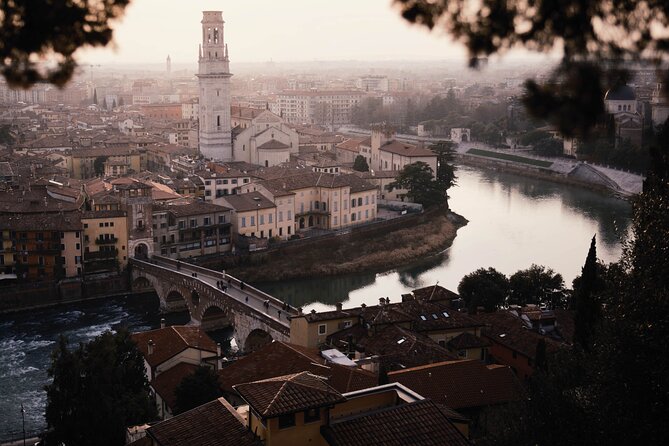
Stop one is Castelvecchio Bridge, an easy opener because it quickly gives you the river-and-old-city feeling that Verona is famous for. The guide frames the story of the city right here, so you’re not just collecting views—you’re learning what you’re seeing.
This is also where you’ll likely take multiple photos. The bridge is the kind of viewpoint where the angles change as you walk a few steps left or right, so don’t rush.
Next comes Museo di Castelvecchio. You’re guided through the museum area with a special note that you can access the courtyard and garden for free. Even if you don’t go deep into paid interiors, these spaces are often where you get a calmer moment before the route keeps moving.
Value check: this pairing is smart. A bridge gives you a big-picture orientation, then the museum grounds add texture—courtyards, walls, and atmosphere that make the city feel lived-in rather than only postcard-perfect.
Porta Borsari: Verona’s Roman entrance
Porta Borsari is a short stop, but it’s a big deal visually and historically. This is described as the main entrance into Verona in Roman times, and the guide adds a curious story that gives the gate more personality than a quick pass-through.
Because the timing is about ten minutes here, treat it like a photo and story stop, not a long exploration. Even with a tight schedule, you’ll come away with a clearer sense of how Verona’s layout used to work—like the city wasn’t built all at once, but assembled over layers.
If you’re the type who usually skips Roman remnants because you feel you “already know the basics,” this stop is a good chance to slow down. The guide’s goal is to make that gate feel like a functional entrance, not just stone.
Ponte Garibaldi: A bridge with a clever crossing trick
Then you head to Ponte Garibaldi, one of Verona’s seven bridges in the city. Here the guide shares a special trick that was once used to cross the bridge—exactly the kind of detail that makes a landmark more than a name on a map.
This is a great stop for listening closely, because the information is short and memorable. If you’ve got your phone on speaker, you’ll still hear it over light street noise, but headphones help if you’re near crowds.
Practical note: bridges are often windy, and phone audio volume can drop. If audio feels quiet, lift the volume a notch rather than walking away from the stop before the story finishes.
The most important church and the paintings you’ll want to spot
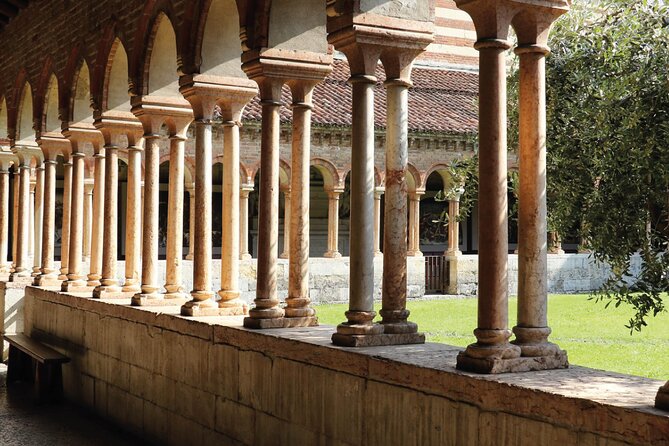
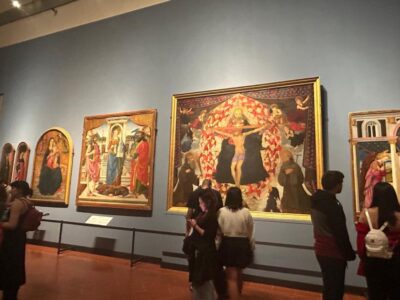
After the bridge sequence, the route includes the city’s most important church, noted for interesting paintings. This stop is intentionally brief—enough time to orient yourself to what you’re looking at, and to know what details to watch for when you stand there.
Since the guide emphasizes paintings, I’d plan to do more looking, less rushing. Even if you don’t have time for a long interior visit, you’ll get better out of the experience by knowing which elements are worth your attention before you step inside.
One caution: church interiors can be darker than the streets outside, and phone screens can look washed out. Keep your brightness reasonable so you can follow the guide if you glance at your text while listening.


Piazza dei Signori and the 84-meter view: look up, not just forward
Piazza dei Signori is described as the drawing room of Verona, and the language in the guide helps you notice why—perspectives and the magnificent buildings that frame the square. This stop is short, but it’s one of those places where your photos improve if you slow down for angles.
The route then adds another “look up” moment: the tallest building in the city at 84 meters, with a view that’s called stunning from the top. The key point here is how the guide helps you justify why you’re going up—so the climb (if you choose it) feels connected to the rest of your walk.
Even if you don’t make the top, you’ll still benefit from learning what to scan for below: rooftops, the river corridor, and how Verona’s spaces connect. It turns a viewpoint into a learning moment.
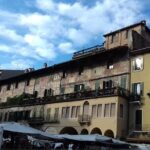
Piazza delle Erbe: oldest square energy, Roman Forum above it
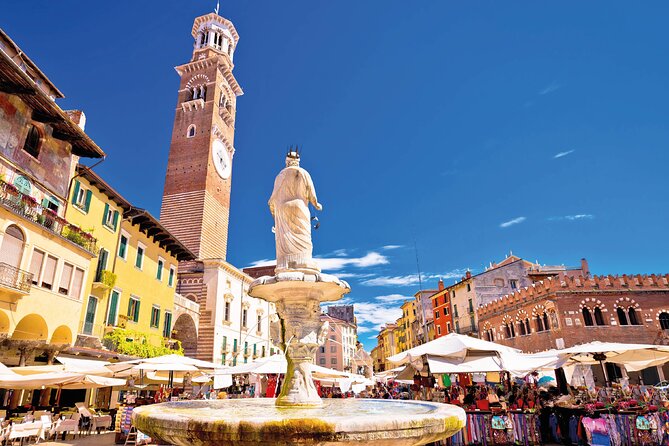
Piazza delle Erbe is longer—about 20 minutes—and it’s positioned as the oldest square in Verona. The guide also tells you it’s located above the area of the Roman Forum, which changes how you interpret the ground under your feet.
This is one of the best stops to use the written guide. On many squares, background noise rises and falls as tour groups move through and locals shop. If audio gets hard to catch, you can switch to reading and keep going without losing the thread.
If you’re hungry, this is also a natural pause point. The walk includes big story beats at the plazas, and pacing matters. Give yourself enough time here to wander a few steps off the main path and soak in the square’s rhythm.
Casa di Giulietta: the balcony you can see for free
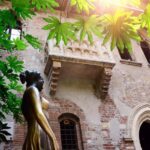
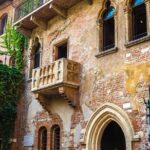
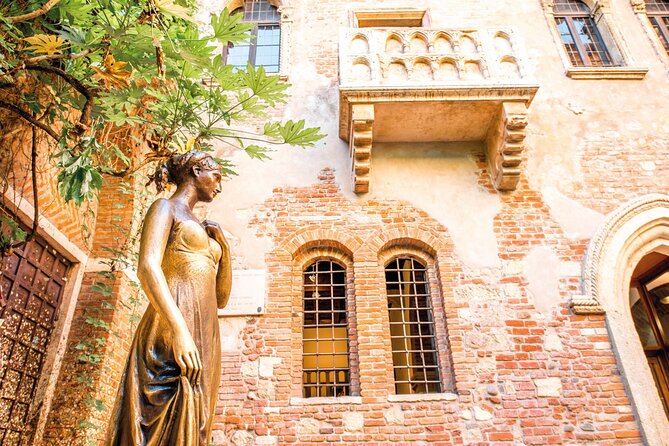
Casa di Giulietta is one of Verona’s most iconic monuments, and the guide adds a curious story behind it—one that’s described as something few people know. You’ll also be able to see the famous balcony from outside for free, which is a good value point if you don’t want to spend time on ticketed entries.
This stop works well for couples and solo travelers alike because the location is visually dramatic even without a deep stop inside. The audio and text help you avoid the common trap of just looking at the front façade and moving on.
Tip: treat Casa di Giulietta as a listening stop first, photo stop second. The story adds context, and the photo feels more meaningful once you know what you’re photographing.
Finishing at the Arena di Verona: the city’s symbol and legends
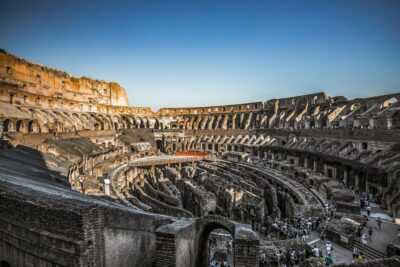
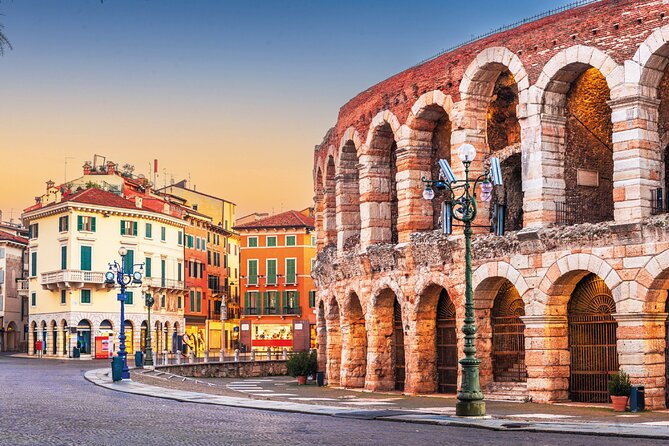
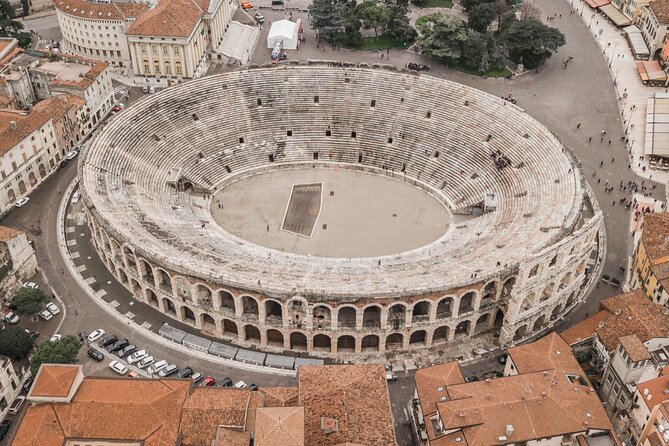
Your route ends at the Arena di Verona, which the guide frames as the city’s symbol. It’s described as a beautiful Roman amphitheater that closes the walk, and you’ll learn about legends connected to the construction.
Even if you’ve seen amphitheaters elsewhere, ending here gives your day a satisfying “final chapter” feeling. You’ve spent the route moving through gates, churches, bridges, and squares; finishing at the Arena ties Verona together as a Roman city that kept rewriting itself.
Because the start and end point are the same, it’s also easy to plan around transportation afterward. You can step directly back into your Verona evening without needing to figure out a whole new meeting spot.
Price and value: what you’re really paying for
At $7.86 per person, this tour is one of the cheaper ways to get structured storytelling across Verona’s highlights. The biggest reason it feels like value isn’t only the price—it’s what you get for that money.
You receive:
- a digital written guide for independent visiting
- an audio-guide experience in multiple languages (Eng, Esp, Ita, Ger, Fr)
Add to that the route design, which includes several stops labeled with free access, and you start to see why it works for a short stay. In a city like Verona, entrance fees can add up fast. This guide keeps a large portion of the experience focused on what you can do on foot and what you can enjoy without paying at every corner.
The trade-off is also clear: you’re not paying for a live guide who can improvise based on your questions. Instead, you’re paying for flexibility and a local voice that you control. If that’s your travel style, the price makes sense.
Who this tour suits best (and who should skip it)
This is a strong fit if you:
- want to explore on your own schedule
- like having a guide while still controlling pace
- enjoy short story beats at each landmark
- are comfortable using your smartphone while walking
It’s less ideal if you:
- hate relying on mobile internet for navigation and audio
- prefer having headphones included (they aren’t)
- need a “hands-free” experience where you never touch your phone
There’s also a real-world listening factor. Audio quality is described as an automated style, and at least one person found the voice hard to enjoy, ending up reading instead. If you’re picky about narration, bring good expectations: you’ll probably use both audio and text during the walk.
Quick tips to make it run smoothly
Start with a charged phone. Then plan for one battery-saving habit: use the map link when needed, but don’t keep your screen bright and glowing the entire time if you don’t have to.
If audio doesn’t load, the provider’s guidance is to refresh the page. That’s a simple fix, but do it early rather than after you’ve already walked away from the stop.
In noisy areas, rely on the written guide. The format includes text alongside audio, so you’re not forced to choose only one way to learn.
Should you book this Verona walking tour?
If you’re visiting Verona for a short window and want a compact overview, this is a sensible booking. You’ll get a structured walk that hits iconic sights, plus stories you can access without committing to a long group schedule.
Book it if you like control: stop for photos, replay a segment, and spend more time where the city grabs you. It’s also a good match for travelers who want a budget-friendly way to add meaning to the usual highlights.
Skip it if you strongly dislike smartphone-based navigation and audio, or if you want a fully live, responsive guide. For everyone else who’s happy to walk and listen at your own speed, this route offers a solid introduction to Verona with local flavor—and a low price that leaves room for pasta, gelato, and one last photo at the Arena.
FAQ
How long does the Verona walking tour take?
It’s listed as about 2 to 3 hours.
Where do I start and where does the tour end?
The tour starts and ends at Arena di Verona, Piazza Bra 1, 37121 Verona VR, Italy.
Is the tour offered in English?
Yes. It’s offered in English.
What languages are available in the audio and written guide?
The digital audio-guide and written guide are available in Eng, Esp, Ita, Ger, and Fr.
Do I need headphones?
Headphones are not included. You can hear the audio through your phone speakers or use your own headphones if you have them.
Do I need internet and a smartphone to use the guide?
Yes. You need a smartphone with an internet connection to use the digital guide, and activation details are provided in your voucher.
Are the sights on the route included with paid tickets?
The guide notes that several stops are free, including areas such as Castelvecchio Bridge and specific free-access entries like the museum courtyard and garden. The information provided does not say that every site on the route has paid admission included.
Can I cancel and get a full refund?
Yes. Free cancellation is available up to 24 hours in advance for a full refund.
What group size should I expect?
The tour has a maximum of 99 travelers.