REVIEW · ROME
Colosseum Underground, Roman Forum & Cesar Palace Special Access
Book on Viator →Operated by Atlas Tours · Bookable on Viator
Rome has a habit of making you look down. This tour turns that up close—special Colosseum access via the Gladiator’s Gate and then the Roman Forum and Palatine Hill so you see three power centers in one smooth chunk of time. The best part is the guided flow: you get context before you wander, and the route is designed to keep you moving without getting stuck in the slow-motion tourist crush.
I especially like the way the Colosseum visit isn’t just photo stops. You walk onto the arena floor, then head into the underground spaces where gladiators and wild beasts were held before fights. One drawback: this is still a lot of outdoor walking on uneven surfaces, with time spent inside underground corridors that can feel cramped and cooler than the sunlit streets.
If you want a first-class Rome archaeology lesson that also feels hands-on, this is a strong pick. Just come ready for stairs, crowd energy outside the gate, and weather that does not care about your plans.
In This Review
- Key Highlights You’ll Actually Feel
- Gladiator’s Gate Access: What the Special Entry Changes
- Arena Floor Steps and Photos: Seeing the Colosseum Like a Show
- Colosseum Underground Dungeons: The Backstage You Can’t Ignore
- One Hour in the Roman Forum: Temples, Tombs, and Power Lines
- Palatine Hill and Caesar’s Palace: The Layers You Can Feel
- How the 3 Hours Work: Group Size, Pace, and Where You Start
- Comfort Tips: Uneven Steps, Stairs, and Rain That Happens
- Why the $144.82 Price Can Feel Like Value (Not a Rip-Off)
- Who This Tour Suits Best
- Should You Book This Colosseum Underground + Forum + Palatine Tour?
- FAQ
- How long is the tour?
- What’s included in the ticket price?
- Is the tour offered in English?
- Where do we meet?
- Where does the tour end?
- Do I need a passport or ID?
- What group size is the tour limited to?
- Is it suitable for people with limited mobility?
- Does this include the Roman Forum and Palatine Hill?
- Can I change or cancel after booking?
Key Highlights You’ll Actually Feel
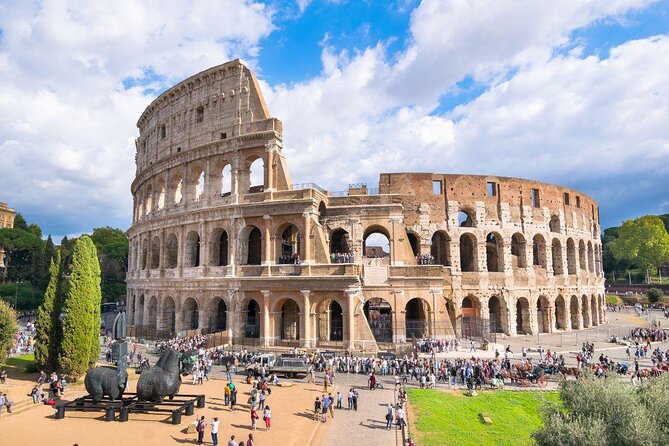
- Gladiator’s Gate entry gets you into the Colosseum area with a privileged-feeling route.
- Arena-floor walking lets you experience the space like the show once did, not like a distance-view postcard.
- Underground corridors and dungeons show the backstage side of gladiator life.
- Roman Forum focus covers major landmarks in one guided hour instead of scattered guesswork.
- Palatine Hill layering takes you from early foundations through Renaissance and later Mussolini-era buildings.
- Small group size (max 24) helps the guide keep the pace controlled for a 3-hour total window.
Gladiator’s Gate Access: What the Special Entry Changes
The Colosseum is famous for a reason, but most visits turn into a contest: who can arrive earliest, stand longest, and tolerate the loudest bottlenecks. This tour sidesteps much of that by starting with a privileged entry through the Gladiator’s Gate. That matters because the “Colosseum experience” isn’t only about the building—it’s about time. When you waste time queued up, you lose the moments when your brain can actually take in what you’re seeing.
Once you’re in, you don’t just look at the stonework from one angle. You get a guided explanation of how ancient builders pulled off a massive stone stadium around two thousand years ago. Then you walk the route that connects the entry points to the arena level. The tour also keeps the story moving, so the architecture doesn’t turn into random facts.
In practice, this is the part of the day that makes the whole ticket feel worth it: you’re not just paying for entry. You’re paying for the sequence—architecture talk, then the arena floor, then the underground spaces.
You can also read our reviews of more tours and experiences in Rome.


Arena Floor Steps and Photos: Seeing the Colosseum Like a Show
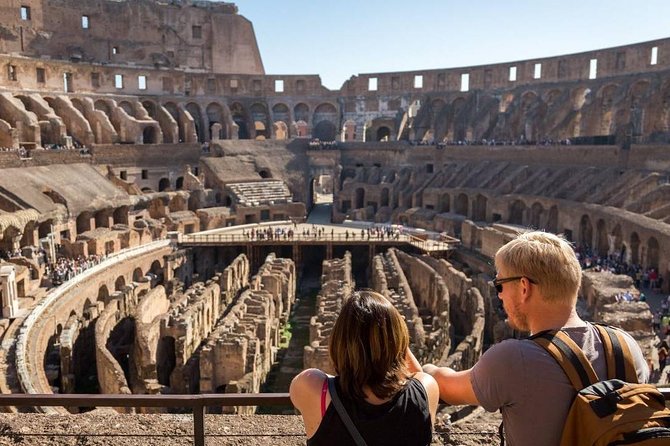
After the guided intro, you step onto the arena floor and get time to explore and take photos. Even if you’ve seen the Colosseum from the outside, it hits differently at ground level. Up top, your mind turns it into a monument. Down here, you start imagining the movement, the noise, the tension, and the way people used every inch of space.
The arena portion is also psychologically important. It’s the “reset.” You see the playing surface first, then the tour pulls you toward the backstage story: who was where, what happened before the first crowd roar, and why the underground mattered. That sequencing helps the underground areas feel more meaningful instead of just being dark hallways you walk through.
Also, because the arena is part of the route, you’re not only stuck with tunnel time later. You get that short stretch of openness and light, which is good when you’re trying to keep energy up for the next stops.
Colosseum Underground Dungeons: The Backstage You Can’t Ignore
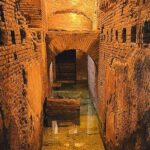
This tour’s main hook is the Colosseum Underground section—often the part people wish every Colosseum visit included. The underground isn’t just a side attraction. It’s where the “production” happened before the public show. This tour guides you through the stadium’s backstage spaces, including areas where wild beasts and gladiators were kept before deadly fights.
That backstage context changes what you notice. You start paying attention to layout and movement: how people were staged, how delays could happen, and how quickly everything had to transition from dark preparation to public spectacle. It’s also where the Colosseum feels less like a single structure and more like a working machine.
A practical note: underground passages can feel more enclosed than you expect, and surfaces can be uneven. If you’re sensitive to tight spaces, plan for a slower pace and keep your mind on the story your guide is telling so you’re not just trying to “get through it.”
From the guide style you’ll likely encounter, this portion tends to be where the talk becomes vivid. Some guides have backgrounds described as archaeology-leaning or excavation-experienced, and that shows in how they paint daily-life and battle-prep images using the physical space you’re standing in.
One Hour in the Roman Forum: Temples, Tombs, and Power Lines
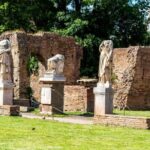
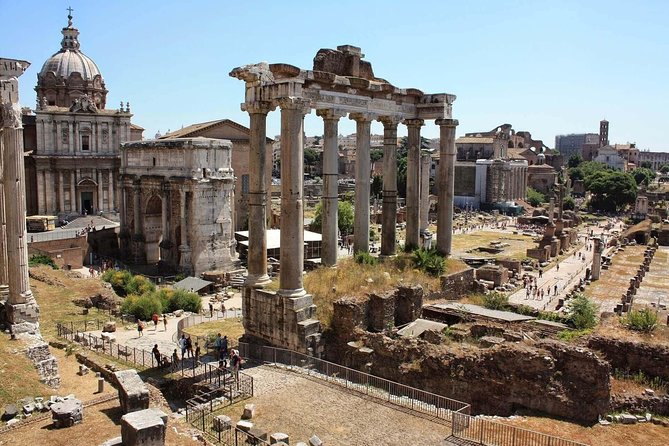
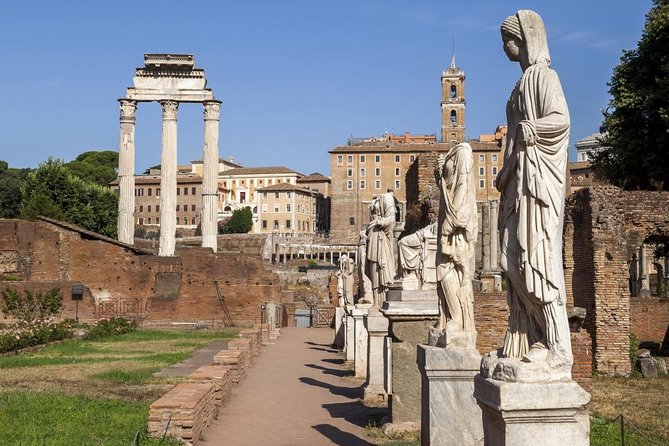
After the Colosseum, the tour shifts to the Roman Forum, and this is where the day becomes a sweep of Rome’s civic and religious gravity. In a single guided hour, you’ll cover a concentrated route that includes major points: pagan temples and tombs, the house of the Vestal Virgins, the Senate house, and Julius Cesare’s tomb.
What makes this stop valuable is that it avoids the classic Forum problem: wandering without a framework. The Forum is big enough to confuse you, and Rome doesn’t label things the way modern cities do. With a guide, you connect the ruins to function—who held power, what religion reinforced, and how public life was staged in stone.
You also get to see the Forum as an extension of the Colosseum. These were not separate worlds. The same culture that produced public spectacle also structured politics and worship in the Forum. Walking from one to the other gives you a cleaner mental map of ancient Rome’s day-to-day logic.
One consideration: the Forum portion is still a walking experience. Even though it’s shorter than the Colosseum underground section, you’ll be outdoors in daylight, and you’ll want comfortable shoes.
Palatine Hill and Caesar’s Palace: The Layers You Can Feel
The final segment heads to Palatine Hill, home to what’s commonly called Caesar’s Palace (Palatine Hill, the imperial core of Rome). Here you walk in the footsteps of emperors—brilliant and, yes, psychotic in the way ancient power stories often go. This stop works best if you like political history, not just architecture.
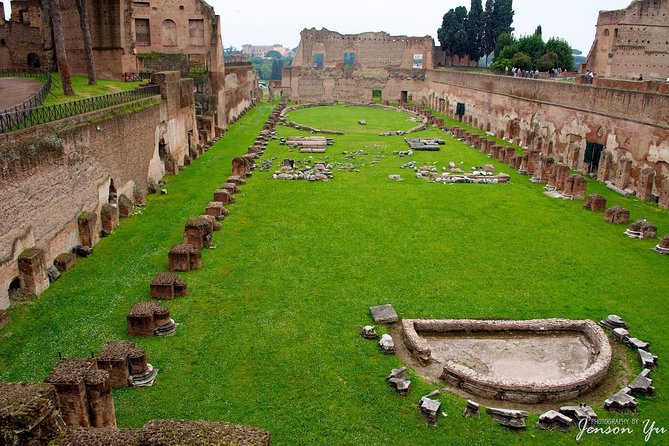
Palatine Hill is also a “time-layer” site. It has structures dating from B.C. times, through the Renaissance, and into the modern era, including buildings built by Benito Mussolini. That range is a big reason people find Palatine Hill more engaging than they expect. You’re not only looking at ancient ruins. You’re watching Rome rewrite itself over and over, with later eras literally building on earlier sites.
As a tour stop, it’s a smart closer because it widens the lens. After the Colosseum’s spectacle and the Forum’s civic-religious power, Palatine feels like the seat of control—where elites planned their image and their rule. The guide’s storytelling matters here too, because the physical remains can look fragmentary without interpretation.


How the 3 Hours Work: Group Size, Pace, and Where You Start
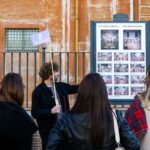
The total duration is about 3 hours, and the group size tops out at 24. That’s small enough to keep the tour from turning into a stampede, but large enough that you should still plan for crowd-style movement around the Colosseum complex. The pace is guided and purposeful, but it’s not a sit-down museum stroll.
You start at Piazza del Colosseo, by the Arch of Constantine (you’ll see it listed as the start point). You end in the center of the Ancient City at the Roman Forum, which is handy for grabbing food, walking to nearby sights, and using public transit afterward.
One more practical thing: the Colosseum area has security and internal routing. Even when your entry is special, you might still face waiting outside security. In a few cases, people reported confusion around finding the correct meeting spot, so give yourself buffer time and use the meeting point description as a reference, not your phone map alone.
Comfort Tips: Uneven Steps, Stairs, and Rain That Happens
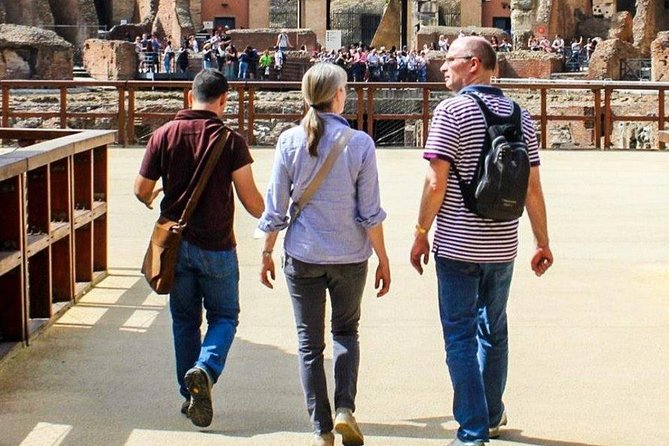
This tour is listed for moderate physical fitness, and the lived experience matches that. Expect walking on uneven surfaces and stairs at times, plus time moving through underground areas. If you’re traveling with knee issues or mobility limits, this is the section of the day most likely to feel challenging.
Also, this is a rain-or-shine kind of outing. People have mentioned heavy rain, so don’t assume you’ll “power through later.” Bring a small packable rain layer, wear shoes that handle slick stone, and plan for the day to move forward no matter the weather.
And please take the simple advice from repeat themes in people’s experiences:
- Bring water
- Use sunscreen
- Consider a hat
Summer heat around the Colosseum and Forum can be intense, and the tour is mostly outdoors with only segments sheltered. A guide may pace you and help with shade breaks when possible, but you’ll still want your own hydration plan.
Why the $144.82 Price Can Feel Like Value (Not a Rip-Off)
At $144.82 per person for about 3 hours, the price might look high at first glance—until you break down what you’re actually buying.
You’re not just paying for Colosseum entry. You’re paying for:
- Special access (Gladiator’s Gate)
- The arena-floor experience
- The Colosseum Underground portion
- Guided time at Roman Forum and Palatine Hill
- Included admission tickets
That combo matters because it compresses three major sites into one guided route. If you tried to assemble the same day independently, you’d spend time researching, buying tickets at different counters, and dealing with logistics that eat your energy.
Also, many guides on this kind of tour are praised for being story-driven and technically solid—some described as archaeology-background or excavation-connected. When you’re underground, that kind of guidance really earns its keep. Random self-guided browsing can show you ruins. A good guide helps you understand what you’re seeing and why it was built that way.
One more value angle: the tour is often booked about 62 days in advance on average. That doesn’t mean you must book exactly that early, but it does suggest availability can tighten, especially for preferred time slots. If you have fixed travel dates, lock it in sooner rather than later.
Who This Tour Suits Best
This is a strong match if:
- You’re a first-time Rome visitor who wants big-ticket classics without juggling tickets and routes
- You care about how ancient buildings worked, not only how they looked
- You want a tour that includes the Colosseum’s backstage side (underground) rather than repeating the usual viewpoint loop
- You like history told through real locations and physical layout
It may be less ideal if:
- You struggle with stairs, uneven ground, or underground confined spaces
- You want a slow pace with lots of breaks and minimal walking
Families can do it too, but plan around the physical demands. For some groups, having a guide who stays patient and flexible with individual needs can make a big difference, especially during long outdoor stretches.
Should You Book This Colosseum Underground + Forum + Palatine Tour?
I’d book it if your goal is a smarter Colosseum day, one where the underground portion is front and center and you still get the Roman Forum and Palatine Hill without turning the day into a logistics puzzle. The Gladiator’s Gate access, the arena-floor walk, and the underground dungeons are the key reasons it feels like more than a standard sightseeing bundle.
Before you commit, be honest about the practical side: wear grippy shoes, bring water, and expect walking and stairs. If you’re okay with moderate physical effort and want a guided thread that ties together spectacle, politics, religion, and power, this tour is a very good use of a half-day in Rome.
FAQ
How long is the tour?
It lasts about 3 hours.
What’s included in the ticket price?
Admission tickets are included for the Colosseum, the Roman Forum, and Palatine Hill.
Is the tour offered in English?
Yes, it’s offered in English.
Where do we meet?
The start point is by the Arch of Constantine at Piazza del Colosseo, 00184 Roma RM, Italy.
Where does the tour end?
The tour ends at the Roman Forum, in the center of the Ancient City.
Do I need a passport or ID?
Yes. Each traveler must present a valid passport or ID document that matches the name provided at booking for successful entry to the Colosseum and Roman Forum.
What group size is the tour limited to?
The maximum group size is 24 travelers.
Is it suitable for people with limited mobility?
It’s listed as requiring moderate physical fitness. You should expect walking and stairs, and some parts of the route involve uneven surfaces and underground areas.
Does this include the Roman Forum and Palatine Hill?
Yes for this experience. The information also notes that the Roman Forum and Palatine Hill are not included in the Underground Night Tour, so make sure you’re booking the correct version.
Can I change or cancel after booking?
No. The experience is non-refundable and cannot be changed for any reason.