REVIEW · ROME
Haunted Rome Ghost Tour – The Original
Book on Viator →Operated by E & D Guided Tours · Bookable on Viator
Rome gets scarier after dark. This 90-minute haunted walk threads grim real-world stories through central Rome, then gives you a chance to try dowsing rods in a small-group setting. I love the way the guide mixes legends with street-level history, and I like that the tour feels more like a nighttime story session than a rushed checklist.
One thing to keep in mind: it is not a horror-movie experience. Expect lightly creepy, history-heavy ghost talk, with walking and standing throughout, and plan on about 90 minutes rather than a full long evening.
In This Review
- Key highlights I think you’ll notice fast
- Starting at Lungotevere Castello: why the evening walk works
- Ghost hunting with dowsing rods: what you’re actually doing
- Across the first bridge: executions, whispers, and street-level drama
- The narrow, dark street stop: why Rome’s alleys feel spooky at night
- Poisoners and a haunted square: the dark gossip of everyday life
- The street built for secret visits: papal hypocrisy as a ghost story ingredient
- The brotherhood of Death church: bodies collected from the streets
- John Paul Getty III kidnapping spot: where modern crime meets old haunting
- Piazza Farnese and Campo de’ Fiori: open-air darkness and famous names
- How scary is it, really? It’s more history-plus than horror
- Price and time: is $31.43 good value?
- Logistics that actually matter: walking, endings, and the streets themselves
- Tips to get more from your haunting
- Should you book this Haunted Rome Ghost Tour?
- FAQ
- How long is the Haunted Rome Ghost Tour – The Original?
- Where does the tour start and where does it end?
- Is the tour in English?
- What’s included besides the walking tour?
- Is it scary or family-friendly?
- What happens if it’s rainy?
- Final call: book it if you want a darker Rome evening
Key highlights I think you’ll notice fast
- Small group of 15 or fewer for a séance-like atmosphere instead of a crowd shuffle
- Dowsing rod ghost hunting with real guidance on how to use the rods
- A route built around major “dark Rome” stops: executions, poisoners, and prisons of rumor
- Evening atmosphere in tight streets that feel made for ghost stories
- Two major squares in the open air: Piazza Farnese and Campo de’ Fiori
- Ends at Campo de’ Fiori, so your night continues without backtracking
Starting at Lungotevere Castello: why the evening walk works
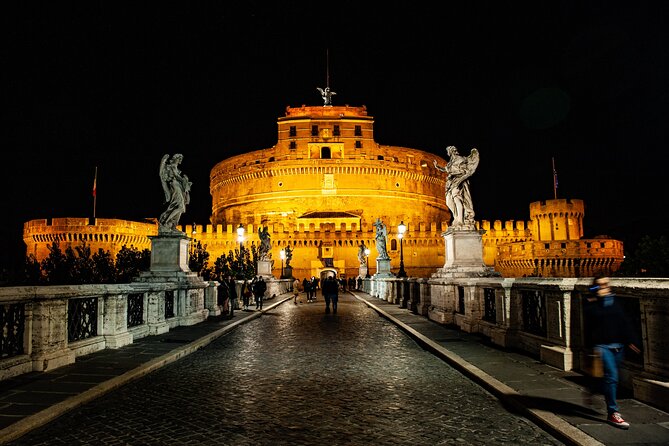
The tour meets at Lungotevere Castello 50, near Castel Sant’Angelo area, and it ends at Piazza Campo de’ Fiori. Starting on the river side matters. Evening light softens the crowds, and the streets feel narrower and older in a way you don’t get at noon.
This is also an easy tour to plan around because it runs in all weather conditions. That means you should dress for rain or chill if it comes, and you’ll want comfortable shoes since you’ll be on foot the whole time. Also, Rome can do its usual construction surprises—during the Jubilee period, some monuments may be under restoration, so you may see minor changes if a site is affected.
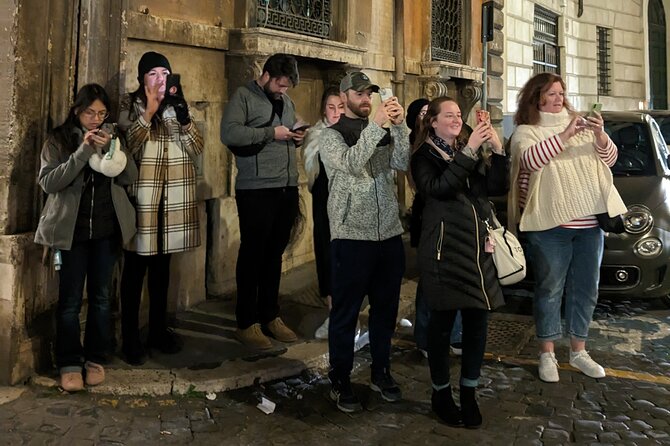
Finally, the group size is capped at 15 people, so you’re not stuck behind dozens of shoulders. You’ll get more of the guide’s attention, and the mood stays controlled—spooky without turning into chaos.
You can also read our reviews of more tours and experiences in Rome.

Ghost hunting with dowsing rods: what you’re actually doing
The signature twist here is that you don’t just listen. You learn to use divining (dowsing) rods to search for ghostly clues during the walk.
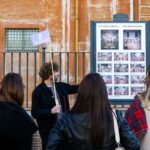
I like this part because it turns passive sightseeing into an activity. Someone hands you the basic instructions, and the guide keeps it moving so you can try it without feeling like you’re waiting for a cue. It’s set up to feel like a mini séance, helped by the small group size and the way the guide paces questions and participation.
Now, keep your expectations grounded. This is not presented like lab equipment or a science class. It’s a fun supernatural angle layered over Roman stories, and it works best if you go in curious and game. If you want a purely academic history tour, you might find this too playful. If you want something atmospheric, it’s one of the best reasons to choose this specific tour.
Across the first bridge: executions, whispers, and street-level drama
The tour begins at a bridge in Rome described as both beautiful and mysterious, and the guide frames it with bloody executions. That’s a vivid opener, and it sets the tone: the city’s postcard views sit right next to the kind of dark scenes people try to bury in silence.
After the first stop, you’ll feel the pacing shift from “here’s a landmark” into “here’s what happened here, and why it stuck.” A good guide will do two things at once: keep the story clear and make the surroundings feel relevant. From what you’ll likely experience, this tour leans into both.
There’s also a practical angle. Bridges and river crossings can be breezy at night, and the crowds thin out later. That helps with the mood, but it also means you should keep an eye on your footing, especially if it’s damp.
The narrow, dark street stop: why Rome’s alleys feel spooky at night
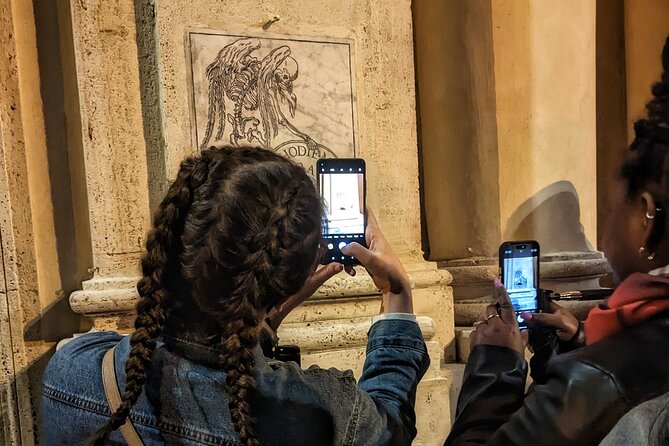
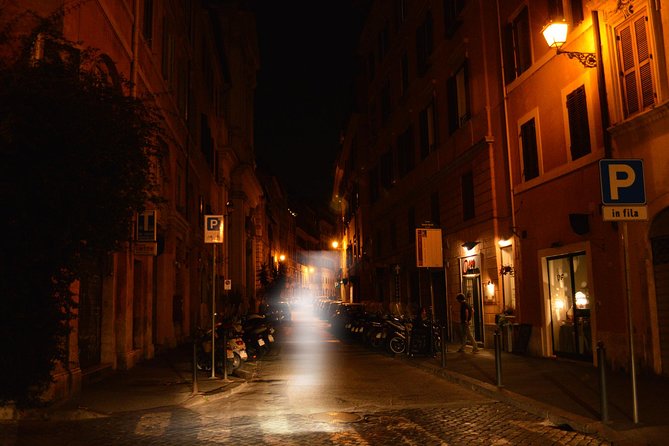
Next comes a stop on an ancient street—described as narrow, dark, and scary. This is where the tour’s pacing really makes sense. When you’re walking through tight streets after dark, you naturally feel the claustrophobic effect that makes ghost stories believable.
The guide uses the setting like a prop. They point out how old Rome’s layout can make certain sounds and shadows feel louder than they would in a wide boulevard. It’s not about jump scares. It’s about atmosphere plus context, and that combo is what keeps many people smiling even when the subject turns grim.
If you’re with someone who gets anxious in dark alleys, bring that up in your own head before you go. This tour doesn’t target fear, but it does lean into crime-and-punishment stories and the sense that the city has layers.
Poisoners and a haunted square: the dark gossip of everyday life
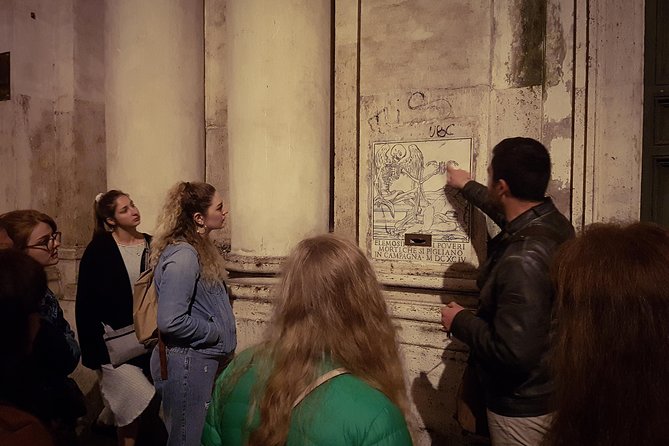
One of the most talked-about stops is a haunted square tied to poison lore. The story centers on professional poisoners who allegedly helped hundreds of women kill their husbands.
That’s not a random creep-factor detail. It fits the broader theme of how fear spreads in tight communities: rumor becomes reputation, and reputation becomes history. The guide uses it as social history, not just shock value. You’ll likely learn how such stories reflect the anxieties of the era—power, domestic control, and how people coped when courts and justice were far away.
A drawback to know up front: this is not sanitized. Even if the tone stays fun, the content covers serious crime. If you’re traveling with kids or someone sensitive to violence, you’ll want to gauge what stories they can handle.


The street built for secret visits: papal hypocrisy as a ghost story ingredient
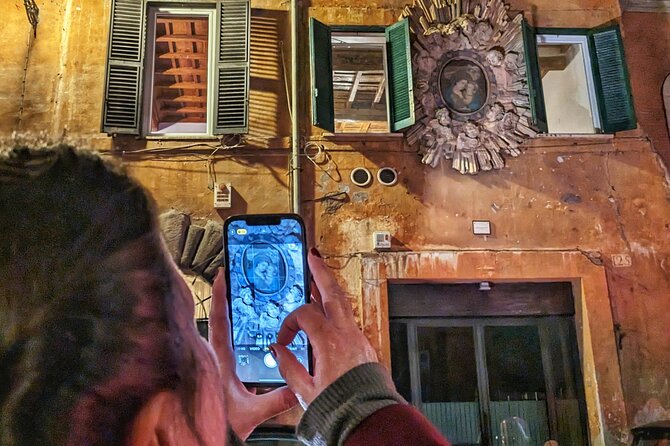
Another stop focuses on an ancient street said to have been built to let the Pope visit his mistresses in peace. That’s classic Rome: grand buildings next to scandalous private life.
I like this segment because it’s a reminder that “haunted” doesn’t always mean supernatural. Sometimes it means human behavior that leaves a lasting stain—written into streets, institutions, and legends. The guide’s job here is to connect the name of the street and the setting you’re standing in to the story without making it feel like pure gossip.
As you walk this part, watch your footing and your pace. Rome’s stones and uneven sidewalks are a constant. A night tour is less forgiving, especially when you’re listening closely and not just walking.
The brotherhood of Death church: bodies collected from the streets
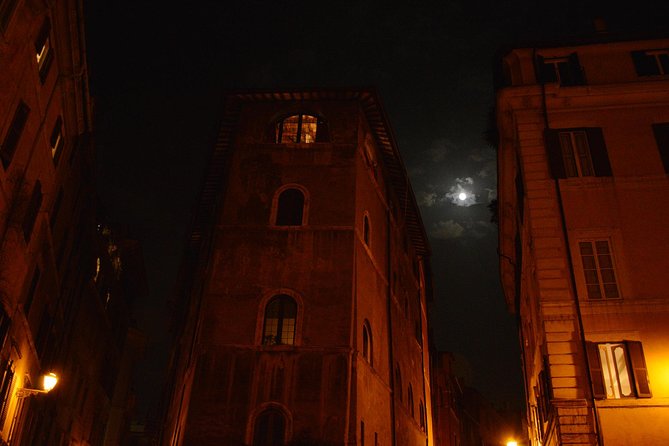
The route then reaches the head church of a brotherhood of Death, described as a burial place for thousands of bodies collected from the streets of Rome. This is one of the stops that feels heavier than the rest, because it points to real suffering rather than just rumor.
Even if the tour is framed with spooky language, this segment can land differently. It’s the most grounded in brutality and mass death. It also gives you a chance to see how institutions shaped burial and memory, and how the city dealt with catastrophe.
If you don’t enjoy dark topics, this is the part where you might want to brace yourself. On the other hand, if you like history that doesn’t look away, it’s also one of the most meaningful stops of the whole experience.
John Paul Getty III kidnapping spot: where modern crime meets old haunting
Then the tour moves from medieval-style doom to a much more modern kind of haunted—linked to the kidnapping of John Paul Getty III in the 1970s, described as still haunted by his ghost. This is where the tour shows a clever trick: it connects different eras under one theme of fear and legend.
I think this works well for first-time visitors because it broadens your mental map of Rome. You start by thinking of emperors and popes, then the tour reminds you that Rome’s “dark stories” aren’t stuck in the ancient past.
It also adds variety to the walk. You get a different emotional tone, and the guide can use the contrast to keep things moving without losing the thread.
Piazza Farnese and Campo de’ Fiori: open-air darkness and famous names
The tour includes stops that land you in two big, recognizable squares.
First is Piazza Farnese, a place tied to a powerful family and described as breathtakingly dark in mood and tone. Even if you’re not going inside any major museum, you’re still learning how power shaped streets and how architecture becomes part of the story people repeat.
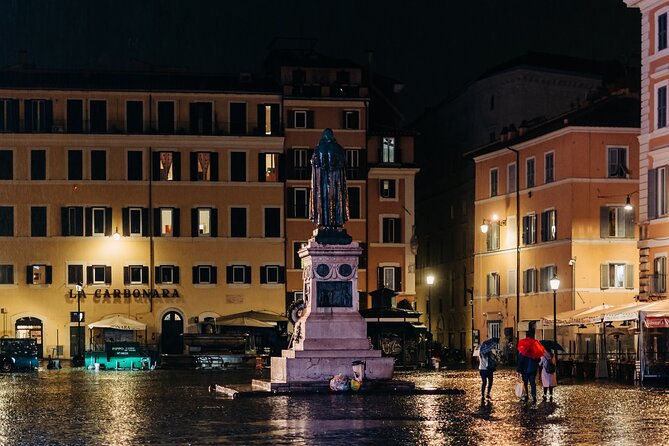
Then comes Campo de’ Fiori, described as a place where thousands of witches and heretics had been burned alive. The tour frames it as a spot where you might spot a ghost or two, if you’re unlucky. Even if you treat that as playful, the reality of the subject is grim, and the open-air setting makes it hit harder.
This is also where the tour ends. Ending at Campo de’ Fiori is handy because you’re right in a lively area for the rest of your evening. Just remember: after this kind of walking and listening, you’ll probably want a warm drink or something to eat before you keep exploring.
How scary is it, really? It’s more history-plus than horror
The best way I can describe the experience is: mildly creepy with a heavy history backbone. Many people love it because it’s spooky enough to feel special, but not so intense that you can’t enjoy your night.
You’ll get crime stories (poisoners, death-brotherhood burial, executions), plus a supernatural layer (ghost hunting with rods). That mix is the core appeal. It’s also why the guide matters a lot.
From the range of guides you might get, the tour seems to reward people who enjoy storytelling with performance. Guides like Lara are often praised for humor and energy. Marco and Mario get highlighted for being engaging and attentive. Ali and Emma show up in descriptions as guides who handle group dynamics well. Clara and Sonia are repeatedly mentioned for making Rome feel alive through clear, entertaining narration. And Bryan and Yash show up as examples of someone keeping the tone fun while still explaining the setting.
If you prefer a quiet, museum-like experience, you might want to skip this one. If you want a night walk where you can laugh, learn, and feel a little spooked, it’s a strong fit.
Price and time: is $31.43 good value?
At $31.43 per person for about 1 hour 30 minutes, this tour sits in the “you pay for a great guide and a night experience” category. You’re not paying for tickets to a big indoor attraction. You’re paying for guided storytelling, a designed route through historic spaces, and the included activity with dowsing rods.
Also, the inclusion list helps justify the price. You get:
- instruction on the dowsing rods
- small-group format (up to 15)
- your guide’s name and number (so you can find them if needed)
And because it runs after dark, you’re effectively buying something different than a daytime walk. Rome at night changes the feel of the city, and the tour uses that shift.
One watch-out: one person reported the tour felt just over an hour instead of the full two. Since the official timing is about 90 minutes, I’d plan for around that, but stay flexible if your pacing depends on the group and the streets.
Logistics that actually matter: walking, endings, and the streets themselves
This tour is simple, but Rome has a few reality checks.
You’ll walk a decent amount, and you’ll be crossing streets. One common praise point is guides who keep everyone safe across roads, which is important at dusk when traffic feels faster. If you’re traveling with slower walkers, consider that the pacing is set for a normal strolling group.
You should also know the tour starts and ends in different places. Start: Lungotevere Castello. End: Campo de’ Fiori. That means you’ll want to plan your next stop without assuming you’ll be dropped back near your starting point.
If you have your own plans late in the evening, give yourself some buffer. Even if you’re good at walking, you’ll likely want a quick reset after the last square before you jump into dinner reservations.
Tips to get more from your haunting
A few small moves make the experience better.
- Wear comfortable shoes and something with good grip. The stones can be slick at night.
- Dress for the weather. The tour runs in all conditions, and cold wind or rain changes how fun the atmosphere feels.
- Bring a charged phone. The tour uses a mobile ticket, and you’ll want it ready.
- Don’t over-plan dinner right after. You’ll be in the mood for food and something warm by the end.
- If the content feels intense for your group, communicate your comfort level with the guide. The best guides can adjust how they present details without killing the vibe.
Also, keep an eye out for Jubilee-related restoration notices. The tour may adjust to site conditions, and you’ll be happier if you treat it as part of the Rome experience rather than a disappointment.
Should you book this Haunted Rome Ghost Tour?
If you want a night in Rome that feels story-driven, a little spooky, and still rooted in the city’s real past, I’d book it. The biggest strengths are the small-group feel and the dowsing rods, which turn the tour into an activity, not just a lecture. Guides like Lara, Marco, Mario, Ali, Clara, Sonia, Bryan, and Yash (if you’re lucky enough to match with one of them) are often praised for keeping the mood fun and the explanations clear.
I’d skip or think twice if you want a purely historical documentary-style tour with minimal play, or if you’re sensitive to crime-related stories. And set expectations for walking and time: this is about about 90 minutes and it ends at Campo de’ Fiori, so plan the rest of your evening accordingly.
FAQ
How long is the Haunted Rome Ghost Tour – The Original?
It lasts about 1 hour 30 minutes.
Where does the tour start and where does it end?
The meeting point is Lungotevere Castello, 50, 00193 Roma RM, and the tour ends at Piazza Campo de’ Fiori (P.za Campo de’ Fiori, 00186 Roma RM).
Is the tour in English?
Yes, it is offered in English.
What’s included besides the walking tour?
You’ll learn how to use divining/dowsing rods during the tour, and the experience is designed for a small-group, séance-like atmosphere. You also receive your guide’s name and number.
Is it scary or family-friendly?
It’s generally described as spooky and mildly creepy, with dark stories mixed in. One review noted it was engaging even for a child, while another mentioned a calmer participant might not feel much fear.
What happens if it’s rainy?
The tour operates in all weather conditions, and it runs outdoors.
Final call: book it if you want a darker Rome evening
Book it if you’re after an after-dark walk with atmosphere, guided participation, and a supernatural gimmick that’s actually part of the fun. Skip it if you want a calm, purely historical stop-and-stare tour with no supernatural angle and no walking at night.