REVIEW · ROME
I Love Rome : Hop on Hop off Open Bus Tour
Book on Viator →Operated by Gray Line I Love Rome by Carrani Tours · Bookable on Viator
Golden hour views start at a bus stop. This Rome hop-on hop-off ride is built for quick orientation, with a loop that reaches major sights like the Vatican, Spanish Steps, and Trevi-area highlights. You control the pace with onboard audio and a map, so you can hop off, wander, and return when you’re ready.
What I really like is the practical mix of multilingual audio (12 languages) and a route designed to get you close to key landmarks without hunting down every address. A second win: it’s self-paced, so you can do a full “see it first” loop, then spend more time on the places you care about. One drawback to keep in mind is that the experience can be less smooth when stops are hard to locate or when traffic piles up, and one route area (the Colosseum archaeological stop) is closed indefinitely.
In This Review
- Key things to know before you board
- Price and what you’re really buying (not just the number)
- First impressions: Finding Stop 1 near Termini
- How the ride works: hop-on hop-off, but stay organized
- The daily timing: when the last bus leaves
- Stop-by-stop: what each area is best for
- Stop 1: Via Giovanni Giolitti, 32 (Termini area)
- Stop 2: P.za dell’Esquilino, 12 (St. Mary Major)
- Stop 3: Giardino degli Aranci (Oranges Garden) and Circus Maximus
- Stop 4: Via del Circo Massimo (Circus Maximus – Bocca della Verità)
- Stop 5: Via del Teatro di Marcello, 2 (Piazza Venezia – Roman Forum area)
- Stop 6: Lungotevere Tor di Nona, 7 (Vatican City & Sistine Chapel area)
- Stop 7: Via Ludovisi, 73 (Spanish Steps and shopping area)
- Stop 8: Via Barberini, 12 (Barberini & Trevi Fountain area)
- Onboard experience: audio, WiFi, and comfort trade-offs
- Route realities: the Colosseum stop closure and traffic delays
- Best ways to use this tour (so it doesn’t feel rushed)
- Should you book the I Love Rome hop-on hop-off bus?
- FAQ
- How long is the hop-on hop-off bus tour?
- How much does the tour cost?
- Where is Stop 1 located?
- Does the tour include audio?
- Is WiFi available on the bus?
- Are museum or attraction tickets included?
- What are the operating hours in the spring and summer?
- Can I bring a small dog?
Key things to know before you board
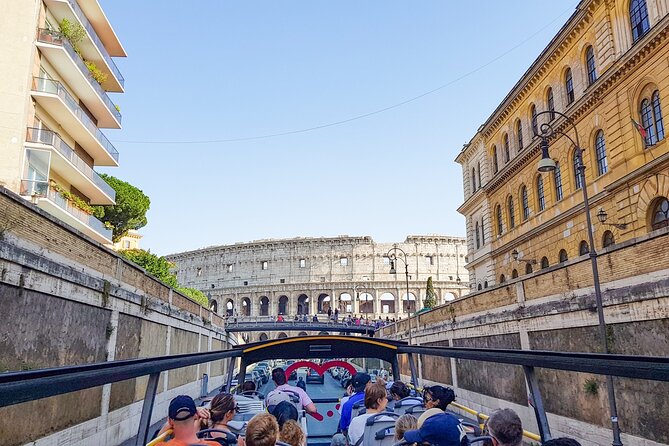
- Stop coverage across Rome’s big hits: Termini area, St. Mary Major, Circus Maximus/Bocca della Verità, Piazza Venezia/Roman Forum zone, Vatican drop-off, Spanish Steps, and Barberini/Trevi area
- Audio headset with 12 languages plus a hop-on hop-off map to keep your bearings
- WiFi available on board, handy while you’re checking walking routes between stops
- Multiple-use hop-on hop-off tickets (with an exception noted as 1 Run), so you can ride more than once if your pass allows
- Colosseum archaeological stop is closed indefinitely, so plan around that gap and possible last-minute routing changes
- Small-dog rule: only small dogs with kennel are admitted on board
Price and what you’re really buying (not just the number)
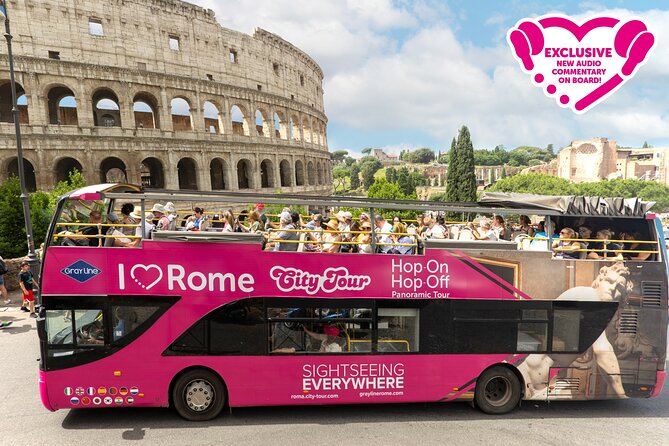
At $21.12 per person for about 2 hours on the loop, this isn’t trying to be a guided walking tour or a ticket bundle to museums. You’re paying for transportation that drops you near the sights, plus onboard narration that helps you understand what you’re looking at while you move.
In Rome, that value can make sense fast. The city is crowded, and hopping between neighborhoods on foot can be slow, especially when you’re balancing multiple “must-sees.” This bus is designed for getting close and letting you decide how much time to spend at each stop.
Also, the tour is set up to run every day, and you can start at the first bus at Stop 1 (Via Giovanni Giolitti, 32). If your schedule is tight and you want a simple plan that doesn’t depend on booking multiple separate activities, hop-on hop-off often pays off.
You can also read our reviews of more tours and experiences in Rome.


First impressions: Finding Stop 1 near Termini
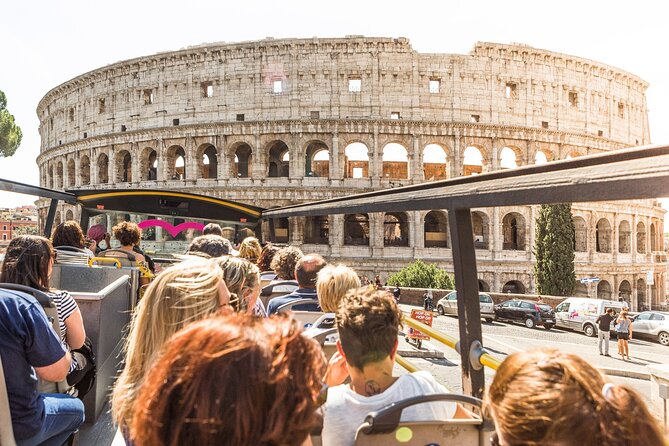
The whole day hinges on getting on the bus for the first time. Stop 1 is Via Giovanni Giolitti, 32, near Termini Station, and that location is usually convenient because you can anchor your sightseeing plan around a transit hub.
Still, there’s a practical caution: Rome often has roadwork and construction, and finding an exact pickup point can be a bit fiddly without clear directions. If you arrive a little early, you give yourself room to spot the right bus and settle in.
A smart strategy: once you locate Stop 1, take 2 minutes to confirm the stop name and check the map you’ll use later. That way, when you return to re-board, you’re not mentally translating between street names and landmarks.
How the ride works: hop-on hop-off, but stay organized
This is a true self-guided format: you can join from any indicated stop, then hop off and back on as your schedule allows. The route uses designated stops placed near major landmarks, so you’re not relying on random curbside sightings.
Two organization tips matter:
- Keep your boarding ticket ready each time you board. In real-world use, people can get confused if they show one thing at first boarding and then forget that you may need to present the correct item again on re-boarding.
- Use the map immediately. The map isn’t just decoration; it’s how you connect what you hear in the headphones to where the bus is actually stopping.
There’s also a caution to read carefully: the hop-on hop-off ticket is described as multiple use with an exception noted as 1 Run. If you’re planning to ride repeatedly in the same day, check that your specific pass matches your plan.
The daily timing: when the last bus leaves
Schedules shift by season, so don’t assume late-day means late buses.
- From 15 March 2025: buses run 8:30 AM to 6:40 PM, with the last bus at 6:40 PM from Termini (Stop 1).
- From 3 November 2025 to 31 March 2026: buses run 8:30 AM to 5:40 PM, last bus 5:40 PM from Termini.
- From 1 April 2026 to 1 November 2026: buses run 8:30 AM to 6:40 PM, last bus 6:40 PM from Termini.
If you’re trying to catch the Vatican or stroll around Spanish Steps at sunset, plan to be back at your chosen stop with some margin. Rome traffic can turn a quick hop into a slower one.
Stop-by-stop: what each area is best for
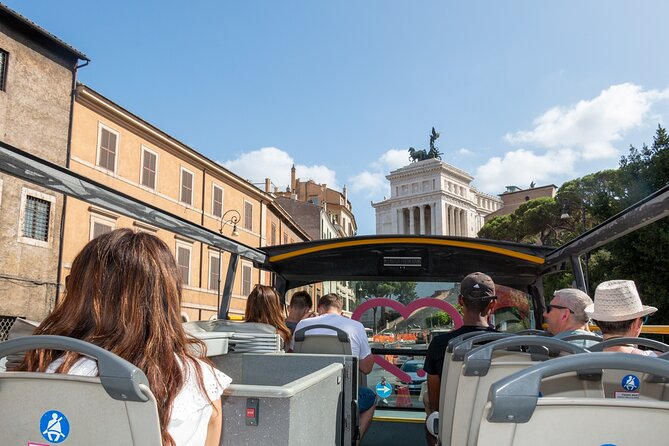
This route is built around “photo + context + short walk.” Here’s how each stop tends to work in practice, and what to watch for.


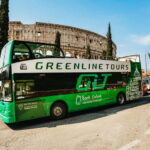
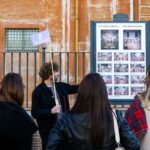
Stop 1: Via Giovanni Giolitti, 32 (Termini area)
This start point is useful because Termini is a major hub. It’s a good moment to do the first loop like a survey: learn how Rome’s neighborhoods connect visually, then decide where to spend your best energy.
If you’re coming by train, you’ll appreciate not needing a dedicated transfer to join. Just remember: start here first if you want the smoothest rhythm of the day, since everything else is easier once you’ve “learned the route” once.
Possible drawback: if construction makes the exact stop feel unclear, give yourself extra time the first time you board.
Stop 2: P.za dell’Esquilino, 12 (St. Mary Major)
This stop puts you close to St. Mary Major, one of the city’s major churches. Even if you don’t plan to spend hours inside, the exterior area gives you a strong sense of the neighborhood’s scale and how Rome layers sacred buildings next to everyday streets.
Best use: hop off briefly to orient yourself, then decide if you want more time there later. It’s also a good “break stop” because the route doesn’t only chase monuments; it gives you a religious landmark along the way.
Stop 3: Giardino degli Aranci (Oranges Garden) and Circus Maximus
Giardino degli Aranci is known for viewpoints, and this stop pairs nicely with Circus Maximus. Even if you’re not doing a deep dive into ancient engineering, you can still get the mental picture: Rome’s past was huge, and the city’s roads still respect that scale.
Best use: if you like photos and wide views, this is one of your early wins. You’ll also have time to stroll around the broader Circus Maximus area before moving on.
Stop 4: Via del Circo Massimo (Circus Maximus – Bocca della Verità)
This is the stop that can make your day feel more playful: Bocca della Verità is an instantly recognizable site. It’s not just about the photo; it’s a chance to break up the “big monument” feeling with a quirky, human-scale moment tied to a famous legend.
Best use: if you’re moving fast, do Bocca della Verità and then decide whether you want more time in the wider Circus Maximus zone. If you like learning while you walk, the onboard audio helps you connect what you’re seeing to what it likely represents.
Stop 5: Via del Teatro di Marcello, 2 (Piazza Venezia – Roman Forum area)
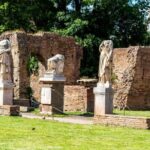
This area puts you in the orbit of Piazza Venezia and the Roman Forum zone. Even without entering every site, this stop helps you understand the geometry of ancient Rome. You get the “where am I?” moments that make later museum or walking plans easier.
Best use: if you’re the kind of person who wants to pick a couple of major sites and do them properly, this is a good place to hop off, look around, then return later if the timing works.
Important context: the route includes this area, but it does not replace the missing Colosseum Archeological Area stop, which is closed indefinitely. So if Colosseum is a top priority, plan a separate approach.
Stop 6: Lungotevere Tor di Nona, 7 (Vatican City & Sistine Chapel area)
This stop is the headline for many people: access to Vatican City and the Sistine Chapel area, described as being between via Panico and Via Mastro.
This is where the bus becomes more than transportation—it’s your timing tool. You can drop off near where you need to be, then build your day around whatever you’ve booked (or whatever you want to see).
Two practical notes:
- The Vatican area is famous for long lines and crowding, so don’t treat this stop as “I’ll just wander whenever.” Even if you’re not entering museums immediately, give yourself time to reposition.
- The audio can help you connect sites faster, especially when your eyes are overwhelmed by scale.
Stop 7: Via Ludovisi, 73 (Spanish Steps and shopping area)
This stop is a sweet spot for people who want Rome to feel like Rome: staircases, street life, and easy wandering.
Best use: if you’re going after the Spanish Steps vibe, hop off here with enough time to walk uphill and downhill a couple times. It’s also a good place for shopping, but keep it practical—Rome sidewalks can be slow, and traffic congestion can affect how quickly the bus can get you back on.
Stop 8: Via Barberini, 12 (Barberini & Trevi Fountain area)
This final cluster is where many people look for the day’s most “classic photo.” The route notes Barberini & Trevi Fountain at this stop.
Best use: if you want to end with your most recognizable landmark, this is a solid closer. If you also want a calmer pace, you can use this stop to roam the nearby streets, then return to catch the last buses without guessing which direction to walk.
Onboard experience: audio, WiFi, and comfort trade-offs
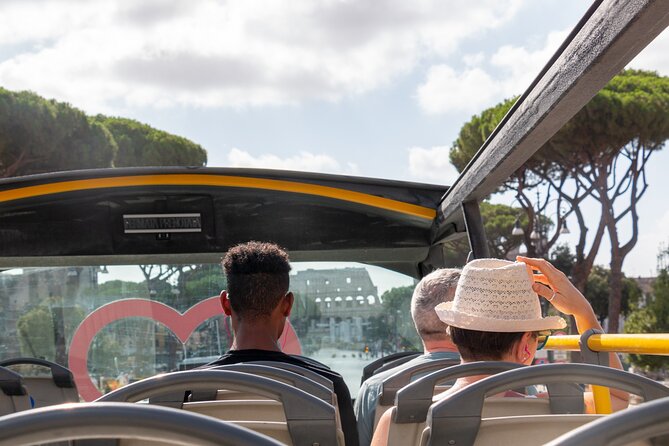
This bus leans heavily on the headphones. You’ll get multilingual audio (12 languages) and a route map so you can follow along as the bus passes stops.
In theory, the audio should line up with what you’re seeing from your seat. In practice, some audio moments can feel off if you’re seated somewhere that makes it harder to hear well, or if the bus is navigating delays. Still, the concept is strong: narration while you ride saves you from constantly pulling out your phone.
WiFi is also available, which is useful for checking which stop you’re at or planning short walks between stops.
Comfort varies with crowds and bus operations. One issue that can happen with boarding is door access. On older or crowded buses, you might find the flow isn’t always smooth. If accessibility is a priority, plan for extra time and be ready to ask staff directly when you board.
Route realities: the Colosseum stop closure and traffic delays
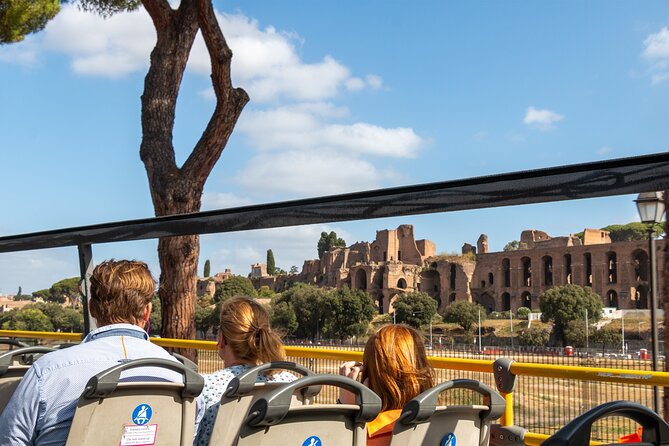
One key point: the Colosseum Archeological Area stop is closed indefinitely. That means your loop won’t drop you right at the Colosseum stop the way you might expect from some other hop-on hop-off routes.
Also, Rome traffic and special events can force last-minute adjustments. The service warns about possible congestion, road closures, and delays.
What this means for you: don’t build a schedule where a single bus stop time is the only way you can see something important. If Colosseum matters, treat it as a separate plan you start from your own walking/transit route, and use this bus for everything else.
Best ways to use this tour (so it doesn’t feel rushed)
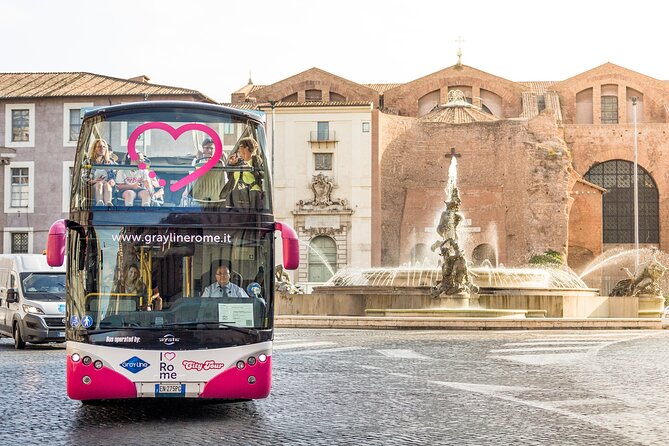
Here’s how I’d use this Rome hop-on hop-off route for maximum value:
- Do one full loop first if you have the time. Use the audio to understand what you’re seeing, then decide where you want to spend real time.
- Choose 2 to 3 “big stops” for longer visits: Vatican, Roman Forum zone, and one of the scenic areas like Circus Maximus/Spanish Steps.
- Keep your walking mindset flexible. This tour is great for getting close, but Rome still asks you to walk to the entrance or viewpoint you want.
- Time your re-boarding with the understanding that delays can happen. If you’re waiting at the stop, check the map so you know you’re at the right point.
If you want the kind of trip where each day has a simple spine, this bus can be that spine.
Should you book the I Love Rome hop-on hop-off bus?
Book it if:
- You want an easy overview across major Rome highlights without committing to a long guided walking day.
- You like self-paced sightseeing with 12-language audio and a map.
- You’re okay with Rome being Rome: traffic, stop-finding, and occasional operational hiccups.
Skip it or consider another option if:
- Colosseum access is a must for your plan. The Colosseum archaeological stop is closed indefinitely, so you’d need a separate strategy anyway.
- You need consistent boarding logistics for accessibility needs. If that’s a concern, plan extra buffer time and be ready to adjust.
If you’re planning smart, this bus is a practical way to see Rome’s major landmarks fast, learn what you’re looking at, and then spend your time where it actually matters to you.
FAQ
How long is the hop-on hop-off bus tour?
It’s listed as about 2 hours (approx.).
How much does the tour cost?
The price shown is $21.12 per person.
Where is Stop 1 located?
Stop 1 is Via Giovanni Giolitti, 32, near Termini Station.
Does the tour include audio?
Yes. You get a multilingual audio headset with commentary available in 12 languages.
Is WiFi available on the bus?
Yes, WiFi is available.
Are museum or attraction tickets included?
No. Admission to attractions, monuments, and museums is not included.
What are the operating hours in the spring and summer?
From 1 April 2026 to 1 November 2026, the bus operates 8:30 AM to 6:40 PM, with the last bus 6:40 PM from Termini.
Can I bring a small dog?
Only small dogs with a kennel are admitted on board.