REVIEW · ROME
Pasta Fettuccine, Ravioli and Tiramisu MasterClass
Book on Viator →Operated by Bella Vita Food Tours · Bookable on Viator
Fresh pasta beats reheated any day. This hands-on masterclass turns central Rome into a working Italian kitchen where you shape dough, fill ravioli, and build a classic tiramisu. I like that it’s organized around a small group and guided in English, so you’re not lost in translation while you learn the key steps.
What I especially like is the mix of making and tasting: you leave with two pasta skills plus a dessert you can repeat at home. One consideration: the sauces for your fettuccine aren’t something you cook from scratch in class since the chef preps them.
You also get a welcome glass of prosecco before you start eating what you helped make. I like the “sit down and enjoy” part that happens after the cooking, including wine or soft drink, bottled water, and a finishing round with limoncello or coffee. The only drawback to plan for is simple timing: with about a 3-hour window, you’ll focus on technique and finishing, not a long slow dinner.
In This Review
- Key Points Worth Noticing
- Meeting at iQ Hotel Roma and the Small-Group Setup
- What the Welcome Drink Means for the Whole Evening
- Rolling Fettuccine: What You Actually Control (and What You Don’t)
- Ravioli with Butter and Sage: Filling, Sealing, and Timing
- Tiramisu From Scratch: The Dessert Skill You’ll Reuse
- Chef Instruction Style: Names You’ll Hear and Why It Works
- The Chef’s Demo and Your Shared Meal
- Drinks, Environment, and the Pace (Including Hot Days)
- Value: Is $71.38 Worth It?
- Who This Class Suits Best in Rome
- Should You Book Pasta Fettuccine, Ravioli and Tiramisu MasterClass?
- FAQ
- How long is the masterclass?
- Where is the meeting point in Rome?
- Is the class offered in English?
- What dishes will you make?
- Do you make the sauce for the fettuccine during the class?
- Are drinks included?
- What happens during the end of the class?
- How large is the group?
- Will I get recipes to take home?
- Can I cancel for a full refund?
Key Points Worth Noticing
- Central meeting point near iQ Hotel Roma makes it easy to plug into your day
- Small group cap (14 people max) keeps the class sociable and less chaotic
- You make the pasta and tiramisù instead of just watching
- English-speaking chef instruction helps you follow steps and timing
- Drinks and a shared meal keep the evening feeling like a real Roman night
Meeting at iQ Hotel Roma and the Small-Group Setup
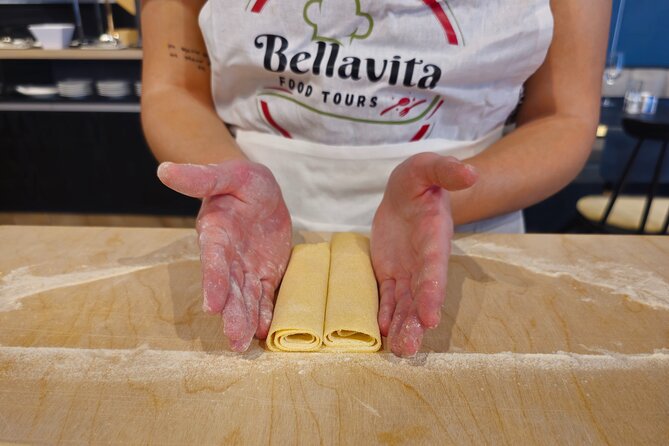
The experience starts at iQ Hotel Roma, Via Firenze 8 (00184 Roma). It’s a smart location choice because it’s central and near public transportation, so you won’t need a taxi mission just to reach the first step. The class runs about 3 hours, with two possible start times, which is helpful if you’re trying to match it to your other Rome plans.
The group size matters. With a maximum of 14 people, you get a kitchen rhythm that feels friendly instead of rushed. And based on what people describe, the chefs tend to slow down when needed, explain the why behind the technique, and answer questions as you go. If you’re the kind of person who learns better by doing, that small-group format is a real win.
You can also read our reviews of more tours and experiences in Rome.


What the Welcome Drink Means for the Whole Evening
Before cooking, you get a welcome glass of prosecco. That sounds like a detail, but in practice it changes the mood. You’re more relaxed for the first hands-on steps, and it sets the tone for a class that feels like dinner with lessons, not homework in an apron.
You’ll also have a glass of wine or a soft drink, plus bottled water, during the course. This matters for value because it’s part of what turns a pasta-and-dessert class into a full evening meal. And when the food shows up, you’re not tasting something half-cooked on the fly—you’re eating what you made.
Rolling Fettuccine: What You Actually Control (and What You Don’t)
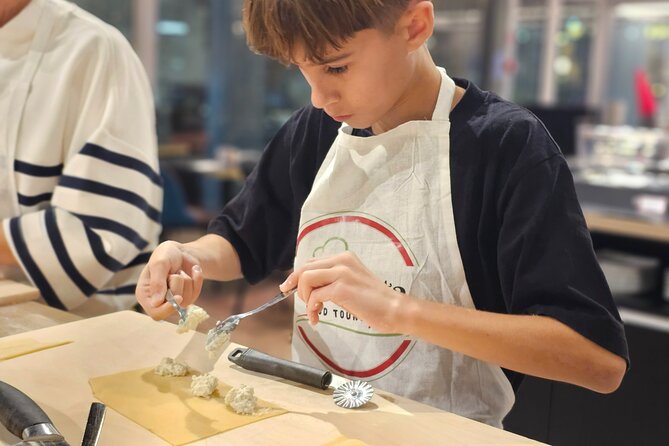
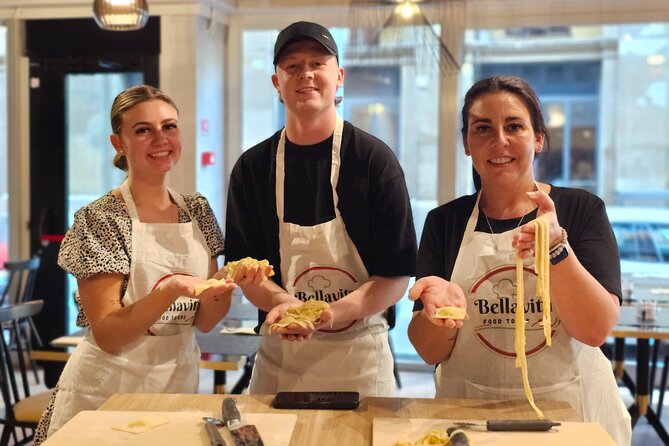
In the pasta portion, you learn to craft authentic fettuccine with guidance from an experienced, English-speaking chef. The key practical point here is balance: you do the work that teaches technique—making the dough and shaping pasta—while the cooking and some components are handled for you so the evening stays on schedule.
For fettuccine, you’ll have a choice of sauce, but you should know this: you don’t make the sauce from scratch during the class. The sauce is prepared by the chef in advance. This is one of those tradeoffs that makes sense when you think about timing. If everyone had to cook sauce from zero while also rolling pasta and assembling ravioli, the class would turn into chaos. Instead, you get to focus on the pasta result, the feel of the dough, and the process you’ll want to repeat later.
One of the most praised parts of this class is how it makes the final product feel restaurant-level. People highlight that the pasta they made was among the best they ate in Rome, which tells me the teaching is built around getting the texture and shape right—not just fun flour dust.
Ravioli with Butter and Sage: Filling, Sealing, and Timing
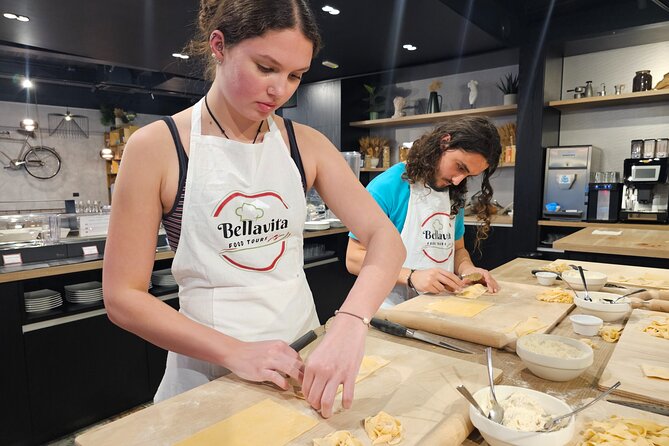
Next comes ravioli. Your instruction covers how to create the filled pasta correctly, then finish it with butter and sage. The chef’s role is not just to show you the steps, but to help you avoid the common beginner mistakes, like overfilling, uneven sealing, or losing the shape when you cut and handle the pieces.
This section is where a small group helps. When you’re pressing edges together and working with dough thickness, you need fast feedback. A larger class would mean longer waits and more guesswork. Here, the group size stays tight enough for the chef to check details and keep things moving.
Also, you’ll get the satisfaction of learning a dish that looks impressive but is doable at home once you’ve practiced the method in a guided setting. If you want a pasta skill that feels more “Italy at its best” than generic cooking, ravioli tends to deliver that.
Tiramisu From Scratch: The Dessert Skill You’ll Reuse
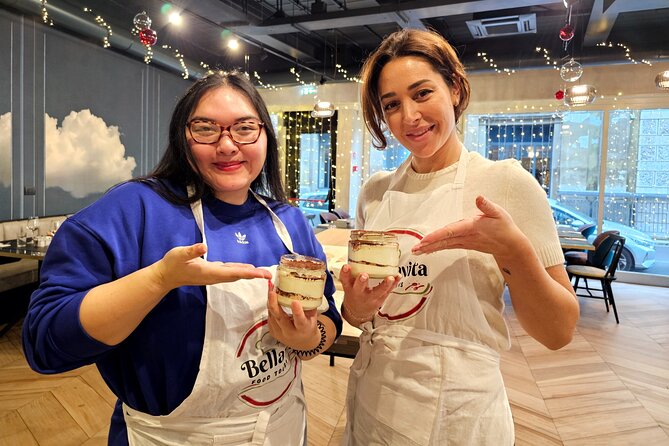
The tiramisù part is where the class becomes memorable beyond the food. You learn how to make tiramisu as a final project, then you eat it as part of the meal. This isn’t just a sweet finish; it’s a repeatable dessert technique you can bring back to your kitchen.
People consistently point to the tiramisù and overall meal as a highlight, with descriptions that the dishes were delicious and worthy of a serious restaurant. That’s important because tiramisù has a few precision points—texture, layering, and timing. When a class teaches it well, you don’t walk away thinking it was mostly timing luck. You walk away knowing what to do next time.
And at the end, you’ll have limoncello or coffee, which is a classic Rome-style wrap-up. It turns the last taste into a proper “we finished” moment, not just a sugary afterthought.




Chef Instruction Style: Names You’ll Hear and Why It Works
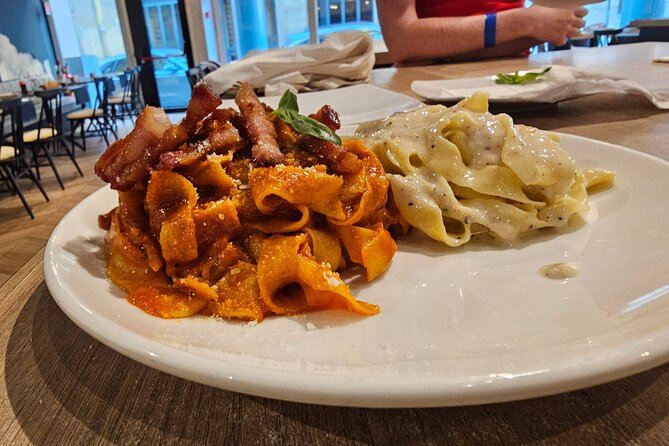
The class is led by an experienced, Italian chef who speaks English. In the feedback you can see specific names showing up again and again—Giuseppe and Danilo. Both are described as patient and fun, with clear step-by-step teaching.
That matters because making pasta is tactile. If an instructor only talks, you’ll struggle to connect the words to the dough. When the chef explains the process, then watches what you do, you end up learning technique rather than copying a single move.
I also like the way these chefs reportedly handle different needs in the room. One person noted getting extra one-on-one time when they were in a small group, which suggests the teaching doesn’t collapse when class sizes change. Another theme is humor and a relaxed kitchen vibe—key ingredients for actually enjoying learning.
The Chef’s Demo and Your Shared Meal
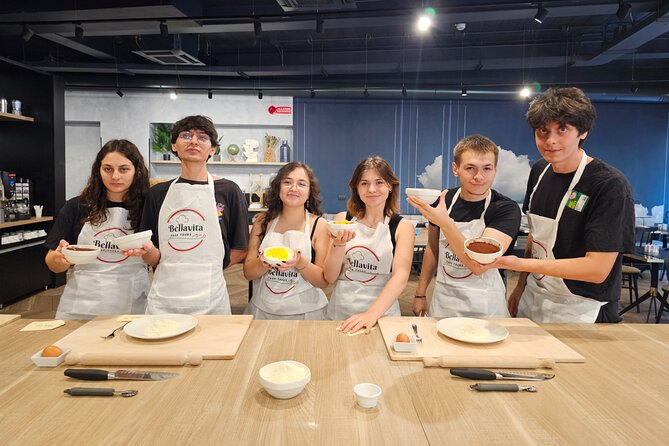
After the hands-on work, you’ll wrap up by watching the chef cook pasta and then feasting on the dishes you made. This part is practical. Even if you’ve never cooked pasta before, your goal is to understand what matters: dough handling, shaping, and the assembly process. The chef’s cooking demo then bridges you into the final texture and doneness you should aim for at home.
Then you eat. You’re not waiting around for something that tastes like leftovers; you sit down and enjoy the results of your own rolling and filling. That shared meal also makes the class social in a natural way. You’re talking while you eat, not just milling around before and after.
Drinks, Environment, and the Pace (Including Hot Days)
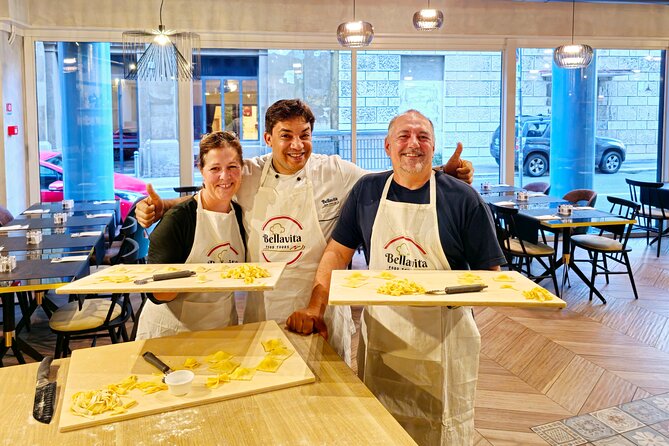
Rome can be warm, and kitchen comfort matters. Some people specifically mention the space being clean and comfortable, with AC. That’s not the headline feature, but it’s the kind of detail that keeps a cooking class from becoming miserable.
The pace is designed around finishing three major items in about 3 hours: fettuccine, ravioli, and tiramisù. You’ll want to treat it like an evening event, not a quick snack stop. If you have back-to-back museum plans, pick your start time carefully so you’re not running on fumes before dough touches your hands.
Value: Is $71.38 Worth It?
At $71.38 per person for about 3 hours, this class is priced like a mid-range food experience—and the value comes from what’s included. You get:
- hands-on instruction for multiple dishes
- a prosecco welcome
- wine or soft drink plus bottled water
- the finished meal you helped make
- a sweet finish with limoncello or coffee
- instruction in English, in a central location
In plain terms: you’re paying for technique coaching, a real meal, and the convenience of having the kitchen organized for a smooth run. The fact that the sauce for fettuccine is already prepared is part of the value logic too; it keeps the class focused on what you can realistically learn and produce in one sitting.
If your goal is to eat well in Rome, plenty of restaurants will do that. If your goal is to take home real skills for pasta and tiramisù, this is the kind of experience where the learning is the main course.
Who This Class Suits Best in Rome
This masterclass is ideal if you want a practical, enjoyable “Roman night” that doesn’t require you to be a confident cook. You’ll likely love it if:
- you want a hands-on experience rather than a tasting tour
- you like learning from an instructor who gives step-by-step guidance
- you want a small group setting where questions are welcome
- you’d like to add pasta-and-dessert skills to your cooking routine at home
It may not be the best fit if you’re looking for a purely guided cultural lecture or a long sit-down dinner. This is a working class. You’ll cook, learn technique, then eat. That’s the point.
Also, if you’re traveling with kids, the reviews show the chef-patience vibe works well for families. No need to guess: the comments explicitly mention strong interaction with children alongside the learning.
Should You Book Pasta Fettuccine, Ravioli and Tiramisu MasterClass?
Book it if you want a central Rome evening where you learn to make fettuccine and ravioli with guidance in English, then finish with homemade tiramisu and a proper food-and-drink meal. The small group size, strong chef energy (Giuseppe and Danilo are repeatedly mentioned), and the fact that you leave knowing how the dishes come together make it a standout “learn and eat” activity.
Skip it only if you’re trying to maximize sights over skills. You’re trading some time for kitchen work, and the sauce component is chef-prepped rather than something you’ll master from scratch. But for most people, that’s a smart trade.
If you want one memorable food activity that gives you both a great meal tonight and real cooking confidence later, this is a solid choice.
FAQ
How long is the masterclass?
The masterclass runs for about 3 hours.
Where is the meeting point in Rome?
It starts at iQ Hotel Roma, Via Firenze 8, 00184 Roma RM, Italy, and ends back at the same meeting point.
Is the class offered in English?
Yes, the experience is offered in English.
What dishes will you make?
You’ll make fettuccine, ravioli, and tiramisu.
Do you make the sauce for the fettuccine during the class?
No. The sauce for the fettuccine is prepared by the chef, so you focus on the pasta making.
Are drinks included?
Yes. You get a welcome glass of prosecco, plus a glass of wine or soft drink, and bottled water.
What happens during the end of the class?
You’ll watch the chef cook the pasta, then eat the dishes you made. Tiramisu is served, followed by limoncello or coffee.
How large is the group?
There is a maximum of 14 travelers in the class.
Will I get recipes to take home?
Based on participant feedback, you can expect to leave with recipes.
Can I cancel for a full refund?
Yes, free cancellation is available up to 24 hours before the experience start time.