REVIEW · ROME
Piazza del Popolo and Historical Sights Walking Tour in Rome
Book on Viator →Operated by Rome's Ultimate Free Walking Tours · Bookable on Viator
Rome’s center hits in one walk. This 2.5-hour, tip-based walking route strings together Porta del Popolo, the Pantheon, Piazza Navona, and Castel Sant’Angelo in a way that helps you see the highlights without getting lost. I especially like the small-group feel (max 15) and the guide-led stories you’d miss on your own. The one drawback: it’s a city-walk pace, so if you want long, slow photo stops, you might feel a bit rushed.
What makes it work is the way the guide handles questions. People praise guides such as Justin, Luccio, Nick, and Claus for answering everything clearly and keeping the walk relaxed rather than stiff, with a vibe that feels more like a friendly group stroll than a loud, sign-heavy bus tour.
Practical bonus: you get a mobile ticket and a planned gelato/bathroom break at Gelateria della Palma. You’ll start at Piazza del Popolo and end outside Castel Sant’Angelo with a view toward St. Peter’s Basilica, so you finish with a payoff.
In This Review
- Key Things I’d Aim for on This Tour
- Why This Piazza del Popolo to Castel Sant’Angelo Walk Works
- Price, Tip-Style Value, and What You’re Really Buying
- Starting at Porta del Popolo: The Gate That Sets the Tone
- Piazza del Popolo: Bernini’s Twins and Ramses II’s Obelisk
- Passing Augustus: Mausoleum Energy Without the Heavy Detour
- Palazzo Borghese: Power by the Facade
- Gelateria Della Palma: The Smart Break (and Where It Helps)
- Pantheon: How to Look at It Like You Know What You’re Seeing
- Piazza Navona: From Domitian’s Stadium Shape to Street-Life Rome
- Via dei Coronari: Renaissance Streets and Pilgrims’ Steps
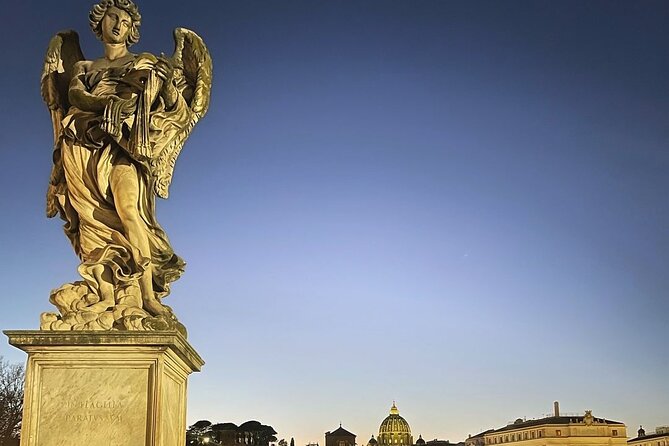
- St. Angelo Bridge: Angels, Martyrdom, and a Story While You Cross
- Castel Sant’Angelo: From Emperor Hadrian to Medieval Strength
- Via della Conciliazione and the St. Peter’s First Look
- Small Group Energy: Why This Feels Like a Walk With Real Answers
- Who Should Book This Tour (and Who Might Not Love It)
- My Take: Is This a Good Value for Rome’s Central Highlights?
- Should You Book This Piazza del Popolo and Historical Sights Walking Tour?
- FAQ
- How long is the Piazza del Popolo and Historical Sights walking tour?
- What’s the group size for this tour?
- Is the tour offered in English?
- Does the tour include a gelato break?
- Are admission tickets required at the stops?
- Where does the tour start?
- Where does the tour end?
- Is a mobile ticket provided?
- Are service animals allowed?
- What is the cancellation policy?
Key Things I’d Aim for on This Tour
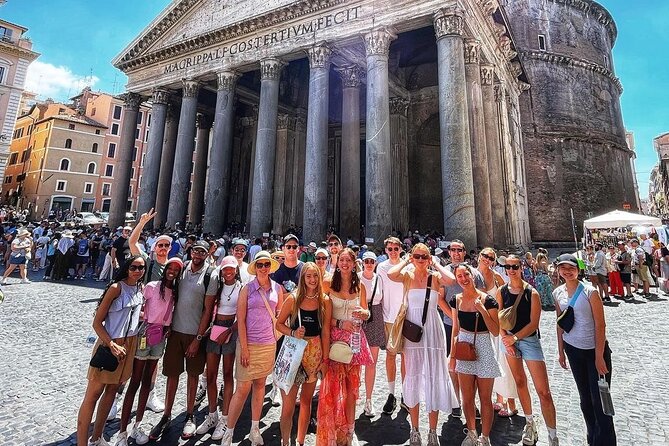
- Max 15 people means you can actually hear the guide and ask questions.
- English-speaking guides (with names like Justin, Luccio, Nick, and Claus mentioned) bring the monuments to life.
- A built-in gelato and bathroom break at Gelateria della Palma.
- A big “hit list” in one route, including Pantheon and Piazza Navona.
- Free admission is listed for each stop, so you can budget with less guesswork.
- Ending at Castel Sant’Angelo gives you a strong visual lead-in toward the Vatican area.
Why This Piazza del Popolo to Castel Sant’Angelo Walk Works
If you only have a short time in Rome, your biggest problem is time. Too many first-time itineraries either focus on one area or scatter you across the map with too many “transportation” gaps. This tour is designed for the middle of Rome: it takes you from Porta del Popolo to Castel Sant’Angelo while threading together sights that normally live in separate planning sessions.
The style is also a big deal. With a cap of 15 people, you’re not fighting for attention. The guide’s job is to help you read what you’re seeing: why these buildings were built, what power was hiding behind the stone, and how the city’s street plan connects ancient Rome to the Roman Renaissance and beyond.
And yes, it’s tip-based. That means you’re paying a small booking amount for your spot, then you decide what’s fair at the end. For a walk that hits multiple major monuments in about 2 hours 30 minutes, it can be excellent value if you’re the type who likes your sightseeing with a story attached.
You can also read our reviews of more tours and experiences in Rome.

Price, Tip-Style Value, and What You’re Really Buying
The listed price is $4.23 per person, and the tour is described as tip-based at the end. In practice, you’re buying two things:
- A guided route that saves you from map chaos and helps you connect the dots fast.
- Time efficiency—you cover a lot of iconic Rome without needing to line up separate tickets or plan five different neighborhood days.
Is it worth paying even the $4.23 booking amount? I think it usually is, because the real cost in Rome is not just money—it’s decision fatigue. A good guide makes the same monuments feel like a connected narrative instead of a series of photos.
The tip part matters too. If you like the guide and you felt you got good answers (and not just a “walk over here” lecture), you’ll likely feel good about tipping. If you don’t, you’ll still get the route and pacing, but you might want to adjust your expectations.
Starting at Porta del Popolo: The Gate That Sets the Tone
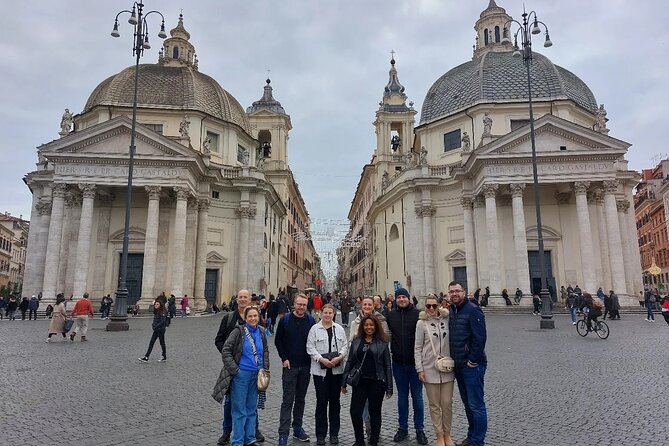
You kick off at Piazza del Popolo, specifically at Porta del Popolo, also called Porta Flaminia. This is where the walk starts to feel grounded. Instead of jumping straight into squares and domes, you begin with a piece of Rome’s gate system—literally a threshold into the city.
Why I like this start: gates are practical history. They’re about movement—arrivals, departures, control. Even if you’re not a hardcore architecture person, a gate gives you a mental framework for how Rome functioned.
This opening stop is short (about 10 minutes), which is exactly right. You get enough context to understand what comes next without losing momentum.
Piazza del Popolo: Bernini’s Twins and Ramses II’s Obelisk
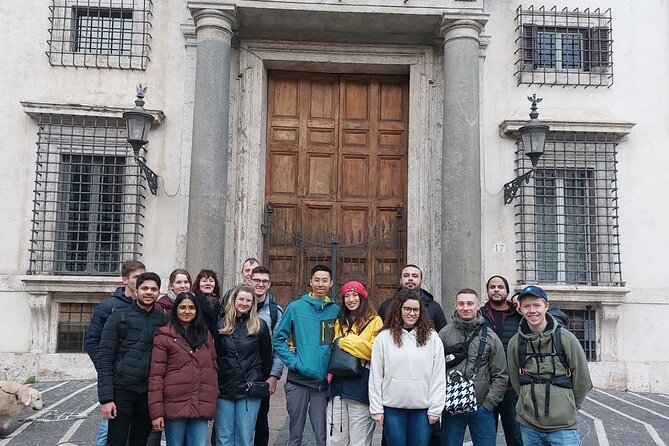
From the gate, you move into Piazza del Popolo, the kind of space where you can instantly feel the importance. You’ll see the twin churches designed by Bernini and the obelisk of Ramses II.
This stop tends to be the moment where first-timers go, okay, now I get why people talk about Rome being different from other cities. Those twin facades aren’t just decoration—they’re part of how power was displayed. And the obelisk adds another layer: it’s a reminder that Rome kept reusing, relocating, and repackaging objects from older worlds to build a sense of continuity and authority.
Time here is about 15 minutes. You won’t be standing around all day, but you’ll have enough to look up, orient yourself, and learn what to notice when you return on your own later.
Passing Augustus: Mausoleum Energy Without the Heavy Detour
Next comes a pass-by moment near the Mausoleum of Augustus, tied to Octavian Augustus, the first Roman Emperor and the founder figure for the Julio-Claudian dynasty.
A key point: you’re not promised a long museum-style visit at this stop. It’s more about orientation and historical framing—how the streets you’re walking through connect to the political backbone of Rome.
For me, this kind of stop is valuable because it answers a question you’ll have anyway: why are these emperors and families showing up everywhere? With a guide’s explanation, you stop seeing scattered monuments and start seeing patterns.

Palazzo Borghese: Power by the Facade
You then pass Palazzo Borghese, a 16th-century palace tied to the powerful Borghese family. Even without going inside, a palace like this works on you visually. It’s the kind of building that signals wealth and influence through scale, placement, and design choices.
This stop is brief (about 10 minutes), and that’s fine. The goal isn’t to tour every brick. It’s to show you how elite families left their fingerprints across the city’s fabric.
Gelateria Della Palma: The Smart Break (and Where It Helps)
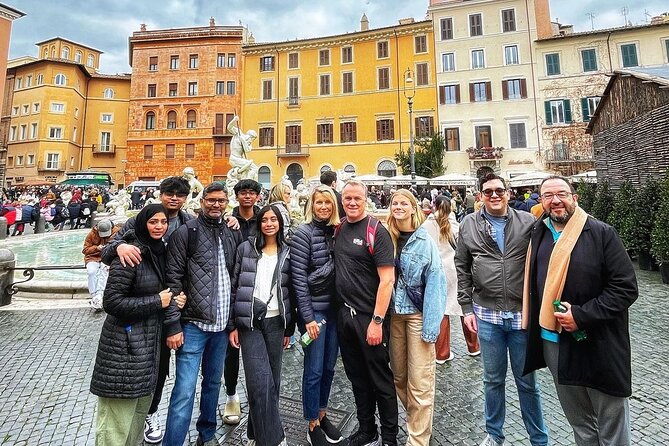
You get a stop at Gelateria della Palma—about 15 minutes—for gelato and a bathroom break.
This isn’t just a perk. It’s a practical Rome move. Even a short walking tour can turn long if you’re thirsty, tired, or desperate for a restroom. Planned breaks keep the group moving and help you enjoy the second half instead of surviving it.
Also, Gelateria della Palma is noted for offering over 150 flavours. If you love options, this is a fun moment where you can actually relax. And if you’re traveling with someone who wants food but doesn’t want a sit-down restaurant meal, this is an easy win.
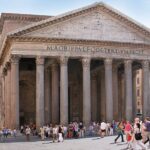
Pantheon: How to Look at It Like You Know What You’re Seeing
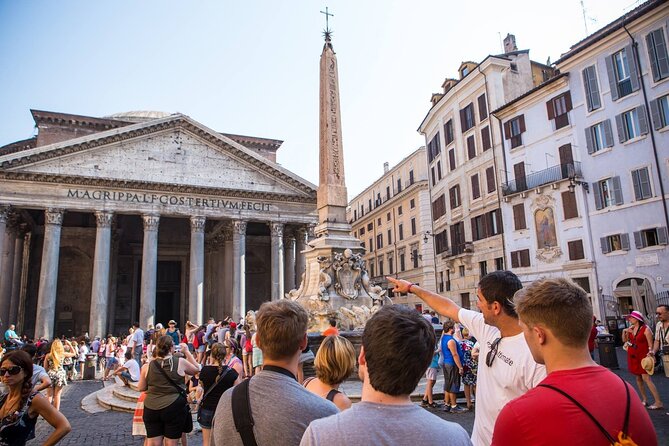
The Pantheon is one of the biggest “major stops,” with about 15 minutes allocated. It’s described as the Temple of all the gods, and the tour also points out that the bodies of Raphael and early Italian royalties are buried there.
Here’s why a guided approach is helpful: the Pantheon can look like pure spectacle if you don’t know what you’re looking for. A guide helps you anchor what’s in front of you to the larger story of Rome—religion, design, and how the space ended up meaning much more than it originally meant.
Even if you only get a short visit time, it’s enough to turn first impressions into informed ones. You’ll walk away knowing what details you can spot the next time you pass by.
Piazza Navona: From Domitian’s Stadium Shape to Street-Life Rome
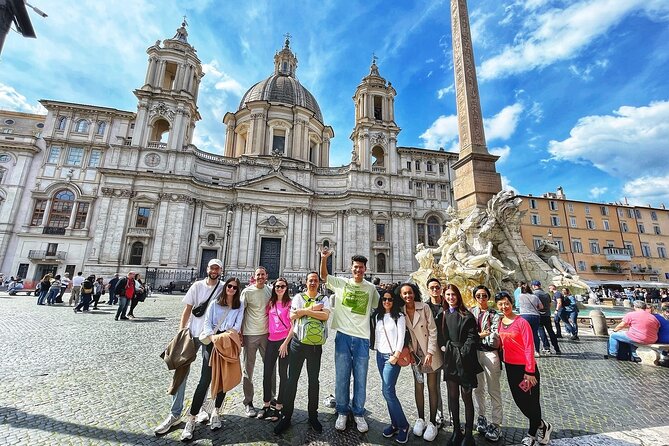
After the Pantheon, you head to Piazza Navona (about 20 minutes). The tour frames the square as being originally in the shape of the Stadium of Domitian, which is a fascinating way to read it.
This is one of those places where the layout can feel “obvious” once someone explains it. When you understand it used to be a stadium footprint, the curves and geometry start making more sense. And because you’re in a living square, it’s also a good place to watch everyday Rome happening around the monuments.
Time is generous enough to take in the space, but not so long that you lose your thread.
Via dei Coronari: Renaissance Streets and Pilgrims’ Steps
Next is Via dei Coronari, about 15 minutes. This is described as a famous street untouched from Renaissance days, where you’ll “go through the steps of the original pilgrims.”
This stop is a change of pace. You’re not in a giant showpiece square. You’re walking a corridor of Rome where history sits in the street itself. That’s a great moment for photos, but it’s also a great moment for thinking: you’re not just seeing monuments—you’re moving through the routes people used to travel.
St. Angelo Bridge: Angels, Martyrdom, and a Story While You Cross
You’ll cross St. Angelo Bridge (about 15 minutes), also called the Bridge of Angels. The tour connects the bridge to the story of the martyrdom of Christ.
Bridges are a clever part of a walking tour because they force you to pause and look both ways. And because you’re moving over the Tiber area, it can give you a natural break in attention before the final “big finish.”
Castel Sant’Angelo: From Emperor Hadrian to Medieval Strength
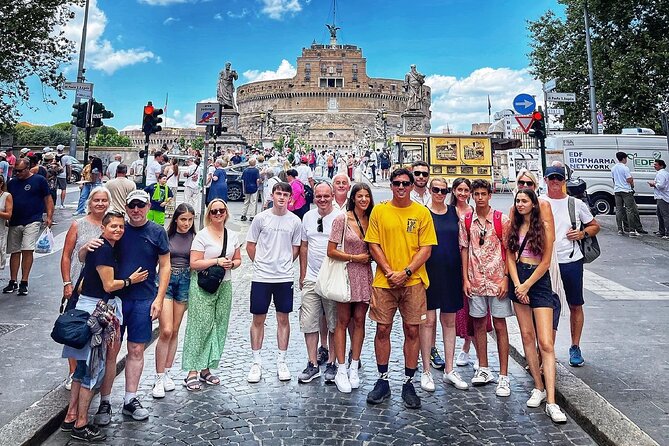
Once you cross, you reach Castel Sant’Angelo. The stop here is short (about 5 minutes), but it’s positioned for maximum effect: you’ll connect the bridge crossing to the arrival at the fortress.
The tour description notes it was originally built to host the ashes of Emperor Hadrian, and it later takes on a medieval role. Even if you don’t go deep into the interior on this short stop, you still get the point: this was a power structure built into Rome’s riverside logic.
Via della Conciliazione and the St. Peter’s First Look
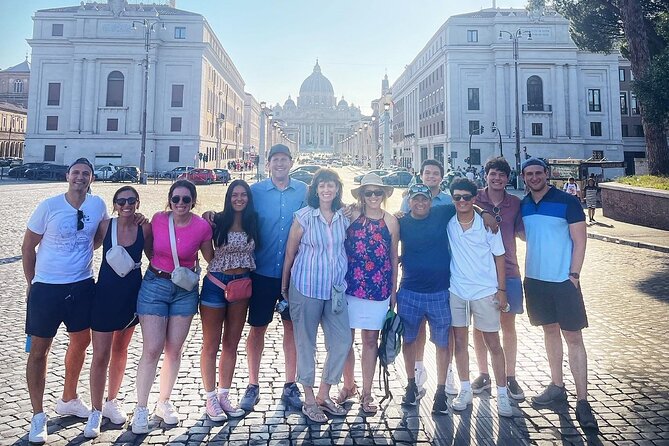
The walk concludes at Castel Sant’Angelo with views toward St. Peter’s Basilica, framed by Via della Conciliazione, described as a masterpiece by Mussolini’s architects, used as a brief introduction to the Vatican area.
This ending matters more than you might think. After a long walk of monuments, you get a big visual “reward” that helps you plan what to do next. Even if the Vatican museums and St. Peter’s are a whole separate day, your brain gets a quick map of where everything sits.
And ending outside Castel Sant’Angelo gives you a strong vantage point without forcing you into extra steps right at the close.
Small Group Energy: Why This Feels Like a Walk With Real Answers
The tour’s small size is not just a comfort detail—it’s how you get value. With a maximum of 15 people, you can ask questions without feeling like you’re interrupting a machine.
Names that show up with very high praise include Justin, Luccio, Nick, and Claus. The common thread in the feedback is simple: clear explanations, easy answers, and an engaging style that doesn’t turn into a lecture.
One practical tip that comes through in the guide style: they can help with food planning too. There’s mention of recommendations for finding better-quality meal options at reasonable prices for people with coeliac needs. So if gluten-free is part of your day, it’s smart to ask the guide directly during the gelato/route conversation.
Who Should Book This Tour (and Who Might Not Love It)
This is a great fit if you:
- want a time-saving Rome walk that covers major central highlights,
- like guided context so monuments feel connected,
- enjoy questions and conversation (not just silent sightseeing),
- want an easy way to start your week and build direction for later days.
It might be less ideal if you:
- need lots of quiet time at each stop,
- get frustrated by steady walking pace,
- prefer to control every minute yourself without a guide.
If you’re the type who likes to learn as you go, you’ll likely enjoy the pacing.
My Take: Is This a Good Value for Rome’s Central Highlights?
For $4.23 plus a tip, you’re buying something hard to replicate: a guided narrative across Rome’s core monuments in roughly two and a half hours. You’re also getting a smart mid-walk break at Gelateria della Palma, which keeps the day comfortable.
The real value is that you leave with more than photos. You leave with names and connections—like why Piazza del Popolo matters, what Augusto’s presence means for Rome’s story, and how Pantheon and Piazza Navona fit into a larger city pattern.
If you’ve ever looked at a Rome map and thought, I’ll never stitch this together alone, this tour is exactly the kind of structure that turns confusion into a clear mental route.
Should You Book This Piazza del Popolo and Historical Sights Walking Tour?
I’d book it if you want a guided, efficient way to cover the center—especially on a first or second day when your bearings are still forming. The combination of a small group, English-led explanations, and a route that hits Porta del Popolo, Piazza del Popolo, the Pantheon, Piazza Navona, Via dei Coronari, and Castel Sant’Angelo makes it a strong use of time.
Book early if you can, since it’s commonly reserved about 50 days in advance. And bring a mindset that matches the format: short stops, good explanations, then moving on—so you end the walk with a satisfying big-picture view of St. Peter’s area.
If you prefer wandering alone for long stretches, you might choose a self-guided day instead. But if you want to get oriented fast and leave with stories that stick, this one is worth your morning or afternoon.
FAQ
How long is the Piazza del Popolo and Historical Sights walking tour?
The tour lasts about 2 hours 30 minutes.
What’s the group size for this tour?
The maximum group size is 15 people.
Is the tour offered in English?
Yes, it’s offered in English.
Does the tour include a gelato break?
Yes. There’s a stop at Gelateria della Palma for gelato and a bathroom break.
Are admission tickets required at the stops?
The tour information lists admission tickets as free at each stop.
Where does the tour start?
The tour starts at Piazza del Popolo, 00187 Roma RM, Italy.
Where does the tour end?
It ends outside Castel Sant’Angelo, with a view toward St. Peter’s Basilica.
Is a mobile ticket provided?
Yes, the tour uses a mobile ticket.
Are service animals allowed?
Yes, service animals are allowed.
What is the cancellation policy?
Free cancellation is available up to 24 hours in advance for a full refund. If you cancel less than 24 hours before the start time, the amount paid isn’t refunded.