REVIEW · ROME
Piazza Navona Underground: Stadium of Domitian EXCLUSIVE TOUR – LIMITED ENTRANCE
Book on Viator →Operated by PIAZZA NAVONA UNDERGROUND - STADIO DI DOMIZIANO · Bookable on Viator
Rome hides a stadium under the piazza. Descend about 5 metres beneath street level for the UNESCO-listed Stadium of Domitian, and you’ll see how Romans shaped sports and public space long before today’s fountains. I love the wow factor of walking those underground levels that opened to the public in 2014, but I’d plan extra time because the entrance can be tricky to spot from the square.
What really makes this work is the included audio guide. With English narration (plus an audio guide for children age 6+), it explains what you’re looking at as you move through the site, so the “ruins plus walls” moment turns into real understanding. One thing to keep in mind: the first section can feel less visually dramatic than the added limited-access area.
In This Review
- Key things to know before you go
- Piazza Navona Underground: what makes the Stadium of Domitian special
- What you’ll see underground: excavations, masonry, and the geometry of the square
- Your audio guide walkthrough: the headset approach that keeps it clear
- The limited-access, VIP-style area across the street
- Time your visit: start times, how long it takes, and what to wear
- Price and value: what $18.14 buys you (and what it doesn’t)
- Meeting point reality check: why Piazza Navona can trip you up
- Who should book this Stadium of Domitian tour?
- Should you book Piazza Navona Underground? My practical call
- FAQ
- How long is the Piazza Navona Underground Stadium of Domitian tour?
- What language is the audio guide in?
- Is admission to the Stadium of Domitian underground included in the price?
- Is there an audio guide for children?
- What’s the meeting area like near Piazza Navona?
- Is the tour suitable for most people?
- Is it okay to bring a service animal?
- Can I get a refund if I cancel?
Key things to know before you go

- 5-metre descent underground into preserved excavations beneath Piazza Navona
- UNESCO-listed Stadium of Domitian with a focus on Roman sports and city life
- Audio guide experience in English, including a children’s version (age 6+)
- Only Roman arena built with brick and cement, a detail you’ll appreciate once you see the masonry
- Limited-access second area across the street that adds a bigger “VIP” feeling
- Small-site pacing with a maximum of 150 people
Piazza Navona Underground: what makes the Stadium of Domitian special
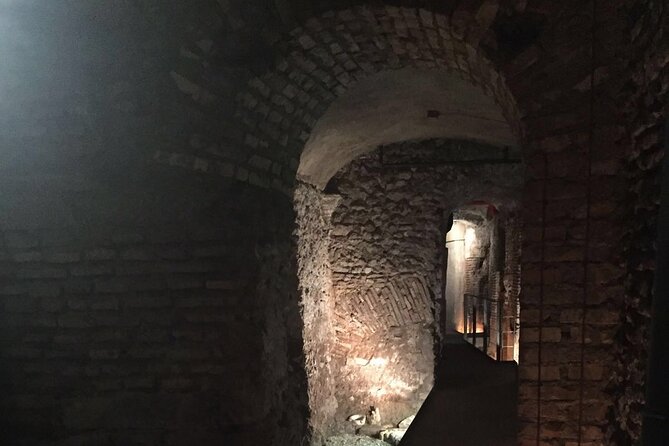
If you’ve ever wandered Piazza Navona and wondered what’s happening underneath all that stone and baroque buzz, this is your answer. This tour takes you down into the excavations under the square and focuses on the Stadium of Domitian, a UNESCO-listed Roman arena tied to how public entertainment worked in the Empire.
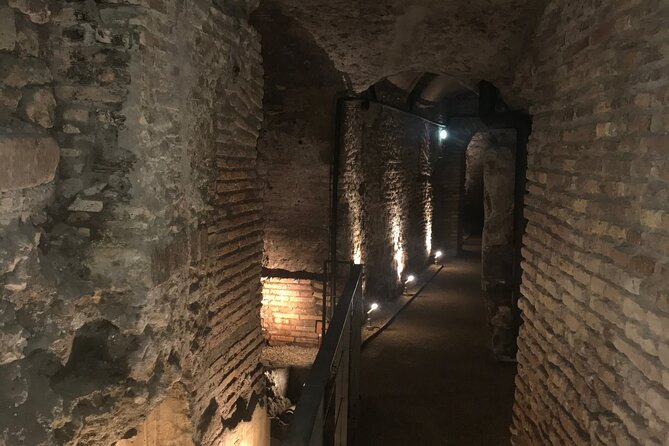
What I like most is that it’s not just a quick glance at a wall. You go down about 5 metres, into the underground levels created by the Romans and later reused as the city grew above it. That vertical change alone makes the experience feel different from most Rome sights.
Another plus: the story is tied to specific architecture. You’re learning about the arena’s construction methods, including the fact that it’s the only Roman arena built with brick and cement—an unusual engineering choice that helps explain why this site is worth preserving.
You can also read our reviews of more tours and experiences in Rome.


What you’ll see underground: excavations, masonry, and the geometry of the square
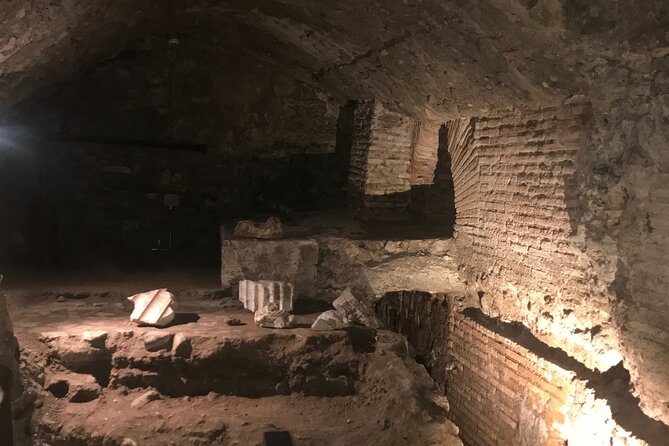
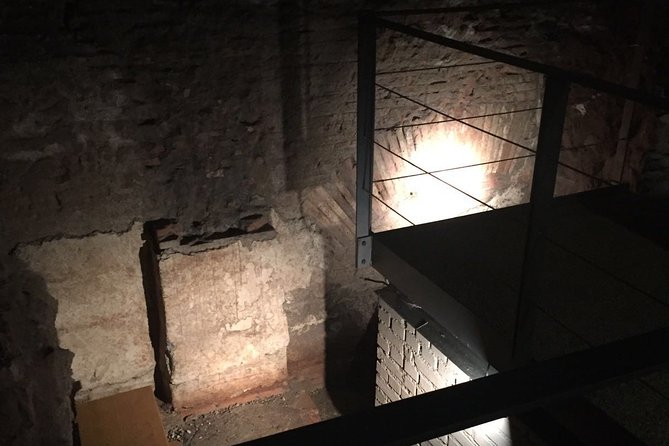
The core visit happens beneath Piazza Navona, where you’ll enter the underground levels that first opened to the public in 2014. Expect a real sense of being in an archaeological space, not a museum hall with perfect lighting and carpeted floors.
The tour highlights the stadium as the first and only masonry stadium in Roman history. That matters because you’re not just looking at “old stuff.” You’re seeing how Romans built an arena structure in masonry, and how that construction shaped what the site became as Rome continued layering new buildings over older ones.
One detail that helps you connect the dots is that the excavations are presented as belonging to the Roman Empire period. That context makes the ruins feel less random. You start thinking about how crowds moved, how sports fit into civic life, and how a place like this influenced the square above it.
And yes, some of the ruins can be spotted from the street without paying. But if you want the real layout and depth, the paid underground visit is the point. From ground level, you only get hints; underground, you get the structure and the explanations that make those hints click.
Your audio guide walkthrough: the headset approach that keeps it clear
This experience is built around an audio guide. You’re given an easy self-guided style route, and the narration is meant to keep you oriented as you pass through different areas of the site.
In practice, that headset approach is great in Rome, where many ruins are close together but information is scattered. Here, the audio guide does the job of connecting what you see to what it meant—so you don’t have to guess or rely on luck with signage.
The narration is offered in English, and there’s an additional audio guide for children age 6 and up. If you’re traveling with kids who can handle a headset, this is one of those rare Roman archaeology activities that can work for a wider age range without turning into “adult-only history.”
There’s also mention of multimedia content within the experience, including a video featuring Alberto Angela. That’s the kind of add-on that helps when the site is small: a short video can supply what your eyes might not yet understand.
The limited-access, VIP-style area across the street
Most people decide whether this tour feels worth it during the second phase. The standout part is the limited-access section that many call the VIP moment.
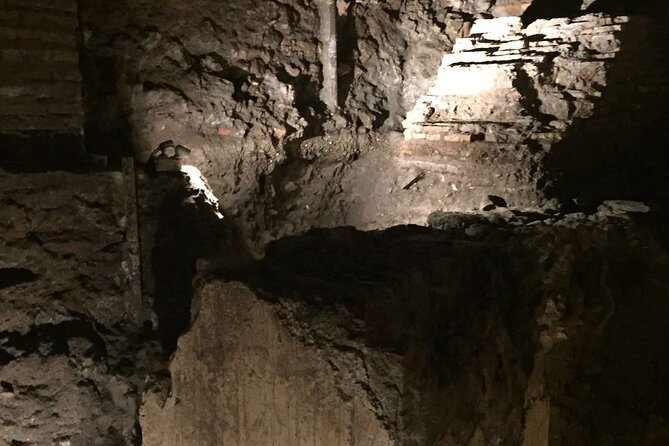
After the initial underground section, you’ll get access to a different area across the street. One review specifically notes a section under the French building, and the impression is consistent: this part adds more room, more variety, and more “I didn’t expect this” moments than the first segment.
That’s also why the pacing can feel uneven if you judge it only by the earliest stops. The first part can come off as walls and archaeology panels. Then the restricted-access areas start to pay off, and you feel like you’ve been let into something extra.
If you’re the type who likes site visits with a bit of exclusivity—without needing to fight for tickets to major attractions—this portion is the reason to go.
Time your visit: start times, how long it takes, and what to wear
The tour duration is listed at about 50 minutes to 1 hour, and many people report it taking closer to an hour and a half in real life. Plan for about an hour to an hour and a half, and don’t stack it too tightly against another appointment.
You’ll find morning and afternoon start times, which is helpful in Rome. If you’re trying to avoid peak midday heat, the underground setting makes the summer walk less miserable. Even when it’s warm up top, you’re descending underground.
Wear comfortable walking shoes. It’s an archaeological visit with stairs and uneven surfaces in a subterranean space. The tour is meant for most people, but sensible footwear keeps the whole experience smoother.
Group size is also part of the comfort equation. There’s a maximum of 150 travelers, so it’s not a private tour, but it shouldn’t feel like a herd either.





Price and value: what $18.14 buys you (and what it doesn’t)
At $18.14 per person, the value comes from what’s included. Your ticket includes admission to the underground Stadium of Domitian site and the audio guide (including the children’s version), plus taxes. You’re not paying extra to enter once you’ve arrived.
What’s not included is also clear. There are no hotel pickup or drop-off services, and food and drinks aren’t provided. If you’re doing this in the middle of a sightseeing day, you’ll want to handle snacks and water on your own plan.
There are also add-ons available on site, like DVD and souvenir photos. If you like bringing home tangible proofs, factor in a little extra spending time after the tour.
Meeting point reality check: why Piazza Navona can trip you up
Piazza Navona is huge—so if your directions only say Piazza Navona, you can end up walking in circles. One of the most practical takeaways here is that the entrance to the underground site can be hard to locate, with the entry point described as narrow compared to the size of the square.
My advice: arrive a few minutes early and treat finding the entrance as part of the experience. Once you’re on the right side, the tour itself is straightforward. But the first challenge is getting to the correct door from street level.
If you’re easily stressed by navigation, this is the one place where that stress can steal your enjoyment. Give yourself time, and you’ll reach the underground portion calm instead of annoyed.
Also, the ticket is a mobile ticket, so you don’t need to worry about printing. Just make sure your phone battery is healthy.
Who should book this Stadium of Domitian tour?
I think this fits best if you:
- want an underground Rome experience that feels different from the usual church-and-colosseum circuit
- like learning through a strong audio guide rather than relying on written panels
- are curious about how Romans built arenas, especially the brick-and-cement masonry angle
- want a more varied visit thanks to that limited-access second area across the street
- are traveling with kids age 6+ who can follow an audio headset
It’s also a good choice if you prefer a shorter commitment. Even with the occasional longer pacing, you’re not spending half your day on a tour.
Should you book Piazza Navona Underground? My practical call
Book it if you want to trade some surface sightseeing for a real sense of Rome layered over itself. The combination of a 5-metre underground descent, the specific focus on the Stadium of Domitian, and the included audio guide makes this a strong use of time near Piazza Navona.
Skip or reconsider if finding the entrance would make you anxious. This tour is easy once you’ve located the correct entry, but the first step can cost you patience if you’re rushing.
If you’re flexible, you can usually cancel for free up to 24 hours before the start time—so it’s not a huge risk to place this on your plan.
FAQ
How long is the Piazza Navona Underground Stadium of Domitian tour?
The tour runs about 50 minutes to 1 hour.
What language is the audio guide in?
The experience is offered in English, with an audio guide included.
Is admission to the Stadium of Domitian underground included in the price?
Yes. Admission ticket is included with your tour purchase.
Is there an audio guide for children?
Yes. There is an audio guide for children age 6 and above.
What’s the meeting area like near Piazza Navona?
It’s in the Piazza Navona area, but the entrance can be difficult to find because the site entry is not obvious from the general square.
Is the tour suitable for most people?
Most people can participate. Comfortable walking shoes are recommended.
Is it okay to bring a service animal?
Yes. Service animals are allowed.
Can I get a refund if I cancel?
You can cancel for a full refund if you cancel at least 24 hours before the experience’s start time.