REVIEW · ROME
Rome: City Highlights Walking Tour
Book on GetYourGuide →Operated by City Walkers Tours · Bookable on GetYourGuide
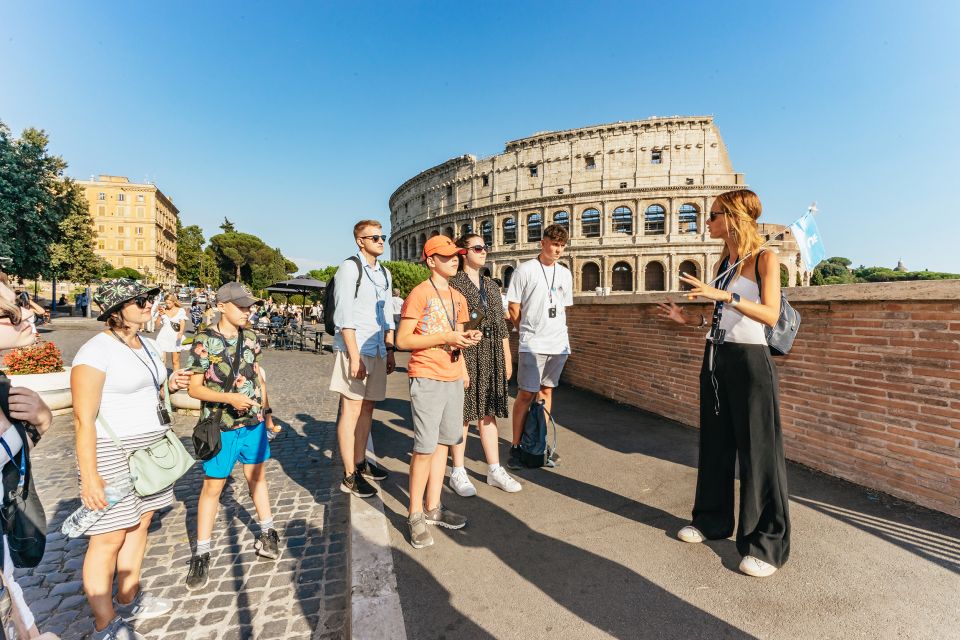
Rome gets clearer when you walk it. This guided highlight tour strings together Roman and Baroque Rome in a tight route, starting at ancient Trajan’s Market and finishing at the iconic Trevi Fountain, with stops that explain what you’re actually seeing.
I especially like how the tour balances the big-name sights with the smaller story behind places like the Jewish Ghetto. You also get outside views of landmarks like the Pantheon, without rushing through ticket lines or trying to decode Roman history on your own. One thing to consider: it’s rain or shine and it’s a solid 2.5-hour walking stretch, so it’s not ideal if you need low-impact access.
In This Review
- Quick highlights that matter
- Trajan’s Market: the smart opening move
- Piazza Venezia and the Vittorio Emanuele monument stop
- The Jewish Ghetto of Rome: context you can actually walk through
- Campo de’ Fiori to Piazza Navona: squares with strong visual cues
- Pantheon and Hadrian’s Temple: what you see from the street
- Trevi Fountain finish: the Baroque finale with a payoff
- What I’d expect in real life: pace, comfort, and timing
- Guide quality: where this tour really earns its money
- Price and value check for $41
- Who should book this walking tour (and who should skip it)
- Should you book this Rome City Highlights Walking Tour?
- FAQ
- How long is the Rome City Highlights Walking Tour?
- Where do I meet the guide?
- What are the main sights on this walking tour?
- Is entry into the monuments included?
- What’s included in the price?
- Is the tour wheelchair accessible or suitable for mobility impairments?
- What should I bring for the tour?
- Does the tour run in bad weather?
- Are there any restrictions on the tour?
Quick highlights that matter
- Trajan’s Market start sets the ancient tone fast, right where the city’s layers begin
- Outside-only monument stops means you’ll focus on photos, viewpoints, and stories over entrances
- Jewish Ghetto time gives context in a part of Rome many visitors skip
- Pantheon to Trevi arc moves you from classic Rome to Baroque spectacle
- Headphones if needed help you catch the guide even in noisy squares
- Guide personality comes through in reviews, with guides like Brian, Monica, and Fabio praised for answering questions
Trajan’s Market: the smart opening move

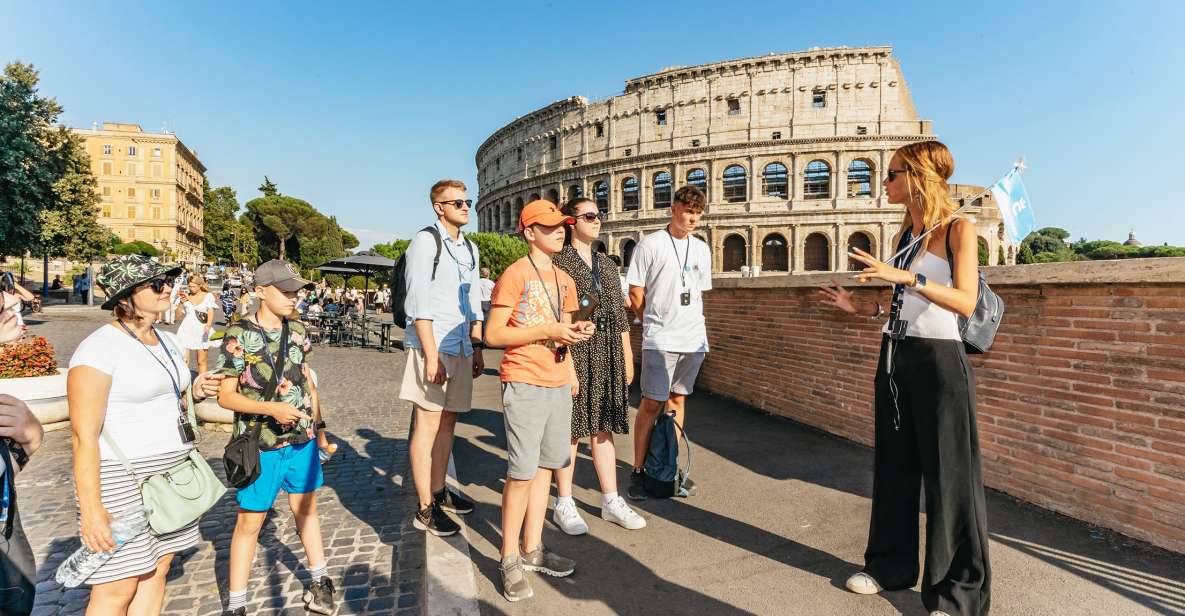
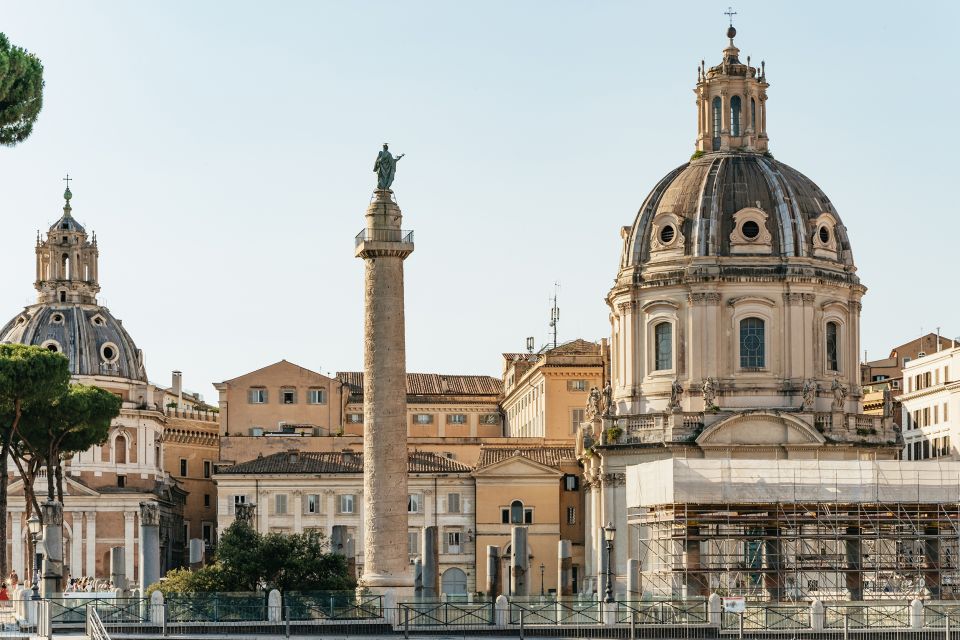
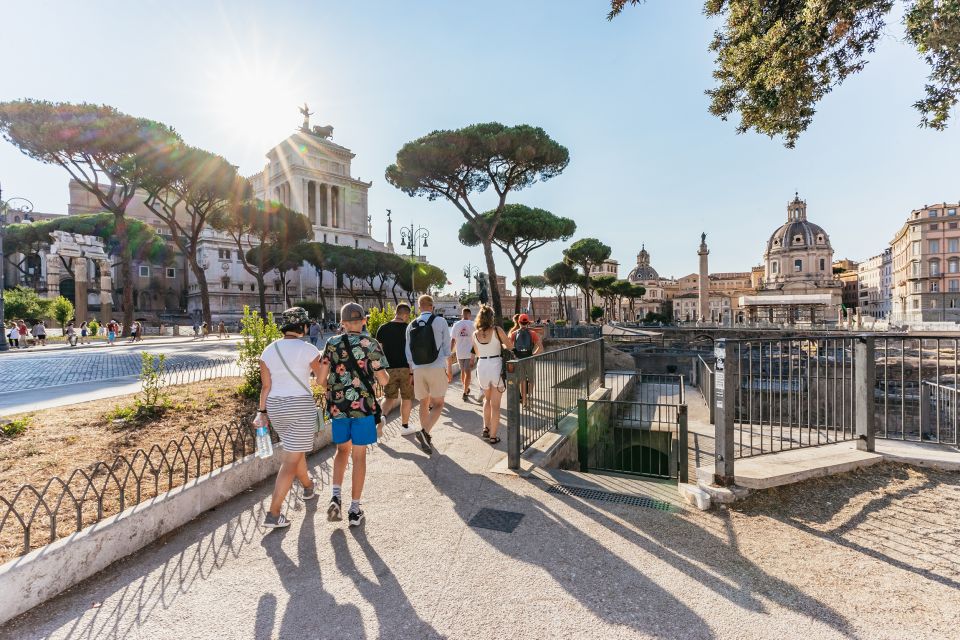
The tour kicks off at Colonna Traiana n 84, with the guide holding a City Walkers sign. From there, you begin at Trajan’s Market, an ancient Roman market built in the 2nd century AD. Even if you’ve seen Rome photos before, starting here helps you understand that the city didn’t just grow upward—it grew outward in layers.
What I like about an opening like this is how it reframes the day. Instead of treating Rome as a list of famous stops, you start with a “how did they build and live here” moment. And because the tour is explained from the outside, you can keep your eyes up and your feet moving instead of budgeting time for entrances.
You can also read our reviews of more tours and experiences in Rome.


Piazza Venezia and the Vittorio Emanuele monument stop
Next comes Piazza Venezia, one of Rome’s best-known squares, and a natural crossroads for how different eras sit side-by-side. The square is home to multiple historic buildings, including the Vittorio Emanuele monument. It’s an area where you feel how Rome can be both grand and complicated.
This is a good point in the walk to slow down and look closely at how the monuments relate to the street grid around them. You’ll get history tied to what you’re physically standing beside—useful because Rome’s “who built what” can get mixed up fast when you’re doing it solo.
The Jewish Ghetto of Rome: context you can actually walk through
Then you shift into the Jewish Ghetto, a smaller area of Rome dating back to the 16th century. On a highlights tour, this stop matters because it’s not just another postcard location. It’s a chance to understand how communities shaped the city, and how the city shaped them back.
One practical perk: because you’re walking at ground level, you’ll notice how the neighborhood scale feels different from the huge showpiece plazas. You also get a guided explanation in plain terms, rather than trying to piece together facts from signage while dodging crowds. If you want your Rome day to include more than emperors and fountains, this stop helps balance the story.
Campo de’ Fiori to Piazza Navona: squares with strong visual cues
After the Ghetto, you walk to Campo de’ Fiori, a central square known for its street market stalls. You don’t just pass through it—you get time in the middle of it, so you can see what makes the square a natural gathering point. Think of it as Rome’s social rhythm: commerce, chatter, and people-watching, all tied to where locals actually spend time.
From there, you head to Piazza Navona, famous for Baroque-style fountains and sculptures. This is where the tour leans into drama. Baroque design is meant to be seen from multiple angles, and with a guide narrating the why behind the shapes, it lands better than it would as a quick “nice fountain” photo stop.
If your Rome instinct is to treat every stop like a checklist item, Navona is a nice correction. The architecture asks you to look around, not just straight ahead.
Pantheon and Hadrian’s Temple: what you see from the street
The tour then reaches the Pantheon, described as one of the best preserved ancient Roman monuments. You’ll see it from the outside, and that detail matters. Yes, you’ll miss interior time—but you gain something in return: more time for context and less time getting stuck in lines.
The Pantheon is also a perfect hinge point between eras. You’ve been moving through squares and Baroque theatrics, and suddenly you’re back in the kind of Roman building that still feels engineered for centuries of use.
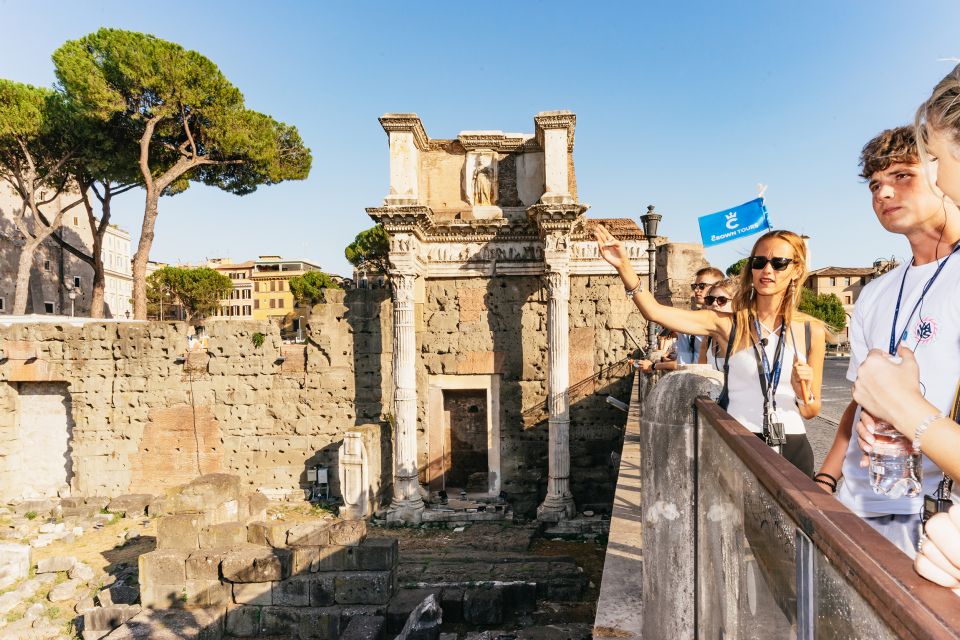
Next is Hadrian’s Temple, noted as the last of the great temples built in the city. This stop helps you broaden the Roman side beyond one famous building. You start noticing how religious, political, and architectural ambition show up as a repeated theme across the route.
Because the tour keeps things outside-only, I’d treat this as a “see the main story clearly” day, not an all-access museum day. If you want interiors later, you’ll know exactly what to prioritize.


Trevi Fountain finish: the Baroque finale with a payoff
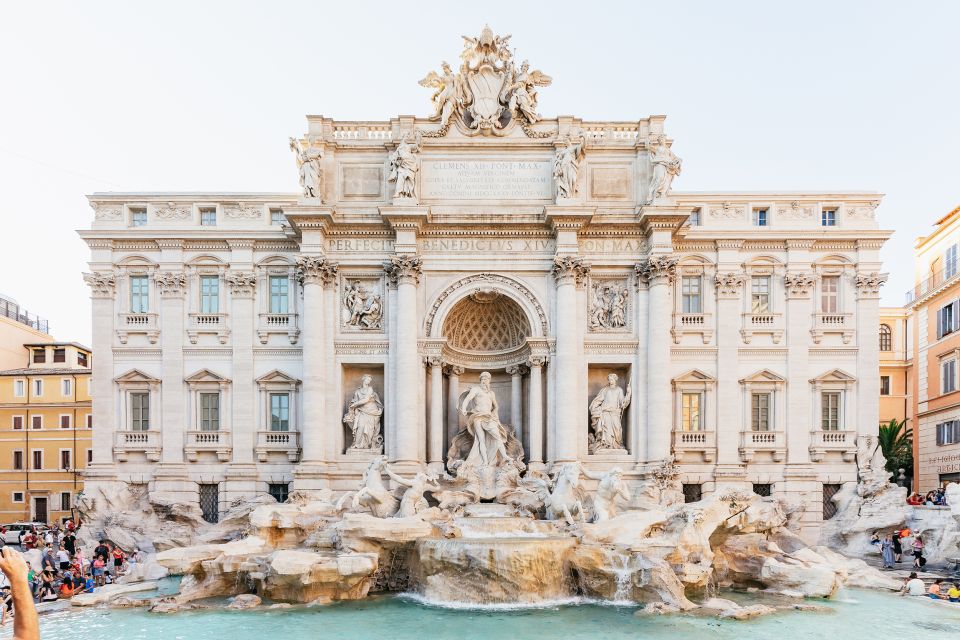
The walking tour ends at Trevi Fountain, the iconic Baroque masterpiece that’s famous worldwide. Finishing here is smart, because it turns your final stop into a payoff. You’ll arrive with stories in your head about Rome’s evolution from classic forms to Baroque showmanship, and the fountain reads differently when you understand the era behind it.
This is also a spot where your brain will likely want to do two things at once: get the photo and keep listening. Take a moment to look beyond the obvious crowd-shot framing. Baroque fountains are designed to feel like motion, and the stonework tells you where the drama is meant to happen.
One more practical note: because you’re finishing at Trevi, you can use the last moments to plan your next move. The area is central, so it’s a decent launch pad for the rest of your day.
What I’d expect in real life: pace, comfort, and timing
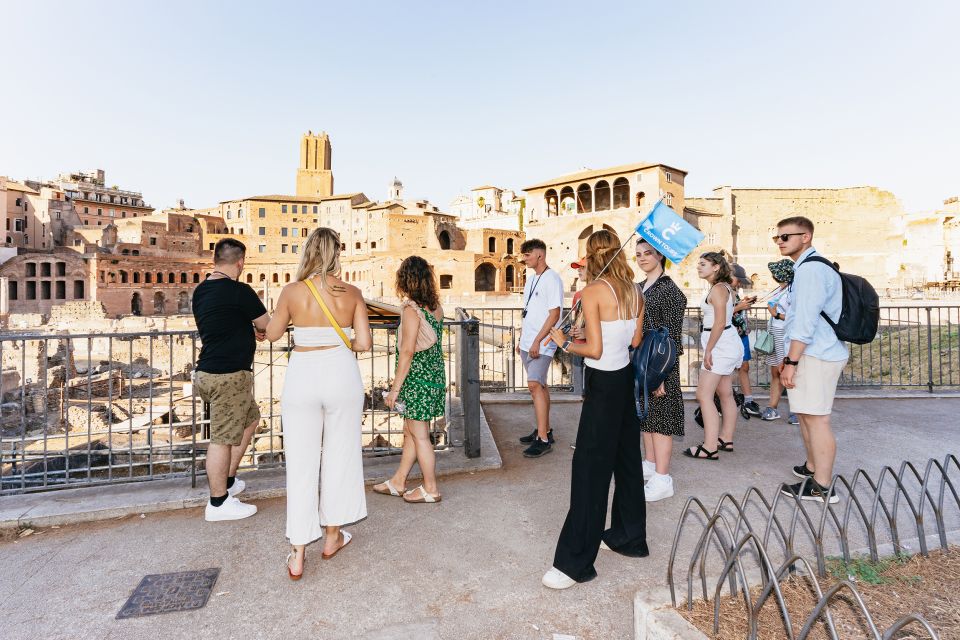
This is a 2.5-hour walking tour, and it covers a strong list of major landmarks plus the Jewish Ghetto and multiple squares. Reviews point out the walking can feel like a lot if you’re not used to it, so wear shoes you can trust. The tour also runs rain or shine, so bring weather-proof layers even if the forecast looks friendly.
You’ll want comfortable clothes, water, and sunscreen. That sounds obvious, but Rome sun can be sneaky, and you’ll be out long enough for it to matter.
Also note: you can’t use the tour as a building-entry plan. The monuments are explained from the outside, with no entries into buildings. If you’re hoping to spend time inside the Pantheon, for example, this isn’t that kind of tour.
Guide quality: where this tour really earns its money
At $41 per person for 2.5 hours, the value isn’t just the route—it’s the human layer on top. Reviews consistently highlight that guides are friendly, personable, and good at answering questions. Names like Brian, Monica, and Fabio show up in feedback praising how they make the city feel simpler to understand.
One review even notes how the guide encouraged questions and kept the tour moving at a pace that still felt unhurried. Another mentions the guide made people feel welcomed and safe. That’s not fluff. In Rome, where streets twist and history is everywhere, a guide who can explain clearly and adjust to your questions changes the experience.
I’d especially look for this if you’re visiting for the first time. You get a framework for what to notice afterward, without needing to study guidebooks the night before.
Price and value check for $41
Let’s talk money plainly. For $41 per person, you’re paying for:
- a local guide for 2.5 hours
- headphones (if needed)
- a structured route that hits major sights plus at least one meaningful detour (the Jewish Ghetto)
You’re not paying extra for building tickets because the tour focuses on outside views. For many first-time visitors, that’s a smart way to manage time in a city where ticketed attractions can eat hours. If you’re already planning to see interiors separately, this works well as your “orientation + highlights” day.
If you’re expecting a low-effort bus-style experience, the cost won’t feel worth it. But if you’re happy walking and you want your sights explained rather than guessed, $41 is a fair deal.
Who should book this walking tour (and who should skip it)
This is a strong fit if you:
- want a first-time Rome orientation
- like history explained in a way that matches what you’re standing beside
- enjoy photo stops with context, not lectures
- want a guide who answers questions and keeps the day fun
It’s less ideal if you have mobility impairments, since the tour isn’t suitable for that. It’s also not the best choice if you want interiors or hands-on access inside monuments, since the stops are outside-only.
One more small consideration: the meeting point at Colonna Traiana n 84 can be a little tricky if you’re arriving late or distracted. The guide is holding a City Walkers sign, so look for that instead of trying to match landmarks from memory.
Should you book this Rome City Highlights Walking Tour?
Yes, if your goal is to get your bearings fast and leave with a clearer story than you started with. The mix of major icons like the Pantheon and Trevi Fountain, plus the Jewish Ghetto stop, gives you more than a basic photo loop.
Book it if you value an engaging guide and you’re comfortable with 2.5 hours of walking in rain or shine. Skip it if you need low walking time, require building entry time, or can’t handle outdoor walking for this long.
In short: this is a practical Rome sampler with real explanations, and it’s priced like something designed for smart, independent travelers—not for people who want shortcuts.
FAQ
How long is the Rome City Highlights Walking Tour?
The tour lasts 2.5 hours.
Where do I meet the guide?
Meet your guide at Colonna Traiana n 84. The guide will be holding a sign/flag with the City Walkers logo.
What are the main sights on this walking tour?
You’ll visit the Trevi Fountain, Pantheon, Jewish Ghetto, Monument to Victor Emmanuel II, plus other notable stops such as Trajan’s Market, Piazza Venezia, Campo de’ Fiori, and Piazza Navona.
Is entry into the monuments included?
No. The tour explains monuments from the outside, with no entry into buildings.
What’s included in the price?
A live English-speaking guide is included, and headphones are included if needed.
Is the tour wheelchair accessible or suitable for mobility impairments?
No. The tour is not suitable for people with mobility impairments.
What should I bring for the tour?
Bring sunscreen, water, and comfortable clothes with weather-appropriate layers.
Does the tour run in bad weather?
Yes. The tour takes place rain or shine.
Are there any restrictions on the tour?
Drones, alcohol, and drugs are not allowed.