REVIEW · ROME
Rome Morning Vespa Sidecar Tour in Rome with Cappuccino
Book on Viator →Operated by Vespa Sidecar Tour · Bookable on Viator
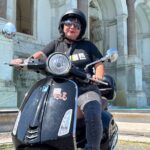
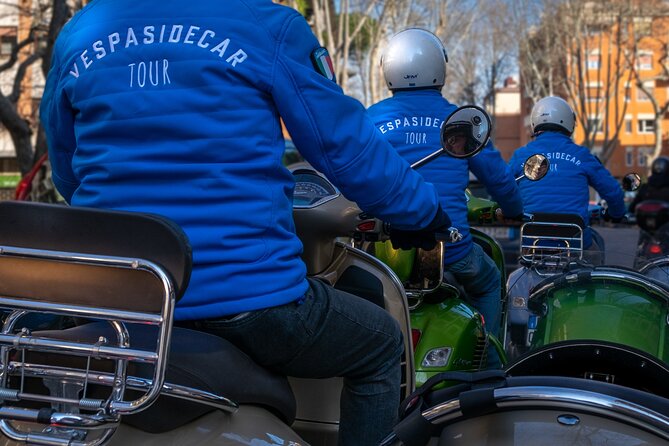
Morning in Rome, minus the stress. A Vespa sidecar tour lets you glide past major landmarks without wrestling traffic or parking, and it’s paired with cappuccino-and-cornetto fuel and an expert guide riding with you through the day’s top stops.
What I really like is how you get live commentary through audio headsets. That means you’re not straining to hear over engines and other groups. You also get a tight morning route that hits around twelve must-sees, with lots of quick photo moments along the way.
One fair consideration: this is a weather-driven ride. The tour requires good weather, so if conditions are poor you may need to switch dates or take a refund rather than forcing it outdoors.
In This Review
- Quick take: what makes this morning Vespa tour work
- Why a Vespa Sidecar Feels Like Rome’s Fast Lane
- Cappuccino and Cornetto Before the Big Landmarks
- Audio Headsets That Keep the Story Clear
- Piazza della Repubblica to Quirinale: Getting Oriented in Minutes
- Trevi Fountain and the Pantheon: Two Stops You Don’t Want to Miss
- Piazza Navona and St Peter’s Square: Rome’s Big Theater Moments
- Terrazza del Gianicolo: A Calm Pause with Real Views
- Cruising Past the Jewish Ghetto and Old Neighborhood Alleys
- Vittoriano and the Unknown Soldier: National Rome in One View
- From the Colosseum Symbol to Santa Maria Maggiore’s Quiet Weight
- Price and Value: What $163.26 Buys You in Real Terms
- Who This Tour Fits Best (and Who Might Skip)
- Should You Book This Rome Vespa Sidecar Tour with Cappuccino?
- FAQ
- How long is the Rome morning Vespa sidecar tour?
- What time does it start, and where do we meet?
- What breakfast is included?
- Is Pantheon admission included?
- Do I need to drive the Vespa?
- What’s the group size limit?
- Are there any limits for children or pregnancy?
- FAQ
- What language is the tour offered in?
- What if the weather is bad?
Quick take: what makes this morning Vespa tour work
- You ride passenger-first, with professional drivers doing the driving and parking headaches.
- Audio headsets keep the story clear as you pass landmarks and neighborhoods.
- Breakfast is included: traditional cappuccino plus cornetto.
- Pantheon entrance is included, so you don’t just look at it from outside.
- The group is kept small, with a maximum of 12 travelers, which helps the pace feel human.
Why a Vespa Sidecar Feels Like Rome’s Fast Lane
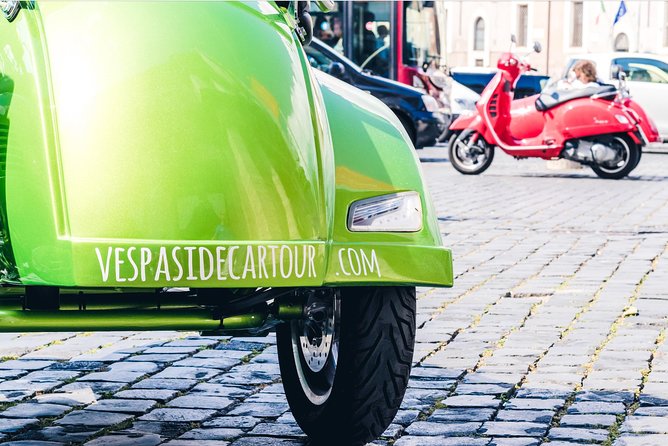
Rome is gorgeous, but it can be a lot. Busy streets, one-way chaos, and the constant question of where to start. This tour solves the problem with one simple idea: you don’t drive, you don’t navigate, you just ride.
A licensed guide narrates with live commentary, while you sit back in the sidecar. The vibe is part sightseeing, part little street-level adventure. You’ll pass iconic monuments up close and at speed, without the slow churn of a big bus.
And the best part is pacing. In about three hours, you’ll cover a ton of ground across different neighborhoods. It’s a great way to get your bearings fast—then you can come back later on foot for the deeper wanderings you choose.
You can also read our reviews of more tours and experiences in Rome.
Cappuccino and Cornetto Before the Big Landmarks
You start with breakfast included: a traditional cappuccino and cornetto. That’s not just a perk. It makes a difference because your morning is packed with standing, walking short bits, and photo stops.
In Rome, a breakfast break is a real ritual. Getting a proper cappuccino-and-cornetto start also helps you handle the rhythm of a tour day. Instead of burning energy waiting in line for coffee, you’re fueled before you hit the main sites.
If you’re the type who likes a clean start, this works. It’s an easy win before Trevi, the Pantheon, and that long list of famous squares and viewpoints.
Audio Headsets That Keep the Story Clear
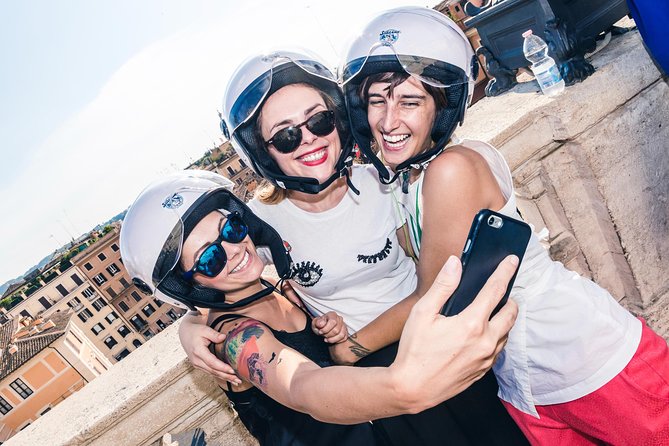
Most classic city tours fail in one way: sound. You end up half-listening or craning your neck to catch the guide’s voice. Here, you get headphones from the start, tuned to live commentary.
That means you can actually listen while you’re rolling through the city. You also don’t have to play guess-the-significance when you’re passing buildings in a fast moving lane of traffic.
You’ll also pick up guide names in people’s experiences—Luca, Matteo, Claudio, Barbara—because the narration is personal. The drivers—Alessandro, Manuel, Massimo—get singled out too, which is a good sign for safety and smooth navigation.
Piazza della Repubblica to Quirinale: Getting Oriented in Minutes
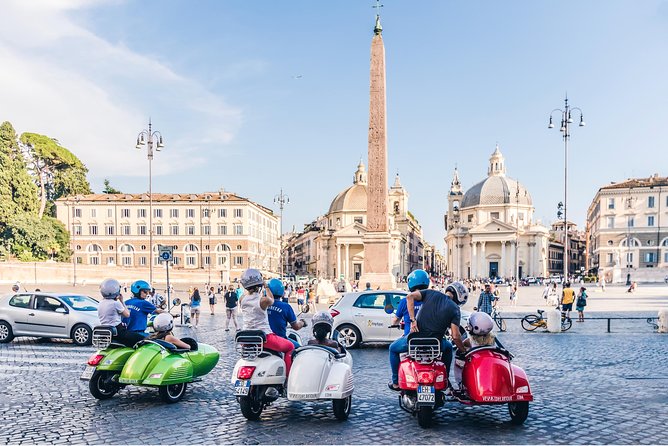
The tour begins at Piazza della Repubblica, 41, and the first stop sets the tone right away. Piazza della Repubblica is tied to Rome’s transformation after it became the capital. The roundabout layout, the fountain, and the mix of grand buildings give you an immediate sense of how Rome “organizes” big spaces.
The fountain here is Fontana delle Naiadi. It’s one of those spots where a short pause pays off because the scale feels theatrical even in photos.
Next comes Palazzo del Quirinale on Quirinal Hill, one of Rome’s most important power buildings. It’s known as a current official residence of the President of the Italian Republic. You’re not going to tour the interior here, but the storytelling helps you place what you’re seeing in Italy’s political timeline—from papal history to modern state roles.
Trevi Fountain and the Pantheon: Two Stops You Don’t Want to Miss
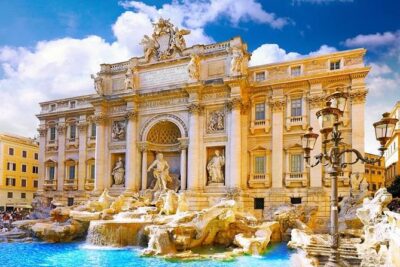
Trevi Fountain is where people go to say they were in Rome. It’s also where you learn something beyond the postcard.
Trevi is huge—about 20 meters wide by 26 meters tall—and its roots stretch back to ancient aqueduct planning. The guide context matters because it turns a crowded moment into a meaningful one. Also, the tour timing gives you a straightforward photo window without the full day-long slog.
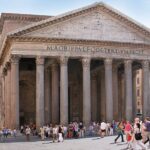
Then you hit the Pantheon, and this is where the value becomes real. The Pantheon entrance is included. It’s also one of the best-preserved ancient structures in Rome, completed around 126 AD, and famous for the oculus that brings daylight into the interior.
This is a “stand and look up” site. If you’ve only seen images, seeing it in person usually changes the scale in your mind. And because admission is covered, you avoid extra tickets and waiting that can drain your trip.

Piazza Navona and St Peter’s Square: Rome’s Big Theater Moments
From there, you roll into the city’s most dramatic public squares.
Piazza Navona sits on the footprint of an ancient stadium, and the Baroque architecture makes the whole area feel like it’s been staged for centuries. The focal points are the fountains, including Bernini’s Fountain of the Four Rivers. Even if you only linger briefly, you’ll feel the energy of a square designed for crowds.
After that, you move toward the Vatican area for St Peter’s Square (Piazza San Pietro). It’s one of the most famous squares on Earth and sits at the base of St. Peter’s Basilica. The scale is difficult to describe until you’re standing where the space was built to hold huge crowds—over 300,000 people.
If you want a quick, guided snapshot rather than a long, self-guided day around the Vatican, this fits.
Terrazza del Gianicolo: A Calm Pause with Real Views
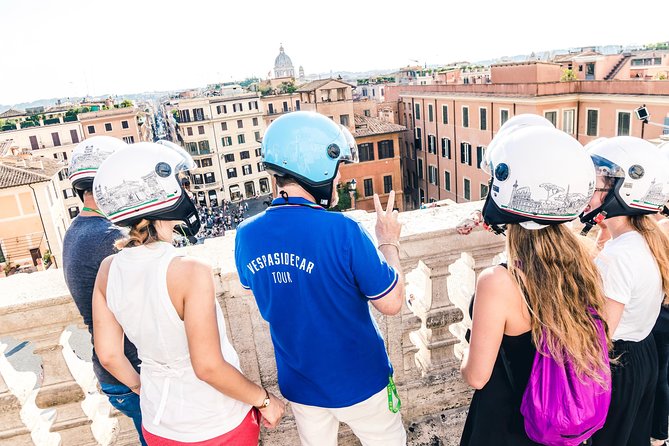
One of the smartest stops on this route is Terrazza del Gianicolo on Janiculum Hill. Rome is intense at street level. Up here, it softens.
Janiculum is often called the eighth hill, and it’s close to the center but feels more relaxed than the downtown crush. The paths and sculptures tied to historical defense of the city add texture to the walk. You get a panorama that’s built for the kind of photos that don’t need filters.
It’s also a chance to reset after the famous squares. Your morning turns from “photo, photo, photo” into “walk slowly and look outward.” If your group needs a breather, this is that moment.
Cruising Past the Jewish Ghetto and Old Neighborhood Alleys
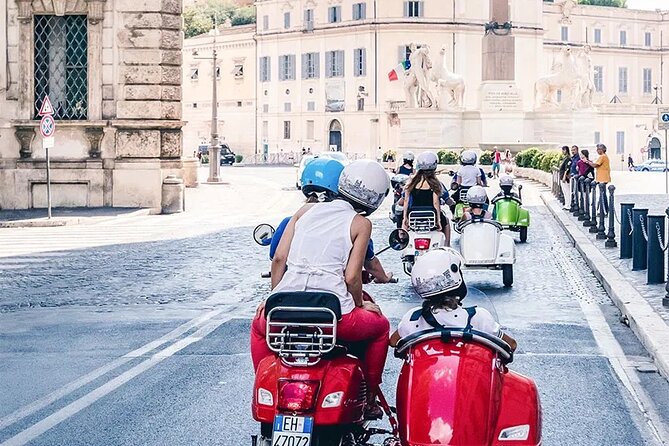
Not every highlight is a named monument. Part of the appeal of this tour is the sense that you’re moving through authentic Rome street life.
You’ll pass through neighborhoods with character—small alleys and areas associated with the Jewish Ghetto. The drive-by approach works because it shows you the shape of the city: tight lanes, sudden openings, and local squares that feel woven into everyday life.
It’s also one of the best ways to understand how Rome neighborhoods “connect.” Later, when you’re walking on your own, those turns will make more sense.
Vittoriano and the Unknown Soldier: National Rome in One View
Next you come to Monumento Nazionale a Vittorio Emanuele II, often called Altare della Patria, in Piazza Venezia. It’s imposing in the way only major monuments can be in Rome: you can’t really ignore it.
The story is tied to Italy’s unification and Victor Emmanuel II. Inside, there’s a museum focused on the Risorgimento—Italy’s movement toward unification. And the monument holds the tomb of the unknown soldier with an eternal flame, guarded by two soldiers.
Even if you don’t go inside, the viewpoint is a key reason this stop works. You’ll see Rome’s layering—centuries stacked into one view.
From the Colosseum Symbol to Santa Maria Maggiore’s Quiet Weight
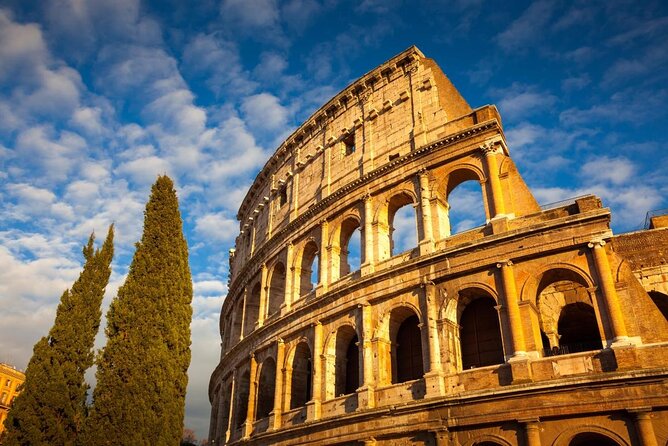
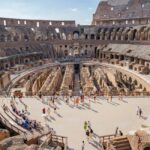
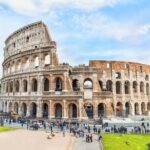
Then you roll toward the Colosseum, Rome’s most recognizable symbol. You don’t just pass it—you get the tour context that explains why it matters as more than a big oval in your travel photos.
The Colosseum represents Roman public life and empire-scale ambition. With millions visiting every year, it can feel like just another tourist stop. Guided narration changes that quickly.
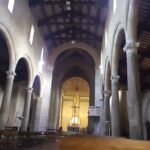
Finally, the route includes Basilica di Santa Maria Maggiore, one of Rome’s four major basilicas and known for its dedication to the Virgin Mary. It’s older and weightier than the squares, which gives your morning contrast. A big monument is loud; a basilica is quiet but lasting.
By the time you’re finished back at the starting point, you’ll feel like you’ve seen different “modes” of Rome: empire, faith, government, and everyday streets.
Price and Value: What $163.26 Buys You in Real Terms
At $163.26 per person for about three hours, you’re paying for three things that often cost extra when you do Rome alone:
- Transport and driver labor: the tour handles the Vespa logistics, so you don’t stress about traffic or parking.
- Guide narration plus audio gear: live commentary through headsets means you spend less time figuring out what you’re seeing.
- A real entry ticket: Pantheon admission is included.
When you add those together, the price starts to make sense. You’re not just buying a ride; you’re buying efficient access to multiple top sites in a short window.
Also, the small group limit (max 12 travelers) helps keep your experience from feeling like a cattle line.
Who This Tour Fits Best (and Who Might Skip)
This is a strong match for:
- First-time visitors who want an efficient introduction across Rome
- People who hate walking long distances in the morning heat or want less map anxiety
- Families with kids minimum age 5 (and seating rules apply: younger than certain height stays in specific seating, taller kids can sometimes sit behind the driver)
- Anyone who wants a break from self-guided “where do I go next?” decisions
It’s not a great fit for:
- Pregnant travelers (not permitted)
- Anyone who’s uncomfortable riding as a passenger on a scooter-like vehicle
- Anyone expecting a slow, museum-style schedule rather than quick landmark moments
One extra comfort note from past riders: on cooler or wet days, some people have reported being offered comfort items like a hot water bottle and blanket. That’s not guaranteed for every departure, but it’s a sign the team thinks about rider comfort.
Should You Book This Rome Vespa Sidecar Tour with Cappuccino?
If you want a morning plan that’s fast, fun, and actually organized, I’d book it. The combination of headsets, a licensed guide, a cappuccino-and-cornetto breakfast, and Pantheon entrance included is a strong package for the time.
If you’re worried about weather or you hate the idea of riding in traffic, keep your expectations realistic. This is not a quiet walking tour. It’s a live, moving city experience.
If you’re trying to choose between a bus day and something more personal, this typically wins. You get closer views than you do from a big window, and the storytelling makes the stops feel connected instead of random.
FAQ
How long is the Rome morning Vespa sidecar tour?
The tour runs for about 3 hours.
What time does it start, and where do we meet?
It starts at 9:00 am. The meeting point is Piazza della Repubblica, 41, 00185 Roma RM, Italy.
What breakfast is included?
Breakfast with traditional cappuccino and a cornetto is included.
Is Pantheon admission included?
Yes. Entrance to the Pantheon is included in the tour.
Do I need to drive the Vespa?
No. You ride as a passenger. Professional drivers handle driving and parking.
What’s the group size limit?
The tour has a maximum of 12 travelers.
Are there any limits for children or pregnancy?
Children must be at least 5 years old. Pregnancy is not permitted.
FAQ
What language is the tour offered in?
The tour is offered in English.
What if the weather is bad?
The tour requires good weather. If it’s canceled due to poor weather, you’ll be offered a different date or a full refund.