REVIEW · ROME
Rome: Private/Group 4 Hours Golf Cart SightseeingTour
Book on Viator →Operated by Rome in golf cart · Bookable on Viator
Rome is best seen at speed, in style. This 4-hour Rome golf cart tour helps you beat the crowds while keeping your eyes up for unblocked views of major sights without killing your feet. I love the smart pacing that gives you enough time to look around and get photos, and I love having a local guide behind the wheel so you can spend more of the ride actually seeing Rome. The only drawback to plan for is that it is weather-dependent, so you may need a backup date if conditions are bad.
You’ll start near Piazza della Trinità dei Monti and spend the afternoon moving through squares, ancient ruins, and postcard viewpoints. The tour works well for first-timers, and it also feels efficient for people with only a day or two. I also like the human touch you hear in guide names like Valerio, Eduardo, Francesco, Michael, Achille, and Pierre: they tend to time stops for photos and questions, not just a fast drive-by.
In This Review
- Quick highlights (what you’ll notice fast)
- Why a Rome Golf Cart Tour Is Perfect for a Tight Schedule
- Meeting at Piazza della Trinità dei Monti and the Hotel Pickup Advantage
- Pantheon Stop: Your Orientation Anchor Without Ticket Stress
- Piazza Navona: Baroque Drama in a Short, Sweet Window
- Trevi Fountain for 30 Minutes: Time to Do It Right
- Forum Romanum and Teatro di Marcello: Quick Ancient Stops That Still Matter
- Viewpoints Over Circus Maximus, Palatine Hill, and the Colosseum Arena
- Via Giulia and Its Michelangelo Connection: The Backstreet Moment You’ll Remember
- Piazza di Spagna Stairs and the 20-Minute Sweet Spot
- Circo Massimo and the Big-Field Feeling of Ancient Rome
- How This Tour Handles Tickets, Entrances, and Your Planning
- Cost and Value: Is It Worth $168.09 for 4 Hours?
- What to Wear and Expect: Short Walks, Lots of Looking, Photo Moments
- Should You Book This Rome Golf Cart Tour?
- FAQ
- How long is the Rome golf cart sightseeing tour?
- Where does the tour start and end?
- Is hotel pickup available?
- What are some of the main stops on the route?
- Are entrance tickets included for the attractions?
- Do I need to bring ID?
- What if some monuments are under restoration during the Jubilee?
- What happens if the weather is bad?
- Is the tour private?
Quick highlights (what you’ll notice fast)
- Fast, photo-friendly pacing that keeps you moving while still giving real moments at each stop
- Guides who act like Rome insiders (from Valerio and Eduardo to Achille and Michael)
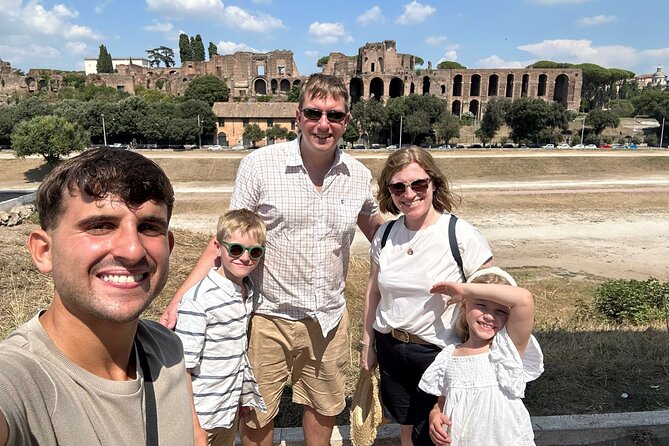
- Great viewpoint time over the Colosseum area, plus Circus Maximus and Palatine Hill
- Backstreet add-ons like Via Giulia, the Renaissance-era street people usually miss on foot
- Easy energy level: you see a lot while avoiding the full-day walking grind
Why a Rome Golf Cart Tour Is Perfect for a Tight Schedule
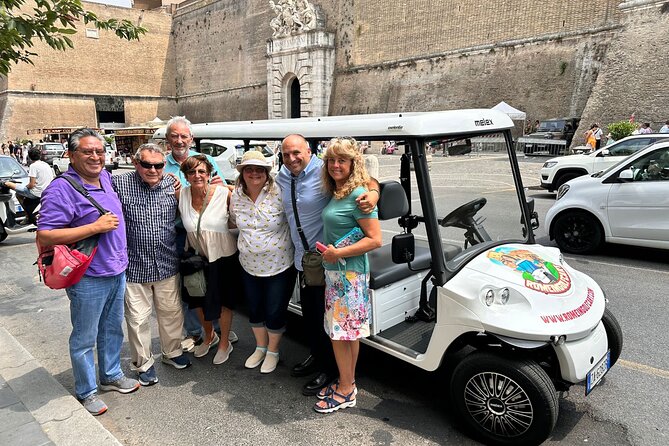
Rome is huge, and on foot you burn time just crossing neighborhoods and waiting to refind your bearings. A golf cart changes that math. You move quickly between sights, and because you are not constantly walking, you can actually enjoy the stops instead of rushing through them with tired legs.
This is also a good fit for first-time visitors because it gives you the broad map of the city. You get the big landmarks you expect, but you also get the angles that explain how Rome connects: squares to fountains, ruins to viewpoints, hills to the ancient stadiums. That matters because Rome only makes sense after you see how the pieces relate.
It is offered as a private tour/activity, so you are traveling with your group only. If you pick the group option, you might still end up split across multiple carts, which is exactly the kind of practical setup that helps a larger group move together without getting stuck.
You can also read our reviews of more tours and experiences in Rome.

Meeting at Piazza della Trinità dei Monti and the Hotel Pickup Advantage
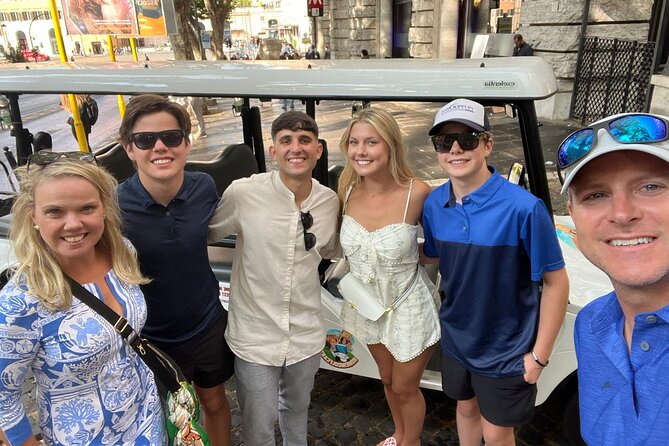
Your tour starts at Piazza della Trinità dei Monti (near the Spanish Steps area). The activity ends back at the same meeting point, so you are not left trying to solve transit after your tour.
The big convenience is pickup: the operator can pick you up from your hotel if it’s in the downtown area. That removes one of the usual Rome headaches—finding the exact meeting spot while you are already juggling arrival time, luggage, and streets that do not behave like a grid.
If you are staying just outside the downtown zone, plan to get yourself to the meeting point. The good news is that the location is near public transportation, so it is not an island.
Pantheon Stop: Your Orientation Anchor Without Ticket Stress
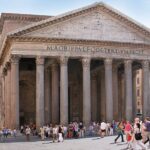
The tour includes a stop at the Pantheon area. The time you spend here can be a quick orientation moment rather than a long, ticket-heavy block, and that is useful when your goal is to get your bearings fast.
Admission to attractions is not included, so treat this as a look-and-learn stop. If you want to go inside, you’ll need tickets separately. The upside is you are not forced into a long line-and-wait pattern during your first 4 hours, which keeps the rest of the route feeling relaxed.
Piazza Navona: Baroque Drama in a Short, Sweet Window
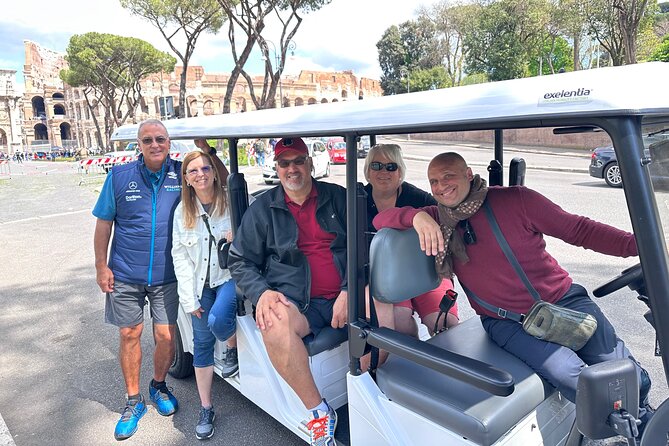
Next up is Piazza Navona, with about 15 minutes on the schedule. This square packs a lot in a small footprint: classic Roman street life, dramatic architecture, and fountains that dominate the scene.
Fifteen minutes sounds short, but on a golf cart route it is enough. You can stroll the perimeter for photos, take in the atmosphere, and move on without losing momentum. The main thing to watch for is timing: keep your camera ready because the best photo angles in this area are usually at the edges of the square, not while you stand directly in the busiest center.
Trevi Fountain for 30 Minutes: Time to Do It Right
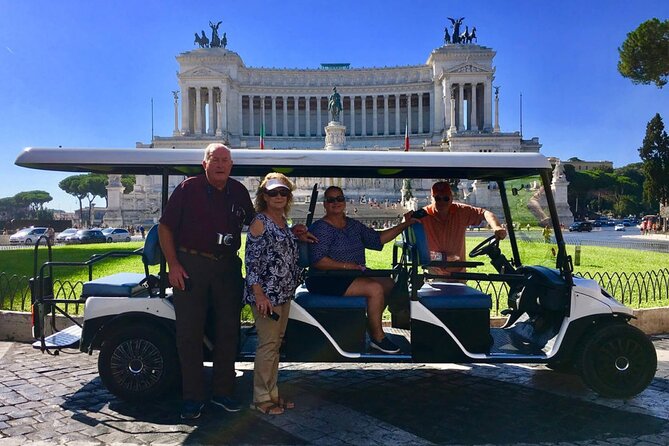
Trevi Fountain gets a longer stop—about 30 minutes. That is smart. Trevi is famous, and part of the experience is simply dealing with the flow of people while you decide where you want your picture.
With half an hour, you can:
- Take your main photo
- Walk a bit to find a calmer perspective
- Pause for a closer look at the details
Tickets are not required, since it’s a public fountain area, so your time stays flexible. This stop often becomes a highlight because it feels like the Rome you pictured, yet you are still riding between other major sites instead of getting stuck only in one place all day.

Forum Romanum and Teatro di Marcello: Quick Ancient Stops That Still Matter
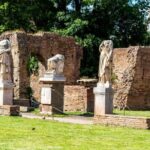
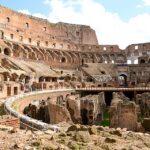
The route then hits Foro Romano (Roman Forum) for about 15 minutes, with admission not included. This is a strong use of time because the Forum is one of those places where even a short visit helps you understand what you are seeing later at other viewpoints. But if you want to go deeper inside the ruins, you will need your own ticket plan.
One important note for the Forum and Colosseum area: each traveler must have a valid ID card or document matching the name used at booking for successful entry. This is not something to wing. If your name on your ID does not match exactly, you may run into problems with entry, so check before you arrive.
Right after that, you stop at Teatro di Marcello for about 10 minutes. It is often described as the Colosseum little brother, and the nickname is not just marketing. It gives you another angle on Rome’s theater culture, and it also sits in a spot that lines up well with the walk-through feel of nearby neighborhoods—right around the beginning of the Jewish quarter.
Teatro di Marcello is free to enjoy from the outside, and the short stop works because it keeps the energy moving while still adding context. If you’re the kind of traveler who enjoys ruins but hates spending hours stuck in one large site, this route style will fit you well.
Viewpoints Over Circus Maximus, Palatine Hill, and the Colosseum Arena
Some of the most memorable parts of this tour happen between stops, during viewpoint time. You get a stop with a panoramic view overlooking Circus Maximus and Palatine Hill. This is the kind of angle that helps you grasp how Rome worked as entertainment and power: massive spaces, big sightlines, and hills framing the city.
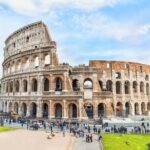
There is also an “amazing stop” designed for the Colosseum area. The goal is clear—get you a view that makes it possible to understand the scale, then make it easy to take great pictures. Several guides in the reviews emphasize photo time, and that matches what this route is built for.
Palatine Hill itself is described as the center of the seven hills of Rome and the oldest nucleus of the Roman Empire. Even if you only get a limited window here, the payoff is mental. You stop, look, and suddenly you can connect the ancient story to where everything sits in the modern city.
Via Giulia and Its Michelangelo Connection: The Backstreet Moment You’ll Remember

Then comes one of my favorite types of stops on this route: the kind you usually only see by wandering off the main track. Via Giulia is a top backstreet stop (about 10 minutes), and the tour description ties it to Michelangelo, calling out the Renaissance-era design.
The value here is that it feels like Rome, not just like sightseeing. You see courtyards and Renaissance-era buildings in a way that is hard to replicate if you only stay on the big, obvious roads.
Also, since this is an on-board-only highlight in spirit—meaning you get perspectives from the cart that walking tourists often miss—it becomes a nice reset after the heavier ancient segments. You move from ruins and grand squares into streets that feel more lived-in.
Piazza di Spagna Stairs and the 20-Minute Sweet Spot
Piazza di Spagna is next, with about 20 minutes. This area is all about charm, and the famous staircases are the reason most people show up. Twenty minutes gives you time to get the classic shot, then circle around to enjoy the streets that lead off it.
This stop is also helpful for logistics. By the time you reach Piazza di Spagna, you’ve already covered a lot of Rome’s core sites. The pacing shift here makes your afternoon feel balanced instead of monotonous.
Admission is free for the area, so your time stays focused on photos and wandering, not ticket lines.
Circo Massimo and the Big-Field Feeling of Ancient Rome
Circo Massimo (Circus Maximus) gets about 10 minutes. This site is a chariot-racing stadium and was the first and largest of its kind in ancient Rome. Even in a short stop, you can feel why it was such a powerful entertainment venue: the space is wide, the history is loud, and it is easy to imagine the scale.
If you like the “place in your mind” side of travel, Circo Massimo is one of the best stops on the route. You look at the ground and suddenly the stories from history class start to make physical sense.
How This Tour Handles Tickets, Entrances, and Your Planning
At several key points, admission is not included. That includes places like the Pantheon stop and the Roman Forum stop. Teatro di Marcello and several scenic stops are free to enjoy from the street or viewpoint areas.
So the practical way to plan is:
- Decide what you truly want inside vs outside
- Budget for any separate entry tickets you want
- Keep your ID ready for the Colosseum and Roman Forum requirement
The tour experience itself stays strong even if you treat some stops as exterior or viewpoint time. That is one reason this route is so popular for people doing Rome fast: it still feels full even without turning the afternoon into a ticket marathon.
Cost and Value: Is It Worth $168.09 for 4 Hours?
At about $168.09 per person for roughly 4 hours, this is not the cheapest way to see Rome. The value comes from what you gain for that cost: time saved, less walking fatigue, and guided routing that gets you to multiple major sights without you acting like your own dispatcher.
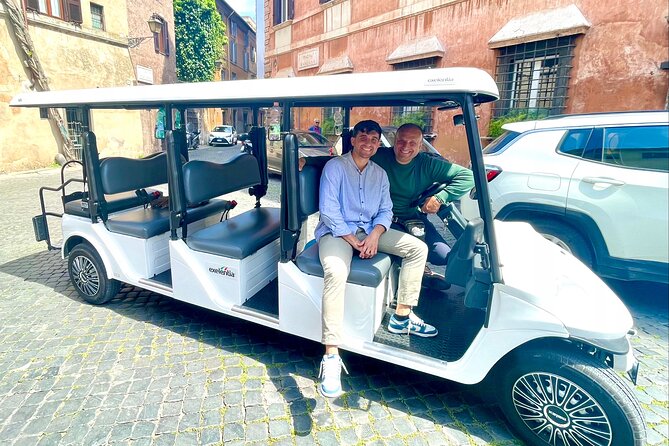
Also, the guide is both professional and fun, and they drive the cart. That means you do not spend mental energy navigating tight streets or traffic while you are trying to enjoy the scenery. In reviews, guides like Valerio, Eduardo, Francesco, Michael, and Achille are praised for striking the balance between information and letting you actually look and photograph.
If you are traveling as a couple or a small family, you may find the price becomes more reasonable when you compare it to multiple separate paid activities, taxis, and the time cost of walking everywhere. If you are solo and you enjoy long, free wandering, you might decide you do not need a cart. But if you want an organized overview with momentum, this price is easier to justify.
What to Wear and Expect: Short Walks, Lots of Looking, Photo Moments
This kind of sightseeing tour is mostly “ride and pause,” not “walk and hike.” You will still move around at each stop, but it is manageable rather than punishing.
Dress for the weather. The tour requires good weather, and that is consistent with how comfortable and scenic it is when you can see clearly. Bring a light layer if your day runs cool, and keep water nearby even if food and drinks are not included.
For photos, set your expectations right: you will get plenty of chances to stop and take pictures, including high-value viewpoints over Colosseum-area scenery and Circus Maximus. If you want iconic shots at Trevi Fountain, you’ll have the time to work for them rather than grabbing one and sprinting away.
Should You Book This Rome Golf Cart Tour?
Yes, if your priorities are a high-quality overview, time efficiency, and seeing viewpoints you might miss on foot. This works especially well for first-time visitors, travelers with limited time, and families who want to keep kids energized without turning Rome into a long endurance event.
If you are the type who loves slow wandering and you already planned a full day for tickets, you might choose to skip a guided overview. Also, because entrance tickets are not included for key stops, you should decide ahead of time whether you want to go inside the Pantheon and the Roman Forum areas.
If you do book, do it with one mindset: use this afternoon to learn how Rome is laid out. Then, let your next day visits be more focused because you already understand the city’s big relationships.
FAQ
How long is the Rome golf cart sightseeing tour?
The tour lasts about 4 hours.
Where does the tour start and end?
It starts at Piazza della Trinità dei Monti in Rome and ends back at the same meeting point.
Is hotel pickup available?
Pickup is offered from your hotel if it is located downtown.
What are some of the main stops on the route?
You’ll visit major sights such as Piazza Navona, Fontana di Trevi, Foro Romano, Teatro di Marcello, viewpoints over Circus Maximus and Palatine Hill, Via Giulia, Piazza di Spagna, and Circo Massimo, plus a stop connected with the Pantheon.
Are entrance tickets included for the attractions?
No. Entrance to the attractions is not included, including stops like Pantheon and Foro Romano.
Do I need to bring ID?
Yes. Each traveler must present a valid ID card or document that matches the name provided at booking for successful entry for the Colosseum and Roman Forum.
What if some monuments are under restoration during the Jubilee?
Some monuments may be under restoration due to the Jubilee, so pay attention to any messages you receive about potential changes.
What happens if the weather is bad?
The experience requires good weather. If it is canceled due to poor weather, you’ll be offered a different date or a full refund.
Is the tour private?
It is listed as a private tour/activity, meaning only your group participates.