REVIEW · ROME
Rome: Trevi Fountain and Underground Guided Tour
Book on GetYourGuide →Operated by Touriks · Bookable on GetYourGuide
Rome hides a working aqueduct under Trevi. This short guided visit connects the fountain myths you see above with archaeology underfoot, often explained with humor by guides like Mario, Francesca, or Anestis. You get the full Trevi Fountain experience in one compact plan: quick surface storytelling, then a temperature break underground.
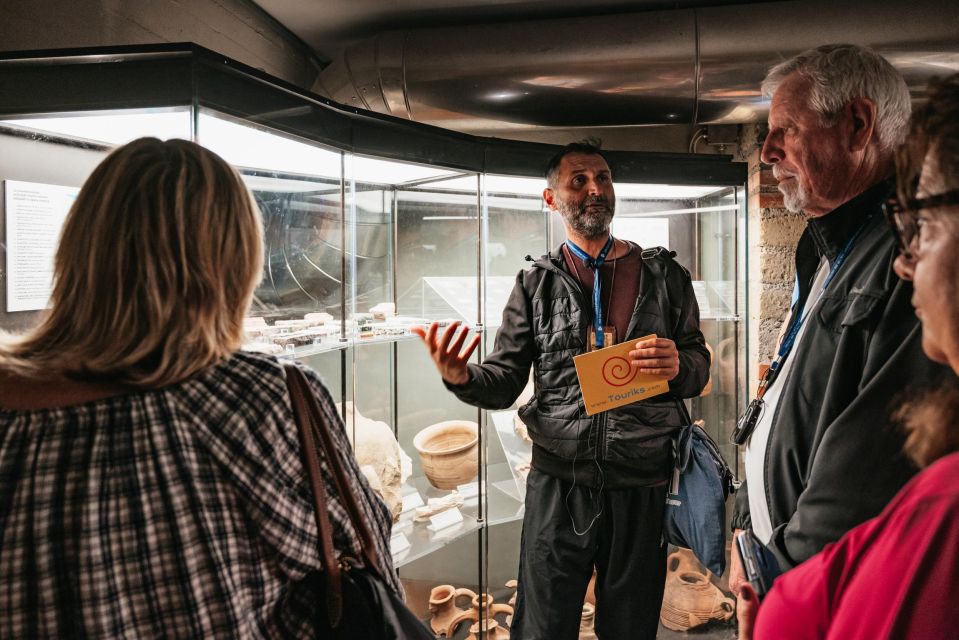
I especially love the 9-meter descent to see the ancient water system in action and hear how it served Rome over centuries. I also like the pacing and the audio help—headsets mean you can follow the guide’s story even in a crowded piazza, and the tone works well for families too.
One drawback to factor in: you can’t just stroll into the restricted fountain basin area. If you want that close-up, there’s a €2 fee, and the guide will steer you to a great public viewing point instead.
In This Review
- Key things you’ll notice during the tour
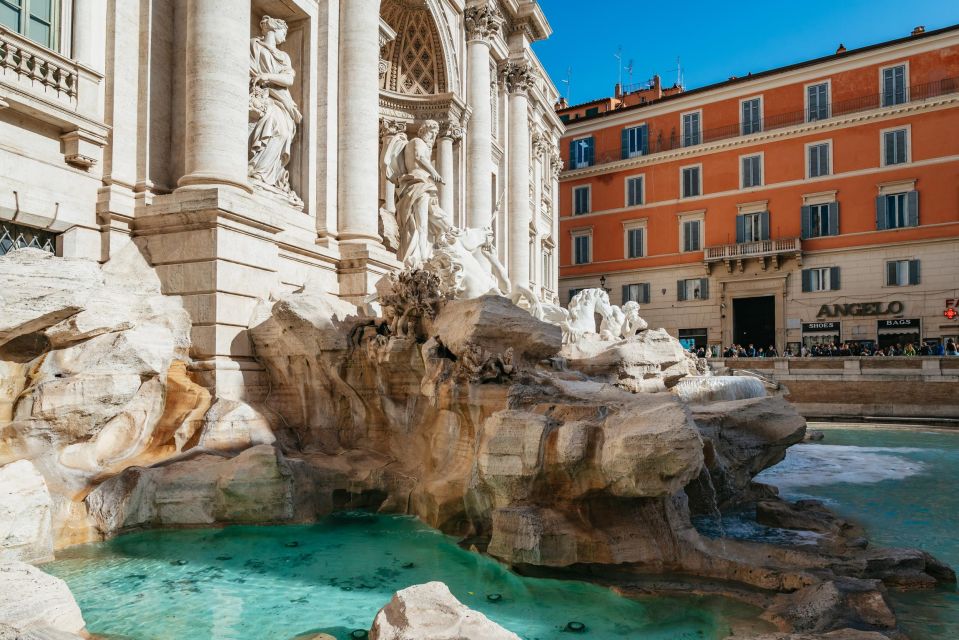
- Trevi Fountain myths at street level: what your guide makes you see
- Where to meet: finding the TOURIKS label at Piazza di Trevi
- The 9-meter underground aqueduct: the main event
- Vicus Caprarius ruins and the imperial Domus beneath modern streets
- Interpreting the Trevi Fountain figures: more than decoration
- Time and value: is $41 worth a quick 40 minutes?
- What to bring and how to plan your day around it
- Who this tour suits best (and who might want a different plan)
- Should you book the Trevi Fountain and Underground Guided Tour?
- FAQ
- How long is the Rome Trevi Fountain and Underground guided tour?
- Where do I meet the guide for the Trevi Fountain underground tour?
- How deep do I go underground during the tour?
- Is access to the restricted basin area included?
- What languages are available for the live guide?
- Does the tour include headsets and underground entrance fees?
Key things you’ll notice during the tour
- 9 meters underground to view a fully functioning ancient aqueduct that still supplies water to the fountain above
- Vicus Caprarius ruins and an imperial Domus you can’t spot from street level
- Headsets included, which makes the short tour feel much longer (in a good way)
- Trevi Fountain iconography explained so the statues stop being just pretty stone
- A quick, guided hit that’s easier than piecing this together solo in the busiest tourist block
- Best viewing from the piazza, since the restricted basin area is extra (and not part of the standard stop)
Trevi Fountain myths at street level: what your guide makes you see

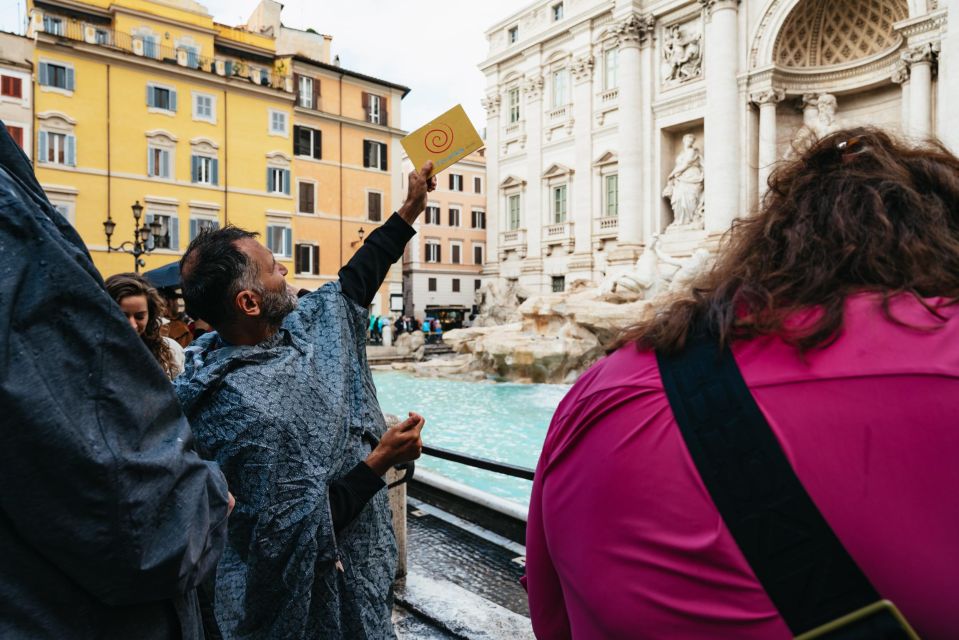
Trevi Fountain looks like a single masterpiece, but it’s really a layered message in stone. Your guide starts you at street level where the figures, scenes, and symbolism all have a job to do, not just decoration value.
This surface part moves fast—think “get your bearings fast”—so you understand what you’re looking at before you leave it behind. If you’ve ever wandered around Trevi with a camera and felt like you missed the point, this is the antidote. The stories connect the artwork to Rome’s real priorities: water, power, and public spectacle.
A big plus is how the guides keep the information digestible. In particular, you’ll hear clear explanations from guides who have a knack for answering lots of different questions without losing the thread—Anestis, for example, is specifically praised for patience.
You can also read our reviews of more tours and experiences in Rome.



Where to meet: finding the TOURIKS label at Piazza di Trevi
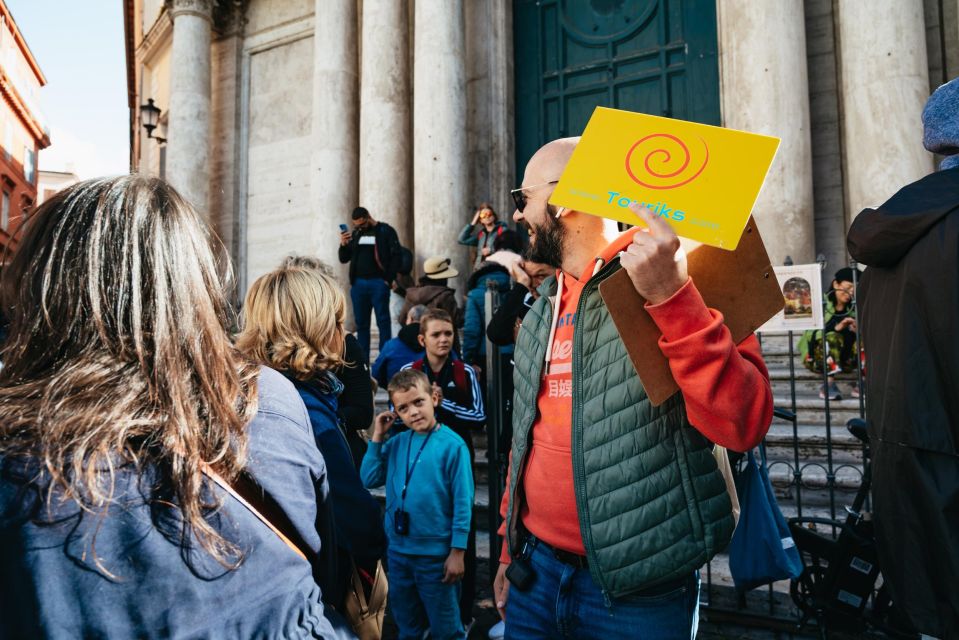
You’ll meet at the entrance to Santi Vincenzo e Anastasio a Fontana di Trevi Church, on the left corner of Piazza di Trevi. Look for a yellow label with TOURIKS written on it.
The practical reason this matters: this corner gets packed. If you arrive late, you can lose time just matching faces to labels. I’d plan a few minutes of buffer so you can locate the guide calmly, not while squeezing through groups.
The tour starts and ends back at Via del Lavatore, 49. That means once you’re back at the piazza, you can flow straight into the rest of your day around Trevi rather than recalculating transport.
The 9-meter underground aqueduct: the main event

The star attraction is going nine meters below ground. This isn’t just a basement museum stop; it’s about seeing the infrastructure that made the fountain possible long before the modern crowd arrived.
What makes this rare is that you’re not staring at a dead relic. You’ll see the 2000-year-old, fully functioning ancient aqueduct that still supplies water to the fountain above. That one detail changes the whole tone of the visit: Trevi becomes not only an artwork, but a working piece of Roman engineering history.
Because it’s underground, it also works as a quick break when the heat or crowds get intense. Even with a short total time, the underground portion gives your brain a fresh angle—less about the classic postcard scene, more about the practical plumbing behind it all.
Expect your guide to explain how this water system fits into Rome’s long timeline. The aqueduct isn’t presented as a single moment in time; it’s shown as part of how the city kept rebuilding on top of itself.
Vicus Caprarius ruins and the imperial Domus beneath modern streets
After the fountain-level storytelling, you’ll move through the underground archaeological remains tied to the area’s earlier life. One of the named zones you’ll see is Vicus Caprarius, where Roman streets and buildings once shaped daily movement and commerce.
You’ll also be shown remains of an imperial Domus. Even if you don’t read every label on-site, the presence of a Domus helps you picture something concrete: this wasn’t a bare city of monuments. People lived in it—walked through it—worked in it—then centuries later, new layers covered older ones.
The tour is designed so you can follow the logic of the site instead of just looking at exposed walls. You’ll be pointed toward how the “millenary stratification” under Rome creates a physical record of time. That’s one reason the underground portion feels special: you’re not only seeing ruins, you’re seeing how Rome stored its past under the present.
Interpreting the Trevi Fountain figures: more than decoration
The Trevi Fountain statues can be overwhelming at first—so many bodies, so many scenes, so much motion in stone. Your guide helps you decode what the mythological figures are doing in the composition and how the artwork connects to the broader meaning of the place.
This part matters because Trevi isn’t just a sculpture. It’s a curated public statement, and the stories on this tour connect the imagery to Rome’s relationship with water and civic power. When you understand that, the fountain becomes more satisfying to revisit after the tour—like seeing the same movie but now knowing the plot.
Guides also use humor and a lively delivery in a way that keeps people paying attention. Mario and Francesca, for example, are singled out for making the time feel fun while still covering real details. That balance is important in a short 40-minute experience.






Time and value: is $41 worth a quick 40 minutes?

At $41 per person for a 40-minute guided experience, you’re paying for three things: a timed visit, a live guide, and access to the underground excavations.
Is it long? No. But short can be good when the site is compact and the area above is chaotic. You’re not renting a full afternoon just to see a handful of key viewpoints. Instead, you’re getting a guided orientation that helps you understand what you’re seeing immediately.
The value improves if you like engineering or Roman history that connects art to function. If your priority is the aqueduct and the archaeology under the streets, the short format keeps you focused. If your priority is slow wandering and unlimited time inside every corner, you might feel time pressure.
Also note that the tour includes entrance fees into the underground excavations, and you’ll have headsets so you can hear the guide clearly. Those small “extras” are part of why this feels more efficient than a self-guided walk.
A final value reality check: you might expect to step into the fountain’s restricted basin area, but you won’t. The guide leads you to an excellent viewing point at public piazza level, and the basin itself requires a €2 fee.
What to bring and how to plan your day around it

The tour includes guide-led storytelling, entrance fees to the underground excavations, and headsets for audio. The operator also asks you to bring headphones and a reusable water bottle, which is smart in a city where shade can be scarce.
Here’s how I’d plan your time:
- Schedule it so you’re not rushing in from far away.
- Leave yourself extra minutes around Trevi afterward, because the area is busy and it’s easy to get stuck moving with crowds.
Weather is also a factor. The tour runs subject to weather conditions, with an option for an alternative date or a full refund if it gets canceled. In Rome, this is normal—just don’t assume it will run no matter what.
Finally, the tour is not suitable for wheelchair users. If you need step-free access, plan an alternative route or ask about options before you book.
Who this tour suits best (and who might want a different plan)

This is a great pick if you want Trevi to make sense fast. It’s especially good for:
- Families with kids who do better with short, lively explanations (the tours are praised for keeping young children engaged)
- People who like Roman engineering—seeing the aqueduct still supplying water is a major draw
- Anyone who wants a guided orientation to Rome’s layers without spending hours sorting logistics
It may feel less ideal if you want a long, unstructured look at the fountain itself. Even though it covers a lot in 40 minutes, it’s still a guided sprint rather than a slow sit-and-stare.
And if you’re hoping for a “secret passage” style experience, temper expectations. The underground is fascinating, but it’s not a narrative fantasy world—it’s archaeology and infrastructure under a real, working city.
Should you book the Trevi Fountain and Underground Guided Tour?

If you want the famous postcard fountain and the story behind the water system, I’d book this. The strongest reason is simple: the tour pairs Trevi Fountain above with the rare chance to see a working ancient aqueduct and nearby Roman remains nine meters underground—in one efficient outing.
I’d especially recommend it when you’re short on time or when you don’t want to figure out how to access the underground on your own. The guide makes the place clearer, and the audio support keeps the short format from feeling rushed.
Skip it (or look for another format) if you need lots of time at the fountain basin itself, since you’ll be directed to the public piazza viewing point and the restricted basin area costs extra. Also skip it for wheelchair needs because it isn’t set up for that.
If your ideal Rome moment is understanding the city in layers—art, daily life, and engineering under the street—this tour hits that goal quickly and well.
FAQ
How long is the Rome Trevi Fountain and Underground guided tour?
The tour lasts about 40 minutes.
Where do I meet the guide for the Trevi Fountain underground tour?
Meet in front of the entrance to the Santi Vincenzo e Anastasio a Fontana di Trevi Church, on the left corner of Piazza di Trevi. Look for a yellow label with TOURIKS written on it.
How deep do I go underground during the tour?
You descend about nine meters underground to explore the archaeological site.
Is access to the restricted basin area included?
No. Access to the restricted basin area has a €2 fee, and the guide will lead you to an excellent viewing point at public piazza level.
What languages are available for the live guide?
The live guide is available in English, French, Spanish, Portuguese, German, and Italian.
Does the tour include headsets and underground entrance fees?
Yes. The price includes the guide, entrance fees into the underground excavations, and headsets so you can hear the guide.