REVIEW · SYRACUSE
Syracuse: Ortigia Classic Walking Tour
Book on GetYourGuide →Operated by Hermes Sicily Tours · Bookable on GetYourGuide
Two hours, and Ortigia already feels familiar. This classic walk strings together Apollo Temple origins, Piazza Duomo’s landmark cathedral, and the myth-soaked Aretusa Spring without dragging you all over town. I especially like the small-group feel (usually around 10 people, capped at 25) and the way the guide keeps the pace friendly while still covering serious material. One thing to consider: Ortigia streets are narrow, so you may share space with other tour groups and busy foot traffic.
Guides like Eva are frequently mentioned for clear explanations and a smooth pace, and that matters here because you’ll be stopping often for photos and context. I also like that you get radio-style headsets if the group is larger, so you’re not forced to crane your neck or rely on hearing across the crowd.
The walk starts at the Apollo Temple area at the entrance of Ortigia and ends around Piazza Archimede (with a drop-off at the Diana Fountain also possible), so it’s a smart “start-here” outing when you want to understand the island’s layout fast.
In This Review
- Key highlights you’ll actually care about
- Entering Ortigia by Apollo Temple: where the story starts
- Archimedes Square and Diana Fountain: small stops, big wayfinding
- Piazza Duomo and the cathedral: Greek temple bones under Christian walls
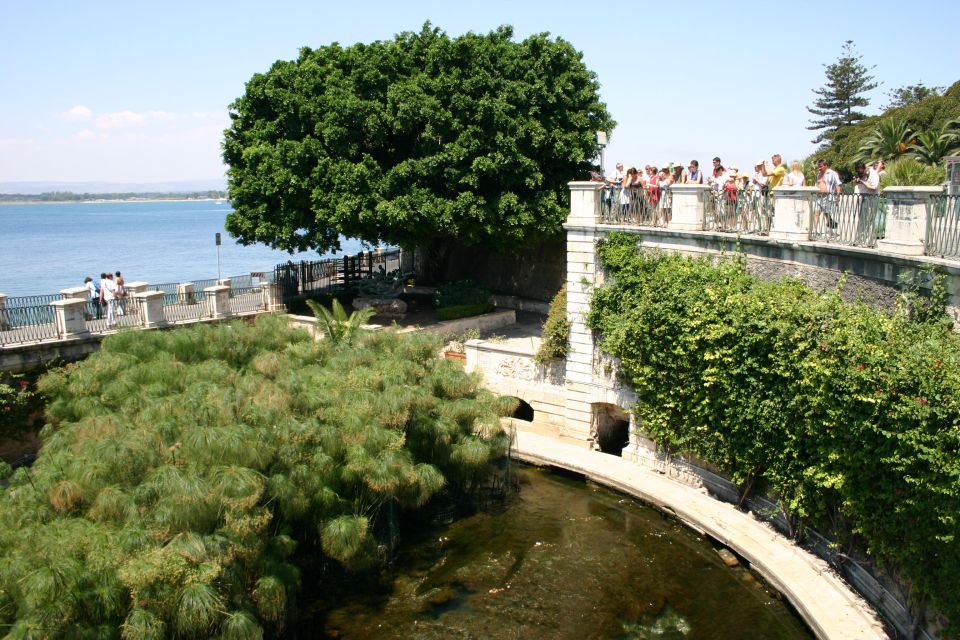
- The Aretusa Spring payoff: myths, papyrus, and sea air
- Giudecca and Church of Saint John Baptist: where history turns human
- Pace, group size, and headsets: why 2 hours works
- Price ($22) and value: what you’re really buying
- Who should book this Ortigia classic walk
- Should you book this Syracuse Ortigia Classic Walking Tour?
- FAQ
- How long is the Syracuse: Ortigia Classic Walking Tour?
- What language is the tour offered in?
- Where does the tour start and end?
- Is entry to the cathedral included?
- Do you provide headsets?
- Is the tour wheelchair accessible?
Key highlights you’ll actually care about
- Apollo Temple opening: a strong anchor point that explains why Syracuse mattered to the Greeks
- Duomo square orientation: you see how Christian Syracuse grew on top of older Greek stone
- Aretusa Spring moments: papyrus plants, myths, and a payoff in views
- Giudecca walking stretch: a guided look at the former Jewish quarter’s story
- Optional cathedral interior: you’ll either step inside with a paid ticket or take a short coffee break
- Headsets when it’s crowded: easier listening in tight streets
Entering Ortigia by Apollo Temple: where the story starts
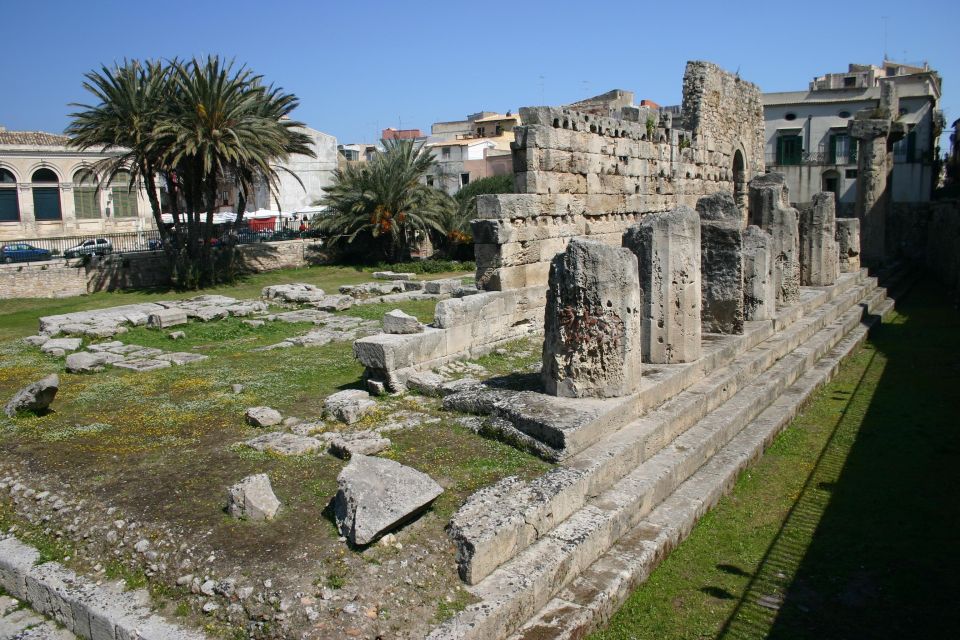
The tour kicks off at the Apollo Temple area, right at the entrance of Ortigia. Even before you get to the “pretty postcard” spots, you get the key context: Syracuse grew into one of the most important Greek colonies, and the stone you’re seeing connects directly to that early era.
The Apollo Temple itself is described as a Doric-style building and also noted as the first large stone temple the Greeks built in the western colonies. That detail matters because it turns what could feel like a random ruin into a historical anchor. Instead of just looking at columns, you’re learning what made this place ambitious.
Practical note: this early stop is also the best moment to slow down and take your first photos. Once you head into the busiest lanes, it’s harder to get clean shots without weaving around other visitors.
You can also read our reviews of more tours and experiences in Syracuse.
Archimedes Square and Diana Fountain: small stops, big wayfinding
From the Apollo Temple area, the route moves into Archimedes Square. This stop works as a transition from ancient roots to the living town center. You’re walking through spaces where different eras overlap, and the guide’s explanations help you notice the differences—street level feels modern, but the story keeps flashing back.
Then comes Diana Fountain. It’s one of those Ortigia focal points where the history lesson becomes visual. You’ll see it as a centerpiece, not just something to pass by, and you’ll get the sense that Ortigia’s “small island” format packs a lot of identity into short distances.
I like that these early-and-mid stops are timed so you don’t feel rushed. You still get time to look and take pictures, and you’re also building mental bookmarks. Later, when you’re wandering on your own, you’ll remember which lane leads toward the Duomo square and which direction carries you toward the water.
Piazza Duomo and the cathedral: Greek temple bones under Christian walls
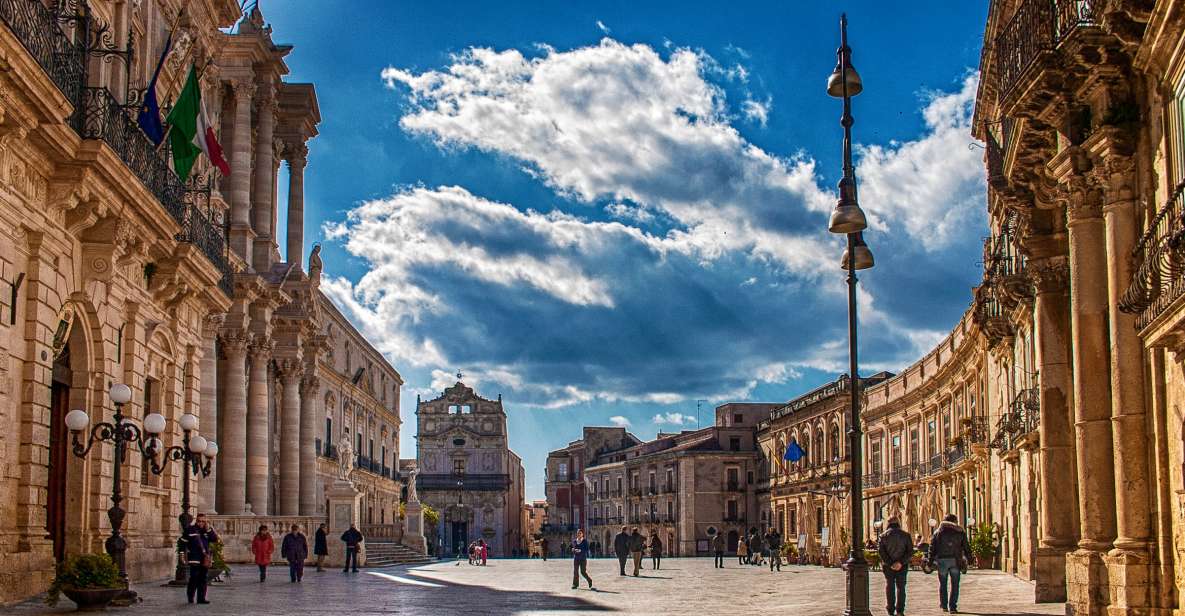
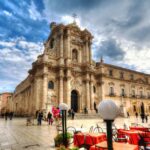
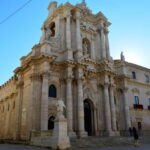
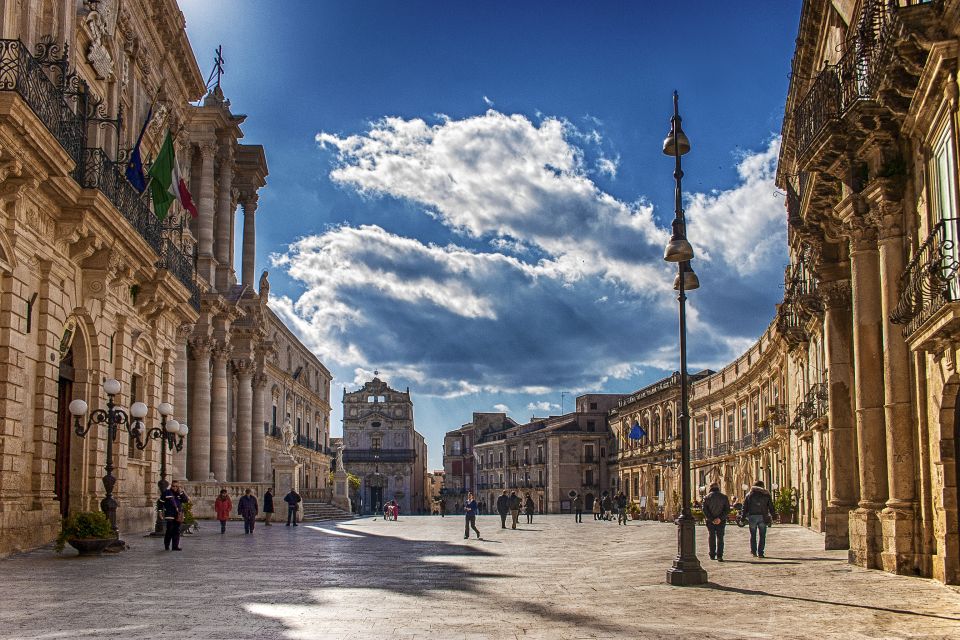
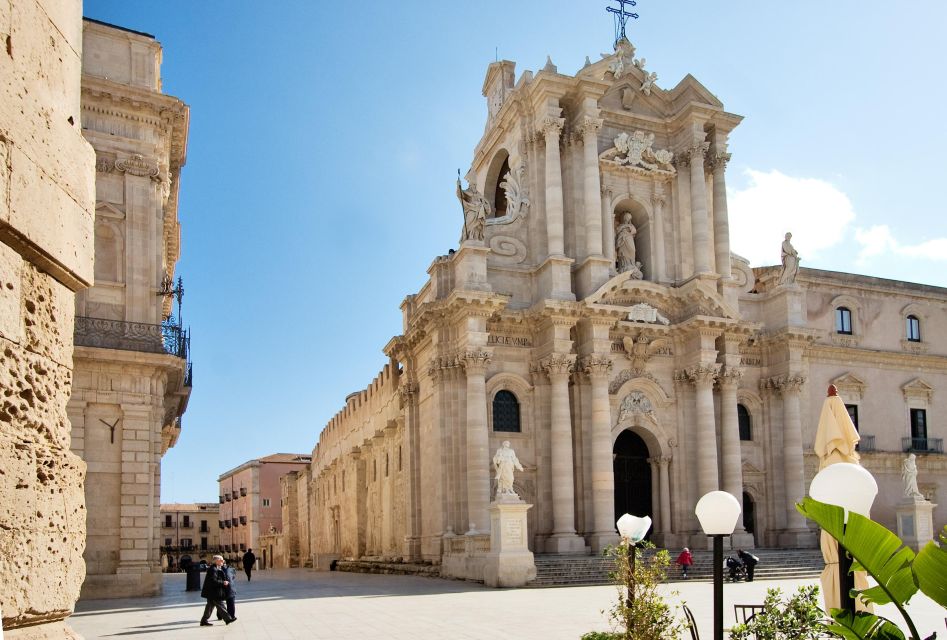
Piazza Duomo is the emotional center of Ortigia for a lot of people. The tour focuses on the square’s lineup of palazzi and ornate churches, but the headline is the cathedral: it’s frequently connected to weddings, and it’s also a classic example of how older Greek architecture shaped what came later.
Here’s what makes this stop more than sightseeing: the cathedral is described as being built on an ancient Greek temple. That means you’re not just looking at a church façade. You’re watching layers of belief and power overwrite one another—sometimes literally using the earlier framework.
The guide also points out landmarks around the square, including Palazzo Vermexio (the town hall) and Palazzo Beneventano del Bosco. Even if you only catch them from outside, those names give you a handle for what you’re seeing when you later compare façades and street plaques.
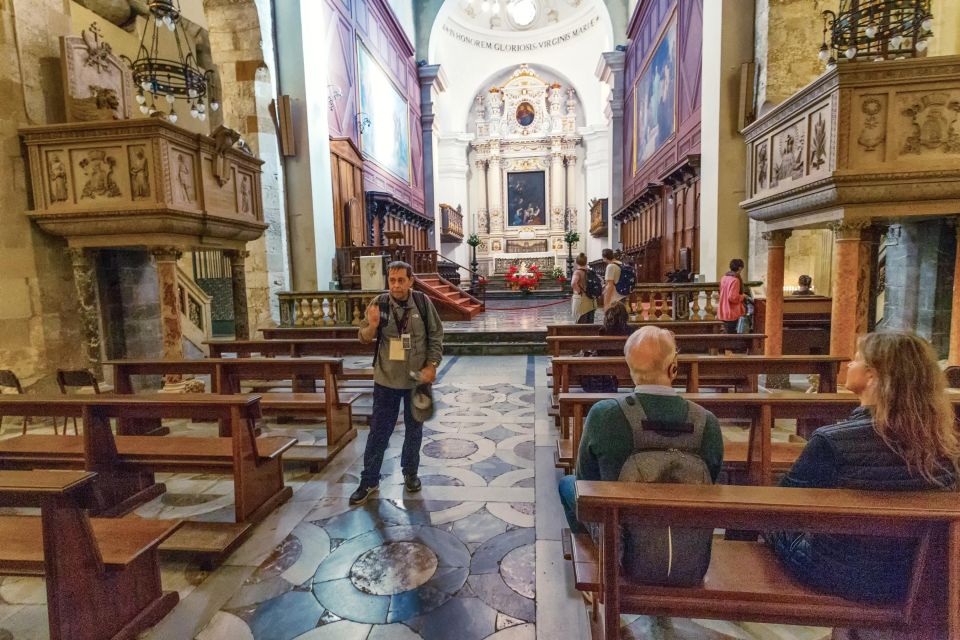
Cathedral interior visit: you’ll have a chance to go inside when access is available, but it’s optional and the entrance ticket is €2 and not included. If the interior isn’t accessible, the plan shifts to a brief coffee break. Either way, you’re not stuck waiting on a locked door with the rest of the group—there’s a practical alternative.
Also, the tour connects the sites to living traditions, including local religious celebrations such as St. Lucy’s feast and its procession. That turns the cathedral square into something more grounded in day-to-day Sicily, not only a museum setting.
The Aretusa Spring payoff: myths, papyrus, and sea air
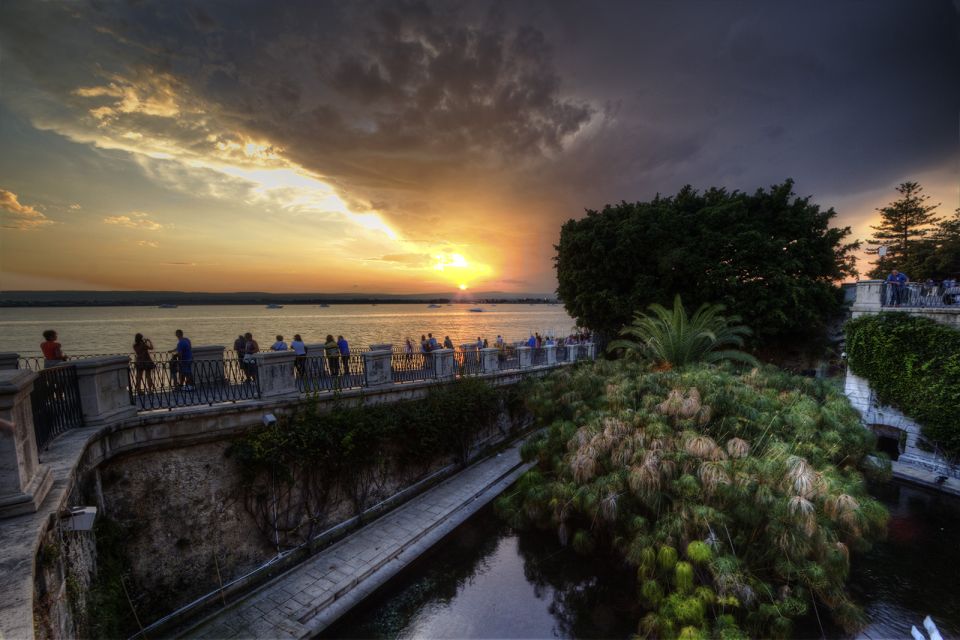
After Piazza Duomo, you head toward Aretusa Spring, described as legendary and famous for papyrus plants. This is the part of the tour that often feels like the reward for all the earlier history: suddenly you’re dealing with a landscape feature that looks almost unreal—fresh water, greenery, and a sense of myth continuing in the present.
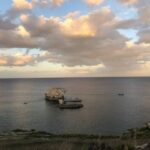
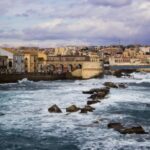
The guide’s storytelling here helps, too. The spring isn’t presented as a random stop; it’s framed as a place with mythical lore. Then you get to walk along the seafront promenade, which is where your senses catch up—salt air, light on the water, and the view angle that makes Ortigia feel more dramatic than it looks on a map.
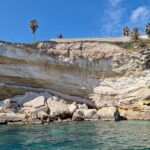
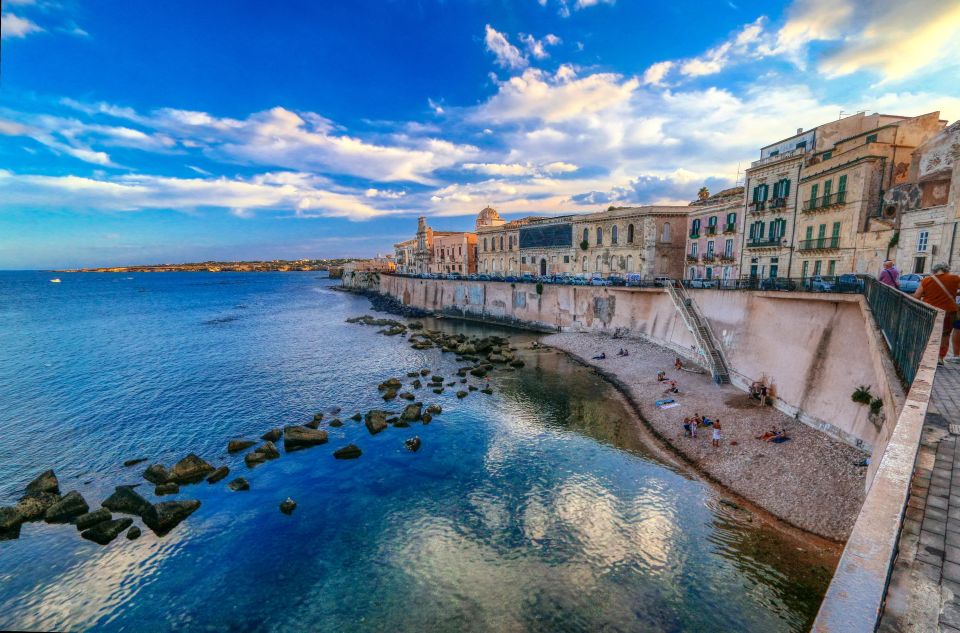
On the way there, you also get scenic views tied to Castello Maniace. You’re not necessarily spending a long time at the fortress itself, but the route is arranged so you see the coastline and get a few key angles.
Tip for your photos: the promenade stretch is the time to step back from your screen and look outward. If you’re the kind of person who always forgets to take pictures until the last minute, this is your built-in chance.
Giudecca and Church of Saint John Baptist: where history turns human
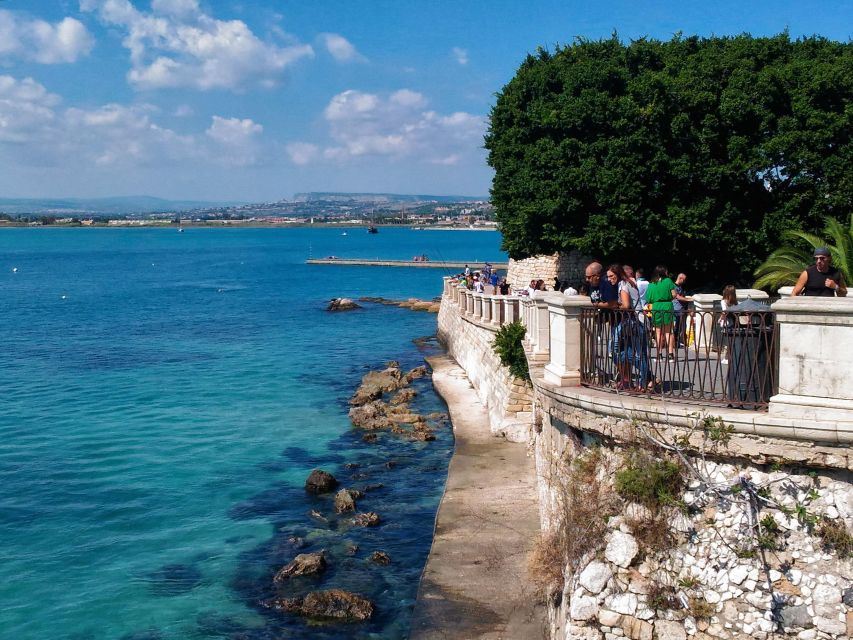
Next up is Via della Giudecca, the walk through the former Jewish district. Even though you’re moving quickly, the route gives you glimpses of the area’s past, and the guide’s explanations make it clearer why this part of Ortigia has its own distinct tone compared with the Duomo square.
This section is valuable because it reminds you that Syracuse isn’t only Greek then Christian. It’s also about communities that lived here across centuries and left traces in the shape of neighborhoods.
Then you reach the Church of Saint John Baptist, with a guided visit. This is another moment where the tour shifts from “look at the view” to “look at the meaning.” You’re learning what you’re seeing and why it matters, and you’re getting a sense of how religious architecture fits into local identity.
One note to keep expectations realistic: since this is a walking tour with multiple stops, you won’t have the kind of unhurried time you’d get on a dedicated cathedral visit. But you will come away with a much clearer mental map than if you tried to DIY the same route without context.


Pace, group size, and headsets: why 2 hours works
This is a shared group tour lasting about two hours. The key detail is the size: maximum group size is 25, but groups typically run around 10 people. That’s what keeps the walk from becoming a slow shuffle where you never hear the guide.
If the group is larger, you’ll get headsets to hear the guide clearly for free. That’s a practical win in Ortigia, because narrow lanes make it hard for the guide to project their voice without either shouting or getting too close.
The pace also sounds intentionally planned: reviews frequently highlight that the guide doesn’t just lecture. You’re guided through key sights, and you also get time to explore and take pictures. In a compact old town, that balance matters—otherwise you end up feeling like you spent two hours walking behind someone’s umbrella.
Small caution: Ortigia is crowded and pedestrian-heavy. Narrow streets mean it’s common to share space with other tours, school groups, and local traffic patterns. The route is still manageable, but you might want to keep your camera accessible and your patience ready. When the streets compress, a tight group helps.
Price ($22) and value: what you’re really buying
At $22 per person for a roughly 2-hour guided walk, this tour is priced like a practical “orientation package.” You’re paying for three things that add up fast in Ortigia:
- Expert guidance that links sites together (Greek origins → cathedral transformation → Aretusa myths → Giudecca identity)
- A route that hits the must-see points without you spending your first day guessing where to start
- Clarity tools like free headsets in larger groups, which directly improve your experience in tight streets
Optional extras are kept optional. The cathedral interior needs a €2 ticket, and if you don’t go inside, you still get a break. That’s a common cost-control strategy here: you’re not paying a big entrance fee to see the main idea, but you can choose to step into the interior when access works.
If you’re only spending a day (or half-day) in Ortigia, I think this is where the value shows. A $22 guided walk can save you hours of mapping and reduce the chance you miss the most meaningful connection points.
Who should book this Ortigia classic walk
I’d put this tour on your shortlist if you want:
- A fast start in Ortigia that explains what you’re looking at as you walk
- A manageable route that doesn’t require a car or planning puzzle
- A guided introduction that you can use later when you wander on your own
- A group size that stays small enough to feel human, not industrial
It’s also described as wheelchair accessible, and it runs rain or shine, which is helpful in Sicily when weather can change without much warning. The only real “must” is wearing comfortable shoes—Ortigia is an old-town walk, and even the smooth parts of the route add up.
Should you book this Syracuse Ortigia Classic Walking Tour?
Yes, with two conditions.
Book it if you want a structured way to understand Ortigia quickly—especially the Greek-to-Christian story, the Duomo square context, and the Aretusa spring payoff. The small-group setup and headsets are the kinds of details that make a guided walk actually enjoyable instead of exhausting.
Skip or rethink it if you’re the type who hates crowds and tight lanes. Even at a good pace, Ortigia is still Ortigia, and you’ll likely share the streets with other groups. If that’s a dealbreaker for you, you might prefer a lighter, slower self-guided plan.
If you do book, go in expecting a smart “first walk” through the island rather than a slow, museum-style deep visit. You’ll get your bearings fast, and you’ll know exactly what to seek out next.
FAQ
How long is the Syracuse: Ortigia Classic Walking Tour?
The tour lasts about 2 hours.
What language is the tour offered in?
The live guide speaks English and Italian.
Where does the tour start and end?
It starts at the Apollo Temple area at the entrance of Ortigia, and it ends around Piazza Archimede, with drop-off options that can include the Fountain of Diana.
Is entry to the cathedral included?
No. The cathedral entrance ticket is €2 and not included. The interior visit is optional when it’s accessible.
Do you provide headsets?
Yes. Headsets are provided for free in case of larger groups so you can hear the guide clearly.
Is the tour wheelchair accessible?
Yes, the tour is wheelchair accessible.