REVIEW · ROME
The ORIGINAL Fiat 500 3hour chauffeured tour
Book on Viator →Operated by Rome 500 exp. · Bookable on Viator
Pink Fiat, fast Rome magic. This chauffeured Fiat 500 tour is a fun way to hit major landmarks and Roman backstreets in about three hours, with lots of quick photo stops. I also like that the driver handles the route and the timing, so you’re not stuck guessing how to get from one viewpoint to the next.
Second, I really like the photo setup: the tour includes photo shooting with your camera, so you’re not waving your phone at strangers for every shot. And the vibe feels personal, with drivers like Alex and Pier highlighted for energy, humor, and great driving through tight streets.
One thing to think about: the car is a classic with no seat belts or airbags, and there’s a weight limit of 100 kg / 220 lbs. If either of those is a concern for your group, you’ll want to choose your transport carefully.
In This Review
- Key reasons this Fiat 500 tour is worth your time
- Why a vintage Fiat 500 route beats hopping by bus
- Your 3-hour plan: the big sights and the short stops that matter
- Stop-by-stop: what you’ll see and what to watch for
- Terme di Caracalla (Ancient Baths) — a Roman “wellness campus” feel
- Circo Massimo (Circus Maximus) — the roar you can still picture
- Buco della Serratura (Keyhole View) — photos through the tiny doorway
- Parco Savello (Garden of Oranges) — views plus a clever visual effect
- Trastevere — the narrow streets ride and the coffee stop
- Piazzale Giuseppe Garibaldi (Janiculum Terrace) — one of Rome’s best panoramas
- Porta San Paolo — an Egyptian pyramid in Rome
- Colosseum stop — front-of-the-landmark photos without the long lines
- Via Galvani (Hill of Broken Vases) — Roman trash math that becomes a landmark
- The value math: what you’re paying for at $211.72
- Guides and the small-moment payoff
- Practical details you should know before you pick a time
- Who this Rome Fiat 500 tour is best for
- Should I book the ORIGINAL Fiat 500 3-hour chauffeured tour?
- FAQ
- How much is the ORIGINAL Fiat 500 3-hour chauffeured tour in Rome?
- How long is the Fiat 500 tour?
- Is the tour offered in English, and do I get a mobile ticket?
- What’s included in the price?
- Is hotel pickup available for all hotels in Rome?
- Where does the tour start, and where does it end?
- Is the Fiat 500 car equipped with seat belts or airbags?
- What is the weight limit for this tour?
Key reasons this Fiat 500 tour is worth your time
- Top sights plus Roman side streets in one tight 3-hour loop, including quick stops for photos
- Hotel pickup for many non-ZTL hotels, which saves you from a longer walk or a transit scramble
- Your camera gets used for photo moments, not just point-and-shoot snapshots from the curb
- Trastevere time for coffee, where the route slows down for a double espresso or creamy cappuccino
- Up to 20 people total, keeping it small enough to feel more like a guided ride than a bus tour
Why a vintage Fiat 500 route beats hopping by bus
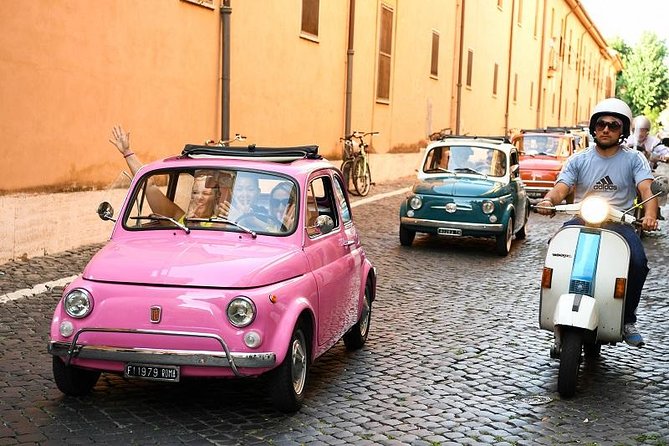
Rome is big, and the famous sights pull you in different directions. What makes this tour work is the mix: you get “wow” landmarks on the edges of your trip plan, plus street-level Rome that’s hard to access if you’re moving on your own.
A vintage Fiat 500 is also a practical sightseeing tool, not just a cute prop. Its size is perfect for narrow streets, and it’s built for slow rolling views. You spend time looking at details instead of constantly checking directions, trying to find the right bus, or worrying about where to park.
You can also read our reviews of more tours and experiences in Rome.


Your 3-hour plan: the big sights and the short stops that matter
This is designed as a compact highlight ride, not a full archaeological day. Expect about 20 minutes at each stop, which means you’ll see a lot of Rome without turning your legs into jelly.
That timing is especially helpful if you’re here for a short visit. In one outing, you can photograph major landmarks (including the Colosseum) and also take in older layers of Rome, from huge bath complexes to a Circus Maximus-style arena space to viewpoints over the city.
Also worth noting: this tour operates with a maximum of 20 travelers, and it’s offered in English. If you like tours where the guide can actually talk and respond, this group size tends to fit.
Stop-by-stop: what you’ll see and what to watch for

Terme di Caracalla (Ancient Baths) — a Roman “wellness campus” feel
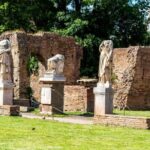
You start at Terme di Caracalla, the ruins of one of the biggest and most sophisticated bath areas in ancient Rome. The tour description makes the scale feel huge: it’s about 15 football pitches across, and it wasn’t only for bathing.
What makes this stop special is the variety you’re supposed to imagine in your head: cold and hot baths, plus Roman and Greek libraries, gyms, theatre spaces, seminar rooms, gardens, and fountains. It’s an old-world example of public space as entertainment and status.
How to enjoy it best: stand back to get the layout, then move closer for details in the stonework. Even if you only have a short window, the size alone gives you a “how was this built?” reaction.
Circo Massimo (Circus Maximus) — the roar you can still picture
Next is Circus Maximus, the famous chariot-racing venue. The framing here is vivid: imagine 250,000 people cheering in a roar like a chariot-race version of a modern mega-event.
The key point for your planning: Circus Maximus predates the Colosseum by a long stretch—about 400 years earlier. That helps you see the arc of Roman entertainment, from arena to amphitheater.
One practical note: because it’s a large open space, your time can feel “wide” rather than “deep.” Use the 20 minutes to orient yourself, take a few photos, and let the guide’s stories help you visualize what stood there.

Buco della Serratura (Keyhole View) — photos through the tiny doorway
Then comes one of Rome’s most famous photo tricks: Buco della Serratura, the view through the keyhole. The idea is that you can line up three countries through the keyhole view—an optical setup that makes people lean in, laugh, and then get the shot.
This is also a stop where the Fiat ride matters. The tour plan calls out selfies and photos while you’re in the classic car, which is exactly what you want from a short stop: quick, fun, and Instagram-friendly without eating your whole afternoon.
Parco Savello (Garden of Oranges) — views plus a clever visual effect
Parco Savello, also known as the Garden of the Oranges, is a panoramic break where Rome looks almost curated. The tour description highlights an “optical illusion” involving St. Peter’s church—one of those moments where the view changes depending on where you stand.
It’s also tied to romance, nicknamed the Garden of the Lovers. You don’t need to be on a date to appreciate it. The important part is the viewpoint quality: your photos come out better because the geometry of the view does the work for you.
How to make this stop count: arrive ready to hold still. The best views here take a second to line up, and the 20-minute limit means you’ll want to move efficiently.
Trastevere — the narrow streets ride and the coffee stop
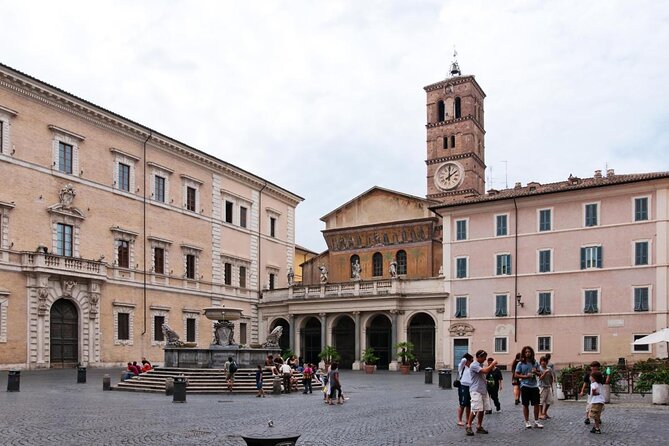
Now you get the “Rome that can’t be faked” part: Trastevere. The tour is built around the thrill of gliding through tiny streets, something that larger cars or standard tour buses can’t do the same way.
This is also where you’re given time to slow down for a double espresso or creamy cappuccino. That coffee break is more than a perk. It’s a rhythm reset: you’ve spent time looking at monuments and ruins, now you get to experience a neighborhood pace.
If you want value from the stop, plan your order quickly and use the time for one or two photos on the street. Don’t try to do a full wander if your next sights are on a fixed schedule.
Piazzale Giuseppe Garibaldi (Janiculum Terrace) — one of Rome’s best panoramas
Next is Piazzale Giuseppe Garibaldi, the Janiculum terrace, and it’s positioned as a top panoramic moment. The tour highlights a broad sweep: you can see the Colosseum, the Pantheon, Altare della Patria, and around 100 church domes.
This is where you’ll understand why the tour keeps moving. Those sweeping lines are easiest when someone else has planned the route and picked the right place to stop.
Tips for the photos: morning or late afternoon light can help, but regardless, this is a place where you’ll want multiple angles—wide shot for the skyline, then a closer frame for dome clusters.
Porta San Paolo — an Egyptian pyramid in Rome
Then you head to Porta San Paolo, where you’ll see a weird-but-real Roman curiosity: the 4th biggest ancient Egyptian pyramid in Rome. It was built around 18 BCE, tied to the tomb of Gaius Cestius.
Even if your brain doesn’t care about Egyptian architecture, this stop is valuable because it breaks the “Rome equals only Rome” mindset. The Roman world pulled in styles and references, and this is a concrete example you can point to.
In 20 minutes, don’t overthink it. Get the photo, look at the structure, and let the guide connect it to the bigger Roman story.
Colosseum stop — front-of-the-landmark photos without the long lines
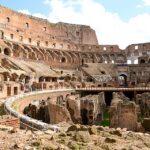
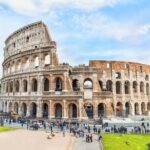
You finish with the big name: Colosseum. This tour doesn’t position you for a full visit inside. Instead, you’ll stop in front of the Colosseum for photos.
That can be a smart choice. If you’re tight on time, a photo stop lets you still experience the icon in context while keeping the rest of your itinerary intact—especially if you want multiple eras of Rome in the same day.
A useful way to appreciate what you’re seeing: the tour description reminds you that the Colosseum was a prototype of modern stadiums. It took about 8 years to build, and in ancient times, around 200 arenas were built in the same spirit.
Via Galvani (Hill of Broken Vases) — Roman trash math that becomes a landmark
For your last stop, you’ll learn about the hill of broken vases on Via Galvani. The tour explains that Romans created an artificial hill using terracotta shards from vessels that transported olive oil, fish sauce, and wine.
The scale here is part of the thrill: the hill is roughly 40 meters high and has a circumference of 700 meters, and it’s estimated to involve shards from about 50 million vases. That’s a shocking amount of “waste” that somehow becomes Rome’s geography.
How to enjoy it: treat it like a curiosity stop that changes how you picture cities. In a short tour, this kind of detail is what makes the experience stick after you’re back at your hotel.
The value math: what you’re paying for at $211.72
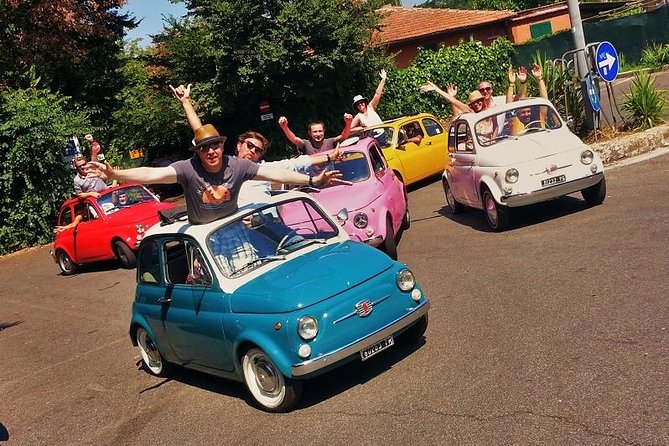
At $211.72 per person for about 3 hours, the price may sound steep until you match it against what’s included and what’s avoided.
You’re paying for:
- a chauffeured vintage Fiat 500 ride (not a typical bus experience)
- a driver who handles the route and timing
- light refreshments
- photo shooting with your camera
- and in many cases, hotel pickup and drop-off for hotels outside ZTL city center areas
The biggest hidden value is time. If you tried to stitch together these stops on your own—between viewpoints, neighborhood streets, and photo spots—you’d likely spend your day juggling transit, walking, and scheduling. Here, you compress it into one guided block.
One cost/benefit note: hotel pickup is not included if your hotel is within ZTL city center areas. If your lodging is in the core, you might meet at the tour start location instead of being picked up.
Guides and the small-moment payoff
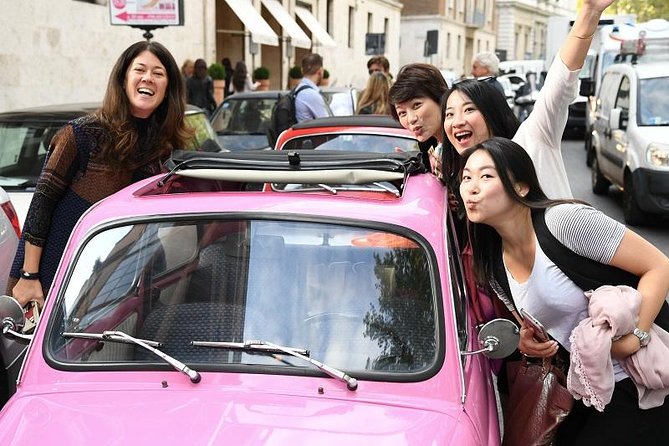
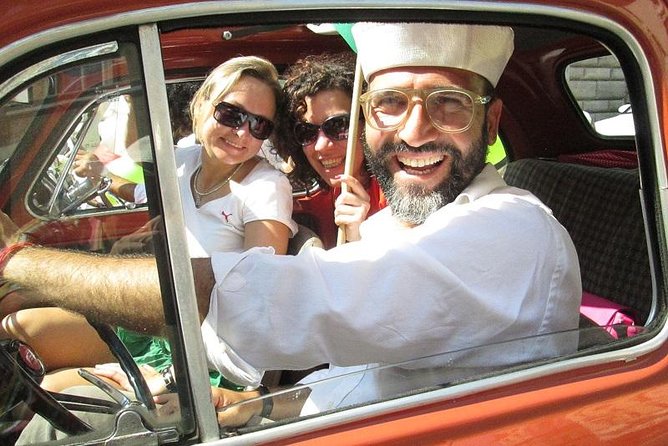
The tour stands out in the way the guide experience shapes the ride. Names like Alex, Pier, and Marco show up in the descriptions, and the recurring theme is that the driver is part entertainer, part history guide, part photographer.
I’d take that seriously when you book. If you’re the type who likes asking questions or wants photos that look like they were planned (not accidental), this setup is a strong fit. The included “photo shooting with your camera” also means you don’t have to master self-timer gymnastics in front of major landmarks.
There’s also a customization angle. The tour format has a sequence of stops, but the tone from the guide experience points to adjusting to your interests. If you have a “must-see” priority, it’s worth telling your driver early.
Practical details you should know before you pick a time

A few bits can make or break comfort.
- Duration: about 3 hours
- Vehicle constraints: no seat belts or airbags in the cars
- Weight limit: not suitable for passenger weighting more than 100 kg / 220 lbs
- Group size: max 20 travelers
- Ticket: mobile ticket
- Meeting point: Via Labicana, 125, 00184 Roma RM, Italy
- Where you return: ends back at the meeting point
How to plan your day around it: pick a time when you still have energy for walking at a couple of stops. Even when the car does the hard work, the viewpoints and ruins still require short bursts of moving around.
Who this Rome Fiat 500 tour is best for
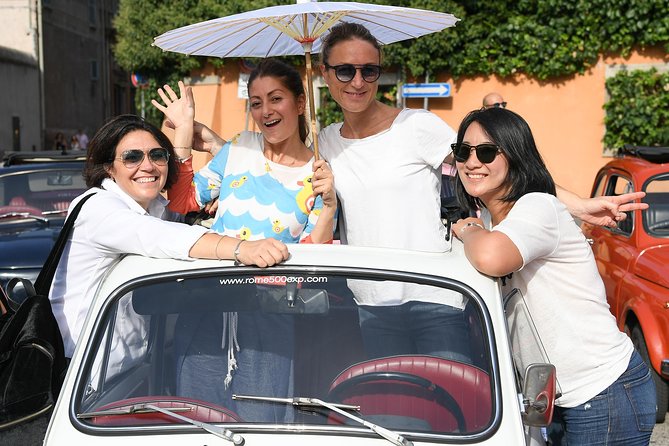
This tour is a great fit if you want:
- a fun, photogenic way to see Rome’s icons
- a mix of ancient Rome and neighborhood vibes (especially Trastevere)
- a guided format that reduces your planning stress
It may not be the best match if:
- you’re worried about safety gear since there are no seat belts or airbags
- your group includes someone over 220 lbs / 100 kg
- you need a long, inside-the-building tour of the Colosseum (this is focused on external viewing and photos)
Should I book the ORIGINAL Fiat 500 3-hour chauffeured tour?
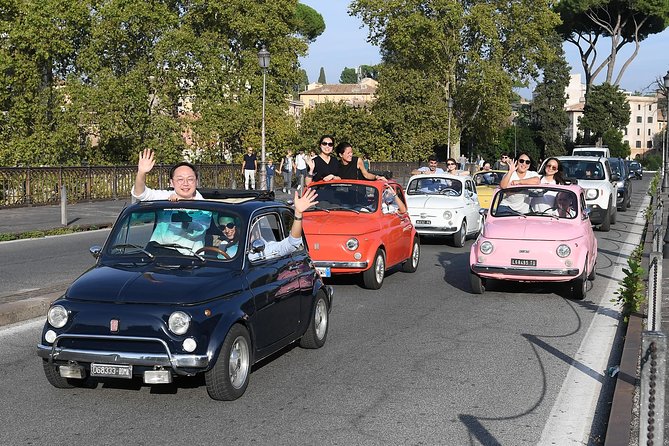
If you want a high-satisfaction “Rome sampler” that still feels personal, I think it’s a smart booking. The value comes from the combination: classic car joy, tight timing, and photo-focused stops that cover everything from baths and arenas to panoramic terraces and quirky structures like Porta San Paolo.
Book it if your priorities are seeing lots in a short time and getting good photos without managing transit. Skip it only if the car’s safety setup or the weight limit is a problem, or if you’re looking for a deep, inside-the-sights kind of day.
FAQ
How much is the ORIGINAL Fiat 500 3-hour chauffeured tour in Rome?
The price is $211.72 per person.
How long is the Fiat 500 tour?
It lasts about 3 hours.
Is the tour offered in English, and do I get a mobile ticket?
Yes, it’s offered in English, and it includes a mobile ticket.
What’s included in the price?
The tour includes a driver, light refreshments, photo shooting with customers’ cameras, and hotel pick-up if your hotel is located external to ZTL city centre areas.
Is hotel pickup available for all hotels in Rome?
No. Hotel pick-up is included only if your hotel is located in areas external to ZTL city centre areas. If your hotel is in the ZTL city centre areas, pickup and drop-off are not included.
Where does the tour start, and where does it end?
The tour starts at Via Labicana, 125, 00184 Roma RM, Italy and ends back at the meeting point.
Is the Fiat 500 car equipped with seat belts or airbags?
No. The cars have no seat belts nor air bags.
What is the weight limit for this tour?
It is not suitable for passengers weighing more than 100 kg / 220 lbs.