REVIEW · VERONA
Verona: Digital Guide made by a Local for your walking tour
Book on GetYourGuide →Operated by Walking Cap · Bookable on GetYourGuide
Verona can be a maze, but this route has a plan. I like the digital guide made by a local because it mixes practical walking directions with the human side of the city, like anecdotes and weird monument trivia. I also like that you’re not stuck marching with a group—this experience lets you choose what to linger on, especially around Verona’s food.
The main thing to consider is that it’s a phone-first experience: you’ll need a charged smartphone and internet, and occasionally the audio or a Google Maps link can hiccup. It’s not heavy logistics, but it is self-guided, so you’ll want your device ready before you start.
In This Review
- Key points before you go
- Why this self-guided Verona walk feels local
- Price and value: what $7 really buys you
- What you need on your phone (and how to not get stressed)
- Starting points: Castelvecchio first, then Verona on foot
- How the Google Maps route really works between monuments
- The audio guide: brief, useful, and built for walking
- Monument visits at your pace (and what entrance fees change)
- Verona food focus: typical dishes and where locals eat
- The pace and distance: will 4.5 km feel like a lot?
- Practical value vs a traditional group tour
- Common hiccups to plan for (so the day stays smooth)
- Who this Verona digital guide is best for
- Should you book this Verona digital guide?
- FAQ
- How much does the Verona digital guide cost?
- How long is the tour, and when can I start?
- Where do I start the walking tour?
- How long is the walk?
- What do I need to use the guide?
- Are monument entrance fees included?
- What languages is the audio guide available in?
- Can I cancel for a full refund?
Key points before you go
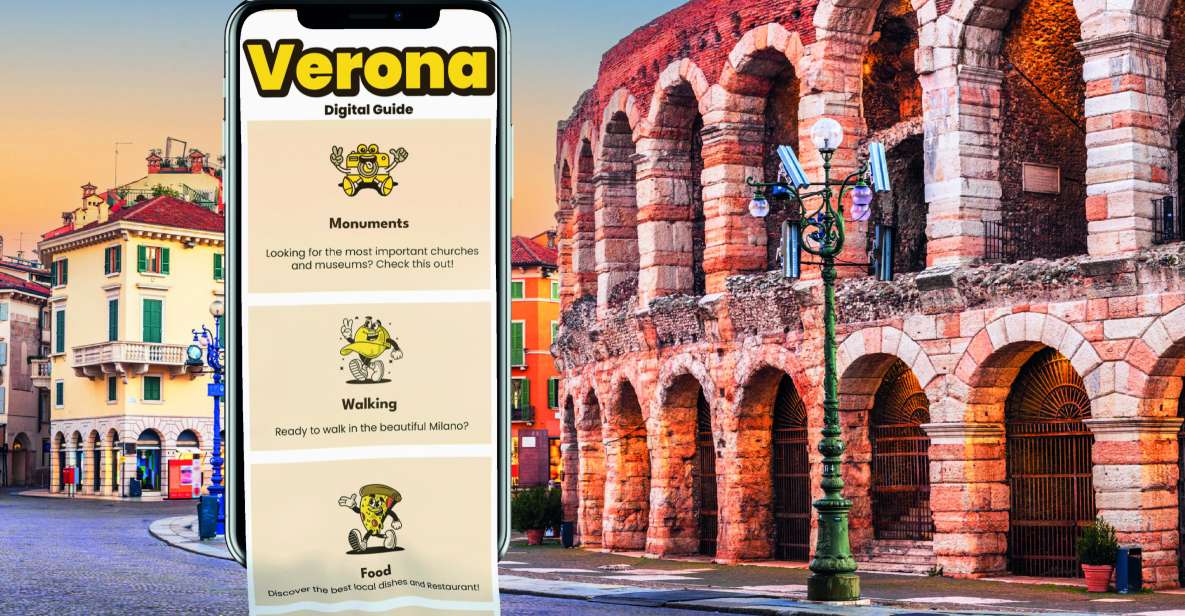
- Local voice, not textbook copy: You get history, curiosities, and street-level stories alongside the route.
- Google Maps links between stops: The itinerary is built to help you move from one monument area to the next.
- Monuments on your schedule: You can freely choose how long you spend and whether to enter.
- Food stops are part of the story: You’ll get typical dishes and where locals tend to eat.
- Multi-language audio included: English, Italian, and Spanish audio guidance.
- About 4.5 km walking: A manageable distance if you’re comfortable strolling through town.
Why this self-guided Verona walk feels local
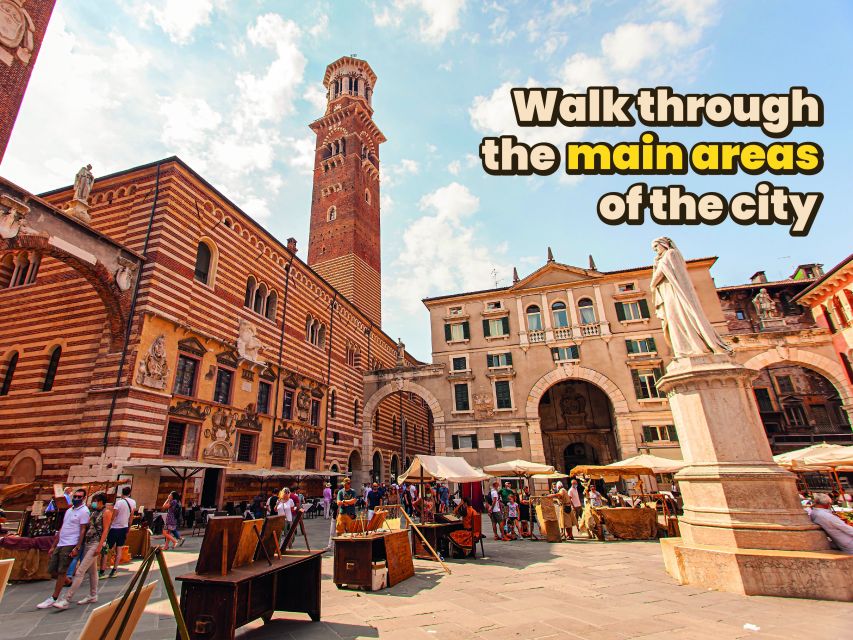
This isn’t a classic guided tour where you have to keep up and pretend you’re not tired. The heart of the experience is the idea that a local’s point of view can make a city feel readable. In practice, that means the guide isn’t only facts; it adds the kind of small stories that explain why certain details matter.
I especially appreciate how the tour balances three things you actually care about while walking: monuments, context, and food. You’re guided to Verona’s main sights, but you also get direction toward what to eat and where to eat it, in a way that fits into a day on foot.
And because it’s self-paced, you can slow down for a viewpoint, spend longer inside a site, or skip ahead when you’re ready. That flexibility is the real luxury.
You can also read our reviews of more tours and experiences in Verona.
Price and value: what $7 really buys you

At $7 per person, you’re paying for one big bundle: a digital walking itinerary, audio narration, and practical restaurant guidance. The value here isn’t just the low price—it’s what’s included for that money: Google Maps-connected routing, multi-language audio, and tips tied to monuments and local life.
You’re also getting something that traditional group tours rarely do well: time control. With this format, you don’t lose your day to waiting for a guide to regroup, and you don’t have to decide on the spot whether an extra stop is worth your effort. The guide supports your choices without pressuring you to rush.
The one cost you should remember is indirect: your entrance tickets. Entrance fees for monuments are not included, so you’ll pay only if you choose to go in. If you want maximum value, plan to pick a few interiors you truly care about and then spend the rest of your time absorbing the streets and viewpoints.
What you need on your phone (and how to not get stressed)
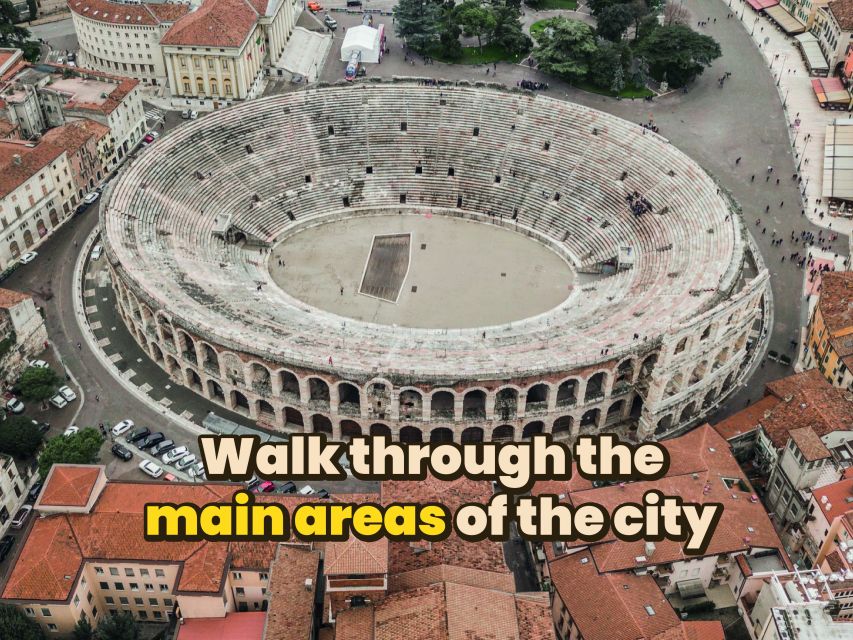
This tour runs through a smartphone app-style experience with a link and password. Before you start, you’ll want to do two boring-but-important things:
- Charge your phone fully
- Confirm you have working internet
No big mystery here, but it matters because the audio guide and the map directions depend on connection. If your battery is low, you’ll feel rushed. If your signal is spotty, you may have to reload or wait, and that can interrupt the flow.
Also, plan your walking shoes. The route is about 4.5 km—not a marathon, but it’s real city strolling. With breaks, it’s very doable, yet it’s enough walking that you’ll enjoy it more if you’re prepared.
Starting points: Castelvecchio first, then Verona on foot
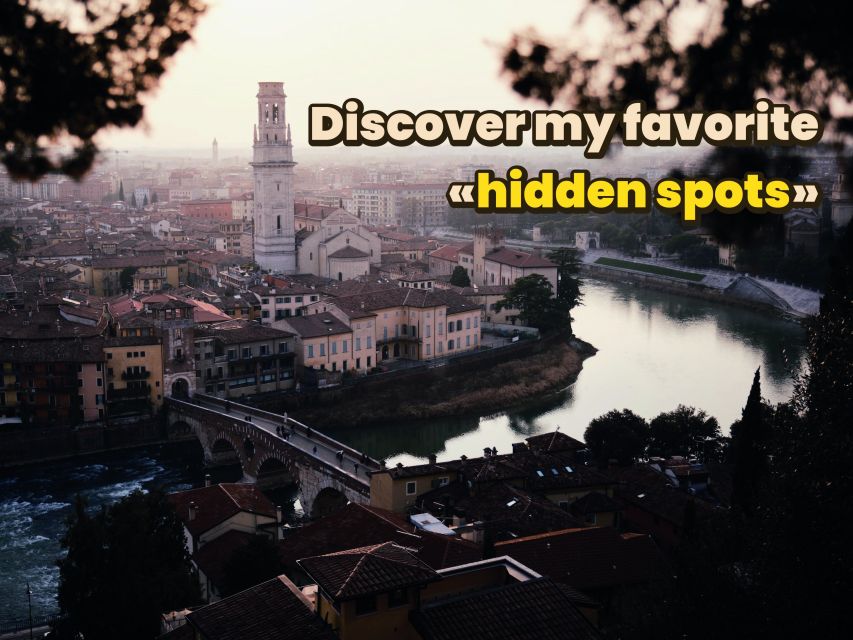
You’ll start either at the location shown for train arrivals (if you enter Verona by train) or you can go directly to Museo di Castelvecchio. Either way, the idea is simple: start on the edges of the historic core where the walking loop begins and where the guide can orient you quickly.
Why this matters: starting at the right place saves time and avoids the common tourist problem of wandering in the wrong direction for the first 20 minutes. The guide is built to be followed as you move, so it helps when your first pin and route match where you physically are.
The tour ends back at the meeting point, which is another practical win. You don’t need to figure out how to get home from a random spot; you’re guided into a walk that loops back.
How the Google Maps route really works between monuments
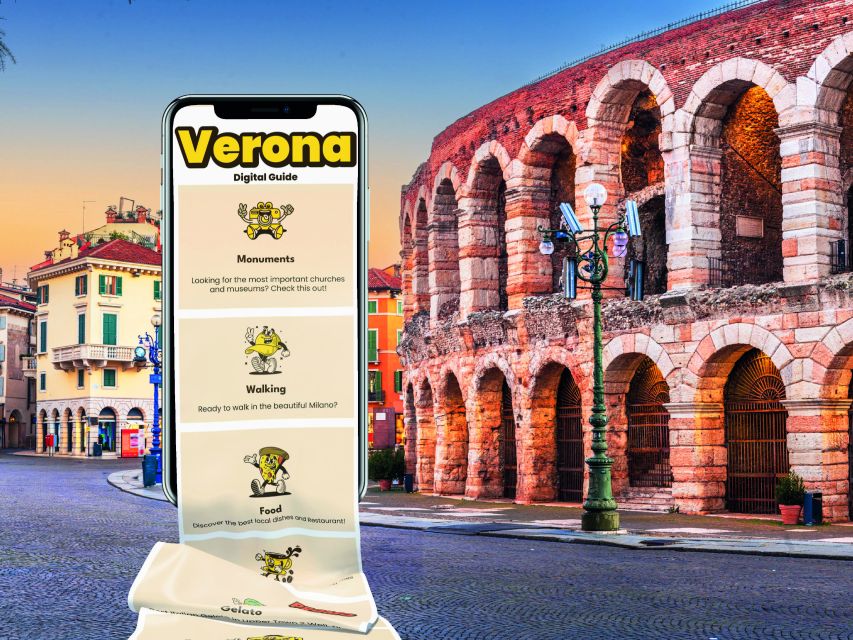
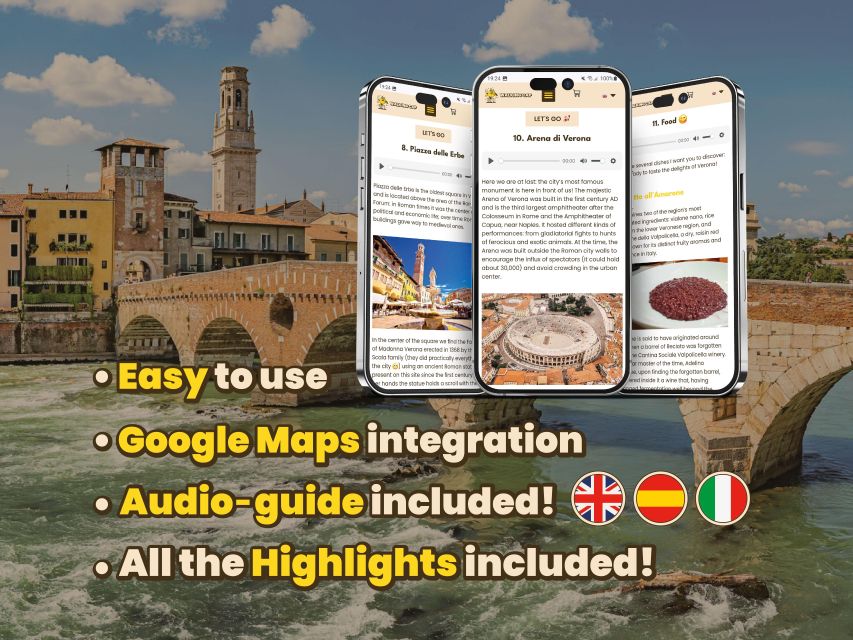
A key feature is that the itinerary is connected with Google Maps. In plain terms, that means you’re not guessing which alley to take next—you can tap for walking directions to the next monument area.
That’s the good news. The reality is that Google Maps routing depends on correct destination pins. There can be moments where a link takes you somewhere slightly wrong, which then adds extra walking to get yourself back on track. When this happens, don’t panic—just check that you’re heading to the right monument name or area, and adjust.
For me, this is the main reason to go slow early. The first time you use the map links, take a moment to verify you’re on course before you crank up your pace. You’ll save energy later in the day.


The audio guide: brief, useful, and built for walking
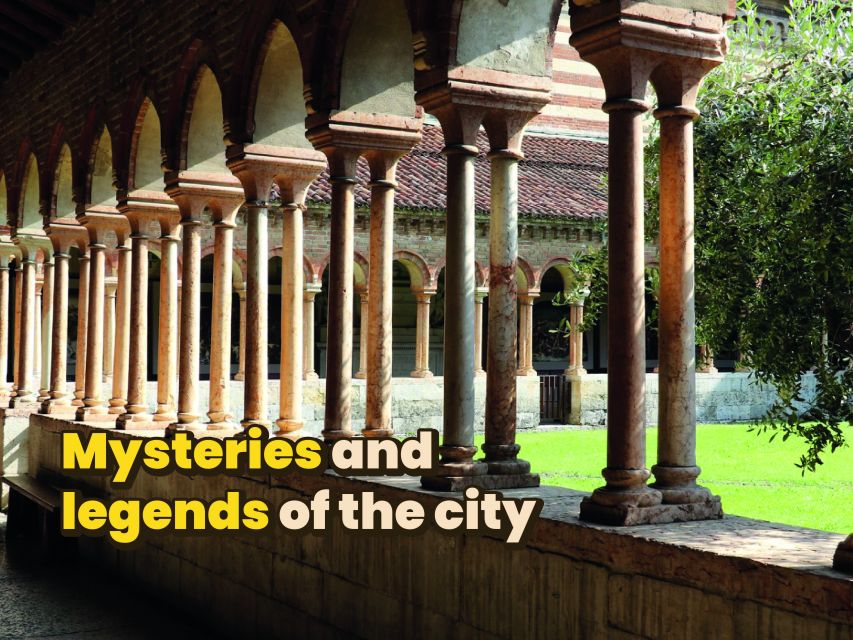
The tour includes audio in English, Italian, and Spanish, plus written support. The audio style is made for walking, so it’s meant to be listened to in short chunks rather than as a long lecture.
That approach is a plus if you like to keep your eyes on the street. You’ll get the main context and anecdotes without having to stop for every paragraph. You can also switch between audio and text when you want a detail without rewinding a bunch.
There’s one thing to watch: if audio doesn’t load correctly, you might need to reload and then continue. This isn’t unique to this tour, but it matters for your day because you want smooth timing, not constant phone troubleshooting.
Monument visits at your pace (and what entrance fees change)

The guide leads you to Verona’s most important monuments and key sightseeing areas, and it’s designed so you can decide when to enter. Entrance fees are not included, so you’re choosing how much of your day goes indoors.
The big advantage of this setup is control. You can:
- Spend longer reading the guide’s trivia and context outside
- Go in when the timing feels right
- Skip an interior if the lines, hours, or your energy aren’t cooperating
This is also a good way to manage your budget. If you’re keeping costs tight, focus on one or two interiors and use the rest of the time for free viewpoints, street scenes, and the guide’s stories.
Verona food focus: typical dishes and where locals eat

A standout feature is that THE FOOD isn’t tacked on as an afterthought. The tour includes best advice for local restaurants and typical dishes that fit naturally into a walking day.
What I like about this part is that it saves you decision fatigue. In a place like Verona, it’s easy to end up at the most visible place on the street, not the most satisfying. Having restaurant tips baked into your route helps you time meals and choose dishes that match the city instead of generic tourist menus.
Also, since the guide is self-paced, you can build around appetite. If you’re hungry earlier than expected, you’re not stuck waiting for a scheduled group stop. You can pause, eat, and then continue when you’re ready.
The pace and distance: will 4.5 km feel like a lot?
The walking distance is about 4.5 km, and it’s described as feasible regardless of athletic training. That’s a good sign if you want a city day that’s active but not punishing.
In practice, your comfort will depend on your pace and how many times you stop. Because the guide gives you freedom to linger, your walk can turn into a slower half-day or a longer full-day stroll.
If you prefer structured tours, this may feel different at first. But if you like having control—choosing what to see next, deciding where to rest—you’ll probably find the pacing to be the point.
Practical value vs a traditional group tour
Here’s the tradeoff. A guided group tour gives you a live human voice and usually a tight schedule. This digital guide gives you something different: a local perspective plus independence.
What you gain with the digital option:
- Freedom to go your own speed
- The ability to stay on a viewpoint or skip a stop
- A day plan that still feels connected through the route
What you give up:
- No one waiting for you while you read slowly or photograph a lot
- The need for your phone to cooperate
For good value, this option shines when you’re traveling with your own rhythm—early mornings, late starts, frequent stops for photos, or a strong interest in food.
Common hiccups to plan for (so the day stays smooth)
The guide is easy to use, but a couple issues can pop up:
- Google Maps links can occasionally send you to the wrong nearby spot (you then need a short correction back)
- Audio may need a quick reload if it stops working
The way to handle this is simple: treat your first few steps as a warm-up. Confirm you’re heading to the expected monument area, then follow the guide confidently. If something goes odd, correct quickly rather than forcing your pace to match an assumed timeline.
This is exactly why self-guided tours work best when you’re not trying to cram everything into one frantic morning.
Who this Verona digital guide is best for
This is a smart fit if you:
- Want a self-guided walking day with local storytelling
- Enjoy browsing monuments without feeling rushed
- Care about where to eat, not just what to see
- Like switching between audio and text depending on what you’re doing
It also works well if you’ve had enough of group tours where you spend half your time listening and half your time watching the guide’s back.
If you hate using your phone for directions, or you know you’ll be constantly out of signal, you might find this frustrating. But if you’re comfortable with basic tech, the guide format is genuinely practical.
Should you book this Verona digital guide?
Book it if you want a day where Verona feels personal, not generic. The combination of local anecdotes, monument guidance, and built-in food advice is the core value, and the $7 price makes it low-risk to try a self-guided format.
Skip it only if you strongly prefer a live guide and you don’t want any chance of app-style glitches. Otherwise, this is a solid way to cover Verona’s highlights while still controlling your own time—especially if you care about eating well and walking at your own speed.
FAQ
How much does the Verona digital guide cost?
It costs $7 per person.
How long is the tour, and when can I start?
It’s valid for 1 day. Starting times depend on availability, and you can start at any time during your booked day window.
Where do I start the walking tour?
You start either at the location shown for train arrivals or you can go directly to Museo di Castelvecchio.
How long is the walk?
You’ll walk about 4.5 km.
What do I need to use the guide?
You need a charged smartphone and internet access.
Are monument entrance fees included?
No. Entrance fees are not included, though you can enter monuments freely if you choose to.
What languages is the audio guide available in?
The audio guide is included in English, Italian, and Spanish.
Can I cancel for a full refund?
Yes, you can cancel up to 24 hours in advance for a full refund.