REVIEW · VERONA
Fascinating Verona: in the Footprints of Romeo and Juliet
Book on Viator →Operated by Curioseety SRLS · Bookable on Viator
Verona turns dramatic fast when you start at the Arena. This 1.5-hour walk pairs Rome’s older-than-Rome energy with the romance-and-rivalry story that put Verona on Shakespeare’s map. You’ll move from ancient stones to medieval streets, with stops tied to Juliet, merchant power, and the Scala family.
I really like two things here: first, the way the guide connects sites to a clear timeline, not just name-drops. Second, you get a compact “best of” route in a small group (up to 15), so you can ask questions and keep your footing. A possible drawback: tickets and entrance fees are not included, so you’ll want to plan for any paid stops—especially around Juliet’s area.
In This Review
- Key Highlights at a Glance
- Starting at Piazza Bra and the Arena di Verona
- Juliet’s House: The Balcony Moment (Then the Bigger Story)
- Herbs Square, Lamberti Tower, and the Merchant-Guild Anchor
- Signori Square: A One-Stop Tour of Verona’s Architecture Layers
- Courtyards and Backstreets to the Scala Family Tombs
- Group Size, Pace, and How Rain Changes the Walk
- Price and Value: What $83.45 Buys You in Verona
- Who This Tour Suits Best
- What to Do Before You Go (So It Feels Effortless)
- Should You Book This Verona Walking Tour?
- FAQ
- How long is the Fascinating Verona tour?
- Where does the tour start and end?
- Is the tour offered in English?
- What is included in the price?
- Are Juliet’s House tickets included?
- What if it’s raining?
- How big is the group?
- Can I cancel and get a full refund?
Key Highlights at a Glance
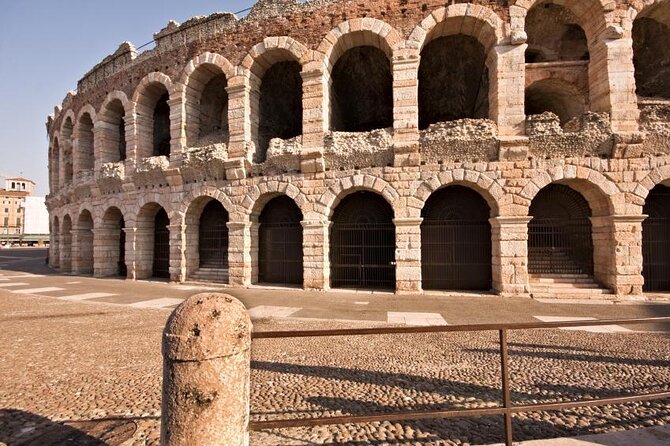
- Arena di Verona first: start where Roman architecture still shows up for cultural events
- Juliet’s House stop: see the famous balcony and Juliet statue, then move on fast
- Herbs Square + merchant clues: Lamberti Tower and Domus Mercatorum add context beyond the tourist basics
- Signori Square as a style sampler: Roman through Romanesque, Gothic, Renaissance, and modern in one walk
- Scala family tombs: a darker, political ending that fits the Romeo and Juliet theme
Starting at Piazza Bra and the Arena di Verona
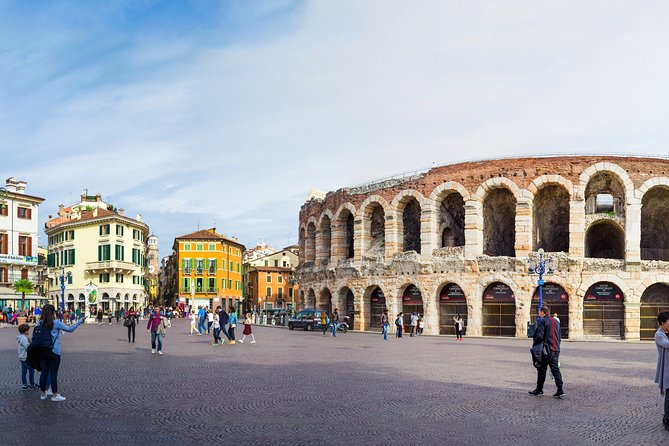
Your tour begins at Piazza Bra, right by the Arena di Verona. That’s a smart move, because the Arena is the kind of landmark that instantly makes you look up and pay attention.
The Arena is a Roman amphitheater that predates Rome’s Colosseum and has been in use for more than 2,000 years. It also still hosts cultural events, so it’s not just a museum object sitting still behind ropes.
From here, you’re not stuck listening in one place. You start walking while the guide lays groundwork about how Verona formed and why the city became such a natural stage for love stories and power struggles.
You can also read our reviews of more tours and experiences in Verona.


Juliet’s House: The Balcony Moment (Then the Bigger Story)
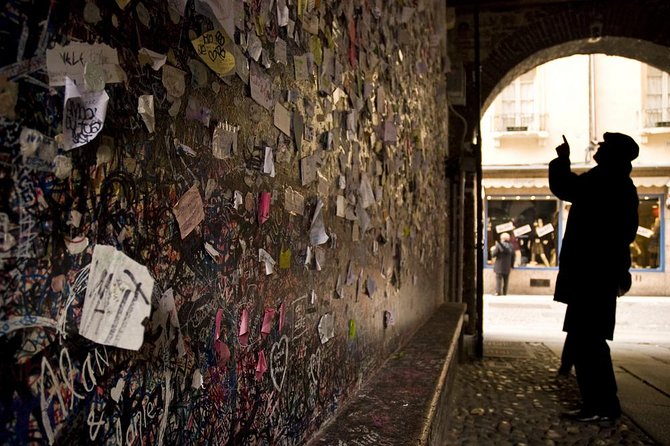
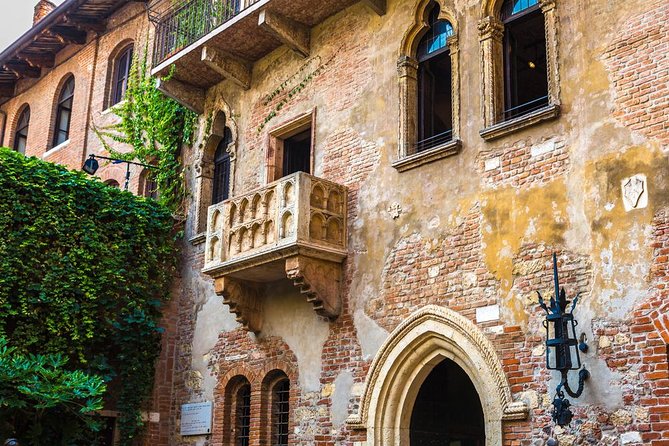
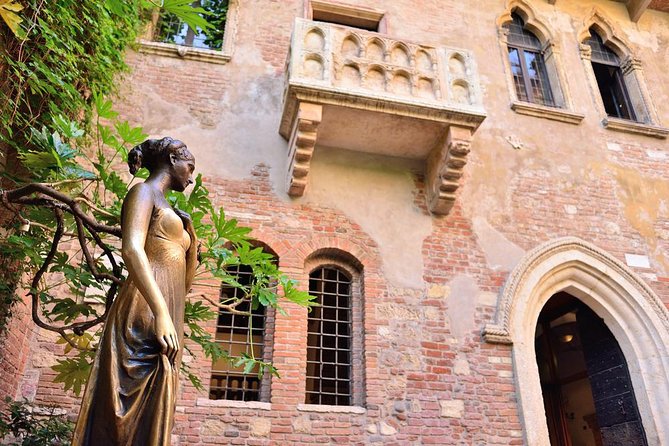
You’ll head to Casa di Giulietta to see Juliet’s famous balcony and the Juliet statue. This is the part most people come for, and it’s worth it even if you’re not a die-hard Shakespeare fan.
Just remember the important reality check: the Capulet and Montague families are fictional. What matters is how Verona’s real history and local legends give the tragedy emotional fuel. The guide uses that contrast to help you read the city as a place where drama could plausibly happen.
Also, the tour name can lead to expectations. The Juliet stop is a highlight, but it’s not the entire tour. You’ll get a full sweep of architecture and political Verona right after, which I think is the best way to use your limited time in town.
One practical point: Juliet’s House tickets are not included. If you want entry-related access at that stop, you’ll need to handle that separately.
Herbs Square, Lamberti Tower, and the Merchant-Guild Anchor
Next comes Herbs Square, a major turning point in the walk. The square is known for a lively market vibe, and it gives you a very “people live here” feeling rather than only monuments and postcards.
From there, the guide points out landmarks like the Lamberti Tower and nearby medieval structures. The Lamberti Tower matters because it represents the kind of civic pride and power Verona projected outward through stone and height.
You’ll also hear about the Domus Mercatorum, which was once the home of the city’s merchant guild. That detail is more than trivia. It helps you understand how Verona’s wealth and influence shaped its buildings, streets, and social life—well before the Renaissance glow and well beyond Shakespeare’s era.
If you like architecture, this is where the tour starts to feel more “usable.” You begin spotting clues in the urban fabric: what was built for commerce, what was built for status, and what got added when the city’s priorities shifted.
Signori Square: A One-Stop Tour of Verona’s Architecture Layers
Signori Square is the place where Verona shows off its multiple lives. The guide frames it as an intersection of Roman, Romanesque, Gothic, Renaissance, and modern elements, all sharing the same urban stage.
This stop is especially valuable if you struggle to tell styles apart on your own. Seeing different eras in such a tight area trains your eye quickly, and it makes later self-guided sightseeing more enjoyable.
You also get context for how and why buildings changed. You start to notice that Verona isn’t one single “theme.” It’s a layered city, built, adapted, damaged, repaired, and repackaged over centuries.
And yes, it’s still fun even if you don’t care about architectural labels. The square helps you understand why the city feels both grand and intimate—big in ambition, small in scale.
Courtyards and Backstreets to the Scala Family Tombs
After the squares, the route turns quieter. You’ll pass through medieval courtyards and backstreets as you make your way toward the Scala family tombs.
The Scala family ruled Verona in the 13th and 14th centuries. The guide connects their scandals and power struggles to the same kind of entanglements people love in Romeo and Juliet—family politics, rivalry, and consequences that linger.
This is a darker ending than the balcony start, and I like that contrast. Juliet gives you the romantic hook; the Scala tombs give you the stakes. Together, they make the Shakespeare theme feel less like a marketing label and more like a lens on real human conflict.
The walking here also helps your balance between “big picture” and “small details.” Courtyards slow you down, and you get a better sense of how medieval Verona probably felt to move through day to day—narrow passages, shaded corners, and sudden reveals.



Group Size, Pace, and How Rain Changes the Walk
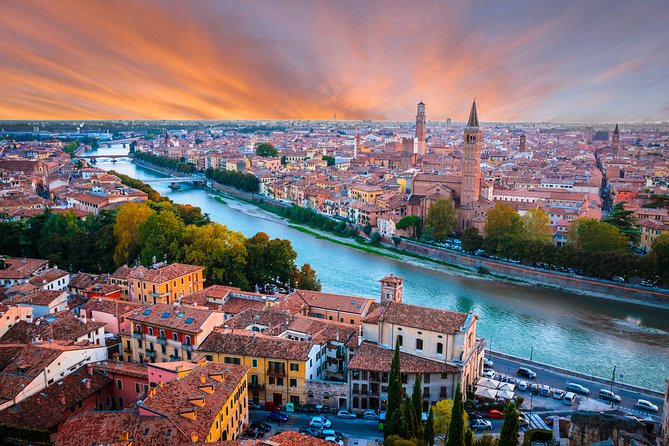
This tour runs rain or shine, so you’re planning for Verona weather rather than hoping for perfect skies. That matters because you’re walking through open-air streets and courtyards, not just hopping between indoor sights.
It also has a moderate physical fitness level. At about 1 hour 30 minutes, the pace is manageable, but you’ll still want comfortable shoes and a quick way to keep warm if the weather turns.
The group size is capped at 15 travelers, which is one reason this kind of guided walk works. Smaller groups mean you hear the guide clearly, and you’re more likely to get your questions answered without everyone getting rushed.
One more timing detail: the guide waits a maximum of 10 minutes from the departure time, and delays of up to 15 minutes can be accepted. If you’re late beyond that, you may miss the tour and it won’t be possible to join once it starts.
Price and Value: What $83.45 Buys You in Verona
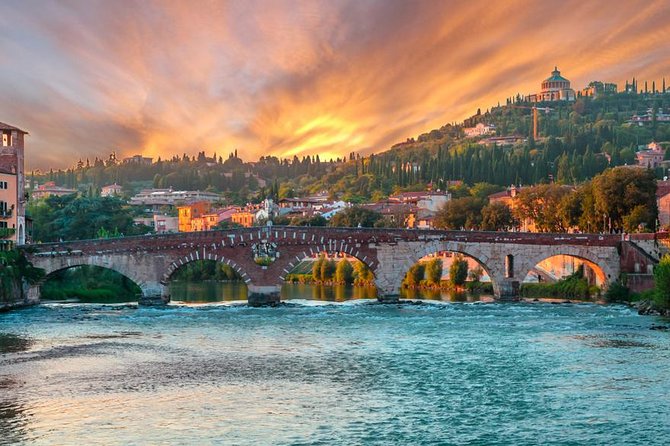
At $83.45 per person, this isn’t the cheapest “stand there and listen” tour. But you’re paying for several things that actually matter in a place like Verona.
You get a local professional guide and a small-group experience focused on top attractions. For many people, that’s the real value: you save mental energy. Instead of figuring out what to prioritize, you follow a route that links story, architecture, and context in a short time.
The route also covers multiple major areas without long transfers. You’re walking a tight loop that goes from Arena to Juliet’s area to central squares and then to the Scala tombs.
What’s not included affects the final value math. Entrance fees and Juliet’s House tickets are not included, and tips aren’t included either. If you plan to pay at paid stops, your total cost will climb a bit. Still, you control that portion, which I like.
Also, some groups include a focus on what you want to see. In the reviews, guides like Frank and Maria stand out for storytelling energy, and Andrea and Francesco are praised for giving clear context and practical architecture pointers. If you enjoy questions and conversation, this tour format is a good match.
Who This Tour Suits Best
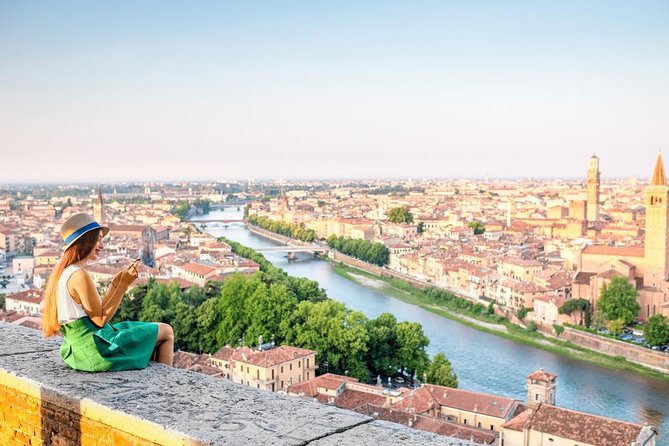
This tour fits best if you have a short stay and you want a smart Verona introduction. If you’re in town for a day or you only have a few hours to spare, you’ll leave with a coherent sense of where Verona’s drama lives—in stone, squares, and old political shadows.
It’s also a good choice if you care about architecture and city layers, not just famous names. The tour’s structure nudges you to look at style changes and street evolution, especially around Herbs Square and Signori Square.
If you hate walking, this might feel like too much. It’s not an extreme hike, but it is a walking tour with street crossings, steps, and outdoor time.
And if Juliet is your one must-see, you might still love it. Just treat Juliet’s House as a stop on a broader route, not the entire experience.
What to Do Before You Go (So It Feels Effortless)
To get the most out of this walk, show up with one simple goal: understand how the city’s past connects. The guide will explain romance and drama, but you’ll get extra value if you listen for the “why” behind each landmark.
Bring water, especially in warmer months. In the reviews, Maria is specifically praised for being thoughtful on hot days and even providing water, which is a good hint about what weather can feel like during the walk.
If you care about Juliet’s stop, check how you’ll handle tickets separately. Since tickets are not included, having your plan set in advance keeps the tour from turning into a scramble.
Finally, be on time. The tour format depends on starting together, and the guide’s wait window is limited.
Should You Book This Verona Walking Tour?
Yes, you should book it if you want a fast, story-led introduction to Verona that covers more than one famous balcony. The biggest strength is how the guide ties together Roman roots, medieval power, and Shakespeare-style drama in a short loop.
I’d skip it only if you want long time at one location or you don’t want to handle any separate ticket costs. Also, if you’re extremely weather-sensitive, remember it runs rain or shine, and you’ll be outside for much of the route.
If your priority is value through guidance—seeing the right places in the right order—this tour delivers. With small group size, strong guide energy (Frank, Maria, Andrea, Francesco, and Maria Pia are repeatedly highlighted), and a clear route from Arena to Scala tombs, it’s a very efficient way to get oriented in Verona.
FAQ
How long is the Fascinating Verona tour?
The tour lasts about 1 hour 30 minutes.
Where does the tour start and end?
It starts at Piazza Bra, Verona, and it ends at Casa di Giulietta, Via Cappello 23, Verona.
Is the tour offered in English?
Yes, it’s offered in English.
What is included in the price?
The tour includes a local professional guide and a small group tour of the top attractions in Verona.
Are Juliet’s House tickets included?
No. Giulietta Home (Juliet’s House) tickets are not included, and entrance fees are also not included.
What if it’s raining?
The experience runs rain or shine.
How big is the group?
The tour has a maximum of 15 travelers.
Can I cancel and get a full refund?
Yes. You can cancel for a full refund up to 24 hours in advance of the experience start time.