REVIEW · VERONA
Tour to discover the Unique History of Verona, the City of Art
Book on Viator →Operated by Guide in Verona · Bookable on Viator
Verona has a second face, and you’ll see it fast. This small-group tour strings together the city’s Roman start, medieval power, and Shakespeare afterglow in a tight 2.5–3 hour loop. I especially loved how Eugenio makes every stop feel like a live lesson, not a lecture.
I also like the pacing and value. You get a mix of free or included entries at several major sights, plus plenty of time to look, photograph, and ask questions without getting herded.
One thing to consider: a couple of churches can be closed for weddings or events, so you may end up seeing the exterior or adjusting on the spot. Also, the meeting point area can be a little tricky if you’re not good at finding routes on your phone.
In This Review
- Key highlights you’ll care about
- Starting at I Portoni della Bra: how the whole walk makes sense
- Arena di Verona: the famous monument with the overlooked backstory
- Scaligero Bridge: a photo stop that turns into a history lesson
- Arco dei Gavi and Porta Borsari: reading Roman Verona in plain sight
- Chiesa di San Lorenzo and Basilica di Santa Anastasia: Romanesque details and real-world limits
- Arche Scaligere and the Scaligeri story: where medieval power becomes physical
- Romeo’s House and Casa di Giulietta: the story you came for, explained with perspective
- Piazza dei Signori and Piazza delle Erbe: politics in one plaza, people in the next
- What you pay: the $70.14 value check and the one likely extra cost
- How long is long enough? Timing, group size, and comfort
- Weather and church closures: what to expect on real days
- Who should book this tour (and who should skip it)
- Quick guide tips before you go
- Should you book this Verona history walk?
- FAQ
- How long is the Verona history tour?
- What is the price per person?
- How big is the group?
- Is the tour offered in English?
- Is pickup offered?
- Where does the tour start and end?
- Are tickets for the sights included?
- Are service animals allowed?
- What if I need to cancel?
Key highlights you’ll care about
- Up to 15 people means you actually hear the guide and can ask real questions
- Free or included site access at many stops helps stretch your budget
- A timeline you can walk: Roman Verona → medieval Scaligeri → Romeo and Juliet
- Eugenio’s personality brings humor and local context, not just dates
- Ends near Casa di Giulietta, so you can continue exploring without backtracking
- Multiple daily time slots make it easier to fit into a short Verona visit
Starting at I Portoni della Bra: how the whole walk makes sense
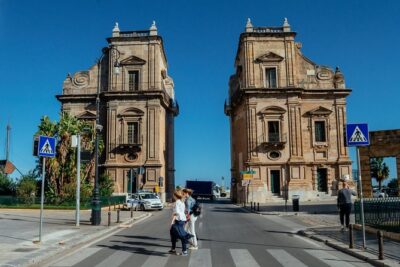
The tour starts at I Portoni della Bra (Corso Porta Nuova). It’s a great place to begin because it sits right where old Verona starts to feel real—between big-city movement and ancient stone. The route is designed so you don’t just see famous buildings; you learn what made Verona matter.
You’ll get the guide’s framing early: this city didn’t become important by accident. You’ll hear how power shifted from Roman rule to medieval families, and how art and politics show up in the layout and the monuments. That matters because Verona can feel like a pile of pretty stops at first glance. With a guide, it clicks into a story.
A practical note: you’ll be walking. Even if each stop is short, you’ll cover enough ground to want comfy shoes and water if the weather is warm. One group mentioned doing the walk in about 35°C—so yes, hydration helps.
You can also read our reviews of more tours and experiences in Verona.
Arena di Verona: the famous monument with the overlooked backstory
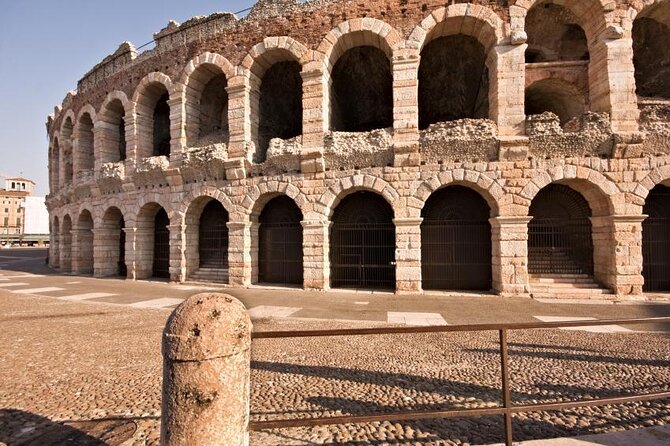
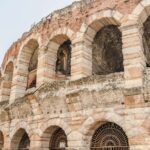
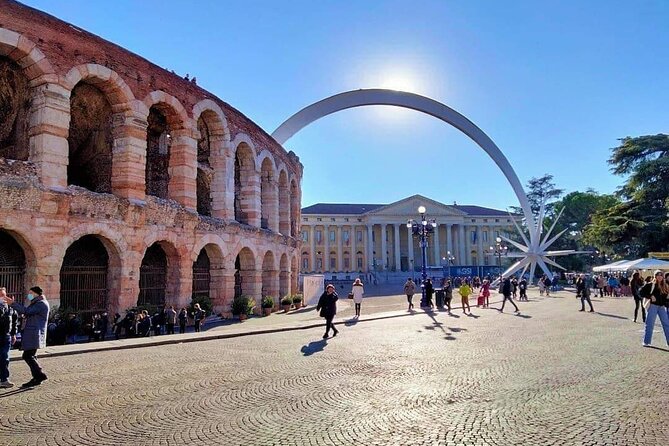
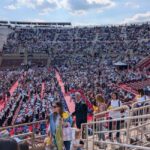
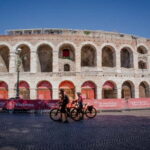
Your first big stop is Arena di Verona. The Arena is one of those places you’ve probably seen in photos, but the tour focus is on the secret history angle—what the monument was for, and why it became iconic. You also get a free admission ticket for this stop.
What I like about starting here: it sets the tone for the whole tour. Verona’s drama isn’t only medieval street romance; it’s also public spectacle and city identity. Even if you’ve seen amphitheaters before, Eugenio’s approach helps you notice details you might miss on your own.
If you’re the type who enjoys small architectural clues—materials, design choices, how crowds moved—you’ll get a lot out of this stop.
Scaligero Bridge: a photo stop that turns into a history lesson
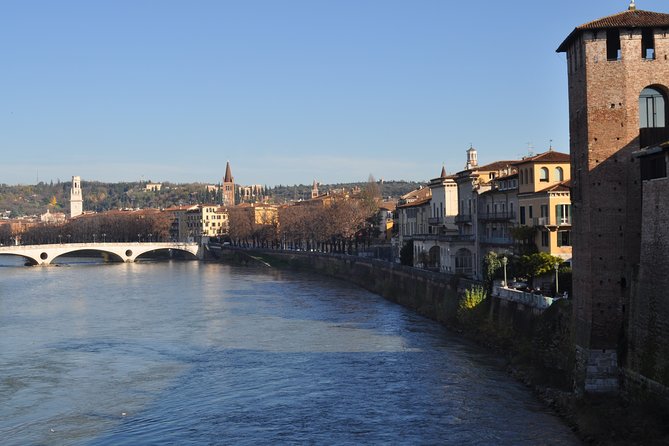
Next you’ll be at Ponte Scaligero (Scaligero Bridge). It’s famous for a reason, and the tour keeps it efficient—about 8 minutes—with admission included. You’ll be able to get the classic views and pictures, but the bigger win is learning why this medieval-looking structure belongs to Verona’s identity.
Bridges are often treated as shortcuts by tourists. On this walk, it’s the opposite: it’s a checkpoint. You’ll start noticing how medieval families shaped the city’s visual language, not just its politics.
Arco dei Gavi and Porta Borsari: reading Roman Verona in plain sight
Then the route goes Roman, fast.
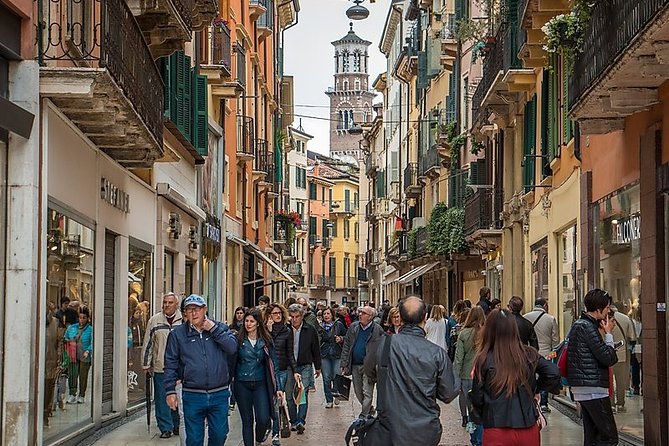
At Arco dei Gavi, you’ll see a triumphal arch from the Roman era and get the story behind it (about 10 minutes, with free entry). Even though it’s a small stop, it works as a reset. Verona becomes less about modern charm and more about how Romans organized a city meant to last.
After that comes Porta Borsari, a World Heritage Site and the entrance to Roman Verona. You’ll spend around 10 minutes here, with free admission. This is one of those sights where standing near the gate helps you imagine the city at full strength—walls, movement, and the idea that this place was built for control and trade.
If you’ve only seen Roman ruins from far away, this stop brings it closer. It helps you see Verona as a city with layers, not just a theme park of famous names.
Chiesa di San Lorenzo and Basilica di Santa Anastasia: Romanesque details and real-world limits
Next is Chiesa di San Lorenzo, a 12th-century Romanesque church. The stop is about 15 minutes, and admission is included. Romanesque churches can feel similar at first if you’re not used to the style, but the guide’s job is to point out what makes this one distinct.
After that you’ll approach Basilica di Santa Anastasia (about 10 minutes). Here’s the one budget surprise: admission is not included. So if you want inside time, you’ll need to plan for that separately.
Also, don’t be shocked if you encounter closures. Some churches were reported as closed due to weddings and other events. That doesn’t mean the tour fails—it just means your experience may lean more exterior on certain days.

Arche Scaligere and the Scaligeri story: where medieval power becomes physical
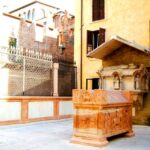
The tour moves into the medieval heart with Arche Scaligere. This is one of the most representative Middle Ages stops in Verona. You’ll have about 15 minutes, and entry is free.
This is where the tour earns its title about unique history. You’re not just looking at tombs—you’re looking at how a city remembers who held power. The guide ties the monuments to politics and identity so you understand why these people matter in the first place.
If you’re traveling with teens or someone who usually tunes out at history stops, this one often works well because it feels like art and architecture, not a textbook. It gives context for why Verona’s center looks the way it does.
Romeo’s House and Casa di Giulietta: the story you came for, explained with perspective
Now you shift from medieval Verona to the world people actually associate with the city.
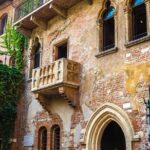
You’ll stop at Romeo’s House (Casa di Romeo) for about 5 minutes with free admission. The point here isn’t deep drama—it’s a quick launch. The guide helps you start telling the Romeo and Juliet story with the real city as the stage.
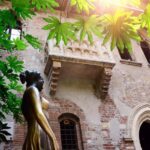
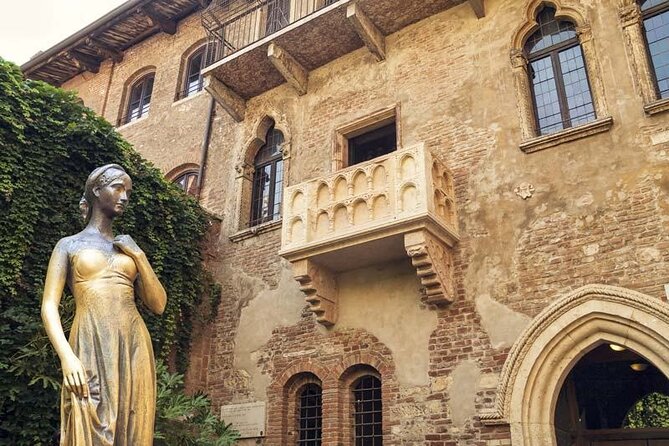
Then you end at Casa di Giulietta for around 20 minutes (also free entry). This is the famous finish line, and it’s smart because you’re walking out right where most people want to be.
A quick expectation check: Casa di Giulietta can be crowded because it’s famous. The upside of having the tour guide here is that you’re not just queueing—you get a context layer so you understand what you’re looking at and how the story has been shaped by time and tourism.
Piazza dei Signori and Piazza delle Erbe: politics in one plaza, people in the next
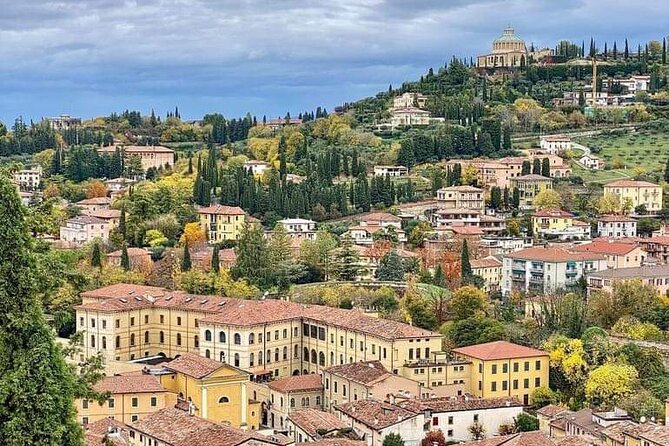
Your tour spends time in two major open squares, and they work as a contrast.
Piazza dei Signori is the political center, and the tour gives it about 20 minutes with free admission. Here, Verona feels like government and power—space designed for gatherings and influence.
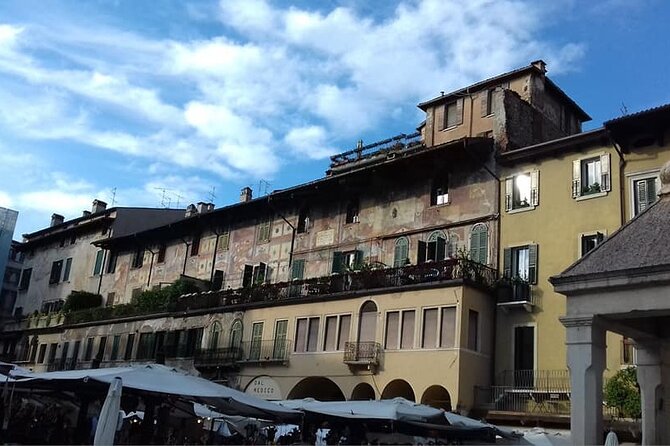
Then Piazza delle Erbe follows for another 20 minutes, also free. This square is the city center where you get choices: snacks, shopping, and a constant stream of street life. It’s described as always full of joy, and that matches what you’ll feel in your feet and ears—people moving, talking, stopping for gelato, pausing to look up at buildings.
If you want a smooth transition after the tour, this is it. These squares are ideal for turning history into a real afternoon plan.
What you pay: the $70.14 value check and the one likely extra cost
The price is $70.14 per person, and the best way to judge value in Verona is tickets plus time.
Here’s what your ticket situation looks like on this route:
- Free entry at key stops like Arena di Verona, Arco dei Gavi, Porta Borsari, Arche Scaligere, Romeo’s House, Piazzas, and Casa di Giulietta
- Included admission at Scaligero Bridge and Chiesa di San Lorenzo
- Basilica di Santa Anastasia is the one marked as not included
So your money goes farther than it looks at first glance. You’re paying for a focused walking lesson, guidance through key areas, and access to several sights without needing to buy separate tickets for everything.
The only extra you might pay for is Santa Anastasia if you want inside time. If you’re the type who prefers to spend money on food instead of another entry ticket, you can decide that day.
How long is long enough? Timing, group size, and comfort
The tour runs about 2 hours 30 minutes to 3 hours. That’s a sweet spot. In that time, you can cover a meaningful arc of the city without exhausting yourself or spending your whole day standing around.
Group size is capped at 15 travelers, which is big enough to feel sociable, but small enough for real conversation. That matters because many people don’t actually know what to ask once they’re in front of a building. Eugenio’s style makes it easier to ask, since he points out details that prompt questions.
Pickup is offered, which helps if you’re trying to avoid the maze of figuring out where to start. And the tour uses a mobile ticket, which reduces stress when you’re on the move.
Weather and church closures: what to expect on real days
Let’s be honest: Verona in summer or shoulder season can mean heat and crowds. One review mentioned doing the tour around 35°C, and that’s your reminder to bring water and take small breaks.
Also, you might find a church closed because of weddings or events. That’s not unusual in an active city. Your best move is to keep expectations flexible. The tour still gives you the route logic and key context even if an interior visit isn’t available.
Who should book this tour (and who should skip it)
This experience is a great fit if you:
- want a first-timer overview that connects Roman, medieval, and literary Verona
- enjoy architecture and public spaces more than museum-heavy days
- want guidance that mixes stories with what you’re actually seeing in front of you
- value small-group pacing and the chance to ask questions
You might want to skip or consider an alternative if:
- you hate walking through crowded squares at the end of the tour
- you’re only interested in one or two specific landmarks
- you need guaranteed inside access for every church, since real-day closures can happen
Quick guide tips before you go
A few small things that make the tour smoother:
- Arrive a few minutes early and take a second look at the meeting point area around I Portoni della Bra
- If you’re traveling in hot weather, plan for water and a slower pace
- Bring a camera with a fully charged battery. The best angles show up at the bridge and Roman gates
- If Basilica di Santa Anastasia interests you, be ready for the possibility you may pay separately
Should you book this Verona history walk?
If you want Verona to make sense—Roman gates, medieval power, and the names you came for—this is a strong pick. The price works out well because multiple stops include free entry, and the pacing keeps you moving without feeling rushed.
I’d especially recommend it if you’re short on time and want a guided route that ends where you’ll likely spend your next hour anyway: Casa di Giulietta and the surrounding center.
If you prefer total control and self-paced exploring, you can still visit these sights on your own. But with Eugenio, the city becomes a story you can walk, and that’s hard to replicate with guidebooks alone.
FAQ
How long is the Verona history tour?
It lasts about 2 hours 30 minutes to 3 hours.
What is the price per person?
The listed price is $70.14 per person.
How big is the group?
The tour has a maximum of 15 travelers.
Is the tour offered in English?
Yes, it’s offered in English.
Is pickup offered?
Yes, pickup is offered.
Where does the tour start and end?
It starts at I Portoni della Bra, Corso Porta Nuova, 2, 37122 Verona, and ends near Casa di Giulietta, Via Cappello, 23, 37121 Verona.
Are tickets for the sights included?
Many stops are marked as free or included, but Basilica di Santa Anastasia is noted as admission not included.
Are service animals allowed?
Yes, service animals are allowed.
What if I need to cancel?
You can cancel for free up to 24 hours in advance of the experience start time for a full refund.