REVIEW · ROME
From Rome to Tuscany: Discover Florence and Pisa in One Day
Book on Viator →Operated by Amigo Tours Spain · Bookable on Viator
Pisa and Florence in one day? Sounds impossible, but it works. This is a long coach day that trades extra museum time for the big hits: Ponte Vecchio, the Duomo area, and Pisa’s Leaning Tower photos from Piazza dei Miracoli. I love how the bus guide frames the history while you’re stuck on the road, and I also like the built-in free time so you can wander when Florence throws you a good side street. The main drawback is the tight schedule and lots of walking, especially in Florence where the bus parking isn’t right at the sights.
You get a bilingual tour leader on the bus (English plus Spanish), a mobile ticket, and an optional Florence audio guide with headphones recommended. You’ll see the iconic places quickly, then spend your time in the squares and streets making your own calls—food, viewpoints, and photo angles included.
If you hate early mornings or you move slowly, this is probably not your day.
Key things I’d plan for before you go
- A very early start (7:00 am) to squeeze Pisa and Florence into one day
- Four-hour drives each way, so the coach time matters
- Pisa is mostly exterior views from Piazza dei Miracoli, not a full guided cathedral visit
- Florence is self-walking time around Santa Croce, the Duomo square area, and major landmarks
- Expect longer walks than you think, with bus parking that can mean a lot of steps
- Optional audio guide in Florence (smartphone required; internet help needed for download)
In This Review
- One-Day Pisa and Florence from Rome: The Honest Deal
- Meeting Point and Timing: 7:00 am Means You Plan for the Day
- Piazza dei Miracoli in Pisa: Leaning Tower Photos and a Cathedral in the Middle
- Santa Croce and Florence’s First Square: A Quick Kickstart for the Renaissance
- The Duomo Area: Brunelleschi’s Dome and the Red-Tile Moment
- Ponte Vecchio and Its Merchant Shops: Why This Bridge Feels Different
- Piazza della Signoria: Florence’s Power Square in Plain Sight
- Coach Day Reality Check: Why This Tour Feels Fast (and How to Make It Work)
- Value and Price: Does $180.19 Make Sense?
- Optional Florence Audio Guide: Helpful, but Know the Tech Limits
- Who This Tour Is Best For (and Who Should Skip)
- My Straight Tips to Have a Better Day
- Should You Book Rome to Tuscany for Pisa and Florence in One Day?
- FAQ
- What time does the tour start?
- Where do I meet for the tour?
- How long is the trip?
- How many people are in the group?
- Is hotel pickup included?
- What’s included in the price?
- Is lunch included?
- Is there an audio guide for Florence?
- Is the tour wheelchair-friendly or low-walking?
- Do kids need a car seat?
- What if the weather is bad?
One-Day Pisa and Florence from Rome: The Honest Deal
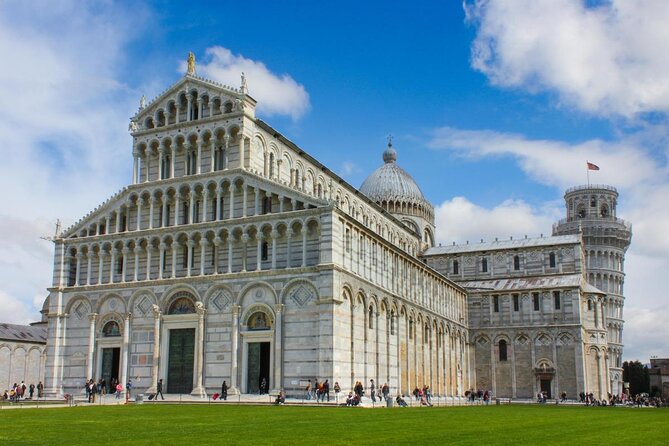
This is a real “hit the highlights” day trip. You’re leaving Rome, driving to Pisa first, then continuing on to Florence—all on the same coach—so you get famous views without needing a hotel change or extra planning.
I like that the trip gives you both structure and breathing room. There’s guided commentary on the bus, plus free time at stops so you can actually enjoy the places instead of just marching through them. In practice, that means you’ll get the story, then you choose how much time to spend with the façade, the square, and the best photo positions.
The trade-off is energy. The itinerary is tight, the distances inside the cities are significant, and the day runs about 14 hours. If you’re hoping for a relaxed, sit-down Florence day, this isn’t that.
Meeting Point and Timing: 7:00 am Means You Plan for the Day
You’ll meet at Piazzale della Stazione Tiburtina, 9, 00162 Roma RM, with a start time of 7:00 am. The tour ends back at the same meeting point, so your day is one continuous loop: Rome → Pisa → Florence → Rome.
You should expect a long coach ride. The Rome-to-Pisa drive is about 4 hours, and the Florence-to-Rome drive is another 4 hours. That’s why the day works best when you treat bus time like part of the sightseeing—bring something to snack on, and don’t count on getting “fresh” right before the first major stop.
Also note the practical side: this group is limited to a maximum of 30 travelers, and you’ll be near public transportation at the meeting point.
You can also read our reviews of more tours and experiences in Rome.


Piazza dei Miracoli in Pisa: Leaning Tower Photos and a Cathedral in the Middle
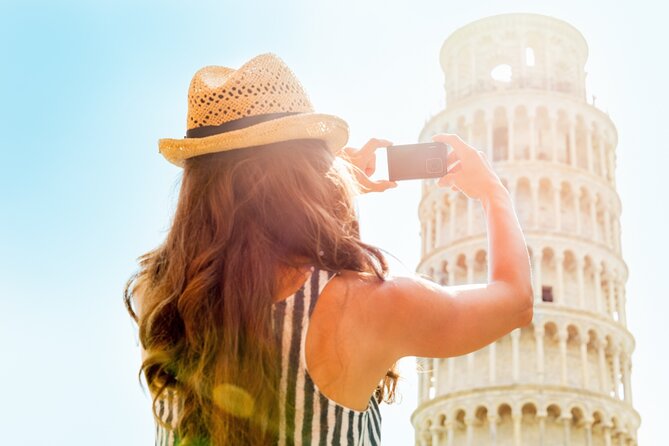
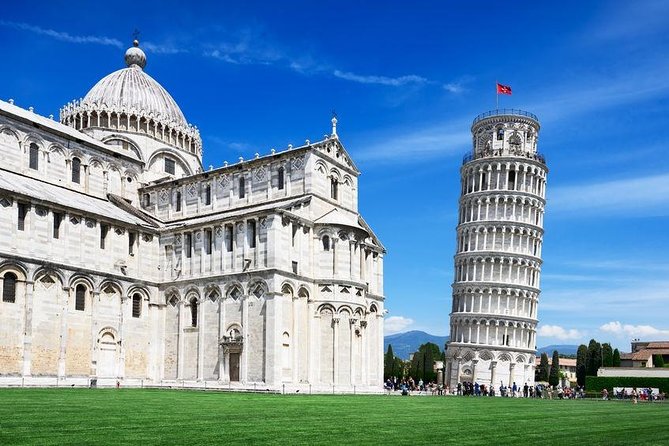
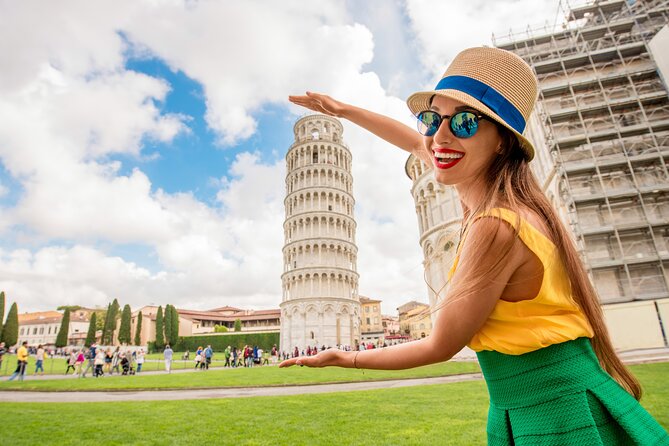
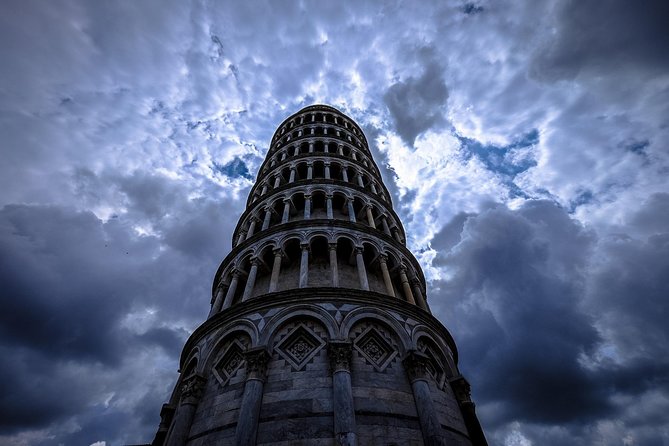
Pisa’s stop centers on Piazza dei Miracoli, the monumental square where the Leaning Tower and the cathedral form the iconic skyline. You’ll have free time here—enough to take the funny angles, try the classic perspective photos, and just soak in how the marble bands look in real light.
One of the neat facts you’ll hear is that the tower’s story isn’t a single one-direction lean. It’s described as having leaned one way at the start, then continued to lean in the opposite direction. It’s the kind of detail that makes you look twice at the tower instead of just snapping a quick picture.
You’ll also be right by the Cathedral of Santa Maria Assunta at the center of the square. It’s a medieval Catholic cathedral dedicated to the Assumption of the Virgin, and it serves as the episcopal seat of Pisa. Even if you don’t go inside, standing in the square gives you that “architecture in a museum-like setting” feeling.
Potential drawback: this is a time-saver stop. You’re not getting a full, slow guided exploration here. Think of it as: arrive, see, take photos, learn the basics, then move on.
Santa Croce and Florence’s First Square: A Quick Kickstart for the Renaissance
Next comes Florence with a first stop at Piazza Santa Croce. The centerpiece is the Basilica di Santa Croce, a major Franciscan church known for its distinctive Gothic architecture. This square is also tied to big names: Michelangelo, Galileo Galilei, Niccolò Machiavelli, and Dante Alighieri are connected to its memorial tradition.
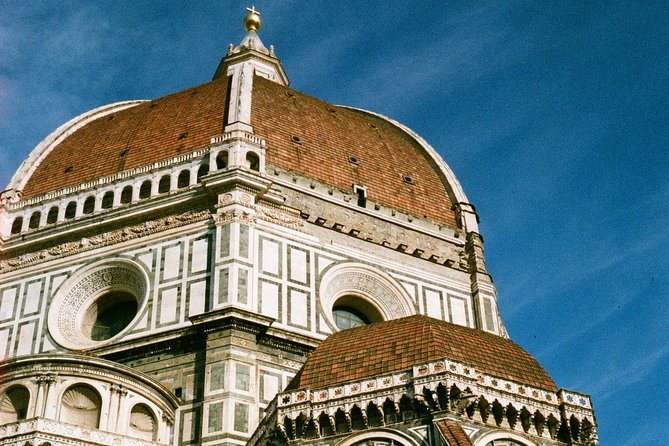
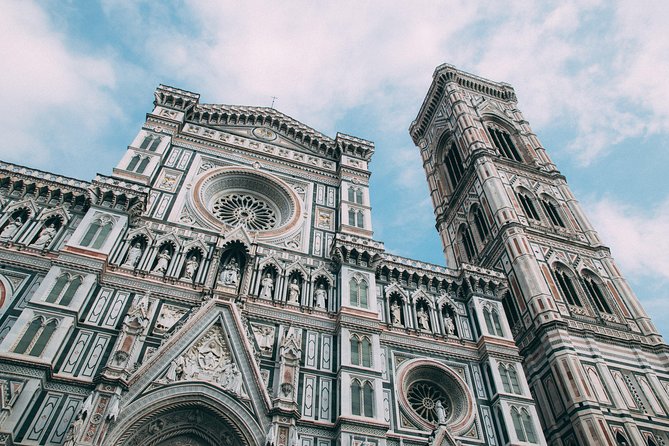
After that, you’ll shift toward the Piazza del Duomo area. This is where Florence hits hard—because even without entering any building, the composition of the square is unforgettable. You get the Cathedral of Santa Maria del Fiore and Giotto’s Campanile as part of the view, and you’re surrounded by the feeling that Florence built itself around art and power.
You’ll have free time to walk around and discover the area on your own. That matters because Florence rewards curiosity. In a guided walking tour, you might miss the small street that leads to a better photo. Here, you get just enough freedom to follow your curiosity for a bit.
Possible downside: the Duomo area is popular, and crowds can slow your steps. The tour keeps moving, so plan to accept that you won’t see every single angle.
The Duomo Area: Brunelleschi’s Dome and the Red-Tile Moment
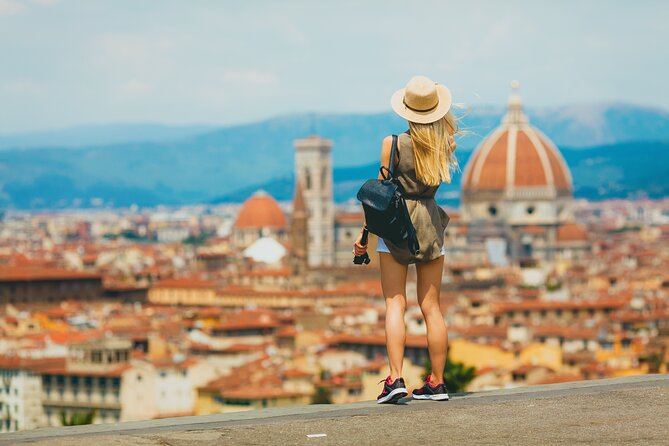
Florence’s famous dome is the reason people make the trip. The tour framing highlights the Renaissance dome designed by Filippo Brunelleschi, often described as an architectural masterpiece. The look you’re aiming for is the red-tiled dome plus the marble façade—this is the Florence postcard moment you’ll want time for.
You’ll also see Giotto’s bell tower, which anchors the square’s skyline. It’s one of those structures that looks more dramatic when you’re up close instead of through photos.
In addition, the route includes another major church sight: a Dominican church from the 15th century with frescoes by Gothic and early Renaissance masters. Even if you only get a partial view, you’ll understand why Florence is treated like an outdoor art textbook.
Practical point: the tour gives free time, but it doesn’t promise you a full cathedral entry experience. If you’re planning to go inside specific churches or museums, you should expect you’ll need to handle those tickets yourself.
Ponte Vecchio and Its Merchant Shops: Why This Bridge Feels Different
Next up is the walk over Ponte Vecchio. This is not just a bridge with views—it’s a bridge with history baked into the design. You’ll see the shops lined along both sides, historically used by merchants, especially jewelers and goldsmiths.
There’s also a detail that makes the scene feel unusually alive: the “tents” or awnings are suspended over the river and supported by columns. It’s one of those things you might not notice from far away, but up close it helps explain how the bridge worked as a trading corridor, not just a crossing.
I like this stop because it’s visually easy. It doesn’t require timing like a museum line does. You can look, photograph, then drift a few steps and find a better viewpoint.
Watch-outs: the day is long and the walking adds up, so plan for a few slower minutes here if you need them.

Piazza della Signoria: Florence’s Power Square in Plain Sight
Finally, you’ll reach Piazza della Signoria, Florence’s central square tied to civil power. It’s described as the seat of the Old Palace and the heart of the city’s social life. Even if you don’t read every plaque, the square’s layout makes the “this is where decisions happened” feeling obvious.
This stop also tends to be a good place for a last set of photos before heading back toward the coach. It gives you a sense of scale—Florence doesn’t just look pretty. It looks like it ran the place.
If you’ve been walking since Pisa, this square is a nice “reset” location: open space, dramatic buildings around you, and an easy pace to regroup.
Coach Day Reality Check: Why This Tour Feels Fast (and How to Make It Work)
The biggest factor in the experience is the bus-heavy format. You’re on the coach for hours, and the city stops are built around quick orientation plus free time. That’s why you get a bilingual tour leader on the bus—English and Spanish commentary helps you follow what you’re looking at, instead of treating Florence like a self-guided scavenger hunt.
But here’s the key planning truth: the free time doesn’t mean “slow.” The itinerary is tight, and the walking distances in Florence can surprise you. Some people report a long walk from where the bus parks to the main areas, with total walking adding up quickly.
My advice: pack like you’re doing a long day hike. Comfortable shoes matter more than fancy outfits. And if you’re someone who likes to take your time at one major sight, you may need to adjust expectations—this tour is about breadth, not depth.
One smart trick: if you’re open to it, you can reduce your walking burden in Florence. A few riders mentioned taking a golf cart for a fee (one figure shared was about €50 per person). Availability and pricing can vary, but the idea is consistent: use paid transport if mobility or energy is the issue.
Value and Price: Does $180.19 Make Sense?
At $180.19 per person, you’re paying for the convenience of two cities in one day plus guided commentary. What you’re not buying is a slow, museum-style Florence experience.
Here’s what you are getting:
- Air-conditioned coach transport round-trip from Rome
- Bilingual tour leader with narration on the bus
- Free time at major Pisa and Florence locations
- Optional Florence audio guide (if selected), with headphones recommended
Here’s what can cost extra:
- Lunch isn’t included
- Museum or interior tickets are not built into the experience (even when the main sights are free to access)
- In Pisa, there’s a note that you may take a train depending on traffic, with a €5 cost mentioned
- There’s no dedicated guided walking tour in Pisa and Florence included
So, is it worth it? If you’re short on time in Rome and you want the postcard hits—Pisa square views, Ponte Vecchio, and the Duomo area—then the price can be fair. If your goal is deep museum time, long cathedral entry visits, or a gentle pace, you’ll likely feel rushed and wish you’d chosen a different setup.
Optional Florence Audio Guide: Helpful, but Know the Tech Limits
If you choose the audio guide option in Florence, you’ll get instructions to download it after booking confirmation. You’ll need a smartphone (Android version 5.0 or later or iOS, with listed compatibility limits), and you’ll need an internet connection for downloading on the bus.
Headphones are recommended so you’re not fighting noise while you walk. And if your phone is low on battery, consider an external charger—because this is the kind of add-on that’s great when it works and annoying when it doesn’t.
Who This Tour Is Best For (and Who Should Skip)
This is a solid choice for:
- First-timers to Tuscany who want a fast sampler
- People who like the idea of “see the big things, then wander a little”
- Travelers comfortable with a demanding pace and lots of steps
It’s not a great choice for:
- Anyone with mobility issues or who struggles with long walks in heat
- People who need lots of seated downtime between stops
- Travelers who want a fully guided, in-depth Florence museum day
Also, it helps if you can handle early mornings. Starting at 7:00 am means you should plan your Rome night earlier—no late-night plans that turn into a groggy coach ride.
One more family note: children under 11 must use a baby car seat, and the operator can’t provide one—bring your own if you need it.
My Straight Tips to Have a Better Day
A day like this goes smoother when you plan for the friction points.
Start with shoes, not souvenirs. If your feet hurt early, your whole day shrinks.
Pick one or two “must-do” moments in Florence. You’ll see the Duomo area and major sights, but deciding what you want to linger on (for example, dome views vs. church façades vs. the bridge angles) keeps you from wasting time in indecision.
Bring water and snacks. Lunch isn’t included, and there can be a morning break for food (some groups describe a breakfast stop with regional snacks). Don’t assume you’ll be fed enough to coast.
Use your free time to your advantage. This tour doesn’t lock you into one long guided walk. When you get free time, grab a practical win: quick espresso, a quick viewpoint, and then move on before the schedule catches up.
If you need help finding the group, don’t rely on luck. There are mentions of using app-based help like WhatsApp and maps to reconnect if someone strays. Keep your phone handy.
Should You Book Rome to Tuscany for Pisa and Florence in One Day?
Book it if you want a fast, efficient taste of Pisa and Florence without switching hotels or eating up days. The best part is the combination of bus narration plus free time at the squares where the famous sights live—so you get context and you still get to wander.
Skip it if your ideal day is slow, detailed, and museum-heavy, or if walking long distances is a problem. The tight timing and the distances inside Florence are real, and this tour is built for seeing a lot, not savoring everything.
If you’re the flexible type—comfortable with early mornings and planning your pace—you’ll likely come away feeling like you squeezed in exactly the scenes you came to see.
FAQ
What time does the tour start?
It starts at 7:00 am.
Where do I meet for the tour?
Meet at Piazzale della Stazione Tiburtina, 9, 00162 Roma RM, Italy.
How long is the trip?
The duration is about 14 hours.
How many people are in the group?
The tour has a maximum of 30 travelers.
Is hotel pickup included?
No. Pick up in hotels is not included, and you meet at the fixed meeting point.
What’s included in the price?
An air-conditioned vehicle, a bilingual tour leader, guided narration on the bus (English and Spanish), and an audio guide in Florence if you selected that option.
Is lunch included?
No, lunch is not included.
Is there an audio guide for Florence?
You can select an audio guide option for Florence. It requires a compatible smartphone and internet access to download.
Is the tour wheelchair-friendly or low-walking?
It’s not recommended for people with mobility problems due to the demanding pace and long distances in the cities.
Do kids need a car seat?
Yes. Children under 11 must seat in a baby car seat, and the operator can’t provide one, so you should bring your own.
What if the weather is bad?
The experience requires good weather. If it’s canceled due to poor weather, you’ll be offered a different date or a full refund.