REVIEW · POMPEI CAMPANIA
Pompeii: Afternoon to Sunset Guided Tour with Ticket
Book on GetYourGuide →Operated by Enjoy Pompeii · Bookable on GetYourGuide
Pompeii hits different at sunset. This guided walk, led by archaeologists like Francesco (Frankie) and Angelo, makes the city feel real fast. I love the skip-the-line entry and the way the guide connects buildings to daily life, from civic centers to neighborhood corners. One catch: it’s still a walking tour on uneven ancient surfaces, so it may feel like a lot if you’re tight on mobility or stamina.
You’ll cover major must-sees—Forum, Basilica, Thermal Baths, Theater—and you’ll hear how Vesuvius changed everything in 79 AD. By the end, the light cools down and Pompeii feels quieter, even if the site is always busy.
In This Review
- Key highlights at a glance
- Pompeii at golden hour: why this afternoon-to-sunset slot works
- Price and value: what $58 buys you (and why it’s not just a ticket)
- Finding the tour start: Ristorante Bar Sgambati and the red sign
- Skip-the-line entry: how to use the extra time well
- The civic heart: Forum, Basilica, and the Antiquarium
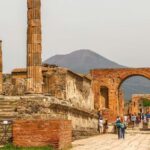
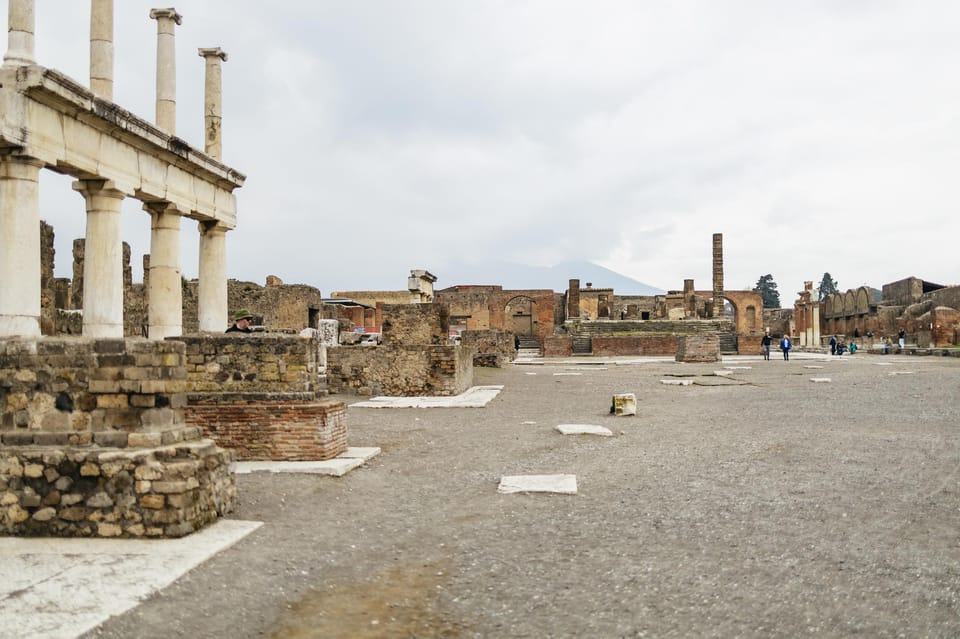
- Forum: where public life happened
- Basilica: law, meetings, and the architecture of order
- Antiquarium and context
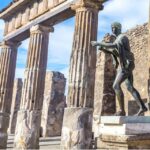
- Thermal Baths: Pompeii’s real-life showpiece for leisure
- The Theater: Roman entertainment, not just a pretty ruin
- Neighborhood streets: bakeries and housing blocks you can actually picture
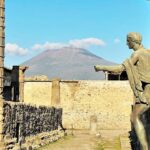
- The Vesuvius story: how the eruption changes the way you see every wall
- The pacing reality: walking, uneven ground, and stamina
- Who should think twice
- Sunset is the bonus—here’s what it changes on site
- After the guided walk: what to do next with your leftover time
- Tour guide impact: why names like Francesco and Anna keep coming up
- Should you book this Pompeii afternoon-to-sunset tour?
- FAQ
- How long is the Pompeii afternoon to sunset guided tour?
- Is skip-the-line entry included?
- Where do I meet the guide?
- Which ruins are included on the tour?
- What language will the guide speak?
- What should I bring with me?
- Is transportation included?
- Is this tour available as a private or small group?
- Is the tour suitable for everyone?
- Can I cancel and get a full refund?
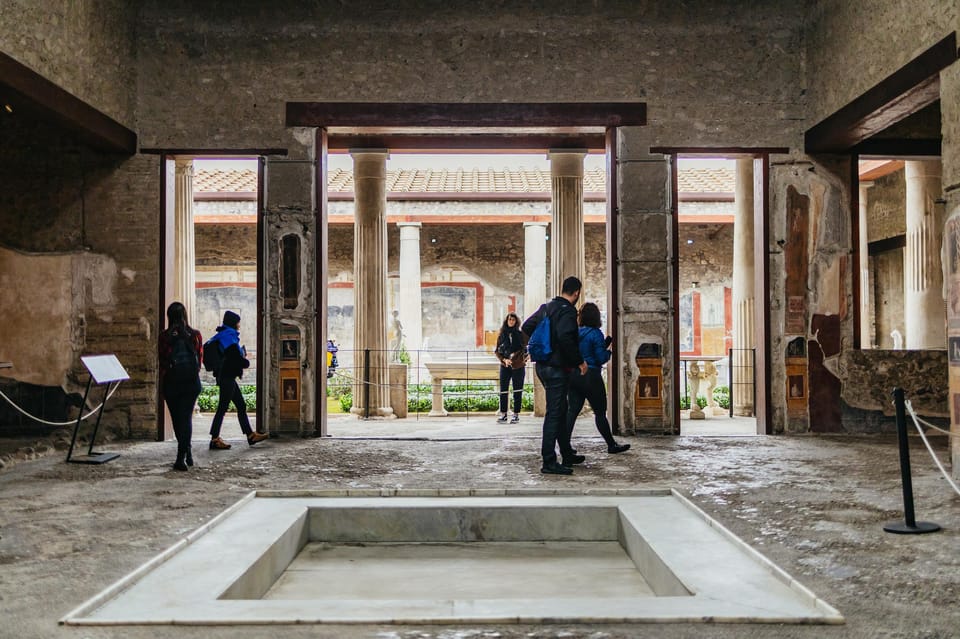
Key highlights at a glance
- Skip-the-line entry, separate entrance: more time walking, less time stuck in queues.
- Archaeologist guide: you get on-the-ground interpretation, not just a script.
- Civic Pompeii in 2.5 hours: Forum, Basilica, Antiquarium, plus the Theater and Thermal Baths.
- Everyday-life stops: bakeries and housing blocks help you picture daily routines.
- Sunset timing: the late-afternoon slot often feels cooler and calmer for long ruins.
- Small groups possible: many departures run as private or small-group tours, which helps pacing.
Pompeii at golden hour: why this afternoon-to-sunset slot works
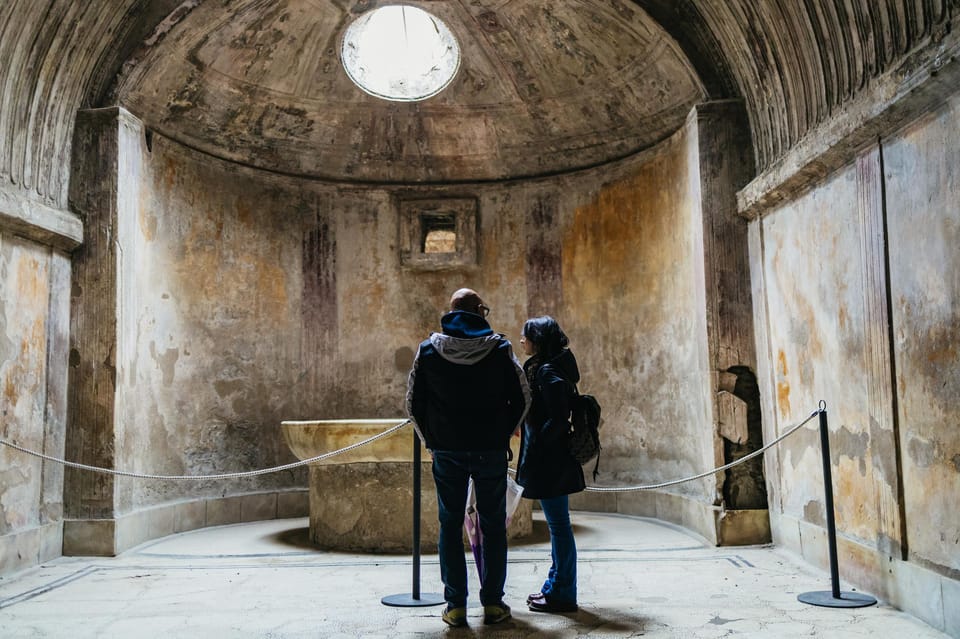
Pompeii is huge. That simple fact is why most self-guided visits feel a bit like “great… now where do I look?” With this format, you’re not trying to map the whole site in a couple hours. You get a focused route, explained in context, then you finish near sunset when the ruins start looking less like an excavation and more like a lived-in place.
I also like the emotional rhythm of the tour timing. The story begins before the eruption—how people built, worked, met, bathed, shopped—and ends with the calm of the late day. It gives your brain time to switch from information mode to atmosphere mode.
The other big practical win: fewer headaches. Many guides are able to keep the group moving and stop often for questions and key views, which matters at Pompeii where it’s easy to get separated or lose momentum. Reviews mention guides guiding at the group pace, and even finding shadier spots when needed.
You can also read our reviews of more tours and experiences in Pompei Campania.

Price and value: what $58 buys you (and why it’s not just a ticket)
At $58 per person for about 2.5 hours, you’re paying for two things that usually cost extra if you do them separately: the skip-the-line ticket and a guide who can explain what you’re seeing.
If you show up on your own, you can walk the ruins, sure—but Pompeii is complicated. Streets, forums, baths, theaters, and houses overlap across different phases of the city. A good archaeologist guide helps you “read” the site. You’re not just looking at stone. You’re learning why certain buildings mattered, what the layout suggests, and how the eruption transformed the city’s fate.
Also, you’re getting a real structure to your time. One tour format detail that helps value: the tour is short enough to feel manageable, but long enough that you can actually hit multiple major areas like the Forum and Thermal Baths. And because it’s a walking tour with tickets included, you’re not spending your time piecing together entry and timing while your day slips away.
Finding the tour start: Ristorante Bar Sgambati and the red sign
Meeting place matters at Pompeii. You don’t want to waste your arrival energy wandering around. This tour meets at Ristorante Bar Sgambati and you should look for a red Enjoy Pompeii sign.
If you’re arriving by train, the area near Pompeii’s station is one of the easiest ways to get yourself organized quickly. Reviews also mention that meeting spot is convenient for people who traveled in by rail. Still, when you’re in a crowd, plan to arrive a little early so you can locate the sign without stress.
Skip-the-line entry: how to use the extra time well
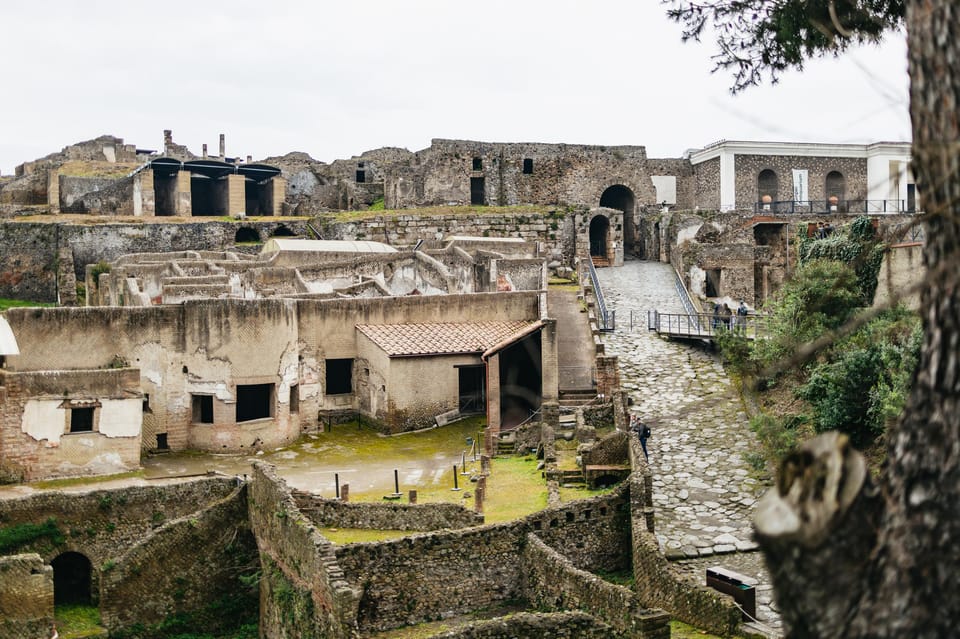
The tour includes skip-the-line entry to Pompeii, using a separate entrance. That doesn’t just save time—it changes how the visit feels. When you start your route without delay, you can focus on walking and listening instead of watching other people filter slowly into the site.
Right away, you’ll want to settle your basics:
- Bring your sun hat
- Have a usable ID card (a copy is accepted)
- Wear shoes meant for uneven surfaces
Pompeii punishes bad footwear. Even when the route is well planned, the site is old stone and old stone is not flat.
The civic heart: Forum, Basilica, and the Antiquarium
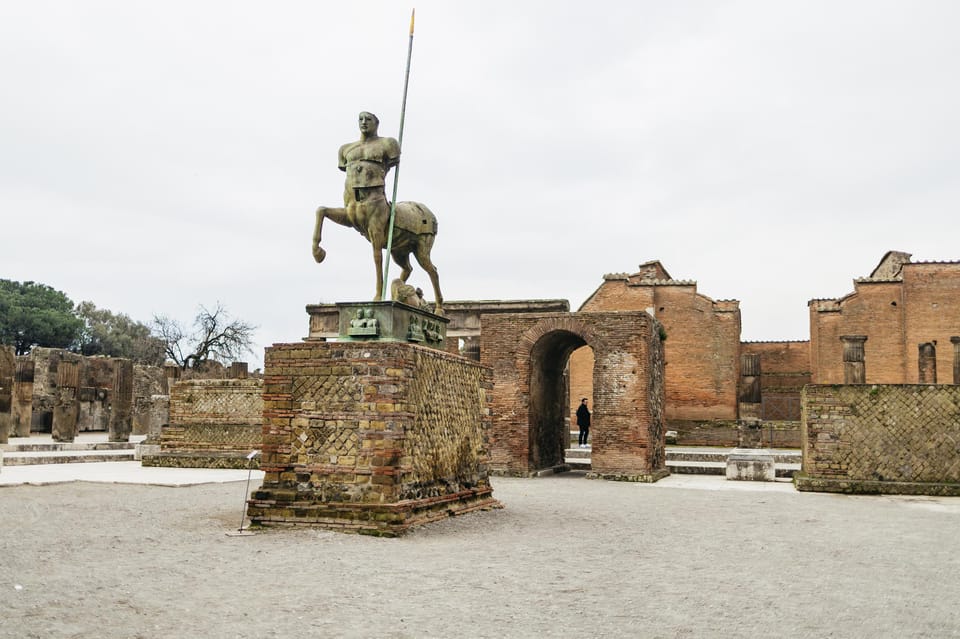
Most Pompeii first-timers want the big highlights. This tour delivers them in a smart order: civic life first, then leisure, then neighborhoods.



Forum: where public life happened
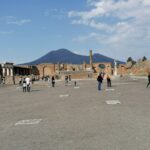
The Forum is the center of gravity for Roman civic culture. On the ground, you’ll see the kind of spaces where people gathered, debated, and conducted daily business. With a guided archaeologist, the Forum stops being just ruins laid out like a puzzle. You start connecting architecture to social behavior—who used these spaces and why they mattered.
Basilica: law, meetings, and the architecture of order
Next is the Basilica, a building tied to Roman civic administration. In many places, basilicas are where the city handled decisions and public life. Standing in these spaces, it’s easier to understand why Romans invested in impressive forms for everyday governance.
Antiquarium and context
This tour also includes the new Antiquarium, which is a useful warm-up. Think of it as the translator for what you’ll see outside. Even if you don’t study archaeology back home, this kind of introduction helps you make sense of details you’d otherwise overlook.
Here’s the practical payoff: when you hit the Forum and Basilica areas, you’re not just seeing “famous buildings.” You’re seeing why they fit together as one functioning city.
Thermal Baths: Pompeii’s real-life showpiece for leisure
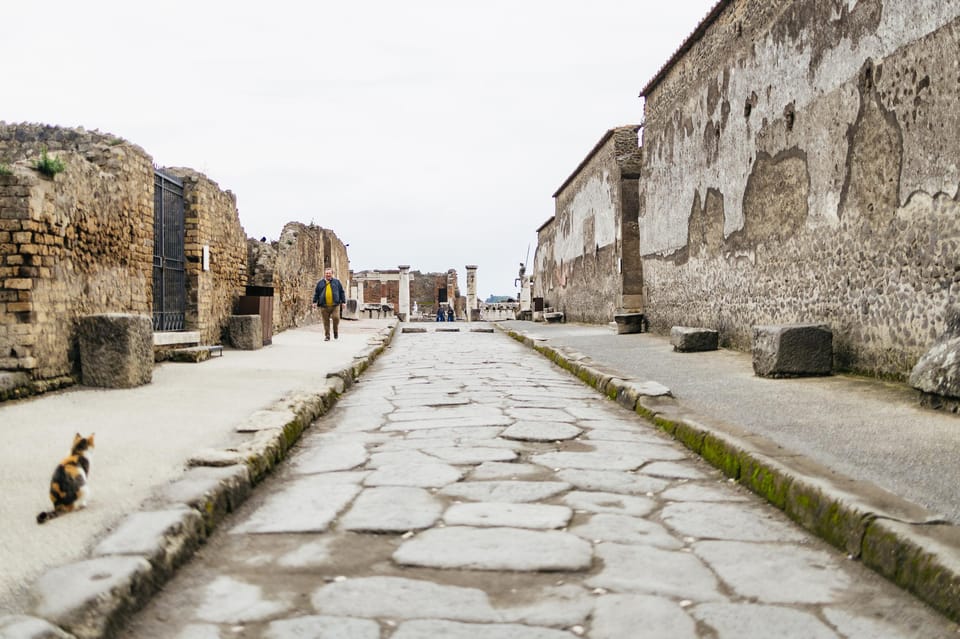
The Thermal Baths are the stop you’ll remember when you think about Pompeii as more than tragedy and ash.
Roman baths were social spaces. People met there, talked there, and spent time there—sometimes for relaxation, sometimes for business. In this tour, your guide ties those routines to what remains on site: layouts that show movement through the bathing process, and architecture that hints at how people managed heat, water, and space.
If you’ve ever wished you could picture a historical city as something other than a museum, the baths do that job. You can stand where people would have passed through day-to-day routines and imagine it with less effort than you’d expect.
And yes, it’s also one of the most visually striking areas. The scale and design can feel overwhelming even with a guide, but the explanation helps you keep it organized in your head.
The Theater: Roman entertainment, not just a pretty ruin
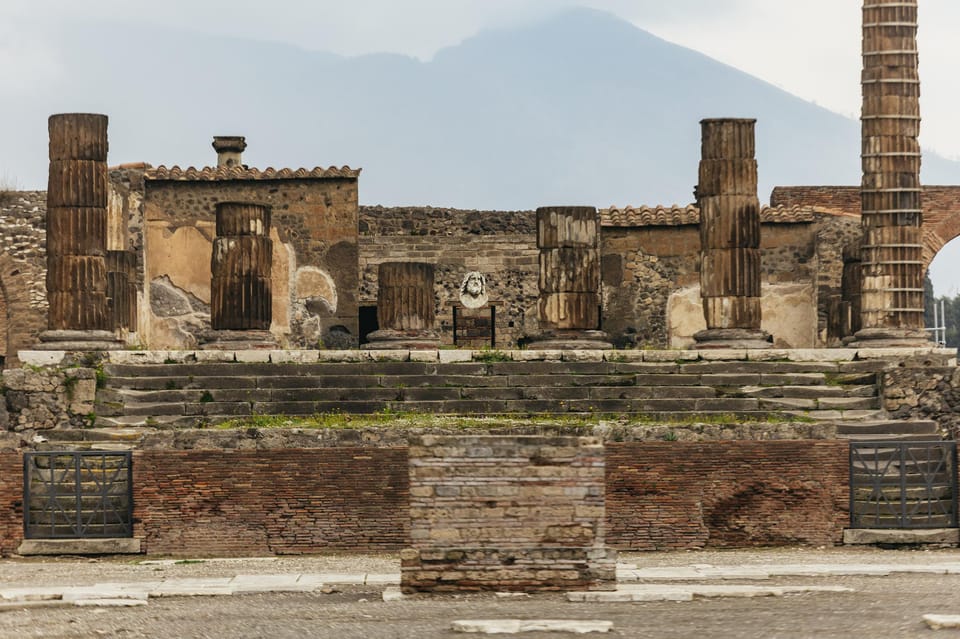
The Theater is where Pompeii shows another side of community life: public entertainment. You’ll get a sense of the cultural rhythm—how performances fit into city life and how architecture shaped the crowd experience.
One nice aspect of guided pacing at this stage: you’re not rushing past. A short tour can easily feel like “fast highlights only.” Instead, the best guides take enough time to point out features that help you understand function: how spaces relate, how crowds would have moved, and what the building tells you about priorities in Roman urban design.
Even in a short afternoon-to-sunset window, the Theater stop helps balance the day. After the civic center and baths, it rounds out the picture.
Neighborhood streets: bakeries and housing blocks you can actually picture
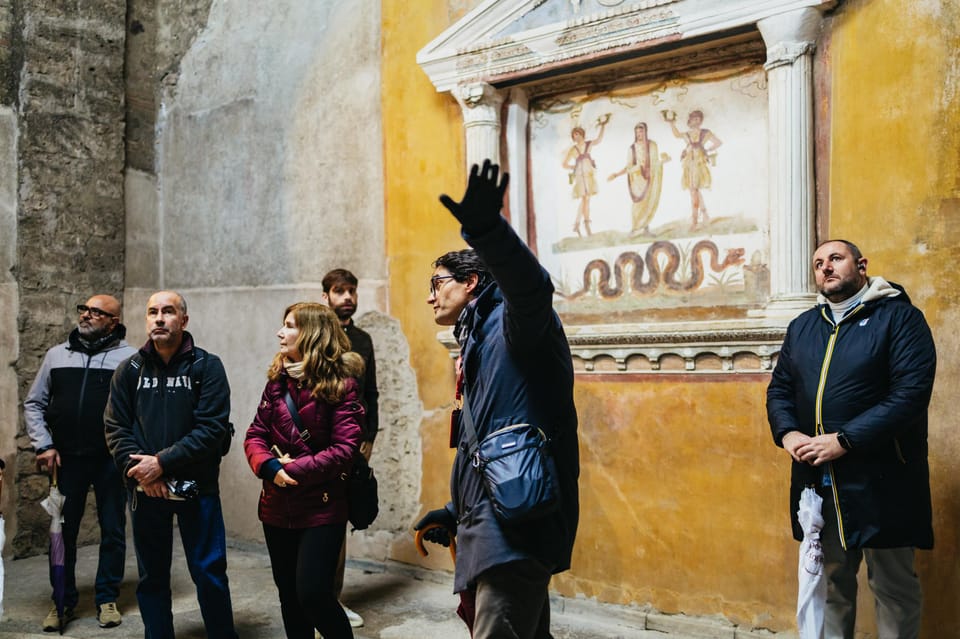
This is where Pompeii stops being abstract.
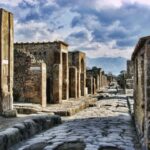
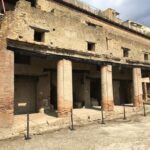
You’ll explore ruins in different neighborhoods, including visible hints of commerce like a bakery setting, plus typical housing blocks. These are the parts that most casual visitors skip because they look less “iconic” than the Forum or baths.
But those are exactly the places that help you understand the city as home. Where do people live? What does daily work look like? How do residential buildings cluster around public spaces? On a guided walk, those questions get answered quickly, so you don’t feel like you’re searching for meaning on your own.
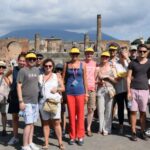
A few reviews also highlight how guides handle pacing across age ranges. One tour group included a wide span of ages, which suggests the tour structure is designed to keep people together without turning the walk into a forced march.
The Vesuvius story: how the eruption changes the way you see every wall
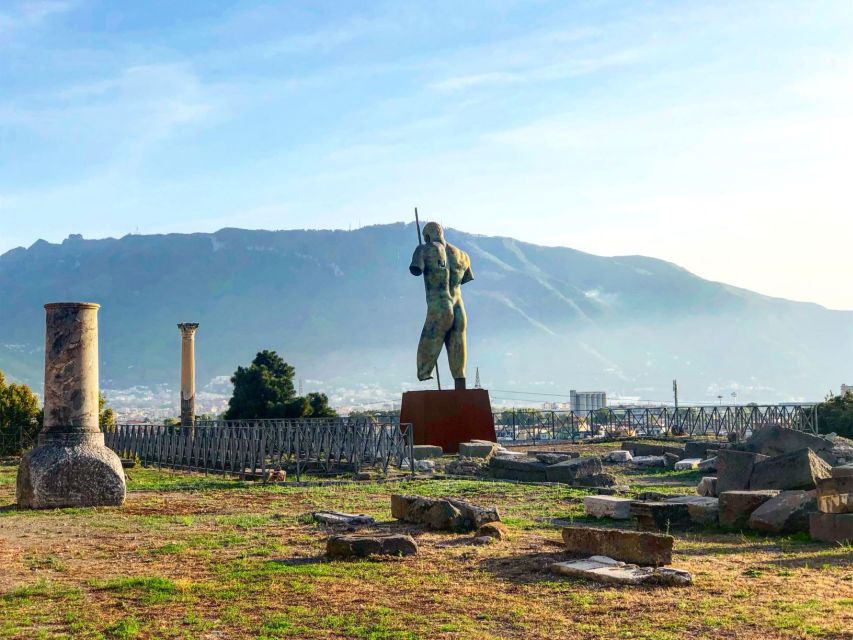
In Pompeii, the eruption isn’t just background. It’s part of how you interpret everything you’re standing in front of.
The tour covers the catastrophe and its impact on the city and broader society, framed through what’s preserved. The effect is subtle but powerful: once you understand the eruption’s outcome, your attention shifts from architecture alone to what the city’s final moments meant.
You start noticing how quickly life was disrupted. And you see the preservation differently, too—not as a science-fiction time capsule, but as a direct consequence of a real event.
Guides often help you connect that larger story to specific buildings you just walked through. That’s why the tour structure matters. You don’t hear the eruption spiel in one lump and move on. You hear it woven through the route so the ruins land with more weight.
The pacing reality: walking, uneven ground, and stamina
This is a walking tour, and Pompeii terrain doesn’t do you favors. The surfaces are ancient, uneven, and sometimes crowded. The best thing you can do is plan for a steady walk and take your cues from the guide.
I’d also treat this as an active 2.5 hours. It’s not an all-day “wander at your own pace” visit. Reviews repeatedly praise guides for keeping a good rhythm and checking in with the group pace, including taking time for questions and slowing down at key points.
You’ll also want to follow the guide’s caution around footing. Even when the route is managed, Pompeii is Pompeii—surfaces can be irregular, and it’s easy to trip if you’re rushing for photos.
Who should think twice
The tour is not suitable for people with mobility impairments, heart problems, or respiratory issues. It’s also not suitable for people over 95 years old.
If you’re unsure, I’d treat this as a “moderate walking” plan and be honest about your comfort with uneven outdoor ground.
Sunset is the bonus—here’s what it changes on site
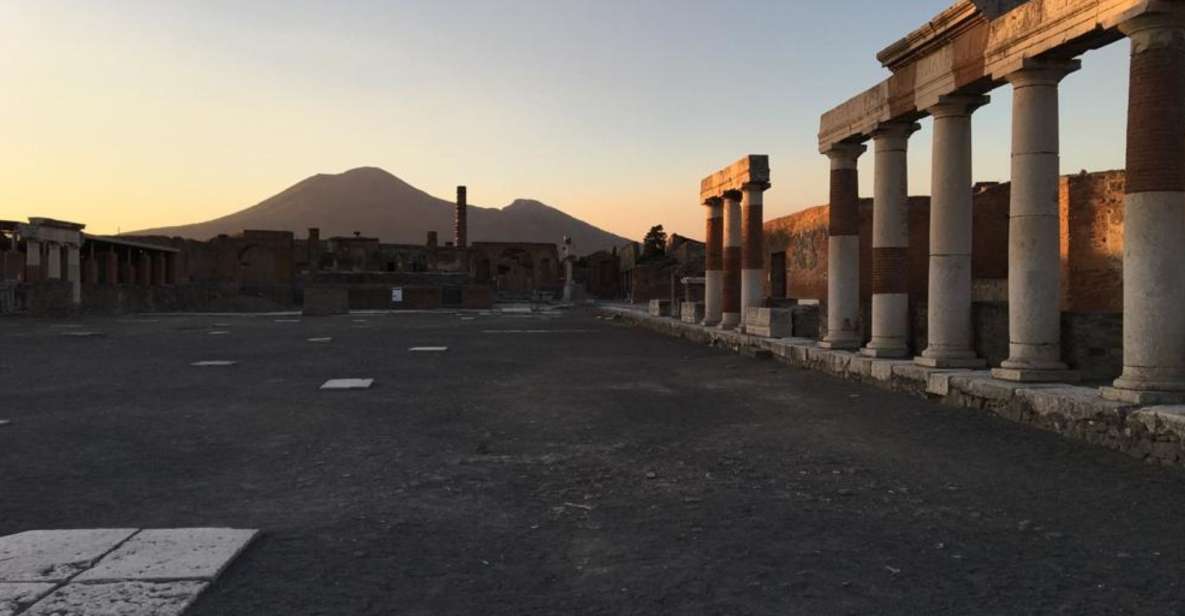
The tour ends with the tranquil atmosphere as the sun sets over Pompeii. That’s not just a nice photo moment. Later light changes how you perceive scale, texture, and shadows across walls and streets.
It can also help with comfort. Several guides and guests mention that later afternoon starts feel better in the heat, with more comfortable temperatures and fewer crowds at key moments. One review specifically calls out a 3:30 pm style start as a sweet spot for cooler conditions.
So if you’re choosing among Pompeii tour times, sunset timing is the practical advantage: you still see the highlights, but you do it with better light and less stress than a peak midday rush.
After the guided walk: what to do next with your leftover time
This tour gives you a tight view of the most important buildings: Forum, Basilica, Antiquarium, Thermal Baths, Theater, plus neighborhood stops. When it ends, you may still want to explore more on your own.
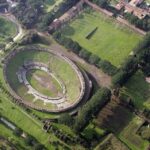
One useful planning note: the Arena isn’t included in the guided route. If you want it, you’ll need to add it separately after the tour.
Also, if you’re the type who likes to linger—stand still, zoom in on details, and try to see the city the way Romans did—consider scheduling extra time after the tour. Pompeii is the kind of site where a few minutes can turn into an hour if something catches your eye.
Tour guide impact: why names like Francesco and Anna keep coming up
A guided ruin visit lives or dies on the guide. This one has a strong reputation for guides who connect stories to what you see and keep the group engaged.
In reviews, names you’ll hear include Francesco (Frankie), Anna, Angelo, Sasa, Luigi, and Francesco/Franky again and again. Common themes:
- They explain architecture and daily life in plain language
- They answer lots of questions without making you feel rushed
- They keep groups entertained, often with humor that doesn’t feel forced
- They help with practical pacing, including finding better spots for shade
That matters because Pompeii can overwhelm you fast. A good guide helps your brain sort the city into categories: civic life, leisure life, neighborhood life, and the eruption’s impact.
Should you book this Pompeii afternoon-to-sunset tour?
Book it if you want a fast, organized Pompeii visit with real interpretation. This tour is a good choice for first-timers who don’t want to waste time figuring things out alone. It also makes sense if your schedule only allows a half-day and you still want the Forum, Baths, and Theater—plus neighborhood glimpses.
I’d skip booking if you have difficulty with walking uneven terrain or you fall into the tour’s stated health and mobility limitations. In that case, you’ll be happier with a more suitable pace or a different format.
If you do book, plan your day with extra breathing room after the tour. You’ll finish with a stronger sense of the city, and that makes any extra time you add afterward feel much more rewarding.
FAQ
How long is the Pompeii afternoon to sunset guided tour?
The tour lasts about 2.5 hours.
Is skip-the-line entry included?
Yes. Your ticket includes skip-the-line entry to Pompeii through a separate entrance.
Where do I meet the guide?
Meet at Ristorante Bar Sgambati. Look for a red Enjoy Pompeii sign.
Which ruins are included on the tour?
You’ll visit major highlights such as the Forum, the Basilica, the Thermal Baths, and the Theater, along with other areas like neighborhoods with a bakery and housing blocks.
What language will the guide speak?
Guides can be Italian, English, or French.
What should I bring with me?
Bring a sun hat and an ID card (a copy is accepted).
Is transportation included?
No. Transportation is not included.
Is this tour available as a private or small group?
Yes. Private or small groups are available.
Is the tour suitable for everyone?
It is not suitable for people with mobility impairments, heart problems, respiratory issues, or people over 95 years old.
Can I cancel and get a full refund?
Free cancellation is available up to 24 hours in advance for a full refund.