REVIEW · ROME
Roman Gladiator School: Learn How to Become a Gladiator
Book on Viator →Operated by Scuola Gladiatori Roma · Bookable on Viator
A gladiator lesson hits different in Rome. What I like most is the hands-on training near the Colosseum and the small-group feel (max 15), so you’re not just standing around. You’ll also get a museum visit included, plus a chance to try an optional tournament. One possible drawback: the school is a bit out of the central center, and if mosquitoes are active, plan on fighting them as much as you fight lions.
This is a great choice when you want something active that still feels tied to the real Roman world. And because lesson times run through the day, you can usually fit it without wrecking the rest of your itinerary.
In This Review
- Key highlights worth your time
- Gladiator School on the Appian Way: Getting There and Finding It
- Museum First: Weapons, Helmets, and Gear You Can Actually See
- Costume Up: Belt, Tunic, Gloves, and the Rudis
- The Actual Lesson: Warm-Ups, Offense/Defense, and Mindset Games
- Arena Fighting, Lions, and Optional Tournament Glory
- Instructors and Group Size: When Humor Meets Coaching
- Price and Value: Why This Costs What It Costs
- Practical Tips: Shoes, Eating Before You Go, and Bug Spray
- Who Should Book Roman Gladiator School (and Who Might Skip)?
- Should You Book This Gladiator Training in Rome?
- FAQ
- How long is the gladiator lesson?
- Where does the experience take place?
- What’s included in the ticket price?
- Is a tournament included?
- What languages is the class taught in?
- What is the minimum age to participate?
Key highlights worth your time
- Appian Way location near the Colosseum, with easy access by public transport
- Museum entry included with weapons, helmets, and Roman artifacts
- Costume and equipment hire for the full lesson (including a training sword, a rudis)
- Small-group class (up to 15 travelers) for more direct coaching
- Arena finale with optional tournament and a certificate at the end
- Family viewing platform so friends and family can watch without joining the training
Gladiator School on the Appian Way: Getting There and Finding It

The Roman Gladiator School is on the historic Appian Way, right outside the most famous ruins area, which is exactly why it works so well. You’re close enough to connect it to your Colosseum day, but far enough that the setting feels like a working training ground—not a photo pit.
The meeting point is Via Appia Antica, 18 (near public transportation). That matters because you can usually reach it by bus or a short cab ride, rather than stressing about long transfers. A detail worth taking seriously: the school can be a little tricky to locate on foot, since it’s reached after a drive rather than being right on a main street corner. If you’re navigating on your phone, give yourself extra time, especially if you’re walking in from the Colosseum area.
Also, think about mosquitoes. Multiple people flagged this location for bites, so bring bug spray if you’re going in warmer months or during evenings when insects are out. Comfortable clothes are a must too, because you’ll move.
You can also read our reviews of more tours and experiences in Rome.


Museum First: Weapons, Helmets, and Gear You Can Actually See

One of the smartest parts of this experience is that it starts with the Gladiator School of Rome Museum included in your ticket. Instead of tossing you straight into sword play, you get context first. You’ll be able to look at gladiator weapons and artifacts, and you’ll also see uniforms and armor pieces that help make the training feel grounded in how Romans actually dressed and fought.
This museum stop is especially helpful for kids. When they can hold the idea of a helmet or weapon in their hands (or at least see it up close), the rest of the lesson stops being random play-fighting and starts feeling like a mission.
It’s also good for adults who want more than comedy and choreography. You’ll get the basics of how gladiators fit into Roman life—soldiers, equipment, and the overall fighting culture—before anyone hands you a training sword.
Costume Up: Belt, Tunic, Gloves, and the Rudis
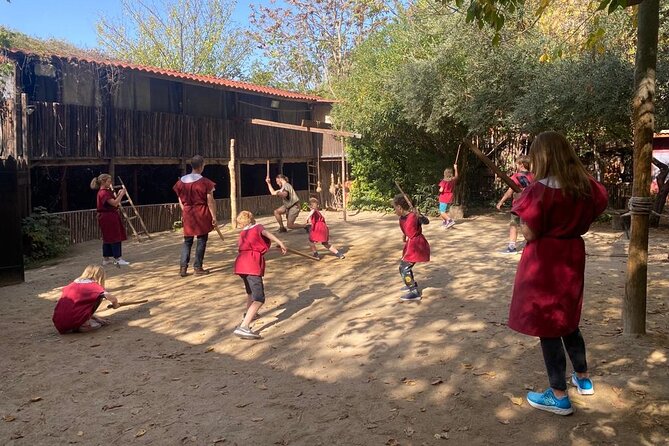
After the museum portion, the lesson pivots into the fun part: suiting up. You hire gladiator clothing and weapons for the duration of your session, including a traditional belt, tunic, leather gloves, and a training sword called a rudis.
This is more than a costume moment. The gear helps you understand why training looked the way it did. Gloves affect grip and stance. Tunics and belts change how you move. Even the sword being a training weapon shapes your practice—what you repeat, what you avoid, and how you learn control.
And because this whole thing is run by the Historic Group of Rome, the instruction tends to feel like reenactment with purpose. You’re not learning stage fighting tricks only; you’re learning basic combat skills and then applying them with a Roman-fighting mindset.
The Actual Lesson: Warm-Ups, Offense/Defense, and Mindset Games
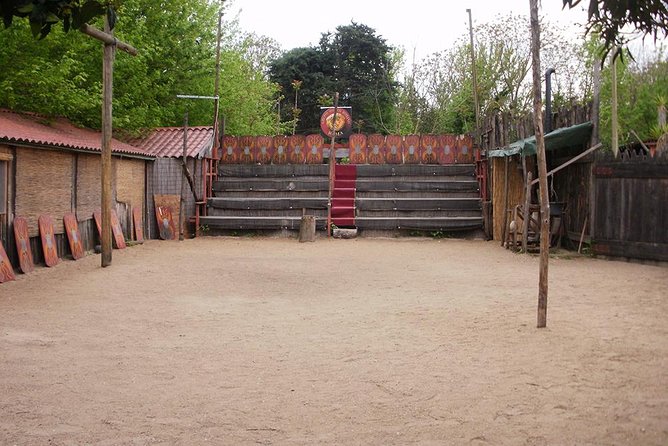
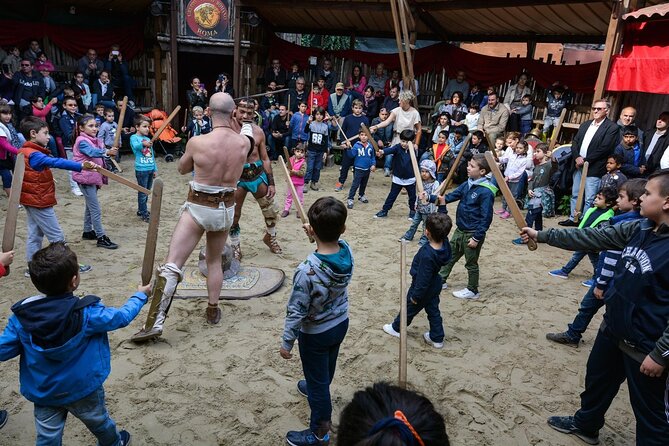
Your two-hour class is built around teaching basic gladiator sword fighting skills, with warm-ups and drills before the more dramatic action. You’ll get coached on offense and defense—practical movements you can repeat in a match-like setting.
What I like about the pacing is that it mixes physical work with mental framing. Even if you’ve never picked up a sword, you’re taught what to do with your body and attention. You’re also encouraged to channel your inner Roman fighter once the training starts to feel game-like.
You might notice a common pattern in how the lesson runs: instructor talk, then structured practice, then a “step into the arena” moment. That format is a big reason this works for mixed ages. Adults tend to appreciate the coaching. Kids usually love the play-and-battle energy.
Arena Fighting, Lions, and Optional Tournament Glory
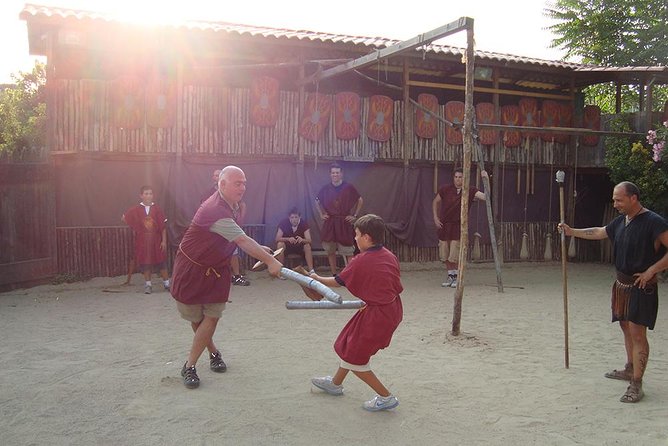
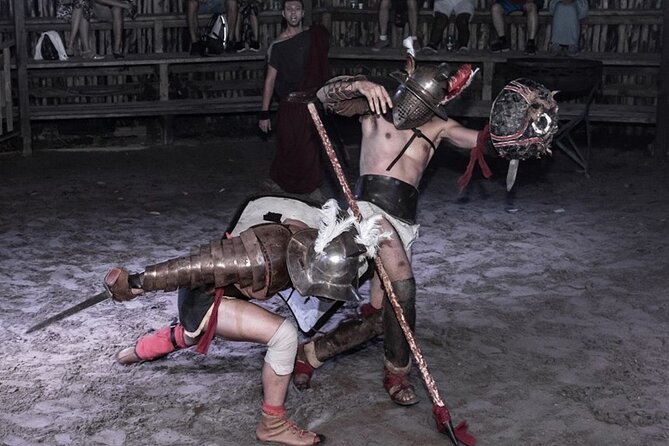
The finale is what most people remember: you step into the arena and fight in matches. The training includes a battle-style element—there’s mention of fighting off lions and squaring off against other gladiators with sword-and-shield style work.
If you want a bigger competitive moment, there’s also an optional tournament. A prize goes to the victor, which turns the last part into a real event instead of a casual “everyone pretend-fight and leave” scenario.
Two more details that make the ending feel official:
- You’ll receive a certificate of accomplishment after the lesson.
- Friends and family can watch from a viewing platform, so parents and other non-participants don’t feel stranded.
One caution: this is a physical activity with real contact-style sparring energy. Most people handle it fine, but if you’re bringing young children, pay attention to your kid’s temperament. There’s enough intensity that some younger kids might find it stressful if they don’t like getting hurt, even lightly.






Instructors and Group Size: When Humor Meets Coaching

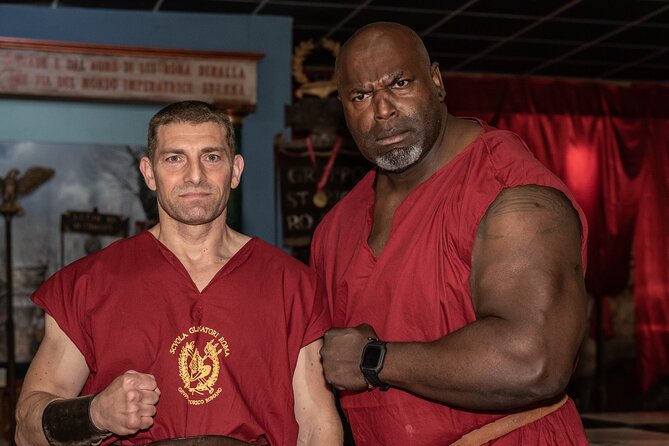
The instructors are members of the Historic Group of Rome, and you’ll feel that from the way they explain things. People specifically called out instructors by name—examples include Mirkos, Ivan, Patricio, and Flama—and those names show up as part of a larger theme: the teaching style tends to combine history talk with humor and high energy.
This matters because gladiator training can turn either silly or solid. Here, it’s both. You get enough explanation to feel like you understand what you’re doing, but you’re still laughing while learning. That balance helps adults relax and helps kids stay engaged.
Small group size (maximum 15) is part of the “why it feels personal” piece. Instead of a long line of people waiting for tips, you get more direct attention and corrections while you practice.
Price and Value: Why This Costs What It Costs
The price is $108.16 per person for about two hours. On paper, that’s not “cheap Rome.” But when you compare it to what you actually get, the value stacks up.
You’re paying for:
- A guided, structured 2-hour training session
- Museum entry included
- Costume and weapons hire (not just a one-time prop)
- A guided explanation tied to Roman fighting culture
- Optional tournament and an official certificate
Also, lesson times are available throughout the day, so you’re not locked into just one slot. That flexibility can be worth real money to you because it reduces the chance you’ll reshuffle other paid activities.
If you’re price-sensitive, think about who in your party will participate. For families with kids, it tends to be easier to justify because the experience becomes the main event. For adults, it’s worth it if you want active learning, not just watching.
Practical Tips: Shoes, Eating Before You Go, and Bug Spray
A few simple moves make this experience smoother.
Wear comfortable shoes and clothes. You’ll warm up and move around, and you’ll want something you don’t mind getting a little sweaty.
Bring bug spray. Mosquitoes came up repeatedly as an issue in this exact area. If you go without repellent, plan on paying the bite tax.
Eat before you arrive. The lesson includes a drink, but there aren’t many convenient food options nearby, so if your group tends to get hungry, you’ll be happier with a snack beforehand. You might be offered snacks on-site, but don’t count on it as your full food plan.
Arrive a little early. Between finding the school drive and settling in for costume time, a few extra minutes keep you from stressing. This is especially true if you’re walking from the Colosseum and you want your brain to stay calm.
Who Should Book Roman Gladiator School (and Who Might Skip)?
This is best for:
- Families with kids age 6 and up who want something active and memorable
- Adults who like hands-on experiences tied to real Roman artifacts and setups
- Groups that want a “main event” that feels different from ruins and galleries
It may be less ideal if:
- You want a mostly seated, low-effort activity
- You’re uncomfortable with the physical side of sparring and competition energy
- You’re going with very young kids who melt down easily when they feel they’re getting hurt (even in a controlled way)
The good news: because friends and family can watch from the platform, mixed groups can still enjoy the day together. Some people train; others take photos, watch the arena matches, and feel part of the action without stepping into the training gear.
Should You Book This Gladiator Training in Rome?
Yes—if you want a Rome experience that’s active, structured, and tied to real-looking equipment rather than just a costume-and-photos moment. The museum stop plus the training means you’ll leave feeling like you understood gladiators, not just played gladiators.
Book it if your group includes kids who can handle movement and a bit of intensity. Also book it if you like instructors who mix humor with coaching, and you value small-group attention.
Skip or adjust your expectations if you want something purely cultural but quiet. This is physical. It’s loud. It’s energetic. And in a good way, it turns Roman history into something you do with your body for a couple of hours.
If you go, plan for mosquitoes, wear good shoes, and arrive a few minutes early. Do that, and the two hours near the Appian Way can become one of the most memorable “only in Rome” moments on your trip.
FAQ
How long is the gladiator lesson?
It’s about 2 hours.
Where does the experience take place?
It takes place at the Gladiator School of Rome near the Colosseum on the Appian Way. The meeting point is Via Appia Antica, 18, 00179 Roma RM, Italy.
What’s included in the ticket price?
Your ticket includes the 2-hour class, museum admission to the Gladiator School of Rome Museum, a drink, and gladiator clothing and weapons hire for the duration of the lesson.
Is a tournament included?
An optional tournament is part of the experience, with a prize for the victor.
What languages is the class taught in?
The experience is offered in English.
What is the minimum age to participate?
The minimum age is 6 years.