REVIEW · ROME
Rome Food Tour in the Historic Centre with 8+ Food Tastings
Book on Viator →Operated by Secret Food Tours · Bookable on Viator
Follow the smell of Rome’s best bites. This 3-hour walk ties classic food stops to major landmarks, from Piazza Navona to Largo di Torre Argentina. It’s an easy way to learn what Roman eating looks like, not just what it sounds like.
I love the sheer amount of food you get, built around homemade pizza, supplì, Roman pastas, cannoli, and artisanal gelato. I also like that the route threads through places that shaped the city’s culture, including the ancient Roman Ghetto and Campo de’ Fiori.
The main drawback is simple: you’ll walk and snack for about 3 hours, so come with comfy shoes and a mindset that your stomach will be on duty the whole time.
In This Review
- Key highlights before you go
- Starting at Piazza Navona: the best kind of Rome intro
- What 8+ tastings actually means for your appetite
- Pizza, supplì, and Roman pasta: why the order matters
- Piazza Navona’s special role: history you can taste
- The French embassy palace stop: art, power, and the “why” of neighborhoods
- Walking through the Jewish Ghetto: history that shapes the table
- Four rivers fountain and ancient walkway: breaks with real context
- Campo de’ Fiori: a square that explains Rome’s everyday side
- Largo di Torre Argentina: ending at ancient ruins
- Gelato and cannoli: how to pace the last stretch
- Adults 18+ drinks, but the tour still works for families
- Guide energy you can feel: praised names and what it means
- Price and logistics: getting value in central Rome
- Who should book this Rome food tour (and who should skip it)
- Should you book? My straight answer
- FAQ
- What’s included in the Rome food tour?
- How many tastings should I expect?
- How long is the experience?
- Where do I meet the tour, and where does it end?
- Is the tour offered in English?
- Can I bring a pet?
- FAQ
- What’s the group size limit?
- Is there free cancellation?
- When will I get confirmation after booking?
Key highlights before you go
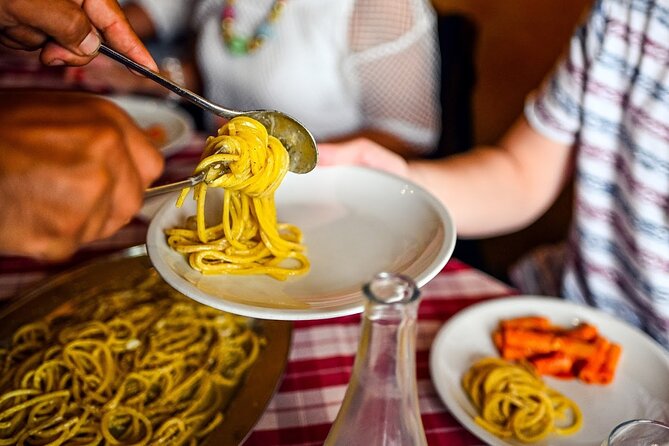
- 8+ tastings across pizza, supplì, cold cuts and cheeses, two pastas, cannoli, gelato, plus a secret dish
- A tight route linking Piazza Navona landmarks to Largo di Torre Argentina ruins
- Neighborhood history on the way, including the 1555 Jewish Ghetto and a French embassy palace
- Small group size (max 12), which makes questions and pacing feel more personal
- English-speaking guide with a mobile ticket and a start/end that are easy to orient to
Starting at Piazza Navona: the best kind of Rome intro
Your tour begins at Sant’Agnese in Agone, Piazza Navona, then you’ll move through the Historic Centre on foot until you finish at Largo di Torre Argentina. That end point matters. Torre Argentina sits right in the thick of ancient Rome, so you don’t leave the tour feeling like you only saw modern streets and restaurant doors.
Piazza Navona is the perfect launch pad for a food tour. It’s dramatic. It’s central. And it’s surrounded by the kind of places where locals casually grab something quick between errands. Starting here also sets the tone: this isn’t a museum day with a snack at the end. It’s a food-first walk that keeps pointing you back to the city around it.
You’ll also see how food fits into Rome’s layout. Squares are social rooms. Streets are kitchens. And in this part of the city, history is right next to your plate, not far away behind a ticket counter.
You can also read our reviews of more tours and experiences in Rome.


What 8+ tastings actually means for your appetite
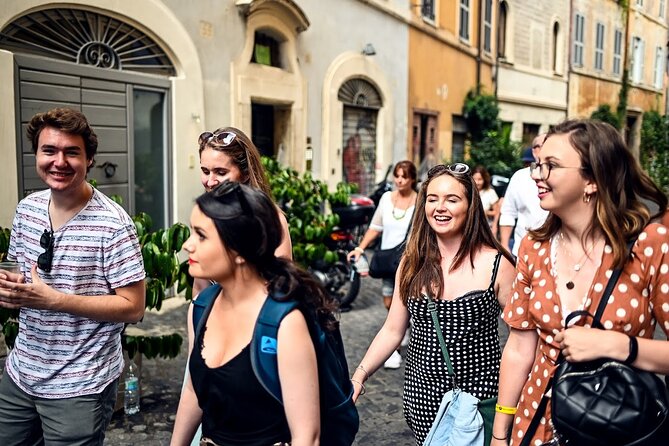
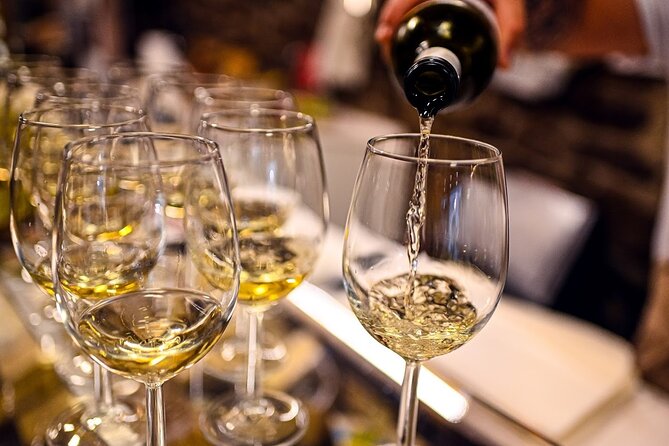
The price is $118.51 per person for about 3 hours, and you should treat it as a “tasting meal” more than a traditional dinner. The tour is designed around multiple stops with enough variety to cover the basics of Roman eating in one go.
Included food items are clearly listed, and that helps you judge value:
- Two different types of homemade pizza
- Supplì
- Italian cold cuts and cheeses
- Two Roman pastas
- Cannoli
- Artisanal gelato
- Our secret dish
That secret dish is worth paying attention to. Even when you know Rome food basics, there’s usually one item you don’t expect, or one version you don’t see as a tourist. This is the kind of extra that turns a good tour into a memorable one.
One more practical point: most tours like this can feel repetitive if they stick to the same category of food. This one avoids that. You’re not just eating carbs in different costumes. You get fried street food (supplì), savory bites (cold cuts and cheeses), hot comfort (pizza and pasta), then sweet resets (cannoli and gelato). You’ll likely finish full, not just satisfied.
Pizza, supplì, and Roman pasta: why the order matters
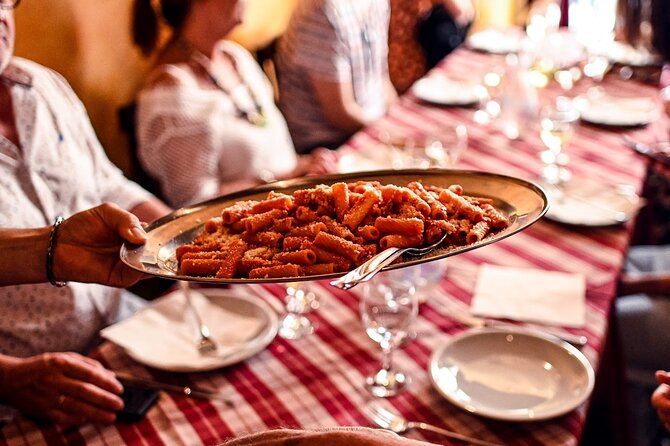
Rome can trick you if you only go by labels. A slice isn’t automatically a meal. A pasta dish isn’t always heavy. And street food isn’t always greasy. This tour helps you learn the rhythm.
Here’s what you can expect as the tasting theme builds:
- Homemade pizza (two types): You’ll taste more than one style, which is the fastest way to understand why Romans don’t all chase the same texture and thickness.
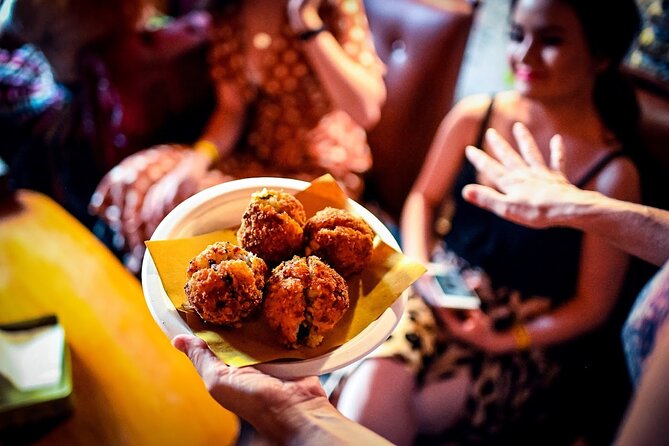
- Supplì: This is classic Roman street food, and it’s a great “mid-walk” stop. It’s snackable, shareable, and perfect when you need something filling but not a full restaurant plate.
- Cold cuts and cheeses: This stop balances the hot food. It also gives you a taste of how Roman meals can shift from bread-and-sauce mode to cured meats and simple flavors.
- Two Roman pastas: Two pasta servings in one tour is a big deal. It lets you compare how Roman flavors handle cheese, salt, and sauce without needing you to commit to a single restaurant meal later.
- Cannoli and gelato: You end with the kind of sweets that define Rome for a reason—sweet, yes, but also very tied to local habits.
I like tours that teach you what to order later. After this walk, you’ll know what kind of Roman food you actually crave: crispy versus creamy, fried versus sauced, light sweets versus heavy desserts.
Piazza Navona’s special role: history you can taste
Even before you hit the first big food stop, Piazza Navona does its job. It’s famous for its fountains and baroque architecture, and it sits on the footprint of an ancient stadium. That “old to new” layering is exactly what you want on a food tour.
From here, the vibe is immediate. You can look around and spot the places where locals would stop for something quick—espresso, gelato, and the kind of bites that don’t require a reservation. The tour leverages that setting. It doesn’t just feed you; it places food into a living city context.
If you’re the type who likes a mental map, you’ll get one fast. Piazza Navona anchors everything. Then the route keeps stepping you through other landmarks so your Roman food memories have a location attached.
The French embassy palace stop: art, power, and the “why” of neighborhoods
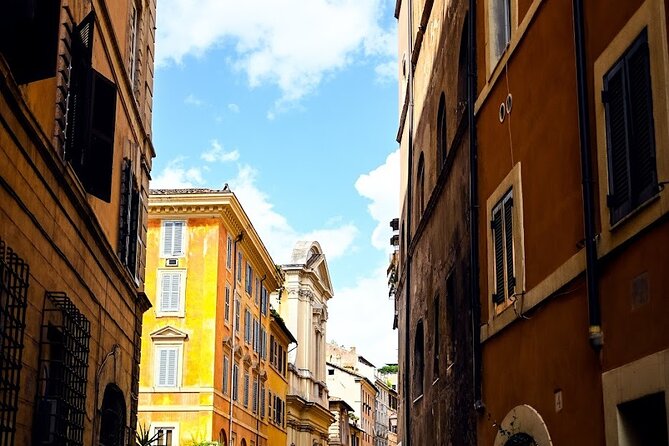
One of the stops you’ll make is at a High Renaissance palace that’s currently used as the French embassy in Italy. You might not think of an embassy as part of a food story, but this is where the tour earns its money.
Food doesn’t grow in a vacuum. Neighborhoods form around power, trade, and who has money to spend. High-profile buildings also pull in institutions, travelers, and services. Even if you never step inside, the sight helps you understand why certain areas feel dense with cafés and dining.
This stop is a reminder that eating in Rome is partly about atmosphere. The city is full of layers, and the tour helps connect those layers to the kind of food you’re eating.

Walking through the Jewish Ghetto: history that shapes the table

The tour includes time at the Jewish ghetto established in 1555 in Rione Sant’Angelo. This is one of those moments where food tourism could easily turn shallow. The value here is that it’s not presented as scenery. It’s treated as a neighborhood with history and ongoing culture.
Why it matters for you: when you understand the street-level history, the food story gets more grounded. You stop thinking of dishes as generic Italian items and start seeing them as part of communities, daily life, and local identity.
It also changes how you walk. In this part of Rome, you’re not just sightseeing. You’re moving through a place where the past has rules, and the present still follows them.
Four rivers fountain and ancient walkway: breaks with real context
Between food stops you’ll also see landmarks that give your walk a sense of direction.
Two that stood out on this route:
- A 17th-century fountain that pays homage to four rivers, topped with an obelisk and a dove
- Remains of an ancient walkway originally built in the 2nd century B.C. to connect two Roman temples
These aren’t random photos. They’re “pause points” where you can reset your pace, look up, and connect the city’s form to its age.
Also, those pauses keep the walk from turning into a nonstop snack sprint. Since the tour lasts about 3 hours, these sight breaks help you stay comfortable while still feeding your curiosity.
Campo de’ Fiori: a square that explains Rome’s everyday side
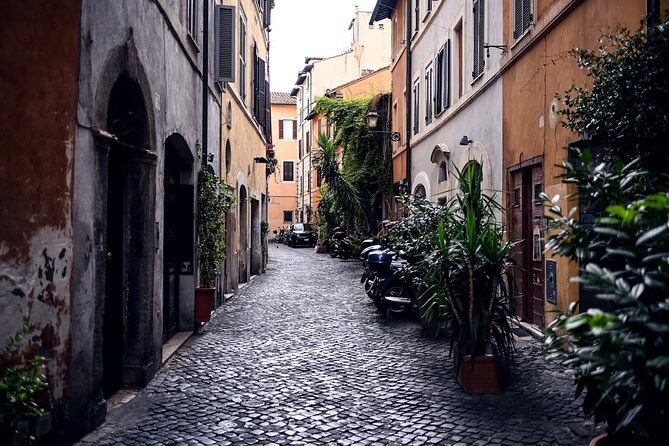
You’ll pass through Campo de’ Fiori, a rectangular square just south of Piazza Navona. The name translates literally to field of flowers, but the real takeaway is how important squares are in Rome.
Campo de’ Fiori feels like a place where daily life happens. Market vibes, quick errands, and the kind of casual social energy where food makes sense. For a food tour, that’s gold. You get the sense that this isn’t just a destination for one-off dinners. It’s a city where people eat often and adapt what they can get.
If you like learning how Romans spend their time, this stop helps you understand the city rhythm.
Largo di Torre Argentina: ending at ancient ruins
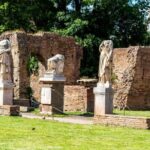
Your tour ends at Largo di Torre Argentina, where you’ll see four Roman Republican temples and remains of Pompey’s Theatre. Finishing here is a smart choice, because it gives your food day a closing “Roman” note.
It’s a different kind of payoff than another sweet stop. It’s the feeling of landing in the deep layers of the city, right after you’ve tasted your way through those same neighborhoods.
By the time you reach Torre Argentina, you’ll likely feel like you’ve done two things at once:
1) learned how Roman food is put together
2) mapped the ancient city onto the modern walk
That combination is why tours like this are so satisfying for first-timers.
Gelato and cannoli: how to pace the last stretch
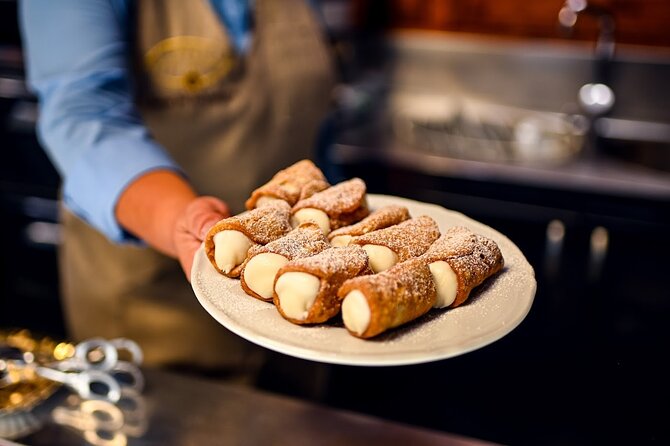
The tour includes artisanal gelato and cannoli, which is a great finish pairing. Gelato gives you something cool and light after hot bites. Cannoli gives you the classic crunch-and-cream sweet ending.
Here’s how I’d handle the pacing if you want to enjoy everything instead of merely survive it:
- Take small bites when possible. Big bites can make you miss the flavors.
- Keep water nearby if you tolerate it well (Rome heat can sneak up on you).
- Don’t force the last sweet item if you’re already stuffed. The tour is designed to feed you, but you still want the taste to land.
The good news is that this tour spreads treats across time, not all at the end. You’re not just eating dessert while standing in a line.
Adults 18+ drinks, but the tour still works for families
The tour includes a minimum drinking age of 18, which means some tastings may include alcoholic drinks for adults. If you’re traveling with kids or you prefer to avoid alcohol, you should be fine focusing on the food side of the program.
In fact, the overall feel from recent experiences suggests guides can keep the pace friendly for families. There are hints of adjustments being made for different groups, and a lot of the praise centers on guides who keep people engaged while moving through the city.
Also, the group size is capped at 12 travelers. That matters for comfort. Smaller groups move with less chaos, and you can actually hear the guide when you’re standing on a corner looking at a fountain or a palace façade.
Guide energy you can feel: praised names and what it means
A lot of the standout feedback centers on guides who make the history connect to the food. Names that come up include Massimiliano, Rocio, Luda, Eduardo, Federico, Manuel, and Robbie/Rob. What they seem to have in common is clear storytelling that helps you understand why a dish fits its neighborhood.
You’ll probably notice this most when you’re between tastings and the guide isn’t just calling out the next stop. The best guides answer the hidden questions: What’s Roman about this? Why this street? Why this order?
If you’re the type who hates vague tours, this is the kind where you walk away with specifics you can repeat later when you’re ordering.
Price and logistics: getting value in central Rome
Let’s talk value in plain terms. $118.51 isn’t cheap, but you’re buying a guided route with multiple tastings stacked together. Central Rome food can be expensive when you pay full menu prices each time. Here, the cost is spread across:
- multiple prepared tastings (not just one meal)
- guided interpretation of the sites along the way
- a small-group format (max 12)
That makes it feel more like a structured food-and-history experience than a random crawl.
A couple logistics points that help you plan:
- You’ll get a mobile ticket
- The meeting point is at Piazza Navona (Sant’Agnese in Agone)
- You finish at Largo di Torre Argentina
- It’s offered in English
- It’s near public transportation
One more practical note: this tour tends to book ahead. If you want a specific day, I’d treat it like a “book early” activity, not a last-minute idea.
And if weather affects the exact routing, know the operator says the itinerary and menu may shift based on availability and conditions. That’s normal in Rome, and it’s better than a tour that pretends the city will freeze for your schedule.
Who should book this Rome food tour (and who should skip it)
This is a strong choice if:
- you want a Rome food introduction without guessing what’s worth ordering
- you like history but want it tied to real eating
- you prefer a small group (max 12) and an active walking format
You might want to skip or reconsider if:
- you hate walking or you’re not comfortable with a full 3-hour pace
- you want a laid-back sit-down meal with zero movement
- you travel with pets (the tour can’t accommodate them)
Also, come hungry in the best way. You’ll likely leave full, and the tour is built to keep you fed across the route.
Should you book? My straight answer
Book it if you want a memorable first look at Roman food culture plus the historical context that makes it click. The combination of 8+ tastings, a small-group walk, and major sights like Piazza Navona, the Jewish Ghetto area, and Torre Argentina makes this a high-value day.
Skip it if you’re chasing quiet, minimal walking, or if you want to control every bite yourself. This is a guided food route, not a free-choice food buffet.
FAQ
What’s included in the Rome food tour?
The tour includes two types of homemade pizza, supplì, Italian cold cuts and cheeses, two Roman pastas, cannoli, artisanal gelato, and a secret dish.
How many tastings should I expect?
The tour is described as having 8+ food tastings.
How long is the experience?
It lasts about 3 hours.
Where do I meet the tour, and where does it end?
You meet at Sant’Agnese in Agone, Piazza Navona, 14, 00186 Rome, and the tour ends at Largo di Torre Argentina, 00186 Rome.
Is the tour offered in English?
Yes, it’s offered in English.
Can I bring a pet?
No, pets can’t be accommodated on these food tours.
FAQ
What’s the group size limit?
The tour has a maximum of 12 travelers.
Is there free cancellation?
Yes, you can cancel up to 24 hours in advance for a full refund.
When will I get confirmation after booking?
Confirmation is received within 48 hours of booking, subject to availability.