REVIEW · ROME
Rome Golf Cart Tour: Highlights of the Eternal City
Book on Viator →Operated by ROME GOLF CART TOUR · Bookable on Viator
Rome moves fast; this tour keeps up. A private Rome golf cart ride lets you hit major landmarks and still slide through quieter side streets instead of sitting in traffic.
You also get a relaxed rhythm: short looks, quick photos, and just enough time to feel like you are getting the lay of the city.
Two things I really like: the free hotel pickup from central Rome, and the way the cart cuts down the grind of nonstop walking. You end up seeing a lot without feeling wrecked by cobblestones. The English-speaking driver also helps turn stops into stories instead of just snapshots.
One thing to keep in mind: with only about 3 hours, you cannot linger for deep dives at every site. And, like any guided experience, the vibe depends on your driver (some guides are talkers, some are more hands-off).
In This Review
- Key highlights at a glance
- Why a golf cart is smart for a first-time Rome hit
- Starting point and the smooth handoff from your hotel
- The real value: 3 hours, a lot of icons, minimal pain
- Pantheon: temple-to-church energy in a quick 15-minute stop
- Piazza Navona: Baroque spectacle built on an ancient stadium
- Trevi Fountain and the Spanish Steps: the “quick view” combo
- Campo de’ Fiori: the square where Rome feels like Rome
- Villa Borghese, Palatine Hill, and Aventine: the “views and ancient layers” segment
- Circo Massimo to Piazza del Popolo: big space, big scale
- Sant’Ignazio di Loyola: when the small details steal the show
- Guides make the difference: what the best ones do
- Who should book this Rome golf cart tour
- Should you book? My practical take
- FAQ
- How long is the Rome golf cart tour?
- Where does the tour start, and how do hotel pickups work?
- Is this tour private?
- Is the tour offered in English?
- Do I need to buy entry tickets?
- Which major sights are included?
- Is cancellation free?
- Are service animals allowed?
- Is the cart tour suitable for most travelers?
Key highlights at a glance
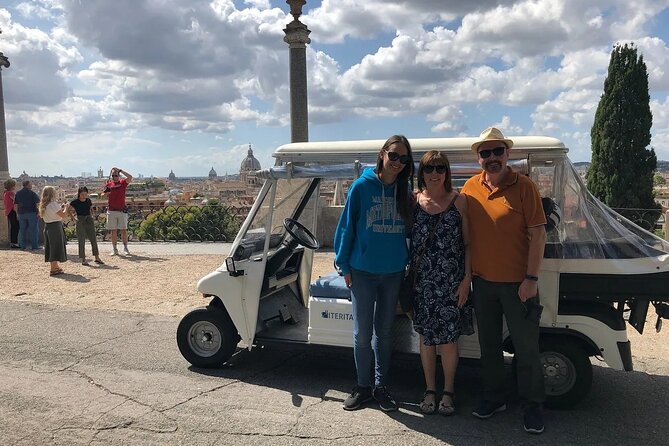
- Private group ride with an English-speaking driver, so it feels less like a cattle call
- Hotel pickup included (central locations) and you end back at the meeting point
- Quiet backstreet route to avoid the worst traffic bottlenecks
- Photo-friendly stop plan at big-name landmarks like Pantheon and Trevi Fountain
- Guide quality varies by person, but names like Francesco, Yvonna, and Hadi show up in standout feedback
Why a golf cart is smart for a first-time Rome hit
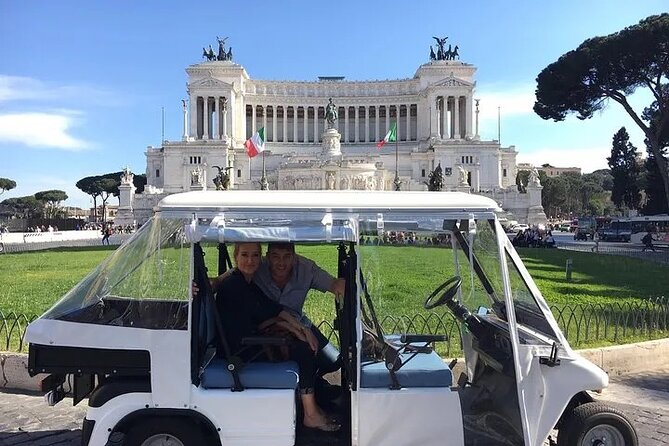
If Rome is your first stop in Italy, this is one of the fastest ways to get your bearings. The cart does the heavy lifting—literally—so you can spend your energy looking up, not down at your footing.
The biggest payoff is comfort plus speed. You roll between sights without the long, straight-line walks that can eat an afternoon. That matters in Rome because the “between” parts are often the hardest: narrow roads, uneven pavement, and sudden uphill stretches.
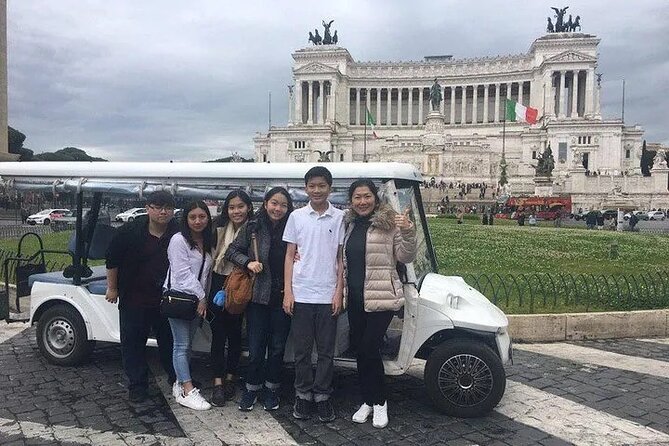
This tour also uses golf carts or an eFiat. Either way, you are getting the same core idea: compact driving, frequent photo stops, and a guide who can point out what you’d normally miss when you are just trying to get from A to B.
And yes, a few guests specifically liked that the cart setup felt safe and comfortable, with seatbelts mentioned in feedback. Don’t be shy about checking that your cart has them and getting settled before you roll.
You can also read our reviews of more tours and experiences in Rome.
Starting point and the smooth handoff from your hotel
You meet at Pic Nic – Just Amir srl in Rome (Piazzale delle Canestre, SNC, 00197 Roma). The best part is the free pickup option: if you are in central Rome and this is a private experience, the operator comes to you.
If your hotel is outside the Rome center, you should plan on contacting the provider. The info indicates they can arrange a private car if pickup is tricky. It’s worth thinking through this early—Rome hotels are sometimes “central” in marketing only, not in real driving distance.
After the tour, it ends back at the meeting point. So your day stays simple: no complicated transfers, no “now what?” moment.
The real value: 3 hours, a lot of icons, minimal pain
Let’s talk price. At $163.26 per person for about 3 hours, this is not the cheapest way to see Rome. But it is also not aiming to be cheap—it is aiming to be efficient.
Here’s what you get for the money:
- You cover multiple top sights in one loop.
- You get hotel pickup (central Rome).
- You travel by cart, which can be a big deal if you want to avoid lots of standing and walking.
If you have limited time, this can be better value than buying separate tickets and then spending half your day commuting on foot. If you are traveling with kids, older relatives, or anyone who tires out easily, the cart format turns “we need a break” into a built-in feature rather than an emergency.
Even with a short duration, the stop plan is designed to make each site count—like a guided “greatest hits” route with just enough time to understand what you are seeing.
Also, this tour runs with numerous departure times. That gives you flexibility to choose a departure that fits your day and helps you dodge the worst traffic windows.
Pantheon: temple-to-church energy in a quick 15-minute stop
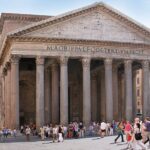
The Pantheon is one of those Rome sights that looks familiar even if you have never been. It’s a former Roman temple, later turned Catholic church in 609 AD, built on the earlier temple site commissioned by Marcus Agrippa under Augustus.
On this route, you get about 15 minutes at the Pantheon, and the stop is listed as free admission. That’s enough time to do the key things:
- Take in the big exterior impact.
- Plan one inside look if it is open and you want the full moment.
- Get photos before the energy shifts to the next stop.
The drawback? Fifteen minutes can feel short if you like reading every detail and slowing down. If this is the one monument you care about most, you’ll probably want to come back later on your own for a longer visit.
Still, as a first stop, it works. It anchors the rest of your day because you immediately see how Rome reuses space and meaning across centuries.
Piazza Navona: Baroque spectacle built on an ancient stadium
From the Pantheon, the tour heads to Piazza Navona, another fast stop (about 15 minutes). This square is one of the defining scenes of Baroque Rome. And the fun detail: it was built on the remains of the Stadium of Domitian.
This is a great stop for two reasons. First, the setting is instantly dramatic—you see the square as theatre. Second, it gives your brain a pattern: Rome layers eras, and the city often repurposes what came before.
Because it’s a public square, you do not need to treat it like a museum. Use the time to:
- Walk to a vantage point for photos.
- Look for the architectural cues that connect the old stadium footprint to the current square layout.
Fifteen minutes is usually enough to enjoy it, but if you want a slow sit-down moment—coffee, people-watching, long photos—you’ll want to build that into another part of your trip.

Trevi Fountain and the Spanish Steps: the “quick view” combo
Next up: Trevi Fountain with about 10 minutes, followed by the Spanish Steps with about 5 minutes.
Trevi Fountain is an 18th-century masterpiece designed by Nicola Salvi and completed over time. The tour’s plan is brief, but Trevi is one of those places where even a short stop helps you understand why it became a global symbol of Rome.
A practical note: Trevi can be crowded. Even if your stop is quick, aim to get your main photos early in the window. Then focus on the surrounding buildings and the sculptural details rather than trying to see everything at once.
Then you roll to the Spanish Steps—those iconic stairs connecting Piazza di Spagna to Piazza Trinità dei Monti. With about 5 minutes, you’re not there to climb for a full break. You are there to register the shape, the view lines, and the feeling of Rome’s grand stairway energy.
If you love walking and want a longer experience, plan to come back later. But for “first day orientation,” this pair is hard to beat.
Campo de’ Fiori: the square where Rome feels like Rome
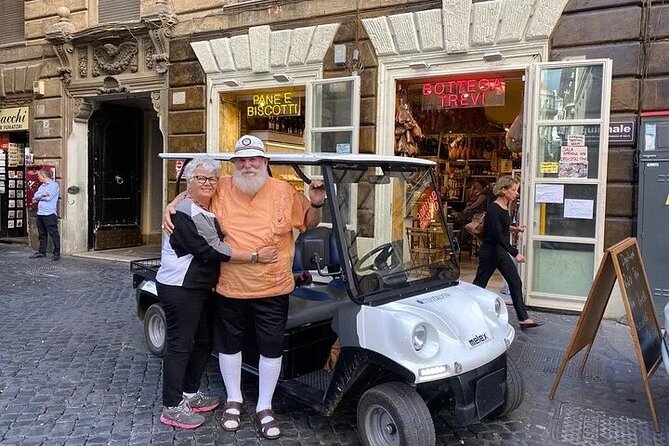
You get about 5 minutes at Campo de’ Fiori, with the stop listed as free. The square is famous for its lively atmosphere—colors, sounds, and that sense that locals treat the space as a daily stage.
One standout detail from feedback: the statue of philosopher Giordano Bruno burned alive is at the center of the piazza. That adds a layer beyond the postcard scene. Campo de’ Fiori isn’t only pretty; it has an edge.
Five minutes is quick, so I’d use it like this:
- Grab a photo from a spot where you can include the central monument.
- Take in the market-life vibe even if you do not buy anything.
- Then move on before you feel rushed.
Villa Borghese, Palatine Hill, and Aventine: the “views and ancient layers” segment
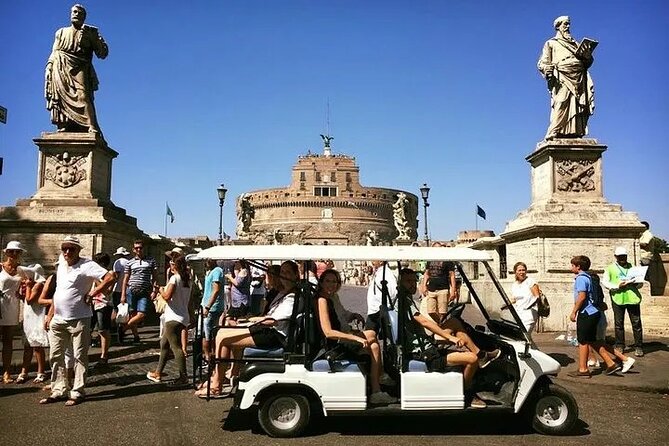
After the classic central landmarks, the route shifts into areas that help you understand Rome as a set of hills and viewpoints—not just a checklist of monuments.
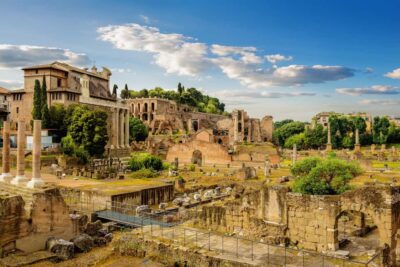
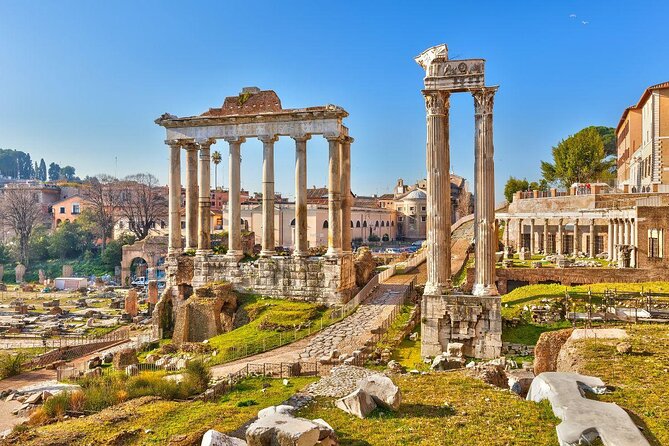
You’ll visit Villa Borghese, the large public park in Rome that includes buildings, museums, and attractions. You’ll also pass through/stop at Palatine Hill, described as the most central of the seven hills, and called the first nucleus of the Roman Empire.
Then the tour includes Aventine Hill, another of the seven hills. Even without long time on the ground, these stops matter because they help you connect what you’ve been seeing to the geography of the city.
This is the part of the day that tends to feel less like “tour mode” and more like “oh, so this is where the city shape comes from.” It’s also a good moment to breathe a bit—especially after the busiest fountain and stair scenes.
Because the duration for these stops isn’t listed with exact minutes, treat them as look-and-photo windows rather than full museum visits. If you want to do the deep historical walking trails, you’ll need extra time later.
Circo Massimo to Piazza del Popolo: big space, big scale
Next you reach Circo Massimo, the ancient Roman chariot-racing stadium and mass entertainment venue. The stop is about 5 minutes and listed as free. It’s short, but Circo Massimo is one of the best “scale shock” places in Rome. Even if you don’t have time to wander, you get the idea of how huge public entertainment used to be.
Then comes Piazza del Popolo (about 5 minutes). It sits inside the northern gate of the city, which was once called Porta Flaminia. The name means The People’s Square, and the space gives you a sense of Rome as an entrance and gathering point, not just a destination.
These quick stops are excellent for your mental map. They help you see the gaps between the “big picture” landmarks and understand how the city expands outward.
Sant’Ignazio di Loyola: when the small details steal the show
The final stop on the route includes the Chiesa di Sant’Ignazio di Loyola. This one is for people who like architecture details—because it has a lot going on.
This church was built based on a design involving Orazio Grassi, with plans credited to Carlo Maderno and others, paid for by Cardinal Ludovico Ludovisi. The church’s facade is inspired by the nearby Gesù church and includes structural elements like two orders of pilasters and Corinthian columns, plus niches and windows.
Even if you only have a short look, this is a perfect cap to the tour because it shifts you away from the famous outdoor icons. Instead, you start noticing how Rome’s power and storytelling show up in building design.
If you are the type who loves to spot patterns—columns, window rhythms, decorative geometry—this stop will feel extra satisfying after the broader squares and fountains.
Guides make the difference: what the best ones do
A lot of the praise in feedback centers on guide energy and storytelling. Names like Francesco and Yvonna show up often, along with guides such as Mario, Pietro, and Claudio. Some guests also called out Hadi, Sabrina, Ivanka/Ivanna, and Alessi.
Here’s what the top-performing guides tend to do in a tour like this:
- They answer questions without making you feel silly.
- They guide you to the best photo angles for the time you have.
- They keep the ride moving but not rushed.
One smaller downside that shows up in feedback: if your guide is more phone-focused or less involved, the experience can feel too quiet and you may feel like you are waiting for explanation. I’d treat this as your reminder to ask early—if something matters to you, say it right away. Good guides adjust.
Who should book this Rome golf cart tour
This is a strong fit if you:
- Are visiting Rome for the first time and want quick orientation.
- Have limited time and want to see major landmarks without burning your legs.
- Travel with kids, family, or anyone who prefers fewer long walks.
- Want backstreet driving so you see more of the city’s texture.
It’s less ideal if you:
- Want to spend long hours inside museums and churches.
- Prefer a slow, wandering pace with minimal structure.
- Are chasing “only history, all day” depth. This route gives you a guided overview, not a full curriculum.
Should you book? My practical take
I’d book this tour if your goal is efficient Rome viewing with less walking stress. The route hits iconic sights (Pantheon, Navona, Trevi, Spanish Steps) and also gives you ancient and viewpoint context (Palatine, Aventine, Circo Massimo). Add hotel pickup, an English-speaking driver, and a private group format, and the value clicks—especially if your itinerary is tight.
If you are the kind of traveler who loves to linger, then consider this your first pass. Do the deep visits on a second day. That way you use the golf cart tour for your bearings, not for your final answer on every monument.
For many people, this kind of tour becomes the foundation for the rest of the trip—where you decide to return, what you skip, and how you plan your evenings.
FAQ
How long is the Rome golf cart tour?
It lasts about 3 hours.
Where does the tour start, and how do hotel pickups work?
The meeting point is Pic Nic – Just Amir srl at Piazzale delle Canestre, SNC, 00197 Roma. Pickup is offered from your central Rome hotel for the private experience. If you are not in Rome center, contact the provider to arrange a private car.
Is this tour private?
Yes. It is private, meaning only your group participates.
Is the tour offered in English?
Yes, the driver is listed as English-speaking.
Do I need to buy entry tickets?
Entry tickets are not included. The itinerary lists some stops as free admission, but you should still plan on needing no tickets only where the route indicates free entry.
Which major sights are included?
The route includes the Pantheon, Piazza Navona, Trevi Fountain, the Spanish Steps, Campo de’ Fiori, Villa Borghese, Palatine Hill, Circo Massimo, Aventine Hill, Piazza del Popolo, and the Chiesa di Sant’Ignazio di Loyola.
Is cancellation free?
Yes. You can cancel for a full refund up to 24 hours in advance of the experience start time.
Are service animals allowed?
Yes, service animals are allowed.
Is the cart tour suitable for most travelers?
Most travelers can participate, and it’s listed as near public transportation. If you have specific mobility needs, it’s smart to ask questions before you book.