REVIEW · ROME
Sistine Chapel and Vatican Museums Small Group Tour
Book on GetYourGuide →Operated by Italy With Family · Bookable on GetYourGuide
The Vatican hits you fast, and this tour helps you get there sooner. With early access you spend less time in lines and more time looking closely at the Sistine Chapel. I like the way the pacing is built around key galleries, so the building doesn’t feel like one giant maze.
Two things I really appreciate are the live guide who connects art to meaning, and the headset setup that keeps you synced up even when groups get loud. One possible snag: St. Peter’s Basilica entry is yours to explore on your own, so if you want a guided walkthrough inside the church, this isn’t that.
In This Review
- Key highlights at a glance
- Why this Vatican and Sistine tour feels different than winging it
- Meeting point and the start of your Vatican day
- The biggest value: early-entry timing and skip-the-line access
- Vatican Museums route: what you’ll actually see (and why it’s ordered well)
- Candelabra Gallery: Roman themes brought forward
- Gallery of the Tapestries: Raphael’s stories in woven form
- Gallery of Maps: global thinking, Roman methods
- Where Pontifical life shows up in the details
- Sistine Chapel: how the guide changes what you see
- Listening with headsets: small tech, big comfort
- St. Peter’s Basilica after the tour: what’s included and what isn’t
- Group pace: how to make the tour work for you
- Who should book this tour
- What you’re paying for at $80.87 and whether it’s good value
- A note on guides: the kind of teaching style that gets praised
- Should you book this Vatican and Sistine small-group tour?
Key highlights at a glance
- Early-morning entry designed to cut the crowd pressure before the museums fill in
- Headsets so you can actually hear the guide inside big echoing rooms
- Candelabra, Tapestries, and Maps stops that turn famous spaces into a clear route
- Sistine Chapel guidance to help you know what to notice once you’re seated
- Security first, then skip-line entry so your time goes to art, not paperwork
- Optional St. Peter’s Basilica time after the tour, with free entry on your own
Why this Vatican and Sistine tour feels different than winging it
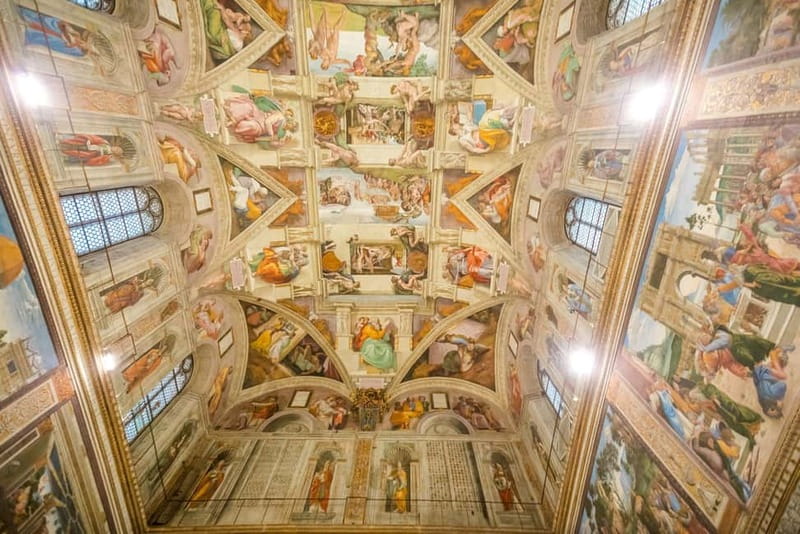
Rome has a special talent for making you stand still. The Vatican doubles down on it: security, ticket lines, and crowd flow can eat hours. This small-group approach is built to reduce that wasted time, mostly by getting you in early and moving you through the most important rooms with a clear plan.
The best part is that the Sistine Chapel moment doesn’t arrive like a surprise ambush. You’re led through the Vatican Museums in an order that makes sense. Then you step into the chapel with a guide who tells you exactly how to look—so you spend your energy on what’s painted, not on figuring out where your eyes should go first.
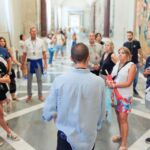
You also get headsets, which sounds like a minor detail until you’re surrounded by people talking and walking at the same time. This is the kind of thing that makes a guided tour feel less like herding and more like learning.
That said, you should be aware of the one limitation that keeps showing up in people’s expectations: St. Peter’s Basilica is not guided inside as part of this experience. The guide helps you with context, and then you’re free to explore the basilica at your own pace.
You can also read our reviews of more tours and experiences in Rome.

Meeting point and the start of your Vatican day
You meet in Piazza della Città Leonina in front of the Bar Leonina. The tour ends back at the meeting point, so you don’t have to worry about figuring out where you’ll be dropped off.
Plan your arrival with buffer time. The Vatican runs on strict entry rhythms, and everyone passes through airport-style security. The dress code is also enforced: no shorts and no sleeveless shirts. Bring your passport or ID card because it’s required for entry.
The tour runs rain or shine, so bring whatever you need to stay comfortable outdoors before you’re inside. Once you’re moving through the museums, you’ll be grateful you came prepared.
The biggest value: early-entry timing and skip-the-line access
There are two realities at the Vatican. One is that it’s famous. The other is that it’s famous and crowded at the same time. Even on mornings, you’ll see lines forming for tours and general admission. This is why the early slot is such an advantage.
With early entry, you start the Vatican Museums before the worst of the day’s squeeze. It also improves the Sistine Chapel experience, because your visit window is earlier and your seating time isn’t as pressured.
This tour also includes skip-the-ticket line entry into the Vatican Museums. That matters because the “line time” isn’t just waiting. It’s time you could be looking at sculpture, frescoes, and the rooms that people come from all over the world to see.
Vatican Museums route: what you’ll actually see (and why it’s ordered well)
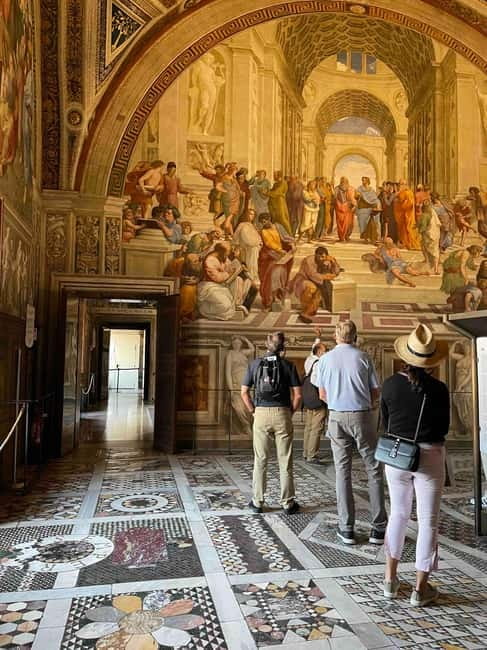
The Vatican Museums can feel endless if you show up with just a map. You’ll see signs, crowds, and doorways, but it’s easy to lose the thread: what you’re looking at, why it’s here, and how it connects to everything else.
This tour keeps you focused with guided stops in the major highlights you’d hope to hit anyway:
Candelabra Gallery: Roman themes brought forward
You’ll pass through the Candelabra Gallery, described as rooms divided into sections where artworks found throughout Italy connect relics of the Roman Empire to later eras. Even if you’re not a museum expert, a guide can do something simple but powerful: help you notice patterns instead of just counting objects.
If you tend to get bored in long museum halls, this stop helps break the day into meaningful chunks. It gives you a visual and historical anchor before you move deeper into the collection.



Gallery of the Tapestries: Raphael’s stories in woven form
Next up is the Gallery of the Tapestries, which hosts an extensive collection of tapestries linked to Raffaello Sanzio. The point here isn’t just to see the materials. It’s to see how famous Catholic stories and myths are represented through tapestry design, where color, figures, and composition still read powerfully even on textile.
Tapestries can be underestimated. With a guide, you’ll understand what you’re looking at faster, and you’ll spend less time asking, What am I supposed to notice here?
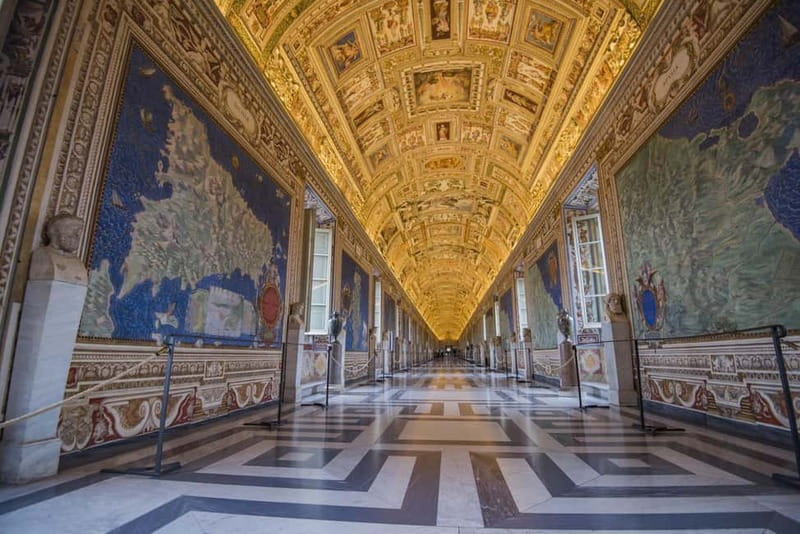
Gallery of Maps: global thinking, Roman methods
Then comes the Gallery of Maps, a favorite stop if you like science, exploration, or old-world cartography. Roman topographers created the maps, which offer a window into how people once thought the world looked.
This is also where a headset-guided group flow helps. The room is packed with details, and you don’t want to be scanning alone while everyone behind you crowds forward. Your guide keeps the route moving while pointing your attention to what matters.
Where Pontifical life shows up in the details
Even outside the big galleries, the Vatican’s religious and historical atmosphere is impossible to ignore. The tour context includes references like the Pontifical Swiss Guards, who have protected the Pope since 1506. It’s a small detail, but it ties the art, the architecture, and the living institution together.
Sistine Chapel: how the guide changes what you see
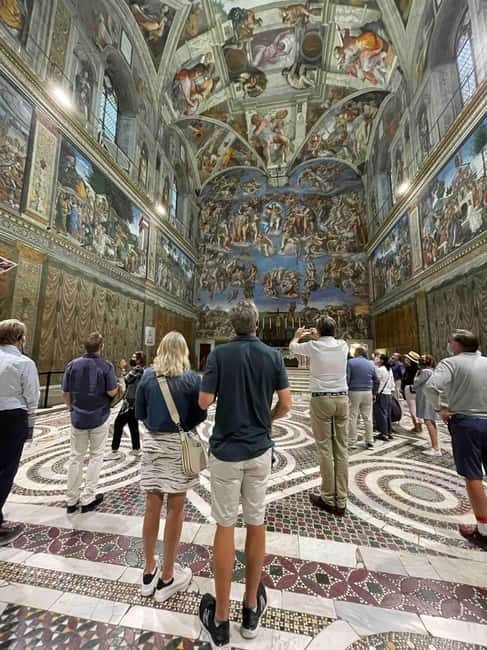
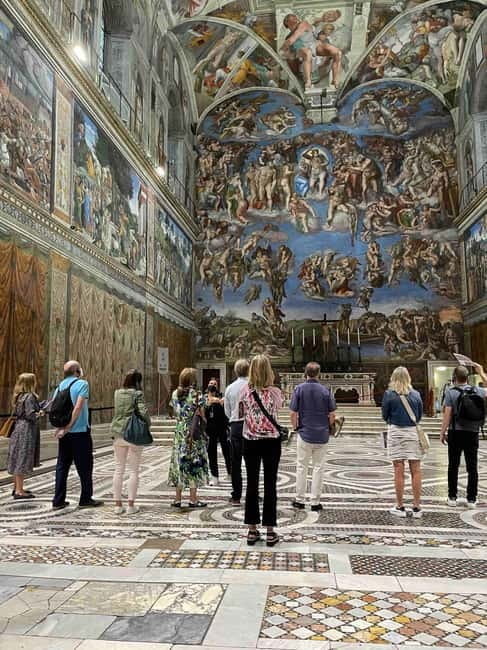
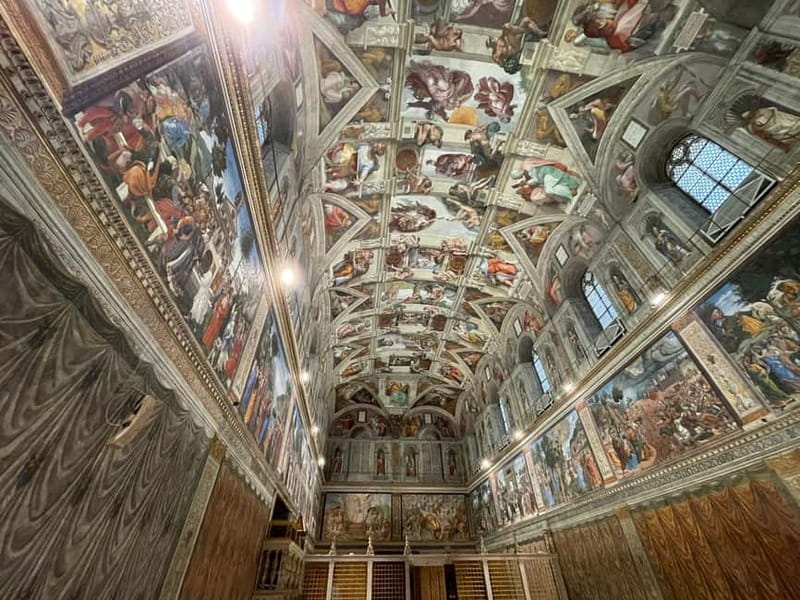
The Sistine Chapel is the moment you’ve been saving your stamina for. The ceiling frescoes, and the way the paintings cover the space, can feel like staring at a masterpiece with no instructions. The guide gives you that useful structure.
You’ll learn what to look for once inside, and you’ll get time to marvel at the ceiling and walls without rushing your eyes. Your guide also answers questions after you exit, which is handy because the Sistine Chapel tends to generate instant questions. People wonder about symbols, sequences, and what they’re really seeing.
One practical note: the Vatican sometimes restricts access in certain areas, including the Sistine Chapel, due to unforeseen circumstances. If that happens, refunds can’t be guaranteed, but the tour still proceeds with access to other historically significant sections. You should go into the day ready to adjust, and with the understanding that the Vatican has its own rules on the day.
Listening with headsets: small tech, big comfort
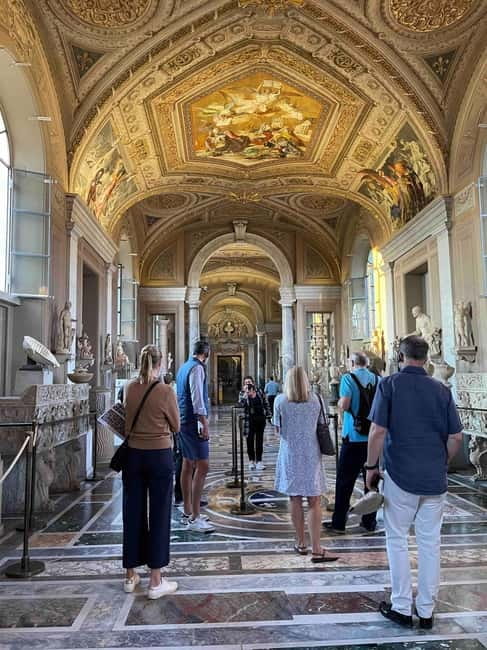
The inclusion of headsets is one of those benefits you only fully appreciate when the environment is loud. In the Vatican, groups talk, people move, and floors echo. Headsets keep your experience from turning into a scavenger hunt for the guide’s voice.
This is also one reason the small-group format works well. Even with a group, the guide can keep everyone together and explain the art without constantly stopping for repeats.
St. Peter’s Basilica after the tour: what’s included and what isn’t
After the museum portion, you’re free to go to St. Peter’s Basilica at your own leisure. The entry to the basilica is free.
This tour does not include a guided tour inside the basilica. The guide provides higher-level context and helps you know what to look for, then you walk it yourself.
That can be perfect if you like to wander and choose your own pace. It can feel disappointing if you specifically want someone to walk you through the basilica’s interior highlights step by step. If you’re the second type, you may want to plan a separate guided basilica experience later or be ready to do your own quick “greatest hits” route inside.
A helpful detail: some people find it easier to return in the evening if there’s an event or a speaking schedule that affects access. If you can, that flexibility is a win.
Group pace: how to make the tour work for you
A guided Vatican day is still a timed flow through big spaces. In a few cases, people note that the group can feel a bit rushed at first. The fix is simple: don’t drift. Stay with the group, follow directions, and be ready to keep up a steady walking pace.
This is also where listening matters. The guide gives you practical cues about where you should stand, how to approach the next room, and what not to miss. If you fall behind, you’ll miss those cues and feel lost more than you should.
If you’re traveling with kids, this style can work well because a good guide knows how to keep younger attention moving while still pointing out major art moments. The day becomes a story you can follow, not a list you can’t keep up with.
Who should book this tour
This tour is a strong match if you:
- Want early access to reduce crowd stress
- Prefer guided context so the Vatican feels understandable, not random
- Like structured museum time, not scrolling in an app all morning
- Value skip-the-line entry and headsets
It may not be the best fit if you:
- Want a fully guided, inside-the-basilica experience with narration from start to finish
- Get uncomfortable with a faster pace through crowded areas
What you’re paying for at $80.87 and whether it’s good value
At about $80.87 per person for a 2.5-hour guided experience, you’re paying for three things that matter at the Vatican: guidance, entry access, and time savings.
Entry to the Vatican Museums is included, and you also get guided coverage through the museum highlights and the Sistine Chapel. Add headsets, plus skip-the-ticket-line access, and the value starts to make sense.
If you tried to do this on your own, you’d still face security, lines, and the problem of choosing what to see first. Even with a free museum day mentality, the Vatican tends to punish slow plans. This tour essentially buys you a smoother morning.
Is it the cheapest way to visit? Probably not. Is it a good use of time compared with risking wasted hours? Very likely, especially if you only have one day in Rome.
A note on guides: the kind of teaching style that gets praised
Guides for this experience often get credit for balancing facts with a sense of story and for keeping groups organized in tight spaces. Names that show up with strong mentions include Barbara, Gigi, Federica, Simone, Sylvia, Francesco, Giulia, Yamuna, and Francisco.
The consistent theme is how they handle pacing and attention: they point out the parts you’ll miss if you’re just reading placards, and they keep you moving without turning the experience into a sprint. If you care about hearing explanations and not just walking through rooms, this guide style is a big part of why the tour gets strong marks.
Should you book this Vatican and Sistine small-group tour?
Book it if you want an efficient morning plan that turns the Vatican from overwhelming to focused. The combination of early entry, skip-the-line access, and guided attention in the museums and Sistine Chapel is exactly what you want when you only have a limited amount of time.
Don’t book it if your top priority is a full guided walkthrough of St. Peter’s Basilica interior. In that case, add a separate basilica guide or plan a self-guided visit with your own route research so you don’t feel like the ending is unfinished.
If you’re the kind of person who likes art best when someone explains what to look for, you’ll get your money’s worth quickly. Arrive dressed properly, show up early to handle security smoothly, and let the guide do the heavy lifting on what your eyes should catch first.