REVIEW · ROME
Rome: Catacombs of St. Callixtus Entry Ticket & Guided Tour
Book on GetYourGuide →Operated by OPERA ROMANA PELLEGRINAGGI · Bookable on GetYourGuide
Rome’s quiet history sits underground. In a tight 30 minutes, you’ll get the story of early Christians in Rome while walking a real underground burial complex beneath the Appian Way. The highlight is the Crypt of the Popes, plus stops with some of the oldest painted walls in the catacombs.
Two things I liked a lot: the live guided tour (many guides, including Comfort and Sam, keep it clear and fun even when the subject turns serious), and the way the route hits the biggest name locations fast. You end up at the Crypt of the Popes, then move on to the Crypt of St. Cecilia, with frescoes and burial-area details that make the site feel larger than just a single hallway.
One consideration: the catacomb spaces can feel claustrophobic and chilly, so if tight underground rooms make you uneasy, this won’t be a comfy outing.
In This Review
- Quick hits before you go
- Catacombs of St. Callixtus in Rome: what you’re booking for $16
- The guided flow: what happens during the 30-minute circuit
- Crypt of the Popes: the stop you’ll remember
- Crypt of St. Cecilia: the adjoining room with a different feel
- Old frescoes and painted walls: what you can actually see underground
- Area I and the cubicles of the sacraments: the “how it worked” stop
- The Appian Way connection: an underground site far from the center
- Getting there from Termini: bus plus Metro routes that work
- Option 1: Termini to San Giovanni to bus 218
- Option 2: via Colosseum or Circo Massimo to bus 118
- What to bring, what to wear, and what not to do
- Tour guides: what the best ones do in 30 minutes
- Price and value: why $16 for catacombs can feel fair
- Who should book the Catacombs of St. Callixtus tour
- Should you book this Catacombs of St. Callixtus guided tour?
- FAQ
- How long is the Catacombs of St. Callixtus guided tour?
- How much does it cost per person?
- What’s included in the ticket?
- Where do I meet, and when should I arrive?
- Can I take photos inside the catacombs?
- Is the tour suitable for mobility issues or claustrophobia?
- How do I get there from Termini Station?
Quick hits before you go
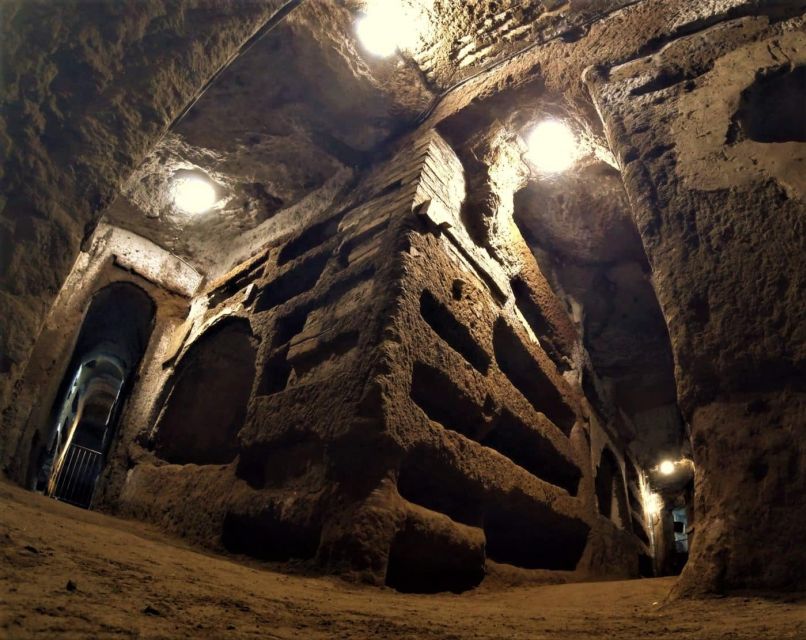
- Crypt of the Popes: see the resting place of 9 popes and 3 bishops
- Crypt of St. Cecilia: a separate, adjoining stop right after the Popes
- Oldest frescoes on display: wall paintings you can actually make out
- Area I and the sacraments cubicles: a more specific look at burial practices
- Cool underground temperatures: expect it to feel colder than Rome street level
- Short and structured: about 30 minutes, with a guide keeping the group moving
Catacombs of St. Callixtus in Rome: what you’re booking for $16
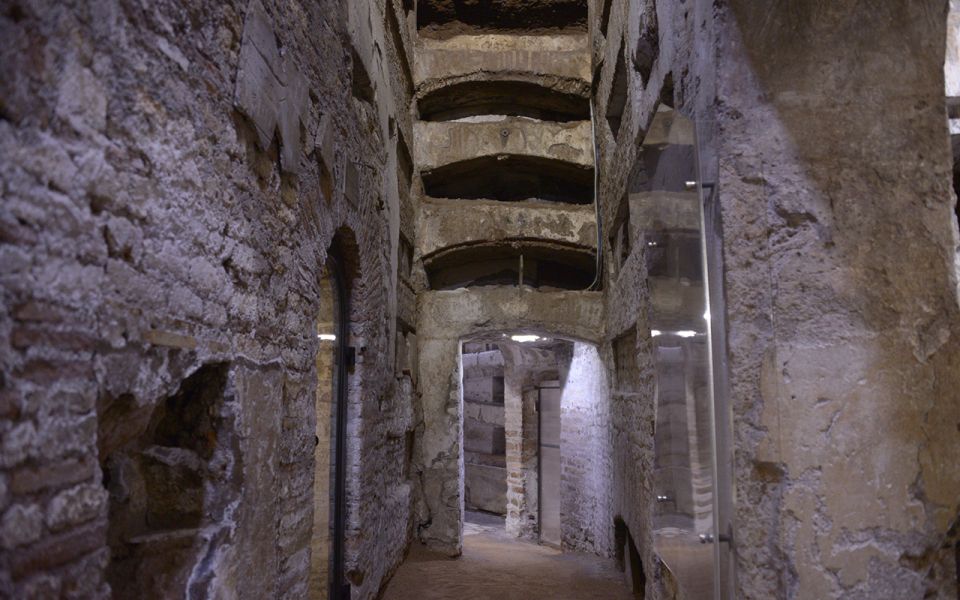
For $16 per person, you’re not buying a slow museum stroll. You’re buying a guided entry ticket into one of Rome’s major early Christian burial settings, with a set route designed to cover the key moments quickly.
This is also a good value setup because the ticket includes the guide and entry. You skip waiting to purchase a ticket on site, and you get a live person guiding you through the names, the layout, and what you’re actually looking at underground.
The tour lasts about 30 minutes, which sounds short until you see how much a catacomb visit compresses into a small circuit. The good news: many guides leave time for questions at the end, so the quick timing doesn’t always mean rushed information.
If you want the main story of the Catacombs of St. Callixtus without turning your day into a long crawl through every side corridor, this fits. It’s ideal as a break from the surface heat and noise when you still want something real and ancient.
You can also read our reviews of more tours and experiences in Rome.


The guided flow: what happens during the 30-minute circuit
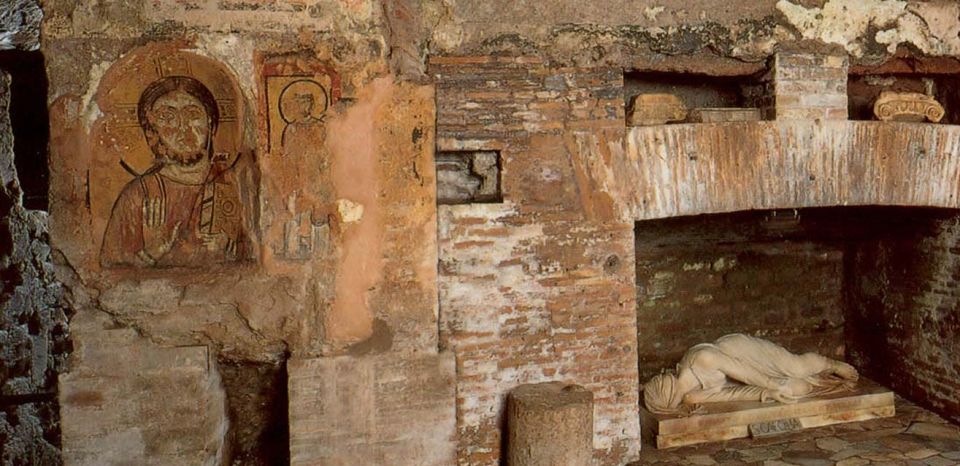
The tour starts with you meeting your guide and using your voucher at the ticket office. Then you move into the oldest official cemetery setting tied to Rome’s early Christian community, with the guide explaining where the complex’s name comes from and why the site matters.
From there, your route follows a clear “big points” path:
- Start with context: how the burial ground worked and what you’re seeing as you go in
- Crypt of the Popes: the major centerpiece stop
- Crypt of St. Cecilia: an adjoining room with its own focus
- Frescoes and painted walls: some of the earliest wall artwork preserved in the underground space
- Area I: where you’ll see the cubicles of the sacraments
The style of the visit is very guided. You’re expected to stay with the group the whole time, and the guide keeps you moving from stop to stop so you don’t get turned around in the underground layout.
A practical plus: the guide doesn’t just recite names. They point out what you’re actually looking at—wall paintings, burial-area features, and the significance of each named room—so the 30 minutes feels packed with meaning instead of just walking in the dark.
Crypt of the Popes: the stop you’ll remember
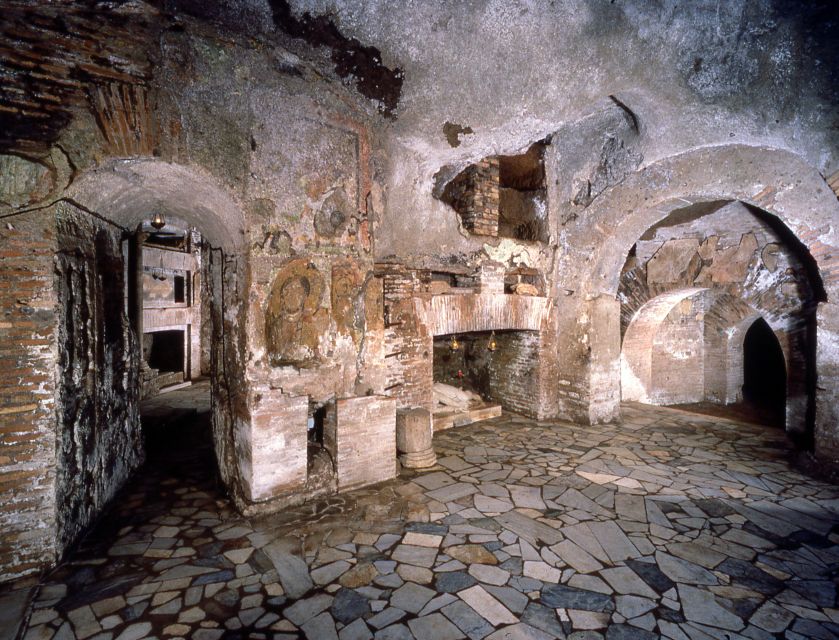
If you only remember one section, make it the Crypt of the Popes. This is where the tour’s central claim comes alive: 9 popes and 3 bishops were laid to rest here, and the guide ties that together with what early Christians were doing underground.
What I like about this stop is the way it gives the whole complex a focal point. Instead of treating the catacombs like a random collection of tunnels, you get a named room with clear importance, which makes everything you see afterward easier to place in your head.
Guides also set the tone well. Several guide styles show up in the experience: some are joking and light on the surface while still respectful, and others are more reverent and measured. Either way, the Crypt of the Popes works because it’s dramatic without needing theatrics.
Crypt of St. Cecilia: the adjoining room with a different feel
Right after the Crypt of the Popes, you head to the adjoining room for the Crypt of St. Cecilia. This stop centers on a Roman matron remembered for helping many martyrs receive a proper burial, which adds a different kind of human detail to the site.
You’re not just learning about prominent church leaders. You’re also hearing how early Christian communities framed care for the dead, and how that care shows up in the way the catacombs were used and remembered.
This room also helps you understand the tour’s design. The visit doesn’t just jump from one famous label to another. It layers meaning, then supports it with what you can see: frescoes, painted walls, and burial-area features that make the story concrete.
Old frescoes and painted walls: what you can actually see underground
The catacombs aren’t just about names. You’ll also see some of the oldest frescoes decorating the walls, and the guided format matters here.
In a lot of underground sites, lighting and crowd flow can make paintings hard to appreciate. Here, the focus is on helping you notice details rather than rushing past them, and the result is that the wall art feels more legible and purposeful as you move through.
This is one of those places where good interpretation beats time. With a guide pointing out what matters, you’re not left guessing what you’re looking at.




Area I and the cubicles of the sacraments: the “how it worked” stop
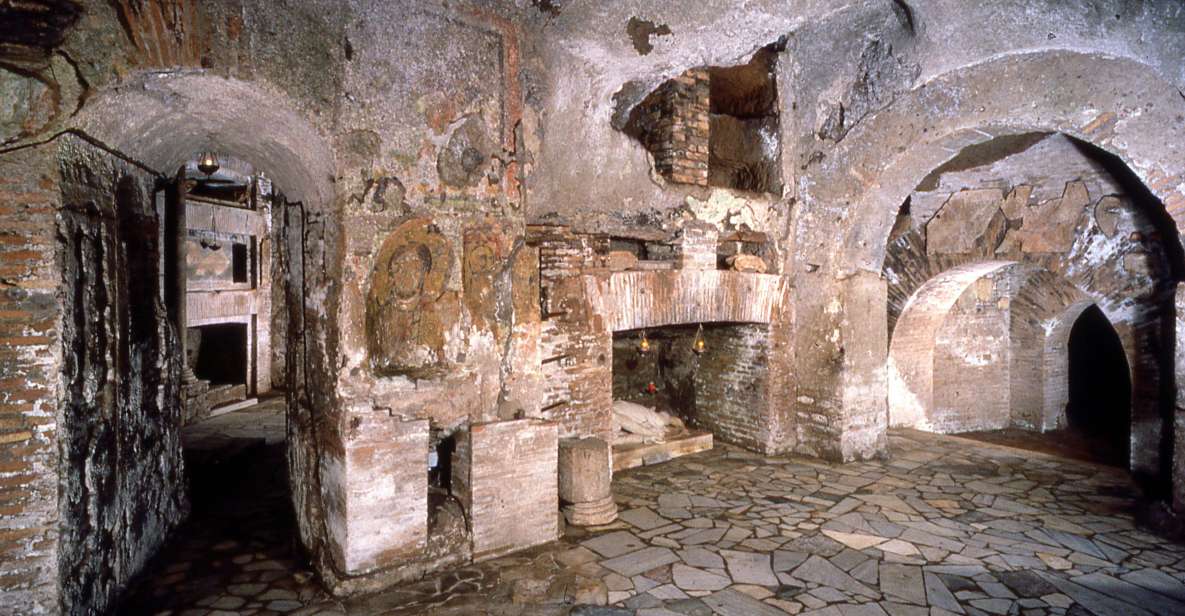
After the named crypt rooms, you’ll reach Area I, where you’ll see the cubicles of the sacraments. This section gives the tour more than a highlights reel feel—it starts answering the practical question of what these burial areas were like and how they were organized.
The tour’s value is in that shift. The Crypt of the Popes and Crypt of St. Cecilia give emotional and historical anchors. Area I gives you structure: how the space functioned as part of early Christian burial traditions.
If you like your history tours to explain systems—how people lived, worshiped, or prepared for death in their own terms—this is the part that tends to land best.
The Appian Way connection: an underground site far from the center
The experience is described as an underground site beneath Rome’s Appian Way, and that location shapes everything about the visit. You’re leaving central Rome to reach a quieter, more out-of-the-way area with access by local transit.
One reason this matters: you’re less likely to feel overwhelmed. Several experiences note the setting feels peaceful rather than packed, which makes the catacomb circuit easier to enjoy because you’re not constantly fighting for a view.
Also, the colder air underground is real. People call out that the chambers can feel around 15°C, which turns the underground visit into a welcome switch from the Roman heat—especially in warmer months.
Getting there from Termini: bus plus Metro routes that work
You’ll meet at the Catacombs ticket office, and you need to arrive at least 10 minutes before your scheduled tour to show your voucher. The entrance is at the catacombs site, and the meeting instructions are specific for a reason: once you’re underground, there’s no drifting around to catch up.
If you’re starting from Termini Station, here are two practical options given for this tour:
Option 1: Termini to San Giovanni to bus 218
- Take Metro A direction Anagnina to San Giovanni
- Transfer to bus 218 direction Ardeatina
- Get off at Fosse Ardeatine
- The entrance is in front of you
Option 2: via Colosseum or Circo Massimo to bus 118
- Take Metro B direction Laurentina to Colosseo or Circo Massimo
- Use bus 118 direction Appia/Villa Dei Quintili
- Get off at Catacombe di San Callisto
A word of advice: this site is a bit outside the core sights. Public transport can be easy, but it can also take planning time. If you’d rather reduce stress, a taxi or rideshare to and from the location can make the whole outing simpler, especially if you’re short on time.
What to bring, what to wear, and what not to do
This tour is built for real underground walking, so wear practical stuff. The basics are comfortable shoes and comfortable clothes.
Also plan for cold. If you run warm on the street, you might still want a light layer for underground sections since the chambers can feel noticeably cooler than you expect.
Rules you’ll want to know before you go:
- No photography inside
- No baby carriages
- The tour is not suitable for mobility impairments
- It’s also not suitable for claustrophobia
These aren’t small details. They affect who can enjoy the tour comfortably and whether you can plan without surprise.
Tour guides: what the best ones do in 30 minutes
A big part of the experience is your guide, and the guide styles show up clearly in the results you get. People call out guides who were friendly, funny, and attentive, including named examples like Comfort, Sam, Arishba, Fr Peter, Francesca, and Don Sam.
What good guides do in a catacomb context is simple: they keep the group together, explain what you’re seeing without turning it into a lecture, and then make space for questions afterward. Several experiences note guides stayed a bit longer after the main tour to answer follow-ups and point out extra spots you might want to see on the property.
If you care about getting meaning out of the walls and rooms, the guide quality isn’t a bonus. It’s the product.
Price and value: why $16 for catacombs can feel fair
At $16 per person, this isn’t a splurge. And because the entry ticket and guided tour are included, you’re not stacking extra costs just to get inside.
The short duration helps too. Thirty minutes means you’re not paying for hours of transit time inside Rome’s core attractions, and you can fit this into a day that already includes major sights.
Value also shows up in the content density. The tour covers the Crypt of the Popes, Crypt of St. Cecilia, frescoes, and Area I’s sacraments cubicles. That’s a lot of labeled, meaningful stops for a tour that doesn’t last long enough for you to get bored.
One more detail that affects value: it’s a guided visit, not a self-guided wander. If you like history explained clearly, you get a higher return per minute than you would wandering on your own.
Who should book the Catacombs of St. Callixtus tour
I’d especially recommend this for:
- You want a focused introduction to Rome’s early Christian burial world
- You like guides who explain what you’re seeing, not just where to stand
- Families with older kids and teens who can handle a short structured tour
- Anyone looking for a cooler indoor break from the surface heat
I’d skip it if:
- You’re claustrophobic or sensitive to tight underground spaces
- Mobility limitations make uneven underground surfaces hard for you
- You strongly want photos as your main souvenir (because photography isn’t allowed inside)
For everyone else, the 30-minute format is a sweet spot. It’s long enough to make the underground story feel coherent, and short enough to keep it comfortable.
Should you book this Catacombs of St. Callixtus guided tour?
Yes—if you want a guided, structured visit that hits the biggest rooms and gives you a real understanding of what you’re looking at underground. It’s a solid pick for first-timers because the route covers the key named spots like the Crypt of the Popes and Crypt of St. Cecilia, then supports them with frescoes and Area I.
Book it if you’re planning to spend most of your Rome day on major sights and you want one different, quiet, historically grounded stop that doesn’t eat your entire afternoon.
Just come prepared for the practical reality: you’re underground, it can feel cool, and you’ll be staying with the group. If that part doesn’t bother you, this is a great way to see a side of Rome most people miss.
FAQ
How long is the Catacombs of St. Callixtus guided tour?
The guided portion is about 30 minutes.
How much does it cost per person?
The price is listed as $16 per person.
What’s included in the ticket?
Your booking includes the Catacombs of Saint Callixtus entry ticket and a guided tour.
Where do I meet, and when should I arrive?
You should go directly to the Catacomb ticket office and show your voucher at least 10 minutes before the scheduled tour.
Can I take photos inside the catacombs?
Photography inside is not allowed.
Is the tour suitable for mobility issues or claustrophobia?
No. It is not suitable for people with mobility impairments and not suitable for people with claustrophobia.
How do I get there from Termini Station?
One route is Metro A to San Giovanni, then bus 218 to Fosse Ardeatine, where the entrance is in front of you. An alternative route uses Metro B to Colosseo or Circo Massimo, then bus 118 to Catacombe di San Callisto.