REVIEW · ROME
Rome: Colosseum Arena, Roman Forum & Palatine Hill Tour
Book on Viator →Operated by Nicom Tours · Bookable on Viator
Three stops. One tight Roman story. This tour strings together the Colosseum arena, Palatine Hill, and the Roman Forum, and the big win is arena access plus a live guide who ties the ruins to gladiator spectacle and power politics. My main caution: expect lots of walking, stairs, and heat, and the pace can feel intense if you’re not used to moving constantly.
After meeting near Via delle Terme di Tito, your group follows a guided route through the Colosseum, including the Gladiator’s Gate and then the arena floor, which is usually restricted. You’ll spend about an hour each at the Colosseum, Palatine Hill, and the Forum, with time slots designed to fit into your day, plus headsets when you’re with a live guide.
In This Review
- Key highlights at a glance
- Why This Colosseum, Forum, and Palatine Tour Makes Sense
- Entering The Colosseum Arena Floor (and the part most tours miss)
- First and Second Tiers: Social Class, Seating, and How the Show Worked
- Palatine Hill: Emperors’ Turf and Those Classic Rome Views
- Roman Forum: Temples, Courthouse Energy, and Power Plays
- Price and Value: What You’re Paying For (and what you’re not)
- Timing, Pacing, and the Heat Factor
- Guide Quality, Headsets, and Understanding English
- Security Rules: What Can Stop You at the Door
- Practical Tips I’d Use Again in Your Shoes
- Should You Book This Tour: My Call
- FAQ
- Where does the tour start and end?
- How long is the tour?
- Is admission ticket included?
- Does it include the Arena Floor?
- What language is the tour offered in?
- Is this a guided tour or an audio tour?
- Is a mobile ticket used?
- How big is the group?
- What’s the fitness level needed?
- What items are not allowed at Colosseum security?
- Is free cancellation available?
Key highlights at a glance
- Arena floor access for that wow factor you only get when the group is guided in
- Small group size (max 24) helps you actually hear the guide and move with less chaos
- Three major sites in one loop so your Rome time isn’t eaten up by transit between landmarks
- Timed Colosseum entry with a reservation included, which helps you avoid the worst of the crush
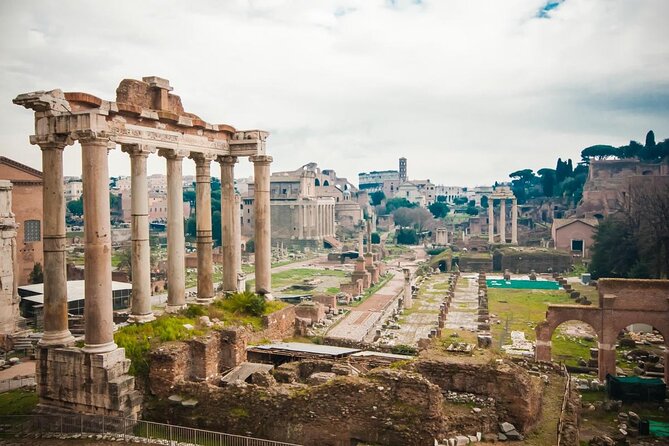
- Forum ruins with political context like Caesar’s area and the darker side of Roman power
- Palatine Hill views that reward the uphill effort with classic panoramas
Why This Colosseum, Forum, and Palatine Tour Makes Sense
If your Rome plan includes the Colosseum and you also want Palatine Hill and the Roman Forum, this tour is built for efficiency. You get a single, guided route that covers the core ancient “power triangle” in one half-day block, and that matters in a city where crowds and lines can eat hours.
What I like most is the combination of access and framing. The tour isn’t just walking past stones. You’re led into the Colosseum area visitors rarely get to stand on, then you move outward to the nearby streets that once acted as Rome’s commercial and political center. The guide’s job is to turn geography into meaning, like explaining how seating worked by social class and why specific temples and civic buildings mattered.
One more practical upside: the group size caps at 24. That’s not tiny, but it’s small enough that your experience is less like herding cats—especially when you’re on uneven surfaces and climbing stairs.
You can also read our reviews of more tours and experiences in Rome.

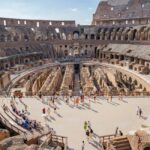
Entering The Colosseum Arena Floor (and the part most tours miss)
The tour starts at the Colosseum, and you’ll meet your guide near Via delle Terme di Tito, 93. From there, the early moments are key. You walk through the Gladiator’s Gate and into the arena area, which is usually restricted to general visitors. Standing on the same floor where gladiators entered changes the feel of the whole building. It’s not abstract anymore; it’s stagecraft.
You also get the Colosseum in layers. The route is structured so you’re not just shuffling from one viewpoint to the next. The guide leads you onto the floor first, then back up to the first and second tiers for explanations about how seating was assigned by social class. That detail is easy to miss on your own, because the building’s design tells the story only if someone points out what you’re looking at.
First and Second Tiers: Social Class, Seating, and How the Show Worked
After the arena floor moment, the tour moves into the upper levels. This is where the Colosseum becomes more than a big oval. You learn about the logic of the seating arrangement—who sat where and why. That matters because gladiator combat wasn’t only entertainment. It was also a public statement about rank, control, and identity.
You’ll likely also hear the guide connect the architecture to the action: how the crowd would have experienced the games, and how the spectacle was managed for maximum impact. That adds a layer of understanding that you can’t easily get from signs alone, especially when you’re trying to beat the clock.
If you’re the type who likes asking questions, plan to do that early. The tour covers a lot of ground, so you’ll want your curiosity answered before the group starts moving again.
Palatine Hill: Emperors’ Turf and Those Classic Rome Views
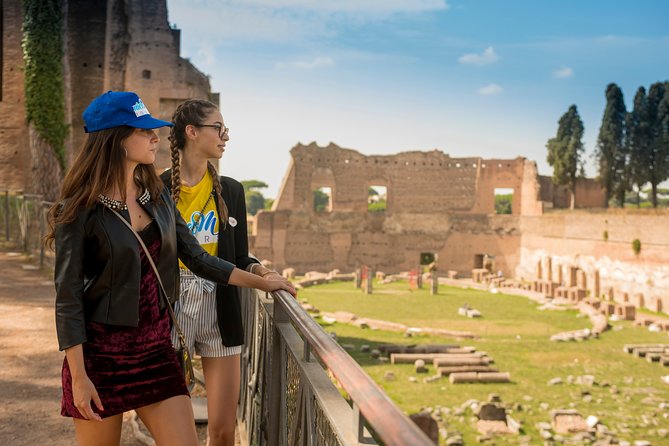
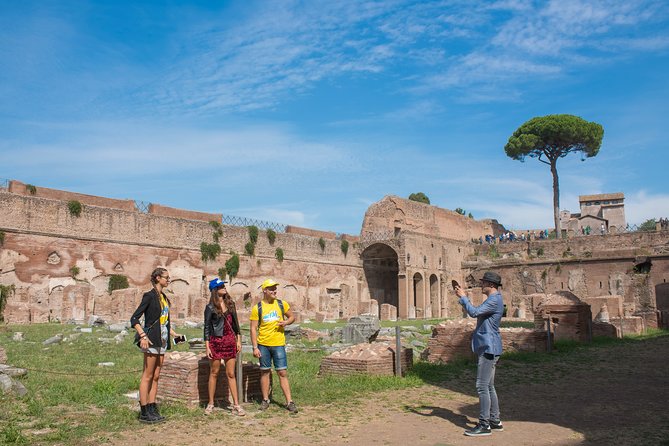
Palatine Hill is the “other” half of the ancient Rome story, and it’s a smart pivot after the Colosseum. The tour heads there next with your guide, exploring the heart of old Rome and the ruins associated with emperors’ palaces.
What you’re aiming for here is perspective. The hill gives you a sense of power literally elevated above the city—an advantage that shows up in the views. Even with crowds, the higher vantage points help you understand why Palatine became such a magnet for rulers and dynasties.
This stop can also be physically demanding. You’ll deal with stairs and grades, plus the realities of Rome’s uneven walkways. If you’re traveling with mobility limits, it’s worth taking that seriously rather than assuming you can just “power through.”
Roman Forum: Temples, Courthouse Energy, and Power Plays
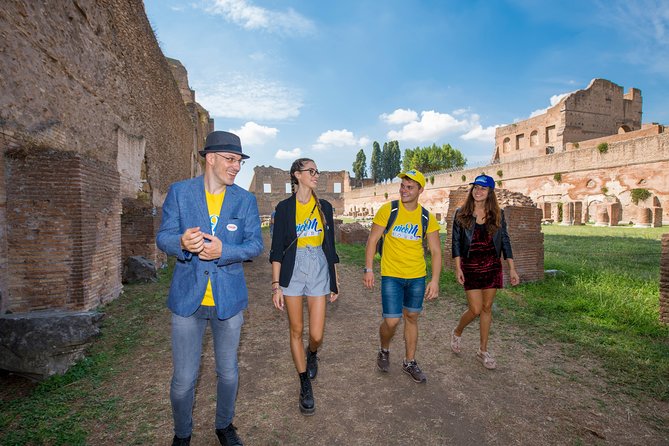
Then comes the Roman Forum, and the tone shifts. Instead of games and spectacle, you’re in the civic and political core—ruins tied to meetings, decisions, and conflict.
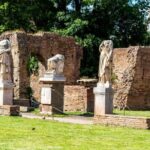
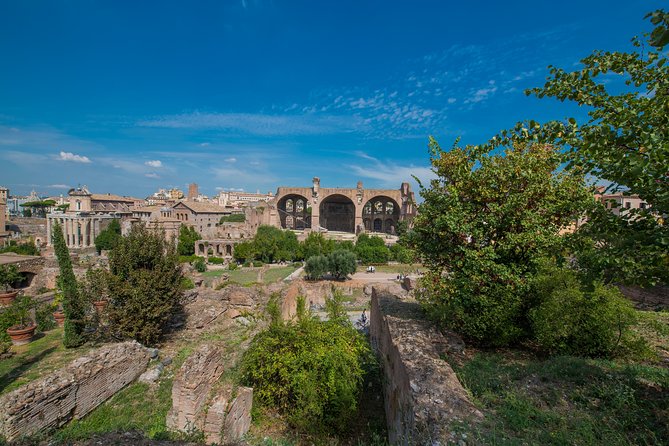
You’ll see major remains and hear how the period worked, including stories about power struggles and betrayal. The tour mentions historic ruins such as the Temple of Caesar and points out other standout structures like the Temple of Saturn and the Curia. When a guide connects those names to what happened there, the Forum stops being a pile of columns and becomes the stage for governance and intimidation.
One tip: save a few minutes for slower wandering even though the tour is guided. The Forum has enough scattered detail that you’ll naturally want to look closer once you understand what you’re seeing. Some people also enjoy taking advantage of the fact that after the guided portion ends, you can keep exploring parts of Palatine at your own pace, especially higher viewpoints.

Price and Value: What You’re Paying For (and what you’re not)
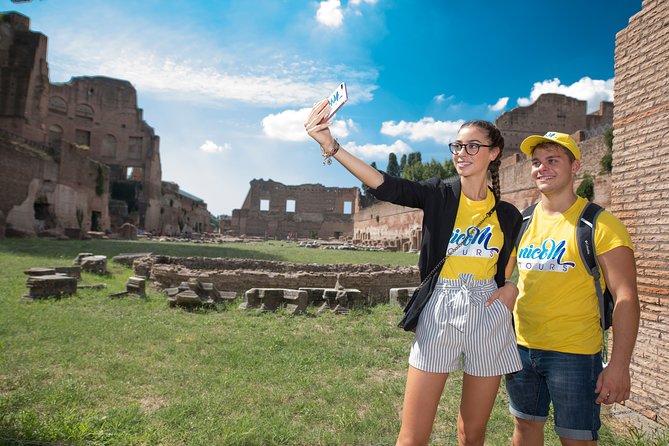
At $71.20 per person for about 3 hours, the headline value is that your entry includes arena access and a reservation fee. The tour bundle lists the Colosseum ticket with arena access as valued at €24 per person, plus a reservation fee valued at €2 per person.
So what are you really paying the rest for? In plain terms, you’re paying for the live coordination, the guide’s explanations, and the on-site logistics that get you moving efficiently through a site with strict rules. You’re also paying for the group audio setup with headsets (if you choose the live-guided option), which can be the difference between feeling like you learned something and feeling like you just stood near the crowd.
This tour tends to be a good fit if:
- you want three top sites without piecing together multiple tickets and meetup points
- you care about context (how seating worked, what civic buildings meant, why power rivalries mattered)
- you’d rather spend your energy looking at things than figuring out a route
It may not be as good a fit if you’re extremely sensitive to pace, language clarity, or long periods of standing.
Timing, Pacing, and the Heat Factor
The tour is listed at about 3 hours, but real life happens. Some departures run longer than expected—one group noted an extra 45 minutes, and another mentioned it going more than an hour past the scheduled finish. That doesn’t mean the tour is “bad.” It does mean you should plan your day with some slack.
Also, it’s Rome. If your slot is in mid-morning or peak sun, the walking and the sun can add up fast. Multiple notes mention hot weather, and the Colosseum and hills are not places where you can hide from the heat.
My practical advice: treat this as a workout-lite. Wear good shoes, bring water, and plan for short photo stops rather than long ones. If you’re relying on the tour to keep you on track, try not to schedule another tight appointment right after.
Guide Quality, Headsets, and Understanding English
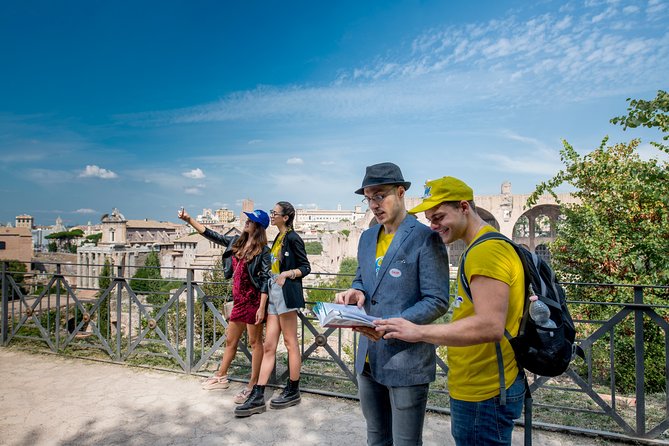
The tour offers an English option, and you’ll either have a live guide (with headsets provided to help you hear) or choose an audio-guided format. That choice affects the experience more than you might expect.
On live-guided versions, headsets are meant to help you hear clearly, especially when the crowd noise is loud. Still, some people reported audio receiver issues, and others mentioned the guide’s accent could be hard to follow at times. I’d treat this as a “pick your priority” moment:
- If you’re comfortable with fast explanations and you like learning in real time, the live guide is usually worth it.
- If you’re extremely picky about accent clarity, audio options can be safer, but you’ll need your own headphones and a fully charged phone.
The tour is capped at 24 travelers, and that helps. It also means you should expect a guided flow where everyone moves together, so you’ll want to be ready to keep up when the group turns the corner.
Security Rules: What Can Stop You at the Door
One reason people get stressed at the Colosseum isn’t the tour—it’s security. The Colosseum has strict restrictions and there’s no bag check service. Metal detectors are used at entrances, and you’re forbidden to bring items like glass bottles, spray cans, alcohol, large bags or backpacks, suitcases, umbrellas with pointed tips, tripods, drones, knives, scissors, or sharp objects. Even food and drinks in glass containers aren’t allowed.
Only small bags are permitted, and they must be inspected by security staff.
Also, bring your ID and make sure the name on your ticket matches your legal name. Some notes mention being asked to confirm names and being denied entry if they don’t match. It’s a small step before you leave your hotel, but it can save a lot of pain at the gate.
Practical Tips I’d Use Again in Your Shoes
Here’s how to set yourself up for a smoother Colosseum day.
Wear shoes you trust on uneven pavement and stairs. More than one note calls out stairs and uneven ground as part of the deal.
Bring water and take the refill opportunity seriously. People mention there are taps and water fountains where you can refill your bottle along the route. Even if you don’t get them all, it’s a good sign that hydration is possible.
If you want photos, plan them as quick bursts. This tour covers a lot in a short time. If you wait too long, the group will keep moving.
If you choose the audio guide option, download the POP GUIDE app in advance and bring headphones. You’ll also want a fully charged smartphone for the best experience.
Should You Book This Tour: My Call
Book it if you want the simplest way to see the Colosseum arena, plus Palatine Hill and the Roman Forum with someone steering you toward the important details. It’s also a strong option if you’re short on time and don’t want to manage three separate self-guided visits.
Skip or switch strategies if any of these are true:
- you need a slow pace with lots of breaks
- you’re worried about understanding a guide with a heavy accent
- you have a very tight schedule after the tour, since departures can run longer than the listed time
- you’re traveling with luggage or items that might cause security problems
If you’re on the fence, my best advice is to match the tour to your travel style. If you like context and guided access, this is a good value. If you’d rather wander at your own speed, you may still enjoy these sites—but you’ll be doing more navigating and you might miss why certain spots matter.
FAQ
Where does the tour start and end?
The tour starts at Via delle Terme di Tito, 93, 00184 Rome, Italy. It ends at the Colosseum, at Piazza del Colosseo, 1, 00184 Rome, Italy.
How long is the tour?
It runs about 3 hours.
Is admission ticket included?
Yes. The Colosseum entrance ticket with arena access is included.
Does it include the Arena Floor?
Yes. The tour includes access to the Colosseum arena area.
What language is the tour offered in?
It is offered in English.
Is this a guided tour or an audio tour?
You can choose a live guide option (a professional guide is included) or an AUDIOGUIDE option (no live guide). Headsets are provided for the live guided option; for the audio guide option you bring your own headphones and use the POP GUIDE app.
Is a mobile ticket used?
Yes. The tour uses a mobile ticket.
How big is the group?
The maximum group size is 24 travelers.
What’s the fitness level needed?
The tour calls for moderate physical fitness. Expect walking, steep grades, uneven surfaces, and stairs.
What items are not allowed at Colosseum security?
You cannot bring glass bottles, spray cans, alcohol, large bags/backpacks, suitcases, umbrellas with pointed tips, tripods, drones, knives, scissors, or other sharp objects. Food and drinks in glass containers are also not allowed.
Is free cancellation available?
Yes. You can cancel up to 24 hours in advance for a full refund.