REVIEW · ROME
Rome: “The Most Beautiful Opera Arias” Concert
Book on GetYourGuide →Operated by Opera da Camera di Roma · Bookable on GetYourGuide
Italian opera, up close and personal. This 50-minute concert puts famous arias and Neapolitan songs into an intimate Waldesian church setting near Piazza Venezia. I especially love how the voices feel powerful even with only a small hall, and how the pianist keeps everything feeling musical and connected, not showy or distant.
The main drawback to plan for: the venue is small, so seating can be tight, and on some nights the crowd may not fill the church.
In This Review
- Quick Hits Before You Go
- A Cozy Church Makes Opera Feel Personal
- The Waldesian Church Near Piazza Venezia: Location and Acoustics
- What You Hear: Aria Favorites, Neapolitan Songs, and Piano Support
- The Real Experience: Seating, Welcome, and the Pace of 50 Minutes
- Performers You Might Spot on the Night
- Price and Value: Is $40 a Smart Rome Choice?
- Who This Concert Fits Best (and Who Might Feel Off-Route)
- Common Downsides to Consider Before Booking
- Should You Book This Rome Opera Arias Concert?
- FAQ
- How long is the Rome Opera Arias concert?
- Where does the concert take place?
- What music is included?
- Is the ticket price $40 per person?
- What’s included in the price?
- What is not included?
- What languages will I hear?
- Is free cancellation available?
- Can I reserve without paying right away?
- FAQ
- What should I expect in terms of seating and comfort?
- Is there a long break during the concert?
Quick Hits Before You Go
- Incredible acoustics in a small church: you’ll hear detail, not just volume.
- Short and focused program: it’s built for a low-stress night out.
- Famous opera moments: you’ll recognize works from La Traviata, Turandot, and Rigoletto.
- Neapolitan flair plus classical variety: Puccini, Bellini, Mascagni, and Vivaldi’s Four Seasons appear in the mix.
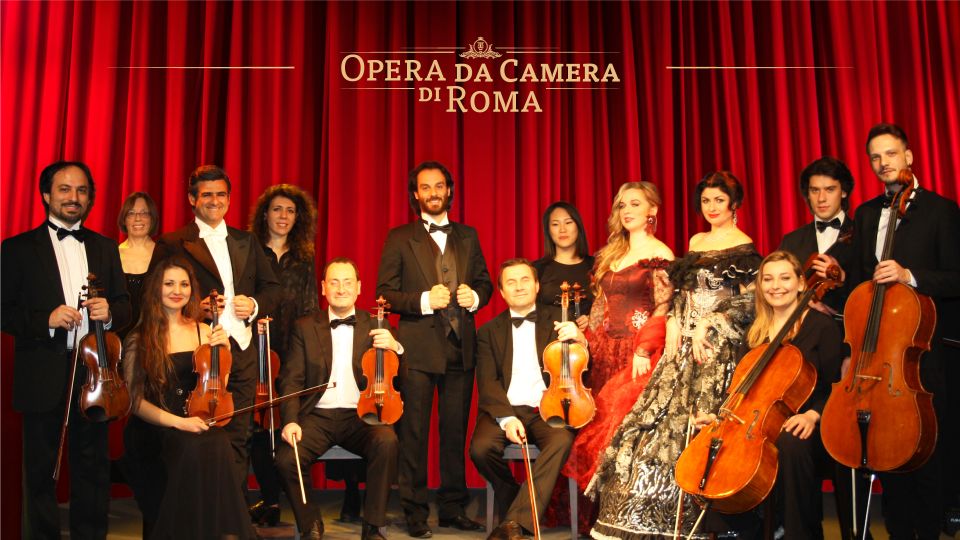
- A real host dynamic: on some nights, the host/pianist Roberto helps set the tone.
- Good value for central Rome: $40 is far more reachable than a full opera ticket.
A Cozy Church Makes Opera Feel Personal
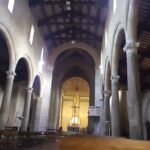
Rome has plenty of big-ticket culture, but this is the opposite style: compact, close, and easy to fit into your day. The concert takes place in a small Waldesian church, and that size changes everything. Instead of “audience at a distance,” you get the sensation that the music is aimed right at you.
The show also has a practical advantage: it’s short. You’re not committing an entire evening the way you would for a full opera. That matters in Rome, where you may want to squeeze in dinner afterward or just keep your energy for walking the next morning.
The vibe tends to be welcoming and lively too. In multiple performances, the host and musicians bring a friendly tone, with humor and audience engagement that makes opera feel like a human conversation rather than something reserved for experts.
You can also read our reviews of more tours and experiences in Rome.

The Waldesian Church Near Piazza Venezia: Location and Acoustics
The big “why” here is the building. This Waldesian church is described as being just meters from Piazza Venezia, which makes it a smart choice if you’re already exploring the historic center. You don’t need transport plans or a far-flung itinerary—this is a “show up, find the church, and enjoy” kind of evening.
But the bigger win is the acoustic design effect you feel in your body. Several comments emphasize that voices echo through the church in a moving way, and that the singers sound deep and powerful rather than thin or muffled. In a small room, you tend to hear phrasing, breath, and nuance more clearly, and the pianist can keep delicate balance without being swallowed by the space.
Because the hall is intimate, you’ll also be close to the musicians. That’s a feature if you like detail, but it’s also a heads-up if you’re sensitive to tight seating or prefer more “stage distance.” It’s not a massive theater, so the comfort level depends on where you sit.
What You Hear: Aria Favorites, Neapolitan Songs, and Piano Support
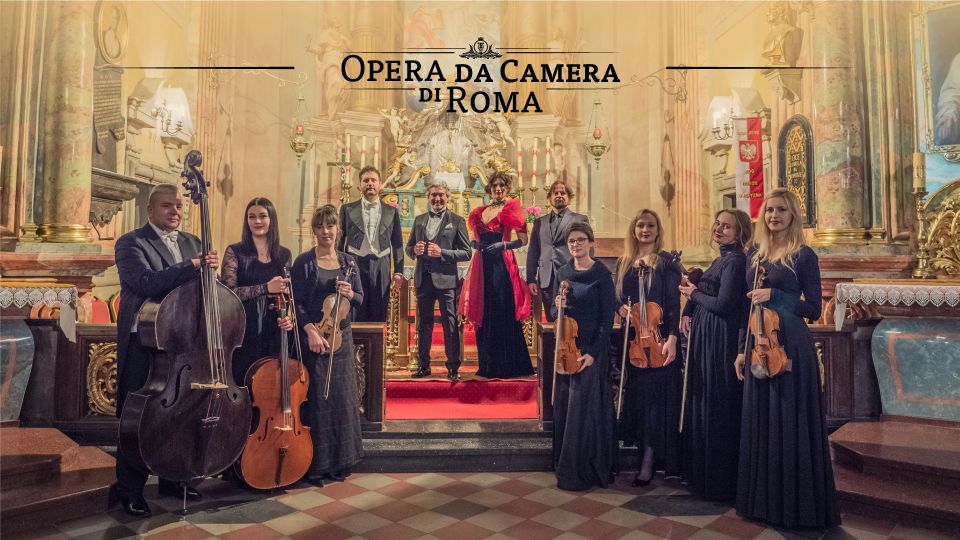
The program is built around the stuff people actually recognize from Italian music—without pretending you need opera homework first. You’ll hear compositions tied to famous Neapolitan composers such as Puccini, Bellini, and Mascagni, plus additional classical selections like Vivaldi’s Four Seasons.
The concert format centers on operatic arias from well-known works including La Traviata, Turandot, and Rigoletto. Depending on the night, listeners also mention standout moments like the popular section E lucevan le stelle (from Tosca). Even if you don’t know the titles, you usually recognize the melodies when sung clearly in a small room.
The grand piano plays a key role. More than background, it supports the singers so the music flows as a story—especially if you’re new to opera and want the emotional arc without getting lost. The pianist’s accompaniment is often mentioned as sympathetic to the singers, which you can hear in how smoothly transitions happen and how carefully dynamics are shaped.
Also, the show can include interaction. One performance notes that the musicians even taught some Italian words so the audience could join in. That’s a small detail, but it helps turn opera from a “listen-only” event into something you participate in.
The Real Experience: Seating, Welcome, and the Pace of 50 Minutes
This concert is designed to start smoothly, with a clear human touch. The host or greeter (English and Italian) welcomes you and helps you find your pew. In at least one account, the directions to the church were described as flawless, and the arrival process felt straightforward.
Once you’re seated, the pace is easy to follow. You’re looking at about 50 minutes total, with no long intermission. That works well on a warm evening when your feet are tired and you still want something beautiful and “different from museums.”
The best part of the short format is that it lowers the barrier for first-timers. Opera can feel intimidating if you think you need context or a program book. Here, it’s presented in approachable segments: recognizable pieces, a small ensemble, and a cozy setting that makes the performance feel immediate.
One caution: small venues can mean small compromises. A couple of notes mention seat comfort and sight issues in certain rows. Another mentions being seated toward the back even when paying for a better seat. If your view matters a lot to you, consider booking early and choosing your options carefully when available.
Performers You Might Spot on the Night
You won’t just be hearing “anonymous talent.” People mention specific musicians and how well they work together. On some nights, the host/pianist Roberto is named, and singers such as Christian and Antonieta are also mentioned for standout performances.
Other names show up in comments too, including Marco and Francesca (and additional performers varying by date). The point isn’t to memorize names—it’s to understand the quality standard. When multiple different singers and pianists are praised in similar terms (powerful voices, excellent accompaniment, engaging delivery), it suggests consistency rather than luck.
There’s also an emphasis on personality. Some performers are described as lively and even comedic at times, while others focus on pure vocal drama. Either way, the show stays entertaining without turning opera into something watered down.

Price and Value: Is $40 a Smart Rome Choice?
At $40 per person, this isn’t “cheap opera” so much as “opera made practical.” Rome is expensive, and even smaller concerts can run high in central areas. Here, what you get is a ticket that includes the performance, delivered in a venue close to major sights.
The biggest value factor is the how. You’re not paying for transportation, guides, or a long structured tour. You’re paying for singers plus piano in a space where the sound lands clearly. When a venue is small enough for voices to feel close, it changes the perceived quality. It’s the kind of setup where $40 can feel like more than you expected.
The short length is part of the value too. You can pair this with dinner nearby without reorganizing your whole schedule. And since it’s a concert, you don’t have to “power through” a multi-stop itinerary when you’d rather sit and enjoy.
Who This Concert Fits Best (and Who Might Feel Off-Route)
This show works especially well if you want an authentic Roman evening that doesn’t require opera experience. If you’re curious about opera but intimidated by full-length productions, this is a smart starting point because the pieces are familiar and the format is bite-sized.
It’s also a good choice if you’re traveling with teens or groups who don’t all share the same taste. One account describes it as a perfect introduction for children, and another mentions teens enjoying it when the pieces were familiar and accessible.
If you’re the kind of traveler who loves “small room + big sound,” you’ll likely feel at home here. In a church like this, even one voice can sound huge, and the piano supports it in a way that feels intimate rather than distant.
On the other hand, if you need lots of visual theatrics—full staging, dramatic lighting, ballet-level spectacle—this is probably not your best bet. Some comments specifically mention lighting that could be more theatrical. The focus is the music and the acoustic closeness.
Common Downsides to Consider Before Booking
The concert’s strengths come with a couple trade-offs. The first is seating. Some comments say certain seats weren’t convenient, and one person reported being placed in the last line even after paying for a better seat. That doesn’t mean it will happen to you, but it is a real consideration in a small church.
The second is expectation around length. The information you’ll see may describe a journey through time that sounds longer, but the duration is listed as 50 minutes, and the experience often feels like a short, complete program with no long break. If you’re expecting a huge, hour-and-a-half-plus opera block, you may feel it’s over quickly—in a “short and sweet” kind of way.
Finally, because the venue is small, the crowd size can vary. Some notes mention the church wasn’t full on a given night. That can affect atmosphere, especially if you love that full-house electricity. Still, the sound quality is praised even when the audience is smaller.
Should You Book This Rome Opera Arias Concert?
If you want a Roman cultural night that feels like you found something special without the stress, I’d say yes, book it—especially at $40 and especially if you’re curious about opera but don’t want a full production commitment.
Book it if:
- You like opera arias and want the best-known moments in an approachable format
- You appreciate close-up performances and strong church acoustics
- You want something centered near Piazza Venezia so your night stays easy
Skip or rethink it if:
- You need theater-style staging and dramatic lighting as part of the experience
- You’re extremely sensitive to tight seating and possible view limitations in a small hall
- You’re expecting a longer program than the listed 50 minutes
This is the kind of concert that makes Rome feel close to you. You come for the music, but you leave with the sense that opera can be direct, emotional, and surprisingly friendly.
FAQ
How long is the Rome Opera Arias concert?
The concert is listed as lasting 50 minutes.
Where does the concert take place?
It’s held in a cosy Waldesian church in Rome, near Piazza Venezia.
What music is included?
You can expect operatic arias from famous Italian operas like La Traviata, Turandot, and Rigoletto, plus Neapolitan songs and Vivaldi’s Four Seasons.
Is the ticket price $40 per person?
Yes. The price is listed as $40 per person.
What’s included in the price?
The opera ticket is included.
What is not included?
Parking and hotel pickup and drop-off are not included.
What languages will I hear?
The host or greeter speaks English and Italian.
Is free cancellation available?
Yes. You can cancel up to 24 hours in advance for a full refund.
Can I reserve without paying right away?
Yes. The option described is Reserve now & pay later.
FAQ
What should I expect in terms of seating and comfort?
Because it’s a small church, seating is close and you may want to choose your seat carefully if that matters to you. Some people have mentioned that a few seats were not convenient.
Is there a long break during the concert?
The concert is presented as a short session with no long intermission mentioned in the available details.