REVIEW · ROME
Rome: Vatican Museums & Sistine Chapel Guided Tour
Book on GetYourGuide →Operated by Tours About · Bookable on GetYourGuide
The Vatican feels like a living museum map. With a guided route, you get to the highlights fast and understand what you’re seeing.
I especially love the skip-the-line access and the way you get to stand inside the Sistine Chapel ceiling moments without guessing where to look. The only real catch is the schedule is tight, so you’ll move at a guided pace even when your feet want to linger.
You’ll start near Ottaviano and follow an expert through the Vatican’s famous galleries, ending at the Sistine Chapel with enough context to make the scenes snap into place. Guides like Illaria, Marco, Lilia, Antonio, Pasquale, and Ruddy (all name-dropped in real tour feedback) get consistent praise for keeping people moving and explaining details clearly, sometimes with humor. Still, if you want to park yourself for long, slow viewing of every sculpture, plan for a route that feels efficient rather than leisurely.
In This Review
- Key things to know before you go
- Getting in fast: skip-the-line and the Ottaviano meet-up
- What the 2.5 hours really means in Vatican time
- Vatican Museums walkthrough: Rotunda, Maps, Tapestries, and more
- Rotunda: getting oriented before you hit the grand galleries
- Gallery of Tapestries: art you can almost feel
- Gallery of Maps: history with a human scale
- Raphael Rooms: when the tour turns from gallery to storytelling
- Sistine Chapel: what you’re actually looking at
- Pace and crowd reality: what to expect when it’s busy
- What’s included in the ticket (and where the savings come from)
- St. Peter’s Basilica: closures that can change what you see
- Dress code and rules that can stop you cold
- Languages and who this tour fits best
- A quick reality check on value: is $118.95 worth it?
- Should you book this Vatican Museums & Sistine Chapel guided tour?
Key things to know before you go
- Skip-the-line entry through a separate entrance to the Vatican Museums and the Sistine Chapel
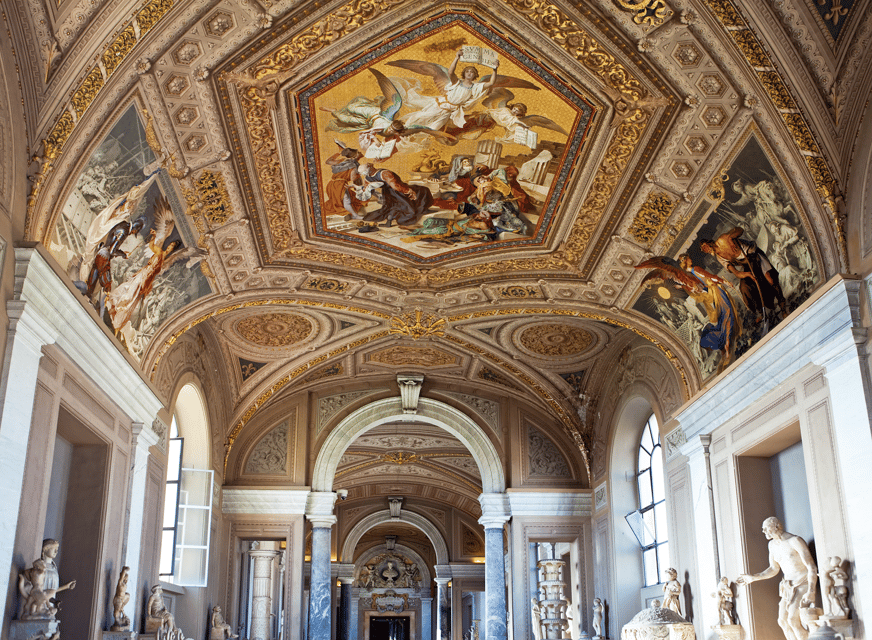
- A guided route that hits major stops like the Rotunda, Gallery of Maps, Gallery of Tapestries, and the Raphael Rooms
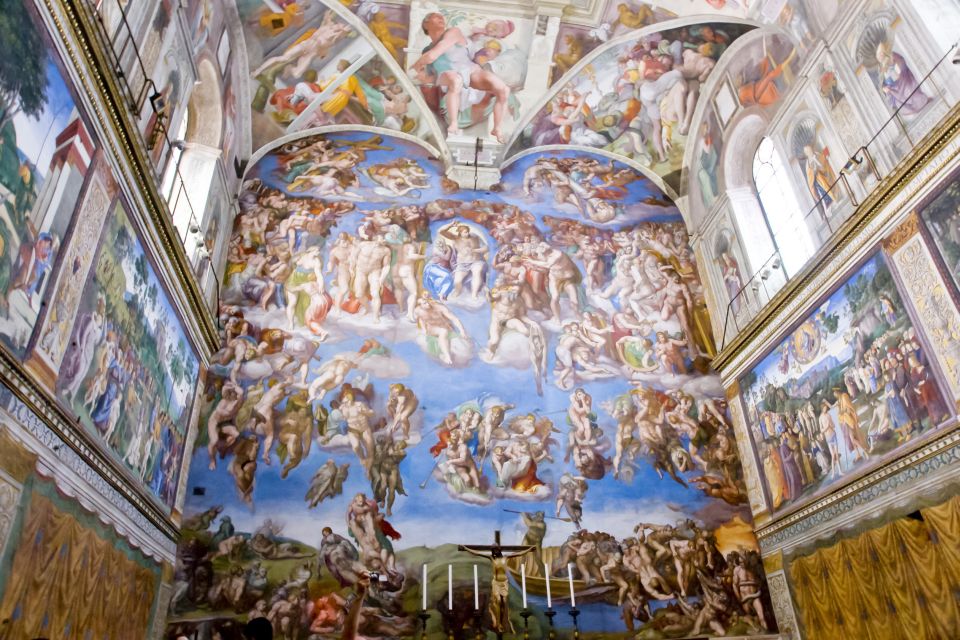
- Michelangelo ceiling focus, including the scenes The Creation of Adam and The Last Judgment
- Headsets and on-site Wi‑Fi at the meeting point, plus a recharging station and bathroom access
- A proven crowd-management style, praised by guests for smooth movement through busy rooms
- A practical reality check: dress rules and a guided pace mean you’re working with constraints, not floating freely
Getting in fast: skip-the-line and the Ottaviano meet-up
The biggest value here is simple: you’re not spending your morning staring at a line. The tour includes skip-the-ticket-line entry to both the Vatican Museums and the Sistine Chapel, using a separate entrance. In a place where queues can eat your entire day, that alone can make a $118.95 ticket feel like good money.
You meet your guide inside the Office. The closest metro stop is Ottaviano, which is convenient for getting there without adding extra transfers. The tour ends back at the meeting point, so you’re not stranded with no plan afterward.
Group size varies, but it’s not framed as a massive cattle-truck experience. Reviews consistently mention guides leading people smoothly through crowds, which is exactly what you want inside the Vatican’s tight corridors and echoing halls.
You can also read our reviews of more tours and experiences in Rome.
What the 2.5 hours really means in Vatican time
The tour runs about 2.5 hours. That’s short enough that you get a high-impact overview, but long enough that you can’t just skim it like a quick photo stop. Think of it as a “greatest hits with context.”
Here’s the practical trade-off: a guided route is designed to move. Some guests say the pace can be quick if you want to stop and study every artifact. On the flip side, other feedback notes guides finding chairs when possible and building in moments to take things in—especially in the Sistine Chapel.
So my advice is to decide what you want most:
- If you want the big landmarks plus explanations, this fits well.
- If you want to read every plaque and linger at every sculpture for 20 minutes, you’ll likely want a longer, slower plan (or to add independent time after).
Vatican Museums walkthrough: Rotunda, Maps, Tapestries, and more

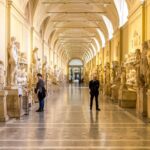
Your tour begins near the entrance to the Vatican Museums. From there, you follow your guide through a set of famous galleries where the art feels layered, like the Vatican is showing off both its taste and its power.
Expect your route to include:
- the Rotunda
- the Gallery of Tapestries
- the Gallery of Maps
- and the Raphael Rooms
Each stop matters because it’s different in purpose and style. You’re not just moving from room to room for photos—you’re seeing how the Vatican curated its image over centuries, from decorative grandeur to carefully staged storytelling.
Rotunda: getting oriented before you hit the grand galleries
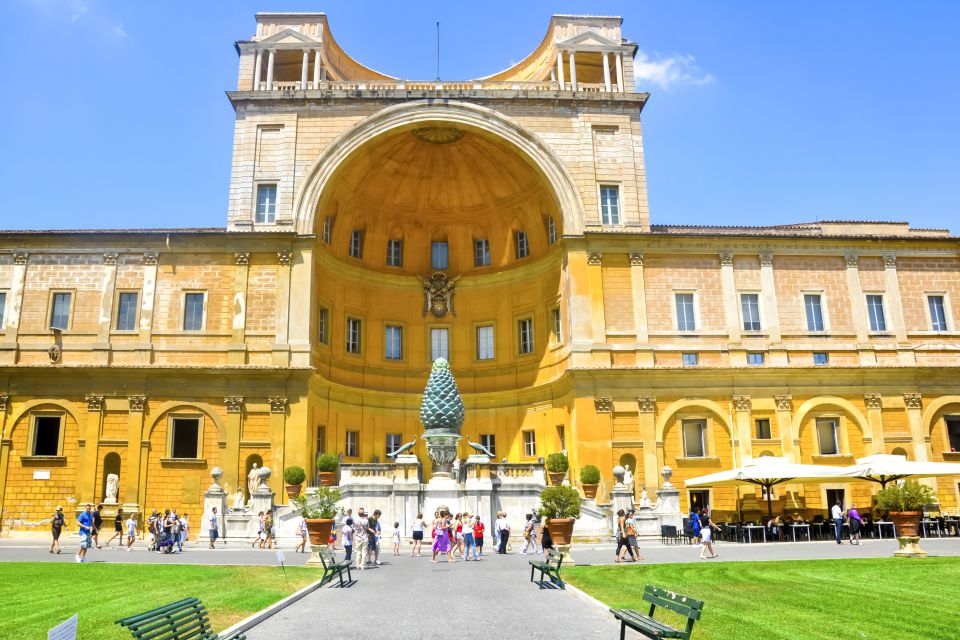
The Rotunda works as a kind of warm-up space. It helps you calibrate your eye so the later galleries don’t feel like one continuous blur of stone and gold. You’ll also get a chance to understand how the museums are structured—useful when crowds make navigation confusing.
Gallery of Tapestries: art you can almost feel
The Gallery of Tapestries stands out because it’s visual theater. You’re looking at large-scale works meant to impress from a distance, and then to reward you when you slow down. The tour’s descriptions and commentary help you connect the decorative elements with what you’re actually seeing, instead of treating it like background.
If your brain is overloaded by museum facts, don’t worry. This is where guides often simplify the big ideas so you remember something besides the photo you took.



Gallery of Maps: history with a human scale
The Gallery of Maps is one of those rooms that makes you stop and think: cartography as a statement. You’re seeing maps as objects of culture and politics, not just geography. With a guide, you’ll understand why these rooms are famous and what you should notice first.
This matters for your experience because it turns the time you spend there into real learning, even if you only have a short visit. The Vatican’s museums can overwhelm you; this kind of structured stop keeps you from missing the best beats.
Raphael Rooms: when the tour turns from gallery to storytelling
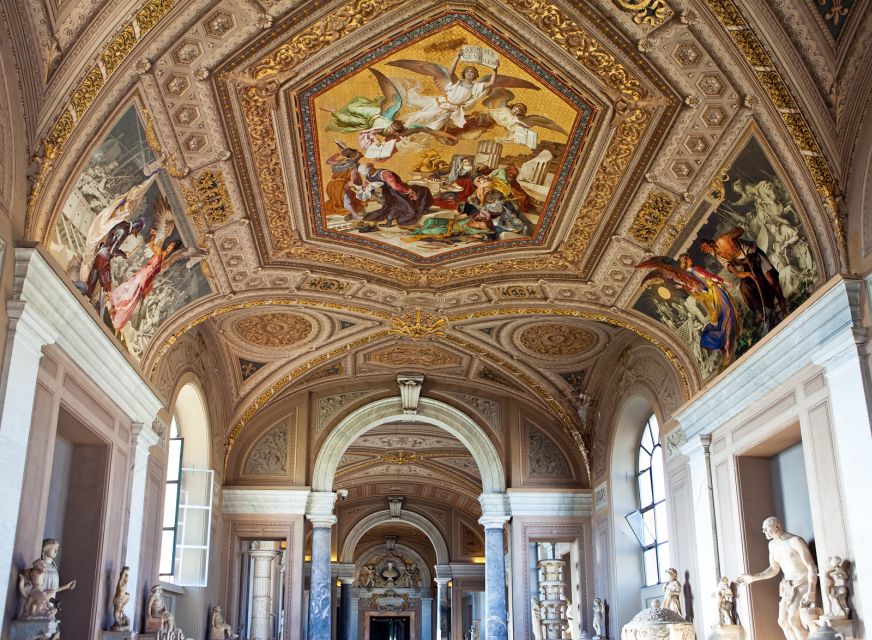
After the big museum galleries, you’ll move into the Raphael Rooms. Even if you’ve never studied art history, these rooms are often a favorite because they feel like paintings that happen around you—scenes designed for how the viewer walks and looks.
One detail worth noting: on rare occasions or on days when St. Peter’s Basilica is closed (for example, Wednesday from 8 AM to 12 PM, and during major religious holidays), the tour is offered in other parts of the Vatican Museums, with special mention of the Raphael Rooms. So if you’re visiting on a date when basilica access is limited, these rooms become even more important to your overall experience.
Sistine Chapel: what you’re actually looking at
The Sistine Chapel is the main event. You’ll walk through to the chapel and stand under Michelangelo’s legendary frescoes, which were painted between 1508 and 1512. The ceiling is the star here, and it helps to know the big scenes before you look up. The tour highlights The Creation of Adam and The Last Judgment, so you’re not just staring upward in a fog of Renaissance imagery.
What makes a guided approach worthwhile in the chapel is focus. The Sistine Chapel is strict, quiet, and visually intense. Without a guide, it’s easy to miss the sequence of ideas and just chase your favorite angle for photos. With instruction, you understand what the scenes represent and why this ceiling is considered a defining achievement of the High Renaissance.
Also, this is where headsets matter. The guide can keep explaining while you’re positioned where you need to be, and you won’t have to crane your neck to hear every word.
Pace and crowd reality: what to expect when it’s busy
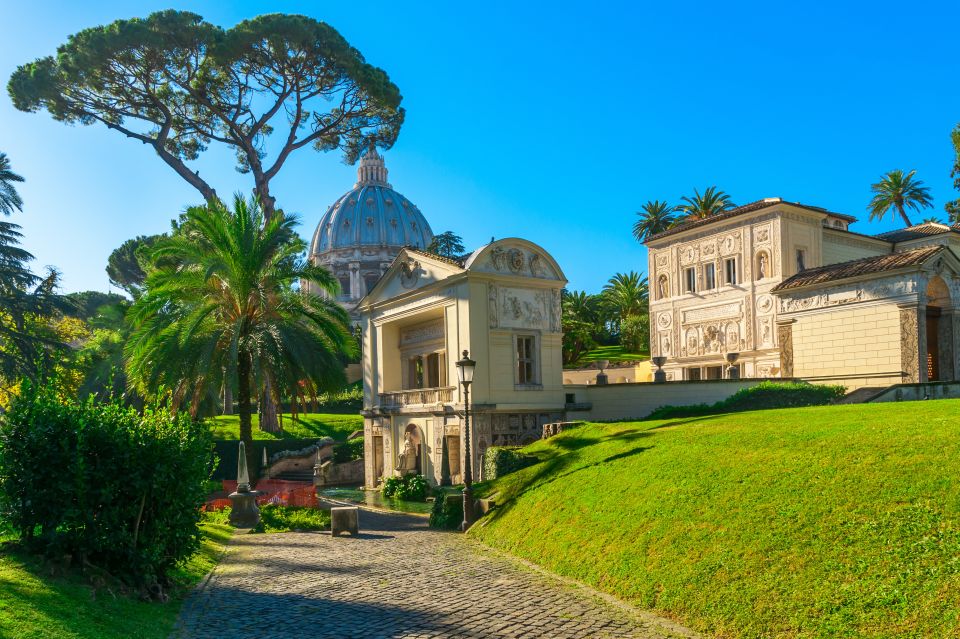
The Vatican Museums are popular, so it’s not a surprise that the inside can feel hectic at peak times. Even the best tour can’t erase the basic fact that there are a lot of people in a finite space.
What you can control is whether your guide handles the crowd well. Reviews repeatedly praise guides for:
- keeping a steady flow through tight spaces
- delivering information without turning it into a lecture
- adding humor to make details easier to digest
- offering practical help, like finding a chair when the group needs a rest
Still, there is one common consideration: this isn’t built for ultra-slow viewing. If you want maximum time with every masterpiece, you may feel slightly rushed when the group moves on. The good news is that at least some guides provide an option to step away for more viewing before continuing toward the chapel, so you aren’t locked into zero freedom. But don’t count on it as your plan; the baseline experience is guided and efficient.
What’s included in the ticket (and where the savings come from)
Your price is $118.95 per person, and the value is less about the raw art and more about what you’re buying on top of the entry fees.
Included:
- skip-the-ticket-line entry to the Vatican Museums
- skip-the-ticket-line entry to the Sistine Chapel
- a professional guide
- headsets
- Wi‑Fi at the meeting point
- bathroom access
- a recharging station for your mobile devices
Not included:
- transportation
- St. Peter’s Basilica
Here’s how I’d think about the math. Skip-the-line access and headsets aren’t just perks. They’re time and stress savers. With a guided route, you also spend less energy figuring out where to go next. For most first-time or time-limited visits, that makes the ticket feel fair.
If you’re planning to visit St. Peter’s Basilica on the same day, you’ll need separate planning, because this tour doesn’t include it directly. One key point: entry to St. Peter’s Basilica is free, but access depends on closure schedules (more on that below).
St. Peter’s Basilica: closures that can change what you see
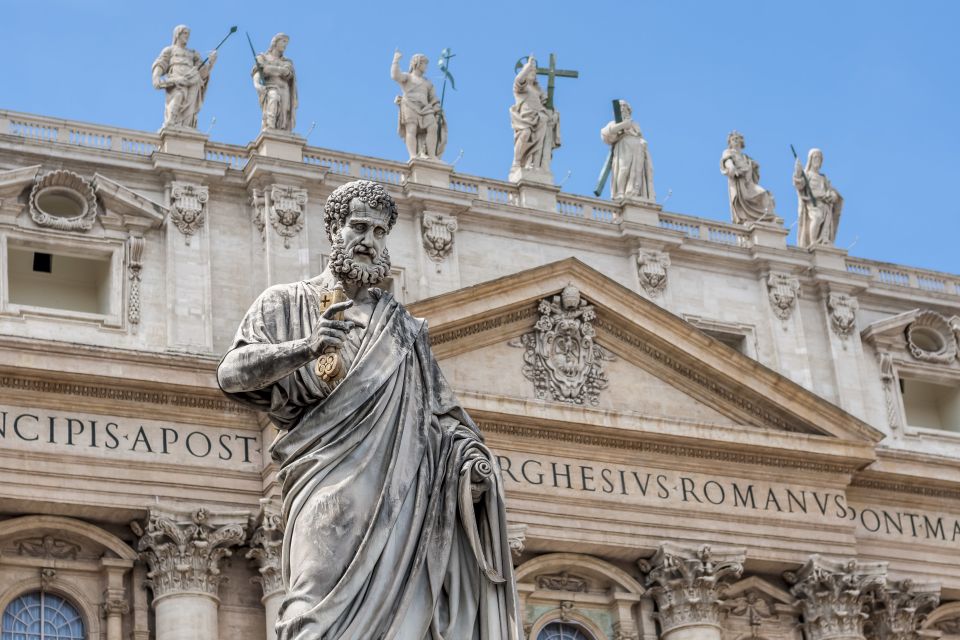
St. Peter’s Basilica can affect your day even if this tour isn’t supposed to include it as a stop. The tour notes that:
- St. Peter’s Basilica remains closed every Wednesday from 8 AM to 12 PM
- it is also closed at Easter, other religious holidays, and on December 25th and 31st
- during those times, the tour is offered in other parts of the Vatican Museums, especially the Raphael Rooms
The bigger “gotcha” is that St. Peter’s Basilica can be closed without prior notice. In that rare case, you’ll spend part of the tour in the Vatican Museums and Sistine Chapel, with emphasis on the Raphael Rooms.
So if you’re visiting on a Wednesday morning, or around major holidays, this tour can still be a solid choice because your time shifts to museum highlights rather than stalling.
Dress code and rules that can stop you cold
The Vatican is strict. If you don’t follow the dress code, you can lose your slot. The rules you need to plan around:
- no shorts
- no short skirts
- no sleeveless shirts
- cover your shoulders and knees
And these are listed as reasons you can be denied entry. This is the one part where “I packed the wrong thing” can turn into wasted money and frustration, so I’d treat it like a real checklist item.
Other restrictions:
- pets are not allowed
- the tour is not suitable for wheelchair users
- individuals with disabilities or special health needs must note it on booking
Languages and who this tour fits best
The tour guide speaks multiple languages: French, Spanish, English, Italian, and German. You’ll also see evidence in feedback that some guides may speak other languages, including Japanese (for example, Antonio is specifically mentioned as speaking Japanese).
Who it suits:
- First-time visitors who want the Vatican’s most famous rooms with real context
- People short on time who still want more than surface-level facts
- Art-curious travelers who want a clear route so they don’t get lost in the museums’ scale
Who might skip:
- anyone who plans to spend long stretches reading plaques and studying details room-by-room
- people who can’t do a mostly guided, standing-heavy route (plus the wheelchair limitation noted)
A quick reality check on value: is $118.95 worth it?
For the Vatican, the cost isn’t just the ticket—it’s time, organization, and not having to fight your way through crowded entry points. This tour bundles that by including skip-the-line entry for the Vatican Museums and the Sistine Chapel, plus headsets so you can keep up.
If you’re visiting during busy hours, skip-the-line access can easily pay for itself in reduced stress. If you’re visiting at a less crowded time and you’re confident navigating on your own, you could compare against independent entry. But for most people, the guided route turns a chaotic museum day into something that feels usable.
Also remember what you’re not getting: transportation and St. Peter’s Basilica. Budget for getting to the meeting point (Ottaviano is the closest metro) and plan St. Peter’s separately if it’s open.
Should you book this Vatican Museums & Sistine Chapel guided tour?
Yes, I think you should book it if you want the core highlights—Maps, Tapestries, Raphael Rooms, and the Sistine Chapel ceiling—with expert commentary and the big advantage of skip-the-line access. The ticket also includes headsets, bathroom access, and a charging station, which sounds minor until you’re actually standing inside.
I’d pass or add a different plan if you need lots of unstructured time to linger over every sculpture and painting, because this experience is designed to move. And if you’re coming with the wrong outfit, don’t gamble—cover shoulders and knees or you risk being turned away.
If your goal is a smart, high-impact Vatican day without wasting it in lines or confusion, this is a very workable choice.