REVIEW · ROME
Vatican Museums, Sistine Chapel Tour and Basilica Access
Book on Viator →Operated by Journey Tours · Bookable on Viator
Vatican in three hours can feel unreal. This small-group tour lines up your visit so you can see the Vatican Museums, the Sistine Chapel, and (if you choose it) St. Peter’s Basilica without wasting your day in the longest queues. I love the skip-the-line advantage for the Museums and headsets that keep the guide’s commentary clear, even when you’re shoulder-to-shoulder with other visitors.
Here’s the tradeoff: you’ll move at a working pace because the Vatican runs strict timed entry, and late arrivals can lose your spot with no refund. Also, St. Peter’s Basilica is its own security story, and it can close on Wednesdays and during religious holidays.
In This Review
- Key things to know before you go
- Value and what $74.70 buys you
- Meeting point: how to start on the right foot
- The clock matters: Vatican timed entry and strict rules
- Vatican City orientation: the tiny state with big impact
- Vatican Museums: what the guided route gets you (and what it can’t)
- Pine Court and Cortile della Pigna: a calm pause inside the museum rush
- Gallery of the Candelabra: size hits harder than you expect
- Gallery of the Maps: history you can actually read at a walkable pace
- Raphael Rooms: the style shift you’re meant to notice
- Sistine Chapel ceiling: what to focus on when time is tight
- Optional upgrade: St. Peter’s Basilica access (and why it can still take time)
- Pacing, stairs, and group size: the tradeoffs of a highlight tour
- Guide quality: what good guiding looks like here
- What I’d do to make this tour feel worth it
- Who this tour is best for
- Should you book Vatican Museums and Sistine Chapel with Basilica access?
- FAQ
- Does this tour include St. Peter’s Basilica?
- Is there skip-the-line access to St. Peter’s Basilica?
- How long is the tour?
- What’s the group size?
- What language is the tour offered in?
- What’s the dress code?
- Do I need to bring identification?
- Are the entry times strict?
- What happens if the Sistine Chapel closes?
- Is St. Peter’s Basilica open every day?
- Where do I meet the tour?
Key things to know before you go
- Skip-the-line to the Vatican Museums and Sistine Chapel: less waiting before you hit the art.
- Headsets included: you hear the guide clearly inside noisy, crowded halls.
- Highlights-heavy route: Maps, Candelabra, Raphael Rooms, and Michelangelo’s ceiling get priority.
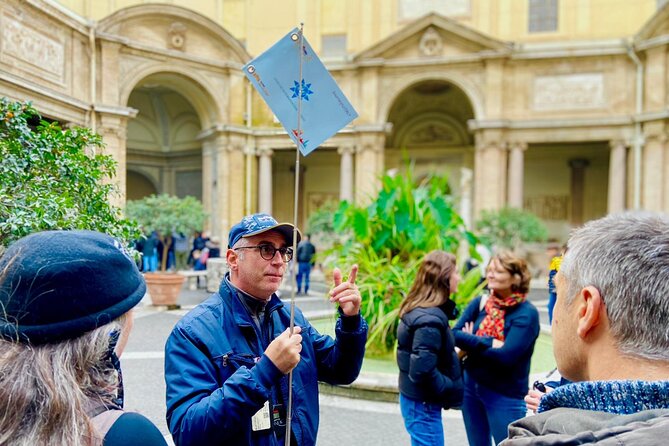
- Cortile della Pigna stops the rush: a short breather in the Pineyard Courtyard with Bramante’s Pigna statue.
- Optional St. Peter’s Basilica is separate: it may require extra screening time and can be restricted.
- Group size max 20: usually more manageable than big cattle-herd tours.
Value and what $74.70 buys you
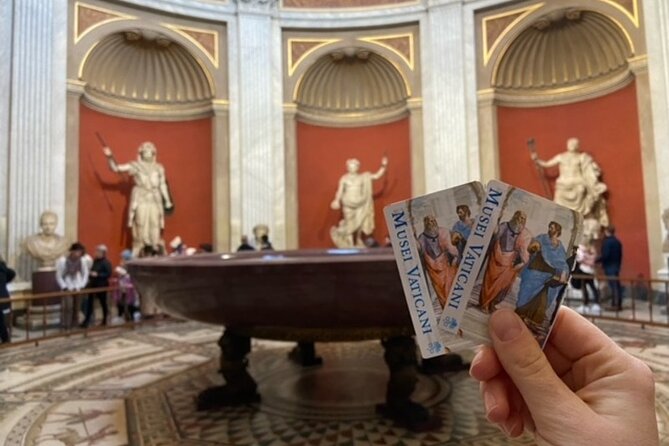
At $74.70 per person for about 3 hours, this tour isn’t trying to replace an art-history degree. It’s built to solve two real problems: time and focus. The value is mostly in assisted entry and smart routing—you get priority access for the Vatican Museums and Sistine Chapel, then a licensed guide helps you see more of what matters instead of getting lost in a museum maze.
Also, this is a small-group format (up to 20). That matters in Rome, because crowd pressure around the Vatican is intense. You’ll still feel it—this is the Vatican—but the structure helps you keep moving without constantly asking where to go next.
If you’re the kind of traveler who wants to stare longer at one sculpture, one painting, one room, you may wish you had extra hours on your own after this tour. But if your goal is to hit the big masterpieces efficiently, the price makes sense.
You can also read our reviews of more tours and experiences in Rome.
Meeting point: how to start on the right foot
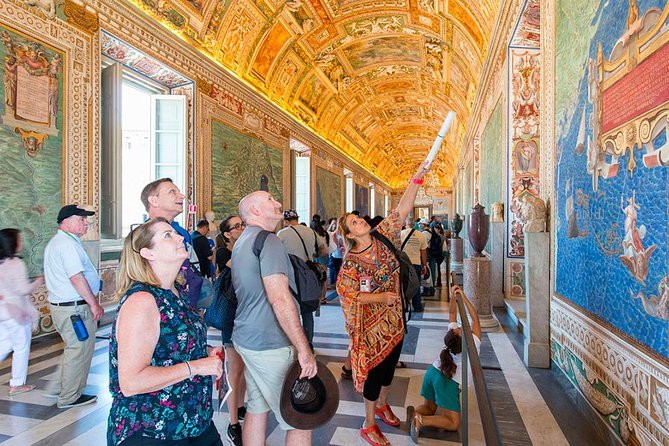
The tour starts at Via Vespasiano, 26, 28 Roma RM, Italy and ends at the Sistine Chapel area (Sistine Chapel00120, Vatican City). Plan to arrive a bit early. Even with skip-the-line benefits, the Vatican controls entry through security checks and timed gates.
A few practical notes that can save you stress:
- Bring a photo ID. Security uses it for your check-in.
- Wear layers and plan for walking on uneven stone.
- The tour notes you’ll want moderate physical fitness. There’s walking and you may face stairs en route to certain areas.
One more detail: there’s free Wi‑Fi at the meeting point. If your ticket or ID info is on your phone, this can be handy while you’re waiting to be gathered.
The clock matters: Vatican timed entry and strict rules
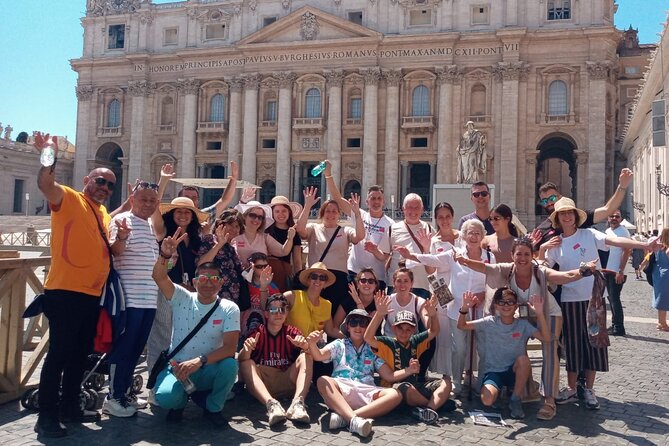
This isn’t a flexible, stroll-when-you-feel-like-it visit. Vatican Museums enforce strict entry times, and the tour also mentions that late arrivals or no-shows may not be admitted, with no refunds.
So treat the entry time like an appointment with consequences. If you’re traveling with kids, using public transit, or connecting from another sight, build in buffer time. A few minutes of extra calm is worth it.
Also, the tour timing can be affected by Vatican operations. The tour explicitly warns that the Sistine Chapel may close on rare occasions, and St. Peter’s Basilica can close unexpectedly due to religious events. This doesn’t mean you should cancel your plans—it means you should go in with the right expectations.
Vatican City orientation: the tiny state with big impact
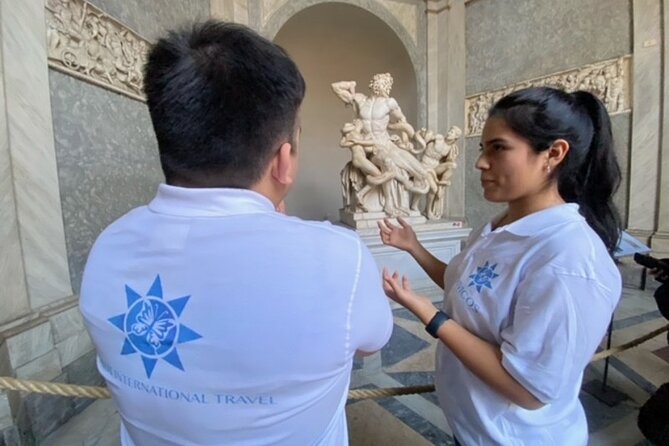
Before you’re swept into galleries, you get a quick orientation at Vatican City. It’s easy to forget that this is not just a building, but a real sovereign territory.
You’ll hear the basics: Vatican City became independent from Italy via the Lateran Treaty in 1929. It’s extremely small—about 49 hectares—and home to roughly 825 people, making it the smallest state in the world by both area and population. Even that brief stop helps you frame everything you’re about to see: it’s art, yes, but also power, religion, and history packed into a compact footprint.
If you’ve ever wondered why the Vatican feels both ceremonial and super controlled, this context helps you read the place correctly.
Vatican Museums: what the guided route gets you (and what it can’t)
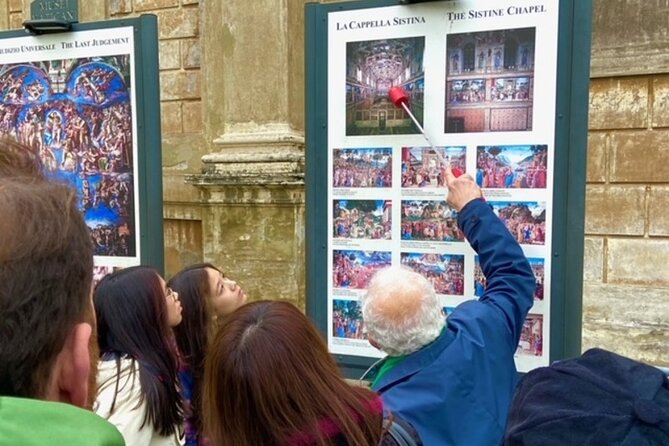
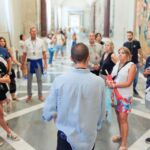
The heart of the tour is the Vatican Museums, with a licensed guide and headsets so you can hear directions and explanations clearly. Your route includes the famous rooms and corridors people chase, like the Gallery of Maps, plus major sculpture highlights and well-known collections.
In practical terms, the guide gives you two big benefits:
- Context for what you’re seeing, so it’s not just an endless line of objects.
- A path through chaos, so you’re not constantly searching for the next room while everyone else fights the same bottleneck.
The Museums stop you’ll likely appreciate most is the way the tour mixes different art types. You don’t just get paintings—you get mosaics of symbolism in maps, religious and classical sculpture, and the kind of museum storytelling that helps you understand how Renaissance and earlier eras interpreted power through art.
That said, it’s still impossible to see the entire Vatican Museums in 2+ hours. You’re getting the famous highlights and a narrative thread, not a museum marathon. If you’re craving “take your time with every room,” consider this as your fast-and-fascinating introduction, then add more time independently after.

Pine Court and Cortile della Pigna: a calm pause inside the museum rush
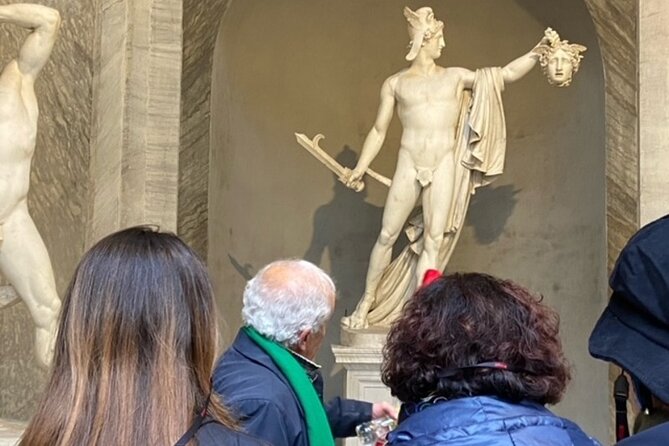
One of the nicest moments on this kind of tour is the brief reset. You’ll spend time around Cortile della Pigna, also known as the Pineyard Courtyard. The stop is short, but it matters.
At the center is Bramante’s bronze Pigna statue. The courtyard mixes classic architecture with greenery, which gives your eyes a break from white marble corridors and ceiling after ceiling of artwork. If the Museums feel overwhelming, this pause helps you re-enter the route with less sensory overload.
It’s also a good moment to hydrate and check how your group is moving, because the next segments can get packed.
Gallery of the Candelabra: size hits harder than you expect
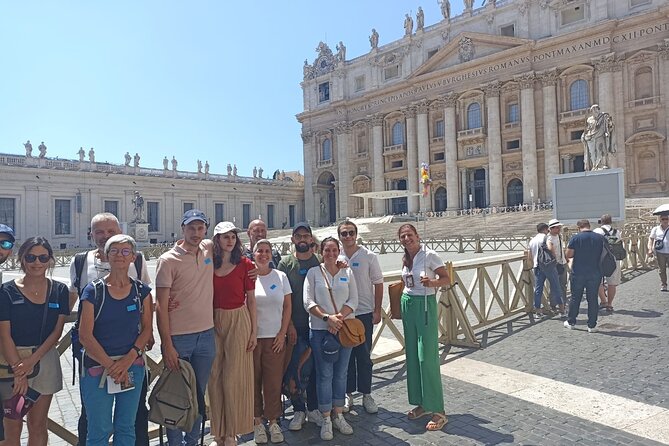
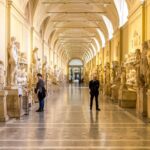
Next up is the Gallery of the Candelabras, the long corridor lined with massive marble candelabras. Even people who aren’t “museum people” usually react here because the objects are big and sculpted with real dramatic intent.
From a traveler standpoint, this is more than a photo stop. The painted vaulted ceilings and classical columns frame the corridor so you feel like you’re walking inside a designed stage set. When you’re in a crowd, scenes like this help you orient yourself—your eyes know where to look even when the group line is tight.
Gallery of the Maps: history you can actually read at a walkable pace
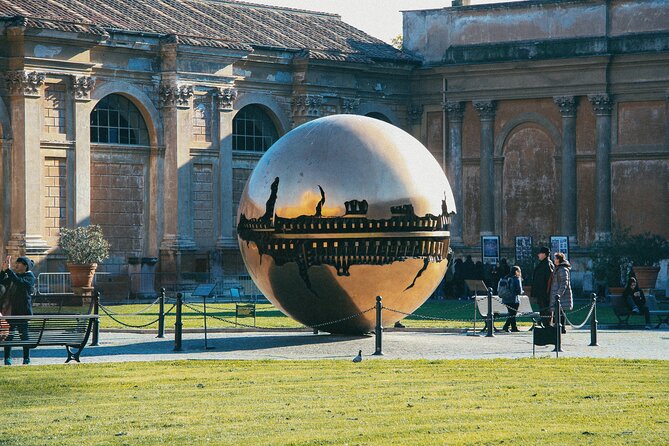
Then comes the Gallery of Geographic Maps. This is one of those Vatican rooms that feels tailored for people who get restless with long art lectures—because the subject is visual and structured.
You’ll see hand-painted maps from across Italy, and the tour frames them as both history and art. The value here is how the guide turns the maps into a story you can follow quickly. Instead of staring at decorative images, you get a sense of why these maps mattered to the Vatican’s worldview and self-image.
If you like “why was this made?” more than “just tell me what year,” this gallery tends to land well.
Raphael Rooms: the style shift you’re meant to notice
The tour highlights the Raphael Rooms, including the idea that these works reveal Raphael’s creative style and genius. Even if you only spend a short time here, the guide’s job is to help you see what’s distinctive about Raphael compared with the work that comes next.
One reason I like including the Raphael Rooms in this format is that they act like a bridge. You move from earlier collections and classical displays into the Renaissance era’s bold storytelling style, and then you’re set up for the Sistine Chapel moment.
If you normally skip art lectures because you think you won’t understand, this is where the guide’s explanation can make it click fast.
Sistine Chapel ceiling: what to focus on when time is tight
You finish the main tour in the Sistine Chapel, with time for Michelangelo’s frescoes. The big practical detail: the Vatican enforces strict rules inside, and the space is crowded.
So instead of trying to see everything, go in with a plan:
- Aim to get your eyes on the big ceiling narrative first.
- Use the guide’s pointing and context to help you place scenes.
- Expect a slower feeling inside the chapel, but still remember it’s timed.
The tour also explicitly notes the famous rivalry context—Michelangelo’s work and Raphael’s studio orbit each other in Renaissance history. It’s one of the most useful pieces of framing you can get because it makes the Sistine Chapel feel like part of a broader art world, not a stand-alone miracle.
One more reality check: the tour warns the Sistine Chapel may close without notice on rare occasions. If that happens, the guide provides a tour of other Vatican museum sections. You’re still in the Vatican system, so it’s worth staying flexible in mindset.
Optional upgrade: St. Peter’s Basilica access (and why it can still take time)
You can choose whether to upgrade for St. Peter’s Basilica access. This is where expectations need careful calibration.
Even when the tour offers help, skip-the-line access does not bypass Basilica security. Entry to the Basilica is always subject to Vatican security screening, and wait times can still be long, especially at peak hours. One common frustration with this upgrade is the difference between skipping lines for the Museums vs. the real-life security time for St. Peter’s.
Also, St. Peter’s Basilica is closed on Wednesdays and during religious holidays, and access may be restricted due to ceremonies or events. The tour also notes an important operational detail: the door connecting the Basilica and the Vatican Museum is closed in the afternoon and on Wednesday. That affects how smoothly you can flow between sites.
So here’s my practical take:
- If St. Peter’s is a must for you, the upgrade is worth considering, but plan extra time and don’t treat it like a guaranteed instant entry.
- If you’re sensitive to lines and want total control, you might prefer visiting the Basilica on your own on a non-closure day.
Pacing, stairs, and group size: the tradeoffs of a highlight tour
This tour runs about 3 hours and works best as a “great hits” itinerary. In a place like the Vatican, that means you may feel rushed if you love lingering.
Some travelers note the pace can be fast and that climbing stairs can be tiring. The group size max is 20, which helps, but it doesn’t eliminate the Vatican’s crowd flow rules. If you’re traveling with kids, older adults, or anyone who moves slowly, I’d take that as a sign to plan your energy carefully.
Footwear matters. The tour data even points you toward moderate physical fitness, and in my opinion, comfortable walking shoes beat stylish ones every time at the Vatican.
Guide quality: what good guiding looks like here
This tour relies on the guide to turn a crowded museum into a coherent experience. When it works well, you get clarity fast: what matters, why it matters, and where to look next.
In the praise for guides, several names stand out for specific strengths:
- Antonio stands out for painting stories with words, and he’s described as speaking Japanese, playing saxophone, and drawing.
- Lora is praised for history timelines and for a true fast-pass feel around the Museums.
- Paola M is highlighted for sculpture and artwork focus.
- Patrick is noted for in-depth talking along the way.
You can’t guarantee the exact guide, but you can look at the overall pattern: the most praised tours are the ones where the guide answers questions and keeps the group moving with purpose.
What I’d do to make this tour feel worth it
If you want the best chance of a satisfying visit, do these five things:
- Arrive early to your meeting point so you don’t get squeezed by security timing.
- Bring your photo ID already ready to show.
- Dress correctly: shoulders and knees covered. No sleeveless tops, shorts, miniskirts, or low-cut outfits.
- Wear shoes you can hike in. You’ll walk a lot, even before you count museum galleries.
- In the Sistine Chapel, pick one or two ceiling areas to really take in, rather than trying to see everything.
That last point sounds basic, but it’s the difference between feeling wow and feeling frantic.
Who this tour is best for
This is a strong fit if you:
- Have limited time in Rome and want the major Vatican hits in one organized visit.
- Prefer guided context over wandering the Museums alone.
- Like small-group pacing and want headsets for clarity in crowds.
- Want a flexible option for St. Peter’s Basilica access, while understanding Basilica security is still real.
It may be a tougher fit if you:
- Want a slow, detailed museum day with time for long stops in every gallery.
- Are very line-sensitive and hate the idea of security screening for St. Peter’s.
- Need a highly flexible schedule if closures or operational changes disrupt the plan.
Should you book Vatican Museums and Sistine Chapel with Basilica access?
I’d book it if you want a practical, high-impact first Vatican visit and you’re okay with a guided highlight format. The skip-the-line entry for the Museums and Sistine Chapel is where the time savings happen, and the headsets plus licensed guide help you actually enjoy the experience instead of just surviving the crowds.
If you’re on the fence about adding St. Peter’s Basilica, decide based on your tolerance for security lines and the day you’re traveling. With Wednesday closures and religious holiday restrictions, it’s smart to plan your calendar first, then add the Basilica upgrade as the cherry on top—not as the whole dessert.
In short: for most first-timers, this tour is a solid value. Just go in knowing the Vatican is strict, crowds are real, and St. Peter’s is its own separate timeline.
FAQ
Does this tour include St. Peter’s Basilica?
Basilica access is included only if you select the option. It is also subject to Vatican security and possible restrictions.
Is there skip-the-line access to St. Peter’s Basilica?
No. Skip-the-ticket-line entry applies to the Vatican Museums and the Sistine Chapel. Basilica entry always involves mandatory security screening.
How long is the tour?
The tour duration is about 3 hours.
What’s the group size?
This tour has a maximum of 20 travelers.
What language is the tour offered in?
The tour is offered in English.
What’s the dress code?
Shoulders and knees must be covered. Sleeveless tops, shorts, miniskirts, and low-cut outfits are not allowed.
Do I need to bring identification?
Yes. All guests must bring a photo ID for the security check.
Are the entry times strict?
Yes. The Vatican Museums enforce strict timed entry. Late arrivals or no-shows may not be admitted and no refunds are provided.
What happens if the Sistine Chapel closes?
The tour notes that the Sistine Chapel may close without prior notice on rare occasions. If that happens, your guide will provide a tour of other Vatican museum sections.
Is St. Peter’s Basilica open every day?
No. St. Peter’s Basilica is closed on Wednesdays and during religious holidays.
Where do I meet the tour?
The start point is Via Vespasiano, 26, 28 Roma RM, Italy, and the tour ends at Sistine Chapel (Sistine Chapel00120, Vatican City).