REVIEW · POMPEII
2 Hours Private Tour in Pompeii with Archaeologist
Book on Viator →Operated by Napoli e dintorni - Archaeological tour guide · Bookable on Viator
Pompeii goes from maze to story fast. In just two hours, this private outing uses an archaeologist’s lens to guide you through major Pompeii spaces—Roman public life, elite homes, and the city’s edge—without you having to figure it all out on your own.
I especially like the tight, stop-to-stop plan (each segment is short and specific), and I like that the guide is a trained archaeologist, not just a lecturer. The focus on places like fresco-heavy villas and the outer necropolis makes the time feel purposeful.
One consideration: the tour is only about 2 hours, and if you’re late, your guided time may be shortened. Also, the entrance fee for the archaeological park is not included, so you’ll want to budget for tickets separately.
In This Review
- Key highlights you’ll care about
- Pompeii in 2 hours: why this format works
- Pacing and the route: from Palestra Grande to Necropoli
- Stop 1: Palestra Grande and what the biggest gym tells you
- Stop 2: Anfiteatro Romano and the theater of everyday drama
- Stop 3: Praedia di Giulia Felice and the idea of elite property
- Stop 4: House of Venus in the Shell and frescoes you can actually read
- Stop 5: Casa di Ottavio Quartione, frescoes, and an outdoor biclinium
- Stop 6: Orto dei Fuggiaschi and the story of the 13 victims
- Stop 7: Necropoli di Porta Nocera and the city’s outer life
- Tickets and price: is $267.46 per group good value?
- What Francesco-style guiding feels like in real life
- Who this tour is best for (and who might want longer)
- Should you book this 2-hour archaeologist tour?
- FAQ
- FAQ
- How long is the Pompeii tour?
- What happens if my group is late?
- What is included in the price?
- What is not included?
- Where do we meet, and where does the tour end?
- Do we need entrance tickets for the sites?
- Is this a private tour?
- Is the tour weather-dependent?
- What is the cancellation window for a full refund?
Key highlights you’ll care about
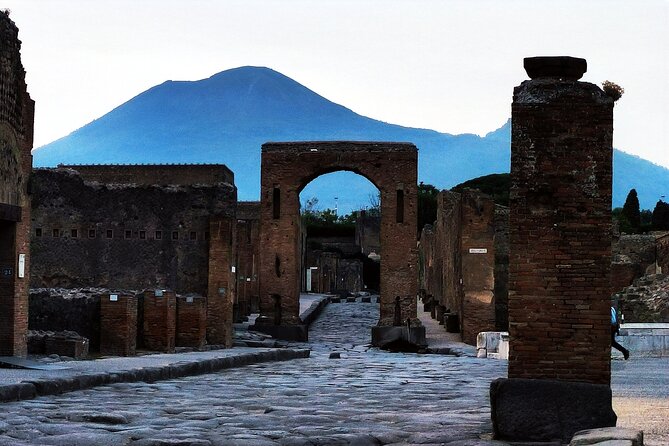
- A specialized archaeologist guide: you get context and on-the-ground excavation perspective, not just general facts.
- Private group up to 15: it’s built for your group to stay together and keep pace.
- Fresco-focused villa stops: the tour targets rooms like the House of Venus in the Shell and Casa di Ottavio Quartione.
- Beyond the center: Orto dei Fuggiaschi and Necropoli di Porta Nocera add the eruption and burial-story angles.
- Admission isn’t included: the experience guides you through key sites, but you’ll handle park entry tickets.
Pompeii in 2 hours: why this format works
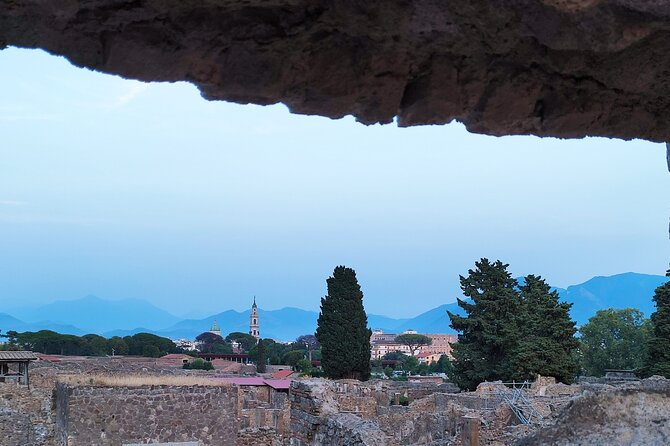
Pompeii can be overwhelming. It’s huge, signage can feel unclear, and time disappears fast when you’re wandering with no plan. This tour solves that problem by using a short, curated route with a professional who can connect what you’re seeing to how people actually lived.
The biggest win is that you’re not trying to turn Pompeii into a self-guided scavenger hunt. You follow a sequence of places that cover different sides of Roman city life: exercise and entertainment in public buildings, wealth and art inside private homes, and then the eruption aftermath and burial areas on the city’s edges.
You can also read our reviews of more tours and experiences in Pompeii.



Pacing and the route: from Palestra Grande to Necropoli
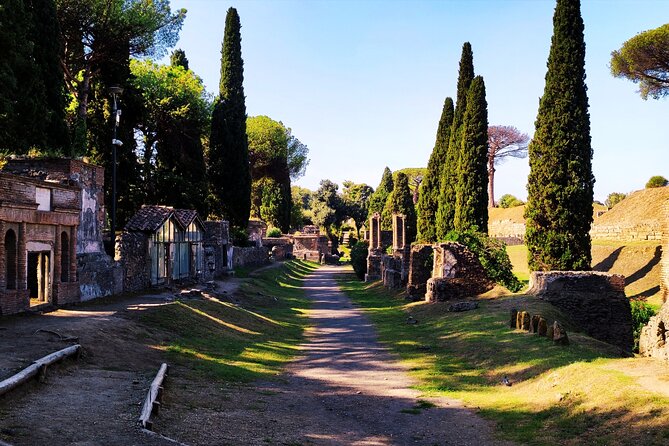
You’re looking at roughly two hours, with each stop carved into small chunks. That matters because Pompeii rewards attention, not speed, but you also can’t spend all day just getting your bearings. The rhythm here is designed to help you process the key highlights while still seeing a meaningful sweep.
The route also avoids a common mistake: only focusing on the most famous, central attractions. You’ll also walk outward across the city walls to reach a major cemetery area, which helps Pompeii feel like a real city, not just a museum of ruins.
Stop 1: Palestra Grande and what the biggest gym tells you
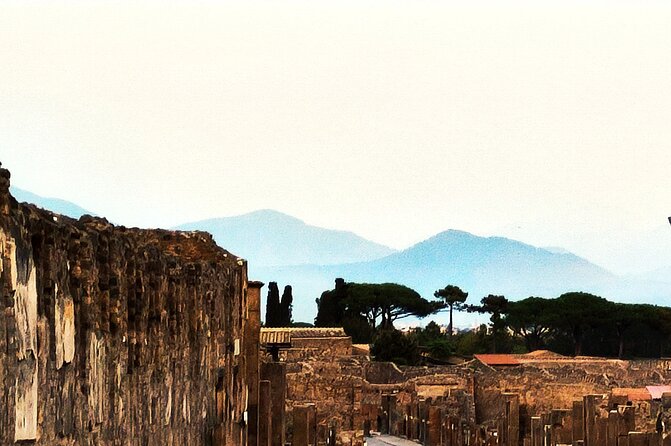
The tour starts at Palestra Grande, Pompeii’s largest gymnasium. This is a smart opener because it frames Roman culture right away: exercise, status, and daily routines were wrapped into public life.
Expect a guided walk-and-explain moment that helps you read the space instead of just observing broken architecture. Since this stop is about 15 minutes, your guide can keep the story focused—how these places functioned, who used them, and why the building mattered in a city that was intensely organized.
Admission isn’t included here, so if you’re relying on a ticket bundle, make sure your plan covers archaeological park entry before you meet up.
Stop 2: Anfiteatro Romano and the theater of everyday drama
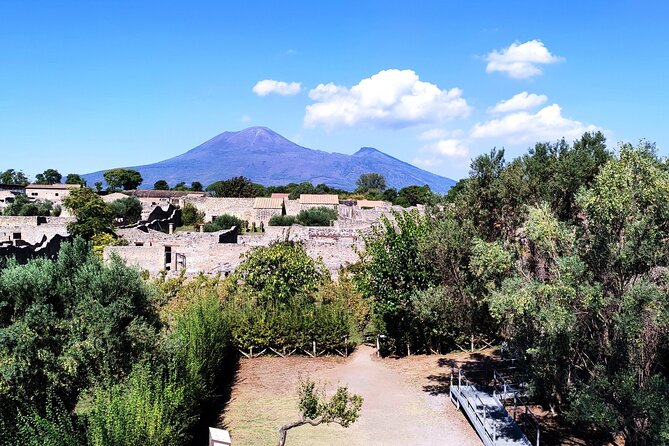
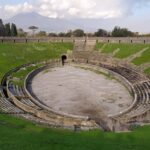
Next is the Anfiteatro Romano, Pompeii’s Roman amphitheater. This is one of the best-preserved buildings of its type and also among the oldest worldwide, so it’s a big deal historically. More importantly for your experience, it’s where entertainment, politics, and public attention all intersected.
In a short stop like this, you’ll get guided interpretation that helps the amphitheater stop feeling abstract. Instead of staring at empty seats, you learn how the space was used and why it shaped crowds and city identity. It’s one of those stops where a guide can translate stone into a lived scene.
Again, you’ll be using your own admission ticket for the archaeological park.
Stop 3: Praedia di Giulia Felice and the idea of elite property
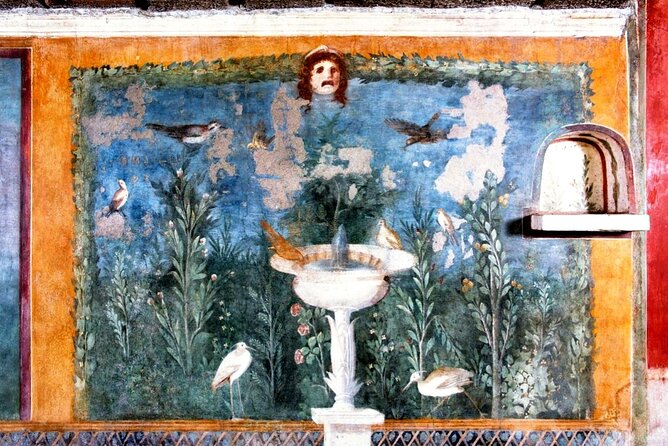
Then you move to Praedia di Giulia Felice, described as one of the larger private houses in Pompeii. This kind of stop matters because Pompeii isn’t only about iconic murals or famous bodies—it’s also about property, wealth, and the social structure of the city.
A private-house stop in a guided format can be better than it sounds. You don’t just see a façade and call it a day. You get help noticing how elite spaces functioned and why this location fits into the larger Pompeii picture.
This segment is another 15-minute block, so you’ll likely get a clear set of takeaways instead of a long lecture. For many people, that’s exactly what you want when you’re managing crowds and a short schedule.




Stop 4: House of Venus in the Shell and frescoes you can actually read
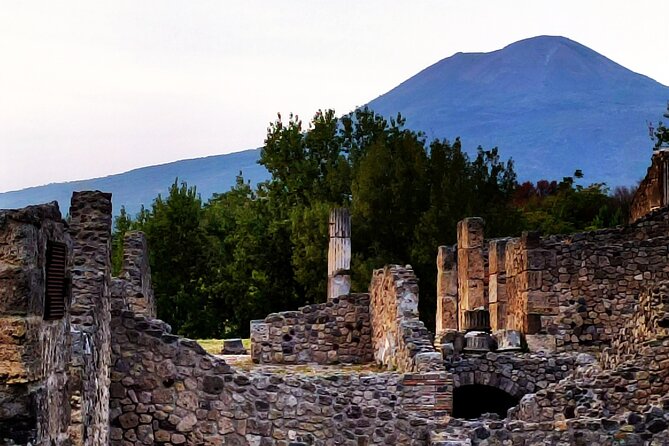
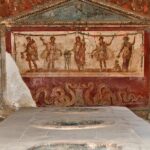
The House of Venus in the Shell focuses on frescoes, and that’s a great match for a two-hour tour. Frescoes can be hard to appreciate without context—your eyes may see color and damage, but you might miss what’s meaningful about the design and subject matter.
This stop is about the art, not just the building shell. With a guide, you learn how to look: what the imagery likely signaled, how it fit the homeowner’s world, and why this particular house gets attention.
And yes, admission is not included, so treat this as guided time inside the park rather than a ticketed-in-and-start-anytime tour.
Stop 5: Casa di Ottavio Quartione, frescoes, and an outdoor biclinium
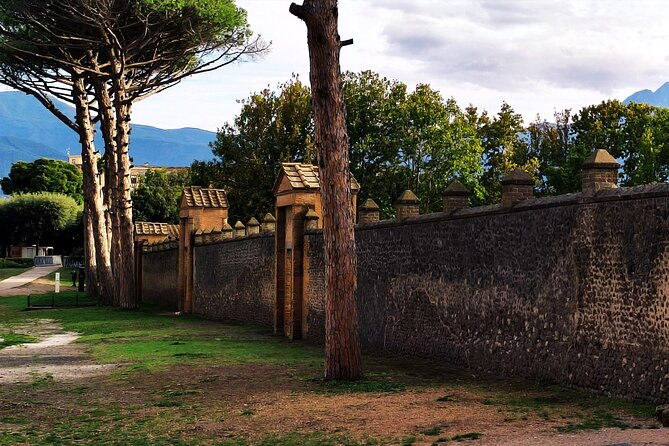
Next up is Casa di Ottavio Quartione, where you can admire magnificent frescoes plus an outdoor biclinium. That combination is valuable because it connects visual art to daily behavior. Eating, hosting, and social rituals weren’t separate from decoration—they were part of the same lifestyle.
The outdoor biclinium angle helps you picture movement. Instead of thinking of Pompeii as frozen snapshots, you start imagining how people used spaces throughout the day and how outdoor areas supported gatherings.
This stop also keeps the promise of the tour: it’s not trying to show everything. It highlights specific rooms and features that help you build a mental model of how wealth and taste worked in Pompeii.
Stop 6: Orto dei Fuggiaschi and the story of the 13 victims
The tour then heads to Orto dei Fuggiaschi, where excavations uncovered 13 victims of the eruption. This is the most emotionally heavy part of the route, and it’s also one of the most meaningful.
A guide matters most in places like this. You want interpretation that respects the human reality while still explaining what archaeology can actually confirm. In a tight timeframe, you don’t need endless details, but you do need a coherent explanation so you understand what you’re seeing and why it was preserved and documented.
This stop is another short segment (about 15 minutes), so your best strategy is to slow down for the key moments your guide points out, rather than trying to read everything yourself.
Stop 7: Necropoli di Porta Nocera and the city’s outer life
Finally, you reach Necropoli di Porta Nocera, one of Pompeii’s largest cemetery areas. You’ll cross the city walls to reach the outer zone, which changes the feeling of the tour. It’s no longer just rooms and public buildings—it’s the boundary space where the city placed its dead.
This is a powerful closing stop because it rounds out what Pompeii means. A city includes how people lived, how they gathered, and how they handled death. The necropolis adds that third layer so Pompeii feels complete in your head, even if you only have two hours.
This last segment is longer than most of the middle stops (about 30 minutes), which makes sense. Cemetery areas reward time and calm, and your guide can pace the story here.
Tickets and price: is $267.46 per group good value?
The price is $267.46 per group (up to 15), and the tour lasts about 2 hours. Admission to the archaeological park is not included, so you’ll pay that separately. That’s important for value math.
Here’s the practical way to think about it:
- If your group is near 15 people, the tour cost works out to roughly $17.83 per person for the guided experience.
- If you’re a smaller group, say 7 people, it becomes about $38.21 per person.
So the pricing can feel very reasonable when you’re splitting it in a larger group. And even when you’re not, you’re paying for a trained archaeologist guide, a private route, and a plan that reduces confusion and wasted time.
The admission-not-included detail is the trade-off. But the upside is you’re not locked into a rigid ticket bundle that might not fit your timing. Just make sure you have park entry handled before you arrive, because this tour’s power comes from moving quickly between sites in the right order.
Also worth noting: this experience tends to be booked ahead (about 46 days in advance on average), so you’ll usually get better options if you secure it early.
What Francesco-style guiding feels like in real life
Across the feedback, the name Francesco comes up again and again. The most praised theme is how much he helps beyond the basic tour script: answering lots of questions, staying organized with bigger groups, and even stepping in when some people in the group weren’t prepared with admission tickets.
That kind of support matters in Pompeii. Crowds can be intense, and the site is big enough that one small snag can break your day. When your guide can adjust—keeping you moving and handling practical issues—it turns a good plan into a smooth experience.
Another repeated strength is that he explains details that you simply wouldn’t pick up if you walk alone. For you, that means the fresco and building features start making sense fast. For kids (and adults), it also helps that questions get handled instead of rushed off.
Who this tour is best for (and who might want longer)
This works well if you:
- Want a private, guided plan and you don’t want to waste your energy figuring out where to go next.
- Like learning from a guide who can connect architecture to daily life and eruption-era context.
- Are traveling with a group big enough to make the per-person cost feel attractive.
It may feel short if you:
- Want to linger a long time on multiple areas beyond the main highlights.
- Prefer a slow, self-paced museum vibe where you can roam without time pressure.
If you’re the type who can spend an entire day at one site, you might leave the tour wishing for more hours. But if you want a strong Pompeii overview with expert framing, two hours is a smart hit.
Should you book this 2-hour archaeologist tour?
If you’re choosing between going alone and paying for a guide, I think this is a strong pick. The price works best when your group is closer to the upper end (up to 15), but the bigger value is the structure: you get the right stops—gymnasium, amphitheater, elite houses with frescoes, eruption victims’ context, and the necropolis—without the confusion that makes Pompeii feel like work.
Book it if you want clarity fast and you’d rather spend your time learning than getting lost. Skip it or plan extra time if you’re set on seeing every corner at a slow pace.
FAQ
FAQ
How long is the Pompeii tour?
It lasts about 2 hours.
What happens if my group is late?
If you’re delayed, the guided tour may be reduced in duration.
What is included in the price?
You get a licensed tour guide and assistance for the entire duration, a private tour, main Pompeii attractions, and a specialized archaeological guide.
What is not included?
Food and drink are not included, and entrance fee to the archaeological park is not included.
Where do we meet, and where does the tour end?
You meet at Via Roma, 101, 80045 Pompei NA, Italy. The tour ends back at the meeting point.
Do we need entrance tickets for the sites?
Entrance fees are not included, and the tour’s stops note that admission tickets are not included.
Is this a private tour?
Yes. It’s private, and only your group participates.
Is the tour weather-dependent?
Yes. It requires good weather. If it’s canceled due to poor weather, you’ll be offered a different date or a full refund.
What is the cancellation window for a full refund?
You can cancel up to 24 hours in advance for a full refund, based on the experience’s local time.